race

Photo of a Black mother cuddling her newborn baby
Photo by Bonnie U. Gruenberg, Wikimedia CC

“When the medical profession systematically denies the existence of black women’s pain, underdiagnoses our pain, refuses to alleviate or treat our pain, healthcare marks us as incompetent bureaucratic subjects. Then it serves us accordingly.”

So writes sociologist Tressie McMillan Cottom, reflecting on her experiences of medical neglect during pregnancy that ultimately led to the loss of her child. Thick, Cottom’s recently published collection of essays, brings to life intimate portraits and sociological analyses of black women’s issues. It has been widely acclaimed by the Chicago Tribune, The New York Times, NPR, The Daily Show, and has set Black Twitter and Academic Twitter abuzz. With Black women’s health in the spotlight, it’s helpful to reflect on what sociologists already know about medicine and wellness at the intersections of race and gender.

In the United States, racial disparities in health are severe. Black mortality is higher than white mortality, and nationally, there has been no sustained decrease in black-white inequalities in mortality or life expectancy at birth since 1945.
Racism is itself a public health concern. Those who experience racism are more likely to suffer from chronic conditions and disability and to rate their physical health as poor. Racism is linked to poorer mental health as well, with conditions like depression and anxiety more common among those experiencing discrimination. This is particularly problematic for members of racial-ethnic minority groups who have mental health problems as they are likely to suffer discrimination effects on the basis of both characteristics. As discrimination may lead to poverty and social isolation, it can negatively impact help seeking, service use and treatment outcomes. Yet these adverse consequences are thoroughly preventable. In order to identify, anticipate, prevent, manage, and remedy such adverse outcomes, it is important for health service providers to understand racism as an ethical issue. By framing racism as the cause of preventable harmful consequences, many hope to reframe racism as an ethical issue for health service providers to address.
Black Americans tend to experience poorer health outcomes than whites when factors such as age and socioeconomic status are taken into account, but the race gap is even wider among women. For example, according to the Centers for Disease Control, black women are more than three times as likely to die while pregnant or within a year of pregnancy due to causes related to pregnancy or its management. The shockingly high maternal mortality rate for black women is the primary reason that the overall U.S. rate has risen by 250% in the past quarter century.  
Race, class, and gender are interlocking systems of oppression that help explain maternal health inequalities. While other groups may experience some of these dimensions of oppression — for instance white women are penalized by their gender, but privileged because of their race — black women experience oppression on all three of these dimensions.
Photo of a 1040 tax form with a pencil.
Photo by PT Money, Flickr CC

Ben Franklin famously quipped that nothing in life is certain except death and taxes. However, sociologists would add that the burden of taxation (and mortality, for that matter) is not evenly distributed across members of society. This tax season we examine the research on who pays how much to Uncle Sam.

Taxation is such a divisive political issue because it is partially driven by ideology, not just fiscal needs. The sociological perspective on taxation highlights non-economic causes and consequences of tax policy. Taxation is more than just the state’s way of generating revenue. It is also a powerful tool for social control. For example, policies have been written to both encourage and discourage wives’ labor force participation depending on the needs and values of the state in different countries and periods. By restricting the political activity of  non-profit organizations, tax laws can also repress some social causes, while encouraging others.
Another function of the tax system is resource redistribution. Progressive tax policies can directly impact after-tax income distribution by taking more money from high-income earners than low-income earners. They can also indirectly affect pre-tax income inequality if taxes pay for programs that increase the earning-potential of less-advantaged people. However, in recent decades, declining tax rates on the rich have put more money in the pockets of the top 1%. Meanwhile, cities are finding creative ways of extracting tax revenue from people who struggle to pay. When residents cannot pay, for example, predatory investors buy their tax debt from the city. Investors can take the house if property owners cannot pay them back at a high interest rate. These policies force poor, non-white urban residents to shoulder an uneven tax burden, and have worsened class and racial inequalities in the United States.
Social factors shape individuals’ willingness to pay taxes. An international survey showed that people are less likely to evade taxes if they believe the government is competent and if tax revenue primarily funds popular programs. This helps explains why some countries are better able to collect taxes than others. In the United States, changing demographics predict changing attitudes about taxation. In a survey experiment, white Americans were less likely to support a tax increase if they were told that an influx of Latinx (compared to white) migrants entered their community. This was driven by declines in feelings of social solidarity. These studies show that whether people pay taxes is influenced by whether they consider public spending to be legitimate.

Filing your taxes is a good annual reminder that taxation does not just fund the government; it can reshape society.

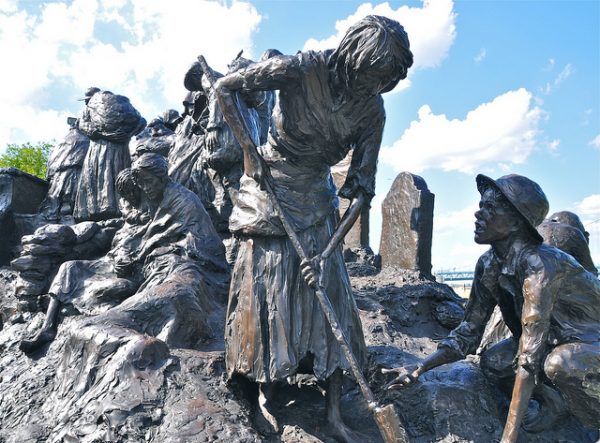
Photo of the Irish Immigrant Memorial in Pennsylvania by Kevin Burkett, Flickr CC

Happy St. Patrick’s Day! As you top one off down at the pub, here’s a round on the house about how the Irish became white in the United States.    

Irish presence in America greatly expanded following increased emigration in the mid-to-late 19th century. The journey from Ireland was arduous and dangerous, but their welcome on arrival was worse. Various political and social organizations espoused prejudiced, bigoted views towards Irish immigrants their families; frequent metaphors included comparing the Irish to animals or vermin. Scholars have described how Irish groups in America resisted hatred and discrimination and took steps to combat discrimination both in the job market and everyday culture. As the sources below describe, the Irish actively overcame and struggled against oppression, and civil society organizations and community engagement helped the Irish to eventually be seen as part of the racial category “White” in America.
This story of becoming white applies not only to the Irish, but also to Italians, Poles, and virtually any other European group once framed as outsiders by America’s paradigm of “whiteness” in the 18th and 19th centuries. Over time, these groups’ cultural identities didn’t disappear; instead they became symbolic and strategic expressions of identity that no longer bore these oppressive stigmas.
Following work by civil organizations and resulting changes in dominant cultural practices, the racial paradigm has expanded to incorporate some groups into the label of white, but not all. Non-European groups’ stories contrasted greatly with that of the Irish, spawning inequalities that still exist today.

As you finish your drink, ponder how several immigrant groups have been historically labeled as racially black, Hispanic, or Asian, instead of white. How would life be different for Irish-Americans if that had been their story?

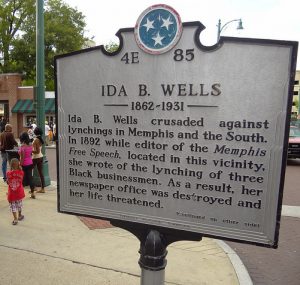
Photo of a plaque commemorating Ida B. Wells. Photo by Adam Jones, Flickr CC

As Black History month draws to a close, it’s important to celebrate the work of Black scholars that contributed to social science research. Although the discipline has begun to recognize the foundational work of scholars like W.E.B. DuBois, academia largely excluded Black women from public intellectual space until the mid-20th century. Yet, as Patricia Hill Collins reminds us, they leave contemporary sociologists with a a long and rich intellectual legacy. This week we celebrate the (often forgotten) Black women who continue to inspire sociological studies regarding Black feminist thought, critical race theory, and methodology.

Ida B. Wells (1862-1931) was a pioneering social analyst and activist who wrote and protested against many forms of racism and sexism during the late 19th and early 20th century. She protested Jim Crow segregation laws, founded a Black women’s suffrage movement, and became one of the founding members of the NAACP. But Wells is best-known for her work on lynchings and her international anti-lynching campaign. While Wells is most commonly envisioned as a journalist by trade, much of her work has inspired sociological research. This is especially true for her most famous works on lynchings, Southern Horrors (1892) and The Red Record (1895).
In Southern Horrors (1892), Wells challenged the common justification for lynchings of Black men for rape and other crimes involving white women. She adamantly criticized white newspaper coverage of lynchings that induced fear-mongering around interracial sex and framed Black men as criminals deserving of this form of mob violence. Using reports and media coverage of lynchings – including a lynching of three of her close friends – she demonstrated that lynchings were not responses to crime, but rather tools of political and economic control by white elites to maintain their dominance. In The Red Record (1895), she used lynching statistics from the Chicago Tribune to debunk rape myths, and demonstrated how the pillars of democratic society, such as right to a fair trial and equality before the law, did not extend to African American men and women.
Anna Julia Cooper (1858-1964) was an avid educator and public speaker. In 1982, her first book was published, A Voice from the South: By A Black Woman of the South. It was one of the first texts to highlight the race- and gender-specific conditions Black women encountered in the aftermath of Reconstruction. Cooper argued that Black women’s and girls’ educational attainment was vital for the overall progress of Black Americans. In doing so, she challenged notions that Black Americans’ plight was synonymous with Black men’s struggle. While Cooper’s work has been criticized for its emphasis on racial uplift and respectability politics, several Black feminists credit her work as crucial for understanding intersectionality, a fundamentally important idea in sociological scholarship today.
As one of the first Black editors for an American Sociological Association journal, Jacquelyn Mary Johnson Jackson (1932-2004) made significant advances in medical sociology. Her work focused on the process of aging in Black communities. Jackson dismantled assumptions that aging occurs in a vacuum. Instead, her scholarship linked Black aging to broader social conditions of inequality such as housing and transportation. But beyond scholarly research, Jackson sought to develop socially relevant research that could reach the populations of interest. As such, she identified as both a scholar and activist and sought to use her work as a tool for liberation.

Together, these Black women scholars challenged leading assumptions regarding biological and cultural inferiority, Black criminality, and patriarchy from both white and Black men. Their work and commitment to scholarship demonstrates how sociology may be used as a tool for social justice. Recent developments such as the #CiteBlackWomen campaign draw long-overdue attention to their work, encouraging the scholarly community to cite Wells, Cooper, Jackson, and other Black women scholars in our research and syllabi.

“Feminism without intersectionality is just white supremacy,” by Ian Spence, Wikimedia Commons CC.

“Intersectionality” — a concept used to help understand the complexity of the social identities, institutions, and experiences — is moving from a buzzword in scholarly and activist communities to more popular mainstream use. The concept refers to an understanding that our lives are always shaped by many factors, like the economy, racism, sexism, family dynamics, education, and our social support systems. For Black History Month, we take a closer look at the women of color who helped bring this term to our everyday language.

In the United States, intersectional work among Black feminists arose out of the need to recognize the experiences of Black women as multiply marginalized. Black women faced oppression along the lines of both gender and race. For instance, Black feminists faced exclusion and oppression from both antiracist movements that fought for justice primarily for Black men, as well as feminist movements that centered white women’s experiences of patriarchy. Out of this exclusion came work like The Black Woman, edited by Toni Cade Bambara, demonstrating that Black women would never gain freedom without attention to their marginalization along the lines of gender, race, and class. Work by Black Lesbian feminists like Audrey Lorde and Barbara Smith also highlighted the ways (hetero)sexuality served as axis of marginalization for LGBTQ+ persons.
However, Black women were not the only women of color actively pushing for intersectional analyses at this time. Chicana and Indigenous feminists were also leading their own distinct social movements, in addition to entering alliances with Black feminists. Much of this work gives voice to women of color, highlighting intersecting oppressions and differences within women of color as an oppressed group. For example, Anzaldúa’s work focuses on intersectionality at the borders. She writes about the physical U.S.-Mexico border in Texas, as well as the symbolic borders she experiences as a part of Mexican, Indigenous, and white worlds.
Many attribute the coining of the term, intersectionality, to Kimberlé Crenshaw. However, Crenshaw herself denies credit, noting that women of color feminists have been doing intersectional academic work and activism informed by intersectionality long before universities and other institutions recognized its importance. In fact, Patricia Hill Collins and Sirma Bilge liken the story of intersectionality’s “coining” to colonizers’ “discoveries” and naming of lands that had been inhabited by indigenous peoples for years.

It is important to remember that concepts like intersectionality are rarely created alone. Instead, they are collaborative efforts with histories and contexts that are vital to understanding the concept itself. As we celebrate Black History Month, let’s also remember that there is no single axis of Black history. Black history is intersectional.

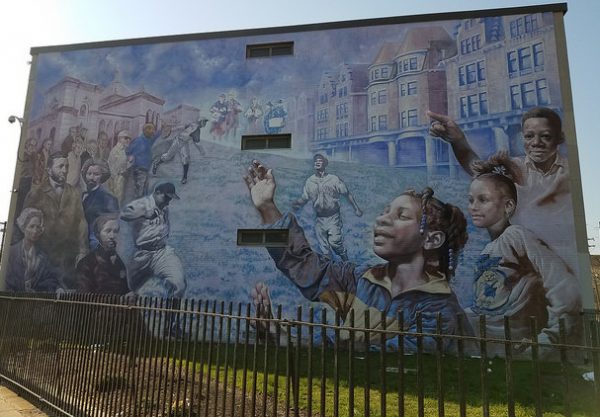
Photo of a mural honoring black history in Philadelphia. Photo by 7beachbum, Flickr CC

In honor of Black History Month, we at TSP hope to spark a larger conversation about the oft-understated role of black sociologists in advancing the field itself. One such figure is W.E.B DuBois. His is a name that Americans may recognize as an iconic black intellectual, but did you know he was a sociologist? In a career spanning several decades from the late 19th to the early 20th centuries, DuBois pioneered sociological methods and theory; several of his works remain classics in the field.  

W.E.B. DuBois was one of the first social scientists in the West to insist that racial inequalities were not inherently due to shortcomings of minority peoples themselves. One of his earliest works, The Philadelphia Negro (1899) focuses on structural inequality for African-Americans in Philadelphia and used an innovative “mixed-methods” design to make this case. The Souls of Black Folk (1903) foregrounds individuals’ beliefs, cultural experiences, and lived realities and explored how people live with and within inequality. The Gift of Black Folk (1924) chronicles the contributions of people of color within the early foundations of the United States, including cultural and artistic projects, mechanical inventions, and blacks’ key roles in early exploration and agriculture. Black Reconstruction in America (1935) shows how freed black communities after the Civil War overcame violence and segregation to make great cultural, political, and social strides.

Though DuBois is well-known as a black intellectual, his pioneering influence has only been recognized in the field of sociology relatively recently. DuBois was often undervalued by his contemporaries, and his work was frequently misaligned and overlooked because of his race. Today, however, his influence and pioneering methods are finally being honored. This can be attributed to efforts by scholars today who have pointed to the groundbreaking academic contributions of not only DuBois, but other black scholars, both men and women, whose work was ahead of its time.

Photo of country flags on a building for the 2018 World Economic Forum meeting. Photo by GovernmentZA, Flickr CC

Each year in January, the World Economic Forum hosts its annual meeting in the Swiss resort town of Davos. The event brings together state leaders, business tycoons, and philanthropists who cultivate relationships between governments and businesses, all with the hope of guiding global progress. This year, the annual meeting made headlines for featuring a Somalian refugee, Mohammed Hassan Mohamud, as one of the event’s seven co-chairs. This inclusion marks another stage of a contested history of international business, development, and intervention in the Global South.

Throughout the Global South, colonialism altered or destroyed local systems, such as food production. Agriculture was restructured to serve colonial powers, which often forced farmers to produce cash crops (like coffee or cotton) instead of food for their own consumption. Over time, knowledge about cultivating local crops was lost. In the aftermath of colonialism, many countries have faced challenges in remaking their agricultural sectors. Businesses and governments from the Global North have sought to have a role in this restructuring. Investors and technological innovators partner to develop new foods, often suggesting genetically modified crops as a solution to hunger. Many scholars, however, raise concerns about the cultural loss of replacing local produce with imported goods that look and taste different. Others assert that such approaches do not address the power inequities that lead to hunger.
Large international development organizations that use technology as a tool of development, such as the Gates Foundation, are organized to create and implement “best practice systems.” Often, this means that corporations develop solutions that treat recipients of their products as new customers. Rachel Schurman argues that this structure separates institutions and their employees from the needs of farmers and strategists from the Global South. From this vantage point, events like the annual World Economic Forum meeting serve as opportunities for international businesses to strategize the best ways to find new consumers.
Activist scholars have built on these critiques with tangible suggestions for more equitable practices. Many argue that development actors must treat communities in the Global South as partners in progress, rather than as beneficiaries. This can be done by including local leaders at every stage of the decision making process. More broadly, activist scholars advocate for the role of social science in industry decision making, particularly in instances of post-conflict investment, as social scientists can provide insight into both power inequities and the long-term effects of economic intervention.

The tension between economic expansion and philanthropy has always been an aspect of development. These power hierarchies continue, but scholars are offering new avenues for more equitable involvement of the Global South. While the inclusion of a refugee in a leadership position in Davos could be a step in the right direction, involvement from the Global South must be inclusive, genuine, and sustained to truly make a difference. In Mohamud‘s own words, “We are not asking for too much, just equal opportunity.”

Photo by Steve Rainwater, Flickr CC

Originally posted February 26, 2018.

Justin Timberlake’s recent performance at the Super Bowl Halftime Show wasn’t his first. Who can forget the now infamous “wardrobe malfunction,” when Timberlake tore Janet Jackson’s clothing, exposing her breast to millions across the United States? Jackson was subsequently blacklisted from the mainstream entertainment industry, while Timberlake’s career continued to flourish. To illustrate the gendered and racial double standards in this case, Black Twitter created the hashtag #JanetJacksonAppreciationDay. Yet, the music industry is not unique. Despite significant progress since the sexual revolution, research shows that sexual double standards persist between women and girls, and men and boys.

Women and girls experience social stigma for premarital sexual activity, having multiple sexual partners, and even participating in non-physical interactions like sexting. Men and boys, conversely, encounter praise for engaging in similar (hetero)sexual conduct. For example, one study showed peers were less likely to accept adolescent girls with a high number of sexual partners, but more likely to accept boys with several sexual partners. At the same time, boys who failed to engage in multiple sexual ‘conquests’ endure stigma from peers. So, both sexually permissive girls and sexually inactive boys face social consequences for not following heterosexual gender roles.
Women who engage in casual sexual activity like hookups outside of a committed relationship, are often judged more harshly and called derogatory names like ‘ho’ and ‘slut.’ One study participant noted, “Guys, they can go around and have sex with a number of girls and they’re not called anything” (Hamilton and Armstrong, p. 598). Both women and men, however, may encounter negative attitudes for hooking up. According to one study, almost 50 percent of college-aged respondents indicated that they lost respect for women and men that engage in a lot of casual sex. However, men were still more likely to only stigmatize women for engaging in casual sex.

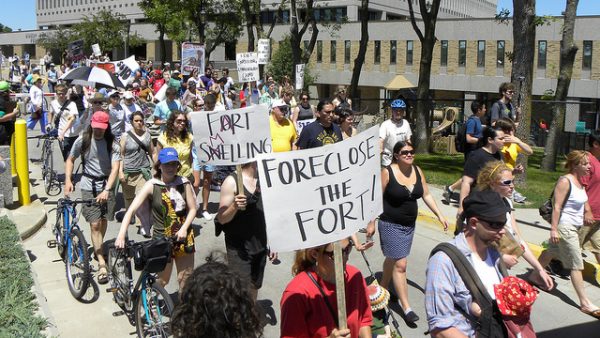
Protest calling to remove Fort Snelling in Minnesota. Photo by Fibonacci Blue, Flickr CC

Originally posted October 9, 2018.

In recent months, a homeless encampment of over 300 people — most of whom are American Indian — has formed along a highway noise wall in Minneapolis. The encampment has been self-proclaimed the “Wall of Forgotten Natives” by residents and Indigenous activists who point out that much of Minneapolis is built on stolen Dakota land. Social and health service providers have mobilized around the encampment, and city officials have worked with community leaders to begin a relocation of people at the encampment to more stable housing on Red Lake Nation land. The wider context for the establishment of the camp, American Indian solidarity and resistance to disbanding the camp, as well as the government’s response, all highlight the process of settler colonialism.

In the United States, settler colonialism is defined as the control of land and its resources by white settlers who seek political power/control in a new space (i.e. like “regular” colonialism) through both displacement and violence against Indigenous persons in order to eventually replace the Native population (i.e. unlike “regular” colonialism). Until recently, studies of Indigenous people have largely been absent from sociological research and some have referred to this as sociology’s “complicity in the elimination of the native.” Scholars have begun to incorporate settler colonialism into research on the domination and dispossession of various racial and ethnic groups.
In Minnesota, American Indians face the consequences of settler colonialism everyday: generational trauma from historical violence and boarding schools while at the same time, confronting a host of contemporary inequities in health, exposure to violence and the foster care system between Natives and non-Natives. At the national level, the U.S. government’s urban relocation programs during the 1950s serve as further examples of settler colonial logic and contemporary homelessness among Minnesota’s urban Natives today and their political response. While these policies encouraged Natives to move from what were economically deprived reservations to what was promised as training and employment in urban areas, they faced intense discrimination. By 1969, unemployment among urban Natives was nearly ten times the national average and Native incomes were less than half of the national poverty level.
After the U.S. government failed to assimilate Native people through relocation in the 1950s, their attempt to end the legal status of what it meant to be a “federally recognized tribe” led to American Indian resistance across the United States and into the social movement fold of the 1960s and 1970s. Founded in 1968, the American Indian Movement was started in Minneapolis, and Minnesota is a historically important site of resistance to settler colonialism among Native peoples. American Indians continue to resist settler colonial practices and beliefs today. One example of this includes Indigenous protests against federally recognized holidays like Columbus Day and Thanksgiving, which are embedded in settler colonial stories of the past that “whitewash” events and stereotype Indigenous people. Other acts of resistance include ceremonies acknowledging genocide and other violent acts by the U.S. government. Just last spring, Dakota activists illustrated such resistance to the Walker Art Center’s decision to host a piece of a “scaffold” similar to that of 38 Dakota men who were hanged following the U.S.-Dakota War of 1862.

The “Wall of Forgotten Natives” highlights both the settler colonial practices that make such a homeless encampment possible but also demonstrate how American Indians have continually resisted settler colonial ideas and actions.


The authors respectfully acknowledge that the University of Minnesota stands on Dakota and Ojibwe peoples’ traditional lands.  

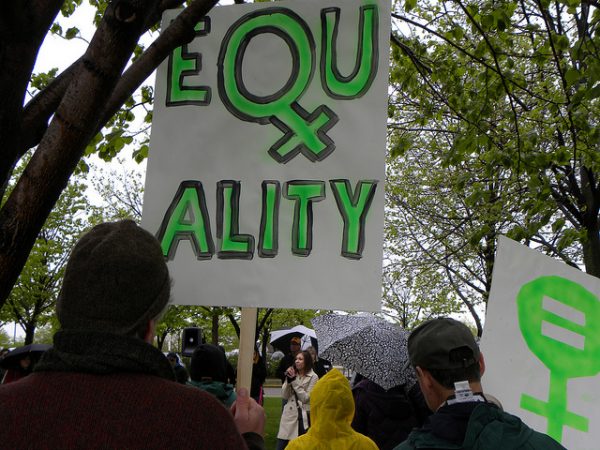
Photo of a protest sign that says “equality” with a female symbol. Photo by Fibonacci Blue, Flickr CC

During this year’s midterm elections, six states adopted Marsy’s Law, a measure that aims to amend state constitutions so that they treat victims’ rights as equal to defendants’ rights in the criminal justice system. Observers like the American Civil Liberties Union warn that the law circumvents due process — particularly the presumption of innocence — by allowing victims the right to deny evidence to defendants and their counsel, and in some states, even curtail the amount of time a defendant can appeal a conviction. The law’s popularity and ensuing debates highlight two key lines of research, the power of victim rights movements in the United States and the racial and gender privilege underlying perceptions of victimhood.

Although different segments of the victim rights movement have different origins, scholars typically point to the 1960s as the time when victim rights hit the national scene. Since then, the mainstream movement has led to state statutes to provide victim restitution, and increase funding for victims’ services. Scholars suggest that while the victim rights movement has had some positive impacts, it occurred alongside the “get tough on crime” movement that facilitated the prison boom. For example, the advocacy of predominately white, elite feminist movements on punishments for rape and domestic violence was viewed as a victory in addressing violence against women. However, it also resulted in a form of “carceral feminism” that increased punitive responses in criminal justice policies in lieu of reforms in other areas such as welfare and other social services.
Other scholars note that the mainstream victim rights movement privileged some victims over others, minimizing and ignoring violence against Black women, Indigenous women, other women of color, and trans women. Research shows that Black women are more likely to experience interpersonal violence but media and even laws often frame “victims” of crimes as white — especially white women. Of the 51 laws named after crime victims in the United States since 1990, only four are named after Black victims, and only three after Hispanic victims. Scholars like Beth Richie show how this dominant political discourse of “preventing crime” not only obfuscates Black women’s experiences with violence but also criminalizes their responses to protect themselves through mandatory arrest and other criminal procedures.

Heightened news coverage and social media attention to the Cyntoia Brown case serves as a clear example of this disparity, demonstrating who U.S. society values as victims and survivors of sexual and other forms of violence. Thus, while Marsy’s Law may seem on its surface to bring an equal playing field to victims in the criminal justice process, researchers and policymakers must pay attention to the broader context from which it emerged and how this law may not only diminish due process, but also privilege certain types of victims over others.


Check out this TROT for more on the racialization of victimhood for missing girls.  

For insight into a social movement that centers women of color as survivors of sexual, domestic, and state violence, check out INCITE!