

Elizabeth M. and Toban B. sent in a clip from the British TV show “That Mitchell and Webb Look” that has a humorous take on how advertisers target men and women:
Search results for embed
Cole S.H. sent us this clip, via Salon, from Fox and Friends. It features Brian Kilmeade, in a discussion about how marriage is positively related to mental health in Finland and Sweden, saying that the problem in America is that “…we keep marrying other species and other ethnics and other…”
So he’s against inter-ethnic and -racial marriage (and willing to say so on national television) and either he is inclined to believe that racial groups are actually different “species” or he is delusional in thinking that some states U.S. states allow us to marry (other) animals.
“That’s the rule,” people. Write it down.
—————————
Lisa Wade is a professor of sociology at Occidental College. You can follow her on Twitter and Facebook.
Various journalists and scholars have pointed out over the years that movies and TV shows often portray as romantic behavior that is fairly indistinguishable from stalking. A good example of this is There’s Something about Mary, in which three men engage in some really sketchy behavior–in one case literally spying on her with binoculars. And while we’re supposed to find them crazy and obsessed, this doesn’t preclude her from getting together with one of them. This type of thing shows up often–one character (usually a guy, though not always) follows another character (who has rejected previous advances) around or sleeps on her lawn or declares he’s in love at first sight or does something else that is supposed to be evidence of deep and abiding love.
But of course, there’s a more disturbing way to interpret that behavior. I once had to contact security and have a man removed from campus when one of my female students anxiously told me that a man she had a restraining order against for stalking (and who wasn’t a student) was outside the classroom. She thought she had escaped him when she moved to college and was very scared that he’d shown up, hours away from their hometown. She didn’t find the behavior romantic or cute; it didn’t make her eventually think she should give him a chance in return for his persistence. It made her feel truly frightened.
Anyway, that’s an overly-long introduction to a video (found here) sent in by Matt W. The creator, Jonathan McIntosh of Rebellious Pixels, edited together scenes from Buffy the Vampire Slayer with scenes of Edward Cullen from the movie Twilight to show how behavior that is depicted as protective and romantic in the film (and book) could also be seen as disturbing:
McIntosh says,
Seen through Buffy’s eyes, some of the more sexist gender roles and patriarchal Hollywood themes embedded in the Twilight saga are exposed in hilarious ways. Ultimately this remix is about more than a decisive showdown between the slayer and the sparkly vampire. It also doubles as a metaphor for the ongoing battle between two opposing visions of gender roles in the 21st century.
I think it’s a great conversation starter (and I’m always happy for an excuse to talk about Buffy).
Gwen Sharp is an associate professor of sociology at Nevada State College. You can follow her on Twitter at @gwensharpnv.
Will M. sent in these spots, by Rethinking Autism, designed to counter misinformation about autism:
Sex sells, I guess. Or, as we’ve discussed before, women’s sexual objectivity and men’s sexual subjectivity sells.
Also see these controversial faux-ransom notesaimed at drawing awareness to autism and other cognitive conditions.
—————————
Lisa Wade is a professor of sociology at Occidental College. You can follow her on Twitter and Facebook.
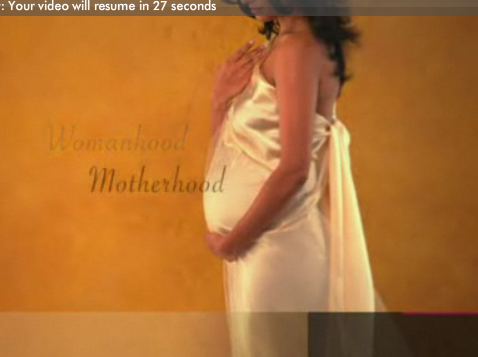
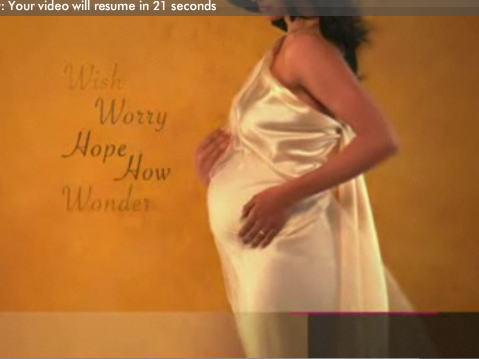
Ryan G. alerted us to a commercial for First Response pregnancy fertility tests. He noticed that the commercial cuts off the pregnant mother’s head, turning her into a faceless baby incubator (like in these editorial cartoons and not unrelated to this photography). Ryan writes: “It’s clear what’s most important in this picture.”

While Ryan couldn’t find the commercial to embed, he did take down the narration and sent in some screen shots. Here is the text of the voiceover:
The moment we pass from womanhood to motherhood, we cross a threshold. For many of us, that step is filled with wish and worry, hope and how, wonder and when. Fertility is a woman’s most sacred birthright. For over twenty years, First Response has been there, helping women answer the most important questions of their lives. Now we bring you new help: the First Response fertility test for women.
Ryan offered commentary, so I’ll rely on him. He writes:
…”womanhood” and “motherhood” are presented as two separate things, with motherhood trumping womanhood. I’m assuming this is partly because a woman is not allowed to have a sex drive after she becomes a mother, and we all know that a woman without a sex drive is the higher form of woman.
He continues:
“Fertility is a woman’s most sacred birthright.” God knows the most important thing any woman can contribute to society is being a baby farm. Strangely, I never see Viagra commercials arguing that knocking people up is a man’s most sacred birthright.

“[H]elping women answer the most important questions of their lives.” The most important question in a woman’s life doesn’t involve her own personal needs, but the needs of her children and soon-to-be children.
Finally, Ryan writes:
And of course, there’s no father pictured here, or even a passing mention of one. Why would there be? Conceiving, planning for, and raising a child is exclusively the job–ahem, the “sacred birthright”–of the mother.
Thanks for the excellent and provocative analysis, Ryan!
—————————
Lisa Wade is a professor of sociology at Occidental College. You can follow her on Twitter and Facebook.
As reported in the Associated Press, according to a report released today by the Trust for America’s Health and the Robert Wood Johnson Foundation, “Adult obesity rates increased in 23 states and did not decrease in a single state in the past year… In addition, the percentage of obese or overweight children is at or above 30 percent in 30 states.”
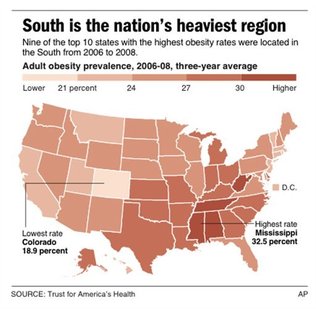 More details, nifty flash graphics, and state specific information can be found online.
HAPPY BIRTHDAY TO SOCIOLOGICAL IMAGES!
Sociological Images is two years old this month. In July of 2007, we had a whopping total of three (3) posts.
We have great fun with the blog and feel very lucky to have such passionate and intelligent readers. Thank you all for reading, commenting, and submitting images!
FROM THE ARCHIVES:
While in Oklahoma this summer, Gwen and I saw a swastika design built into a brick chimney. It reminded us of Wendy’s fascinating post on the history of the swastika symbol from June 2008. Before WWII, it didn’t signify oppressive racist ideology at all. The post features pictures of swastika jewelry, a swastika quilt, and more.
NEWLY ENRICHED POSTS (Look for what’s NEW!):
Race and Inequality
We updated our post about race and toxic release facilities by adding some maps showing high-poverty areas and air pollution in Toronto.
Racialicious had an interesting post about Microsoft’s Natal game initially having trouble recognizing people with “dark skin,” which we added to our post about Nikon’s blink-recognition software problems.
Sex and Sexual Orientation
Another zoo reports a pair of gay penguins raising a chick. We added it to our post on gay animals.
A poster affixed to a tree outside my house was another excellent example of heteronormativity and the social construction of the family. I added it to a previous example (featuring elephants!).
Christine B. sent us some images of sexualized animals used in Orangina ads, which we added to our earlier post about their insane commercial.
Joyous A. sent us a link to a photograph that we just had to add to our post on ejaculation imagery.
Doin’ Good
Also in boobs,we added another example of breast cancer marketing, this time a breast cancer-themed limousine sent in by Steve W., to our post on the topic.
We also added an anti-smoking advertisement threatening women with unattractiveness to a similar anti-drinking advertisement.
Hot Stuff
We added another example of the objectification of men to our post on the topic (NSFW). In this example a mascara wand involves a man who loses his clothes. Thanks to Jennifer C. for sending us the link!
Fiona D. sent in a Belfast Telegraph story on the Lingerie Football League that apparently warranted a slide show with fifty-nine (59) photos. We added some to our post asking “What warrants a slide show?” (scroll down).
Tiffani sent us an ad in which a woman with her head in a clothes washer is used to advertise a credit union in Georgia. See it here.
We also added a billboard, sent in by Sharon G., using sex with women to sell kitchen remodeling. See it here, among our other examples of sex being used to sell homes and house stuff.
And Sarah N. sent us another example of women’s “curves” being used to sell products. We added it to our post on the topic here.
Taylor S. sent us another example of a boob-themed product and we added it to our products-shaped-like-boobs post.

I mean, it’s Ellen DeGeneres. She’s a comedian. Everyone knows she’s just being funny.
Besides, she’s totally gay. Gay ladies don’t really care about beauty, am I right or am I right?
What do you think?
I’ll tell you what I think. Satire or no, Cover Girl’s done a lot of market research and they think it’s going to make people buy make up just like any old advertisement. And I think they’re right.
In fact, I think satire is disarming. When we see this commercial, our “don’t fuck with us” response doesn’t kick in because it’s just funny ol’ Ellen bein’ wacky. Advertising counts on us thinking it doesn’t affect us. Otherwise we’d be pissed. I think satire is a useful tool with which advertisers trick us into letting down our guard.
We’ve been hitting satire hard lately. I think it’s because it’s really pretty tricky to figure out. See our previous posts on or featuring satire here, here, here, here, here, and here. Here’s one that actually refers to data (as opposed to just involves us mouthing off.)
(Via Moody Springs.)
—————————
Lisa Wade is a professor of sociology at Occidental College. You can follow her on Twitter and Facebook.
Lisa Wade, PhD is an Associate Professor at Tulane University. She is the author of American Hookup, a book about college sexual culture; a textbook about gender; and a forthcoming introductory text: Terrible Magnificent Sociology. You can follow her on Twitter and Instagram.
Cole S.H. sent us this clip, via Salon, from Fox and Friends. It features Brian Kilmeade, in a discussion about how marriage is positively related to mental health in Finland and Sweden, saying that the problem in America is that “…we keep marrying other species and other ethnics and other…”
So he’s against inter-ethnic and -racial marriage (and willing to say so on national television) and either he is inclined to believe that racial groups are actually different “species” or he is delusional in thinking that some states U.S. states allow us to marry (other) animals.
“That’s the rule,” people. Write it down.
—————————
Lisa Wade is a professor of sociology at Occidental College. You can follow her on Twitter and Facebook.
Various journalists and scholars have pointed out over the years that movies and TV shows often portray as romantic behavior that is fairly indistinguishable from stalking. A good example of this is There’s Something about Mary, in which three men engage in some really sketchy behavior–in one case literally spying on her with binoculars. And while we’re supposed to find them crazy and obsessed, this doesn’t preclude her from getting together with one of them. This type of thing shows up often–one character (usually a guy, though not always) follows another character (who has rejected previous advances) around or sleeps on her lawn or declares he’s in love at first sight or does something else that is supposed to be evidence of deep and abiding love.
But of course, there’s a more disturbing way to interpret that behavior. I once had to contact security and have a man removed from campus when one of my female students anxiously told me that a man she had a restraining order against for stalking (and who wasn’t a student) was outside the classroom. She thought she had escaped him when she moved to college and was very scared that he’d shown up, hours away from their hometown. She didn’t find the behavior romantic or cute; it didn’t make her eventually think she should give him a chance in return for his persistence. It made her feel truly frightened.
Anyway, that’s an overly-long introduction to a video (found here) sent in by Matt W. The creator, Jonathan McIntosh of Rebellious Pixels, edited together scenes from Buffy the Vampire Slayer with scenes of Edward Cullen from the movie Twilight to show how behavior that is depicted as protective and romantic in the film (and book) could also be seen as disturbing:
McIntosh says,
Seen through Buffy’s eyes, some of the more sexist gender roles and patriarchal Hollywood themes embedded in the Twilight saga are exposed in hilarious ways. Ultimately this remix is about more than a decisive showdown between the slayer and the sparkly vampire. It also doubles as a metaphor for the ongoing battle between two opposing visions of gender roles in the 21st century.
I think it’s a great conversation starter (and I’m always happy for an excuse to talk about Buffy).
Gwen Sharp is an associate professor of sociology at Nevada State College. You can follow her on Twitter at @gwensharpnv.
Will M. sent in these spots, by Rethinking Autism, designed to counter misinformation about autism:
Sex sells, I guess. Or, as we’ve discussed before, women’s sexual objectivity and men’s sexual subjectivity sells.
Also see these controversial faux-ransom notesaimed at drawing awareness to autism and other cognitive conditions.
—————————
Lisa Wade is a professor of sociology at Occidental College. You can follow her on Twitter and Facebook.
Ryan G. alerted us to a commercial for First Response pregnancy fertility tests. He noticed that the commercial cuts off the pregnant mother’s head, turning her into a faceless baby incubator (like in these editorial cartoons and not unrelated to this photography). Ryan writes: “It’s clear what’s most important in this picture.”
While Ryan couldn’t find the commercial to embed, he did take down the narration and sent in some screen shots. Here is the text of the voiceover:
The moment we pass from womanhood to motherhood, we cross a threshold. For many of us, that step is filled with wish and worry, hope and how, wonder and when. Fertility is a woman’s most sacred birthright. For over twenty years, First Response has been there, helping women answer the most important questions of their lives. Now we bring you new help: the First Response fertility test for women.
Ryan offered commentary, so I’ll rely on him. He writes:
…”womanhood” and “motherhood” are presented as two separate things, with motherhood trumping womanhood. I’m assuming this is partly because a woman is not allowed to have a sex drive after she becomes a mother, and we all know that a woman without a sex drive is the higher form of woman.
He continues:
“Fertility is a woman’s most sacred birthright.” God knows the most important thing any woman can contribute to society is being a baby farm. Strangely, I never see Viagra commercials arguing that knocking people up is a man’s most sacred birthright.
“[H]elping women answer the most important questions of their lives.” The most important question in a woman’s life doesn’t involve her own personal needs, but the needs of her children and soon-to-be children.
Finally, Ryan writes:
And of course, there’s no father pictured here, or even a passing mention of one. Why would there be? Conceiving, planning for, and raising a child is exclusively the job–ahem, the “sacred birthright”–of the mother.
Thanks for the excellent and provocative analysis, Ryan!
—————————
Lisa Wade is a professor of sociology at Occidental College. You can follow her on Twitter and Facebook.
As reported in the Associated Press, according to a report released today by the Trust for America’s Health and the Robert Wood Johnson Foundation, “Adult obesity rates increased in 23 states and did not decrease in a single state in the past year… In addition, the percentage of obese or overweight children is at or above 30 percent in 30 states.”
More details, nifty flash graphics, and state specific information can be found online.

HAPPY BIRTHDAY TO SOCIOLOGICAL IMAGES!
Sociological Images is two years old this month. In July of 2007, we had a whopping total of three (3) posts.
We have great fun with the blog and feel very lucky to have such passionate and intelligent readers. Thank you all for reading, commenting, and submitting images!
FROM THE ARCHIVES:
While in Oklahoma this summer, Gwen and I saw a swastika design built into a brick chimney. It reminded us of Wendy’s fascinating post on the history of the swastika symbol from June 2008. Before WWII, it didn’t signify oppressive racist ideology at all. The post features pictures of swastika jewelry, a swastika quilt, and more.
NEWLY ENRICHED POSTS (Look for what’s NEW!):
Race and Inequality
We updated our post about race and toxic release facilities by adding some maps showing high-poverty areas and air pollution in Toronto.
Racialicious had an interesting post about Microsoft’s Natal game initially having trouble recognizing people with “dark skin,” which we added to our post about Nikon’s blink-recognition software problems.
Sex and Sexual Orientation
Another zoo reports a pair of gay penguins raising a chick. We added it to our post on gay animals.
A poster affixed to a tree outside my house was another excellent example of heteronormativity and the social construction of the family. I added it to a previous example (featuring elephants!).
Christine B. sent us some images of sexualized animals used in Orangina ads, which we added to our earlier post about their insane commercial.
Joyous A. sent us a link to a photograph that we just had to add to our post on ejaculation imagery.
Doin’ Good
Also in boobs,we added another example of breast cancer marketing, this time a breast cancer-themed limousine sent in by Steve W., to our post on the topic.
We also added an anti-smoking advertisement threatening women with unattractiveness to a similar anti-drinking advertisement.
Hot Stuff
We added another example of the objectification of men to our post on the topic (NSFW). In this example a mascara wand involves a man who loses his clothes. Thanks to Jennifer C. for sending us the link!
Fiona D. sent in a Belfast Telegraph story on the Lingerie Football League that apparently warranted a slide show with fifty-nine (59) photos. We added some to our post asking “What warrants a slide show?” (scroll down).
Tiffani sent us an ad in which a woman with her head in a clothes washer is used to advertise a credit union in Georgia. See it here.
We also added a billboard, sent in by Sharon G., using sex with women to sell kitchen remodeling. See it here, among our other examples of sex being used to sell homes and house stuff.
And Sarah N. sent us another example of women’s “curves” being used to sell products. We added it to our post on the topic here.
Taylor S. sent us another example of a boob-themed product and we added it to our products-shaped-like-boobs post.
I mean, it’s Ellen DeGeneres. She’s a comedian. Everyone knows she’s just being funny.
Besides, she’s totally gay. Gay ladies don’t really care about beauty, am I right or am I right?
What do you think?
I’ll tell you what I think. Satire or no, Cover Girl’s done a lot of market research and they think it’s going to make people buy make up just like any old advertisement. And I think they’re right.
In fact, I think satire is disarming. When we see this commercial, our “don’t fuck with us” response doesn’t kick in because it’s just funny ol’ Ellen bein’ wacky. Advertising counts on us thinking it doesn’t affect us. Otherwise we’d be pissed. I think satire is a useful tool with which advertisers trick us into letting down our guard.
We’ve been hitting satire hard lately. I think it’s because it’s really pretty tricky to figure out. See our previous posts on or featuring satire here, here, here, here, here, and here. Here’s one that actually refers to data (as opposed to just involves us mouthing off.)
(Via Moody Springs.)
—————————
Lisa Wade is a professor of sociology at Occidental College. You can follow her on Twitter and Facebook.
Lisa Wade, PhD is an Associate Professor at Tulane University. She is the author of American Hookup, a book about college sexual culture; a textbook about gender; and a forthcoming introductory text: Terrible Magnificent Sociology. You can follow her on Twitter and Instagram.