
Search results for embed

Chris, at Public Criminology, points to an excellent example of how institutional rules can have unintended and counterproductive consequences. In this case, the rule applies to people convicted of committing sex offenses against children. Such offenders, once released from prison, are disallowed from living with 2,500 feet of schools, parks, churches, or any place where children might congregate.

So far so good.

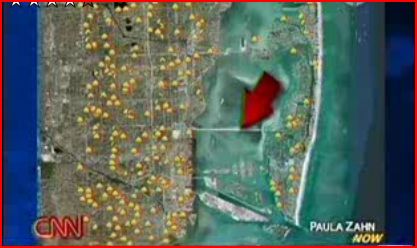
But it turns out that, in Miami, that translates into everywhere. That is, everywhere is within 2,500 feet of one of these places. The yellow dots in this still the places near which sex offenders are not allowed to live:
Capture

Parole officers are at a loss and have instructed released offenders to live under a causeway in the middle of Biscayne Bay (see the red arrow). They even check on them every morning to make sure they are there.

These sex offenders, then, are forced into homelessness by rules designed to protect children.

The video below reports on the situation. In addition to the human rights concerns, there is a concern that the living conditions may actually increase the chances of recidivism.  Living under a bridge: (1) is arguably even less enjoyable than prison, (2) smothers hope of ever reintegrating into society, and (3) is not really conducive to self-improvement.

See also our other posts on rules that apply to released sex offenders here and here.

UPDATE: Comments thread closed.

—————————

Lisa Wade is a professor of sociology at Occidental College. You can follow her on Twitter and Facebook.


Tracy R. sent in the trailer for the movie “Good Hair,” a documentary by Chris Rock:

This movie looks awesome. It humorously addresses the social construction of “good” hair, which means, of course, straight hair. As we see in the trailer, African American women often feel pressured to wear their hair straight in order to be seen as attractive; this is similar to how lighter skin is often defined as more attractive than darker skin, even by other African Americans (and Latinos). It’s also interesting that the pursuit of “good” hair has created a global market for human hair.

On the topic of African American women and weaves, Sexual Buzz sent in this KGB “Natural Weave” commercial (KGB is a service where you can get answers to questions via text) that plays on the “angry sassy Black woman” image.

Gwen Sharp is an associate professor of sociology at Nevada State College. You can follow her on Twitter at @gwensharpnv.

—————————

Lisa Wade is a professor of sociology at Occidental College. You can follow her on Twitter and Facebook.

Lisa Wade, PhD is an Associate Professor at Tulane University. She is the author of American Hookup, a book about college sexual culture; a textbook about gender; and a forthcoming introductory text: Terrible Magnificent Sociology. You can follow her on Twitter and Instagram.


This cartoon satirizes the common sitcom family that includes an average-looking, bumbling husband and a gorgeous, put-together wife. It reverses the roles to illustrate (1) how offensive these sitcoms are to men (men are useless oafs who can’t be expected to act like adult human beings) and (2) how we take for granted that hot chicks should marry useless oafs (via):

I know, it’s satire, and, if you’re a regular reader, you know how I worry about satire.  To me, this points out how stupid (and gendered) family sitcoms are.  But, for others, it might just reinforce the hateful stereotype that fat women are disgusting and useless.  The problem is that the impact of the cartoon depends on who is watching it.

—————————

Lisa Wade is a professor of sociology at Occidental College. You can follow her on Twitter and Facebook.

Sarah S. sent in these two commercials for am/pm:

Dear am/pm:

1. I am a customer and I have a vagina. To be more specific, I am not a 20-year-old, het, white dude who likes sports, video games, and top ramen. Also, my mom doesn’t still do my laundry. (I’m just guessin’.)

2. Women are not stuff. They should not be lumped in with Funyuns. Get a clue.

Here’s a couple similar posts: Women are precious belongings (bubblewrap them) and pieces of furniture.

—————————

Lisa Wade is a professor of sociology at Occidental College. You can follow her on Twitter and Facebook.

The Women’s Media Center has compiled a series of clips exposing the racist and sexist discourse surrounding Sotomayor’s nomination to the Supreme Court:

Via Racialicious.

—————————

Lisa Wade is a professor of sociology at Occidental College. You can follow her on Twitter and Facebook.

Amy Poehler, Sarah Silverman, Julie Lewis-Dreyfus Julia Louis-Dreyfus, Christina Applegate, Jane Krakowski, and Mary Louise-Parker candidly discuss getting older in Hollywood. The discussion starts about about 1:00. It’s not particularly organized, but it’s nice to hear perspectives from the inside:

Via Feministing.

—————————

Lisa Wade is a professor of sociology at Occidental College. You can follow her on Twitter and Facebook.


In this video clip, Naomi Klein, author of The Shock Doctrine and other works on globalization and economic change, discusses what she calls “disaster capitalism,” or the use of disasters or “shocks” (whether natural or human-caused) as an opportunity to impose a certain type of global free-market capitalism that often would be impossible during “normal” times. At the beginning she’s discussing the specific example of the Iraq War, but that’s just one of many examples you could use.

Klein’s argument is that globalized free-market capitalism didn’t spread around the world by some natural process, or by simply winning in a “battle of ideas,” but rather was often opportunistically extended by companies in the wake of disasters, when nations and citizens were often in no position to debate or resist economic change in the face of more immediately pressing matters.

If you are very interested in the topic, here’s a lecture by Klein:

[youtube]http://www.youtube.com/watch?v=hA736oK9FPg[/youtube]

See also our post on The Story of Stuff, Mickey Mouse Monopoly, and old pro-capitalism propaganda.

Gwen Sharp is an associate professor of sociology at Nevada State College. You can follow her on Twitter at @gwensharpnv.