Search results for The

Originally posted at OrgTheory.

Let us start with some basic data.

First, the Democratic party has won the plurality or majority of the Presidential vote 6 out of 7 times since 1992. Yet, they won the Electoral College only 4 out of 7 seven times.

Second, the Gallup polls shows that the Democratic party has a modest advantage in identification, with Democratic identifiers and leaners getting about 46% of the population vs. 40% for the Republicans. Yet, the Democrats only control 32% of the governorships (16 out of 50) and they control 29% of the state legislative chambers (29 out of 99). In the national Congress, Democrats do OK. Senate 48% (48 of 52) and House 44% (194 of 435). If we assume that non-party identifiers evenly split, the Democrats are somewhat under-performing, but just a little.

In terms of party control, it is only in Congress where Democrats perform as expected (or maybe slightly under-perform) but in the Presidency and the states, they really do lose more than they should.

Photo by donkeyhotey; flickr creative commons.

Why?

And, please, no, it is not gerrymandering – the Presidency and the governorships are not gerrymandered. Gerrymandering has a modest effect at best. There really is a consistent under-performance.

I’ve been reading a few books that shed light on this really big structural feature of American politics. Each book offers a discussion of an issue in party politics and when you piece them together, you see how the Democratic and Republican parties differ:

In Local Party Organizations, Douglas D. Roscoe and Shannon Jenkins report on a survey of 1,220 party officials at the state and local levels and they ask a number of questions about the operation of local parties.

First, how did state parties help locals? GOP advantage – website development, newspaper buys, campaign expenses, social media; Democratic advantages – computer support, record keeping, staff. Second, GOP local parties were more likely to have “clear strategic goals” and a well managed organizational culture.  Third, GOP organizations are more likely to have a complete set of officers, by laws, and headquarters, whiles Democrats are more likely to have a phone listing. Also, Democrats also tend to focus on labor intensive actions, like door-to-door and voter registration. Fourth, these activities often (but not always) correlate with electoral success.

Bottom line: GOP organizations appear to be a little more focused, organized, and strategic. Democrats seem to concentrate a bit more on things people can do (door to door, for example and record keeping).

In Asymmetric Politics, Matt Grossman and David Hopkins delve deep into the culture of the GOP and Democratic parties to argue that they are very different beasts. The GOP is ideologically driven and policy oriented, while Democrats are more oriented toward group solidarity and coalition maintenance. The book is massive and presents lots of data, such as public opinion data, voting patterns, and publications by interest groups and think tanks. Even though I disagree with some points, it is well taken. Democrats have a diffuse ideology and work on the coalition, while the GOP is more “mission oriented.”

David Ricci’s Politics without Stories is a study of political rhetoric and it has a simple message. Look at the philosophers, wonks and orators of the Democratic party and you see nuance and sophistication. Look the the GOP and you see more direct narratives. To quote the great Kieran Healy, Republicans “fuck nuance.

What do we learn from this overview?

From top to bottom, the Democratic and Republican parties show important and consistent differences. Not just ideological differences, but qualitative differences in how their parties are organized and how they behave. Democrats, to simplify, are “people oriented” and focus on social practices and ideology that fits that general perspective. In contrast, Republicans are a little more task oriented, which translates into more focused and digestible rhetoric and more of an institutional interest in concrete results. There is probably more to this story, but this is a good start.

Fabio Rojas, PhD is Professor of Sociology at Indiana University. He is the author of From Black Power to Black Studies and Theory for the Working Sociologist, and co-author of Party in the Street: The Antiwar Movement and the Democratic Party after 9/11. He has also written an advice book for graduate students and tenure track professors called Grad Skool Rulz.
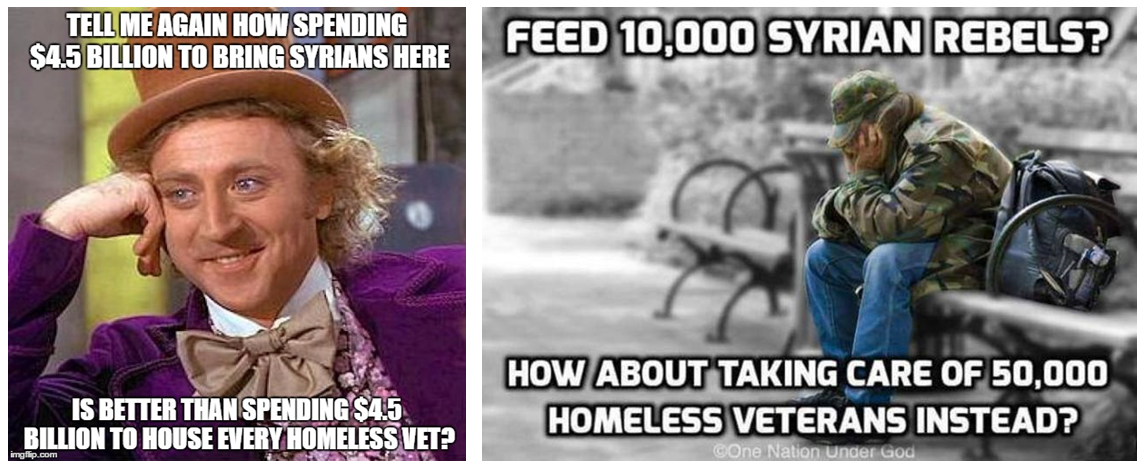
When we see individuals holding cardboard signs and asking for spare change wearing camouflage, homelessness among veterans can seem like an epidemic. Recently, however, government efforts to reduce veteran homelessness have had great success. In response to a federal strategy known as Opening Doors, since 2010 veteran homelessness has declined by almost 50%. And in that time period some cities, such as New Orleans, have reported veteran homelessness at functional zero. 

You would never know it from social media. As the world has grappled with the Syrian civil war, political memes have emerged in the U.S. that make the case that we should prioritize homeless veterans over Syrian refugees. These memes foreground a competition between homeless veterans and Syrian refugees in order to make a misleading, emotionally-appealing argument against the resettlement of Syrian refugees.

Deliberately or not, the online images are similar to propaganda. Actors create emotionally-charged illustrations with biased and one-sided evidence to encourage a political point. The memes push a narrative of homeless veterans as overlooked by the government, while this goes against the facts. They also suggest a fallacious argument that the Department of Veterans Affairs will lose funds because of the refugee resettlement program. This is not the case.

At the same time the memes appeal to our sentiments. Features writer for Mashable, Rebecca Ruiz, contends that memes like these pose the emotional question, “If people in the U.S. are suffering, why are we helping refugees?” What if veterans are those slighted? This is a powerful idea because Americans revere veterans.

In Coming Home: Attitudes toward U.S. Veterans Returning from Iraq, sociologists Alair MacLean and Meredith Kleykamp argue that male veterans involved in recent military-related combat are still supported by the general public, even in light of the idea that those exposed to combat have mental health issues and substance abuse problems. They add that veterans are privileged by symbolic capital, or prestige related to their service. A meme that presents veterans as treated unfairly is likely to produce an emotional reaction, something that is known to simplify our thinking and decision-making.

While the digital messages premised on helping veterans are compelling, they are false and a strategic exploitation of our feelings, one with xenophobic, white nationalist, and anti-immigrant goals. They urge us to advocate against Syrian resettlement to solve an unrelated problem that is already diminishing.

Ian Nahan has a Bachelor’s of Arts degree in both sociology and social work. He plans on working with veterans once he obtains a master’s degree in social work at the University of Pennsylvania.

Photo by Ted Eytan; flickr creative commons.

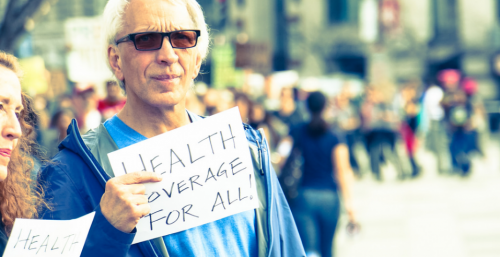
President Trump recently declared that Obamacare is “essentially dead” after the House of Representatives passed legislation to replace existing health care policy. While members of the Senate are uncertain about the future of the proposed American Health Care Act (AHCA) — which could ultimately result in as many as 24 million people losing their health insurance and those with pre-existing conditions facing increasing health coverage costs — a growing number of Americans, especially women, are sure that the legislation will be bad for their health, if enacted.

On the same day that the House passed the Republican-backed plan, for example, a friend of mine revealed on social media that she had gotten her yearly mammogram and physical examination. She posted that the preventative care did not cost anything under her current employer benefit plan, but would have been prohibitively expensive without insurance coverage, a problem faced by many women across the United States. For instance, the American Cancer Society reports that in 2013 38% of uninsured women had a mammogram in the last two years, while 70% of those with insurance did the same. These disparities are certainly alarming, but the problem is likely to worsen under the proposed AHCA.

Breast care screenings are currently protected under the Affordable Care Act’s Essential Health Benefits, which also covers birth control, as well as pregnancy, maternity, and newborn care. The proposed legislation supported by House Republicans and Donald Trump would allow individual states to eliminate or significantly reduce essential benefits for individuals seeking to purchase health insurance on the open market.

Furthermore, the current version of the AHCA would enable individual states to seek waivers, permitting insurance companies to charge higher premiums to people with pre-existing conditions, when they purchase policies on the open market. Making health insurance exorbitantly expensive could have devastating results for women, like those with a past breast cancer diagnosis, who are at risk of facing recurrence. Over 40,000 women already die each year from breast cancer in our country, with African-American women being disproportionately represented among these deaths.

Such disparities draw attention to the connection between inequality and health, patterns long documented by sociologists. Recent work by David R. Williams and his colleagues, for instance, examines how racism and class inequality help to explain why the breast cancer mortality rate in 2012 was 42% higher for Black women than for white women. Limiting affordable access to health care — which the AHCA would most surely do — would exacerbate these inequalities, and further jeopardize the health and lives of the most socially and economically vulnerable among us.

Certainly, everyone who must purchase insurance in the private market, particularly those with pre-existing conditions stand to lose under the AHCA. But women are especially at risk. Their voices have been largely excluded from discussion regarding health care reform, as demonstrated by the photograph of Donald Trump, surrounded by eight male staff members in January, signing the “global gag order,” which restricted women’s reproductive rights worldwide. Or as illustrated by the photo tweeted  by Vice-President Pence in March, showing him and the President, with over twenty male politicians, discussing possible changes to Essential Health Benefits, changes which could restrict birth control coverage, in addition to pregnancy, maternity, and newborn care. And now, as all 13 Senators slated to work on revisions to the AHCA are men.

Women cannot afford to be silent about this legislation. None of us can. The AHCA is bad for our health and lives.

Jacqueline Clark, PhD is an Associate Professor of Sociology and Chair of the Sociology and Anthropology Department at Ripon College. Her research interests include inequalities, the sociology of health and illness, and the sociology of jobs, work, and organizations.

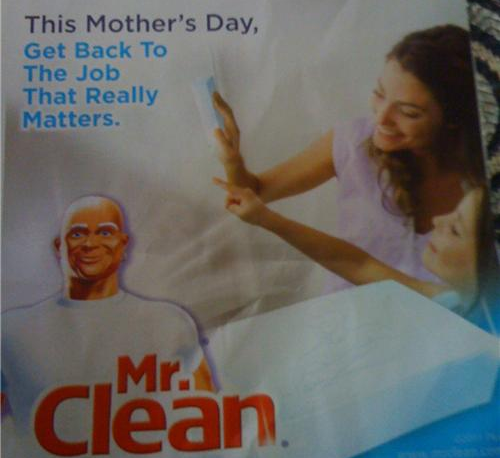
For Mother’s Day, I wrote my third post on mothering for Money magazine about the divergence in income among other-sex couples once kids arrive, called the “motherhood penalty” and “fatherhood premium.” Here’s the whole list:

And please enjoy these posts from SocImages’ Mother’s Days past!

Lisa Wade, PhD is an Associate Professor at Tulane University. She is the author of American Hookup, a book about college sexual culture; a textbook about gender; and a forthcoming introductory text: Terrible Magnificent Sociology. You can follow her on Twitter and Instagram.

Originally posted at Gin & Tacos.

If you want to feel old, teach. That movie quote is not wrong: You get older, the students stay the same age.

Your cultural references are all dated, even when you think things are recent (ex., The Wire is already ancient history. You might as well reference the Marx Brothers). You reference major historical events that they’ve sort-of heard of but know essentially nothing about (ex. the Cold War, Vietnam, the OJ Simpson trial, etc.) You do the math and realize that they were 3 when 9-11 happened. And of course it only gets worse with time. You get used to it.

One of the saddest moments I ever had in a classroom, though, involved Rodney King and the LA Riots. We just passed the 25th anniversary of those events that left such a mark on everyone who lived through them. Of course “25th Anniversary” is a bold warning that students, both college and K-12, will have only the vaguest sense of what the proper nouns refer to. A few semesters ago in reference to the Michael Brown / Ferguson incident I mentioned Rodney King in an Intro to American Government class. I got the blank “Is that a thing we are supposed to know?” look that I have come to recognize when students hear about something that happened more than six months ago. “Rodney King?” More blinking. “Can someone tell why the name Rodney King is important?”

One student, god bless her, raised her hand. I paraphrase: “He was killed by the police and it caused the LA Riots.” I noted that, no, he did not die, but the second part of the statement was indirectly true. God bless technology in the classroom – I pulled up the grainy VHS-camcorder version of the video, as well as a transcript of the audio analysis presented at trial. We watched, and then talked a bit about the rioting following the acquittal of the LAPD officers at trial. They kept doing the blinking thing. I struggled to figure out what part of this relatively straightforward explanation had managed to confuse them.

“Are there questions? You guys look confused.”

Hand. “So he was OK?”

“He was beaten up pretty badly, but, ultimately he was. He died a few years ago from unrelated causes (note: in 2012).”

Hand. “It’s kind of weird that everybody rioted over that. I mean, there’s way worse videos.” General murmurs of agreement.

“Bear in mind that this was pre-smartphone. People heard rumors, but it this was the first instance of the whole country actually seeing something like this as it happened. A bystander just happened to have a camcorder.” Brief explanation, to general amusement, of what an Old Fashioned camcorder looked like. Big, bulky, tape-based. 18-year-olds do not know this.

I do believe they all understood, but as that day went on I was increasingly bothered by that that brief exchange meant. This is a generation of kids so numb to seeing videos of police beating, tasering, shooting, and otherwise applying the power of the state to unarmed and almost inevitably black or Hispanic men that they legitimately could not understand why a video of cops beating up a black guy (who *didn’t even die* for pete’s sake!) was shocking enough to cause a widespread breakdown of public order. Now we get a new video every week – sometimes every few days – to the point that the name of the person on the receiving end is forgotten almost immediately. There are too many “Video of black guy being shot or beaten” videos for even interested parties to keep them all straight. Do a self test. Do you remember the name of the guy the NYPD choked out for selling loose cigarettes? The guy in suburban Minneapolis whose girlfriend posted a live video on Facebook after a cop shot her boyfriend in the car? The guy in Tulsa who was surrounded by cops and unarmed while a police helicopter recorded an officer deciding to shoot him? The woman who was found hanged in her Texas jail cell leading to the public pleas to “Say Her Name”?

These kids have grown up in a world where this is background noise. It is part of the static of life in the United States. Whether these incidents outrage them or are met with the usual excuses (Comply faster, dress differently, be less Scary) the fact is that they happen so regularly that retaining even one of them in long term memory is unlikely. To think about Rodney King is to imagine a reality in which it was actually kind of shocking to see a video of four cops kicking and night-sticking an unarmed black man over the head repeatedly. Now videos of police violence are about as surprising and rare as weather reports, and forgotten almost as quickly once passed.

Ed is an assistant professor in the Department of Political Science at Midwestern Liberal Arts University. He writes about politics at Gin & Tacos.

Flashback Friday.

During the colonial era, class-privileged citizens of colonizing nations would travel to colonized lands to, as I wrote in a previous post, “enjoy reveling in the seemingly bizarre and unfamiliar people and customs of these Other places…” Human beings, in other words, were among the objects of this tourism, along with gorgeous vistas and unfamiliar plants and animals.

Today many citizens of wealthy nations still yearn for “authentic” and “unique” travel experiences. It is somehow more prestigious to go where others do not. And human beings are still, often, the object of such tourism. This kind of travel, always ethically problematic, has become increasingly disruptive as fewer and fewer places are inaccessible and more and more people are able to afford to get there. For those humans identified as worthy of the tourist gaze, this may sometimes mean constant and overwhelming objectification.

A new documentary, Camera, Camera, documents the crushing weight of tourism in Luang Prabang, Laos, where monks make a traditional sacred procession each morning. Seth Mydans, reviewing the film, writes:

…this sacred ritual is now swarmed by scores of bustling tourists, some of whom lean in with cameras and flashes for closeups as the monks pad silently past.

Screenshot from Camera, Camera.

Frustrated, artist Nithakhong Somsanith says:

They come in buses. They look at the monks the same as a monkey, a buffalo. It is theater… Now the monks have no space to meditate, no space for quiet.

This clip from the documentary captures Somsanith’s concerns beautifully and hauntingly:

Originally posted in 2010.

Lisa Wade, PhD is an Associate Professor at Tulane University. She is the author of American Hookup, a book about college sexual culture; a textbook about gender; and a forthcoming introductory text: Terrible Magnificent Sociology. You can follow her on Twitter and Instagram.

This month sociologist Matthew Desmond won the Pulitzer Prize for his book, Evicted: Poverty and Profit in the American City. Desmond’s book documents, in rich and depressing detail, what it’s like to try to pay rent as a low income earner and how easy it is to end up on the street. Eviction is not caused by personal “irresponsibility,” Desmond insists, it’s essentially “inevitable.”

Eviction is psychologically scarring, but it also throws families further into poverty, destabilizing their work and family lives, often stripping them of their few possessions, and costing money — all while enriching landlords.

Here’s 7 minutes from Desmond about his experience living among low income families and the lessons he learned:

Lisa Wade, PhD is an Associate Professor at Tulane University. She is the author of American Hookup, a book about college sexual culture; a textbook about gender; and a forthcoming introductory text: Terrible Magnificent Sociology. You can follow her on Twitter and Instagram.

Sometimes you have to take the long view.

This week Bill O’Reilly — arguably the most powerful political commentator in America — was let go from his position at Fox News. The dismissal came grudgingly. News broke that he and Fox had paid out $13 million dollars to women claiming O’Reilly sexually harassed them; Fox didn’t budge. They renewed his contract. There was outcry and protests. The company yawned. But when advertisers started dropping The O’Reilly Factor, they caved. O’Reilly is gone.

Fox clearly didn’t care about women — not “women” in the abstract, nor the women who worked at their company — but they did care about their bottom line. And so did the companies buying advertising space, who decided that it was bad PR to prop up a known sexual harasser. Perhaps the decision-makers at those companies also thought it was the right thing to do. Who knows.

Is this progress?

Donald Trump is on record gleefully explaining that being a celebrity gives him the ability to get away with sexual battery. That’s a crime, defined as unwanted contact with an “intimate part of the body” that is done to sexually arouse, gratify, or abuse. He’s president anyway.

And O’Reilly? He walked away with $25 million in severance, twice what all of his victims together have received in hush money. Fox gaves Roger Ailes much more to go away: $40 million. Also ousted after multiple allegations of sexual harassment, his going away present was also twice what the women he had harassed received.

Man, sexism really does pay.

But they’re gone. Ailes and O’Reilly are gone. Trump is President but Billy Bush, the Today host who cackled when Trump said “grab ’em by the pussy,” was fired, too.  Bill Cosby finally had some comeuppance after decades of sexual abuse and rape. At the very least, his reputation is destroyed. Maybe these “victories” — for women, for feminists, for equality, for human decency — were driven purely by greed. And arguably, for all intents and purposes, the men are getting away with it. Trump, Ailes, O’Reilly, Bush, and Cosby are all doing fine. Nobody’s in jail; everybody’s rich beyond belief.

But we know what they did.

Until at least the 1960s, sexual harassment — along with domestic violence, stalking, sexual assault, and rape — went largely unregulated, unnoticed, and unnamed. There was no language to even talk about what women experienced in the workplace. Certainly no outrage, no ruined reputations, no dismissals, and no severance packages. The phrase “sexual harassment” didn’t exist.

In 1964, with the passage of the Civil Rights Act, it became illegal to discriminate against women at work, but only because the politicians who opposed the bill thought adding sex to race, ethnicity, national origin, and religion would certainly tank it. That’s how ridiculous the idea of women’s rights was at the time. But that was then. Today almost no one thinks women shouldn’t have equal rights at work.

What has happened at Fox News, in Bill Cosby’s hotel rooms, in the Access Hollywood bus, and on election day is proof that sexism is alive and well. But it’s not as healthy as it once was. Thanks to hard work by activists, politicians, and citizens, things are getting better. Progress is usually incremental. It requires endurance. Change is slow. Excruciatingly so. And this is what it looks like.

Lisa Wade, PhD is an Associate Professor at Tulane University. She is the author of American Hookup, a book about college sexual culture; a textbook about gender; and a forthcoming introductory text: Terrible Magnificent Sociology. You can follow her on Twitter and Instagram.