Search results for The

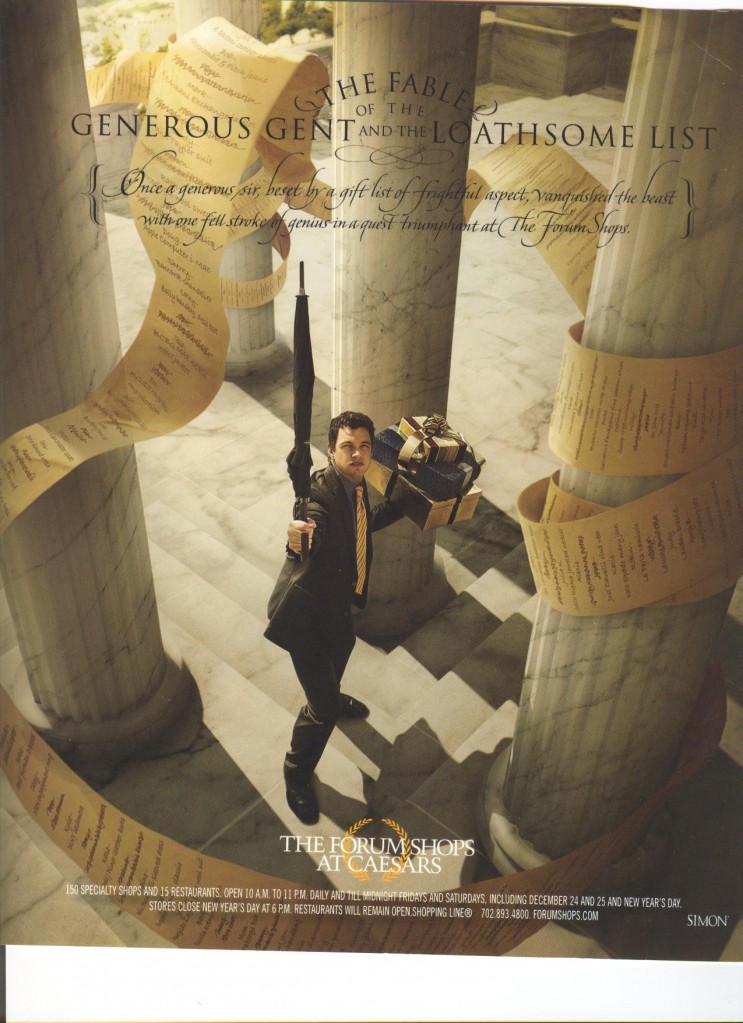
This ad, found in Town and Country, features a man battling “a gift list of frightful aspect.”
03-008

Text:

THE FABLE OF THE GENEROUS GENT AND THE LOATHSOME LIST.

Once a generous sir, beset by a gift list of frightful aspect, vanquished the beast with one fell stroke of genuis in a quest triumphant at The Forum Shops.

It draws attention to what many of us feel, few of us say, and very, very few advertisers would emphasize: the gift giving mandate associated with Christmas (and, to a lesser degree, other U.S. holidays) can be an incredible emotional and financial burden, as well as a time suck.   I have no doubt that expressing dissatisfaction regarding gift giving is more acceptable, in general, for men than women (despite the fact that women do the majority of holiday-related chores).  Thus, it’s no accident that this ad is aimed at men.

Lisa Wade, PhD is an Associate Professor at Tulane University. She is the author of American Hookup, a book about college sexual culture; a textbook about gender; and a forthcoming introductory text: Terrible Magnificent Sociology. You can follow her on Twitter and Instagram.
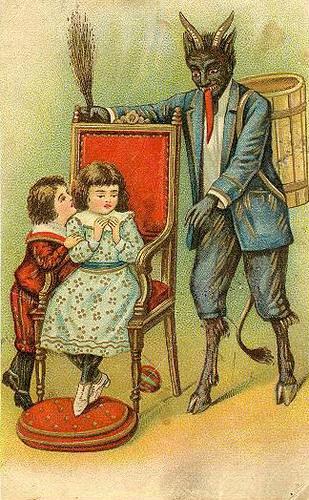
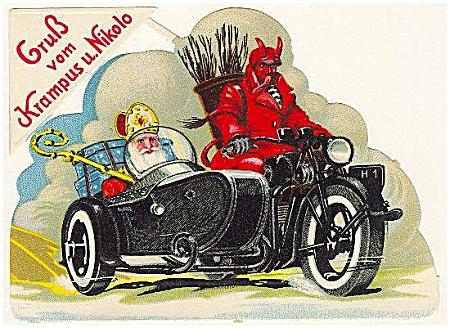
In the U.S., many little girls and boys are told that, if they don’t behave, they won’t get any presents on Christmas.  Sound like a significant threat?

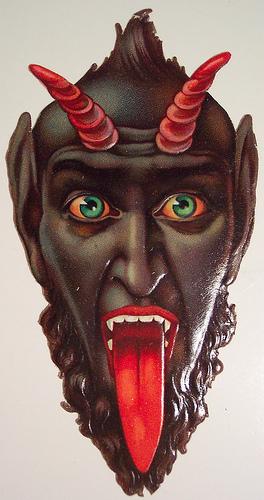
Some cultures–parts of Austria, Germany, Switzerland, Slovenia, and Italy–have an anti-Santa Claus, Krampus.  Krampus is Santa’s sidekick; he’s his evil twin, if you will.  He stalks the streets hitting people with switches.  If a child is bad, Krampus will take the child’s gifts away.  If the child is awake Christmas Eve night, Krampus will take the child away!

Krampus:

untitled4

untitled3

untitled5

More images found here, here, here, here, here, and herevia.

Lisa Wade, PhD is an Associate Professor at Tulane University. She is the author of American Hookup, a book about college sexual culture; a textbook about gender; and a forthcoming introductory text: Terrible Magnificent Sociology. You can follow her on Twitter and Instagram.
Following up on a previous post about gendered gift giving guides at Lego and Toys R Us, I discovered something interesting.

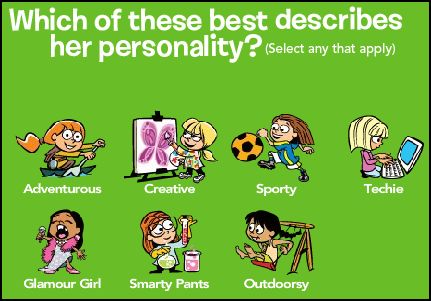
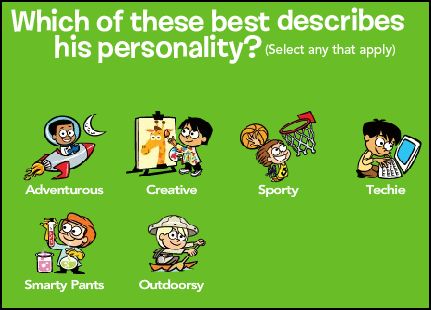
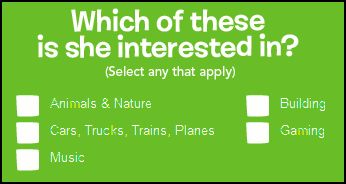
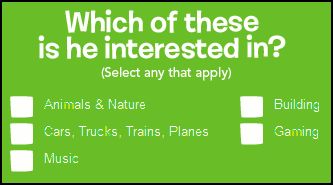
I was intrigued by the Toys R Us guide because it asked the buyer to specify the gender of the child, but then tended to have more or less the same “personality” and “interests” options.  For example, below are the choices for girls and boys.  You’ll see that they are very similar.

Girl personalities:

girl personalities

Boy personalities (same, sans “Glamour Girl”):

boy personalities

Girl interests:

gints

Boy interests:

bints

So, why even ask about gender, I wondered?  I did a test.  For both boys and girls ages 12-14, I checked “techie” and “building” to see what I would get.

What I got was rather fascinating.  I can’t remember where I originally heard it, but someone somewhere observed that when it came to technology, there was a stereotype that men were  the engineers and designers and women were the consumers and users.  That is, both men and women might like technology, but men were active in producing technology and women just got to benefit from men’s hard, brainy work.

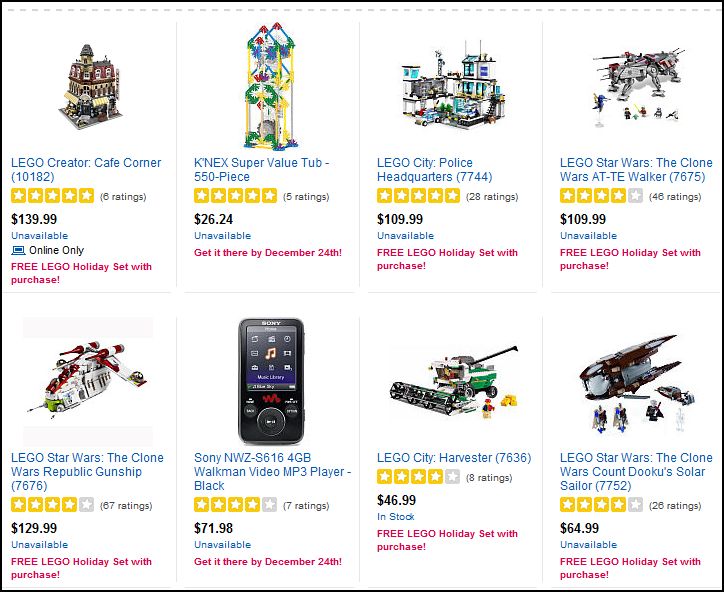
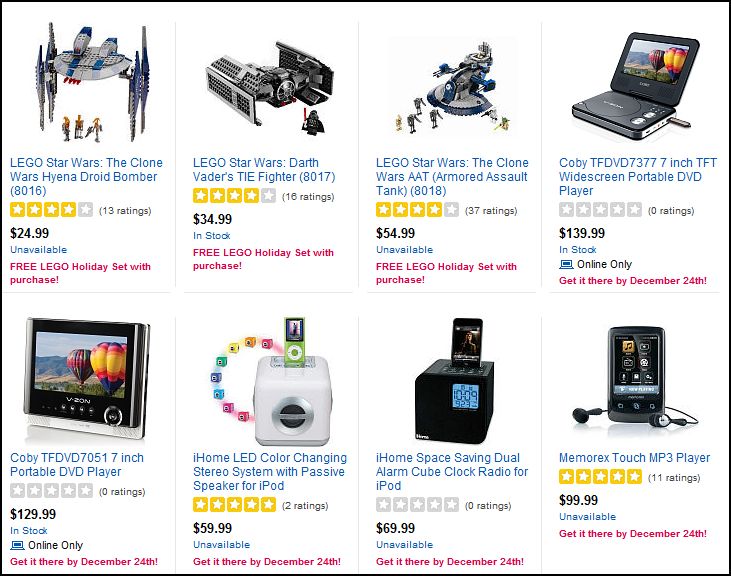
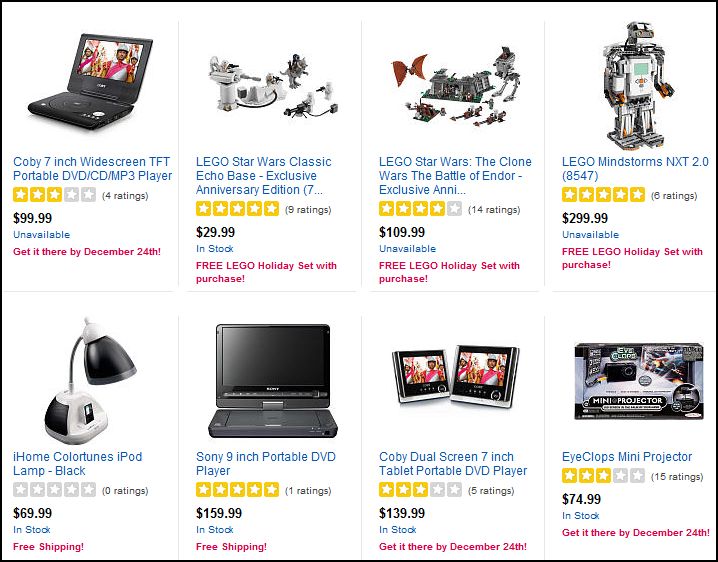
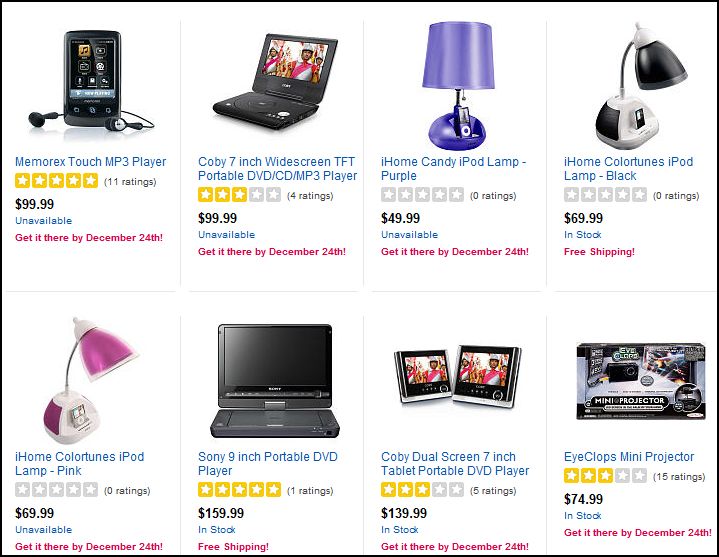
Well, that’s essentially what Toys R Us told me.  Remember, for both boys and girls, I checked “techie” and “building.”  Here is the top 24 gift suggestions for boys:
CaptureB1

CaptureB2

CaptureB3

So that’s 13 building/engineering games (like Lego and KNEX), 3 ipod accessories, 4 portable DVD players, 2 MP3 players, and a few other things.

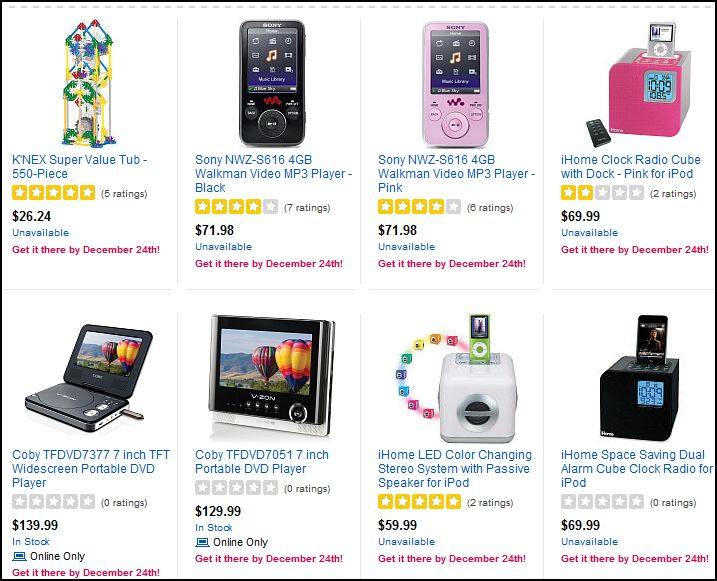
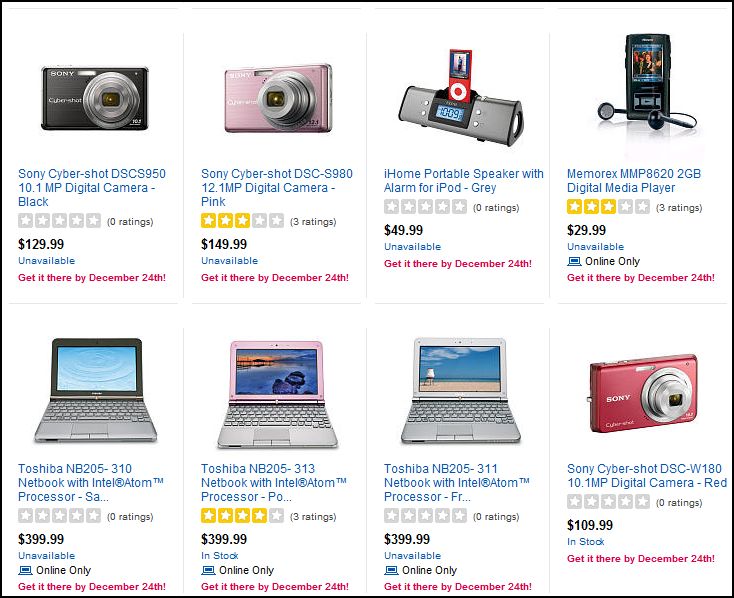
What do girls get?  Seven ipod accessories, 5 portable DVD players, 4 MP3 players, 3 laptop computers, 3 cameras, and one building/engineering game.  One.
CaptureG1

CaptureG2

CaptureG3

Sure enough, Toys R Us confirms that girls may like technology, but boys build it.

Lisa Wade, PhD is an Associate Professor at Tulane University. She is the author of American Hookup, a book about college sexual culture; a textbook about gender; and a forthcoming introductory text: Terrible Magnificent Sociology. You can follow her on Twitter and Instagram.
This 1959 ad for an airplane toy throws in girls as an afterthought in the final seconds (“Every boy wants a RemCo toy… and so do girls”). It’s easy to dismiss the ad as quaint and representative of a different time, but today’s advertising seems equally gendered, with girls thrown in as an afterthought (like in this dinosaur toy website) or neatly segregated (see here, here, and here).

Found at Vintage Ads.

Lisa Wade, PhD is an Associate Professor at Tulane University. She is the author of American Hookup, a book about college sexual culture; a textbook about gender; and a forthcoming introductory text: Terrible Magnificent Sociology. You can follow her on Twitter and Instagram.
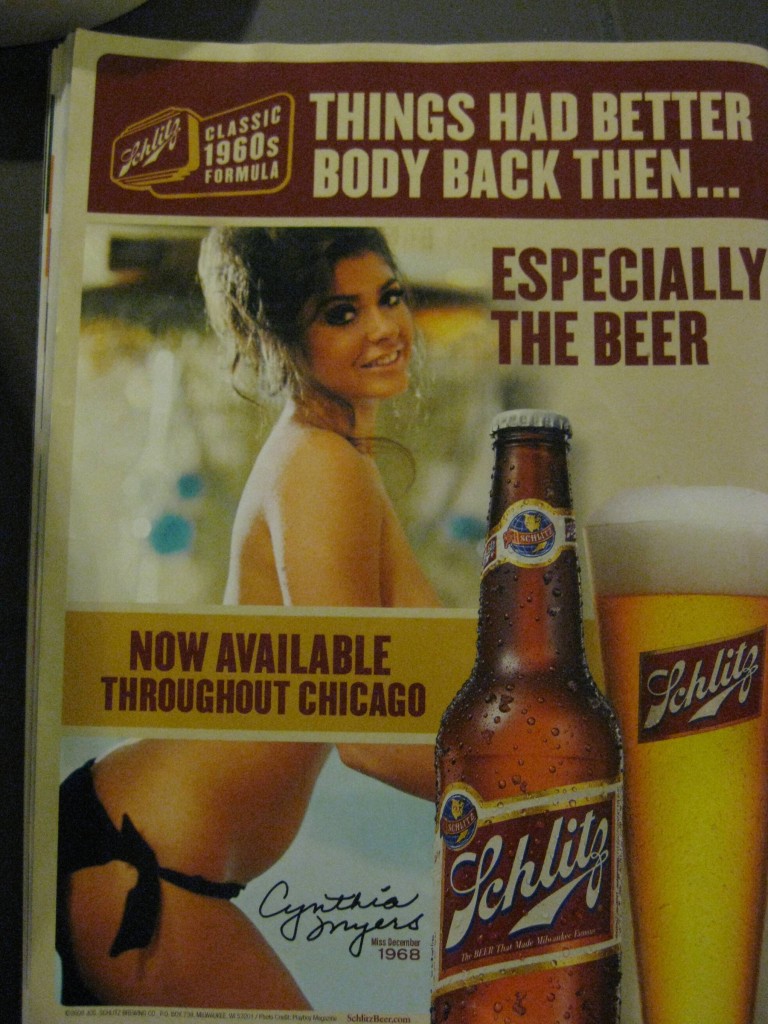
The ad below, sent in by Corinne C., expresses nostalgia for “classic” beers and classic women:
Picture1

(From TimeOut Chicago.)

Lisa Wade, PhD is an Associate Professor at Tulane University. She is the author of American Hookup, a book about college sexual culture; a textbook about gender; and a forthcoming introductory text: Terrible Magnificent Sociology. You can follow her on Twitter and Instagram.
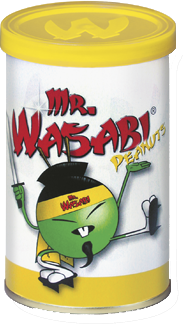
Kirsti McG. sent us her correspondence with the manufacturer of these:

Dose-schraeg_300x352

dosePeanuts

Kirsti, who saw these on the grocery store shelves in Scotland, wrote to complain that the company mascot, Mr. Wasabi, “pack[s] together practically every stereotype about East Asians possible, from wooden toe sandals to buck teeth to samurai swords to kung fu…” (check out the website to see him animated).

Kirsti got a letter back castigating her for daring to be offended by the character.  They told her that hers was the only complaint they’d ever received (implying that she was crazy or over-sensitive) and that she was trying to make them into an “enemy.”

They also used the “some of my friends are Asian” response, explaining:

…we have been cooperating with the Asian manufacturing company for 4 years, we have a registered company in Thailand and Japan in a different line of business, and everybody is delighted with Mr. Wasabi and the branding. It goes so far that the manufacturer has asked us permission to use the branding in their own markets in Cambodia and, hold your breath, Japan.

Then they accused her of ignorance and racist paternalism:

Maybe you should deepen your knowledge of Asia and the Asian psyche, beyond your rather activist style “I-am-going-to-protect-the-poor-asians-from-these-ruthless-snack-tycoons.”

This is a great example of the backlash that frequently occurs when power is threatened.  The company representative didn’t say “Gee, I’d hate to be racist, let me think about this” or even “I’m sorry you’re offended, but this is just what the logo is.”  He said, “You are the crazy person here. There is nothing wrong with our logo and how dare you even suggest that it is racist!  We are innocent and perfect with our Asian friends and you are totally out-of-line.  If anyone is racist, it is you.”  This is a common response when someone’s privilege is exposed: Everything goes along just fine until you ask for power relations to be reconfigured, and then you see the resistance.  For another example, see our post showing vandalized anti-rape posters.

Kirsti wrote back explaining calmly that their ties to Asian companies does not necessarily mean that their branding isn’t racist and that to suggest that there was a single “Asian psyche” (that is 100% behind their product) is, itself, kinda racist.

She said that the next letter was less accusatory and that he promised to bring the issue up with the board.

Sometimes, even in the face of backlash, collective action can work.

You can contact the peeps at Mr. Wasabi here.

Lisa Wade, PhD is an Associate Professor at Tulane University. She is the author of American Hookup, a book about college sexual culture; a textbook about gender; and a forthcoming introductory text: Terrible Magnificent Sociology. You can follow her on Twitter and Instagram.
In previous posts on Gossip Girl promotions and the New Beverly Hills 90210, we’ve argued that daily life is becoming increasingly pornified.  That is, features of the genre of pornography are being mainstreamed and porn is now, more than ever in modern history, everywhere.

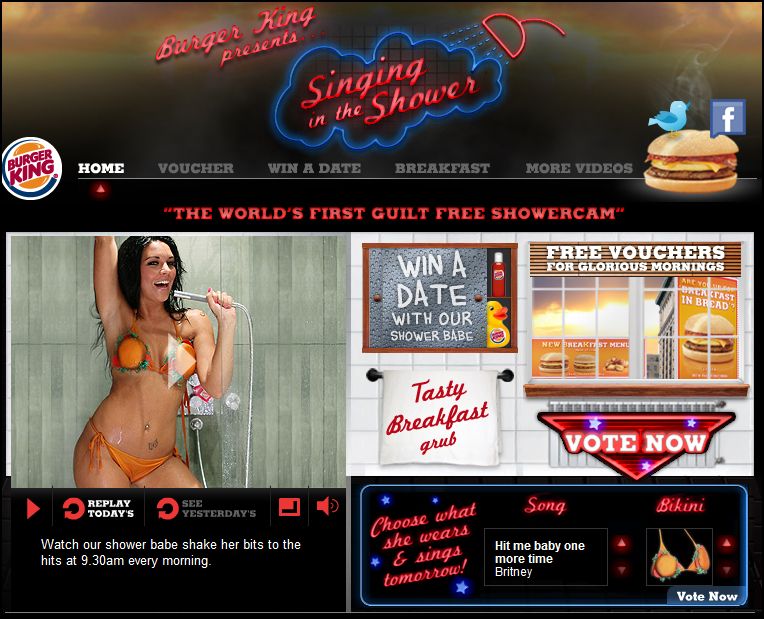
I couldn’t help but this of this concept of pornification when I investigated the Burger King Shower Cam website, sent in by Catrina C.

Capture

Text:  “Watch our shower babe shake her bits to the hits every morning.”

Um, yeah, so everyday you can go to the website and watch a girl in a bikini sing a song in the shower (don’t miss the burger boobs).  You can also vote on the song and bikini for the next day, as well as enter into a contest for a date with the girl.  If you don’t win the date, you may still be a lucky runner up and win Burger King “proper man toiletries”:

Yep, Burger King hygiene products.

Word on the street is that the products are a joke; they actually smell like meat.

Has Axe been so successful in using misogyny to pitch its products that Burger King feels that it must sell toiletries to fully get on the pornification bandwagon?  I just don’t know.

In any case, as A Sarah points out at the Shapely Prose, this is insulting to women and men both.  Apparently Burger King presumes men are stupid or shallow enough to be impressed by BKs facilitation of bit-shaking and, therefore, that the campaign will actually translate into a desire to consume their product (as opposed to a desire to avoid it).

The fact that it’s supposed to be funny doesn’t make it better, it makes it worse.  Because, really, this is the kind of humor they think men respond to?  “Hahaha.  She’s wearing a bikini and it looks like there are fried eggs on her boobs!  Hahaha!”  “Hahaha!  I smell like meat!”  Dudes, Burger King thinks you’re stupid.

Lisa Wade, PhD is an Associate Professor at Tulane University. She is the author of American Hookup, a book about college sexual culture; a textbook about gender; and a forthcoming introductory text: Terrible Magnificent Sociology. You can follow her on Twitter and Instagram.
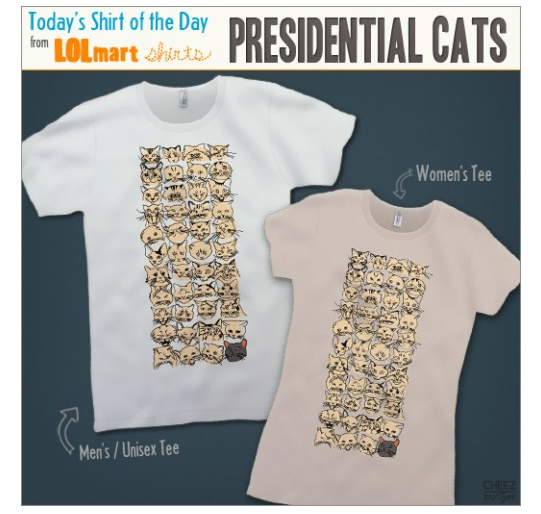
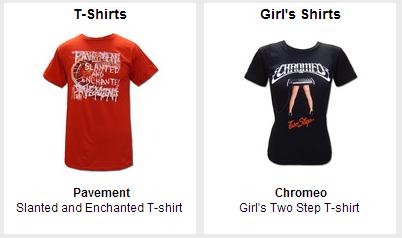
V. and Anna G. sent in this ad for a LOLCats T-shirt.  Notice that the woman’s t-shirt is for women only, but the man’s t-shirt also doubles as a unisex shirt.

Picture1

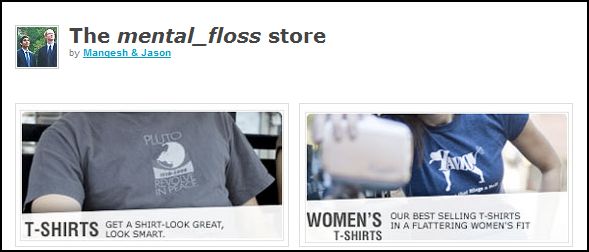
Both Emily W. and Sabine M. sent in this example of the same phenomenon at Mental Floss:

Capturecc

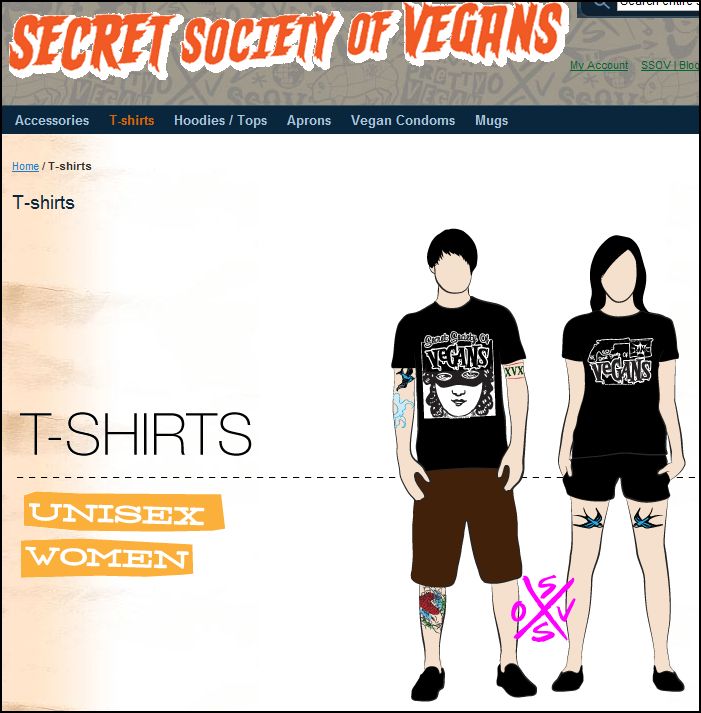
Mindy J. sent us a third example from Secret Society of Vegans:

From Johanna G:

Finally, Jessica S. sent in this example from Kung Fu Nation:

1

This is just another example of the phenomenon of how we take one half of a (false) binary (such as man vs. woman) and make one generic and the other specific.   Men can be human, but women are always female humans; white people can be just people, but non-white people are always other; Christian symbols are for everyone, but non-Christian symbols are exclusive; and so on and so on.

For more examples, see these posts on how racial and ethnic identity adds spice, Sotomayor’s racial bias, male neutrality in stick figures (here and here), male-default avatars, flesh-colored products, for normal to darker skin, Michelle Obama’s “flesh-colored” gown.

Lisa Wade, PhD is an Associate Professor at Tulane University. She is the author of American Hookup, a book about college sexual culture; a textbook about gender; and a forthcoming introductory text: Terrible Magnificent Sociology. You can follow her on Twitter and Instagram.