Search results for The

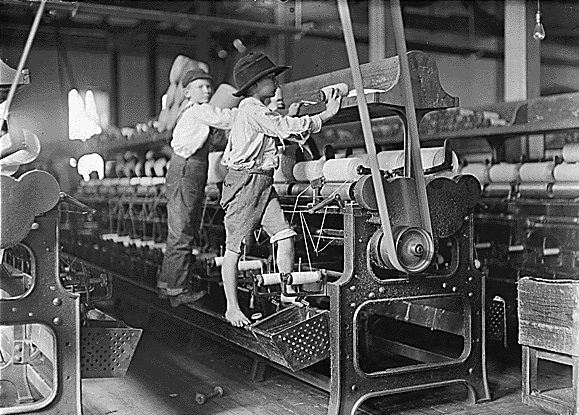
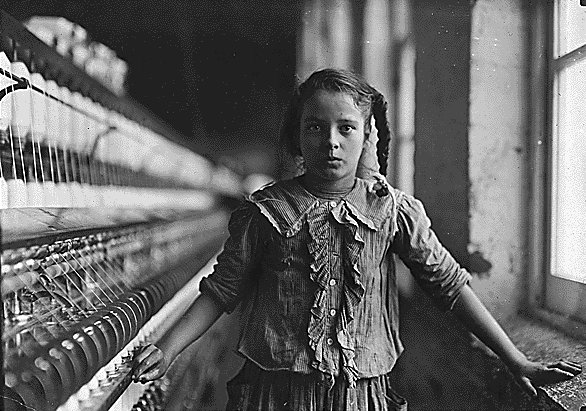
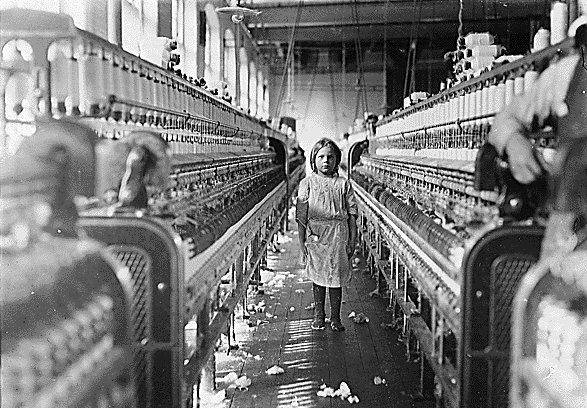
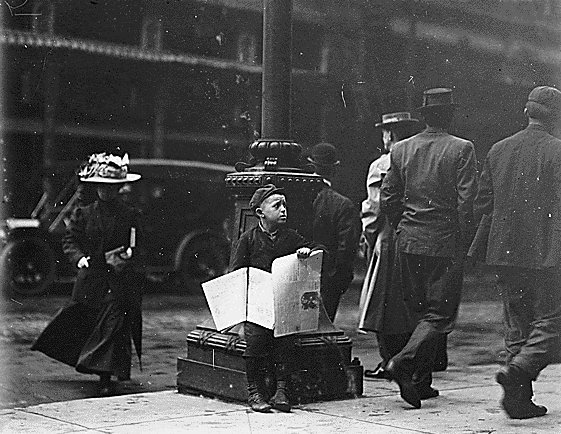
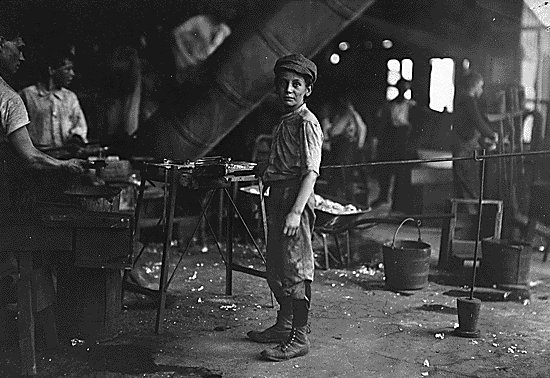
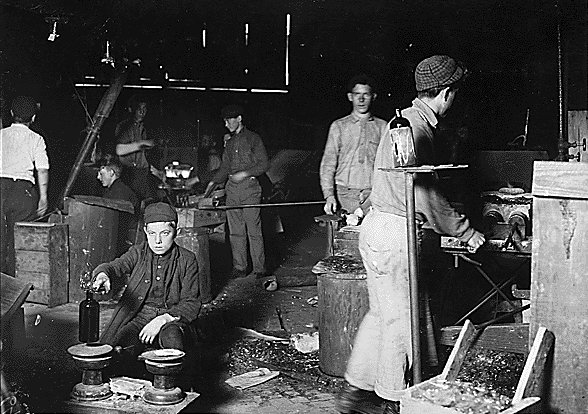
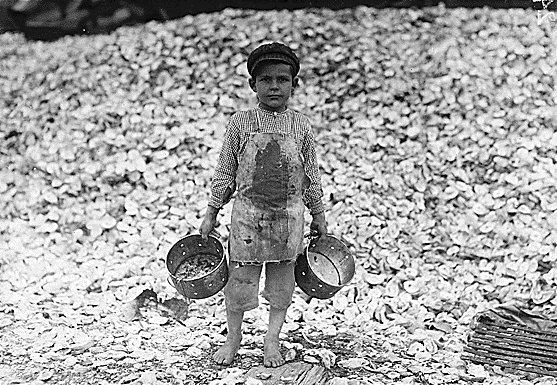
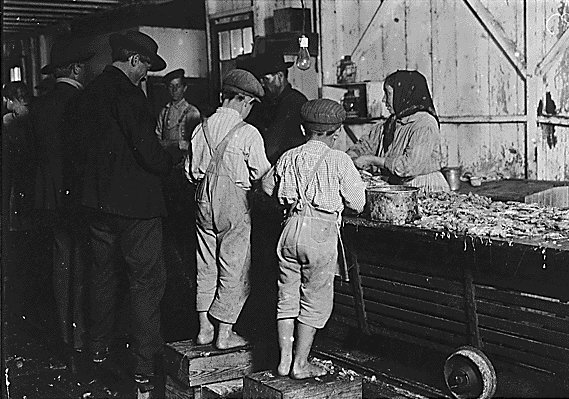
These days the talk is about adult-olescence, or the seeming extention of adolescence well into ones twenties.  But the idea that children should have a childhood at all is actually pretty recent.  Before industrialization, when families tended to work their own land, children got to work as soon as they were able.  Being apprentices to their parents was the difference between life and death.

Industrialization brought a whole new kind of work: wage work that occurred outside the home.  At that time, it made perfect sense that kids would work, as they’d be working on the farm all along.  Only later did we decide that working outside the home was different than working at it and that, perhaps, children working outside of the home needed protection.  The first federal law regulating child labor was passed in 1938.

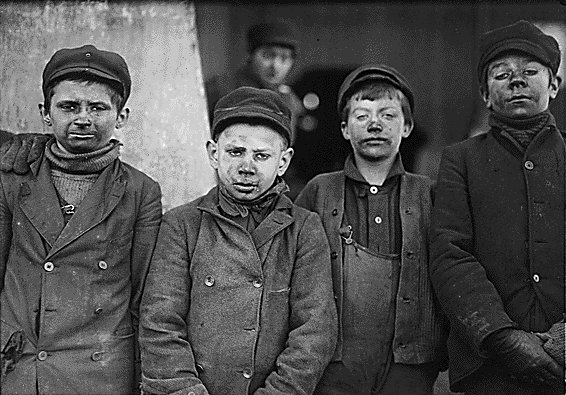
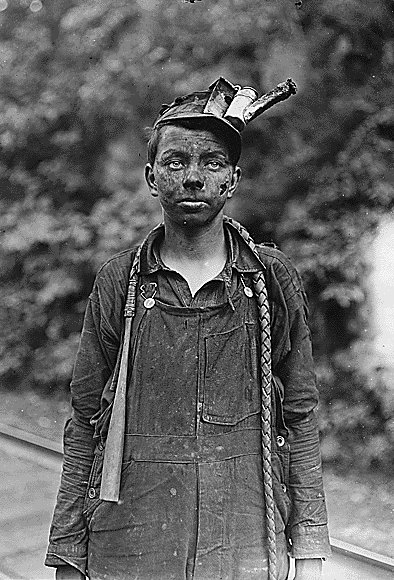
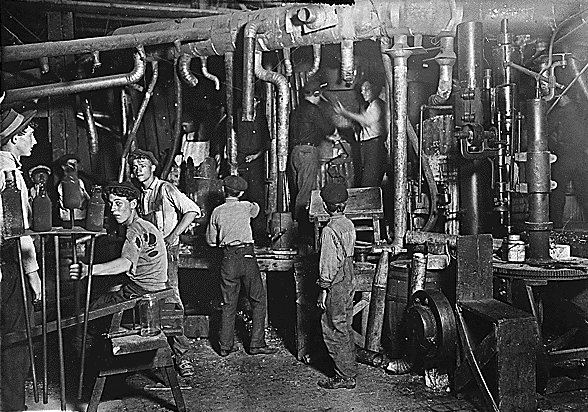
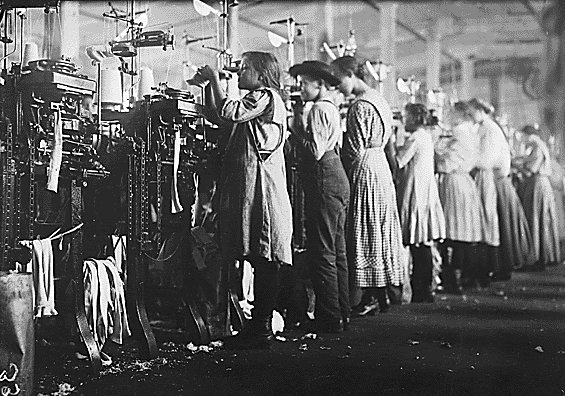
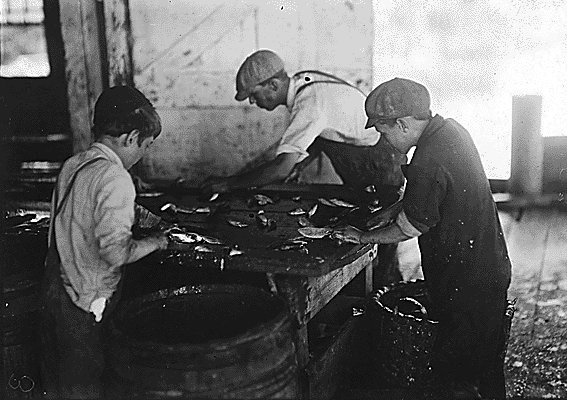
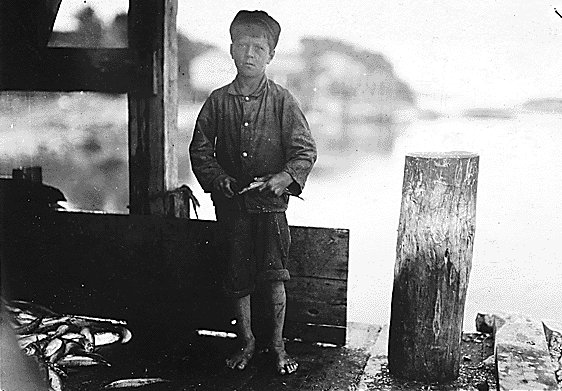
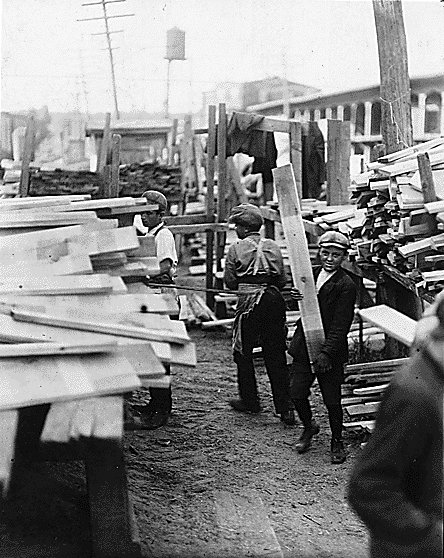
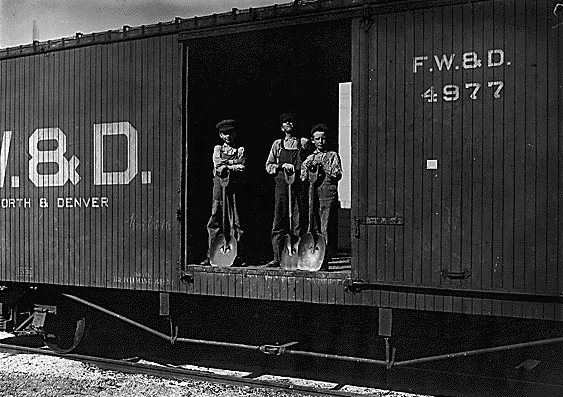
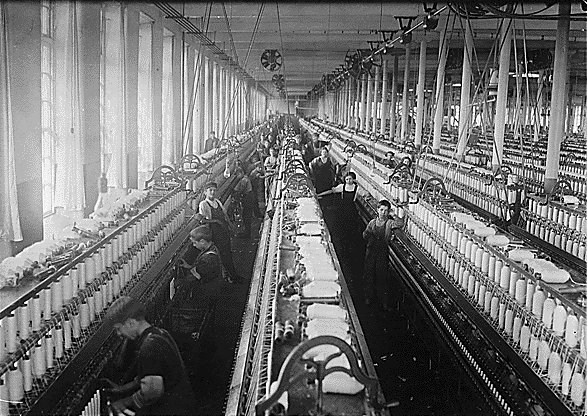
Below are some amazing photographs of child laborers from The History Place (thanks to Missives From Marx for pointing me to them).

The Spinning Factory:
view

empty

whitnel

full

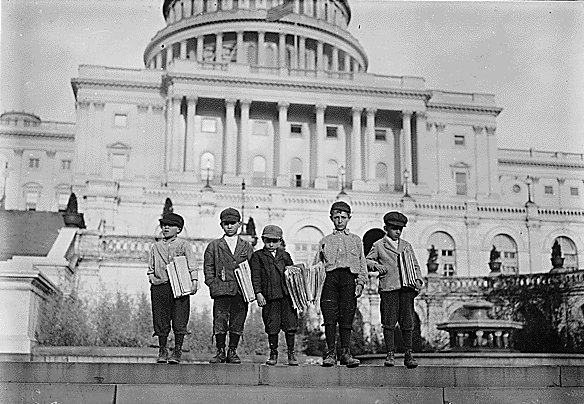
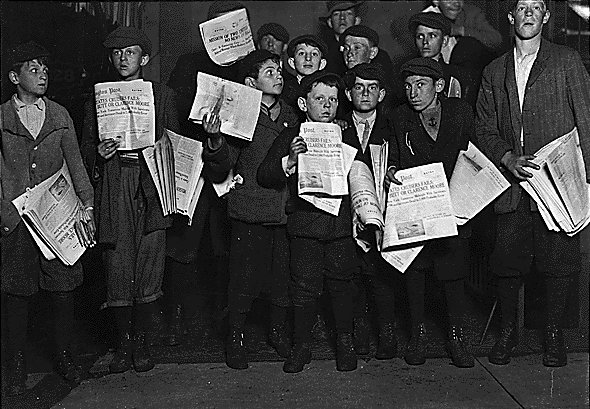
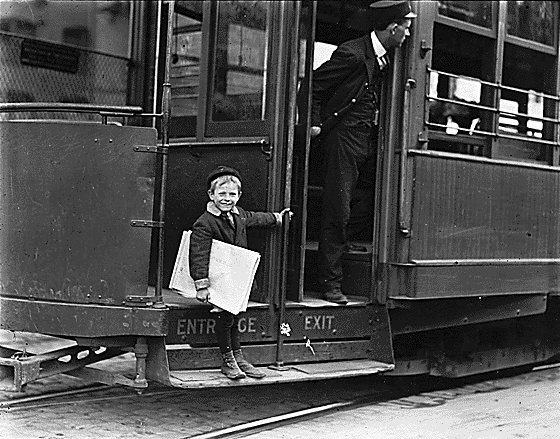
Newsies:

n1

n2

n3

n4

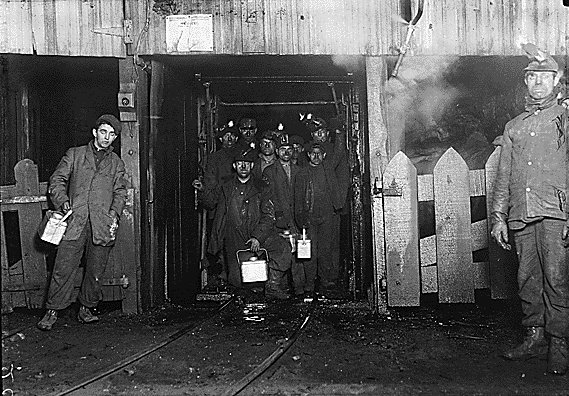
Miners:

c1

c2

c3

Factory Workers:

f1

f2

f3

f4

Seafood Workers:

d1

d2

d3

d4

Fruit Pickers:
q1

q2

Misc.:

z1

z2

z3

Lisa Wade, PhD is an Associate Professor at Tulane University. She is the author of American Hookup, a book about college sexual culture; a textbook about gender; and a forthcoming introductory text: Terrible Magnificent Sociology. You can follow her on Twitter and Instagram.

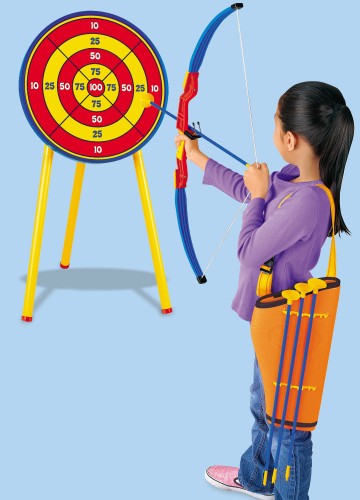
Josh W. emailed to let us know that he was recently browing the website Toys to Grow On and was surprised when he noticed that girls were used to model a number of toys that we’d normally see with boys:

371_l

387_l

461_l

903_l

The degree to which toys are gendered really struck me when I realized how surprising these images are–that a girl dressed up as an FBI agent, or using tools, was something to be excited about because it’s so unusual.

Interestingly, I looked through the rest of the site and didn’t find an equivalent effort to show boys playing with stereotypically feminine toys. In fact, boys were quite underrepresented on the site–there are many more girls than boys. If I had to just hazard a guess, I’d think this has something to do with the fact that we tend to imagine gender equality as a world in which women have access to the same things men have–jobs, equivalent pay, and so on. We worry that girls are being harmed if they’re told girls aren’t good at math, never see images of women as doctors, and so on. Most people are less likely to think boys are being treated unfairly by not seeing images of boys playing with dolls or an Easy Bake oven, so the absence of those types of images don’t get as much criticism or attention.

UPDATE: Commenter Alyssa nicely summarizes why see this difference:

Unfortunately, we don’t see boys as being treated as unfairly when they don’t get to do “girl things” because girl things are considered inferior. It seems natural to people that girls and women want to do boy/men things because we see these activities as worth while. But a boy or man doing girl/women things is seen as somehow deviant because they are seen as wasting their time doing something useless.
But the truth is things that are usually labeled as feminine, are worthwhile. Boys certainly are disadvantaged when they are discouraged to learn how to take care of themselves. They are disadvantaged when they are discouraged learn empathy and social skills. Our view of all things feminine are inferior hurts both boys and girls.


Nora H. sent in this excellent example of how advertisers gender chores. The ad goes through how generations and generations of women have done laundry.

For more examples, see these: one, two, three, four, five, six, seven, eight, nine, ten, eleven, twelve, thirteen, fourteen,.

See also our posts about how funny it is when men do housework: one, two, here, and three.

Lisa Wade, PhD is an Associate Professor at Tulane University. She is the author of American Hookup, a book about college sexual culture; a textbook about gender; and a forthcoming introductory text: Terrible Magnificent Sociology. You can follow her on Twitter and Instagram.

NEWS:

During November we divvied up the massive gender tag into 18 sub-categories to make it easier to search for specific types of gender posts.  For example, you can now browse all of our posts about masculinity by going to the “gender: masculinity” tag.  We hope this makes it easier to navigate the site.

In other words, we worked our asses off for you over Thanksgiving break, so go browse a gender tag right now!

And, your monthly reminder: we’re on Facebook and Twitter, if that floats your boat.

FROM THE ARCHIVES:

Last November we posted an analysis of the negative reactions to female body builders’ bodies.  It reveals the entitlement that many feel to be aesthetically pleased by women’s appearance.

And in November ’07 we featured an Orangina ad that Gwen says is “possibly the weirdest freakiest ad I have ever seen in my 34 years on this planet.” As reader Gis said in the comments:

AH! AH! AH! AH! WHAT?!?!  AH!  I can’t unsee this!

So, yeah, uh, check that out.  You might want to watch it in high quality on a full screen.  I’m just sayin’.

NEWLY ENRICHED POSTS (Look for what’s NEW! Nov ’09):

Remember that 1981 ad for Legos that everyone LOVED?  I found three more examples of vintage ads that seem rather devoid of gender differentiation.

Just last month we added material to our post on racial and ethnic themed college parties.  This month, we get to do it again.  This time courtesy of a University of Delaware party at which white people dressed up as Mexicans (triggering and NSFW).

We added another example to our collection of vintage illustrations of the argument that black people are closely related to apes and monkeys.

Erin M. sent us an example of a sex toy for men being described as “shameful.” We added it to our post discussing how the use of sex toys by women and the use of sex toys by men are evaluated very differently (NSFW).

Tim McC. sent in a link to a Volvo concept car aimed specifically at women.  We added it to our post on the Dodge La Femme.  It’s really interesting to compare how cars were marketed to women in the 1950s and today.

Kristyn G. sent in another commercial where the idea that women are liberated by choice is used to market a product.  This time, it’s an Indian cable company marketing itself by comparing itself to non-arranged marriage.

Jackie S. sent us a link to a satirical Onion news report illustrating how feminists might protest PETA.  We added it an old post with an image of a PETA protest.

Dmitriy T.M. sent us another example of services being marketed as “wife” or “husband” services.

Jessica S. sent us a comedic skit for the Shii, a girls’ version of the Wii.  We added it to our post on otherwise-gender-neutral-games gendered female.

We added a fourth commercial, this one for Target, to our post featuring commercials that depict women as just plain insane.

We added another vintage ad featuring the word “gay” as it used to be used.

Do you feel you have a truly special relationship with your cleaning products? If so, check out the Lysol commercial we added to our post about Sarah Haskins’s “Target: Women” segment on household cleaners marketed as women’s special, special friend.

We added another example of U.S.-based advertising that removes people of color when moved overseas.  This time the product is the movie Couples Retreat.

We added a 1987 ad for Contra to one of our collections of sexism in the technology world.

Last month we posted about the Ralph Lauren ad featuring a woman photoshopped to be incredibly thin. We updated the post with a video about the model in the ad, who has now been fired for not fitting into some clothing.

This one I put out there for debate.

I don’t get a chance to watch the many dance shows out there, but I’ve seen a bit and I have a question for those of you who’ve been watching them more carefully.

The video below is of Sébastien Soldevila and Mimi Bonnavaud dancing at the Cirque de Demain festival (thanks for the info, netrus).  In the dance, a woman is torn between rejecting a man and being powerfully drawn to him.  I’ve noticed that this theme crops up frequently in even just the little bit of dance programming I’ve watched. In this video, you get the idea in just the first few seconds, though you might want to watch the rest because it’s awesome. (Video title, btw, is not mine.)

I can see why choreographers return to this theme again and again. I think this is a common human experience (lord knows I’ve been there) and great fodder for art.

My question is: Is this theme gendered? That is, is it usually the woman who is desperately trying to escape the man and her attraction to him, and not vice versa?

I ask because, if it is, what we’re really seeing is not just a drama about a conflict between attraction and repulsion, we’re seeing a drama in which men are allowed to be deaf to women’s insistence that they want to be left alone, released. Really, deep down, this narrative tells us, she wants him. Therefore, it’s perfectly ok for him to ignore her “no.” If he just follows her for long enough, grabs her to make her look at him one more time, forces her up against his body enough, then she will relent.

From a different perspective, this is a man who is stalking and harassing her, but the narrative (which almost always ends in her giving in to him/her desire) suggests that this is perfectly reasonable, even passionate, loving, devoted behavior.

Do we sometimes (or ever) see women doing the stalking and harassing in these choreographies? Or is it usually the man?

Also in “no” doesn’t mean “no”: caveman courtship, it’s not “no” if she’s a zombie, you may say “no,” but your perfume says “yes,” and some pretty grotesque t-shirts.

—————————

Lisa Wade is a professor of sociology at Occidental College. You can follow her on Twitter and Facebook.

Lisa Wade, PhD is an Associate Professor at Tulane University. She is the author of American Hookup, a book about college sexual culture; a textbook about gender; and a forthcoming introductory text: Terrible Magnificent Sociology. You can follow her on Twitter and Instagram.

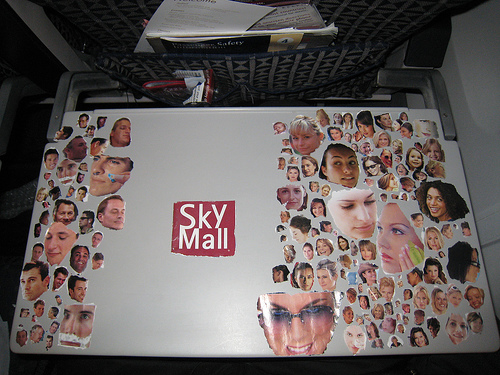
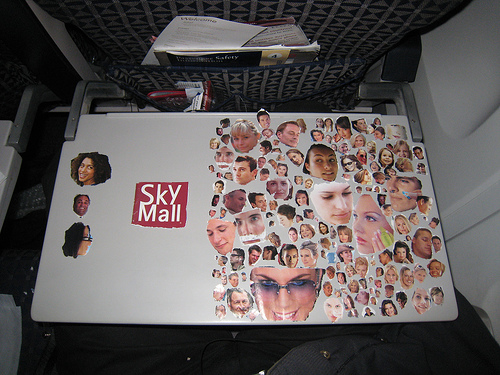
Perhaps bored, certainly creative, fi5e at ni9e tore all of the faces out of the SkyMall magazine and arranged them on her tray by race and gender.

Here’s what it looks like by gender:377812146_917369cd4a

By race:377812149_90b026668c

So women outnumbered men significantly and the magazine included almost exclusively white (appearing) people.

She also arranged them by size and hair color, if you want to check it out.

Thanks to Macon D for pointing to this post in a comments thread!

—————————

Lisa Wade is a professor of sociology at Occidental College. You can follow her on Twitter and Facebook.

When we consider how well we are doing financially, we must choose a referent.  That is, when we ask the question (“How well am I doing?”), we are also, simultaneously choosing a comparison group (e.g., people in our profession, people of our same sex, people our age, etc).

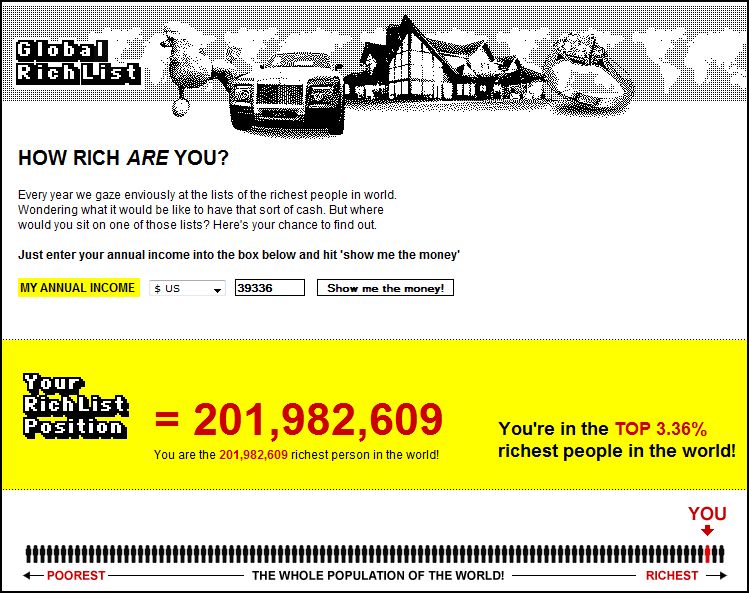
Most of us probably also restrict our considerations to people in the same country.  We usually don’t think about how well we are doing compared to all human beings in the world, but this website allows us to do just that.  If you put in your yearly income, it will show you where you rank on a global scale (Yen, Canadian dollars, U.S. dollars, Euros, and Pounds only, unfortunately).

I put in the median yearly income for a full time worker in the U.S. and this was the calculation:

Capture

This, of course, doesn’t consider the cost of living differences, but it still offers an interesting perspective.

—————————

Lisa Wade is a professor of sociology at Occidental College. You can follow her on Twitter and Facebook.

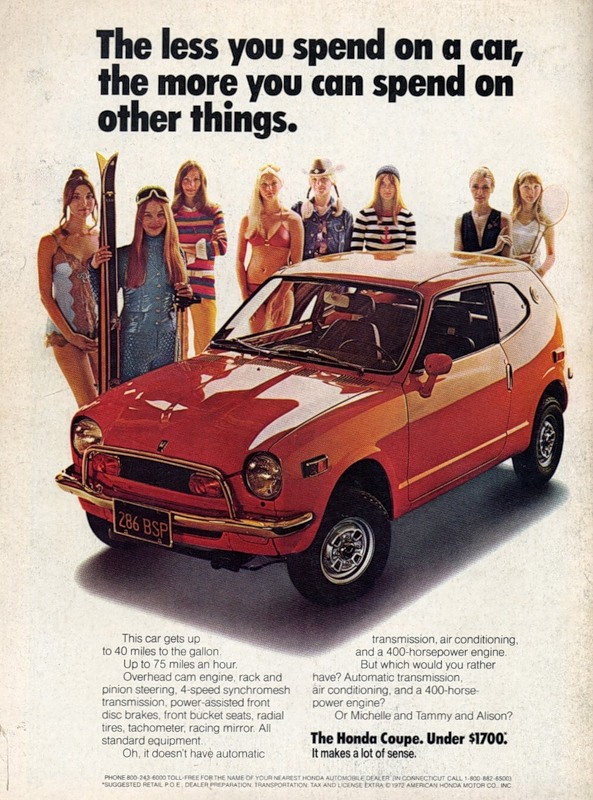
At first I thought that this vintage Honda ad was aimed at women who wanted to do lots of “things.” And then I realized, no, despite the fact that all the women look alike, the ad is actually aimed at men who get to have “things,” like “Michelle and Tammy and Alison.”

0_2eead_e886e175_XL

Selected text:

But what would you rather have? Automatic transmission, air conditioning, and a 400-horse-power engine?

Or Michelle and Tammy and Alison?

More examples of women being conflated with things here, here, here, here, here, here, and here.

Found at Vintage Ads.

—————————

Lisa Wade is a professor of sociology at Occidental College. You can follow her on Twitter and Facebook.