Search results for The

The MTV series, Jersey Shore, has been accused of ethnic bias and Denny and Lynda Lou suggested we discuss it.  The reality show features eight 20-something Italian Americans in a Real World-type situation (all living together in the same house on the beach) and is currently most famous for the scene where Snooki gets socked, hard, in the face:

js

It features, as does nearly every reality show involving 20-somethings, a lot of ridiculous, immature behavior, a celebration of party-culture and anti-intellectualism, and capitulation to the pornification of American culture.

The show is accused of being discriminatory not because it involves all those things, but because it specifically involves Italian Americans, who vocally embrace the term “Guido,” doing all of those things.

So what exactly is the problem with Jersey Shore?

The problem is that, because of negative stereotypes about Italian Americans, the bad behavior of the show’s stars will be attributed, by some, to their Italian American-ness.  If the show simply featured young people, who didn’t identify with a particular ethnic or racial group, the bad behavior might be attributed to youth or attention-starved-reality-show-celebrities.  But when we mark a group as Other (in this case, specifically Italian American), their behavior suddenly reflects on the whole group.

This is never true for the unmarked, neutral category whose identity is so normalized and mainstreamed as to be invisible.  In these cases, bad behavior is individualized (“that person is immoral or crazy” instead of “those people are immoral or crazy”).

So part of what makes Jersey Shore problematic is the context.  Because Italian Americans are Othered in the U.S., a show featuring them will inevitably be used by some to confirm negative stereotypes of the group.  But, of course, MTV is facilitating this by putting together a show that features Italian Americans exclusively, encouraging us to notice their Italian Americanness specifically and, therefore, making their ethnicity salient when we react with horror and disgust at what we see.

Lisa Wade, PhD is an Associate Professor at Tulane University. She is the author of American Hookup, a book about college sexual culture; a textbook about gender; and a forthcoming introductory text: Terrible Magnificent Sociology. You can follow her on Twitter and Instagram.
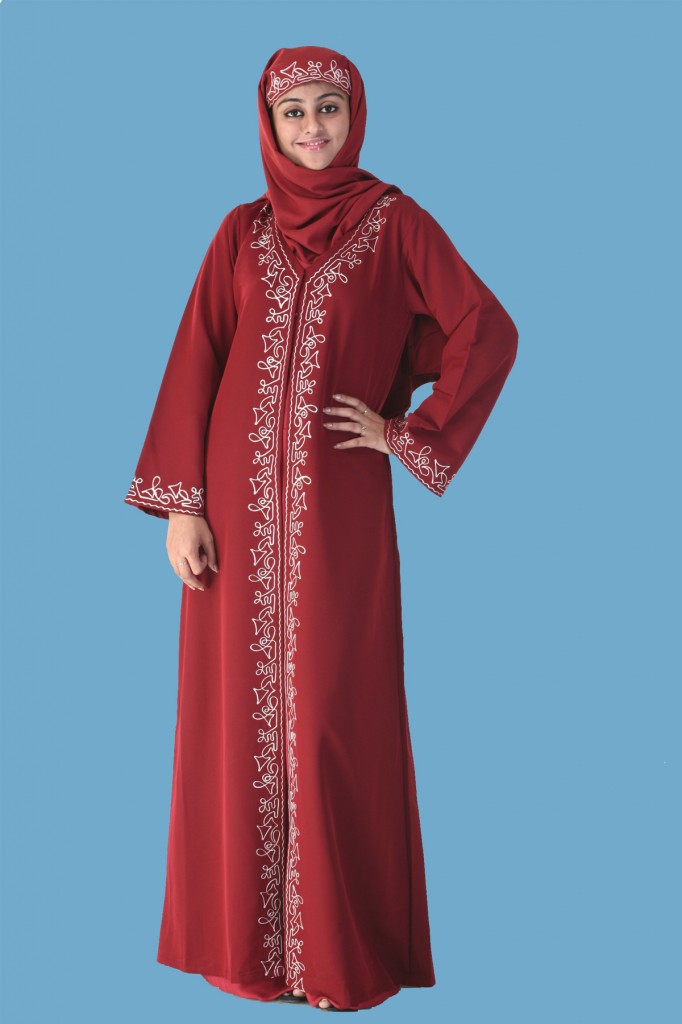
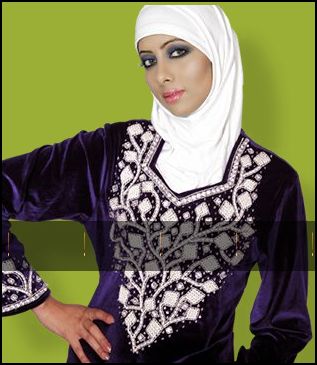
I always enjoy having my preconceptions challenged and I had a nice moment while visiting the website of a U.S. company, East Essence, that sells clothes for Muslim women.

They offered some of what I expected, such as traditional clothing and hijabs:

aj50

Capture11

And also some things I didn’t expect:

Picture1

st3

The fact that the website includes traditional and modest clothing, and also models wearing tight jeans and revealing their midriffs, challenges the notion that Muslim women always dress according to strict rules, as well as the ideas that all Muslim women dress alike or that any given Muslim women dresses the same from day to day.

For more on Muslim fashion, see our posts here, here, here, and here.

Lisa Wade, PhD is an Associate Professor at Tulane University. She is the author of American Hookup, a book about college sexual culture; a textbook about gender; and a forthcoming introductory text: Terrible Magnificent Sociology. You can follow her on Twitter and Instagram.
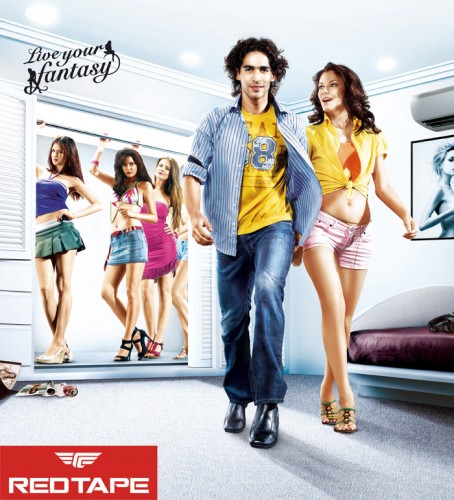
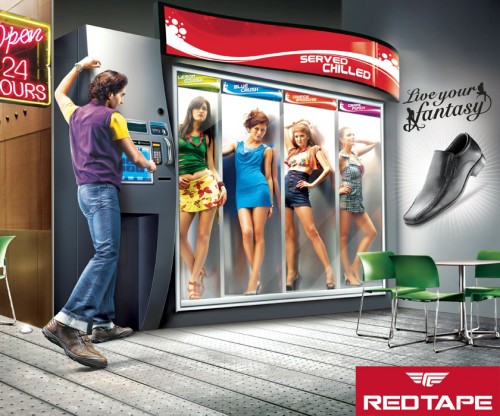
Rhea D. sent us a link to an ad campaign currently running in India for the shoe company Redtape. In the ads, a guy gets to select which woman he wants from a vending machine or his closet:

VendingMain

WardrobeMain

I think the fantasy is not just to have a specific hot chick, but to be able to pick out which one you want and get her immediately. It’s the ultimate form of objectification–women as simply something to pick from and purchase at your leisure. Rhea points out that everyone in the ad is quite light skinned, which is widely associated with beauty and success in India.

See our posts on skin lightening cream for men, skin lighteners as liberation, skin lightening as modernity, and hot girls make your Ecko jeans.

6a00d83451ccbc69e200e54f1072bf8833-800wi

Picture1

Both (here and here) at Found in Mom’s Basement.

Lisa Wade, PhD is an Associate Professor at Tulane University. She is the author of American Hookup, a book about college sexual culture; a textbook about gender; and a forthcoming introductory text: Terrible Magnificent Sociology. You can follow her on Twitter and Instagram.

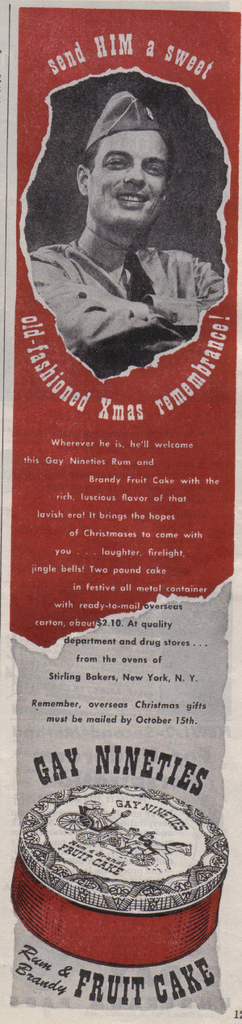
This vintage ad reminds us of a time when “gay” meant “happy” and fruit cake wasn’t a joke:

483083461_e39b58b4ef_o

See more gay ads here!

From Vintage Ads.

Lisa Wade, PhD is an Associate Professor at Tulane University. She is the author of American Hookup, a book about college sexual culture; a textbook about gender; and a forthcoming introductory text: Terrible Magnificent Sociology. You can follow her on Twitter and Instagram.
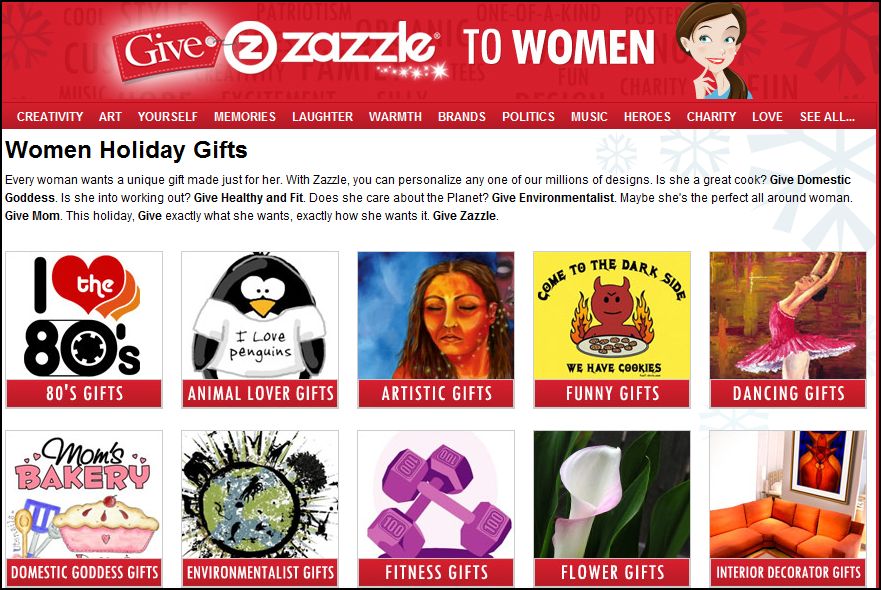
Consider this a catch-all post showing the many ways in which marketers use the excuse of gift-giving to reinforce gender stereotypes.

Exhibit One: Katrin sent along this example from Zazzle.  She writes:

The gift guide section is great… Men fish, hunt, are tech nerds, BBQ kings, and are in the military.  And, if you really have to, there is a “Metro Man gift” section as well. Women are animal lovers, spiritual, environmentalist, interior designers, teachers, brides, sorority members AND they “support the troops” as military wives. Of course THEY are NOT soldiers. Just like men cannot be married to and much less, support, a woman in the military.  The only thing men and women have in common?  The 80s.

zmen1

zmen2

zwomen1

zwomen2

Exhibit Two: Keely W. sent along this delightful gift suggestion. Moms, need a gift that costs just a little but seriously pays off? Buy your daughter these eyebrow tweezers! They’ll make for hours of wonderful mother-daughter time! Here’s to the intergenerational transfer of patriarchal beauty standards!

Capture

Exhibit Three: Maggie G. sent in these screen shots from the Lego website.  First, notice that, just as with the dinosaur website we posted about recently, legos are assumed to be for boys, unless they are specifically for girls.  The girls category in the bottom row makes all the other categories, by default, for boys:

Snapshot_2009-11-21_17-12-59

If you click on girls, you get two options, Belville and Preschool:

girls

Here’s what the Belville sets look like (all pink with horsies, puppies, and fairies!):

Snapshot_2009-11-21_17-13-44

Legos aimed at younger kids are, I guess, gender-neutral… which is consistent with the increasingly pressure to gender-differentiate as kids get older:

Snapshot_2009-11-21_17-14-21

Got any more gendered x-mas guides?  Send them in and I’ll start a post for next year.

See also this post on gendered gift-giving guides.

Lisa Wade, PhD is an Associate Professor at Tulane University. She is the author of American Hookup, a book about college sexual culture; a textbook about gender; and a forthcoming introductory text: Terrible Magnificent Sociology. You can follow her on Twitter and Instagram.
Reader Jennifer E.B. alerted us to the Dutch tradition of Zwarte Piet, “Black Pete.”  Jennifer writes:

I grew up in a town that was overwhelmingly Dutch.  Most people in town had Dutch anscestry (though not my family), there was a Dutch festival each spring, and before Christmas there was a Sinterklaas parade (Dutch Santa Claus).  When we were there for Christmas this year both of my daughters received a chocolate in the shape of their initial in their stockings from my sister.  I had let them have some of the chocolate several times before the background picture on the box caught my eye.

What Jennifer saw was what looked like a character in blackface (product found here):

delft_2034_1559970

Jennifer did some digging and she discovered that Zwarte Piet is a traditional Christmas Sinterklaas character in the Netherlands.

Lulu Helder at the Museum of Racist Memorobilia explains:

The role is usually played by a white woman or man who wears black or brown grease paint on their faces (Saint Nicholas is always performed by a man). He or she wears large golden earrings, a curly wig and red lipstick. Right now they wear brown grease paint more often because “the blackness frightens children”.

Once the transformation is completed, a change in voice and behaviour usually follow. He or she will speak improper Dutch with a low voice and a Surinamese accent.

Below the jump are some pictures (not safe for work):

more...

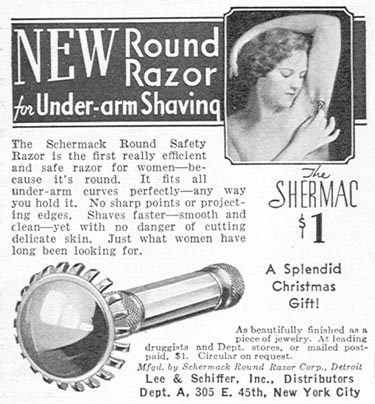
Evidence that they’ve been trying to sell us high-technology razors since at least the 1930s (source):

razorgood12011934205

Text:

The Schermack Round Safety Razor is the first really efficient and safe razor for women–because it’s round.  It fits all under-arm curves perfectly–any way you hold it. No sharp points or porjecting edges.  Shaves faster–smooth and clean–yet with no danger of cutting delicate skin.  Just what women have long been looking for.

A Splendid Christmas Gift!

As beautifully finished as a piece of jewelry…

A splendid Christmas gift, indeed.

Lisa Wade, PhD is an Associate Professor at Tulane University. She is the author of American Hookup, a book about college sexual culture; a textbook about gender; and a forthcoming introductory text: Terrible Magnificent Sociology. You can follow her on Twitter and Instagram.