Search results for The

Dmitriy T.M. sent in this Dodge ad that associates cars with liberty and, by extension, America itself:

There are a few problems with this conflation of Dodge with patriotism and Americanness. For one, Dmitriy says,

Washington ( as the general) would’ve never been leading the charge. The commanders always stayed back ( preferably on the high ground) so that they could observe the progress and give commands ( and get away as quickly as possible in case of a loss).

So the image of the brave leader charging ahead of his troops into battle is misleading.

In addition, many Dodge vehicles aren’t made in the U.S. So Dodge wants us to associate its brand with the U.S. in a symbolic way that makes irrelevant, and invisible, where the car is made. What’s important is that Dodge, founded in the U.S., builds cars that represent a masculinized, tough version of “freedom,” and of course, freedom is uniquely American. It reminds me a lot of the symbolic identification Pabst Blue Ribbon drinkers often feel with blue-collar workers, an identification that has little to do with the actual production process.
Cross-posted at Jezebel.

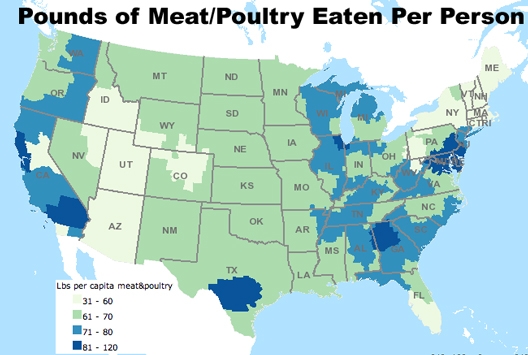
James B., a student at Rensselaer Polytechnic Institute, let us know about a series of maps at Daily Yonder that show consumption of various food and drinks across the U.S. Per capita meat consumption:

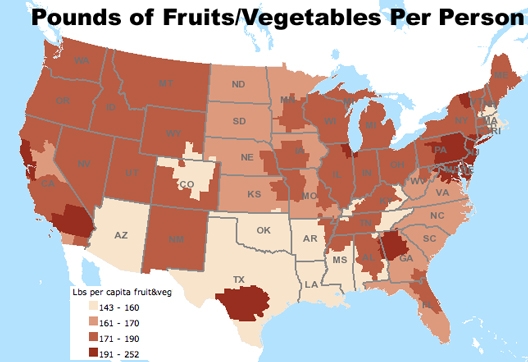
Fruits and vegetables:

You might expect those two maps to be near mirror images — that in places where people eat more fruits and vegetables, they’re eating less meat, and vice versa. But notice that in fact, many places stand out as having particularly high consumption of both categories of food — for instance, the big dark splotches in Texas and Georgia show up on both maps, as does a large region in Pennsylvania, New Jersey, Maryland, and northern Virginia. Northern Colorado, and all of Arizona, on the other hand, rank in the lowest category for both meat and fruits/veggies. So for our Coloradan and Arizonan readers: what are y’all eating?

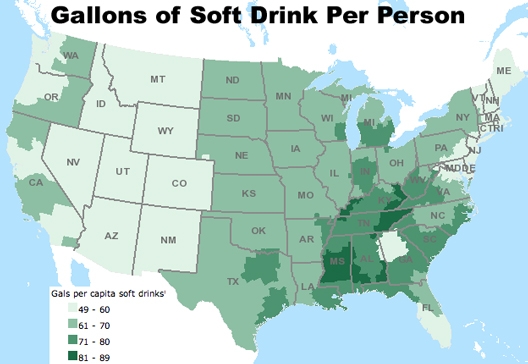
Here’s the map for soda:

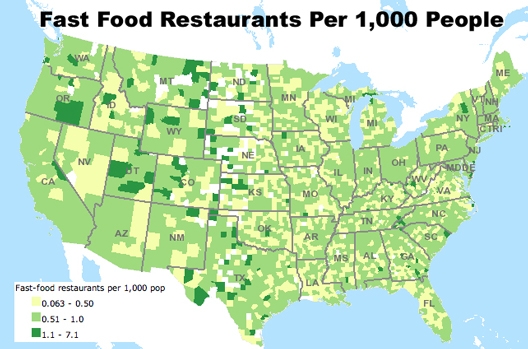
Concentration of fast food restaurants:

For the record, “fast-food restaurant” is defined according to the USDA’s classification:

Limited-service restaurants include establishments primarily engaged in providing food services (except snack and nonalcoholic beverage bars) where patrons generally order or select items and pay before eating. Food and drink may be consumed on premises, taken out, or delivered to the customer’s location. Some establishments in this industry may provide these food services in combination with alcoholic beverage sale.

And how much are we spending in those fast-food establishments?

The maps are based on data from the USDA Economic Research Service’s interactive food atlas, which provides a wealth of information on food availability, where Americans buy their food, physical activity levels, health indicators, and so on.

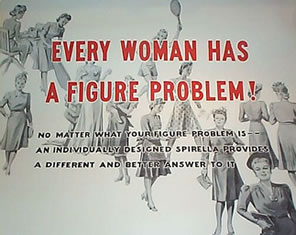
Anna J., a student at Rensselaer Polytechnic Institute, sent in this vintage ad for Spirella girdles that provides a good reminder of how women are repeatedly told that our bodies are never, ever acceptable as they are, but are always in need of “improvement” through the use of products (found at The Great Fitness Experiment):

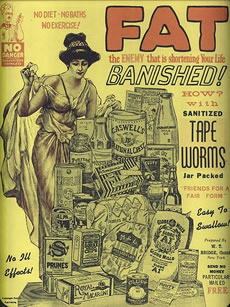
But hey, if you don’t feel like wearing a girdle, perhaps some tapeworms are your solution:

UPDATE: Reader Syd says the tapeworm ad is a hoax, though other readers disagree, and the practice itself definitely occurred. I don’t know how to find out, but since there’s at least some question about it, I’d take it with caution. However, commenter Angela pointed out that Tyra Banks recently had a story on tapeworms on her show:

As Anna points out, “It’s really interesting how ads have changed over time, but the expectation of culture that women be dieting has remained the same.”  Certainly more people wouldn’t tell women to eat a tapeworm — sanitized or not — these days, but plenty of questionable products out there still promise weight loss with “no diet” and “no exercise,” and my bet is you could pick up any women’s magazine currently on the shelf and get a range of advice on how to make sure you lose any weight you might have gained over the holiday season.

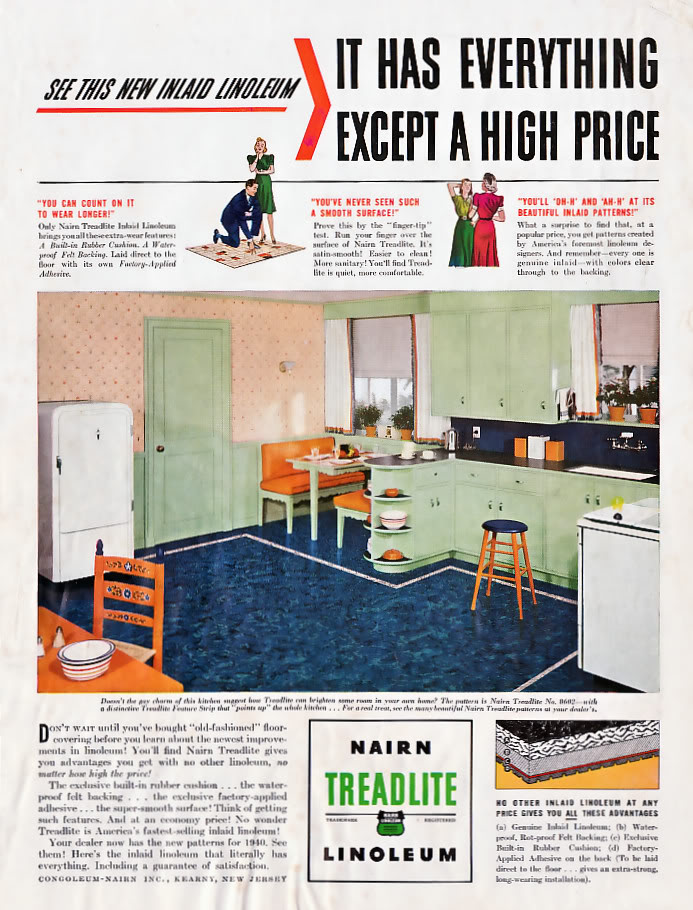
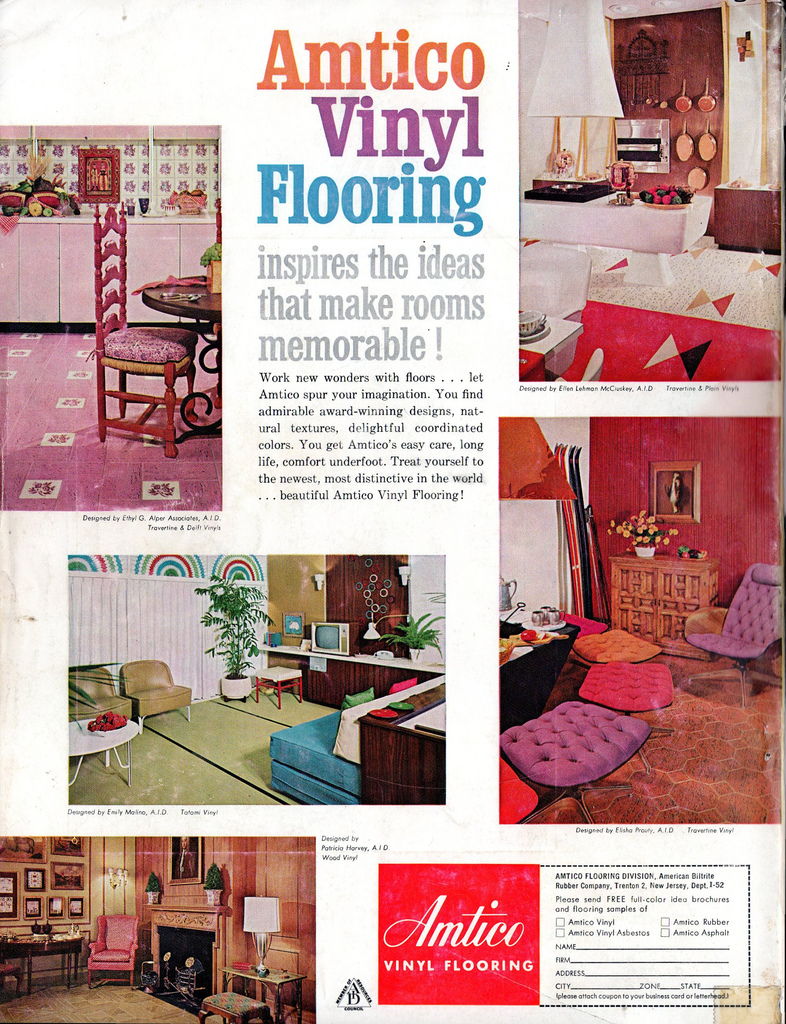
I love how these two vintage ads reveal that colors are experienced differently across time and cultures.  Both ads feature color schemes that, today, seem outrageous, even hideous.  Yet, at the time, they must have been cutting edge and quite fashionable.

Both images from Vintage Ads (here and here).

Lisa Wade, PhD is an Associate Professor at Tulane University. She is the author of American Hookup, a book about college sexual culture; a textbook about gender; and a forthcoming introductory text: Terrible Magnificent Sociology. You can follow her on Twitter and Instagram.

Wakeboarding Santa in Hamburg, Germany (courtesy of The Big Picture):

Christmas Across Cultures

On Discourse:

Racializing Christmas

Gift Guides and the Social Construction of Gender

Sexifiying Christmas

Christmas Marketing

Lisa Wade, PhD is an Associate Professor at Tulane University. She is the author of American Hookup, a book about college sexual culture; a textbook about gender; and a forthcoming introductory text: Terrible Magnificent Sociology. You can follow her on Twitter and Instagram.

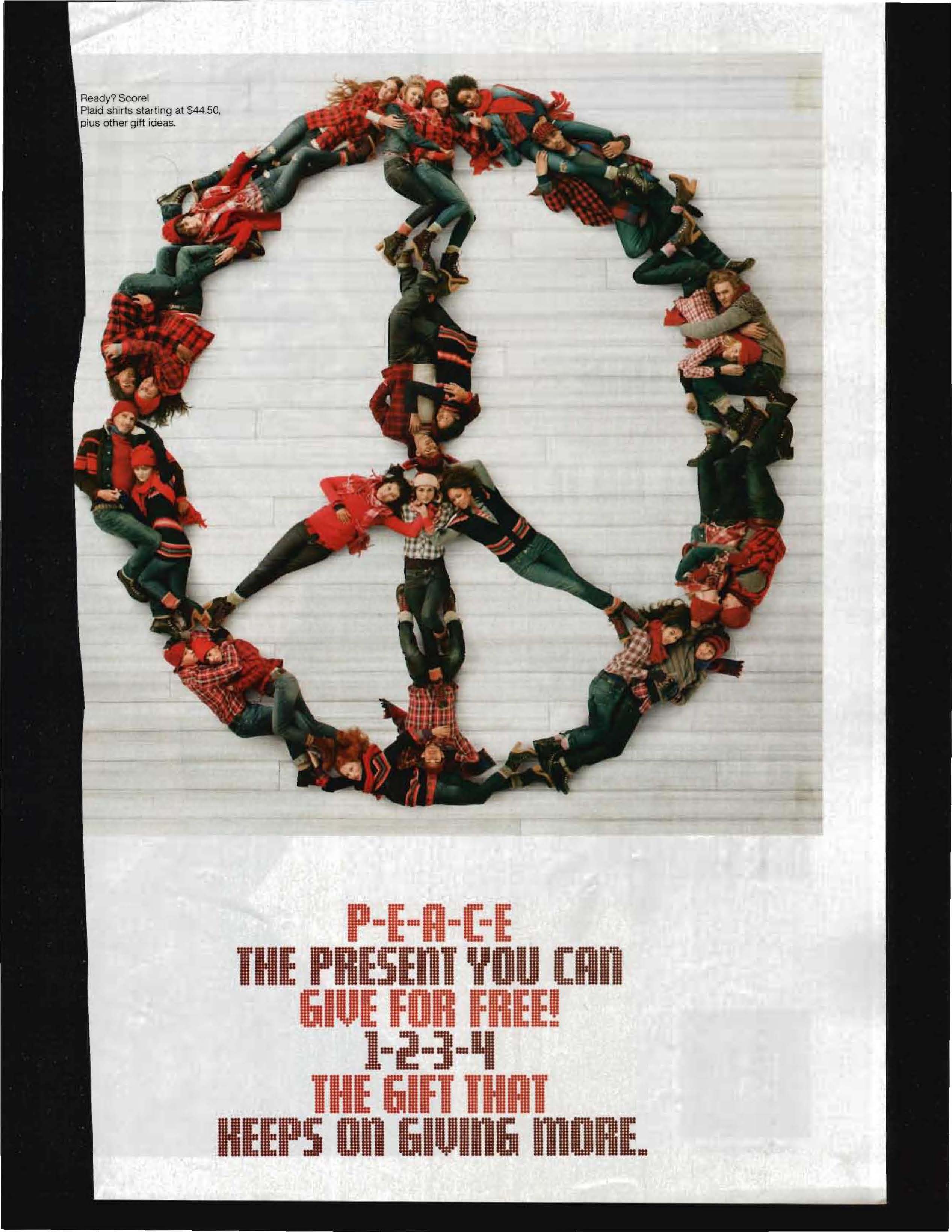
I saw this ad last year but forgot to post it. What I find interesting is the way that “peace” has been both stripped of any real meaning and presented as something easy to achieve:

So while a plaid shirt might cost you $44.50, peace is free. This makes sense only if “peace” has been turned into a completely apolitical feel-good abstraction, as opposed to an end result of social and political processes that require effort and may or may not be particularly cheap. But “peace” is, here, entirely empty of political meaning, so much so that the company could use the word in an ad without worrying that they would be accused of making a political statement about, say, either of the two wars the U.S. is currently engaged in, or the Israel/Palestine conflict, or any number of other situations that a politicized meaning of peace might bring to mind.

Five readers sent along gendered gift guides.  These are interesting only in their ubiquitousness.  Let us begin:

What do women want? According to an email from Chapters.Indigo, sent in by Rajan P., they want candy, wine, fictional romance and, um, blankets (for coziness?):


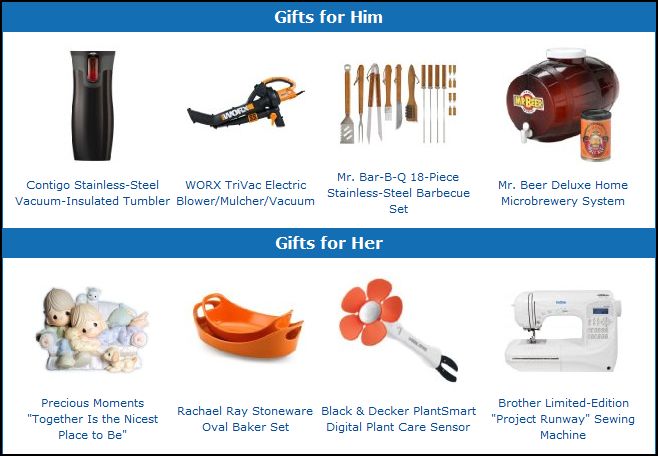
Liz from Minneapolis got an email from Amazon.com with ideas “For Him” and “For Her.” Liz writes:

The gift ideas for him are manly things like a coffee mug (but described as a vacuum sealed tumbler) and barbeque tools, while gifts for her include a hideous Precious Moments figurine and a super handy plant care sensor.

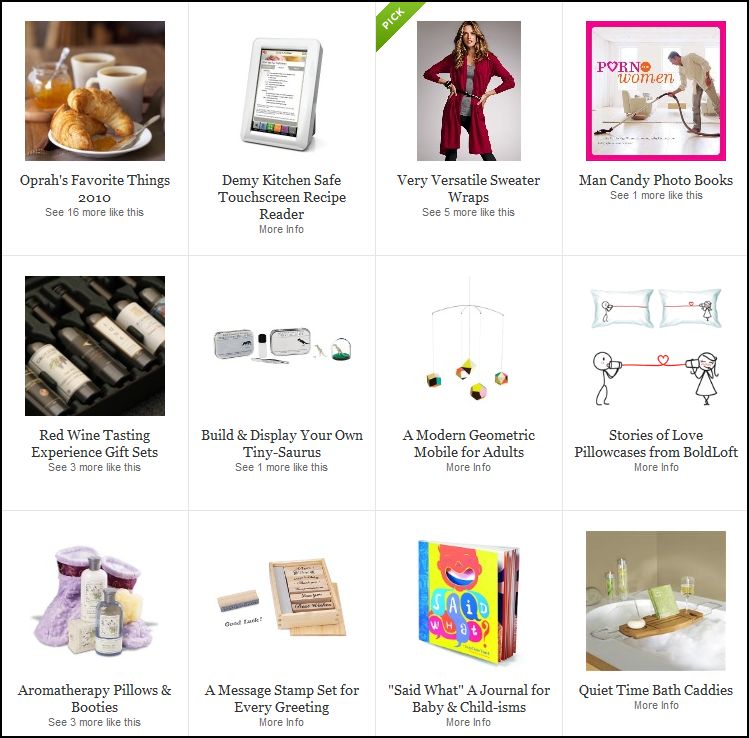
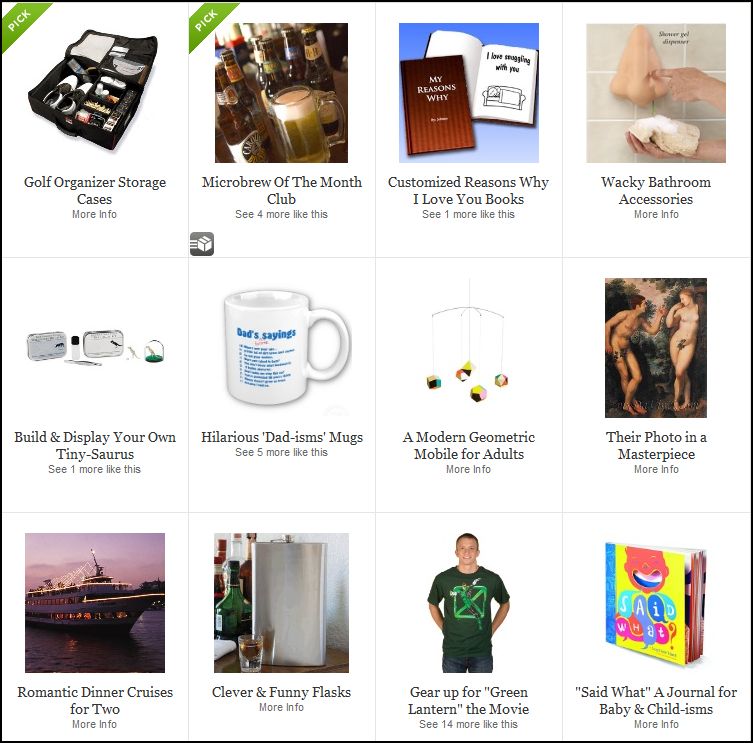
Eileen B. sent a link to the gendered gift guide at gifts.com.  Apparently women want wine, love, coziness (sweaters, hot baths, and aromatherapy), cooking stuff, anything-Oprah, and men who clean (are we seeing a trend yet?):

While men want beer, golf-related items, and a giant plastic nose that snorts out your shower gel:

Both want grown-up mobiles, tiny-sauruses, and a baby book, so there’s that.

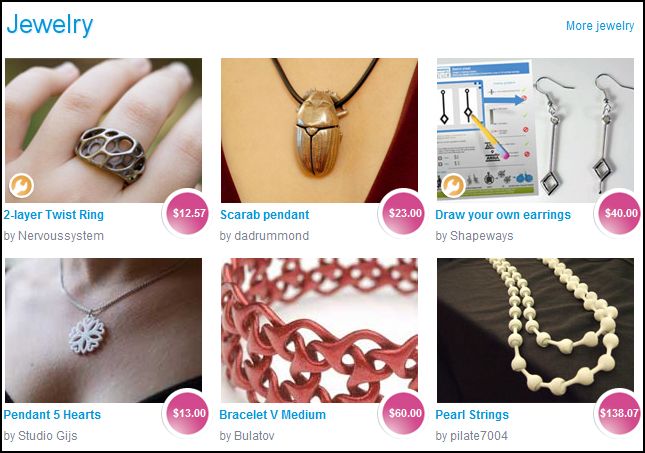
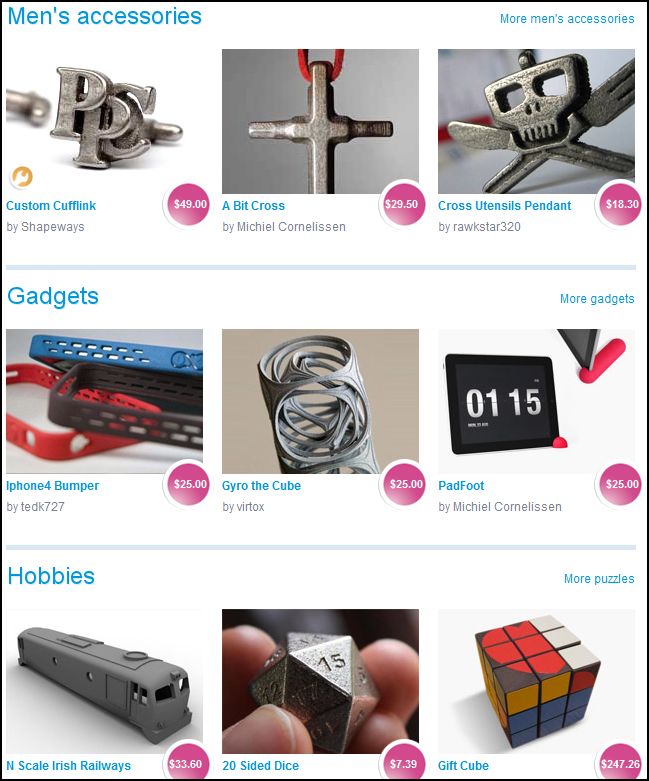
Another reader, “a reader,” sent in links to the site Shapeways which thinks women want decorations (for their bodies and their homes), but figures men want stuff to do (“gadgets” and “hobbies,” with a few hard core accessories thrown in):

Had enough?  There’s more!

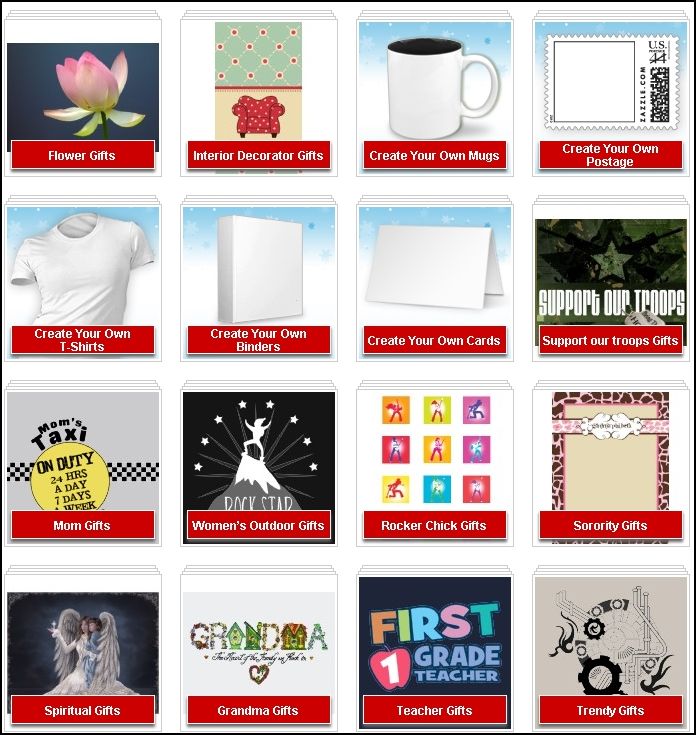
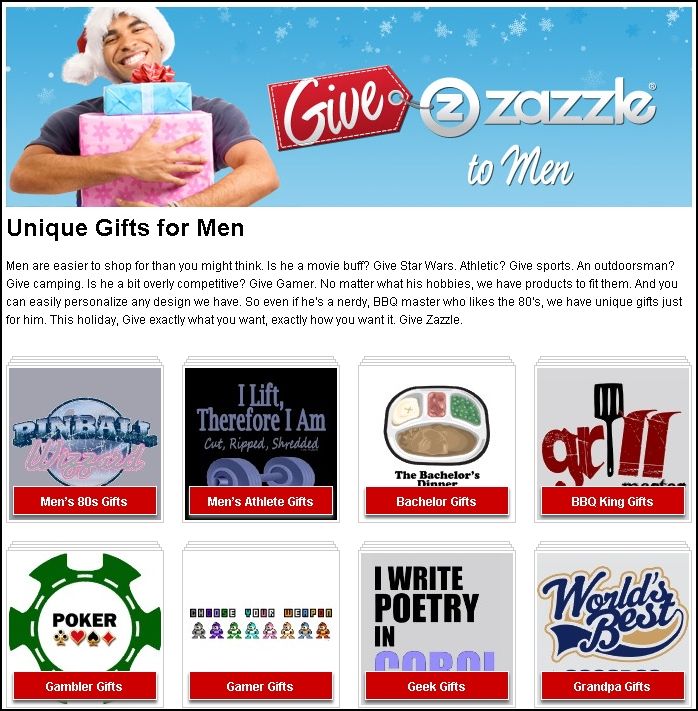
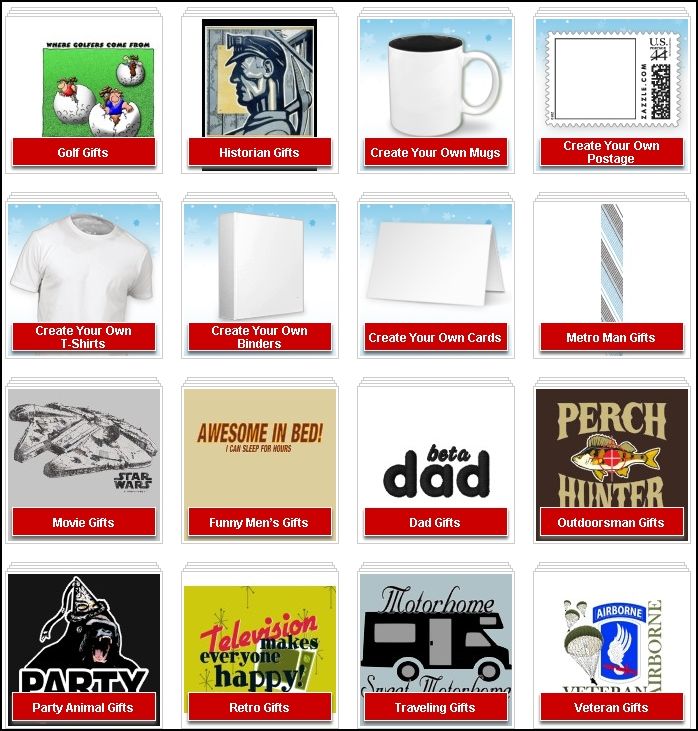
Apocalyptopia sent screen shots of the gendered gift guide from Zazzle.  She writes:

We have the old, tired “only guys like History and video games” trope. I also noticed that there’s an “Animal Lovers” category under Women, but the only similar category to be found under Men is “Outdoorsman” (if you don’t count Party Animal) which deals more with killing animals than loving them. Chicks are just so sentimental, right? (Gag!) I also can’t understand why “Traveling” is found under Men but not Women.

The thing that disturbed me the most about this, though, was that for Men they have a “Veterans” category while for Women they have a “Support Our Troops” category. As the daughter of a retired female veteran of two wars, I was a bit offended. I’m sure my mother would be offended as well that they think watching her friends get blown up still doesn’t make her qualify as a real veteran and that she’s relegated to simply supporting those who are (i.e.: men).

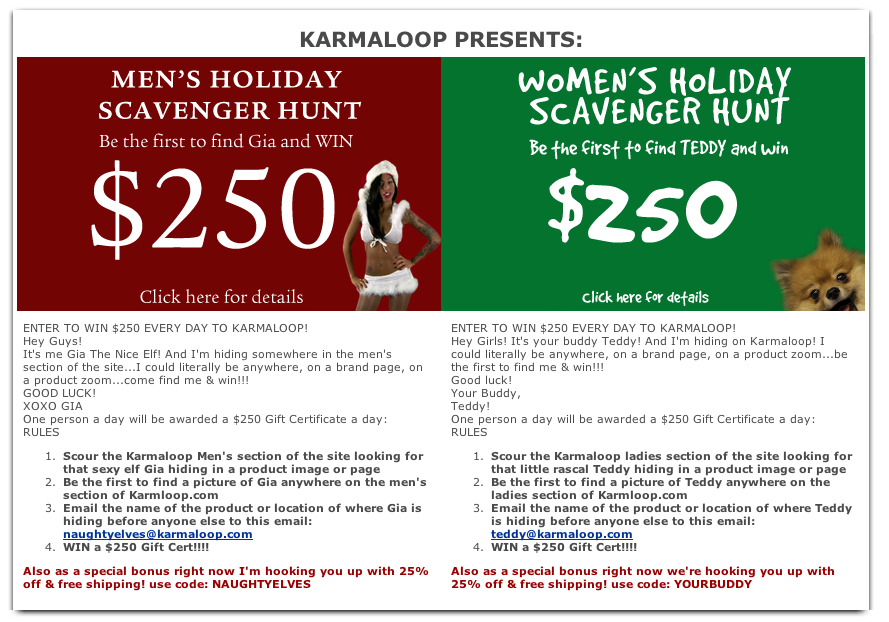
Finally, Michelle Y. alerted us to a gendered game at the Karmaloop website. Men are told to search for a sexy lady; and ladies? A Pomeranian.

Lisa Wade, PhD is an Associate Professor at Tulane University. She is the author of American Hookup, a book about college sexual culture; a textbook about gender; and a forthcoming introductory text: Terrible Magnificent Sociology. You can follow her on Twitter and Instagram.

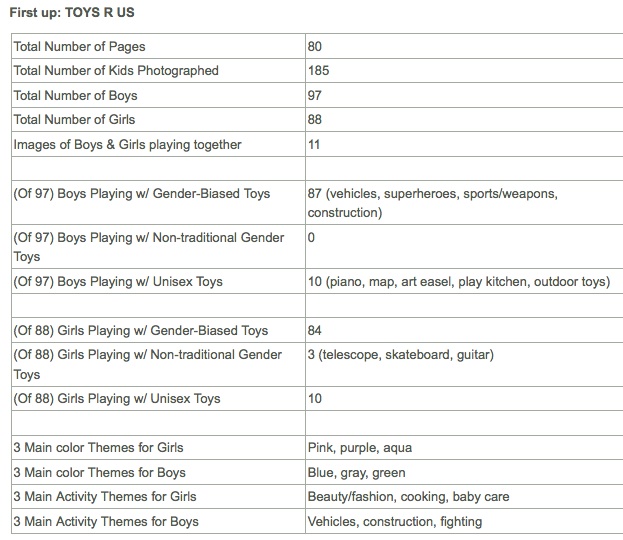
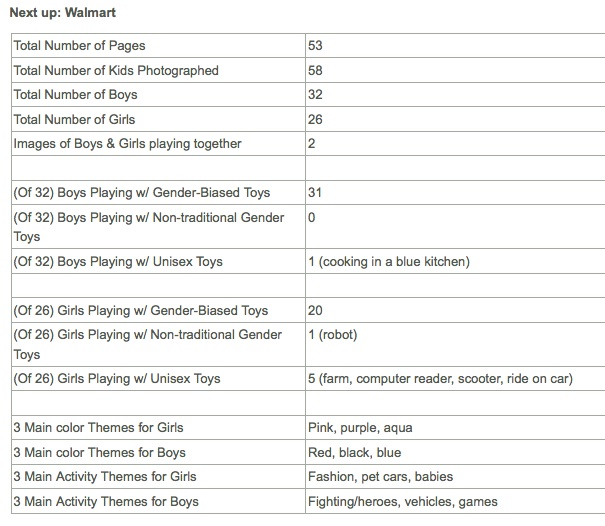
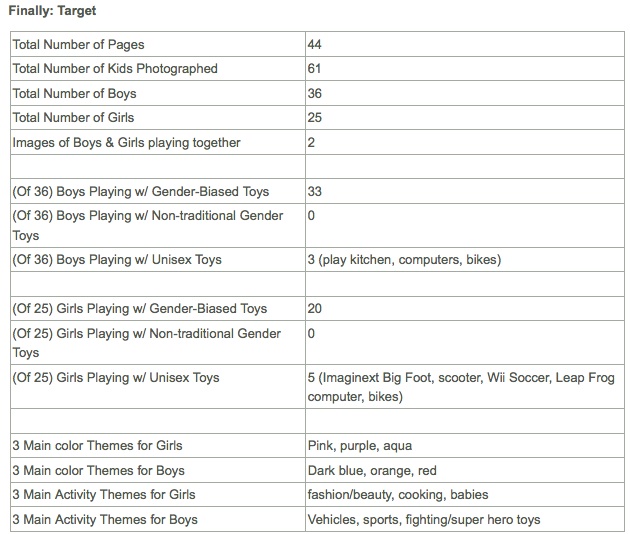
Jessica B. sent in a link to a really great post over at Pigtail Pals. The author, Melissa, analyzed the contents of a number of holiday-season catalogs advertising toys. She tabulated how many girls and boys appear in each, how many are shown doing gender-stereotypical vs. non-stereotypical activities, and the main themes of the toys.

Here are the results for Toys ‘R’ Us:

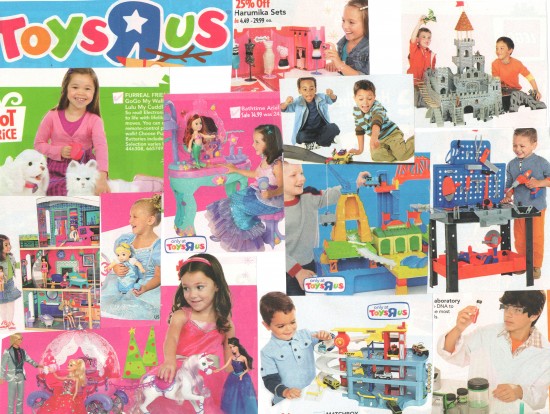
Images from the catalog:

Wal-Mart:

Target:

It’s particularly striking to me how few images there are of girls and boys playing together, a predictable outcome, I suppose, of our insistence that boys and girls need different toys — since, if must play with different toys, they won’t be playing together.

Melissa discusses the specific images on several pages of the catalogs — check her full post out for more commentary.