Search results for The

Cross-posted at PolicyMic.

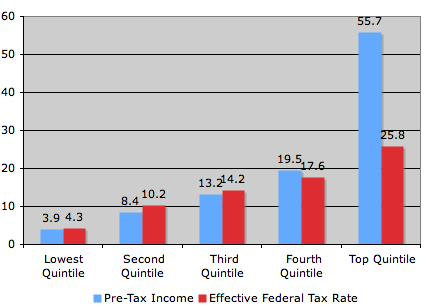
I recently came across two really fascinating figures.  The United States has a system of “progressive taxation.”  This means that the richer you are, the more you pay in taxes.  This first figure, found at The American Prospect, shows the percentage of total income earned by Americans (split up into quintiles) and the tax rates for each group.   The poorest quintile, then, pays 4.3 percent of their income to the government, but only makes 3.9 percent of all income dollars each year.  In contrast, the richest quintile brings home 55.7 percent of all income dollars each year, and pays 25.9 percent of that in taxes.
6a00d83451c45669e20115701ba37e970b-500wi

Ezra Klein writes:

When you look at percentage of total tax liabilities, the rich do in fact bear a heavier burden. But it’s because they have so much more money. They are not bearing a heavier burden as a percentage of their incomes. They’re bearing it in relation to everyone else’s incomes… People hear that the top 20 percent pay almost 70 percent of the country’s income taxes and nod their head. That’s unfair! But it mainly seems unfair because people don’t know the top 20 percent accounts for almost 60 percent of the national income.

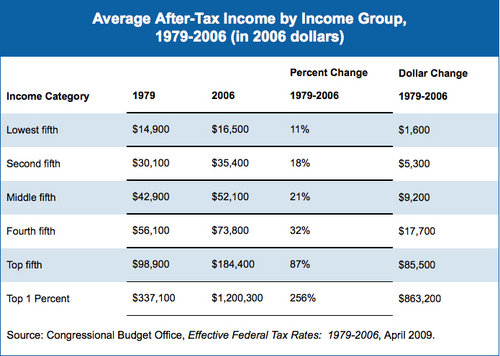
This second figure (from Matthew Yglesias via Thick Culture) illustrates increasing income inequality.  It compares the average after-tax income for each  quintile, and then the top 1 percent, in 1979 and 2006.  During that time, the poorest fifth saw their incomes increase 11 percent, the middle fifth saw their income increase by 21 percent, and the richest fifth saw their income increase by 87 percent.  Check out the percent increase for the top one percent!
cbpptable-thumb-500x356

(For more great illustrations of income inequality in the U.S., see here, here, and here; for a comparison of income inequality in the U.S. and elsewhere, see here.)

What does fair look like?

Is this kind of income inequality fair?  Is it fair to take a higher proportion of taxes from richer people?  Should we be taking even more from the rich?  Should we be taking less from any group?

Does it matter where the money is going?  I have to admit, I was feeling a little crappy about taxes when we were spending billions of dollars on war, but now that we need to kick start the economy and deal with our debt, I feel fine about them.

Has the economic crisis affected your opinions on (progressive) taxation?  How?

Lisa Wade, PhD is an Associate Professor at Tulane University. She is the author of American Hookup, a book about college sexual culture; a textbook about gender; and a forthcoming introductory text: Terrible Magnificent Sociology. You can follow her on Twitter and Instagram.
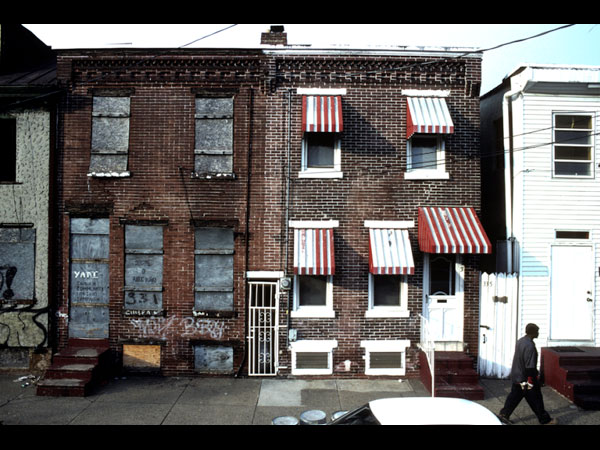
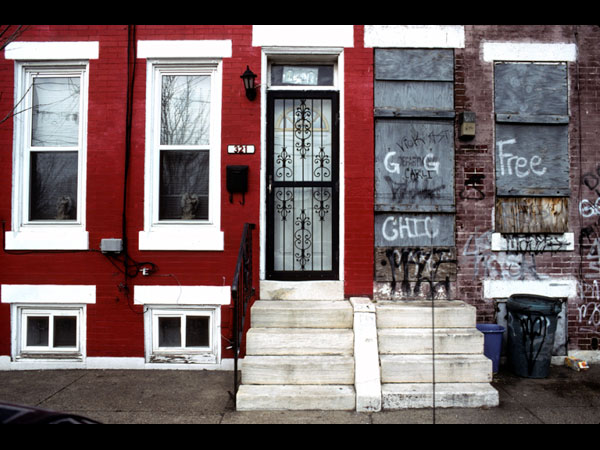
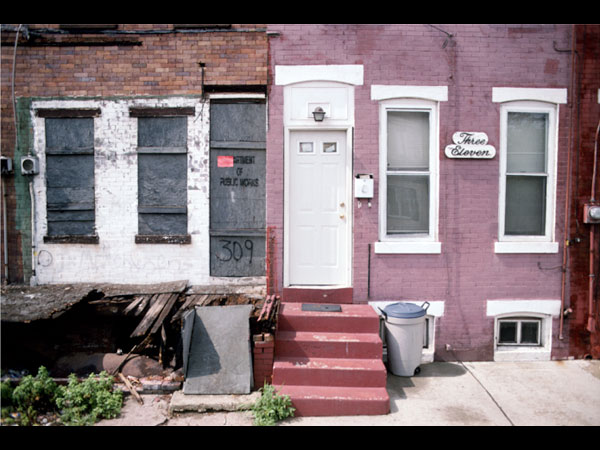
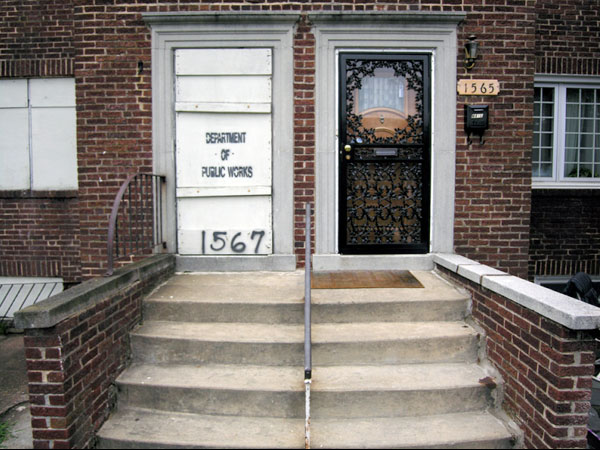
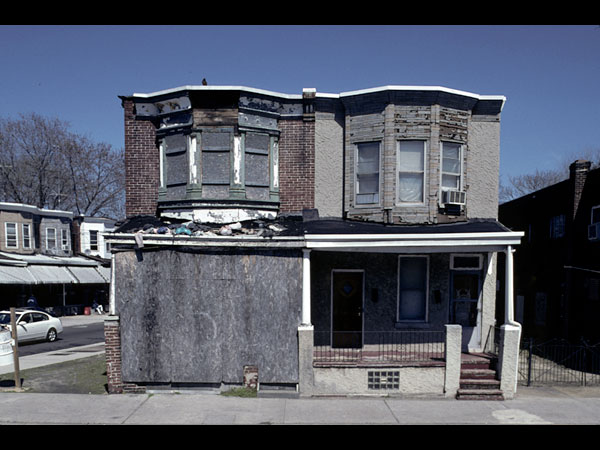
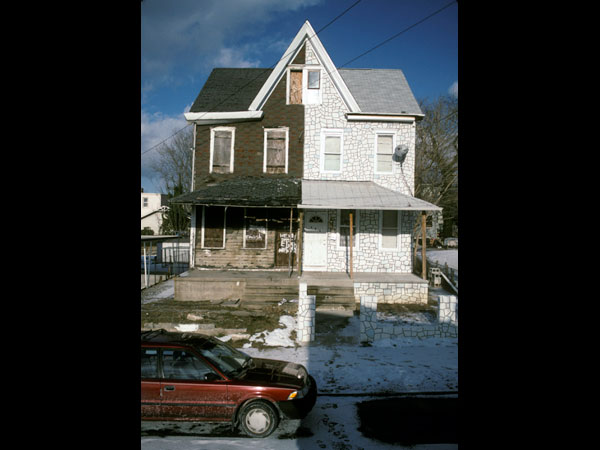
I recently posted about how the economic downturn isn’t affecting all of us equally.  We can say the same for the rash of home foreclosures.  Some people, of course, are losing their homes and other’s aren’t.  But, in addition to that, some people are seeing the value of their homes go down more than others due to the housing crisis.  For example, if you don’t lose your house, but lots of other people in your neighborhood do, the value of your house will fall moreso than the values of homes in neighborhoods with little to no foreclosure.  Photographer Camilo Jose Vergara draws our attention to yet another unequal casualty of the housing crisis: owners of duplexes who are, disproportionately, working class and urban. 

How are owners of duplexes uniquely affected by foreclosure?  First, if the other half of your duplex is abandoned or under foreclosure, your half is significantly devalued.  And, second, as Vergara writes:

Those living in the occupied home often have their lives made more difficult by what happens on the other side of a shared wall…  people throw trash in the front and back yards of the vacant unit, causing foul smells and attracting rats. Physical problems in the empty shell cause accelerated decay in the occupied house. Water may be left running in the unoccupied unit, causing moisture to migrate next door. In cold weather, pipes burst. Joists rot and collapse, tearing bricks out of the shared wall. And if the empty dwelling is not properly sealed, prostitutes and drug addicts may break in and start fires.

The images:

picture-2

picture-3

picture-4

picture-6

picture-17

picture-19

Via the Daily Dish.

Erin S. sent in this ad suggesting that the quickest way to rekindling a romance is to take an epic vacation. 

picture_2

Text:

Drift together rather than apart.  Their quest led them here.

Whether it is dinner at the world’s most romantic table or strolling the cobblestone streets of the world’s oldest cities, the perfect setting begins with The Leading Hotels of the World.

According to the ad, a strong relationship is built on the expensive and exceptional moments in a marriage.  Data on marital satisfaction, however, suggests that it is the daily, mundane tasks that make or break a marriage (who does the dishes, who puts the kids to bed, whether the bills get paid on time, and so on). 

Arlie Hochschild’s The Second Shift is the classic book on the topic.

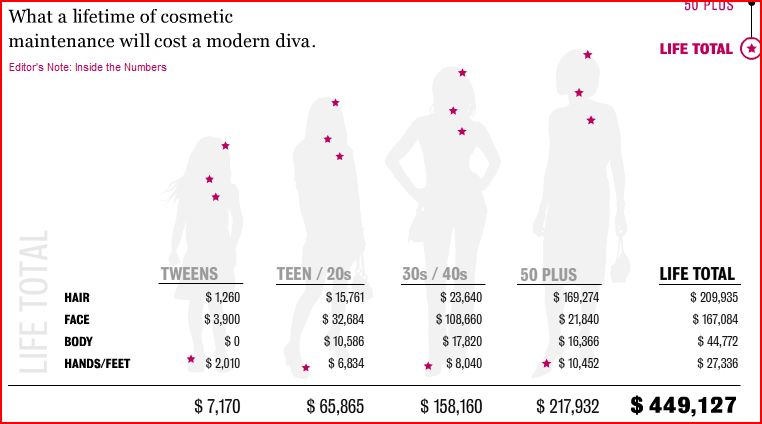
An  interactive graphic at Newsweek allows us to explore the amount of money women spend on beauty by their tweens, teens, 30s/40s, 50s, and, then, over the course of their lifetimes.  Below is a screenshots of the summary, click here to visit the graphic, and visit here for details on the numbers.

tween3

Instead of affirming the idea that husbands and wives cooperate to raise a child, this commercial affirms the idea that women nurture their children alone. Her husband is not her partner; he is just another human in the home whom she is responsible for nurturing. Women, then, are mothers and wives whose sole job is to nurture children and husbands. Accordingly, the husband and the child are, inevitably, pitted against one another.

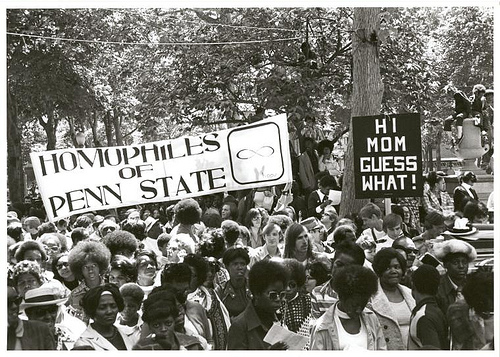
Toban B. sent in a link to a set of photos from the 1970s gay rights movement. Given that since the anti-gay-marriage Prop 8 passed in California in November, many people have argued that a) the African American community is particularly homophobic and voted against the bill (so it’s Black people’s fault Prop 8 passed) or b) gay rights organizations have failed to reach out to the African American community and win their support (so it’s elitist gay people’s fault Prop 8 passed), both positions that imply that gay rights and African Americans are at odds, I found this photo from Philadelphia (in 1972) particularly striking as a reminder that African Americans often did and do support gay rights, and the gay rights movement has often actively included them…oh yeah, and also there are gay Black people:

2431510819_5e96be8dfe

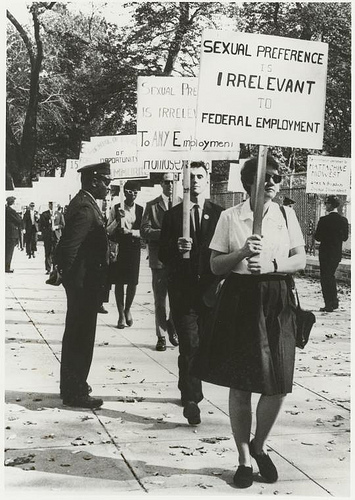
Here’s an image of people picketing the White House in the 1960s in support of legislation to ban discrimination against gays and lesbians in federal employment:

2426325769_75b32819e9

There are also quite a few vintage gay movement images mixed in to this set of photos. Thanks, Toban!

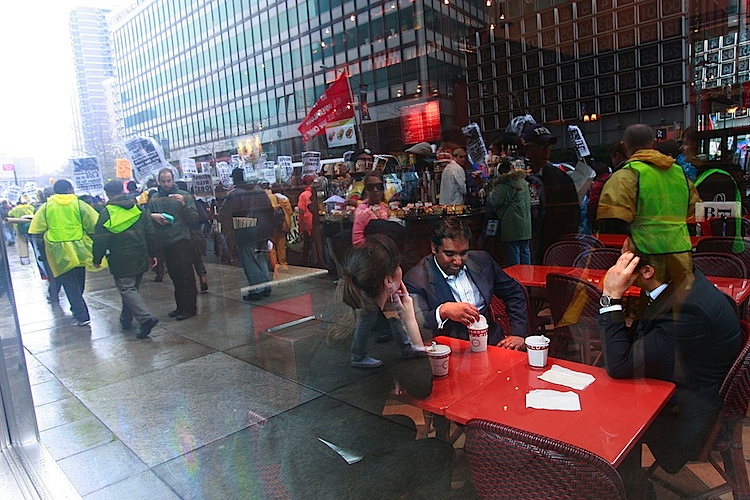
I came across this great photo at BAGnews NOTES, entitled, “Reflecting on the Meltdown”:
85742709MT009_Protesters_De

The author describes the photo and its meaning this way:

It captures a two-day anti-capitalist rally protesting the Wall Street bailout. Through the use of reflection (in this photo of a restaurant, as well as this one playing the street off against a corporate lobby), Mario [Mario Tama, Getty Photographer] portrays America’s class schism (note the guy in the lime-colored reflective vest overlapped with the guy in the jacket with the wristwatch); America flip-flopping between awareness and denial; and the strange disconnect these days between crisis and ‘business as usual.

This is a wonderfully telling picture, but perhaps in addition to “America flip-flopping between awareness and denial,” one could also interpret the artistic use of reflection as representative of the ever-widening chasm between the social classes in the United States – one that will most likely not be remedied or even addressed in the near future.

soto_131

Some ecards via Feministe.