Search results for The

Marketers are happy to respond to and create insecurities.  Here’s one we haven’t covered before, shoes and inserts for men that covertly increase their height:

Borrowed from The Social Complex, a heightism blog. See also guest posts from The Social Complex introducing the concept of heightism as a gendered prejudice and discussing heightism (and other icky stuff) at Hooters.

Lisa Wade, PhD is an Associate Professor at Tulane University. She is the author of American Hookup, a book about college sexual culture; a textbook about gender; and a forthcoming introductory text: Terrible Magnificent Sociology. You can follow her on Twitter and Instagram.

 

By now, you’ve undoubtedly seen multiple examples of before-and-after photos that illustrated how re-touching is used to help celebrities and models meet those unrealistic beauty standards we see in the media (see our posts on Katy Perry, a parody Photoshop ad, pre-retouched Playboy pics (NSFW!), Jessica Alba, and Demi Moore and Kim Kardashian). Dolores R. sent in a video of a man emphasizing the other side of the equation — that is, how the “before” body in supplement ads can be manipulated to make the apparent transformation especially dramatic:

For the full collection, see our Re-Touching/Photoshop Pinterest board (NSFW).

Gwen Sharp is an associate professor of sociology at Nevada State College. You can follow her on Twitter at @gwensharpnv.

Cross-posted at Montclair SocioBlog.

Being in the dominant majority allows you that comfort of not thinking.  People in that majority can assume that everyone shares their views, ideas, and even characteristics, and much of the time, they’ll be right.  “Flesh colored” in the U.S., sometimes even today, means the color of white people’s flesh.

White is the default race, the American race.  It’s easy to ignore that African Americans might not see those Band-Aids as flesh colored.  Similarly, Christianity is the default religion, and those who are in the majority can make those same flesh-colored assumptions.  Justice Scalia, for example, seemed unable to understand that the Jewish families of Jews killed in war might not feel “honored” by a cross placed on the grave of their son or daughter. (My post on this is here.)

The latest example:  this Hannukah card sent in South Carolina, presumably to Jews, by Rick Santorum’s local team.  First tweeted by political reporter Hunter Walker, it’s rapidly making the rounds of the Internet.

The Santorum team knew that Jews celebrate Hannukah.  But apparently they either did not know or did not remember that the New Testament is not part of Judaism and that Jews do not believe in the divinity of Jesus.  So those words from John — that those who follow Jesus “will have the light of life” — probably did not convey the intended effect of holiday warmth.

Cross-posted at Montclair SocioBlog.

It can take a while to find the right word.  But a mot juste may be crucial for framing a political issue. If you like the idea of men being able to marry men, and women women, what should you call the new laws that would allow that?

The trouble with “gay marriage” and even “same-sex marriage” is that these terms suggest – especially to conservatives – some kind of special treatment for the minority.  It’s as though gays are getting a marriage law just for them.

At last, the gay marriage forces seem to have come up with a term that invokes not special treatment but a widely-held American value that’s for everyone – equality.  A bill in  New Jersey has been in the news this week, mostly because Gov. Christie says he will veto it.  The bill is a “marriage equality” law.

The governor is in a bit of a squeeze.  As a Republican with ambitions beyond New Jersey’s borders, he can’t very well be for gay marriage.  But if his opponents can frame the matter their way, he now has to come out against equality.  Which is why the governor continues to refer to the issue as “same-sex marriage.”*

It’s like “abortion rights” or even “women’s rights.” A phrase like that might rally women to your cause, but if you want broader support, you need a flag that every American can salute.  I’m not familiar with the history of abortion rights so I don’t know how it happened, but those who want to keep abortion legal have managed to frame the issue as one of freedom to choose.   They have been so successful that the media routinely refer to their side as “pro-choice.”   To oppose them is to oppose both freedom and individual choice, principles which occupy a high place in the pantheon of American values.

It’s not clear that the “marriage equality” movement has been similarly successful, at least not yet.  I did a quick Lexis-Nexis search sampling the last week of the months January and July going back to 2007.  I looked for three terms: “same-sex marriage,” “gay marriage,” and “marriage equality.”

The general trend for all three is upwards as more legislatures consider bills, with big jumps when a vote becomes big news – that blip in July 2011 is the New York State vote.  But the graph can’t quite show how “marriage equality” has risen from obscurity.  That first data point, July 2007, is a 4.  Four mentions of “marriage equality” while the other terms had 25 and 50 times that many.  As of last week, “gay” and “same sex” still outnumber “equality,” but the score is not nearly so lopsided.

Here is a graph of the ratio of “equality” to each of the other two terms.  From nearly 1 : 20 (one “marriage equality” for every 20 “gay marriages”) the ratio has increased to 1 : 3 and even higher when the discussion gets active.

If the movement is successful, that upward trend should continue.  When you hear Fox News referring to “marriage equality laws,” you’ll know it’s game over.

———————————

* Christie is usually politically adept, but he’s stumbling on this one.  He referred to a gay legislator as “numb nuts” (literally, that might not necessarily be a liability for a politician caught in a squeeze).   Christie also said that he’s vetoing the bill so that the matter can be put on the ballot as a referendum – you know, like what should have happened with civil rights in the South.  

I think people would have been happy to have a referendum on civil rights rather than fighting and dying in the streets in the South.

Several critics, including Numb Nuts, responded that, yes, Southern whites would have been happy to have civil rights left up to the majority.  African Americans not so much.  (If you’re looking for an illustration of Tocqueville’s “tyranny of the majority,” the post-Reconstruction South might be a good place to start.)  The analogy is obvious – race : 1962 :: sexual orientation : 2012 – even if it was not the message the governor intended.

In an earlier post we reviewed research by epidemiologists Richard Wilkinson and Kate Pickett showing that income inequality contributes to a whole host of negative outcomes, including higher rates of mental illness, drug use, obesity, infant death, imprisonment, and interpersonal trust.

She summarizes these findings in this quick nine-minute talk at a Green Party conference:

See Dr. Pickett making similar arguments as to why raising the average national income in developed countries doesn’t make people happier or enable them to live longer, why unequal societies are more violent, and how status inequality increases stress.

And see more about income inequality and national well-being at Equality Trust.

Lisa Wade, PhD is an Associate Professor at Tulane University. She is the author of American Hookup, a book about college sexual culture; a textbook about gender; and a forthcoming introductory text: Terrible Magnificent Sociology. You can follow her on Twitter and Instagram.

Today kicks off New York Fashion Week, an important time of year for models.

In these interviews, sociologist Ashley Mears talks about her research on modeling. Modeling, she explains, is a “winner take all” market; most live in very precarious economic circumstances. The value of her product — her body and her ability to use it — is something over which she has almost no control.

Accordingly, modeling requires an incredible amount of “emotion work,” the control of one’s feelings and presentation of emotions for the sake of an employer or customer.

For more from Dr. Mears, see our posts on the invisibility of labor in modeling, the ugly secret behind the model search, thinness in modeling (trigger warning), and contrasting aesthetics for high end and commercial models.

Lisa Wade, PhD is an Associate Professor at Tulane University. She is the author of American Hookup, a book about college sexual culture; a textbook about gender; and a forthcoming introductory text: Terrible Magnificent Sociology. You can follow her on Twitter and Instagram.

The phrase “Magical Negro” refers to the phenomenon in which a white character in a tv show or movie finds enlightenment through the wisdom of a Black character.  It is widely considered an offensive trope in which Black people — imbued with special spiritual, religious, or primitive powers of insight, often ostensibly due to some disadvantage like poverty — serve only to support a white person’s transformation.  The white person, and their ultimate redemption, remains the central story.

I couldn’t help but think of this when I watched the trailer for The Best Exotic Marigold Hotel, sent in by Katrin.  In this trailer, the Magical Negro isn’t a Black person; it’s not even a person.  It’s the entire country of India.

See if you see what I saw:

For examples of the Magical Negro, see our post on The Secret Life of Bees, the Magical Negro at Ikea, and the Magical Aboriginal Child in an Australian tourism ad.

Lisa Wade, PhD is an Associate Professor at Tulane University. She is the author of American Hookup, a book about college sexual culture; a textbook about gender; and a forthcoming introductory text: Terrible Magnificent Sociology. You can follow her on Twitter and Instagram.

Feast your eyes on this:

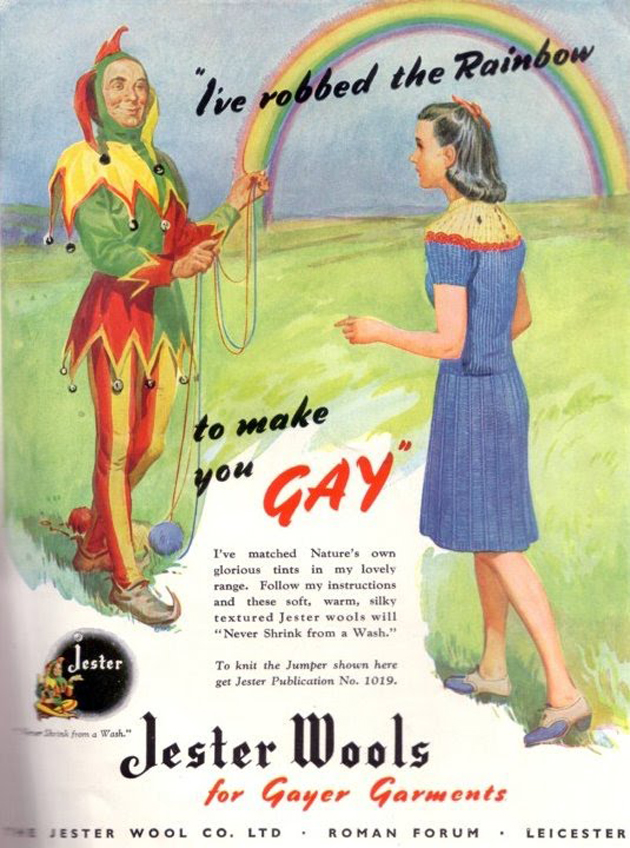
Social change makes life interesting.

Lisa Wade, PhD is an Associate Professor at Tulane University. She is the author of American Hookup, a book about college sexual culture; a textbook about gender; and a forthcoming introductory text: Terrible Magnificent Sociology. You can follow her on Twitter and Instagram.