Archive: 2008


Matt W. sent us links to a whole set of very popular videos on the theme “My New Haircut.” Here is the original, which, as Matt says, is “mocking popped-collar ‘bro’ masculinity.” Note: the language is not safe for work.

[youtube]https://www.youtube.com/watch?v=Q5QJ9i_o5vo[/youtube]

After the first video came out, people began making other versions, such as the “Jewish edition” and the “Senior Citizen edition.” As Matt points out, “It seems to be a mix of people of different ethnicities making fun of themselves/how they’re perceived, and outsiders indulging in outright bigotry.”

Asian edition:

Mexican edition (sadly, my rural poor-white upbringing led me to think, in response to him saying he is wearing a wife-beater shirt, “That’s not a wife-beater, that’s a muscle-shirt. Not the same thing.”). His Spanish accent sounds fake to me, but I might be totally off there. Also, the video is by “Mr. Fagg” productions.

Gay edition. The actors say, “For all you haters…we’re not gay were just acting as you can probably tell by how ridiclous we act.”

Jewish edition:

Black edition, featuring drug use and general criminality:

There are tons of others, but you get the point. If you watch any of these, the sidebar will have lots of other editions.

Whether or not you could use these videos in classes probably depends a lot on where you’re at and how much trust you’ve built up with your students. They might be interesting for discussions of humor–are there things that are funny when some people say them but not when others do? Does it make a difference whether a person using stereotypes is a member of the group being laughed at or not? When is humor being used to point out and undermine stereotypes, and when does it just reinforce them? Who has the authority to decide these things?

Thanks, Matt W.!

Gwen Sharp is an associate professor of sociology at Nevada State College. You can follow her on Twitter at @gwensharpnv.
Brook M. brought our attention to Al Jazeera’s English-language coverage of Arab women athletes training for the 2008 Olympics. They include a Moroccan runner, Israeli Arab boxers, a Qatar race-car driver, and Egyptian soccer players. Among other topics, the segments address opposition the women have faced being female Arab Muslims in sports, especially concerning their clothing. The first segment is about 11 minutes long; the second one is about 12 and a half.

One thing I like about these videos is they show the diversity of Arab Muslim women, a group often depicted as a homogeneous, passive, subordinate group all wearing veils. Some of the women in the clips do not cover their hair while some wear hijab. Among those who wear hijab, some cover every bit of their hair, others do not; some head scarves are lace and fairly transparent, while others are dark and solid. The women talk about how they feel about mixing religion and sports and being female athletes, and again, they differ in their perspectives.

While the sports element is interesting, seeing the diversity among Arab women, as well as Arab women actively discussing religion and resisting gender roles, may be very useful for students who usually encounter portrayals of Arab women as completely oppressed victims of a sexist culture/religion, so I can imagine using it in classes that aren’t about sports.

Thanks, Brook M.!

Soon after reading my post on “ethnic” fashion, Robin noticed an article in the New York Times about “tribal” elements in fashion. According to the article, “The tribal trend, seen on spring runways awash with ikat, batik, and African wax prints, is hot this summer.” We helpfully learn, “The specimens are rarely authentic, mind you. Rather, designers have appropriated ethnic elements and given them a modern spin.” According to one designer,

“It’s a dialogue between what’s traditional and new, and between East and West,” she said. “Our weavers in Uzbekistan find it really surprising and a real struggle to begin with. At first they don’t like the reworked designs, but over time they acquire appreciation.”

A quote from another designer:

“The enticement of ethnic dress in modern culture is like going on a guided safari,” he said. “We can enjoy the element we are familiar with and attracted to, while not giving up our daily comforts. We can wave to the lion from the safety of our S.U.V.”

So wearing “ethnic” clothing is like going on a sightseeing trip where you can look at savage animals but in a safe way that doesn’t actually bring you in contact with them…interesting. “We” (non-ethnic) people can pick and choose a few things from other cultures but without giving up “daily comforts,” or, like, knowing anything about other people or thinking through thorny issues like who that “we” encompasses and who is doing the defining of “we” and the ethnic “them.” I have to say, the “We can enjoy the element we are…attracted to…” made me think of sex tourism.

Notice here that, first, “ethnic” or “tribal” is applied to an enormous range of cultures spanning the globe that have little in common except not being from Western Europe or the U.S. Also, we see that “ethnic” fashion = traditional = non-modern = wild/animalistic = Eastern, whereas “modern” fashion = Western = non-ethnic. Because there is no ethnicity in the “West.” Except when designers use “traditional” Aztec or Mayan or Mexican or Laplander or etc. etc. prints in their “ethnic” designs.

Here are some pictures from the accompanying slide show:

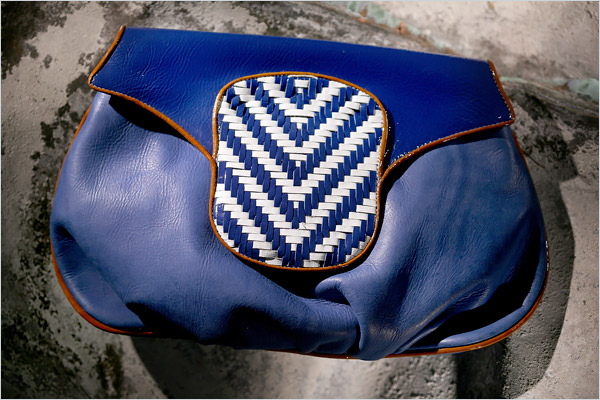
This purse is $565. The weaving is what the quote from the first designer above was saying she struggled with Uzbeki producers about, since they didn’t like her reworked versions of their “traditional” patterns. I wonder how much of that $565 goes to those weavers?

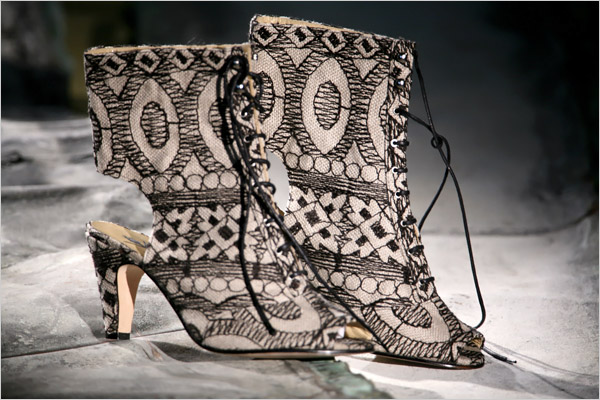
The caption to the photo of these boots is “cultural gumbo.” They are $350.

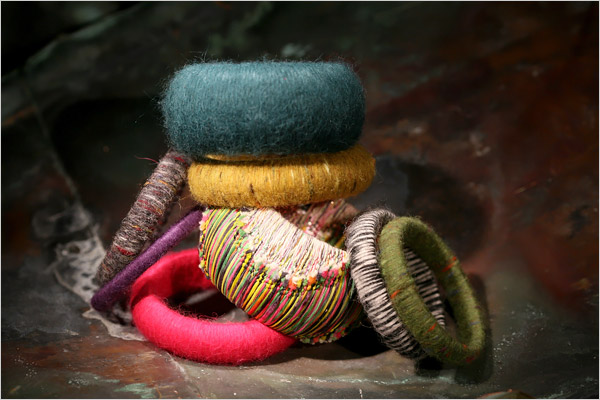
These bangles come in cashmere, tweed, and cotton and are $45-125. The article does not tell me if I am being “ethnic” and going on a fashion safari every time I wear my black cashmere cardigan. Maybe it has to be brightly-colored cashmere to be “tribal.”

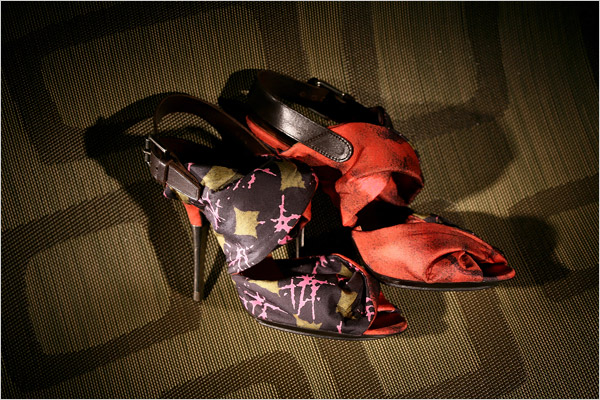
These shoes are $715. They are ethnic because they are silk and I guess maybe that’s supposed to be a vaguely Asian-y print on the black ones. My years of training in a rigorous sociology Ph.D. program also give me the critical thinking and analytical skills to tell you with certainty that they are hideously ugly.

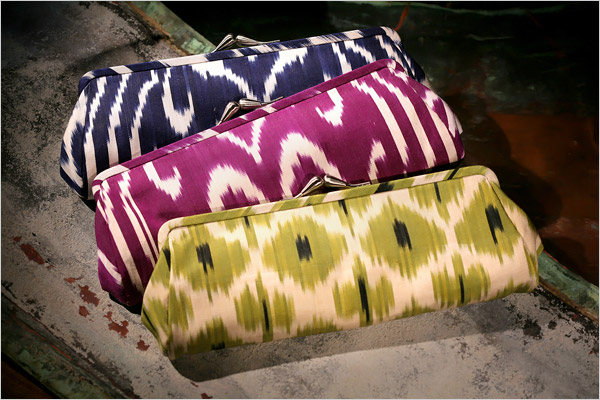
These clutches are $450. They are ethnic because they use a style of dying called ikat, and also probably because they have a vaguely animal-print design.

Great find, Robin!

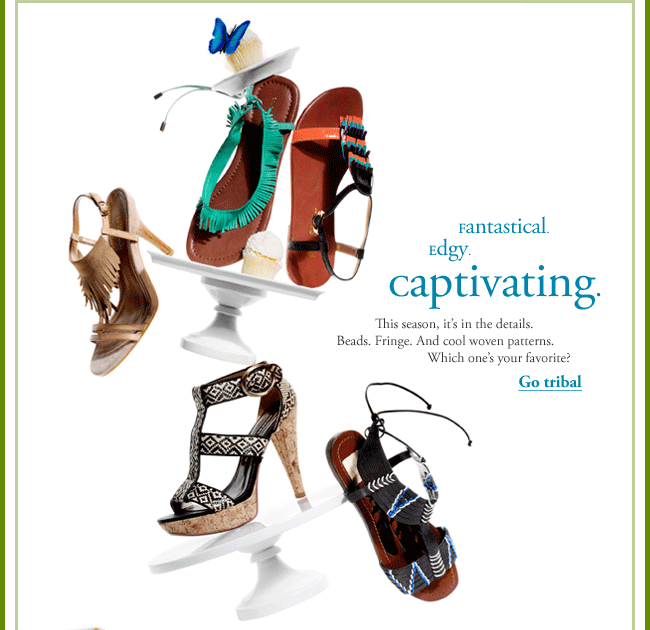
NEW: Katie J. sent in a link to Pepperlime (part of the Gap/Banana Republic/Old Navy empire), which features shoes that let the wearer “go tribal”:

pl_w_tribal_rz_picks_02

In a 1987 article titled “Sex and Death in the Rational World of Defense Intellectuals,” Carol Cohn discussed the way in which “defense intellectuals” (the scientists and strategists behind war) used language that was rife with sexual metaphors, sexual imagery, and the promise of sexual domination. Here are some of the words and phrases she heard these men (mostly) use to refer to military weapons:

“penetration aids”

“vertical erector launchers”

“thrust-to-weight ratios”

“soft lay downs”

“deep penetration”

“protracted versus spasm attacks”

“releasing… megatonnage in one orgasmic whump”

India’s first explosion of a nuclear bomb described as “losing her virginity” and then the United States asked whether they should “throw her away.”

An explanation of why the MX missile is to be placed in new silos: “because they’re in the nicest hole—you’re not going to take the nicest missile you have and put it in a crummy hole”

One journalist described a nuclear blast like this:

“Then, just when it appeared as though the thing had settled down into a state of permanence, there came shooting out of the top a giant mushroom that increased the size of the pillar to a total of 45,000 feet. The mushroom top was even more alive than the pillar, seething and boiling in a white fury of creamy foam, sizzling upward and then descending earthward, a thousand geysers rolled into one. It kept struggling in an elemental fury, like a creature in the act of breaking the bonds that held it down.”

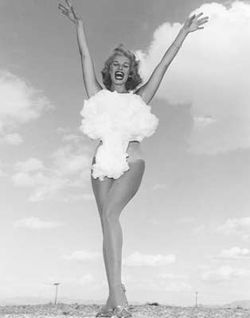
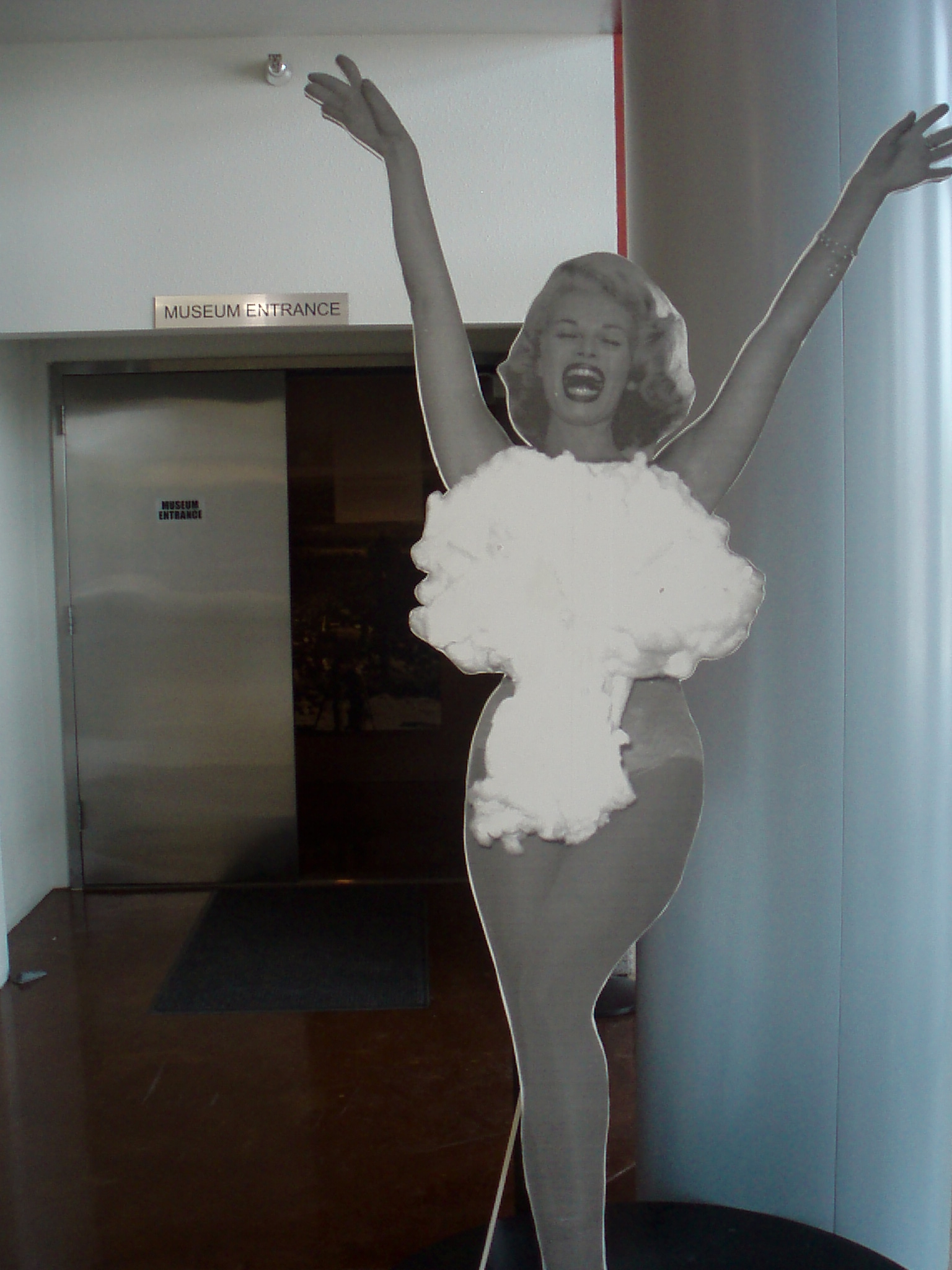
With this in mind, consider the costume worn by Miss Atomic Bomb (1957). Yes that is a mushroom cloud or, dare I say, an “orgasmic whump” spreading out all over her. A full-size cardboard cut-out Miss Atomic Bomb, that is Lee Merlin, welcomed Gwen and I to the Atomic Testing Museum in Las Vegas. Here she is in all her glory:

I want to give a shout-out to Vivek who mentioned Merlin in response to our previous post on the Atomic Testing Museum.

Reference: Cohn, Carol. 1987. Sex and Death in the Rational World of Defense Intellectuals. Signs 12, 4: 687-718.

Lisa Wade, PhD is an Associate Professor at Tulane University. She is the author of American Hookup, a book about college sexual culture; a textbook about gender; and a forthcoming introductory text: Terrible Magnificent Sociology. You can follow her on Twitter and Instagram.

Alongside an article in the New York Times today was this graph comparing the percentage of positive statements made about Obama versus Clinton by the media over the course of the primary race.  The article discusses whether players in the U.S. media think their coverage was sexist.  Lots of people do not think so.  It has some really interesting quotes from people in front of and behind the camera.

Click here to see a montage of sexist statements about Hillary Clinton by media pundits.

Spotted on consumerist.com

“Ask not what your country can do for you. Ask ‘Can I get this shoe in a size seven?'”

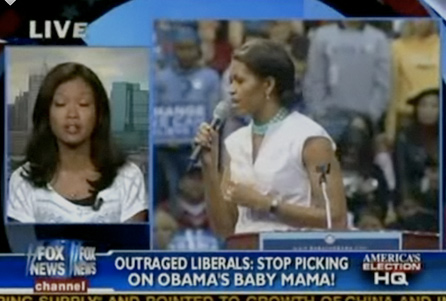
…”Obama’s Baby Mama.” Way to racialize the democratic nominee and his wife. See it here.

Thanks to an anonymous tipster!

NEW: Pat C. sent in an image (found here) showing the FOX News caption referring to Michelle Obama as a “baby mama.”

Thanks, PT!

Miguel pointed out that AskMen.com collected a list of “worst male-bashing ads,” all of which represent men as morons or useless oafs. Here are some of them:

1st for Women, a South African auto insurance company that only insures women:

A Domino’s ad in which the wife laughs at her husband’s sexual overtures:

A Sony Cyber-shot ad that depicts men as a horse’s ass (it’s the first clip; for some reason there are some FedEx clips afterward):

Men as easily manipulated by flirty women:

These might be useful for a discussion of masculinity and portrayals of men as idiots and morons, especially regarding family life, which serves to reinforce the idea that men can’t be trusted to cook or clean or care for children because they’ll just mess it up. Although it doesn’t come up in these ads, it’s also good to bring in the class element we see in shows like “King of Queens,” “The Simpsons,” “According to Jim,” and “Married with Children,” which all have working-class, generally pot-bellied idiot husbands married to smart, gorgeous women who sigh and put up with their childish behavior.

Also see the earlier post of a Roomba ad that portrays the husband as a literal ass (this ad also made it into the AskMen list).

Thanks, Miguel!

Gwen Sharp is an associate professor of sociology at Nevada State College. You can follow her on Twitter at @gwensharpnv.