Archive: 2008

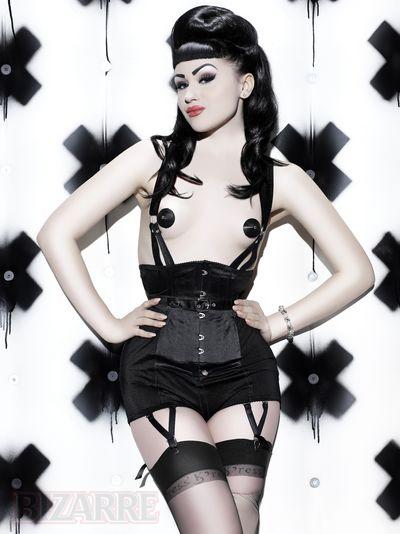
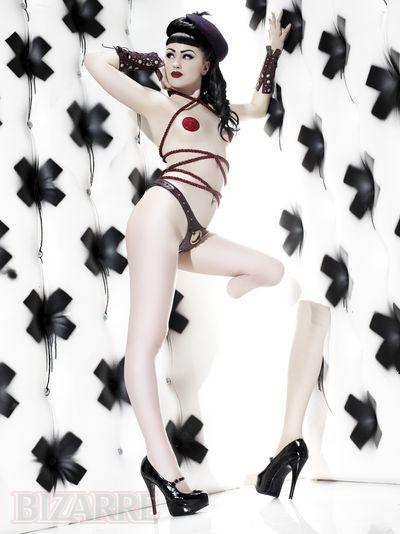
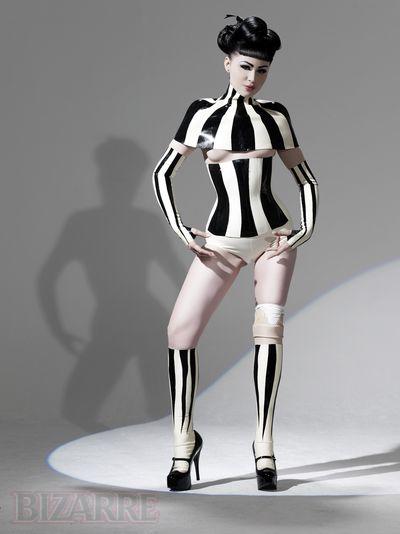
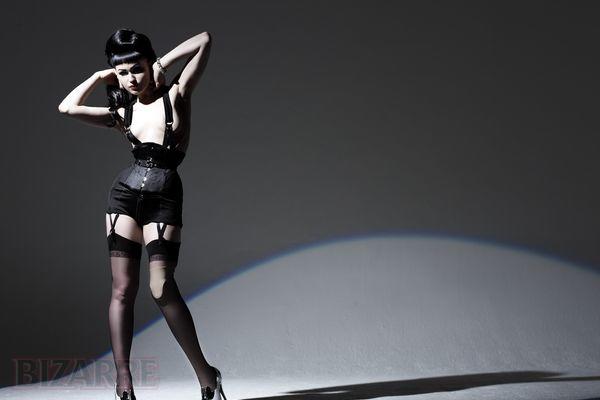
Yesterday, one of my favorite blogs, Sociological Images, picked apart amputee alt model Viktoria’s appearance in Bizarre Magazine.

What makes Viktoria “bizarre”? Is it her amputated leg? Is it the fact that she has an amputated leg and is still incredibly sexy? Or is it that she has an amputated leg and still considers herself a sexual person? Is this empowering? And to who? Surely the disabled are desexualized in this country, so it’s nice to see that challenged even, I suppose, in a magazine about weirdos. And yet, I suspect her sexuality is acceptable, fetishizable, only because she conforms to expectations of feminine beauty. In the big scheme of things, does she reproduce the standard of beauty, unattainable for most women, that crushes women’s self-esteem and sense of self-worth? And will disabled women, most of whom (like most non-disabled women) could never dream of being so beautiful, actually look at her and be able to identify? Or will this just draw attention to another way in which they don’t match up?

Now really, I think that SocImages went a little overboard with Viktoria (especially when they dismissed her comments about sexuality as “standard porn star talk”). Maybe it’s because I know her little better than they do, but I think that they oversimplify the genuine place that she comes from in choosing to be a model. However, they do bring up an important discussion that’s been nagging me for some time. What is an alternative model, and what is an alt model’s role in visual culture? In my life, at various points, I came up with 3 different definitions. I believe in each of them, and I have a problem with each of them as well. Here they are below. Which one resonates with you? Do you think it’s a combination of the three below, or something completely different? Opinions, please.

1. The model who challenges society’s notions of beauty.

Examples:

Kenyan-born trans model Biko Beauttah, photographed by Bode Helm.
Velvet D’Amour, photography credit unavailable.

I love these models, but the issue here is that, while they appear to push the boundaries of beauty in some direction, they usually wind up brutally reinforcing another traditional notion in the process. For example, trans models make us rethink gender/beauty, but with their self-presentation they usually reinforce the ideal of a sleek, hairless feminine figure, thus fueling the hair-removal industry. In fact, epilator-manufacturer Philips Norelco has already found a way to to capitalize on this to great effect – just watch this ad. And large models like Velvet D’Amour and skinny-by-comparison but still-considered-plus-size recent ANTM winner Whitney Thompson help to redefine weight in modeling, but what makes them “legitimately beautiful” in the eyes of the mainstream world is their “correct” bone structure, their blond hair. Without some “redeeming quality” of this sort, the world doesn’t recognize them as models, and wouldn’t even give them a shot at making a difference. Mainstream media often presents them as beautiful “in spite of,” not “because of.” While their individual messages are empowering (I love Velvet’s interviews), I don’t find our culture’s use of these models empowering at all.

2. The hottie with strange hair/tattoos/piercings/latex.

Examples:

Mosh, photographed by Vance.
Scar13, photograhed by Nadya Lev.

Like it or not, it’s a valid definition – arguably the most widely-embraced one at that. This idea is epitomized by the Suicide Girls motto: “redefining beauty, one hot, naked chick at a time.” Underneath all the hair dye and black eyeliner, the ideal remains the same: symmetrical faces, clear skin and slim figures with a slightly above-average degree of variation as compared to mainstream modeling. Alterna-porn sites and alt modeling agencies such as Nocturnal Models helped cement this concept, but the biggest reinforcement came from self-proclaimed “alt photographers” and “alt models,” in whom they chose to include and exclude as they built up their online “spheres of influence.” This definition doesn’t make me happy now, though I had no problem with it at 21, when all I did was go clubbing and take pictures that reminded me of how I felt when I was dressed-up on the dance floor. When I realized that my own photography was reinforcing the same standards of beauty that make it difficult for women to have a healthy self-image, I took a step back.

3. The self-made persona.

Examples:

Feisty Diva wearing a hairpiece she created, photographed by Nadya Lev.
Anachronaut, photographed by Nadya Lev.

Another definition of alt model is someone who completely reinvents themselves from head to toe. This could be someone you’d never otherwise notice on the street, yet through inventive styling, self-applied makeup, self-styled clothing and hair, they create a whole new persona for themselves. The ultimate example of this is Mana, who goes from being a middle-aged man to a gothic Loli. These people make up their own beauty, owning their look from head to toe for the purpose of expressing an artistic ideal, proving a political point, etc. But are are they really “models,” or artists who allow you to take their portrait? It’s the most positive concept to me, but is it a valid definition of “model”?

So there you have it. Three definitions, some of which conflict with each other. And still, even after writing all of this out, I’m not sure if I’m even satisfied with my own personal definition, which draws on all three. Something’s bothering me. Something’s missing. Anyone have any idea?

—————————-

Nadya Lev, a photographer, blogs for the Coilhouse.

Lisa Wade, PhD is an Associate Professor at Tulane University. She is the author of American Hookup, a book about college sexual culture; a textbook about gender; and a forthcoming introductory text: Terrible Magnificent Sociology. You can follow her on Twitter and Instagram.
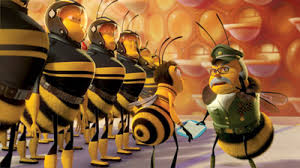
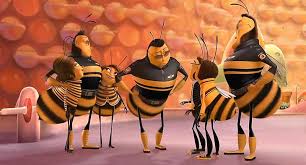
Vesko J. sent in several images from “Bee Movie,” the cartoon with Jerry Seinfeld as the voice of the main bee character, Barry. He says:

Female bee workers exist in the movie, but are hardly visible (unless sexual presence is needed.) They can be seen only for a few seconds in the distant background and don’t have any lines of dialogue (as opposed to random male bee workers, who are clearly visible and have lines of dialogue).

Even the bees, that pollinate the flowers, are male. They are called “pollenjocks” and all the female bees fall for these strong, muscular, brave guys.

These are the pollenjocks. In case you didn’t know, it’s actually female bees who collect pollen.

The pollenjocks are big, muscular male figures who tower over the females, who, as far as I can tell, could be called pollengroupies. They aren’t really individuals with personalities; they exist as background to show how awesome the pollenjocks are. On the other hand, the female characters that are treated as individuals tend to be in the home, such as Barry’s mom. Barry’s love interest is not a female bee but a human female, a florist.


Now, I get it. It’s a kids’ movie, and there’s going to be a lot of anthropomorphizing and such. But how animals are anthropomorphized tells us a lot about our social assumptions and what we’re comfortable with. There’s no reason the worker bees’ sex has to be changed, except that it makes more “sense” to us that the hard-working providers would be male. The choices to make the males the center of the story, to make them bigger than the females, and to portray female bees as fawning groupies desperate for male attention tells us an awful lot about the gender stories we tell ourselves about humans, and that they’re important enough to us that even children’s movies have to recreate those stories, no matter how much fiddling with reality it takes. And even though this is an animated children’s movie about bees that talk, flirt, and wear clothes, I bet an awful lot of people will think the gender hierarchy in the movie is fairly accurate.

Thanks, Vesko!

Gwen Sharp is an associate professor of sociology at Nevada State College. You can follow her on Twitter at @gwensharpnv.

I don’t have an image for this post. What I have is a quote from Bill Napoli, a South Dakota state senator. He doesn’t believe that bills banning abortion should have an exception in cases of rape, because if the woman “really” deserved to get one, she could get it under the health-of-the-mother exception. Here is a direct quote:

A real-life description to me would be a rape victim, brutally raped, savaged. The girl was a virgin. She was religious. She planned on saving her virginity until she was married. She was brutalized and raped, sodomized as bad as you can possibly make it, and is impregnated. I mean, that girl could be so messed up, physically and psychologically, that carrying that child could very well threaten her life.

I came upon part of this quote in issue #40 of Bitch magazine (p. 17), but I found the full quote here (scroll down a little past halfway).

What’s interesting to me here isn’t about abortion per se, but the implication of who would and wouldn’t “really” suffer if they were impregnated from a rape. Apparently if you aren’t a virgin or religious, or ARE a virgin but weren’t necessarily planning on staying that way until marriage, then being raped and getting pregnant just wouldn’t be as traumatic as it would to “nice” girls.

It’s also creepy how we often like to think in rather fine detail about the ways good little virgins can be violated. I mean, he could have just said “she was raped,” but no, he decides to make it a bit more graphic. And how bad is “as bad as you can possibly make it”? Is there some measuring stick for how traumatizing different violations are, so you can be sure the girl has suffered enough to qualify as a deserving victim?

It reminds me of an article I read about the myth of the black rapist and the virginal white victim in the post-Reconstruction South (sorry, I don’t remember the article); the author said that detailed stories about how animalistic, savage black men had ravaged delicate white women served as a form of folk porn–people repeated the stories over and over, embellishing as they went. Telling rape stories provided a socially sanctioned outlet for people to talk about sex even in “nice” society, since you were only doing it to warn others of the danger, of course.

So even though there’s no image, I thought the quote might spark some interesting classroom discussion, either about abortion or about sexuality, victimization, and the enduring idea of the deserving and undeserving rape survivor. Or, hell, even a discussion of the social construction of porn–I mean, if you took Napoli’s exact words and put them in a different context and didn’t tell people he was a senator discussing a proposed bill, I bet a lot of people would think it was obscene but interpret it very differently since he was just talking about a hypothetical situation while discussing serious matters such as the law.

I’m always interested when I see ads that play on parents’ fears of neglecting their children as a way to sell them stuff. Middle and upper-middle class parents often encounter, and adopt, a parenting ideology that requires the input of lots of money, time, and emotional energy to be a “good” parent. Parenting is commodified into a set of things parents feel a lot of pressure to buy to prove that they love their children and care about their futures–and don’t want them to be social outcasts.

My mom got pregnant with me when she was 16 and I grew up decidedly working class, and the parenting style I was used to was basically, “The kid’s still alive, so I guess I did a pretty good job.” My mom may have taken this attitude to extremes a bit, since she was known to put me in a harness and tie me out to the clothesline so she didn’t have to keep such a close eye on me when she was busy around the house. Give her a break–she was a teenager! It seemed like a really good idea! (And admit it: there’s part of you that is thinking, “That’s brilliant!”)

My point is, I’m always interested in the ways we seem to always be raising the bar on what is considered good parenting, and “good” parenting is usually defined by middle class standards–though we also often criticize middle and upper-middle class parents for supposedly being distant and self-centered and for pushing their kids too much to succeed. So it’s a catch-22: working-class parents don’t have the money to buy a lot of the products or services we think loving parents must provide their kids, and middle-class parents who do provide them may be criticized for doing so.

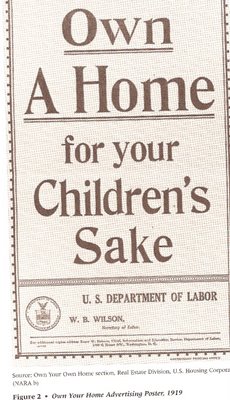
Anyway, the other day I came upon these two ads, both of which try to sell products by making parents afraid that if they don’t, they’ll be neglecting their kids. This first one makes it clear that this tactic isn’t new; it’s from 1919:

I found it in the article “Standardizing Childrearing through Housing,” by Paul C. Lukin and Suzanne Vaughan, in Social Problems, volume 53, issue 3, p. 299-331 (the poster is on p. 310).

I found this ad in a Las Vegas community magazine. The text lets you know that silver crowns can be unattractive, and that for your child’s sake you better pay for the white fillings (which are more expensive, and the extra cost is often not covered by dental insurance, even when people have it). I also like that metal fillings are called “bling.” Awesome.

Some of the text below the picture:

Being able to see the dental work in your child’s mouth is not always an appealing appearance. A healthy, natural looking smile for your child is our goal…Now you have a choice!

A couple of months ago, on a lark, I sent an email to Bitch magazine’s reviews department telling them about Sociological Images. If you’ve never read Bitch, you’re missing out–it has great articles on various elements of pop culture, and my only complaint is that it only comes out four times a year.

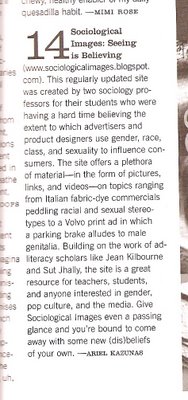
Anyway, this afternoon issue no. 40 showed up in my mailbox…and look what’s #14 on “the bitch list: an annotated guide to some of our favorite things”:

It’s on p. 71. Sadly my follow up email about the website address change got lost, so it has the old web address, but still! Yay!

This may overshadow the day I passed my Ph.D. defense in terms of excitement.

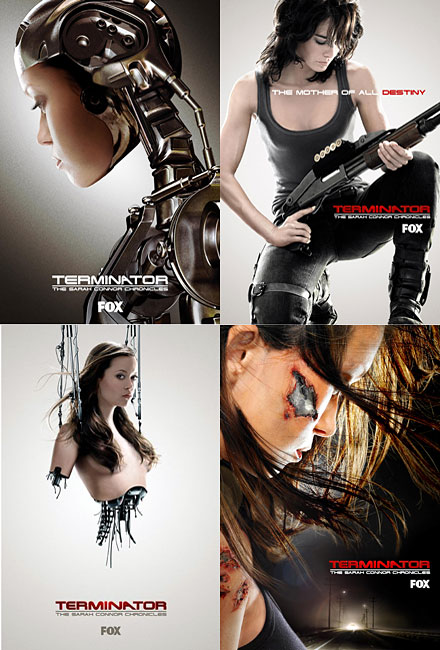
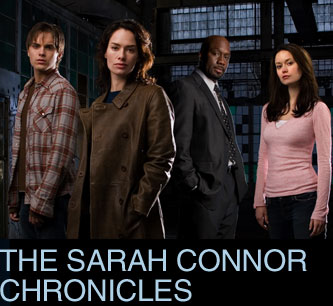
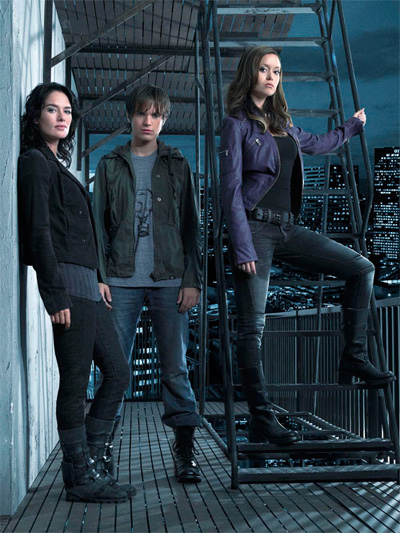
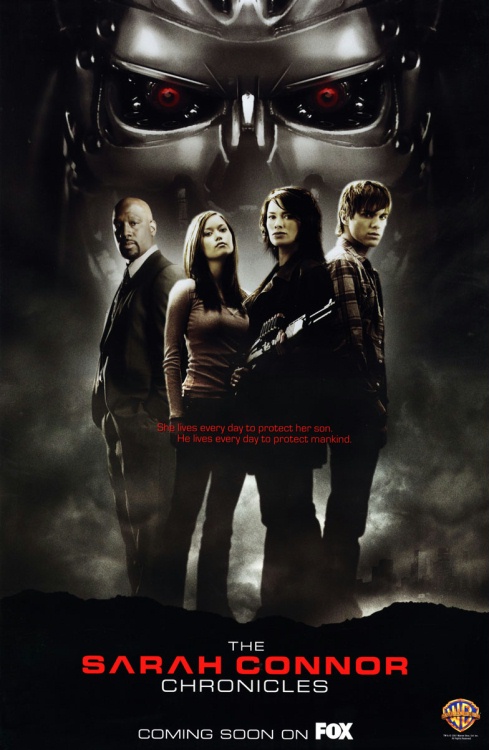
Dawn A. sent us these posters for The Sarah Connor Chronicles.  Notice how, in three out of four posters, the women are not making eye-contact and, in all of them, they are in a passive pose with a passive facial expression.  Dawn adds:

I’m alarmed by the disembodiment of the character.  While she may be a part of the Terminator series, would we ever see Arnold Schwarzenegger (or other male characters) portrayed like this in posters?

Thanks Dawn!

NEW: After a discussion with my friend Jason, I decided to offer some more images and commentary as food for thought.

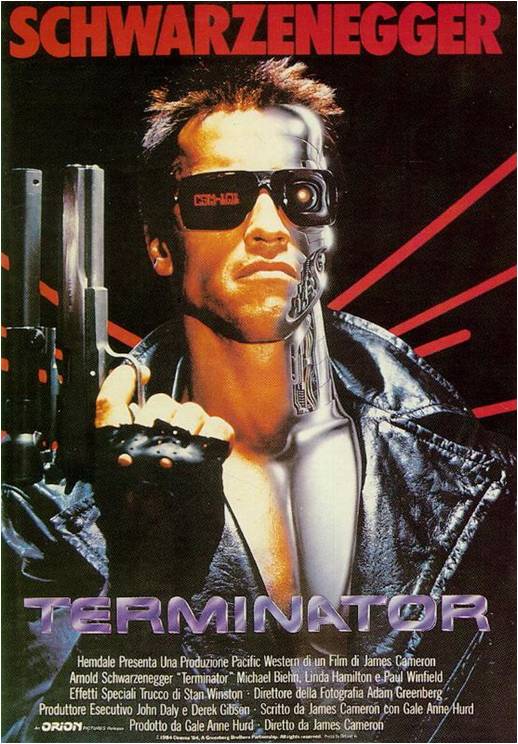
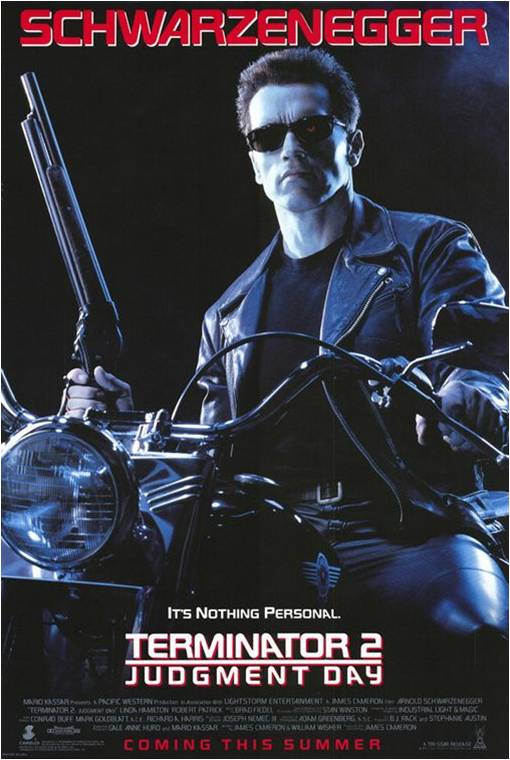
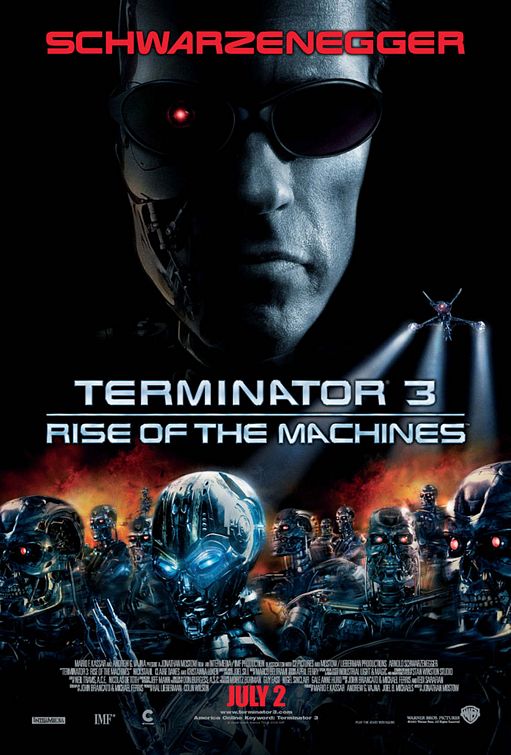
Here are the Terminator posters I could find featuring Schwartzenegger.  There are a lot of things separating and potentially separating these posters from those above other than gender: about 20 years, maybe the moral of the movies/series or the feeling of the show, and surely producers/directors etc.  Even so, I think it’s worth putting up the images for contrast.

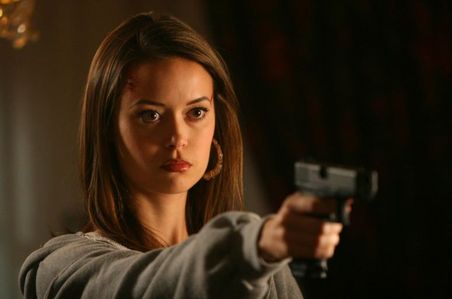
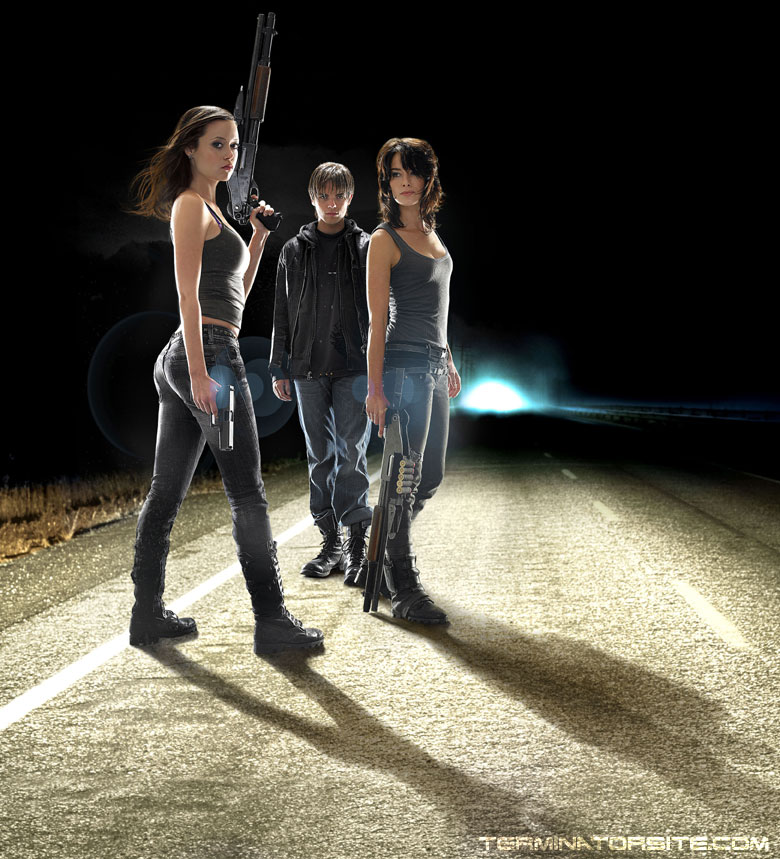
Back to The Sarah Connor Chronicles:  Below are some additional promotional images that do not reproduce the passivity we see in the first set.  Word on the street is (or so I have heard some people say), the women are not as feminized in the series as they are in the promotional material (which, if true, is interesting in itself).

Still, Jason notes that the empowerment of the women in the series as protectors, comes at the cost of disempowering John Connor and that disempowerment is achieved, in part, through his feminization.  His task, then, as the series progresses, is to finally become a “man.”  At that point, supposedly, he would no longer need the protection of women. 

So, femininity is still associated with weakness.  And, insofar as femininity is equated with weakness, and women are more-or-less required to do at least some femininity (lest they be called “dykes” or “bitches”), women are more-or-less required to appear at least a little bit weak in their daily lives. 

The images below are from a slide show to accompany the cover of a British magazine, Bizarre. You can see the slide show and the article accompanying her cover here. Thanks to Jason S. for the link!

What makes Viktoria “bizarre”? Is it her amputated leg? Is it the fact that she has an amputated leg and is still incredibly sexy? Or is it that she has an amputated leg and still considers herself a sexual person?

Is this empowering? And to who? Surely the disabled are desexualized in this country, so it’s nice to see that challenged even, I suppose, in a magazine about weirdos. And yet, I suspect her sexuality is acceptable, fetishizable, only because she conforms to expectations of feminine beauty. In the big scheme of things, does she reproduce the standard of beauty, unattainable for most women, that crushes women’s self-esteem and sense of self-worth? And will disabled women, most of whom (like most non-disabled women) could never dream of being so beautiful, actually look at her and be able to identify? Or will this just draw attention to another way in which they don’t match up?

Also, are these images really about her sexual-ness, her desire? Or are they about how sexy she is, the extent to which she can inspire desire in others? That is, is she just an object like any other pin-up girl? How are her images any different than those in mainstream pornography and men’s magazines? She speaks in the article about her own sexual curiosity and openness, but this is standard porn star talk and it’s very difficult to know whether it is genuine or performance. Would it matter if we knew?

This photo shoot of Viktoria for Bizarre magazine actually seems incredibly ordinary to me.

UPDATE: Comments on this post have been closed.

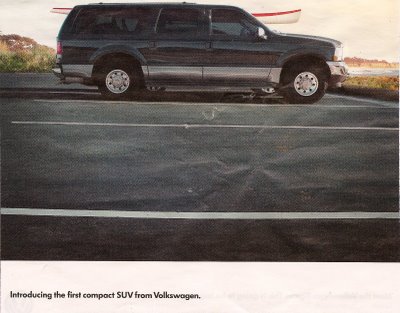
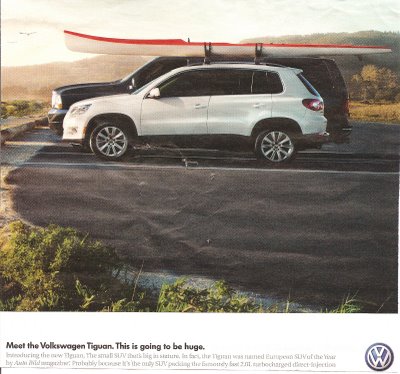
This is a two-page ad for the Tiguan, a “compact” SUV from Volkswagen. Whereas most SUV ads stress how big and powerful they are (often using images and language that associate them explicitly with masculinity), this one does the opposite–its small size compared to other SUVs is an asset in these ads.

I wonder who the target audience for the Tiguan is supposed to be. And are gas prices finally affecting what people are looking for in vehicles? Is being huge no longer the positive characteristic it was, like, 3 months ago?