
Laura K. brought our attention to these ads with not-so-subliminal sexual content (via haha.nu). Some of them are so-not-so-subliminal that they may not be safe for work.
Archive: 2008
Vietnam-era anti-draft propaganda from The Draft Resistance offers girls to pacifist boys.
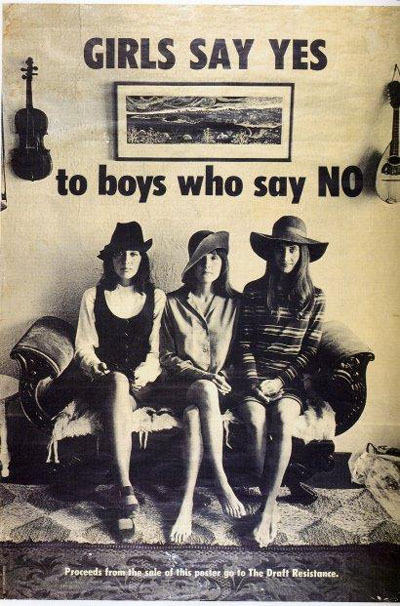
From Vintage Ads via Jezebel.
Maybe you’ve never noticed, given that feminists are always talking about the ladies, that there are lots and lots and lots of things that (real) men are not supposed to do. For instance: drink fruity drinks, wear pink shoes, look at their fingernails the wrong way, enjoy a “chick flick,” like a girl, like cats, prefer not to fight, care about grades, eat salad… should I go on? You get the gist.
Comparably, women have got it good. We’re allowed to knit and play soccer, be a mom and be a lawyer, take dance and karate, wear skirts and pants!
How do we make sense of this? Crash course: Femininity is just for chicks. When men do feminine things, they are debasing themselves. Masculinity is awesome and for everyone. When women do masculine things, they’re awesome. This is sexism: Masculinity rules, femininity drools. Men are encouraged to stay away from femininity, so their individual choices are constrained, but they also are staying away from something debasing. In contrast, women are required to do a least some femininity, so women are required to debase themselves, at least a little bit, even as they are given more options.
I say this all to introduce these two hilarious examples of men and how they have to worry about doing masculinity (sent in by Vesko J.).
How To Give The Perfect Man Hug
How I Sit On The Bus
Lisa Wade, PhD is an Associate Professor at Tulane University. She is the author of American Hookup, a book about college sexual culture; a textbook about gender; and a forthcoming introductory text: Terrible Magnificent Sociology. You can follow her on Twitter and Instagram.
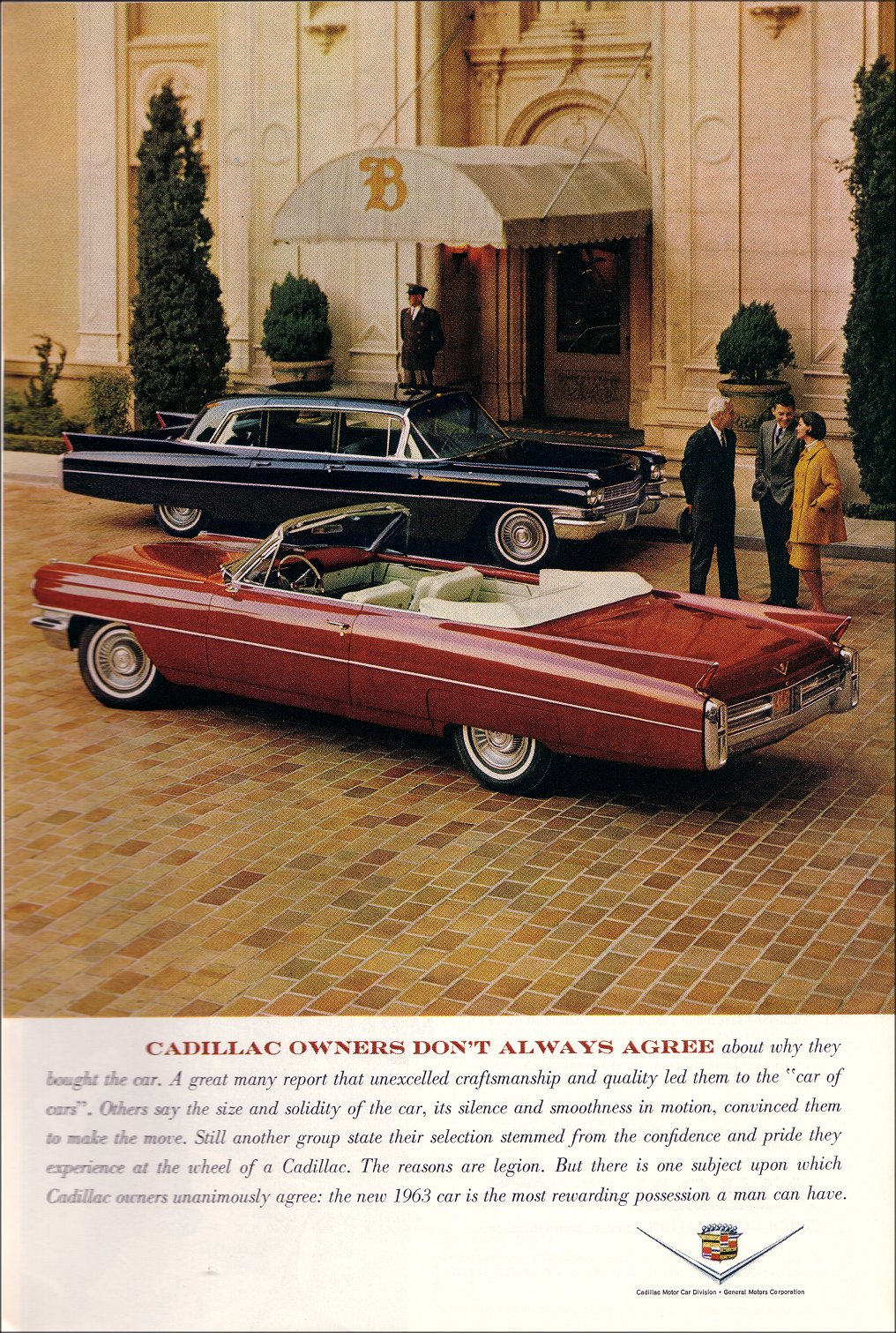
Class is usually a more subtle dimension of ads than race or gender. I think, and I admit I am speculating here, that it is because there is a need to, usually, appeal to the masses while at the same time suggesting that the masses do or should have access to the most high-class things (which they do not). Thus, the difference between being middle-class and upper-class is minimized at the same time that the symbolic attainment (only) of upper-class-ness is being sold to middle-class people. There are exceptions, of course, such as when ads aimed at the upper-class sell product by suggesting that a middle-class person could never afford it.
Anyway, these ads, found here, are from 1962 and 1963. I thought they were interesting because of the way they communicated wealth and luxury, mostly with location.
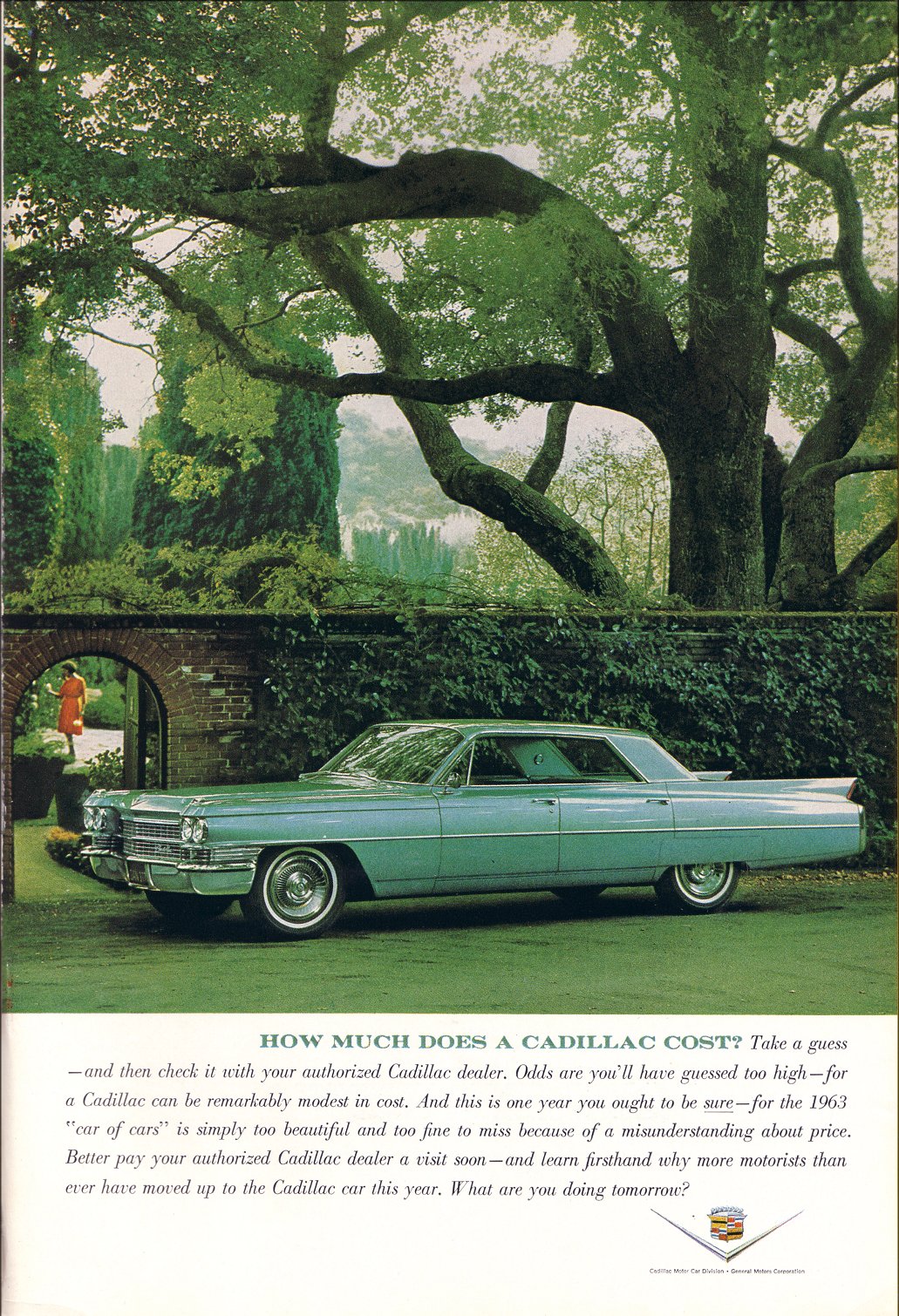
Notice the very old giant trees, ivy-covered ancient-looking stone, an archway, and hedges… all in what looks like a private residence. The copy, which suggests that I’m right about “symbolic attainment,” begins:
How much does a Cadillac cost? Take a guess–and then check with your authorized Cadillac dealer. Odds are you’ll have guessed too high–for a Cadillac can be remarkably modest in cost.
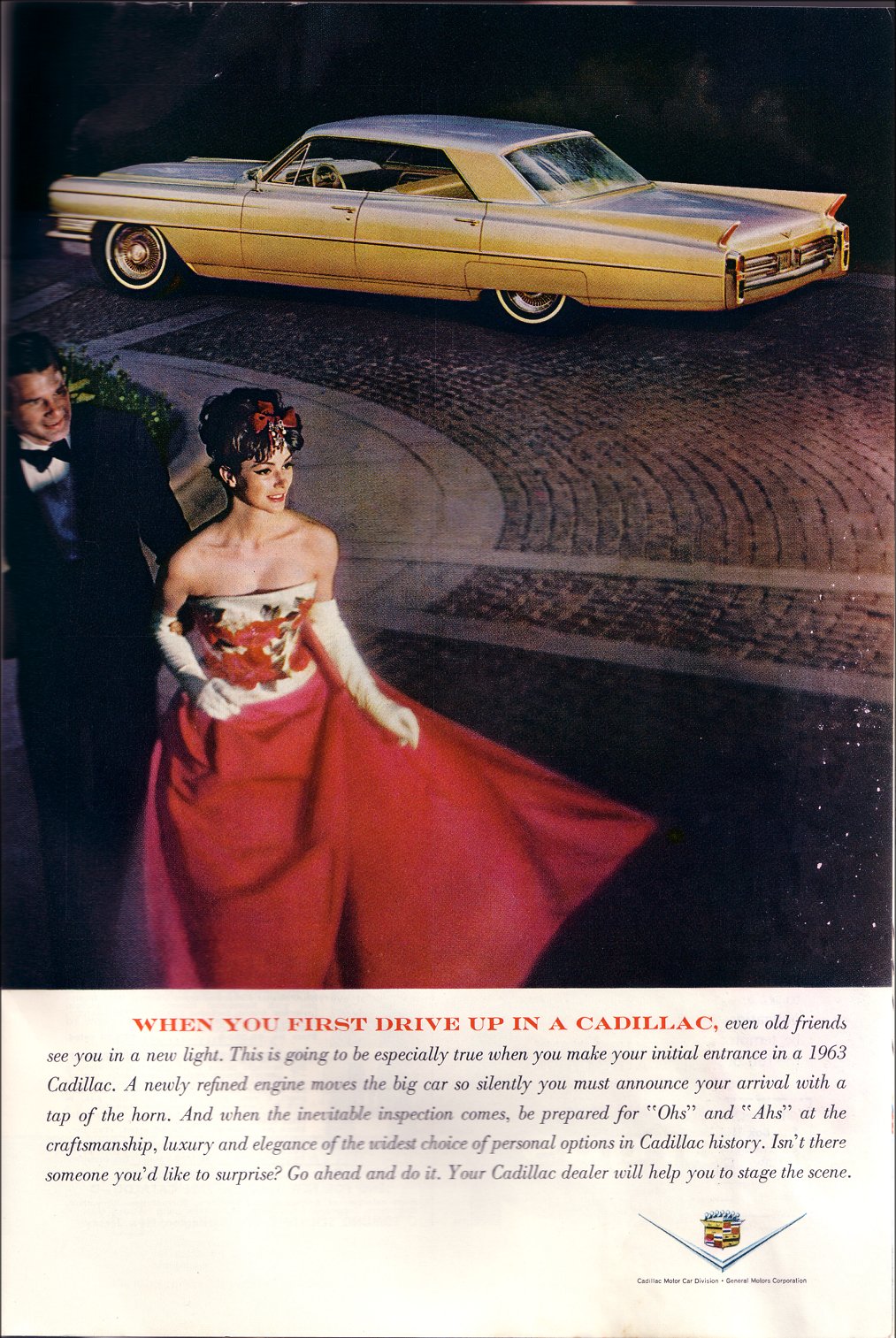
There is a beautiful woman in the expensive-looking dress, of course, but also notice the cobble-stone circular driveway under her feet:
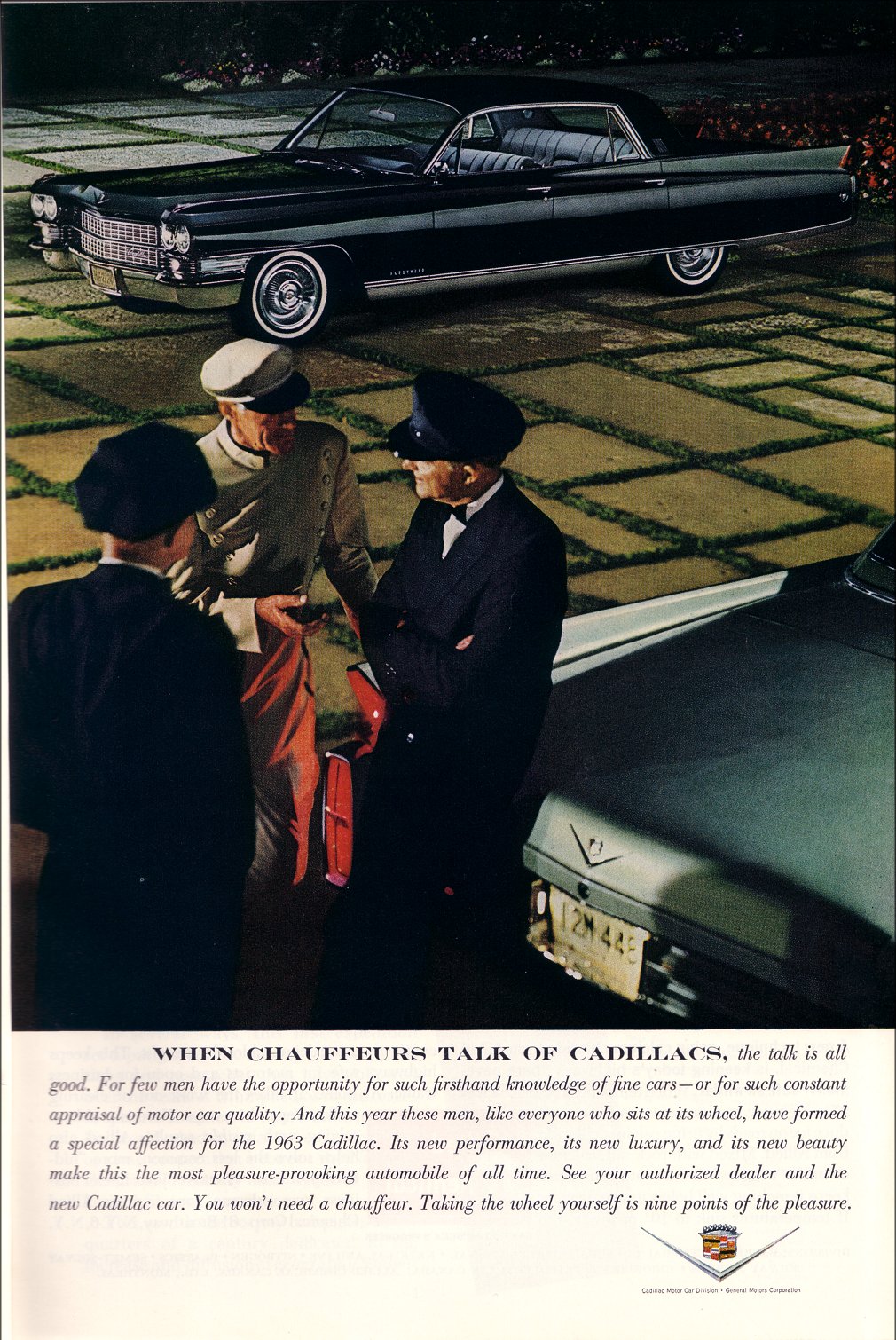
The chauffer communicates a certain degree of wealth, of course, but also the stone driveway decorated with greenery:
Cobblestones, again, and a very expensive New York City apartment building. Copy includes the following comment:
“…the new 1983 car is the most rewarding possession a man can have.”
Thanks to Jason for the link!
Jenelle N. sent this ad in:

As she put it, “I’d say there’s nothing subtle about this one.” No, indeed.
Thanks, Jenelle!
More proof that complaining works or, as I prefer to say, the squeaky wheel gets the grease (you haven’t forgotten the Obama sock monkey and the sex target yet, have you?). The commercial below was set to run in the U.K. for five weeks, but has been pulled due to complaints that a guy-on-guy smooch forces parents to talk to their children.
[youtube]https://www.youtube.com/watch?v=6sgNg_2eM38[/youtube]
Remember Ellen, though? And look what happened to her!
Via AdFreak.
Lisa Wade, PhD is an Associate Professor at Tulane University. She is the author of American Hookup, a book about college sexual culture; a textbook about gender; and a forthcoming introductory text: Terrible Magnificent Sociology. You can follow her on Twitter and Instagram.
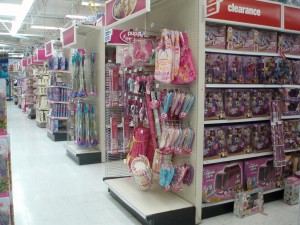
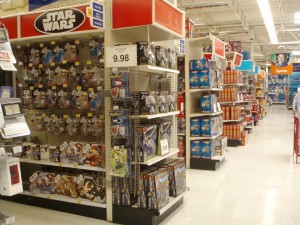
I took these pictures at the Toys ‘R Us in Henderson, NV. If you can’t tell, the picture on the left is the boys’ section of the store, and the picture on the right is the girls’ section. First, why must there be a boys and girls section at all? Must all toys be coded as masculine or feminine? Second, notice how gender is color-coded. Kids can tell immediately, even before being able to read, which aisle is for them. All this is aside from the content; that is, what toys are sold in each aisle. These are strong and clear messages to children about group differentiation.

* Picture and title borrowed from Jason S., who snapped the picture in the parking garage for the Sundance Kabuki Theater (Japantown, San Francisco, CA).
Vietnam-era anti-draft propaganda from The Draft Resistance offers girls to pacifist boys.
From Vintage Ads via Jezebel.
Maybe you’ve never noticed, given that feminists are always talking about the ladies, that there are lots and lots and lots of things that (real) men are not supposed to do. For instance: drink fruity drinks, wear pink shoes, look at their fingernails the wrong way, enjoy a “chick flick,” like a girl, like cats, prefer not to fight, care about grades, eat salad… should I go on? You get the gist.
Comparably, women have got it good. We’re allowed to knit and play soccer, be a mom and be a lawyer, take dance and karate, wear skirts and pants!
How do we make sense of this? Crash course: Femininity is just for chicks. When men do feminine things, they are debasing themselves. Masculinity is awesome and for everyone. When women do masculine things, they’re awesome. This is sexism: Masculinity rules, femininity drools. Men are encouraged to stay away from femininity, so their individual choices are constrained, but they also are staying away from something debasing. In contrast, women are required to do a least some femininity, so women are required to debase themselves, at least a little bit, even as they are given more options.
I say this all to introduce these two hilarious examples of men and how they have to worry about doing masculinity (sent in by Vesko J.).
How To Give The Perfect Man Hug
How I Sit On The Bus
Lisa Wade, PhD is an Associate Professor at Tulane University. She is the author of American Hookup, a book about college sexual culture; a textbook about gender; and a forthcoming introductory text: Terrible Magnificent Sociology. You can follow her on Twitter and Instagram.
Class is usually a more subtle dimension of ads than race or gender. I think, and I admit I am speculating here, that it is because there is a need to, usually, appeal to the masses while at the same time suggesting that the masses do or should have access to the most high-class things (which they do not). Thus, the difference between being middle-class and upper-class is minimized at the same time that the symbolic attainment (only) of upper-class-ness is being sold to middle-class people. There are exceptions, of course, such as when ads aimed at the upper-class sell product by suggesting that a middle-class person could never afford it.
Anyway, these ads, found here, are from 1962 and 1963. I thought they were interesting because of the way they communicated wealth and luxury, mostly with location.
Notice the very old giant trees, ivy-covered ancient-looking stone, an archway, and hedges… all in what looks like a private residence. The copy, which suggests that I’m right about “symbolic attainment,” begins:
How much does a Cadillac cost? Take a guess–and then check with your authorized Cadillac dealer. Odds are you’ll have guessed too high–for a Cadillac can be remarkably modest in cost.
There is a beautiful woman in the expensive-looking dress, of course, but also notice the cobble-stone circular driveway under her feet:
The chauffer communicates a certain degree of wealth, of course, but also the stone driveway decorated with greenery:
Cobblestones, again, and a very expensive New York City apartment building. Copy includes the following comment:
“…the new 1983 car is the most rewarding possession a man can have.”
Thanks to Jason for the link!
Jenelle N. sent this ad in:
As she put it, “I’d say there’s nothing subtle about this one.” No, indeed.
Thanks, Jenelle!
More proof that complaining works or, as I prefer to say, the squeaky wheel gets the grease (you haven’t forgotten the Obama sock monkey and the sex target yet, have you?). The commercial below was set to run in the U.K. for five weeks, but has been pulled due to complaints that a guy-on-guy smooch forces parents to talk to their children.
[youtube]https://www.youtube.com/watch?v=6sgNg_2eM38[/youtube]
Remember Ellen, though? And look what happened to her!
Via AdFreak.
Lisa Wade, PhD is an Associate Professor at Tulane University. She is the author of American Hookup, a book about college sexual culture; a textbook about gender; and a forthcoming introductory text: Terrible Magnificent Sociology. You can follow her on Twitter and Instagram.
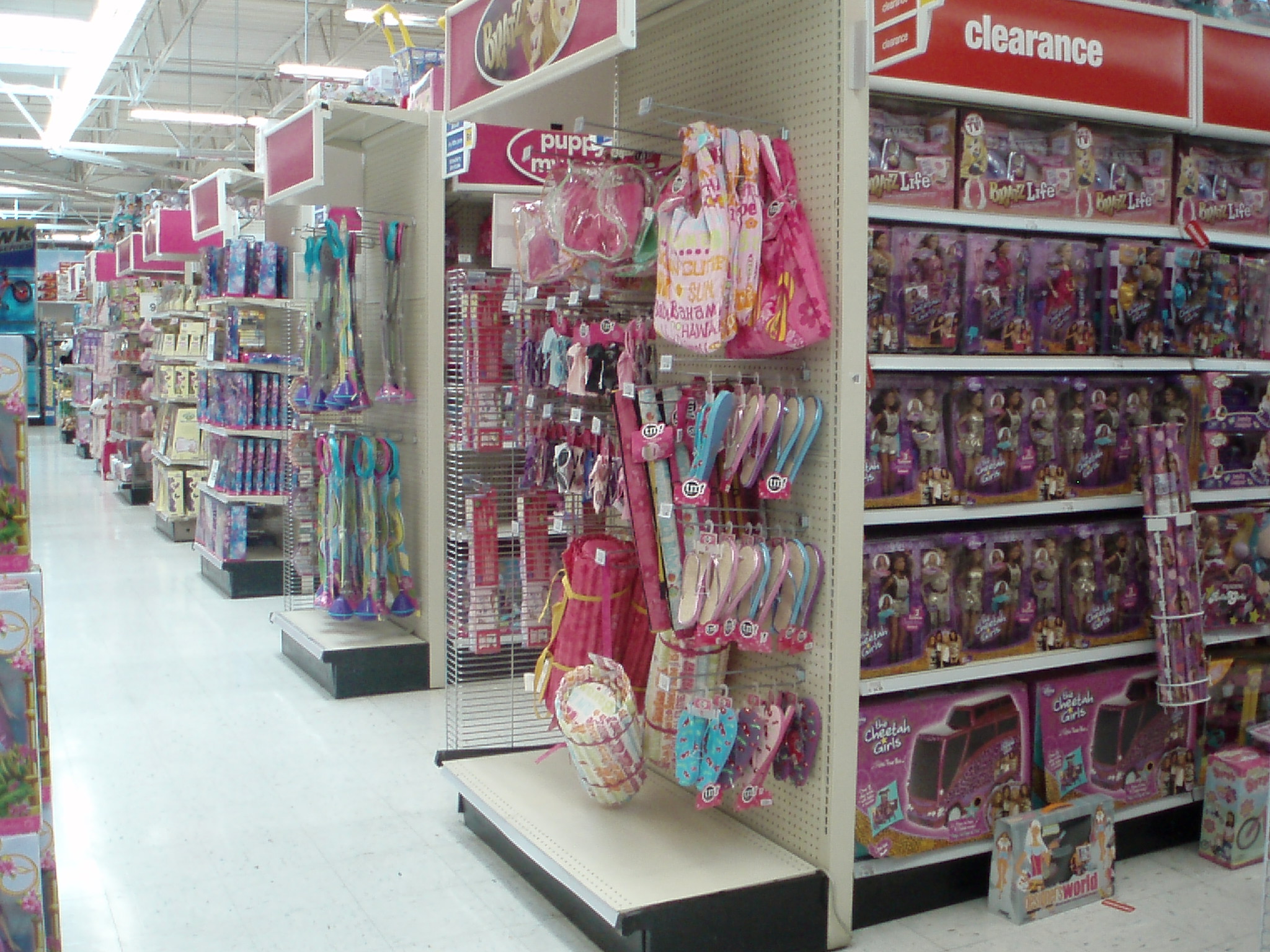
I took these pictures at the Toys ‘R Us in Henderson, NV. If you can’t tell, the picture on the left is the boys’ section of the store, and the picture on the right is the girls’ section. First, why must there be a boys and girls section at all? Must all toys be coded as masculine or feminine? Second, notice how gender is color-coded. Kids can tell immediately, even before being able to read, which aisle is for them. All this is aside from the content; that is, what toys are sold in each aisle. These are strong and clear messages to children about group differentiation.

* Picture and title borrowed from Jason S., who snapped the picture in the parking garage for the Sundance Kabuki Theater (Japantown, San Francisco, CA).