Archive: 2008

In her book The Body Project: An Intimate History of American Girls, Joan Jacobs Brumberg argues that increased access to mirrors in the 1800s helped spur middle-class Victorian obsessions with the body, particularly skin and the presence of acne on the face. Mirrors gave the average person more of an ability to imagine themselves through others’ eyes and to inspect every part of their body (and presumably find it lacking).

Samantha J. showed me the logical end-point of this association between mirrors and negative appraisals of one’s body: mirrors that don’t make you do the work of negatively judging your body, but just go ahead and do it for you.
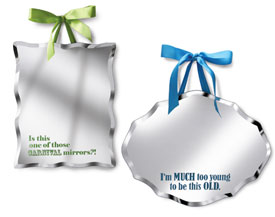
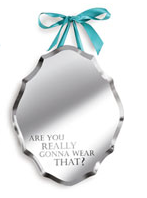
The one on the left says, “Is this one of those CARNIVAL mirrors?!” and the one on the right says, “I’m MUCH too young to be this OLD” (found here). The mirror below (found here) says, “Are you really gonna wear that?”
Of course, if you want a self-esteem boost, or already feel really good about yourself, you could buy this one (found with the one above), which says, “I’m the fairest of them all…”:
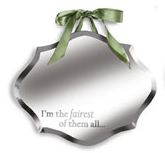
Anyway, they might provide a (sort of silly) illustration to go with a discussion of how increased access to mirrors or other technologies (is a mirror a technology?) have affected perceptions of the body and our ability to scrutinize every inch of it (which could, of course, be part of a larger discussion about how changes in technology can affect cultural trends).

Thanks, Samantha J.!
In her book, The Averaged Americans, Sarah Igo talks about the development of statistical methods.  Their development allowed for the emergence of the idea of an “average American.”  An idea that carried moral weight; “average” was “good.” 

Looking at the famous “Middletown” study, the Kinsey Reports, and the invention of polling, she discusses how methods aimed at identifying the average Amerian often reproduced preconceived notions of who was a real American.  In the Middletown study, Blacks were ignored because the researchers decided they didn’t count as average Americans.  Similarly, polling methodology is aimed at getting a representative sample, but representative of who?  Deciding who is being over- or under-represented in a sampling strategy is always a choice.

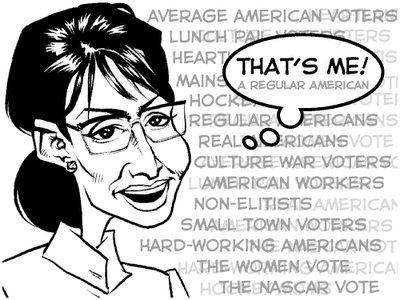
The invention of the “average American” as an idea is interesting in light of the McCain/Palin rhetoric about “main street” and “real America” and the way in which being a “typical” American is being framed as morally good (image from Stuff White People Do)


As with Middletown, the idea of the average American used by McCain/Palin is still racially-coded.  We Are Respectable Negroes lists 69 terms–including “regular folks,” “responsible Americans,” and “good hard-working people”–used by speakers in this election to mean middle-class white person.  Here are Palin’s words:

[youtube]http://www.youtube.com/watch?v=Vob9vFvojN8[/youtube]

Which brings me to Joe the Plumber.  Joe the Plumber, of course, is supposed to represent an “average” American.  But every in-group needs an out-group and, like all incarnations of the average, Joe has to be differentiated from the extremes, the non-average, the tails of the distribution: the blacks, the traitors, the poor, the Muslims, etc.  Here he is making exactly such an argument about Obama:

[youtube]http://www.youtube.com/watch?v=xw2Wczp9yOc[/youtube]

Indeed, convincing us that Obama is Other has been a central part of the McCain/Palin strategy (see here, here, a here, a here, here, here, here).

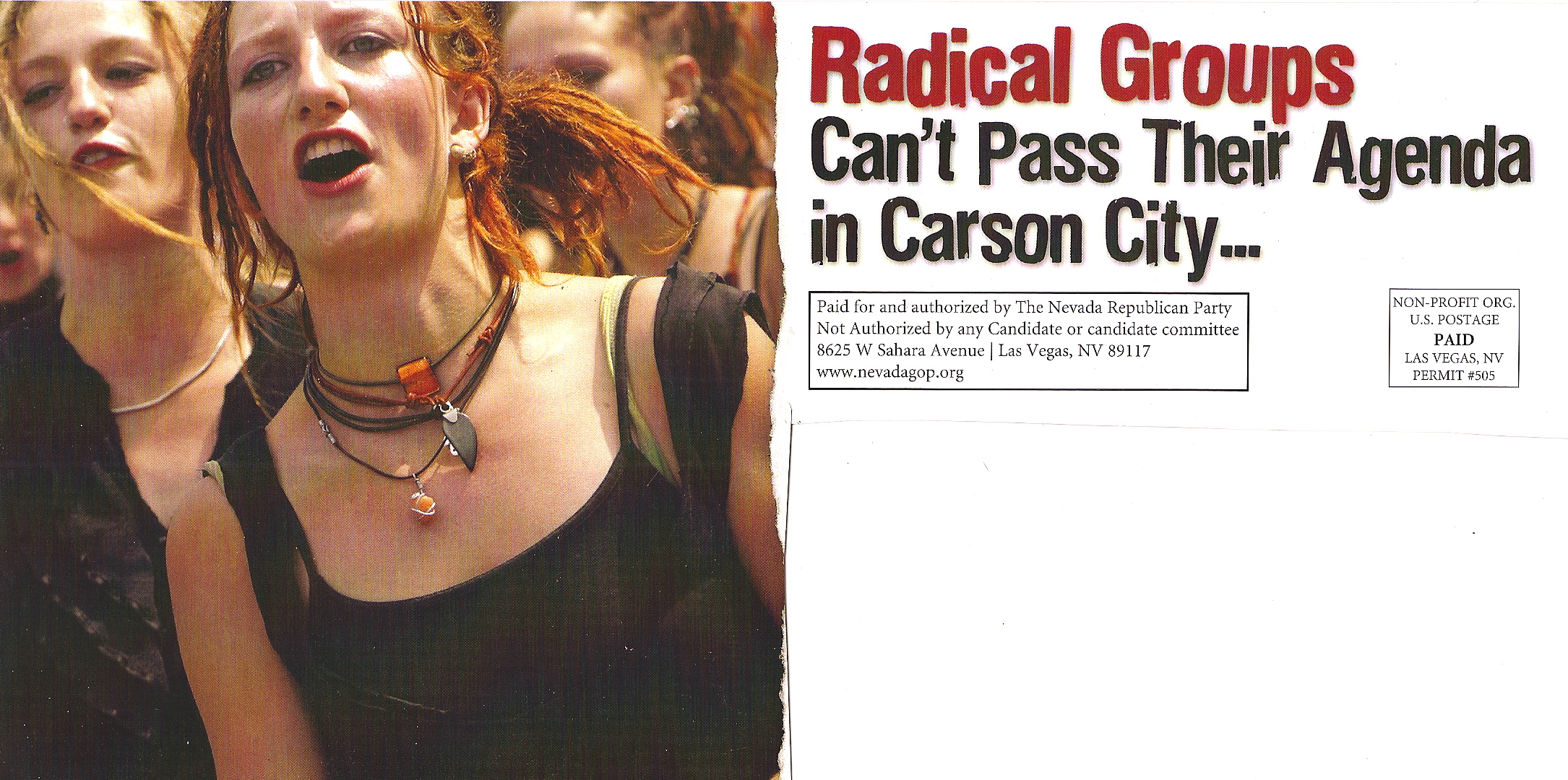
Nevada is a battleground state, and the state elections have gotten nasty (on both sides); the mailers I get every day don’t even pretend to be about issues any more, they’re just attack ads. I got this one, against a Democratic candidate, a couple of days ago:

I thought the photo they chose to illustrate “radical groups” was interesting. There were no specifics about what type of “radical” groups, or what they are radical about. To me, this image seemed like it was supposed to bring up the threat of radical (angry) feminists, but I don’t know if that was the specific type of radical this was meant to evoke or if that’s just what it makes me think of.

Anyway, it might be useful for a discussion of political discourses (for instance, how groups selectively use words like “radical,” “progressive,” “traditional,” “regressive,” and so on to depict change as either good or threatening), as well as what types of political agendas even appearances have become associated with “radical” politics (for instance, a woman wearing multiple necklaces and dreadlocks symbolizes radicalism).

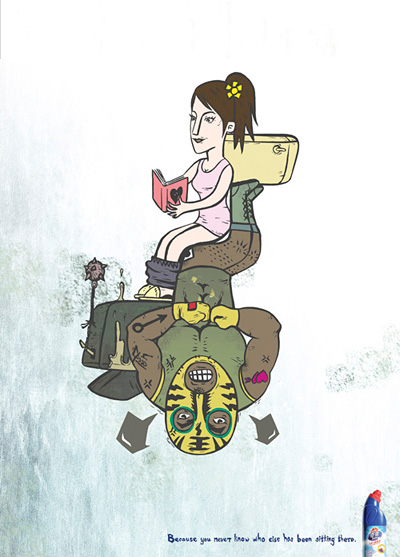
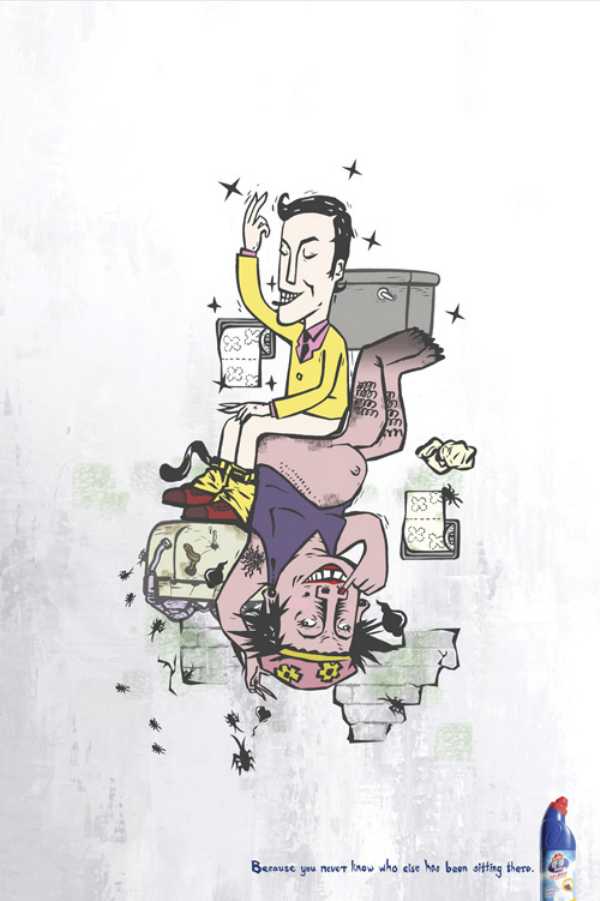
Nadya at Coilhouse sent in this ad campaign for Kiwi Kleen Toilet Cleaner.  In order to disgust you, the ads suggest that sharing a toilet seat is like sitting directly on someone else’s ass and, to disgust you further, they suggest that that someone else could be a Mexican wrestler, a fat pig, and a transsexual.  Keep it classy, Kiwi Kleen.  (Images found at Coilhouse and Coloribus.)


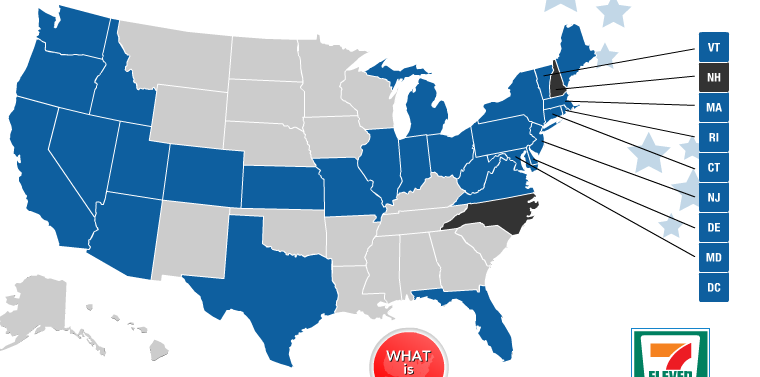
Apparently for the last several presidential elections 7-11 has had a “7-Election” marketing campaign, in which they offer blue and red coffee cups and customers “vote” by choosing one or the other. Here is a screenshot from the 7-Election 2008 website:

You can go to the website and see the “voting” results map (current as of this morning), which shows two states at 50/50 and every other state going for Obama:

If you go to the actual website, you can hover over each state and see what the % breakdown is.

Now, in and of itself, I just thought this was slightly interesting as an example of the commodification of political choice (“express your voting preference through a coffee cup!”), and I thought it could be used as an example of made-up statistics that are entirely meaningless. For instance, at the 7-11 near my house, I noticed they only have blue cups available, so it would be impossible to “vote” for McCain. Anyone with just some basic common sense could think of tons of problems with this as a real methodology–it didn’t even really seem worth my time to go into much detail about why a poll based on sale of coffee cups is unscientific and stupid.

But then I noticed something on the website: according to the website, results are reported weekly in USA Today (although I wasn’t able to find links to any weekly reports, which seemed odd). I know USA Today isn’t considered a high-quality newspaper by a lot of people, but still, it’s at least ostensibly reporting news. The 7-Election website also has a link to CNN, so perhaps they are partnering with them, too. Editor & Publisher ran a story on it. The results of a marketing scheme to sell coffee is being treated as news. I’m going to try to use it in class to discuss how things get defined as “newsworthy,” and who sets the agenda for what we’re going to talk about. Here we have a company getting free publicity for its marketing promotion because that marketing promotion has been declared “news.” What important information about the world is being ignored in favor of this? How does treating this as newsworthy legitimize it, as though these statistics are meaningful or accurate? Does that increase sales for 7-11?

I found a lot of comments on blogs where people claimed that after hearing about this campaign, they went out and bought coffee just to “vote” for their preferred candidate, and a few who said they refused to buy coffee because the store was out of the cups they wanted. I find this entire thing incredibly bizarre, and I don’t see why news outlets and individuals are buying into the idea that this is anything other than a way to convince more people to buy 7-11 coffee.

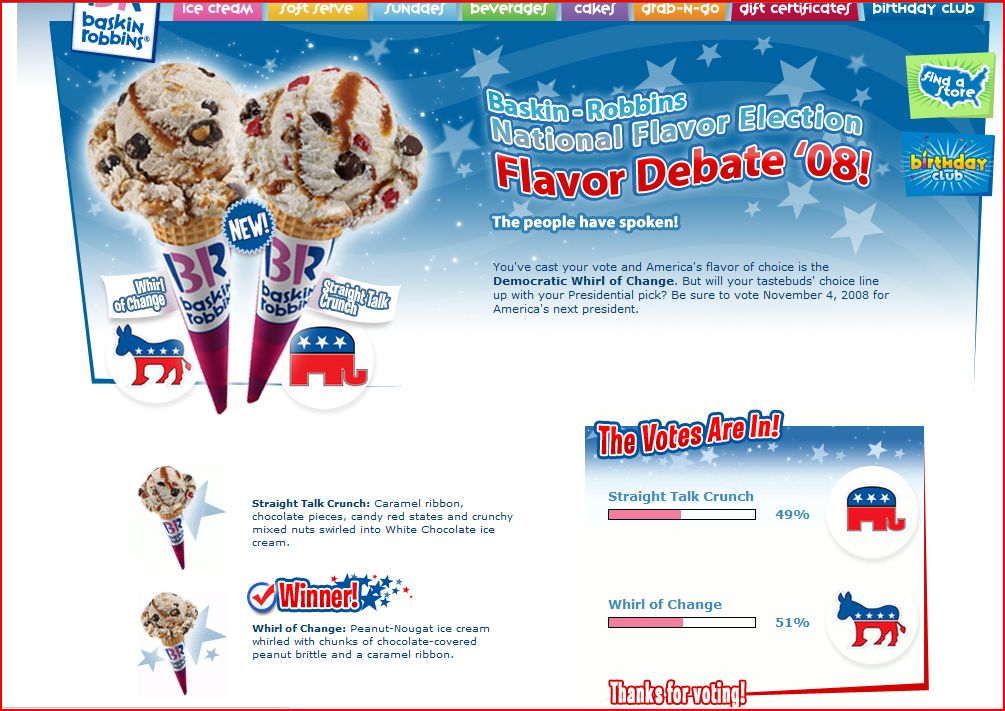
NEW!  In our comments, Penny pointed out that Baskin Robbins does the same thing.  Here are the results from this suspicously delicious poll as of the morning of Nov. 4th:

Hello Readers! 

Please enjoy this collection of posts that we’ve enhanced while you’ve been busy reading our new stuff and, um, all the election coverage you can stomach.  There will be more new material in our Special Election Round-Up!  Look for it on the morning of Nov. 4th.  But for now, click on these links and look for the bright red NEW!

Tini Puppini is a hyper-sexualized fake pet dog that combines sexualization with anthropomorphization in a super creepy way.  Just scroll past the sexualized equines in this post to the sexualized canines. It’s weird, I promise.

Single? Are the odds in your favor? We can tell you. We’d put up a map showing where single men outnumber single women and vice versa. And now we’ve added a link to an interactive map where you can choose particular age ranges and a screen shot of the map for the 30-45 and the 50-65 range.

Promoting smoking with doctors and Santa Claus? Oh yes! See some more vintage cigarette ads here.

miz_geek, in the comments to this post, pointed us to a commercial for Korean Air with truly blatant ejaculation imagery. Watch it here in our post where we collect, um, ejaculation imagery (scroll to the bottom).

Commenters Eoin and T.B. pointed us to another World War II carpool propaganda poster

In a hospital waiting room, we saw another sign instructing employees to do emotion work.  We added the images and further discussion on the topic to this post.

We added another instance of the use of the government-invented term “Hispanic.” This time it involves peanuts!

By “traditional marriage” do you mean polygamy?  We added two more examples of the satirical treatment of the traditional marriage.  The satiricist makes a pro-gay marriage argument by pointing to the trouble with the idea of “tradition.”

Scott W. sent us a great example of the use of the implicit promise of sex with a hot chick to sell, um, condominiums.  We added it to our post along that theme.

Our post featuring the sexualization of food is getting ridiculously extensive.  But when Denia sent us in a picture of hotdogs that said “Undress me,” we couldn’t resist adding them.  Click here and scroll all the way down.

NEW SAMPLE ASSIGNMENT

Karryn Lintelman generously allowed us to reproduce her assignment, The Rhetoric of Pop Culture, using Sociological Images and other resources.  Check it out here.

Elizabeth Dole (R) is running for Senate against Kay Hagen (D) in North Carolina. In the campaign ad below, Dole’s argument against electing Hagen is that she is supported by “Godless Americans” who believe in the separation of church and state. It is a nice example of the demonization of athiests (which, as we have seen, exceeds even the demonization of Muslims these days). (If the video doesn’t embed, click here.)

Found at The Daily Dish.

Click here for a nice gender and race analysis of a range of Halloween costumes for adults and kids by our blogger, Wendy.  We’ve also highlighted two costumes in particular: the Sexy Scholar and Anna-Rexia.  And, of course, just a few days ago, we posted about the Halloween display that includes a lynched Sarah Palin and a screenshot of an Obama mask found by searching for “terrorist costume.”  And don’t miss our jack-o’-lantern tribute to Max Weber.  See also, if you like, my Huffington Post about the race, class, and gender politics of Halloween.

To our newest Halloween material:

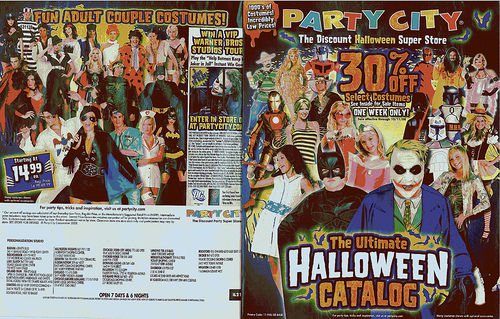
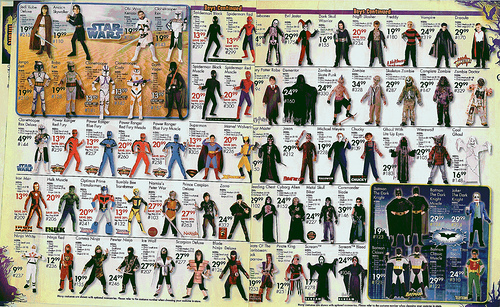
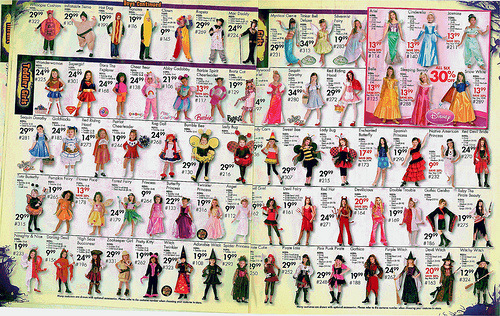
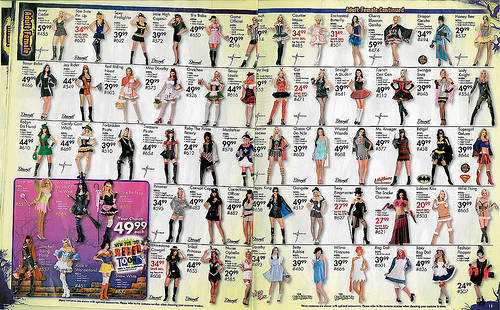
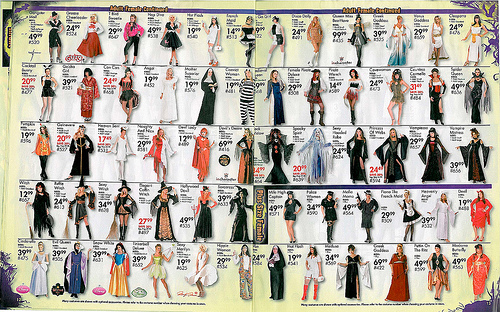
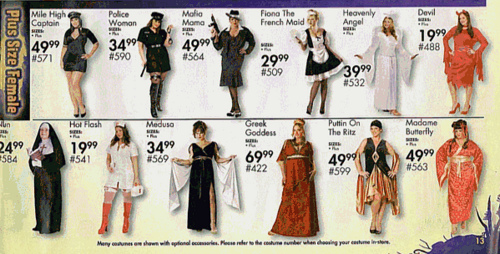
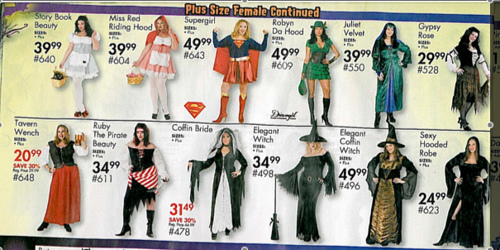
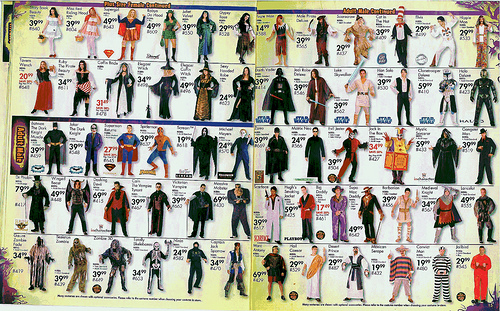
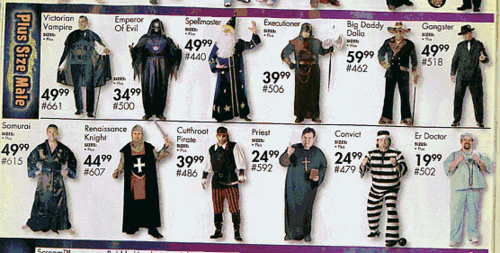
Andrea G. scanned in an entire Halloween costume catalog and offers some global observations about the breadth of costumes made available.  You can check out her flickr account here or scroll down for the images and some of Andrea’s commentary.

The Cover and Back:

Boys’ costumes:

Boys’ costumes (continued) and girls’ costumes:

Girls’ costumes (continued):

Women’s costumes:

Plus women’s costumes:


Plus women’s costumes (continued) and adult men’s costumes:

Plus men’s costumes:

First, Andrea notes how gendered the costumes are.  Women overwhelmingly are supposed to look sexy, while men are supposed to look funny or scary.  Note that this doesn’t vary much by age.  The costumes for adults and children are strikingly similar.

Second, Andrea points to how often men’s faces are covered by masks and how infrequently women’s are.  She writes that “5 out of the 198 costumes categorized under “female” or “girls” were masked (2.5%)” and “96 of the 180 costumes categorized under “male” or “boys” were masked  (53.3%).”  Andrea thinks: “I think this touches on the double standard American society holds for females/girls to be attractive and beautiful, while males/boys do not have to cater to this social rule, for the most part.”

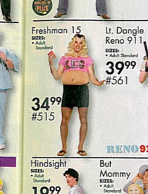
Third, Andrea notes that there are costumes designed to make men look fat, but not women.  For example, this “Freshman 15” costume:

Thanks Andrea!