Archive: 2008

Breck C. sent in a video of the original “Wassup” Budweiser ad. What strikes me about the commercial is the portrayal of male friendship: men don’t actually talk meaningfully, they just mention sports and yell catchphrases at each other. Yet this is associated with “true” friendship (as is Budweiser).

After watching it, I was trying to decide to what degree I thought race was an important factor in the commercial–were viewers likely to read this as how Black men interact, specifically, or just what men are like, more generally? African Americans are sometimes stereotyped as loud and more boisterously expressive than other groups, but lots of commercials portray men in general as sort of loud idiots (or children or animals) of some type or another.

I looked for some more “Wassup” commercials and came upon this one:

[youtube]https://www.youtube.com/watch?v=UDTZCgsZGeA[/youtube]

The only male shown being annoyed by the screaming–and not part of the friendship group–is the White guy at the end. I got the impression that he’s used to hearing it from them, so presumably he could have learned to like it as much as they have.

Both Breck C. and Burk sent in this update of the video, made by an independent director with all the original “Wassup” actors (and not in any way related to the Budweiser company):

Apparently this commercial became sufficiently imprinted in the public consciousness that it occurred to someone to update it as a political ad, assuming people would still remember and feel affection for the catchphrase and the characters. I had no idea.

Thanks, Breck and Burk!

Gwen Sharp is an associate professor of sociology at Nevada State College. You can follow her on Twitter at @gwensharpnv.
I’ve posted about the phenomenon of what I’ve called leftist balkanization or the way in which leftist causes tend to be narrowly focused such that they undermine other leftist causes (see here for my original post and here and here for two follow-ups).  Perhaps the opposite of such balkanization is social movements that try to bring together issues that find themselves on opposite sides of the political spectrum.  Below are two advertisements for the pro-environment anti-immigration movement.  The argument is that restricting immigration is good for the environment.

This first commercial from the Californians for Population Stabilization makes exactly this point:

You might be asking yourself whether this pro-environment anti-immigration message is really just an anti-immigration message shrouded in leftist rhetoric.   In this case, at least based on the commercial below from the same organization, the answer appears to be “yes.”

Of course, it’s not necessarily true that all anti-immigrant pro-environment messages are secretly simply xenophobic. For a great discussion of this troubled movement, see Leslie King’s great article that shows how challenging it is to mobilize a grass roots movement when one half of your message offends one half of the population and the other half of your message offends the other.

Via copyranter.

Cross-posted at Love Isn’t Enough.

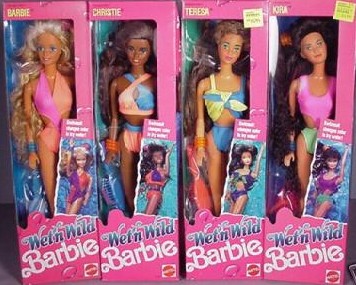
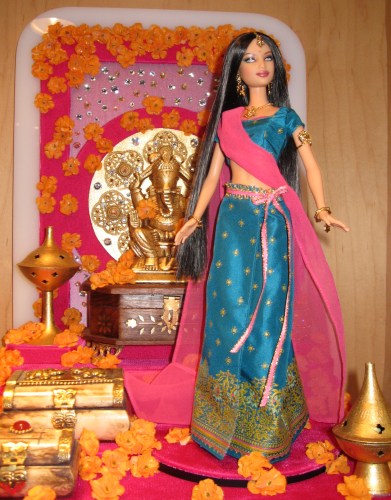
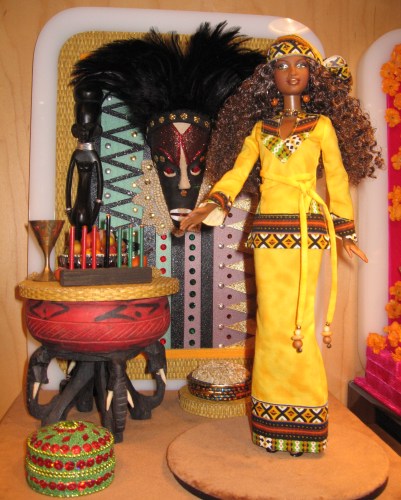
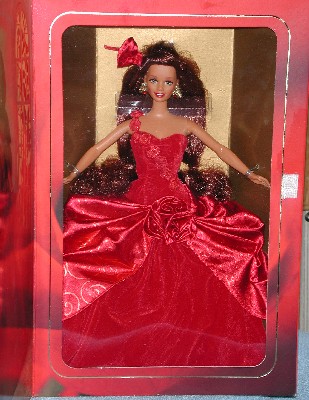
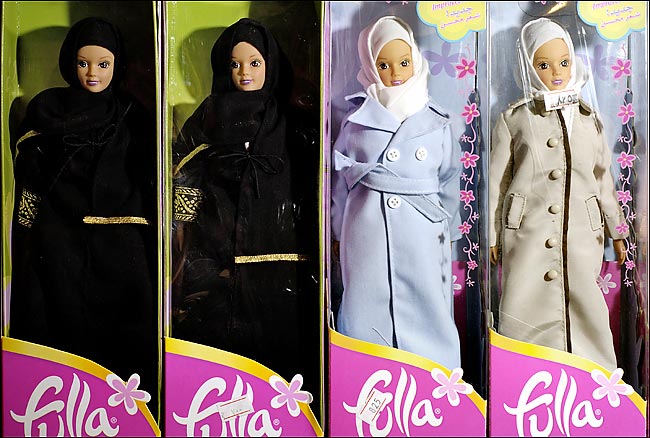
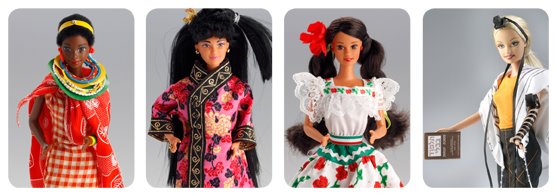
Ann DuCille, in her book Skin Trade, takes two issues with “ethnic” Barbies. 

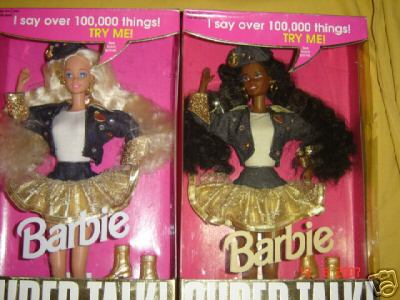
First, she takes issue with the fact that “ethnic” Barbies are made from the same mold as “real” Barbies (though sometimes with different paint on their faces).  This reifies a white standard of beauty as THE standard of beauty.  Black women are beautiful only insofar as they look like white women (see also this post).  DuCille writes:

…today Barbie dolls come in a rainbow coalition of colors, races, ethnicities, and nationalities, [but] all of those dolls look remarkably like the stereotypical white Barbie, modified only by a dash of color and a change of clothes.

Consider:

But, second, DuCille also takes takes issue with the idea that Mattell would try to make ethnic Barbies more “authentic.”  Trying to agree on one ideal form for a racial or ethnic group is no more freeing than trying to get everyone to accord to one ideal based in whiteness.  DuCille writes:

…it reifies race.  You can’t make an ‘authentic’ Black, Hispanic, Asian, or white doll.  You just can’t.  It will always be artificially constraining…

And also:

Just what are we saying when we claim that a doll does or does not look… black?  How does black look? …What would make a doll look authentically African American or realistically Nigerian or Jamaican?  What prescriptive ideals of blackness are inscribed in such claims of authenticity?  …The fact that skin color and other ‘ethnic features’ …are used by toymakers to denote blackness raises critical questions about how we manufacture difference.

Indeed, difference is, literally, manufactured through the production of “ethnic” Barbies and this is done, largely, for a white audience. 

To be profitable, racial and cultural diversity… must be reducible to such common, reproducible denominators as color and costume.

The majority of American Barbie buyers are only interested in “ethnicity” so long as it is made into cute and harmless variety.  This reminds us that, when toy makers (and others) manufacture difference, they are doing so for money.  DuCille writes:

…capitalism has appropriated what it sees as certain signifiers of blackness and made them marketable… Mattel… mass market[s] the discursively familiar–by reproducing stereotyped forms and visible signs of racial and ethnic difference.

Consider:

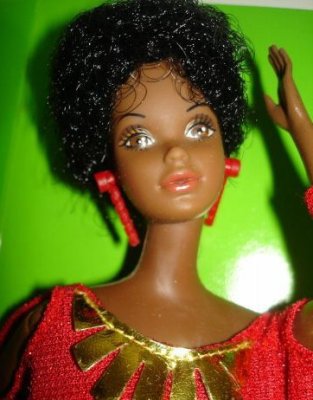
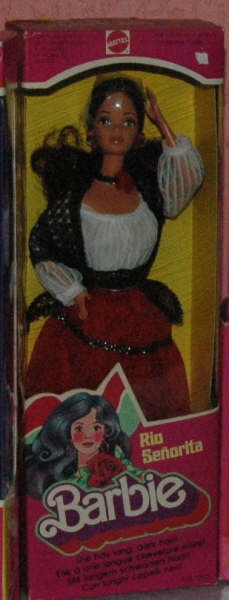
Black Barbie and Hispanic Barbie, 1980

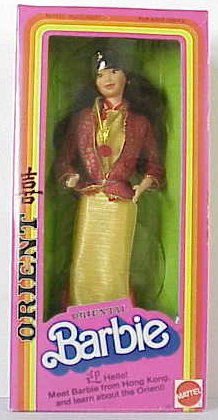
Oriental Barbie, date unknown

A later “Asian” Barbie (Kira)

Diwali Barbie (India)

Hula Honey Barbie

Kwanzaa Barbie

Radiant Rose Ethnic Barbie, 1996

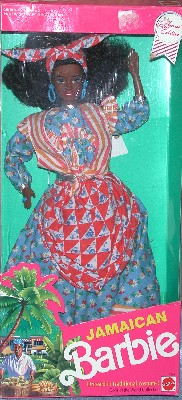
There are many reasons to find this problematic.  DuCille turns to the Jamaican Barbie as an example. 

The back of Jamaican Barbie’s box tells us:

How-you-du (Hello) from the land of Jamaica, a tropical paradise known for its exotic fruit, sugar cane, breath-taking beaches, and reggae beat!  …most Jamaicans have ancestors from Africa, so even though our official language is English, we speak patois, a kind of ‘Jamaica Talk,’ filled with English and African words.  For example, when I’m filled with boonoonoonoos, I’m filled with much happiness!

Notice how Jamaica is reduced to cutesy things like exotic fruit and sugar cane and Jamaican people are characterized as happy-go-lucky and barely literate while the history of colonialism is completely erased.

So DuCille doesn’t like it when Black Barbies, for example, look like White Barbies and she doesn’t like it when Black Barbies look like Black Barbies either.  What’s the solution?  The solution simply may not lie in representation, so much as in actually correcting the injustice in which representation occurs.

(Images found here, here, here, here, here, and here.) 

For a related post on race and friendship, see here.

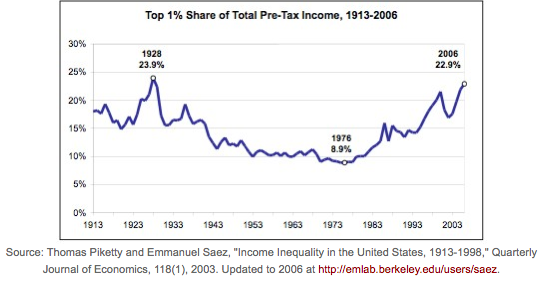
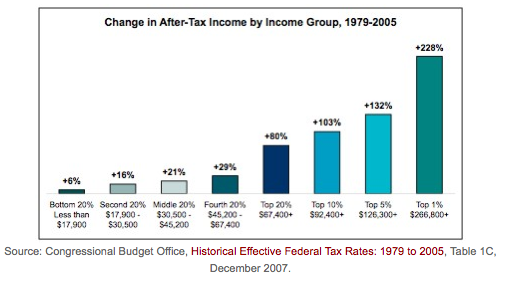
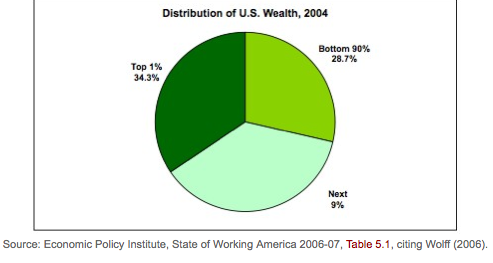
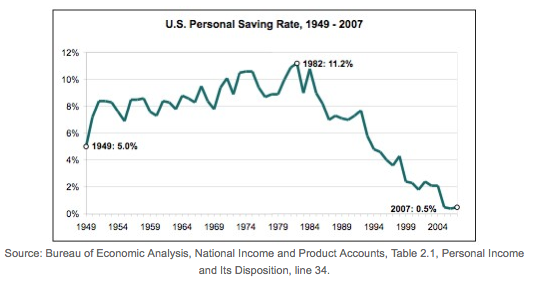
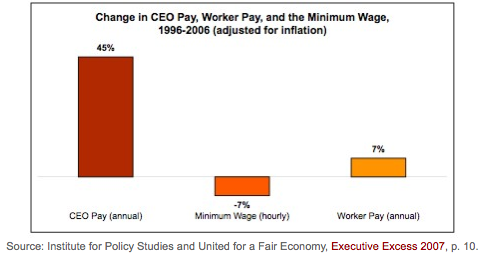
Here are some graphs about income inequality over time:

From the Working Group on Extreme Poverty.

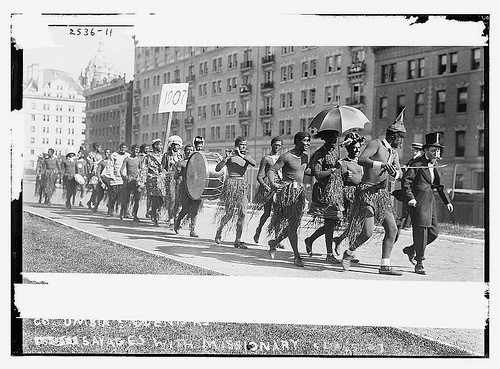
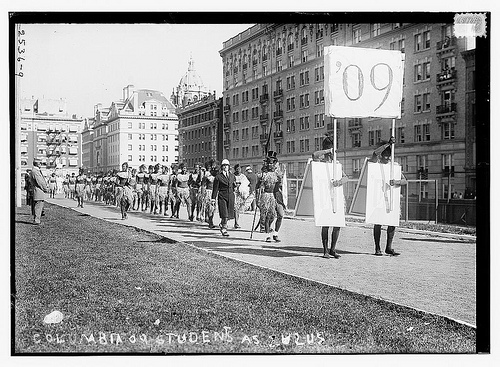
These images capture the Columbia University class of 1909 posing as “Zulu Savages” (found here thanks to Penny R.)  We may not be so surprised to see such mimickry of blacks in 1909, but I think that when compared to these pictures of college students at race-themed parties in 2007, it might make for some interesting discussion of humor, mimickry, racism, and the notion of progress… especially as Halloween approaches.

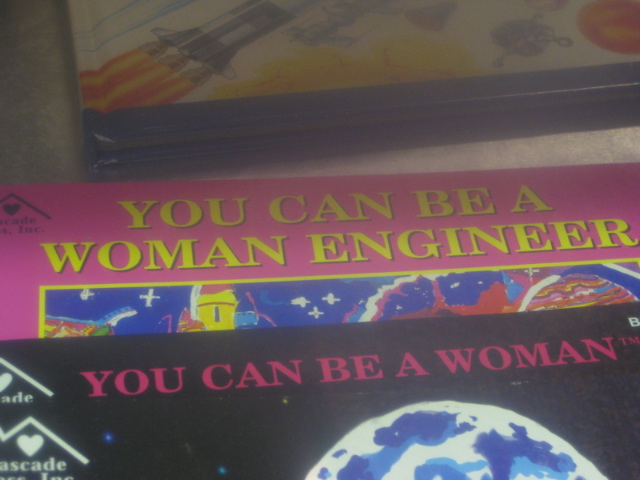
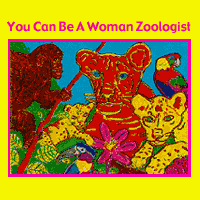
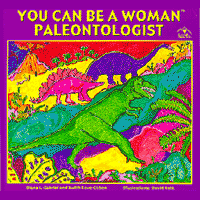
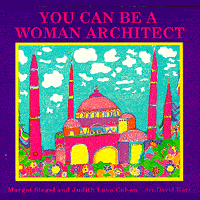
Beth T. sent us this picture of some books for sale at the NASA John Glenn Research Center in Cleveland.  I found some more at the website. They nicely illustrate the gendering of jobs.  Only because we implicitly think that zoologists, oceanographers, paleontologists, and architects are men, is it necessary to modify the term with “woman.”

Teresa C., from Moment of Choice, sent in the trailer for the movie “The Secret Life of Bees.” What brought her attention to it was that it had a female voiceover, which is very uncommon. Voiceovers are almost always male. Unfortunately, she hasn’t been able to find a video of the trailer with the female voiceover online; if anyone finds it, let us know. This trailer just has some of the characters’ lines from the movie as narration.

What struck me about it–and Owen Gleiberman over at Entertainment Weekly–was that this seems to be another movie in which wise, long-suffering African American characters protect or enlighten White characters who are, at their core, good, kind liberals (we know that Dakota Fanning’s character is a Good White Person because she knows about the Civil Rights Act). As Gleiberman says in his review,

Isn’t it time that Hollywood took a sabbatical — maybe a permanent one — from movies in which black characters exist primarily to save the souls of white ones?…Over the years, we’ve all seen too many anachronistic ”magic Negroes” in movies like Forrest Gump and The Green Mile.

I would add “The Legend of Bagger Vance” to the list. They have important Black characters, but those characters’ main role is to facilitate the moral development of the White character through their wise advice and unending patience. I may be totally off, since I’ve only seen the trailer (though Gleiberman has seen the whole film), but “The Secret Life of Bees” seems to have a lot of the same themes.

Thanks for sending in the clip, Teresa!

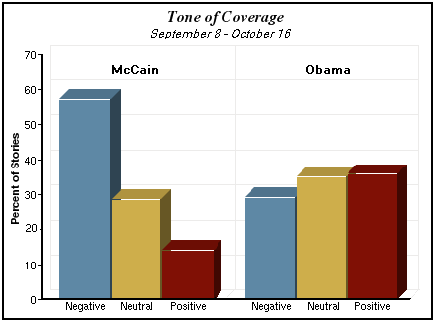
Data from the Pew Research Foundation, via Andrew Sullivan.