
Archive: Apr 2015


RU042315

This week, Cyborgology reported from the #TtW15 conference (that’s “Theorizing the Web 2015” for those not down with the hashtags), while we all wished Max Weber and Emile Durkheim happy birthdays, celebrated the Riot Grrrl movement, and considered guns, privacy, and presidential politics. Dive on in! more...
RU041015


As always, we’ve got a little something for everyone… dive in!

Feature:

Can We Race Together? An Autopsy,” by Ellen Berrey. Starbucks’ Race Together program sure seemed to unite people, but not necessarily around the need to abandon social constructions of race.

The Reading List:

Caught in the Culture Wars’ Crossfire,” by Jack Delehanty.

There’s Research on That!

Rights and Rights: Religion at Work,” by Jacqui Frost and Evan Stewart. “Restoring Religious Freedom Acts” affect the rights and freedoms of more than business owners and LGBTQ customers. Frost and Stewart look to scholars Amy Adamczyk and Cassady PittPenny Edgell, Joseph Gerteis, and Douglas Hartmann (hey! We know that guy!); András TilcsikMichael Wallace, Bradley R. E. Wright, and Allen Hyde; and Bradley R. E. Wright, Michael Wallace, John Bailey, and Allen Hyde.

Citings & Sightings:

XXX’d Out: What if Porn Disappeared,” by Sarah Catherine Billups. Sociologist Chauntelle Tibbals, author of the forthcoming book Exposure: A Sociologist Explores Sex, Society and Adult Entertainmenton why shutting down mainstream porn would harm performers.

Parenting: QT Better than OT,” by Sarah Catherine BillupsMelissa Milkie and Kei Nomaguchi share the findings of their recent study with the Washington Post: “I could literally show you 20 charts, and 19 of them would show no relationship between the amount of parents’ time and children’s outcomes… Nada. Zippo,” says Milkie.

Spitting and Suspicion,” by Sarah Catherine Billups. On the racialization of low-level crimes in a large midwestern city (hey! We know that city!) with Nancy Heitzeg and community consultant William W. Smith IV.

Toking While Black,” by Neeraj Rajasekar. Sociologist Pamela E. Oliver on the larger patterns that have resulted in disproportionate drug arrests of African Americans even in states with legalized marijuana.

For Gay Black Men, Negative Stereotypes May Have One Positive Consequence,” by Caty Taborda. When David Pedulla‘s research team sent out resumes for identical job candidates and descriptions of jobs they were perfect for, but manipulated whether their hobbies suggested they were gay, gay black men won out. Why?

An Eye-Clopening Workforce Trend,” by Sarah Catherine Billups. As small-staff shops move to having the same workers open and close the store, wociologist Gerhard Bosch tells the New York Times about the European Union’s required 11-hour rest period between shifts.

Money Talks,” by Jack Delehanty. New apps for payments and money transfers are nice and easy, but the record of your spending might say more about you than you’d like.

Give Methods a Chance Podcast:

Keith N. Hampton on Visual Content Analysis of Urban Space,” with Kyle Green:

“I think the biggest strength is that this is truly the only way to do a longitudinal study of public space. We can hang out in a public space for months, or maybe even a year, but doing that for two or three decades is simply impossible. So, for any large scale, longitudinal study of urban public spaces, I think this is probably the only method that is available to us.”

Daniel Sui on the Methodological Advantages and Limitations of Big Data,” with Sarah Shannon:

“In terms of the applications of big data, it is limited by only your imagination. That is why big data has attracted interest by industry, government agencies all over the world, and, of course, academics and scholarly researchers.”

The Editors’ Desk:

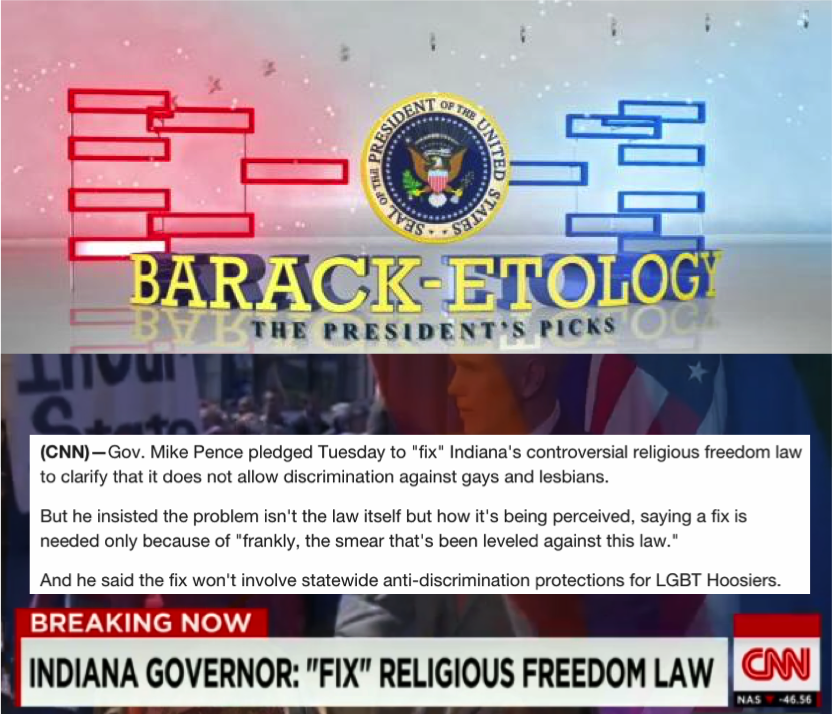
Holy Week, Hoops, and Hoosier State Law,” by Doug Hartmann. Last week, the eyes of the nation were on Indiana for two reasons: the contentious “Restoring Religious Freedom Act” and the NCAA Men’s March Madness basketball tournament. Turns out, that’s not such a surprising cross-over (even if Wal-Mart and NASCAR’s calls for repeal of the law may have been).

Scholars’ Strategy Network:

How Educational Opportunities Can Help Disabled Americans Break out of Low-Wage Occupational Ghettos,” by David Pettinicchio.

Why Historically Black Colleges and Universities Remain Vital in U.S. Higher Education,” by C. Rob Shorette II.

Council on Contemporary Families:

“‘Daddy’s Home!’ Increasing Men’s use of Paternity Leave,” by Ankita Patnaik.

A Few from the Community Pages:

Our Latest Book!

Sign Up for Inbox Delivery of the Roundup!

The Last Roundup!

IndianaNCAA


What to feature on the home page this week? How about some research on religion and society, since Passover and Easter are coming up? Or perhaps we should do something on LGBTQ discrimination, given the law that just got passed in Indiana (and a similar one Arkansas’s governor unexpectedly rejected). But maybe those stories are better framed sociologically in terms of protests and social movements, given all of the controversy that has surrounded it. Or does this actually require a religious analysis? After all, the legislation was called “The Restoring Religious Freedom Act.” Maybe, instead of playing our usual “Debbie Downer” role, we should just have some fun and find a piece on the Final Four, March Madness, and the whole spectacle of sport in modern society. (Though, truthfully, talking about college basketball as “spectacle” already feels like falling into familiar habits.)

If only we had a piece that brought all this together in one fell swoop. If only we had a piece that could connect the various dots of religion, rights and freedoms, LGBTQ discrimination, public policy and political protest, and mass-mediated, spectacle sports. And, can we get that before the high holidays are over?

Actually, in a way we have such a piece, or at least the building blocks for one. I’m referring to the drama that is being played out right in front of us this very week in Indiana as Governor Mike Pence, under heavy pressure from those calling for the NCAA to pull its headquarters (if not the Final Four itself) out of the state, scrambles to “fix” the legislation his legislature just approved. What a story! Here we see religion and sexuality come right up against each other, how the Constitutional “rights” of some are balanced (or not) against the Constitutional “freedoms” of others. Here we can observe how institutional power plays out against political protest and passionate social movements, as well as try to ferret out where the mass media and corporate interests with such stakes in March’s Madness will come down. Here we can watch as that seemingly fun, apolitical realm of sport suddenly gets pulled into a very high profile, very controversial, very political debate. And it is all happening during one of the most sacred weeks of the year. (I was talking about the religious folks when I first wrote that but I guess I shouldn’t leave the sports fans out–especially since I count myself, for better or worse, as a member of both of these passionate communities.) It’s almost too good to be true–from a sociological, home page-type point of view.

Of course, we don’t really have that story—or should I say that analysis—yet. If you are working on that and have something to share, please send it along. Sociological analysis doesn’t just write itself. In the meantime, let me share two smaller pieces that might help provide some frame and context.

One is a “TROT!” (There’s Research on That!) piece pulling together some great sociological research on the squishiness (that’s our technical term) of laws regarding religious freedom and the rights of refusal–that is, legal attempts to codify which forms of discrimination on the basis of race, religion, or sexual orientation are allowed; whose rights and freedoms are inscribed and institutionalized; and the problems with trying to enforce these laws and statutes in actual social life. So, while nearly half of all U.S. states have religious freedom and right of refusal laws on the books, most also include codicils specifying that businesses cannot discriminate on the basis of race, religion, or sexual orientation. How Indiana and Arkansas’s laws will—or will not—open the door for business owners and others to close theirs, refusing service to LGBTQ-identified citizens, should be interesting and the research compiled in this piece should help you understand the complexities and perhaps even anticipate how the drama will unfold.

Second, I’d like to direct you to the white paper Kyle Green and yours truly wrote for the TSP politics volume a little while back: “Sport and Politics: Strange, Secret Bedfellows.” The way in which politics and sport are colliding in Indiana right now is nothing new or novel. Too often when we are watching sports we don’t even see the politics being played out right in front of us. And too many of us are too quick to cynically dismiss struggles in the politic realm as mere games that don’t matter anymore. This stuff matters, no matter what side you are on or which team you are rooting for.