crime

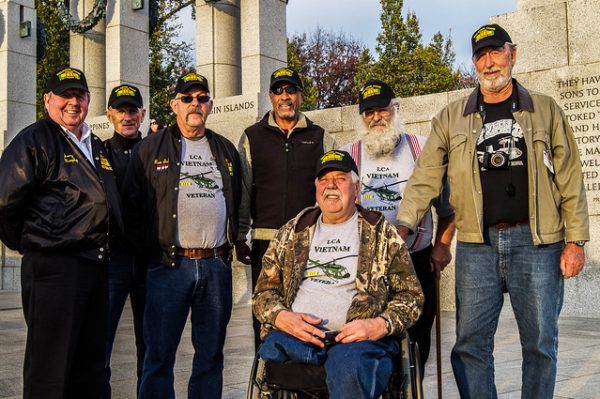
A group of seven vietnam veterans, wearing vietnam t-shirts. one is in a wheelchair, the others stand around him.
Photo by deveion acker, Flickr CC

Veterans Affairs (VA) has had it’s fair share of scandals — including 2014’s scandal about massive wait times in its healthcare system. A new policy now allows U.S. veterans to seek care outside of traditional VA hospitals in an attempt to reduce the wait time — still a month or more — for veterans seeking treatment. New research explores the long-term consequences of combat experience for veterans’ health and finds that worsening physical and mental health outcomes later in life are not directly related to combat experience (i.e., a physical injury suffered during combat or PTSD that directly results from combat). Instead, poor health can result from a variety of social and psychological processes in veterans’ lives after returning home.

Jason Schnittker used data from the 2010 National Survey of Veterans to understand how combat experience relates to poor health. Respondents reported their physical health (whether they needed help with basic activities) and mental health (whether they had been treated for a psychiatric disorder in the past six months). Schnittker restricts the analysis to veterans who served during the draft era (prior to 1974) and excludes veterans with service-related disabilities.

Veterans who had combat experience (service in combat or a war zone) and had contact with  dead and wounded reported worse health than those who only reported combat experience. Further, those with combat experience reported worse health than those who only served during years of active combat operations.  

Psychiatric disorders explain part of the relationship between exposure to the dead or wounded and poor health outcomes. Not all health effects are the result of trauma, though — feeling unprepared for the transition back to civilian life, social relationships, and smoking behavior also explain a significant portion of the relationship between combat experience and poor health.

This research demonstrates that veteran’s health outcomes — especially physical health — involve a variety of psychological and social processes. For example, veterans whose experiences in civilian life diverge significantly from their experiences as a service member may find it difficult to reconcile their military service with their new roles and identities in civilian life. Schnittker believes this research can also help inform transitions out of other “total institutions,” like prisons, or even out of significant social roles. Understanding the unique experiences of veterans will be even more important as veterans begin seeking care outside of veteran-specific hospitals. 
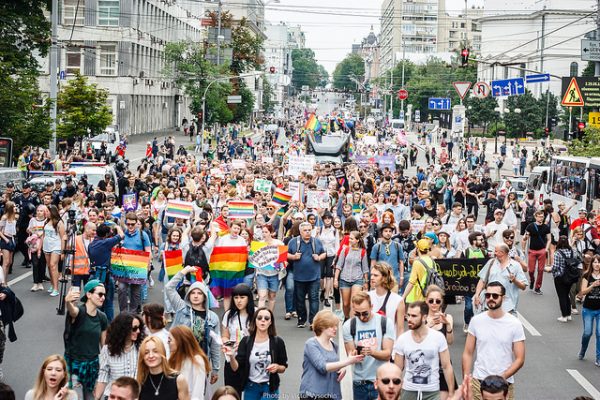
Pride Parade in Kyiv 2017. Photo by Arrideo Photography, Flickr CC

Originally published October 10, 2018

At the international level, the advancement of sexual minorities’ rights often result from advocacy by broad international human rights groups, like Amnesty International, or from international organizations specializing in LGBT issues. In a recent study, Kristopher Velasco investigated which of these two types of organizations is more effective at influencing the national adoption of progressive LGBT policies.

To measure the success of LGBT causes at the national level, Velasco created a LGBT Policy Index of national laws that impact people with different sexual orientations, gender identities, or who engage in same-gender sexual practices. The Index is higher in countries that have enacted bans on employment discrimination, established hate-crimes protections, or legalized same-sex unions. Velasco then gathered data from 156 countries for the period between 1991 and 2015 . The study compares the relationship between the Index and the global emergence of human rights international organizations and LGBT international organizations, as well as the overall effect of the mounting global support for LGBT rights.

Velasco finds that the LGBT Policy Index has dramatically risen since 1990. For example, bans on employment discrimination increased from less than 1% of countries in 1991 to over 32% in 2015. Velasco also finds that the emergence of national LGBT policies is significantly associated with the global emergence of organizations specifically concerned with LGBT rights, and it was not significantly associated with the presence of broader international human rights organizations. In addition, the positive effect of LGBT international organizations increases when considering the mounting support for LGBT rights in the global context. For instance, as the United Nations expresses growing concern to sexual orientation and gender identity, political leaders are more likely to adopt progressive LGBT policies.

In short, globalization and mobilization of international organizations — especially those concerned with particular issues — play a key role in whether nations adopt LGBT-friendly policies.

Photo of elementary school students standing by their desks working with construction paper.
Photo by K.W. Barrett, Flickr CC

Millions of students each year are suspended or expelled from school, sometimes in response to minor, non-violent policy violations such as skipping class and “disruptive behavior.” These harsh policies disproportionately push out students from disadvantaged backgrounds, especially youth of color. Much of the research on this topic focuses on middle and high school students. However, a new study by Wade Jacobsen, Garrett Pace, and Nayan Ramirez shows that a surprising number of urban students are already impacted by the third grade.

The researchers used data from several thousand children in 20 large American cities to document how many were suspended or expelled by age 9. Overall, 11% of children were removed from school at least once by this age. However, there were stark race and gender inequalities in elementary school discipline. Only 8% of white boys and 2% of white girls were suspended or expelled, compared with 40% of black boys and 15% of black girls.

Next, the researchers wanted to understand what factors are driving inequalities in early school discipline. They found that racial disparities were not due to differences in behavior reported by parents. Instead, disparities were mostly explained by school disciplinary practices and family background, such as poverty and parental incarceration.

Exclusionary discipline is intended to punish and reduce aggressive behavior. However, the researchers showed that children who were suspended or expelled became more physically aggressive after they returned to school. They suggest that suspension and expulsion disrupt routines at home and cause children to fall behind at school, and this increased stress may lead to poor behavior.

While exclusionary discipline may sometimes be necessary to ensure student safety, there can be little disagreement that pushing kids out of schools when they are still learning to read is a practice that should be reconsidered. Finding effective alternatives to exclusionary discipline for non-violent behavior at an early age could improve racial equity in life-long educational outcomes.

Photo of young students writing at a long table. The student closest to the camera is an African American boy with glasses and a green shirt.
Photo by Amanda Mills, USCDCP. Pixnio, CC

“Broken-windows” policing was a popular policing strategy in the 1990s that emphasized aggressive policing of low-level crimes as a way to reduce more serious crimes in an area. However, broken-windows policing led to racial disparities in stops and arrests in many cities where it was implemented. Recent research by Joscha Legewie  and Jeffery Fagandemonstrates that such disparities in police stops and arrests can have far-reaching impacts on youth educational performance. Specifically, they found that in New York City, broken-windows policing led to diminished educational successes among African American boys in particular.

Legewie and Fagan tested the effect of policing program, “Operation Impact,” which began in 2004. Over its 10 years in existence, Operation Impact targeted high-crime areas of the city for increased stop-and-frisks of pedestrians and officers were encouraged to make arrests for low-level offenses. Legewie and Fagan argue that Operation Impact could have two potential impacts on educational performance among youth: 1) it could lead to major reductions in crime which could increase academic performance in high-crime areas or 2) it could diminish educational achievement due to negative direct and indirect contacts with police.

The authors employ data from two major sources to test this relationship: a database of NYC student records from 2003 to 2012 and NYPD data on pedestrian stops, crime complaints, and arrests during Operation Impact from 2004 to 2012. They adopt a difference-in-differences analytic approach to assess the before and after impacts of Operation Impact on crime and educational performance. The NYPD expanded, moved, removed, or added impact zones every six months during implementation of Operation Impact, which allowed Legewie and Fagan to estimate the causal effect of the program on youth educational performance by accounting for other neighborhood factors that could confound their findings.

Operation Impact lowered educational performance of black boys in the neighborhoods affected, especially those between the ages of 13 to 15. They find that this reduced educational performance was related to decreased school attendance among African American boys, suggesting that this form of system avoidance may be partly to blame for bad test scores.

This research demonstrates how broken-windows policing strategies have had far-reaching consequences for opportunity gaps in education. The analysis suggests that while Operation Impact reduced violent and property crime rates, its costs to students’ educational success outweighed these crime reductions.

Image shows people holding protest signs. One sign says "Mr. policeman please don't kill my day, my child, brother, uncle, cousin, friend, etc. thank you." Another says, " the right to bear arms is a white privilege."
Photo by Tony Webster, Flickr CC

On April 18th, police officer Christopher Krickovich faced public criticism for rough handling a Black teenager at a local school. Similar incidents across the nation have compelled Black parents to talk to their children about how to navigate and survive police interactions. Most of these conversations use familiar high-profile cases involving Black men such as Michael Brown and Eric Gardner to illustrate the danger with police contact. Yet, Black girls and women have largely been neglected as targets of police brutality. In a recent study, Shannon Malone Gonzalez reveals that Black girls are not only left out of public discourse regarding police violence, but also the everyday “police talk” Black mothers use to teach Black children how to navigate interactions with law enforcement.

Gonzalez conducted interviews with 30 middle- and working-class Black mothers in an urban city. Each mother had one or more children between the ages of four and thirteen and 21 Black mothers had at least one daughter. During her interviews, Gonzalez asked Black mothers to reflect on their children’s racial and gendered vulnerabilities to police violence and how these perceptions of vulnerability informed police talk with their children.

Black mothers often utilized the “making it home” framework when discussing police with their children. Through double consciousness — understanding one’s own vulnerabilities through the lens of the dominant group — this framework teaches Black youth to be hyperaware of police stereotypes that reproduce notions of Black criminality. Mothers provide suggestions for how Black youth should interact with law enforcement to increase their chances of “making it home” safely. Black mothers believe these talks are vital for their children’s survival.

At the same time, Gonzalez points out that these talks marginalize the experiences of Black girls in three ways. First, Black mothers often categorized Black sons as the primary targets of police brutality and Black daughters as collateral targets or “secondary victims.” Even when asked about girls, several mothers turn their attention back to their sons. Second, these talks reinforce the idea that violence associated with masculinity, such as physical assault and shootings, are more important than verbal harassment or sexual violence — experiences that are more often linked to women’s experiences of police misconduct. The “making it home” narrative also treats the home as an inherently safe space, even though homes often function as a site of police violence for Black girls and women. Finally, mothers see police talk as crucial for boys’ socialization but optional for their daughters. Through her work, Gonzalez encourages us to make Black women’s and girls’ experiences with police more visible in our understandings of police-community relations.

Hand holding American hundred dollar bills with a rubberband wrapped around the bills.
Photo by 401(K) 2012, Flickr CC

The heated condemnation of celebrities and business leaders in the recent Varsity Blues Scandal reveals how indifference to apparently harmless donations can transform into massive condemnation of a crime. In a recent study of moral reactions to questionable transactions, researchers Oliver Schilke and Gabriel Rossman asked people to rate their disapproval to dubious exchanges taking place under varying scenarios. Reactions varied according to the social context and components of the transaction, even when goods and the traders involved in the negotiation remained the same.

Schilke and Rossman created several vignettes describing real-world experiences, including political bribery, commercial bribery, and selling a baby. For example, in one of the vignettes a couple reaches out to a new mother with several types of offers in order to adopt her baby. In the first scenario, the couple and the mother undertake a quid pro quo arrangement, in which the couple compensates the mother with $10,000. In alternative scenarios, the couple conceals the monetary exchange by offering to pay off the medical costs of the delivery (pawning) or by buying the mother’s car for several times its real value (gift exchange). The couple still paid $10,000 in each scenario.

A different vignette describes the story of a defense contractor that asks a congressman to endorse his company’s equipment for testing by the Army. The quid pro quo exchange describes that the lobbyists offers $10,000 directly for the endorsement. In an alternative scenario, the defense contractor ‘suggests’ that the company expects compensation for previous contributions in past political campaigns.

Research participants rated the vignettes and the scenarios based on a 7-point scale of moral disapproval. As expected, respondents expressed more disapproval of direct payments than to the alternative scenarios. However, three factors lessened this disapproval:

  • First, people soften their reactions in scenarios when there is a lack of clarity about the exchangers’ real intentions (attributional opacity).
  • Second, moral disapproval declines when the acts of giving and receiving are distant in time (perceived transactionalism).
  • Finally, respondents lessened their disapproval when they believed the exchange wouldn’t provoke general disapproval in the population (collective validity).

Respondents also declared different levels of disapproval to the giver and the receiver in the transaction. For example, respondents empathized with the couple for their desire to raise a child, but they condemned the mother for giving the baby away. The stigma in illicit exchanges is likely to be more connected with traders’ roles and statuses in the transaction than with the nature of the good itself.

The line between acceptable and unacceptable exchanges is a gray area. This study reveals that people’s reactions towards transactions involving non-market goods, such as babies, democratic decisions, and college education, depends on social expectations and how people perceive the intentions and reciprocity of the exchange. In the midst of the massive scandals in college admissions, social science offers useful guidelines to understand societies’ moral values.

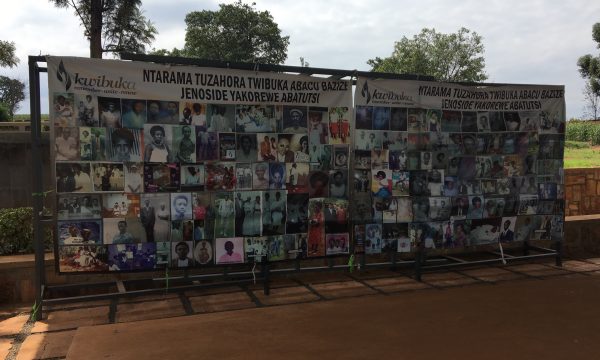
Photo shows a banner with photos of Rwandans lost in an attack on a church during the 1994 genocide at the Ntarama Memorial.
Photo of the Ntarama Memorial in Rwanda, where 5,000 people were killed at a church. Photo by Brooke Chambers

In 1994, 800,000 Tutsi were killed in the Rwandan genocide as UN peacekeepers stood by. Despite relentless requests from Force Commander Roméo Dallaire, UN headquarters and powerful governments refused to provide trucks or radio-blocking technology that could have protected civilians, and UN peacekeepers were under orders not to use force unless they were directly targeted. In the wake of the violence, international leaders promised legal solutions to prevent genocide and mass violence in-real-time through legal doctrine like the Responsibility to Protect (R2P).

Twenty-five years have now passed since the Rwandan genocide, but despite the optimism around R2P and other legal developments, mass violence and genocide continue to occur. And they are met with limited legal response as they unfold. Syria, the Central African Republic, and Yemen have all seen extreme violence against civilians in recent years. If the law prohibits such behavior, why is there no resulting global action?

In recent research, Katherine Southwich employs a classic legal model that shows how the naming, blaming, and claiming of violence are central to legal disputes. This allows her to pinpoint moments when political choice can affect the function of international law. Legally, a violation must first be “named” as harmful. Then “blame” for this harm must then be attributed on a group or individual. Finally, the victim must “claim” victimhood and seek remedy. Southwich argues that each of these stages are politically tenuous in international law.

The burden for claiming crimes against humanity is broad. The term “crimes against humanity” is meant to reflect that violations like torture or enslavement are an afront against not only the victim, but against all people. Based on this understanding, developments like R2P created a global responsibility to defend against such crimes in order to protect all of humankind. Southwich asserts that a diffusion of responsibility makes it less likely for anyone to act. And in terms of naming, no central body exists that determines whether or not a crime is genocide. States or international bodies may adopt the language, but there is no group that defines the crime. When such assessments are inherently challenging, especially in-real-time, naming is often put off until it’s too late to help targeted groups.

Southwich uses the case of the Rohingya in Myanmar to examine the failures of international institutions in upholding promises of civilian protection. The Rohingya have faced persecution in Myanmar for decades, with many experts calling for legal action during this ongoing genocide. But despite restrictions to health care, destroyed villages, and mass killings, judicial processes to address the violence are largely at a stand-still. In the meantime, the humanitarian situation escalates, with Rohingya refugees fleeing to neighboring countries that struggle to support them.

Many states have chosen to dwell in semantic disputes to avoid response. And there are many reasons they may choose to not act – they may see Myanmar as a potential business partner, or they may be hesitant to endanger their own soldiers in peacekeeping missions. As experts still remain divided about the best strategies to respond to mass violence or genocide, many states decide their own costs outweigh potential benefits to victims.

The existence of legal protection doctrine does little alone.  Political will is necessary to mobilize the law and to promote protections for civilians. Powerful states and international organizations must choose to uphold their legal commitments. Twenty-five years after the Rwandan genocide, the need to protect civilians from genocide and mass violence remains as crucial now as it was in 1994.

Eric A. Stewart, Daniel P. Mears, Patricia Y. Warren, Eric P. Baumer, and Ashley N. Arnio, “Lynchings, Racial Threat, and Whites’ Punitive Views Toward Blacks,” Criminology, 2018

Photo of the Memorial for Peace and Justice by Judson McCranie, Wikimedia Commons, CC

The Equal Justice Initiative’s National Memorial for Peace and Justice honors the lives of the over 4,000 Black men, women, and children who were lynched on U.S. soil between 1877 and 1950. When the memorial opened in Montgomery, Alabama last spring, reporters asked founder Bryan Stevenson, why build a lynching memorial? Stevenson aptly replied that the memorial serves to not only honor lynching victims but to highlight how the legacy of racial violence affects U.S. punishment practices today. A new study from Eric Stewart and colleagues helps us understand the relationship between lynching and the contemporary punitive attitudes of whites.

The study builds on a long line of research that stems from the work of Ida B. Wells and examines how this history of racial violence shapes criminal justice practices. Wells was one of the main public voices to challenge the common justification for lynchings among whites — that Black men committed acts of rape and other crimes against white women. Her work demonstrated that lynchings were in fact, not a response to crime but a tool of economic and political control used to maintain white dominance in both the South and North. Stewart and his co-authors attempt to unpack this complex history and its implications for criminal justice attitudes today.

The authors draw from a wide range of sources, including a 2013 national survey of crime and punishment attitudes and multiple historical lynching data inventories matched to modern county boundaries. Their findings indicate that this history of racial violence is relevant for whites’ beliefs about crime and punishment today. Specifically, white people who reside in areas where lynchings were more common have increased punitive sentiments towards Black people, including greater support for imprisonment, longer prison sentences, and the death penalty.

This effect is amplified among whites who view Black people as more prone to violence against white people. This finding demonstrates that the historical myth used to justify lynchings of black-on-white violence continues to hold sway over white beliefs’ about crime and punishment today. Further, the findings seem to apply nationally — not just in the South — and lynchings do not appear to impact the punitiveness among Black survey respondents.

Stewart and colleagues’ study demonstrates that the legacy of lynchings has shaped contemporary white views of crime, criminality, and punishment through a racial lens. Similar to Stevenson’s comments, the authors conclude that researchers must continue to unpack the importance of historical context in shaping contemporary views of crime and other social issues.

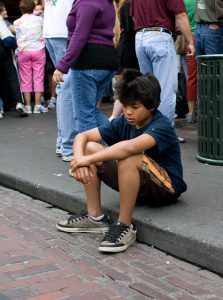
Photo of a child sitting on a sidewalk. Photo by Chris Beckerman, Flickr CC

In 2016 there were more than 400,000 children in foster care in the United States. Kids are placed in foster care because of parental neglect, abuse, incarceration, and other reasons that make it unsafe for them to live at home. The majority of these kids are successfully reunited with their parents after their parents complete a case plan. However, a sizable minority of these reunited children will re-enter foster care. New research by Sarah Font, Kierra Sattler, and Elizabeth Gershoff identifies the policy and family conditions that make foster care re-entry more likely.

Foster care is meant to be a temporary status, and the federal government pushes states to achieve “permanency” for kids in care as quickly as possible. Federal funds can even be withheld from states if too many children remain in foster care for longer than a year. A “permanent” home has two main forms: reunification with parents, or terminating parents’ rights and matching kids with an adoptive home. Terminating parents’ rights is considered an extreme step. Doing so requires detailed evidence that parents are not making timely progress toward their goals. By contrast, the standards for reunification are less clear. This means that if parents’ progress is not good, but also not bad enough to terminate their rights, the state has an incentive to reunite them with their kids as they approach federal deadlines. Returning children to parents who have made sub-par progress makes it more likely that they will be taken from their home again in the future.

The researchers analyzed data of children from Texas to find out what family conditions predict foster care re-entry. The children most at risk of re-entry were those who initially entered foster care because of parental substance abuse and neglect (substance abuse is rarely the only reason children are removed from a home). Of these cases, parental substance abuse and neglect were also typically the reasons for reentry, showing that these issues within the home persist over time.

These findings are especially important at a time when opioid use (combined with neglect) is increasing the number of children being removed from their homes. The researchers do not suggest that states should lower their standards to terminate parents’ rights. Rather, they advocate that timelines toward permanency should be relaxed and more post-reunification services should be offered to formerly substance-abusing parents to reduce the risk of returning a child to a home that is still unsafe.

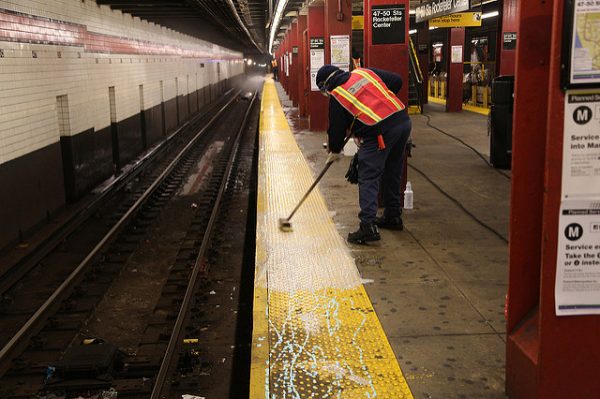
Photo by Metropolitan Transportation Authority of the State of New York, Flickr CC

Originally posted August 14, 2018.

Helping former inmates return to communities after being released from prison is a serious challenge. Poor and unskilled populations with criminal records face significant barriers to enter the labor market, especially when trying to access formal and stable jobs. New research by Naomi Sugie describes the day-to-day experiences of job search and survival for 133 men recently released from prison in Newark, New Jersey.

Since former prisoners are a highly mobile and hard-to-reach population, Sugie distributed smartphones among participants and asked them to report their daily job search and employment experiences. This type of self-reporting and real-time data also prevented the difficulties of trying to remember past work experiences. The more than 8,000 real-time daily measures showed that respondents experience extreme job instability. Only about half of the participants ever worked at least two consecutive days and only one-quarter of the sample ever worked at least four consecutive days. Most men ceased looking for jobs after the first month, and for those who continued to search,  the chances of finding a regular job were still fairly low. To survive and fulfill their immediate needs, men relied on various low-skill and irregular jobs — from warehouse keepers to carnival maintenance workers. 

To explain the experience of working at the margins of the labor market, Sugie created the concept of work as foraging, which refers to engagement in intermittent, short-term, and precarious work needed to make ends meet. The irregular and sometimes exploitative experience of work as foraging may even exacerbate strain or criminal activities among marginalized job seekers. This particular type of work — work as foraging — challenges the idea that work always leads to social integration and desistance. On the contrary, working as a form of survival is more likely to lead to higher social inequality and lower social integration for foraging workers.