
crime

A close-up photo of a gavel as a judge signs a document in the background. “Judge Signing on the Papers” by Katrin Bolovtsova is licensed under CC BY 2.0 in pexels.

As U.S. states pass increasingly strict abortion laws, debates often focus on legal rights and restrictions. But what other messages are these laws sending about gender and power? To explore this question, researchers Luna J. Slater, Brooke A. de Heer, and Emily M. Schneider analyzed the language of 18 of the most restrictive state abortion bans enacted between 2018 and 2022. Their findings reveal how these laws portray abortion seekers as victims, prioritize physical health over mental health, and create bureaucratic hurdles for pregnant people who’ve experienced sexual violence – ultimately reinforcing unequal power dynamics and diminishing women’s autonomy.

Of the laws analyzed, most bans avoid criminalizing people seeking abortions and instead outline punishments for doctors and clinics. The authors argue that this enforces a narrative of abortion seekers as coerced or incapable of making independent medical decisions. Many of these bans also describe abortion procedures as being performed on the pregnant person, rather than as choices made by them. For example, Missouri’s HB 126 (2019) describes the pregnant person as the “woman upon whom an abortion is performed or induced.” The authors argue that such wording ultimately portrays women as innocent, subordinate, and passive recipients of care rather than decision-makers.

While all analyzed bans include exceptions to save the pregnant person’s life, nearly every state limits them to physical conditions, not psychological ones. The authors argue this reinforces the view of pregnant people as vessels for birth rather than individuals whose overall well-being – including mental health – matters. This approach further diminishes the autonomy and rights of pregnant individuals by restricting their access to care based on a narrow definition of medical necessity.

Fewer than half of the bans analyzed included exceptions for cases of rape and incest. Of those that did, 75% required the pregnant person to formally report the rape to law enforcement or a medical provider to qualify. Some laws went even further – such as Iowa’s SF 359, which demands that the rape be reported “within forty-five days of the incident.” These legal conditions place an additional burden on pregnant people who have experienced sexual violence, forcing them to navigate complex bureaucratic and legal systems to justify their need for reproductive healthcare. In doing so, such laws reinforce patriarchal control by limiting reproductive rights and forcing pregnant people to engage with systems that may disregard their safety, dignity, and well-being.

The restrictive abortion laws analyzed in this study go beyond policy – they shape public perceptions of autonomy, health, and justice. By framing abortion seekers as victims, excluding mental health considerations, and imposing burdensome requirements on those who have experienced rape or incest, these laws reinforce gendered inequalities that extend far beyond the issue of abortion.


“Clsoe-up of a Reel-to-reel Audio Tape Recorder” by cottonbro studio is licensed under CC BY 2.0 in pexels.

Serial killers like Ted Bundy and Jeffrey Dahmer have been gone for decades, yet their stories continue to fill our screens and airwaves. From Netflix series and documentaries to true crime podcasts, their names and crimes keep reappearing in new forms. A new study by sociologist Brian Monahan explores why these stories never seem to fade. He argues that their endurance is not just the result of public fascination with violence, but of the media’s ongoing effort to reproduce, repackage, and resell them.

Monahan introduces the concept of “media looping” to explain this process. Drawing on 37 media examples, including documentaries, films, streaming series, and podcasts, he finds that stories about serial killers are continually reactivated and reshaped. From early sensationalist documentaries in the 1980s to recent prestige dramas like Dahmer — Monster: The Jeffrey Dahmer Story (2022), the same figures and themes are reinterpreted for new audiences. The repetition makes old crimes feel current and turns historical events into ongoing cultural touchstones.

The study shows that this process is not accidental. Media looping is both a storytelling pattern and a business strategy. It allows media companies to reuse familiar stories and recognizable figures to keep audiences engaged and generate profit.

But this repetition also affects how people understand violence. Monahan finds that white male killers are often shown as complex or even sympathetic, while victims, many of whom are women or people of color, receive much less attention. This imbalance shifts the focus away from the victims and the social conditions that shape their stories. Viewers also become part of the cycle by listening to true crime podcasts, watching series, and joining online discussions that keep these stories circulating and alive.

Monahan’s research suggests that serial killer stories persist not only because they are newsworthy or extraordinary, but because repetition itself is what makes them extraordinary. Media industries depend on retelling violence in ways that generate new interest and revenue, turning real tragedies into lasting cultural products. In the end, the timeless serial killer is less a mystery of human psychology and more a reflection of how our media systems recycle familiar stories to hold our attention.

A long-exposure photo at night of a police car with flashing lights. “Hunting for a Gunman” by MSVG is licensed under CC BY 2.0.

Perceived threat plays an important role in police officers’ on-the-job decision making. That makes sense – an officer concerned for their safety is more likely to use force against a civilian. But what if the perceived threat has nothing to do with that civilian? What if it didn’t originate on the job at all?

Samuel Thomas Donahue and Gerard Torrats-Espinosa wanted to understand how a homicide in a police officer’s neighborhood affects their likelihood of using force on civilians in the next week. Their study suggests the answer depends on race – both the race of the officer and the race of the civilian.

Using administrative data from the Chicago Police Department (CPD), police officers’ home addresses from voter registration rolls, and publicly available crime data, Donahue and Torrats-Espinosa created a snapshot of almost 9,000 CPD officers’ neighborhood contexts and workplace conduct between 2012 and 2020. The authors matched officers exposed to a homicide near their homes with other officers who were not exposed to a homicide but otherwise shared the same race, assigned “beat,” and shift day and time. To understand how race might affect police officers’ likelihood of using force, the authors looked at scenarios with varying officer and civilian races.

In almost every case, there was no meaningful change in the likelihood of an officer’s use of force – with one notable exception: when a homicide occurred within 1/8th of a mile of a white police officer’s home, that officer became seven times more likely to use force against a Black civilian in the following week. No other combination of officer and civilian race saw a change anywhere close. Donahue and Torrats-Espinosa say this is evidence that white police officers experience anti-Black racial bias when dealing with Black civilians in the aftermath of a neighborhood homicide.

Donahue and Torrats-Espinosa view this effect as an example of racial threat – when prejudices among a dominant group are ignited by perceived threats to their status. The fact that the effect only showed up when white officers came into contact with Black civilians suggests that neighborhood homicides activate racial bias rather than a professionalized police response.

This article also shows how “at home” contexts impact “at work” behavior, and how violence can spread between neighborhoods – and between murders by civilians and violence by police.

A wall of secure fencing surrounds a detention center. “Detention Center Fencing” by D-Stanley is licensed under CC BY 2.0.

With U.S. immigration raids and detentions on the rise, more people are navigating a complex and hostile immigration court system. In a new study, Mirian Martinez-Aranda interviewed 55 formerly detained immigrants in southern California to understand how detainees navigate this system and seek justice. Her interviews, conducted with immigrants detained just before the latest wave of enforcement (2015-2018), are as revealing as they are disconcerting.

Detained immigrants in the United States face systemic barriers to justice. For example, U.S. immigration law does not guarantee the right to legal counsel or representation in immigration court. Most immigrants cannot afford legal counsel, and the resources that are available are overburdened and often unreliable. The paperwork and legal jargon bound up in the immigration court system are also complicated, which puts immigrants who do not speak English at an extreme disadvantage. As one interviewee described,

“We did not have the knowledge to fill out paperwork … Even requests to make a doctor’s appointment had to be in English. They [ICE staff] have dictionaries but won’t lend them. A few of us have dictionaries, so we work together to try to translate phrases to ask for what was needed. But it was very difficult.”

These barriers can delay and deny justice while undermining due process protections.  Martinez-Aranda interviewed one man whose time in detention was extended by a year because of the time it took to find an interpreter, since he was unable to communicate his case for asylum without one.

Martinez-Aranda found that to cope with these barriers, detained immigrants cobbled together resources from whatever sources they could find. Some received support from relatives, advocacy groups, and other detainees who had gained more familiarity with the legal system. Some sought assistance from lawyers, although they were difficult to contact and would sometimes cheat or abandon their clients. As one interviewee stated, “I was detained a long time, and I saw many people get taken advantage [of] by attorneys that took the money and never came back.” Still other detainees were forced to represent themselves, which is usually unsuccessful. Together, these strategies invariably complicated or delayed cases.

The U.S. immigration court system systematically obstructs immigrants in a way that Martinez-Aranda describes as “legal violence.” These barriers to justice are heightened for those who are already the most marginalized: people with low education, low incomes, little knowledge of English, and little community support. The recent crackdowns on immigration enforcement further overburden the court system, increasing the number of people who are detained and face deportation with no guarantee of justice.

A woman sitting on the edge of a dock looking out onto the water. Photo by Keenan Constance and licensed under Pexels License.

What happens in a romantic relationship when things turn violent? The common reaction is “just leave him” or “call the police” – but there are often many other ways female victims resist. A recent interview study by Lynette Renner, Carolyn Hartley, and Knute Carter explored the strategies of resistance taken by 150 different victims of intimate partner violence.

The study identified six common strategies that victims used to cope with or respond to abuse. These included seeking formal support, such as staying in a shelter or calling a hotline, or informal support, such as turning to social networks by talking with family or friends. Some pursued legal assistance by contacting the police or filing charges, while others engaged in safety planning behaviors like hiding money or keys in preparation to leave. Acts of resistance, such as fighting back or ending the relationship, were also common, as were placating strategies, where victims tried to keep the peace or avoid the abuser to reduce conflict. Victims often engaged in one or more of these strategies simultaneously.

After reviewing the data, they concluded there were 4 different “types of victims” based on different patterns of use of the above paths:

  • High Strategy Users (took all or almost all the above paths)
  • Moderate Strategy Resisters (took primarily the resistance path)
  • Moderate Strategy Placators (took primarily the placating path)
  • Low Strategy Users (least likely to commit to one path, especially safety planning)

In short, women experiencing relationship violence navigate different paths when faced with critical decisions about their safety. To offer meaningful support, advocates, service providers, and policymakers must recognize each survivor’s unique combination of risks, resources, and responses.

“Ted Cruz (51461230545)” by Matt Johnson is licensed under CC BY 2.0.

While the words of politicians are often reported, the effects of their words are hard to measure. However, a recent study by Nilay Saiya and Stuti Manchanda attempted to measure these effects by examining the likelihood that Christian nationalist statements by U.S. senators breed violence against religious minorities who identified as but weren’t limited to, Muslims, Sikhs, Jews, and Hindus. 

The public statements of all 100 senators were analyzed for ten pro-Christian nationalist statements. This included phrases like “The federal government should declare the United States a Christian nation” and “The federal government should advocate Christian values.” Using the Global Terrorism Database, the authors then constructed an original dataset of Christian-based violence in all 50 states from 1990 to 2018. 

The findings showed a significant association between pro-Christian nationalist sentiments by senators and higher levels of violence against religious minorities in the states they represent. More specifically, they found that states where senators articulated pro-Christian nationalist statements were 1.4 to 1.5 times more likely to experience anti-minority attacks. The authors believe this association is because the pro-Christian nationalist rhetoric provides political empowerment to its citizens to act out against other religious groups that are perceived as threats.

This “trickle-down” discourse is an important factor in pinpointing potential catalysts for religious and political violence. The authors stress the gravity of how an increasing number of Americans support the idea that violence is a legitimate tool to reinstate the cultural and political dominance of Christian values. It is a stark reminder that words do matter and overtly religious speech such as Christian Nationalist rhetoric can have dangerous consequences.

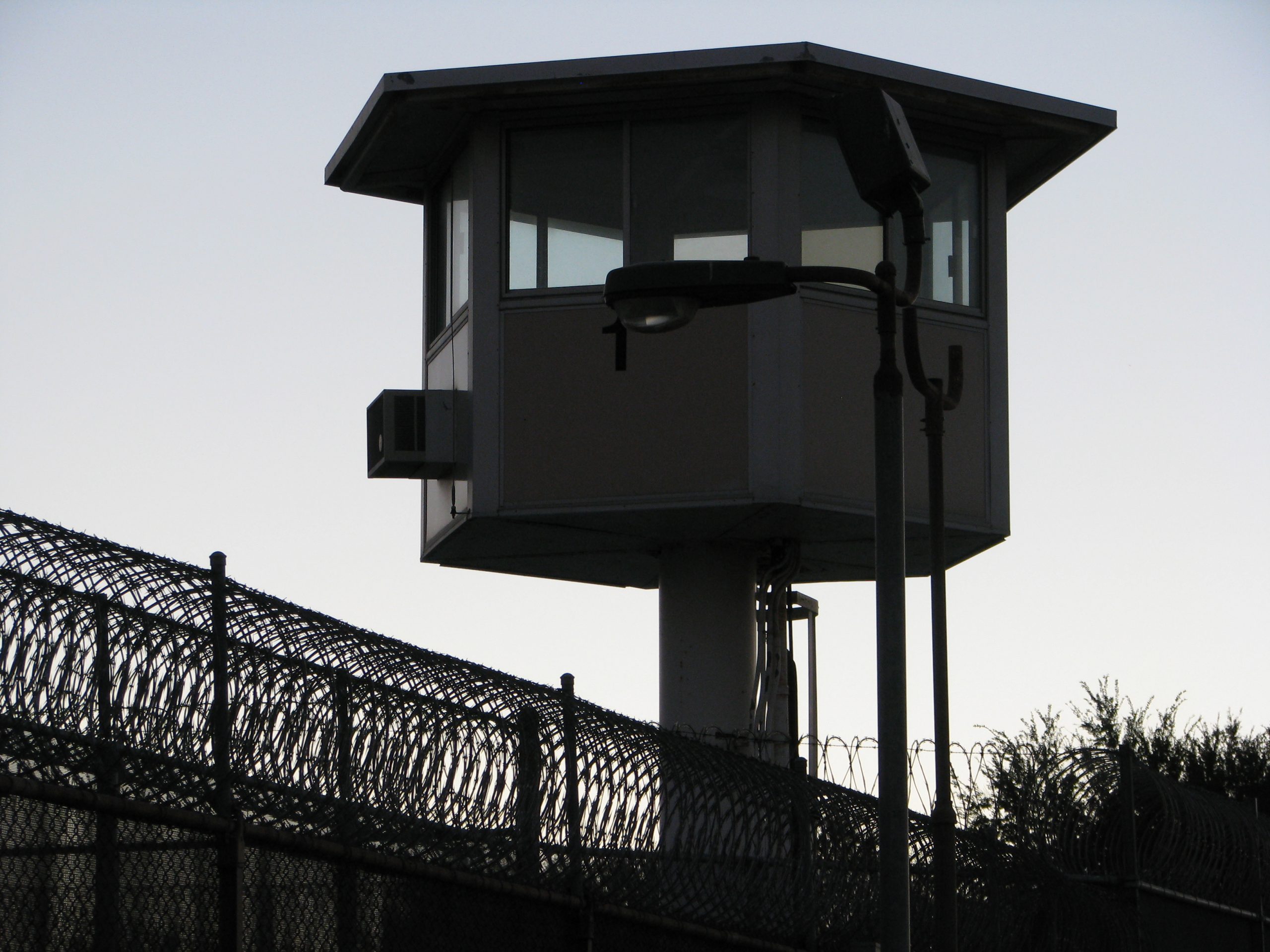
A prison watchtower silhouetted against the sky, with barbed wire fencing in the foreground.“prison guard tower” by Rennett Stowe is licensed under CC BY 2.0.

Extensive research has examined how prison affects the lives of adults once they leave the system. However, scholars have been limited in their ability to investigate how prison affects the lives of people who are incarcerated consistently or intermittently during their “coming-of-age” period. These long-term prison sentences (10 years or more, although not always continuous) are difficult to study because scholars are often unable to enter prisons to conduct research, leaving a gap in our understanding of a particularly vulnerable population of young people. 

David Knight addressed this issue by conducting research with consistently and intermittently incarcerated African American and Afro-Latino men, as Black men make up roughly half of adult male sentences which last for 5 years or longer. 

The interviewees were with 18 to 34 years olds and were either incarcerated at the time of the interview or had been incarcerated during their teenage and adult years. Knight concluded that young men who were incarcerated early in their lives in both groups understood their identities as deeply connected to prisons. Rather than just thinking about prisons as places, many interviewees understood their experiences even outside of the physical space as defined by their incarceration. They described their lives, from childhood to adulthood, and even after being released, as restricted and deprived in comparison to their peers.

  • “In prison, you still [get] older year after year. You still turn eighteen…still turn thirty…but it’s the setting that makes you act a different way…Instead of getting your own apartment…a single cell…The first time you may fill out a job application is for a prison job.”

Knight also found that some who were continuously incarcerated described being detained during their youth as a means of ‘protecting’ them from dangers from the ‘outside’, such as violence and addiction.

  • “When I look back at my teenage self…it’s a good thing I came to prison, if only for the fact that I can really stop and listen…it would have been bad for me, way worse than it is now.”

Although mortality rates are often lower inside prisons than outside of prisons, Knight’s interviewees describe their experiences as dehumanizing, degrading, and debasing. In other words, we can understand these sentiments as a commentary on the lack of support for marginalized communities, rather than support for what is happening in prisons themselves.

This research highlights that prisons are not just physical spaces, but institutions that profoundly shape identity and future life opportunities. Incarcerated youth, during critical developmental years, are further marginalized from peers who experience key educational, social, and personal milestones. As prisons increasingly become environments where young men and women grow up, it is crucial to continue studying how they shape the transition to adulthood.

A woman holding a white box saying “Donate” on it, by Liza Summer is licensed under Pexels License.

Gun violence remains a critical public health crisis, causing measurable and immeasurable loss to families and communities across the United States. The economic toll of this violence on families is also staggering, with an estimated $557 billion spent annually on everything from funeral and medical costs to criminal justice processes and psychological support. 

When support from employers, insurance companies, and victim compensation programs falls short, many families turn to crowdfunding to help cope with their losses. But what shapes the financial requests families make—and the support they receive—after gun violence?

A recent study by Catherine Burgess and Jennifer Carlson examined this question by analyzing 535 GoFundMe campaigns created for women and girls killed by gun violence in California and Florida between 2016 and 2018. Their findings reveal how race and gender play key roles in how victims are portrayed in fundraising campaigns and the financial support their loved ones receive.

Their research shows that crowdfunding pages for white women and girls often portrayed them as innocent victims deserving of public sympathy and financial support. These campaigns emphasized their moral character—such as being a good mother or loving daughter—and often highlighted gun violence as their cause of death. For white victims who were mothers, their GoFundMe pages asserted their moral worth as protective and selfless, intensifying the tragedy of their loss. One page read, “[Her children] are her whole wide world, & she was also their world.”

In contrast, crowdfunding pages for Black and Latinx women and girls often focused on the immediate needs of their families, such as funeral expenses, rather than portraying them as victims deserving of public grief. Campaigns for women of color rarely mentioned gun violence and instead framed their deaths as private tragedies: “We are asking family and friends to support us in this hard time because her family doesn’t have the funds to provide her a proper farewell.” Caregiving roles were also central to the narratives of women of color. However, rather than evoking public grief, they underscored the personal hardships their families faced. GoFundMe pages for women of color were also more likely to highlight the victim’s resiliency, recognizing their strength in overcoming adversity.

In addition to the differences in framing, there were also disparities in fundraising success. On average, campaigns for white women and girls in the sample raised six times more money than those for Black women and girls and three times more than those for Latinx women and girls. White victims were also more likely to have campaigns that supported charitable memorial funds or gun violence prevention efforts. 

It is sobering that over 535 women and girls were killed by gun violence in just two states over two years, highlighting its devastating toll on U.S. women and girls. In the midst of this violence, Burgess and Carlson’s research reveals that inequality persists even in moments of charity. The same biases found in traditional support systems also exist in crowdfunding appeals, highlighting the racial and gender disparities in society.

Someone having their finger printed, being pressed down by another hand. Image by cottonbro studio under Pexels license.

A background check can make or break someone’s future. Every day, people are denied jobs, housing, and educational opportunities because of “failing a background check.”  These checks are often completed by for-profit private companies, are under- or unregulated, and have a reputation for being inaccurate – but how inaccurate are they?

Researchers Sarah Lageson and Robert Stewart conducted background checks on 101 individuals with criminal records in New Jersey, comparing official state records with a private company’s background check. They then verified the accuracy of the results with the individuals themselves. Of their sample for these background checks, they found that 92% had a “false-negative” error (meaning the person was not flagged as having a criminal conviction, when they in-fact did) and 50% had a “false-positive” error (meaning the person was incorrectly flagged as having a criminal conviction, when but they actually did not). 

Long story short, errors in background checks subject people and their families to undue financial, social, and emotional harm – all due to a private company’s poor algorithm and negligence. However, with greater privacy protection and regulation of criminal history information in the public sector, the authors argue that reliance on inaccurate private sector background checks may begin to shift. 

A pharmacist wearing a white coat working at their lab station. Image by Polina Tankilevitch under Pexels license.

Over 500,000 Americans have died as a result of opioid overdose since 1999. Policymakers, police, and medical professionals are all trying to understand and prevent overdose. For example, pharmacists now use computer programs that track how often patients refill their prescriptions called ‘Prescription Drug Monitoring Programs’ (PDMPs). 

Because these prescription tracking programs were designed for law enforcement, some worry they might be subtly pressuring pharmacists to be more focused on policing than providing patients with care. Supporters of these PDMPs say they can eliminate biases by automating decisions about prescription eligibility and giving pharmacists a formal justification to turn patients away.

Elizabeth Chiarello interviewed 118 community-placed pharmacists to learn how the new PDMP databases affected their work routines and relationships with other professionals.  

Chiarello found that as pharmacists used the PDMPs, they reoriented their work around crime and the legal system, rather than health care logics. This shifted their treatment of prescription misuse from a rehabilitative one to a more punitive one. She therefore describes PDMPs as ‘Trojan Horse Technologies,’ based on the classic story of the soldiers hidden inside the giant horse that the Greeks gifted to the Trojans; 

“Whereas the Greeks leapt out of the horse to massacre their enemies,” Chiarello writes, “the criminal-legal logics embedded in the PDMP emerge slowly as pharmacists use PDMPs in daily practice,” which gradually transforms the pharmacy field.  

Pharmacists are now expected to act as an extension of law enforcement,  

Through the adoption of PDMPs, law enforcement may have subtly deputized pharmacists to criminalize prescription misuse. Although pharmacists have historically resisted this role, PDMPs have become systematized and made pharmacists more comfortable policing their patients. Chiarello concludes that pharmacists would be less inclined to police patients, and more inclined to care for them, if they had access to different treatment tools, such as the ability to provide medications for substance use treatment under a physician’s supervision.