
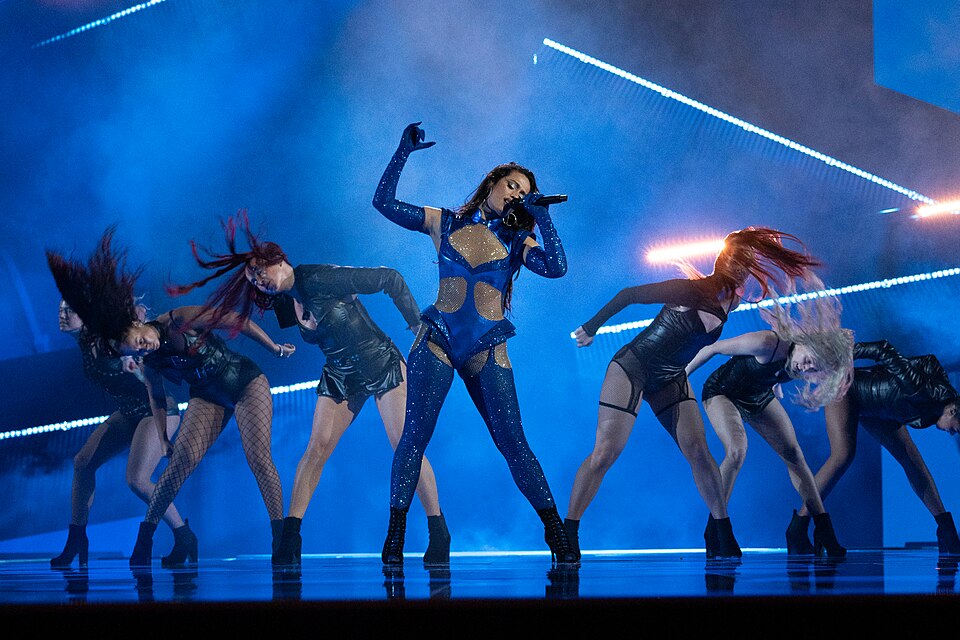

Cultural spectacles like the Met Gala and the Super Bowl halftime show are fixtures of the annual calendar; they are also reliable flashpoints for public debate about politics and social issues. For example, Bad Bunny’s performance at Super Bowl LX, entirely in Spanish, sparked a debate about language and American identity. Beyond their national contexts, these events can also ignite global controversy, such as when the 2024 Paris Opening Ceremonies drew widespread backlash among Christians worldwide who took issue with an avant-garde rendition of The Last Supper. Using the Eurovision Song Contest as their central case, Luca Carbone and colleagues show how such “recurrent events” serve as cultural arenas where actors perform, contest, and reshape meanings and public attitudes on pressing social issues.
Eurovision is an annual singing competition that features national acts consisting of songs performed before a global audience. First held in 1956, Eurovision now attracts over 100 million viewers, who vote for the winning act. Blending patriotic fervor and campy performance art, Eurovision remains one of the most watched non-sport events in the world. This prominence results, in part, from its long history of activism and engagement in polarized issues, ranging from sexuality and gender to geopolitical conflicts like the Gaza war. Although Eurovision acts are carefully designed to showcase participating countries’ artistry and cultural identity, they often present narratives that challenge official state policy or domestic public opinion.To explore these tensions, the researchers collected lyrics from the European Song Contest Database, a repository of every song performed in the final and semi-final rounds of each Eurovision since 1956, which they linked with public opinion data from the European Values Survey beginning in 1981. Using computational techniques, they then classified performances based on their connection to themes of sexuality and national identity to assess how song narratives and domestic public attitudes aligned and diverged over time.
For some nations, public attitudes aligned with song narratives in illuminating ways — while for others, there was little connection at all.
For Malta, Italy, and Austria, for example, narratives in Eurovision acts around sexuality “led” public support for protections for sexual and gender minorities. In other words, the progressive narratives in these countries’ Eurovision songs served as forerunners to eventual shifts in public attitudes. In other cases, the narratives in Eurovision acts “followed” well-established public attitudes. For example, Finland’s 2013 and 2018 performances featured a same-sex kiss and a public coming out, respectively. National polls showed broad support for LGBTQ rights well before these high-profile performances. While these performances garnered a polarized response from global viewers, this belied the widespread support for LGBTQ protections among the Finnish public, highlighting how the same performance can resonate with domestic and global audiences in very different ways.
When we think about how events impact social change, we tend to focus on unexpected or extreme events such as wars, pandemics, or natural disasters. Carbone and colleagues challenge this assumption, showing that planned, recurrent events like Eurovision play an equally important role in mediating shifts in social norms and public attitudes.
————–
Daniel Cueto-Villalobos is a cultural sociologist and doctoral candidate at the University of Minnesota who studies religion, race, and social change. His dissertation examines how Twin Cities faith communities respond to unexpected crises. Beyond the dissertation, Daniel is involved in a number of mixed-methods collaborative projects examining the social impacts of COVID-19, policing, immigration, and the church/state divide in the contemporary public sphere. His scholarly work has been published in leading journals including Social Problems, Sociology of Religion, and the Journal for the Scientific Study of Religion, and he has contributed commentary on Minnesota Public Radio, The Conversation, and The Society Pages.
Comments