crime

Joshua Kehn, Flickr CC

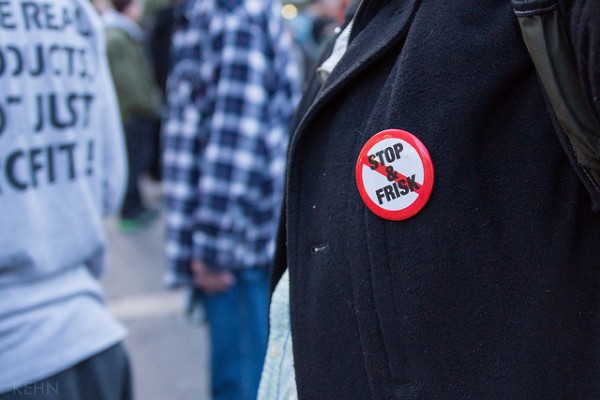
Incidents of extreme violence impact both the victim and the perpetrator, but they also affect the greater community in terms of things like increased fear of crime and negative impacts on child development. Johanna Lacoe and Patrick Sharkey detail another key mechanism by which the neighborhood social climate is altered by violent events: the increased interaction of law enforcement and community residents via stop, question, and frisk activity after a violent crime.

Using data from the NYPD on stop and frisk activity and homicide, as well as U.S. Census data on neighborhood demographics, the authors examine the relationship between neighborhood homicides and subsequent police activity. They find that block groups where a homicide is committed experience a 70% increase in stop and frisk events relative to the stop and frisk activity a week before the homicide. This association holds even adjusting for neighborhood characteristics, such as racial/ethnic composition and poverty rate, the time of year the homicide occurred, and the precinct responsible for the homicide response. Further, Lacoe and Sharkey find that the increase in stop and frisk activity is higher in neighborhoods defined as “high crime” (90% increase vs. 68%). However, the increased levels of stop and frisk in both “high crime” and “not high crime” neighborhoods is experienced predominantly in majority black and majority Hispanic neighborhoods. The researchers find no difference in stop and frisk activity before and after a homicide in predominantly white neighborhoods. 

This study illustrates how both the violence a neighborhood experiences and the responses to that violence are disproportionately distributed within the city. Not only are communities of color more likely to experience violence in their communities, but they are also more likely to experience more stop and frisk activity that extends the range of the “crime scene” into the greater community.
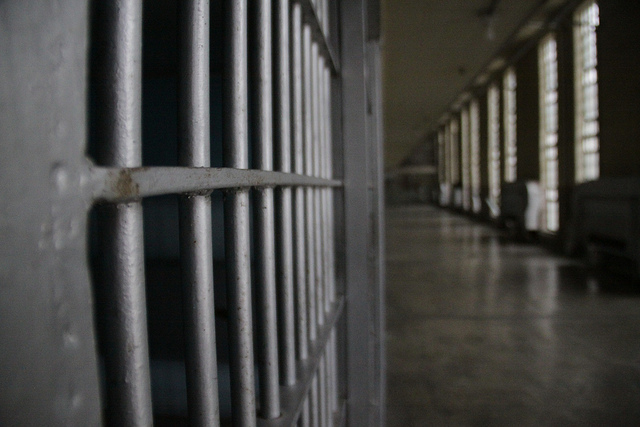
Photo by meesh, Flickr CC

The stigma of incarceration often extends beyond the individual and results in unintended consequences for their families. In addition to caregiver transitions, socioeconomic disadvantage, and an increased risk for contact with the criminal justice system, children of incarcerated parents are often deemed “guilty by association.” Yet, we know little about those children who transition into adulthood and receive a college education. Are adult children able to create a prosocial identity outside of their parents’ felony status?

Kate Luther set out to explore this question through interviews with 32 adult children of incarcerated parents in college. She used announcements, emails, fliers, and social media to recruit college students at community colleges, four-year universities, and graduate programs. Her sample of 32 students were between ages 18 to 39, and had at least one parent in prison for a minimum of 6 months before turning 18.

She found that students navigated parental stigma in three distinct ways. First, many attempted to both physically and emotionally distance themselves from their parents. They maintained physical distance by not visiting their parents in prison and emotional distance by changing their last names, not referring to them as “mom” or “dad,” or developing close ties with other adult caregivers, such as grandparents or stepparents. Other participants only separated themselves from their parent’s criminal behavior, while maintaining that he/she was a good father or mother. Second, students viewed their parents as negative role models. They asserted that their parent’s criminal lifestyle motivated them to form an identity outside of criminality so that they would not become like their parent. Lastly, despite the fear of shame and judgement from peers, many students used their parents’ criminal status as a positive factor in developing their identity. They viewed having a parent in prison as an experience that made them who they are today.

Luther’s work shows that adult children of incarcerated parents are not forever bound by that stigma. While their educational environments may require more stigma management, these students often find ways to use their experiences with parental incarceration as a means to create a prosocial identity.

Photo by Paul Sableman, Flickr CC

Criminological theory suggests that voluntary organizations — nonprofit groups that provide services to the neighborhood — are associated with decreased levels of crime. Research shows that voluntary organizations create neighborhood cohesion and decrease potential stressors that have been found to increase criminal activity. Yet, there is research on this relationship that finds weak, or even opposite, effects than the theory suggests, with some studies finding voluntary organizations to actually increase crime levels. In a new study, James Wo, John Hipp, and Adam Boessen complicate the relationship by taking into account how long the voluntary association operates within a particular neighborhood.

Using data from the National Center of Charitable Statistics, the U.S. Census, and local police departments, the researchers find that neighborhoods with more voluntary organizations are weakly associated with lower levels of crime after controlling for between neighborhood and city variation. But when they consider the length of time each voluntary organization has operated in each neighborhood, they find an “age-graded effect.” That is, organizations that have spent more time in the neighborhood are more effective in reducing crime. The effect also varies by association, and civil advocacy and community associations, for example a minority rights association, are associated with the most consistent decreases in crime across types of crime.

The results of this new study reveal that not only are certain organizations more effective in reducing certain types of crimes, but significant resources, leadership, and time must be devoted to an organization before it has a significant impact on the level of crime in an area. The authors note that organizations may face challenges upon startup, such as gaining trust with the community or funding issues, or they may have services or events that take time to take effect. Although the stakeholders in voluntary organizations want, or even need, to show tangible effects for funding or legitimacy, the research here suggests that the longer you let the voluntary centers incubate, the more extensive their impact on community safety.  

Photo by Dave Nakayama, Flickr CC

In recent years, the political landscape of criminal justice in the United States has shifted away from the “get tough on crime” era of the 80s and 90s,and politicians from all backgrounds seem to be embracing more lenient criminal justice reforms. However, a recent study by Katherine Beckett, Anna Reosti, and Emily Knaphus challenges the assumption that there is a general consensus. Instead, they argue that the state of criminal justice politics and policies is more aptly defined by complexity and contradictions, which may hinder meaningful reductions in prison populations.

Beckett and her colleagues analyzed state correctional policies collected by the National Council of State Legislatures to assess the punitive or nonpunitive nature of legal provisions enacted from 2000 to 2013. The findings suggest that prior to the recession, many states enacted punitive anti-crime policies, but following 2007, more lenient provisions outnumbered punitive ones by nearly 3 to 1. However, these nonpunitive reforms were mainly limited to drug and parole policies, and a punitive trend towards violent or sex offenses remained and even intensified in some states.

The researchers also reviewed newspaper articles and editorials about criminal justice reform from 2008 to 2014 to understand the surrounding political discussions.  Their results suggest that most news coverage regarding criminal justice reform focused on fiscal concerns as the main justification for reducing correctional populations, while the human costs of mass incarceration were rarely mentioned. Moreover, the intended beneficiaries of these reforms were those individuals who were convicted of a nonviolent or drug offenses. There were only two mentions of policies aimed to benefit those convicted of violent offenses within the 163 articles that were analyzed.

While we are witnessing meaningful progress in reducing prison populations, the current reforms are only geared towards nonviolent offenses. Further, political discourse is typically focused on the money lost to mass incarceration, as opposed to its negative effects on the lives of millions of Americans. Reversing mass incarceration will require incorporating broader reforms that address the social costs of imprisonment and emphasize the humanity of all the individuals under correctional supervision.

Photo by Thomas Barber, Flickr CC

How do citizens of a country that has gone through a genocide remember and talk about that genocide? How does the survivor’s narrative about who is to blame about a genocide reflect the passage of time and the role of memory? To answer these questions, Hollie Nyseth Brehm and Nicole Fox analyze 102 interviews they conducted with Rwandan genocide survivors as they explore how collective memory is not only socially patterned, but how it also affects narratives on who is to blame for the violence.

Unlike previous studies that find survivors to be more likely to engage in “collective amnesia,” rarely referencing historical precedents leading to violence, survivors in Rwanda often volunteered historical explanations for the violence. Nyseth Brehm and Fox find little variation in the use of historical explanations across generational cohort, geographic location or educational attainment. They find that most of the interviewees mentioned at least one historical event as heralding the genocide, with many mentioning colonialism and the 1959 revolution as significant events. The 1959 revolution, especially, is mentioned by almost half the interviewees as being key in ushering a “bad government.”

By locating blame outside Rwanda by blaming colonialism, the international community, and international actors, Rwandans refute the notion that the genocide was due to enduring tribulations within Rwandan society. The authors argue that in post-conflict nations, placing blame on the international community and a “bad government” will have an effect on survivors’ political attitudes and their levels of engagement in reconciliation programs. One such effect may be large-scale support of minimal attempts by regimes to appear more effective than the “bad government” that came before them. Nyseth Brehm and Fox also suggest that in situations such as police violence in America or the refugee crisis in Europe, present day discussions on cultural traumas may transform over time and blame will be apportioned in new ways. 

Photo by futureatlas.com, Flickr CC

More often than not, research on gender-based violence during mass atrocities is focused on violence perpetrated by men against women and girls. There is far less discussion about gender-based violence against men and young boys. In a recently published paper, Gabrielle Ferrales, Hollie Nyseth Brehm, and Suzy McElrath shed light on this understudied phenomenon and explore sexual violence against males in Darfur. The authors explain that, although this violence is in some ways about physical domination, it is primarily meant to symbolically dominate and denigrate both the victims and surviving community members.

Using interview data from the Atrocities Documentation Survey (ADS), the authors analyse 1,136 Darfuri interviews conducted in Eastern Chad. The authors examine how gender-based violence against men and boys works to emasculate them through homosexualization, feminization, genital harm, and sex-selective killing. This allows perpetrators to perform masculinity in a manner that is in line with the Sudan’s gender norms, and points to the role that gender plays in influencing patterns of violence. In addition, emasculation allows for a symbolic form of violence to be perpetrated. One such symbolic form of violence is the degradation of males in both this life and the afterlife. This often occurs through post-mortem rape, serving to violate not just burial norms but also ensuring that the victim’s standing is tarnished even in the afterlife. 

These findings shed light not only on how sexual violence is perpetrated against men during mass atrocities, but it can also contribute to our understanding of gender-based violence outside of these extreme circumstances. In a recent interview with Ferrales, she states that gender-based violence against men and boys is a reality in societies that frame heterosexual masculinity as dominant. Ferrales points out that “gendered identities […] are privileged in settings ranging from the U.S. to Sudan,” and studying gender-based violence against males during mass atrocities can also provide us with an opportunity to test and evaluate current work on violence against men and women in non-conflict settings.

Photo by Luca Melloni, Flickr CC

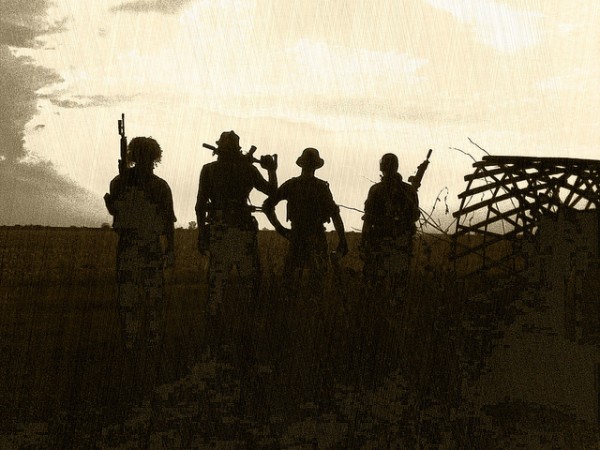
Reintegration into society is crucial for ex-combatants who were previously involved in armed conflict, yet repeated offenses often impede successful transitions. This problem can be seen first hand in Colombia, where approximately 20 percent of former combatants from guerrilla and paramilitary groups engaged in illegal activity since demobilization of armed conflict. The Colombian government has responded by supporting educational resources, counseling, health care, employment, and financial assistance programs for former combatants. Successful reintegration, however, also involves determining which individual and social factors influence some ex-combatants to commit crime and others to lead a crime-free life.

 Oliver Kaplan and Enzo Nussio use event history analysis to predict the time until ex-combatants are arrested, combining 2008 Fundación Ideas para la Paz (FIP) survey data of 1,485 ex-combatant men and women from both guerrilla and paramilitary groups with police records documenting arrests and captures through June 2012. Additionally, they conducted 98 interviews with ex-combatants from 2008 to 2010 to determine potential motives for returning to criminal activity. 

Findings indicate that former combatants who initially joined guerrilla or paramilitary groups for personal motives are more likely to commit crime after demobilization. This effect was even stronger for former paramilitaries. In contrast, those who are deterred by police, held strong family ties, achieved more education, and had children are less likely to return to illegal activity after armed conflict. Factors such as threatened security and worsening economic opportunities, however, showed little effect on recidivism. Kaplan and Nussio also note the importance of gender reintegration, as women may face sexual violence and men may experience feelings of emasculation after losing their military status. Studies like this show a clear link between “street crime” and other forms of armed conflict — and the common reintegration challenges they pose for individuals and societies.  

Americans these days like to think of the Ku Klux Klan—if they think of the KKK at all—as a white supremacist abomination whose time has come and gone. That is, its presence was deplorable but its impact minimal. A new article from Rory McVeigh, David Cunningham, and Justin Farrell paints a different picture, arguing that the very visible demonstrations of the extremist organization have played a lasting role in shaping the American electorate as we know it today.

The 1960s saw a major shift in the Southern United States where mostly white voters, motivated by their opposition to Civil Rights policies, shifted their support from Democrats to Republicans. The authors argue the Klan was a major player in this shift, but not because it recruited a wide swath of voters to their cause. Instead, KKK activism, in its extremism, drew attention to how the civil rights movement was challenging long-held “links between movement goals and positions taken by political candidates” (1148), thus turning white voters against the Democratic party.

McVeigh, Cunningham, and Farrell base their argument on findings from two sets of tests. First, using data from the National Consortium on Violence Research, House UnAmerican Activities Committee data on Klan organization from 1967, they measure Klan activism within counties in ten southern states through the 1960s. Counties marked by KKK activism were significantly more likely to vote for Republican Presidential candidates. And this effect carried past the ‘60s. Repeated tests comparing 1960 to 1972, 1980, 1992, and even 2000 show that the effect holds over time. There is also a geographic effect; counties that bordered centers of Klan activism had weaker, but significant shifts toward Republican voting as well.

A second analysis using 1992 Southern Focus Poll data shows a similar pattern among individual voters. Those more in favor of segregation were more likely to vote Republican; however, this was only if they lived in counties that had documented Klan activism back in the 1960s.

The authors are careful to point out these results do not mean the Klan has directly influenced voters over the last 50 years. Instead, this is a story about the unintended, yet long-lasting consequences of a radical group that “dislodge[s] voters from preexisting party loyalties” and reshapes the field of public opinion (1161). In short, the Klan changed the political culture and produced a system of party allegiances that remained in place long after their activism diminished.

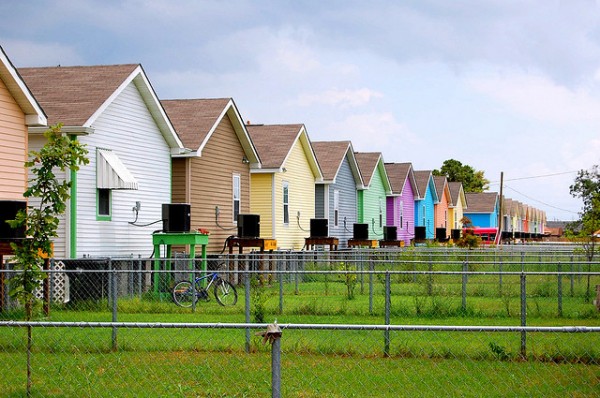
The Musicians' Village neighborhood in New Orleans, rebuilt some three years after Hurricane Katrina. Photo by Tanya Lukasik via Flickr.
The Musicians’ Village neighborhood in New Orleans, rebuilt some three years after Hurricane Katrina. Photo by Tanya Lukasik via Flickr.

Beyond the 6,000 prisoners released in the U.S. Sentencing commission’s effort between October 30th and Nov 2nd, over 650,000 people are released from prison each year—a process scholars and policy makers call reentry. Former prisoners face many barriers upon reentry, including lack of access to work, housing, and voting rights. Despite the huge population of people experiencing reentry each year, most neighborhoods and communities are scarcely involved in the process, and most of these former prisoners return to a small number of disadvantaged urban neighborhoods. How does this concentration of formerly incarcerated individuals impact recidivism, or the extent to which individuals reoffend?

David S. Kirk uses a clever “natural experiment” and data from post-Katrina New Orleans, originally published in the American Sociological Review, to investigate how concentrating former prisoners in a small number of neighborhoods affects recidivism rates. In August 2005, Hurricane Katrina caused extensive damage and forced newly released prisoners to relocate to other communities across the region, as opposed to returning to their original metropolitan neighborhoods. In effect, the natural disaster of Katrina mimicked the conditions of an “experiment,” in which released prisoners were much more widely dispersed across the region rather than clustering in a small number of neighborhoods.

In his anaylsis, Kirk measures recidivism by neighborhood reincarceration rates, comparing neighborhoods with large changes in parolee concentration to “control” neighborhoods that did not experience a change in reentry concentration. Controlling for factors such as socioeconomic condition, housing availability, and previous recidivism, Kirk finds much greater recidivism in in the New Orleans neighborhoods with the greatest concentration of parolees . Specifically, for each extra parolee per 1,000 residents, the neighborhood’s recidivism rate rose by 11%.

A potential explanation for this effect is that the dispersal of formerly incarcerated individuals across larger physical space helps “break up” social networks that make reoffense more likely. Kirk notes that released individuals are often restricted to a particular neighborhood by the very rules of their parole—a policy that could be undermining public safety. To combat this situation and reduce recidivism, he suggests housing subsidies and relocation assistance to help parolees and other former prisoners find homes in a broader mix of neighborhoods.

Photo by Robert Couse-Baker, Flickr CC

Many factors predict rates of gun ownership, including race, education and income levels, political-party affiliation, and local crime rates. But what about legislation and statements from local politicians and media? Do these factors also influence gun sales? University of Washington professor (and current Robert Wood Johnson Foundation Scholar in Health Policy at the University of Michigan) Rene D. Flores’ research explores the relationship between the two.

Flores tests whether an increase in anti-immigration ordinances or arguments predicts an increase in gun sales within twenty-four Pennsylvania counties. Using administrative data from the countries themselves, he shows how proposed anti-immigrant laws, such as increased deportation power or English-only mandates, predicts an increased sale of handguns. Even after controlling for other factors that predict gun ownership, proposed anti-immigrant ordinances and rates of gun sales track each other closely. Flores also finds a similar link between anti-immigrant-ordinances and subsequent handgun purchases in South Carolina.

Flores suggests the relationship springs from the rhetoric used by politicians and media outlets that describes immigrants as criminal, violent, and dangerous. When immigrants or other populations are portrayed negatively in this way, social anxiety can catch fire in native populations. He tests this claim by examining how, after anti-immigrant ordinances are proposed in Pennsylvania counties, local media run more stories linking immigrants to crime and violence. He suggests that these stories either cause or reflect a change in local attitudes toward immigration—one that results in increased anti-immigration sentiment and gun sales. In short, anti-immigration legislation and rhetoric can shape public attitudes, and social anxiety can predict the likelihood that locals “lock and load.”