
crime

Photo by 53Hujanen, Flickr CC

It has been over two years since the Flint lead water crisis came to light. Today, many in Flint remain skeptical about the quality of the water and residents continue to push for better water infrastructure and safety standards. We now know that lead exposure has a multitude of negative health impacts, and some even argue that the removal of lead from gasoline in 1970 contributed to the great crime decline. Recent research by Robert Sampson and Alix Winter tests this connection by examining if lead exposure is connected to delinquency and arrest in adolescence.

Sampson and Winter use data from the Project on Human Development in Chicago, a representative sample of children and their caregivers in the mid-1990s. In this study, they follow a group of 254 individuals from infancy to age 21. They examine blood lead levels, official arrest records, and caregiver-reported antisocial behavior. By following these individuals over two decades, the researchers are able to observe possible effects of lead exposure over time.

Sampson and Winter find that lead exposure is directly linked to antisocial behavior, like destructive outbursts, in adolescence. This relationship stands even when accounting for a variety of individual, caregiver, and neighborhood characteristics, including the participant’s mental health and impulsivity. While the authors do not find a direct connection between lead exposure and arrest, previous research tells us that antisocial behavior is related to arrests for many different types of crimes. Therefore, those exposed to lead in their childhoods will likely face increased interaction with the criminal justice system, due to lead’s toxic effects — specifically increased antisocial behavior.

Sampson and Winter argue that toxic inequality — unequal exposure to toxins, like lead — may shape the unequal distribution of crime in neighborhoods and cities throughout the United States. In this case, lead poisoning may explain how one dimension of social inequality contributes to crime and criminalization. Flint’s crisis highlighted how environmental hazards are concentrated in disadvantaged communities, and this study further demonstrates that unequal exposure to toxic living conditions can have long-reaching consequences for the families and their children that live in these areas.


Photo by Evan Delshaw, Flickr CC

Fathers who do not pay formal child support are often the brunt of media and public scrutiny. Black fathers, in particular, face racial stereotypes that accuse them of being “bad fathers” for not being involved in their children’s lives. Yet, not paying child support may also lead to more serious consequences, such as the accruement of child support debt and jail time for nonpayment of debt. New research by Elizabeth Cozzolino traces this multistep process to explore noncustodial fathers’ risks of receiving jail time for nonpayment of child support.

Cozzolino draws upon responses from the Fragile Families and Child Wellbeing Survey to test which factors lead to a formal child support order; which factors lead to child support debt; and lastly, which factors result in a noncustodial father’s jail time for nonpayment of debt. The author suggests that two key pathways may determine a noncustodial father’s entrance into the criminal justice system: first, the relationship context between the mother and noncustodial father (e.g. securing a new relationship with another partner) and, second, the mother’s use of public assistance such as TANF (Temporary Assistance for Needy Families) or Medicaid.

Out of the families with noncustodial fathers, roughly 50 percent received orders for child support. A mother’s use of public assistance and a decrease in the quality of the relationship between the mother and noncustodial father increased noncustodial fathers’ likelihood of receiving a formal child support order. Sixty percent of fathers with a child support order accrued child support debt, and this resulted in jail time for 14 percent of them. The use of public assistance by the mother was less important for accruing child support debt, but the relationship context remained salient. Significant factors that increased a noncustodial father’s likelihood of jail time include having multiple children with different partners and owing more than $10,000 in child support debt. If these punitive patterns continue, the welfare and criminal justice systems will only reproduce inequalities that will likely exacerbate a father’s ability to financially support their children.

Debra Umberson, Julie Skalamera Olson, Robert Crosnoe, Hui Liu, Tetyana Pudrovska, and Rachel Donnelly, “Death of Family Members as an Overlooked Source of Racial Disadvantage in the United States,” Proceedings of the National Academy of Sciences, 2017
Photo by Quinn Dombrowski, Flickr CC

Losing a family member can be hard emotionally and physically. Previous research demonstrates that grief and bereavement negatively impact socioeconomic status and a variety of health outcomes, but research has not considered the effect of multiple experiences of loss or potential racial disparities on who is more likely to lose family members. Recently, Debra Umberson and her colleagues tackled whether Black Americans experience more and earlier family deaths than White Americans. Their striking findings illustrate that Black Americans are more likely than White Americans to experience the deaths of mothers, fathers, siblings, spouses, and children. In addition, Black Americans are more likely to experience the death of multiple family members and to experience loss at an earlier age.

The researchers used two nationally-representative datasets to look at the experiences of two different cohorts of Americans. One dataset included 7,617 individuals born 1980-1984 and the other dataset included 34,757 individuals born 1900-1965. Researchers calculated how likely an individual was to experience a death of a family member, as well as differences in age when individuals experienced specific deaths.

Black Americans are more likely to experience the death of multiple family members and to experience the death of a family member at an earlier age than White Americans. Blacks in the older sample were about 90 percent more likely than Whites to have experienced four or more deaths by age 60. And Whites were 30 percent more likely than Blacks to have never experienced a family loss by the same age, even when researchers controlled for several social factors. For those born 1980-1984, Blacks were three times more likely to experience the death of two or more family members by the age of 30. 

Disparities begin young and continue throughout much of the life course. In the younger sample, Blacks were three times more likely than Whites to lose a mother, more than twice as likely to lose a father, and 20 percent more likely to lose a sibling by age 10. All disparities level off at later ages, except the likelihood of losing a child, which continues to increase for Blacks after age 50. This earlier and more frequent exposure to death is a “distinctive stressor” that almost certainly drives cumulative disadvantage by increasing stress and harming social ties.  

Photo by Daniel Lobo, Flickr CC

While the federal effort to block funding to sanctuary cities is slowing down, states like Tennessee are developing their own bills to mandate local cooperation with federal immigration officers. There is contention over exactly what a sanctuary city is, and the guidelines for sanctuary look very different from place to place. The reason behind the initial push to defund sanctuary cities was concerns that surges of undocumented immigration lead to more crime, despite consistent research findings that immigration actually decreases crime. A recent study by Ricardo D. Martínez-Schuldt and Daniel E. Martínez explores relationships among sanctuary cities, immigration, and violent crime rates.

Martínez-Schuldt and Martínez examine the impacts of sanctuary city policies on two types of crime: homicide and robbery. There are no official sources of sanctuary cities in the United States so the authors had to get creative, gathering lists from the National Immigration Law Center and other sources to determine which cities adopted sanctuary policies from 1990 to 2010. The authors include measures of both unauthorized Mexican immigrants and total immigrant population of cities to directly test the effects of immigration on violent crime.

In contrast to the common political rhetoric, increases in unauthorized Mexican immigrants were related to decreases in homicide, but only in sanctuary cities. The authors suggest sanctuary policies may lead to more social integration and feelings of safety for immigrant communities, which could both reduce criminal activity and increase police cooperation in these neighborhoods. These results remain the same even when accounting for a variety of other city characteristics that may influence crime, such as residential mobility and social disadvantage.

Martínez-Schuldt and Martínez’s study demonstrates that much of the political valence around sanctuary cities and crime is unfounded. However, this political rhetoric around “crimmigration” mirrors the beliefs of many Americans. A 2017 Gallup poll found that 45 percent of respondents erroneously indicated that immigrants make crime worse. As this study shows, the link between immigration and crime is not true, and sanctuary policies may help to reduce violence in the cities that adopt them. In short, sanctuary cities may be safer than we think.

Photo by DVIDSHUB, Flickr CC

Sexism is not simply about individual bias or action. In fact, the structure of organizations can facilitate sexism so that discriminatory practices occur even when individuals do not express sexist attitudes. In new research, Stephanie Bonnes demonstrates how bureaucracies and male-dominated hierarchies within the U.S. military facilitate discriminatory behavior towards women, like sexual harassment or abuse. 

Bonnes conducted in-depth interviews with 33 U.S. service women, including 21 on active duty. More than a third of her interviewees experienced what Bonnes calls, “bureaucratic harassment,” where powerful individuals manipulate administrative policies and procedures to undermine their colleagues’ professional careers. For example, superior officers delayed women’s promotions, threatened to withhold benefits or cancel holiday leave if they reported sexual harassment and abuse. One commander even failed a service woman on an exam when she would not comply with his wishes to take a desk job, and prohibited her from retaking the test.

Black and Latina service women reported that superiors cited their “attitudes” in performance reviews or infraction reports, reflecting racism as well as sexism. For instance, a White male officer reprimanded Joanna — a Latina officer — for disrespecting a superior officer, even though he was the same rank as her. In blaming Black and Latina women for their “attitudes,” these men rely on stereotypes about women of color, specifically that they are easily angered and thus unprofessional.

Bonnes argues that service women’s treatment is not simply the result of explicitly sexist commanders. Rather, the military’s policies, procedures, and its hierarchical structure — imbued with some level of discretion for those in power — promote discrimination against service women. And when commanders use their discretion to give infractions or poor performance reviews, service women face serious consequences, including ineligibility for opportunities like pay raises because of holding lower ranks, and time and energy spent responding to infractions and abuse instead of devoting that energy to other important aspects of their lives. In short, Bonnes’ research allows us to understand how institutional structures — rather than simply sexist individuals — can reproduce gender inequality if left unchecked.  

Photo by aclark71, Flickr CC

When we hear about children losing their caregivers to incarceration, we tend to think about mothers. Yet, there is a small, yet sizable group of men that enter prison while being the primary caregivers of their children. In recent research, 39 of these incarcerated men in Australia talked to researchers Tess Bartlett and Anna Erikson about how they try to uphold their roles as fathers while serving time in prison.

Life in prison forced many of these men to balance their identities as both prisoners and fathers. On the one hand, they needed to display an attitude that valued strength and violence to adapt to prison conditions. On the other hand, the men wanted to preserve their nurturing and caring roles as fathers. To balance both the prisoner and the father identities, inmates purposively choose what version of themselves they want to display depending on the situation. However, some parents decided to abandon their “father” identity once in prison. Some men asked their families not to visit at all, in hopes that this would lessen the emotional burden of imprisonment for both themselves and their children.

For those men who did want to stay connected with their children, the prison structure made this difficult. For example, visiting rooms did not allow men to fully engage with their children, through activities like running or playing games. Still, men wrote letters, made toys, and created art to stay connected to their children. One of the participants declared, “[I] still have a lot of offer as a father.” 

Correctional authorities could tremendously improve the life of fathers and children by providing better spaces for families to be families. Preserving family ties while incarcerated is associated with fewer offenses, positive parenting practices, and increased employment opportunities after leaving prison. In short, prison structures that allowed greater family connection could provide substantial social benefits.

Photo by Chris_Parfitt, Flickr CC

Talking about racism and race relations is often difficult, especially between a parent and child. Parents of color often feel the need to talk about these subjects to protect their children from violence and prepare them for racism in the world. But recent research by Megan Underhill suggests that White parents more often remain silent on these matters, ignoring the reality of race relations in the United States and allowing for the continuance of White privilege and dominance.  

Through interviews with 40 White, middle-class parents in Cincinnati, Ohio from 2014–2015, Underhill questioned parents about their communications with their children regarding racial protests and violence — in Cincinnati in 2001 and Ferguson in 2014. Originally Underhill focused on the shooting and protests in Cincinnati, a city that is essentially half White and half Black. Then, a month into the interviews, violence in Ferguson occurred, so Underhill started asking parents about both cities (though not all parents originally interviewed were questioned on these latter events).

Twenty-eight parents did not talk to their children at all about racial tensions or protests in either city. When asked why, half stated that their children “never asked” and the rest stated that their children were too young to discuss such topics. Though most parents in the study reported speaking to their children about race beforehand, they often used rhetoric that superficially addressed diversity — “we’re all the same but different” — thus avoiding uncomfortable racial talk. Twelve parents spoke to their children about racial tension and the Ferguson protests, though most did not talk to their children about the underlying structures that support racial inequality in the United States. In all, only two parents in the study initiated conversations with their children about racial inequality and White privilege. 

Part of the reason seems to be that parents themselves had little knowledge of U.S. race relations and therefore felt like they could not have meaningful conversations about race with their children. In sum, this research demonstrates that White families — in contrast to families of color — lack either the willingness or the ability to talk about race, even in the face of current events. And this practice will surely only support the status quo. 

Jukka Savolainen, Samantha Applin, Steven F. Messner, Lorine A. Hughes, Robert Lytle, and Janne Kivivuori, “Does the Gender Gap in Delinquency Vary by Level of Patriarchy? A Cross-National Comparative Analysis,” Criminology , 2017
Protesters arrested at the 2008 Republican National Convention. Photo by Jeremy Noble, Flickr CC

Almost universally, women commit less crime than men. At the family-level, researchers explain this through gender socialization — in families where parents exert more control over daughters than sons, girls are less likely to commit crimes than boys. New research by Jukka Savolainen and colleagues examines the gender gap in crime on a larger scale by using data from 30 countries to determine how patriarchal attitudes and the social position of women may influence young women’s participation in crime.

The authors combine the International Self-Report Delinquency Survey — which measures youth’s participation in crime in 30 nations — with attitudinal measures of gender equality from the World Values Survey and the Gender Inequality Index from the United Nations —  which measures gender disparities across nations in areas such as economic status and reproductive health. Consistent with previous research, they find a gender gap in crime participation. While young men participated in more crime than young women overall, the gap is greater in countries with greater patriarchal attitudes and higher levels of gender inequality. In other words, young men and women commit crimes at more similar levels in countries with more gender equality, and this is due to a combination of young women committing more crime and young men committing less crime. 

In sum, decreases in patriarchal attitudes and practices influence both male and female participation in crime. The authors suggest that variations in patriarchal norms across countries may alter gendered socialization practices, gender differences in parental supervision, and gendered attitudes and behavioral expectations — all of which may affect future participation in crime.

Photo by takomabibelot, Flickr CC

Mass information is changing criminal justice surveillance. Police departments have begun to use massive digital datasets — referred to as “big data” — to reduce crime rates. However, these practices can prompt inadvertent social consequences, according to sociologist, Sarah Brayne. Brayne spent more than two years observing and interviewing members of the Los Angeles Police Department (LAPD) investigating how new technologies have intensified and transformed how police monitor large numbers of people.

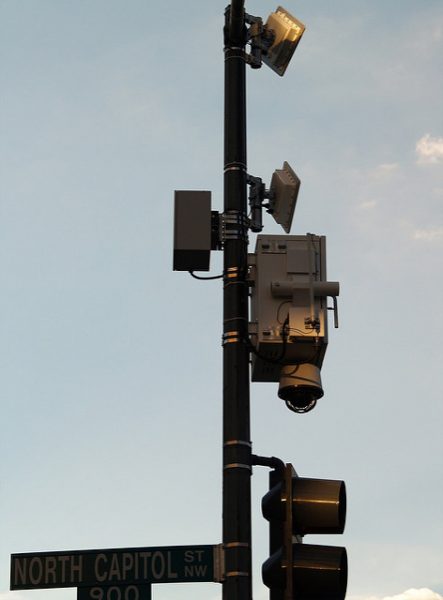
One of the most shocking transformations in the LAPD data-systems is the dramatic increase in the number of people and institutions under surveillance. Their software investigates individuals with and without previous police contact. Based on police records, the software builds network diagrams of associated contacts. These include the suspect’s relatives and people affiliated with the addresses or phone numbers in the suspect’s register, regardless of their involvement in criminal activities. Databases also gather information not related to crime control, like from Twitter accounts and utility bills. This widens the net of surveillance to non-criminal spaces.  

Although technology plays a big part in decision-making, humans still play a vital role in surveillance. For example, when an analyst runs a search for a certain individual, they can see how many times other criminal justice employees have searched for that individual. The more searches, the higher the individual’s “criminal risk,” no matter what their criminal justice involvement is. Further, big data makes it possible to patrol “hot spots” of crime, based on predictive analyses of future crimes. However, some officers contest this form of control, by turning off their automatic vehicle location (AVL) technology.

Advocates of big data believe it can reduce human bias against racial minorities and increase police accountability. However, their faith rests on false the assumption that digital information is free of human bias. As these new technologies extend and intensify surveillance of both individuals and institutions, Brayne points out that some individuals — particularly those living in low-income, minority areas — will surely bear the burden of control more than others. 

Photo by Shane Adams, Flickr CC

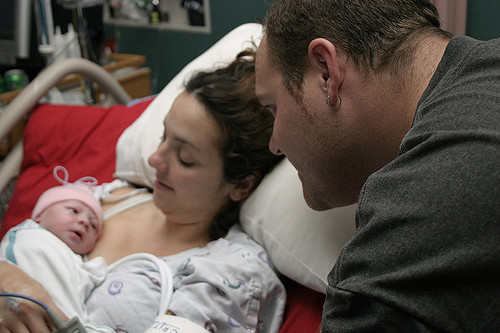
For those involved in gang activity, parenthood can serve as a powerful turning point in parents’ lives. Yet, men and women may experience and react to parenthood differently. In their recent work, David Pyrooz, Jean Marie McGloin, and Scott H. Dekker examine whether parenthood reduces the likelihood of gang affiliation and criminal offending among male and female gang members. 

The authors’ analysis draws from the responses of 163 women and 466 men who self-identified as gang members in the 1997 National Longitudinal Survey of Youth. The authors tested whether parenthood for the first or second time reduces the likelihood of self-identification as a gang member, in addition to the likelihood of committing crimes, including theft, drug solicitation, and assault. The authors also examined male gang members’ involvement in their children’s lives based on their residence with or apart from their children. Finally, the authors controlled for cohabitation between parents, legal employment, and education to determine the specific effects of parenthood.

Prior to having children, female gang members had a lower likelihood of committing crime and fewer years spent as gang members than men overall. For first-time mothers, having a child reduced their likelihood of gang affiliation by 93 percent and their probability of offending by 47 percent. However, only male gang members who were first-time fathers and resided with their children showed significant reductions in gang affiliation and criminal offending. At the same time, these changes were far less likely to last in comparison to female gang members. Thus, this research demonstrates that while parenthood can be a powerful force for moving away from criminal identity and activity, its impacts are tempered by gender.