crime

Photo by Victor, Flickr CC

Originally posted Sept. 7, 2017

Criminologists have long observed that men seem to commit less crime after they get married — marriage increases interdependence between spouses, changes social activities, and develops new thinking patterns. However, marriage is more than just the relationship between two individuals, but rather the joining of two social networks of friends, coworkers, and family members that can have other consequences beyond the spousal relationship. And sometimes we marry into families that increase, rather than decrease, our exposure to crime.

Lars Hojsgaard Andersen asks how in-laws affect men’s criminal activity. Using registry data on the entire population of Denmark, Andersen finds that, consistent with previous research, marriage reduces the likelihood that men will be convicted of crime.  However, this “buffer” of marriage is lessened by the presence of a brother-in-law who has been in trouble with the law. Specifically, new husbands whose brothers-in-law were convicted in the last 3 years have a 20% higher likelihood of being convicted themselves, relative to new husbands without a convicted brother-in-law. This relationship holds even when accounting for the characteristics and criminal history of both husband and wife, as well as the criminal history of both families.

Andersen notes that previously convicted brothers-in-law increase the likelihood of crime for husbands regardless of their own criminal histories — they can even “ignite criminality” among husbands who previously had no brushes with the law. Overall, the research shows that the ability of marriage to reduce criminal activity partly depends on the new network ties that marriage brings. In short, the impact social bonds and institutions have on behavior rests, in part, on the social ties that those institutions foster.
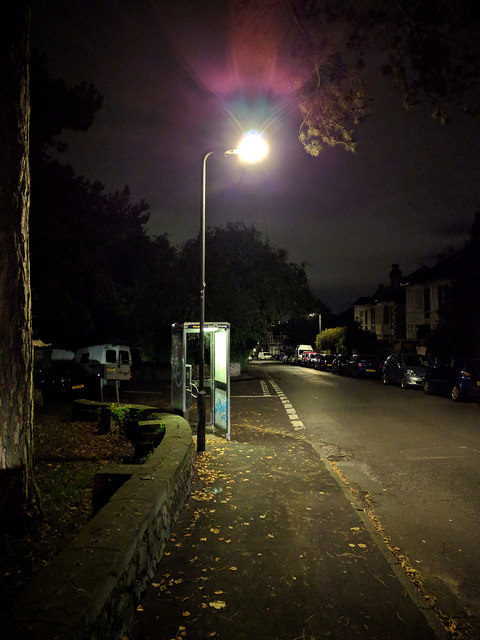
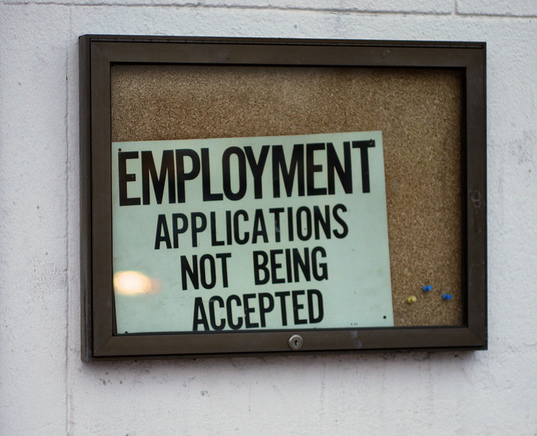
Photo by Rob Brewer, Flickr CC

Scholars of crime pay extensive attention to how the physical characteristics of neighborhoods, like street lighting and security cameras, might help deter crime in high crime areas. A recent study by Paulo Avarte, Filipe Ortiz Falsete, Felipe Garcia Ribeiro, and André Portela Souza extends this research by assessing the effects of electricity access on violent crime rates in Brazil. Brazil is an important location for a focus on violence reduction, as Brazil — and the whole of Latin America — is home to some of the highest homicide rates in the world.  

The authors examine the impact of a federal program titled Luz Para Todos (LPT), or the Light for All program, which aimed to provide Brazilian households with access to electricity beginning in 2001. The LPT program provided electricity access to ten million households by 2009, focusing specifically on expanding access in impoverished rural areas. The authors use demographic census and mortality data from over 5,000 Brazilian municipalities in 2000 and 2010 to assess the relationship between electricity and homicides, accounting for other characteristics such as education levels, labor market characteristics, unemployment, and police size.

They find that the LPT program resulted in a discernible drop in homicide rates for rural areas, especially in the Northeast region of Brazil, an extremely impoverished area that had minimal electricity access prior to the implementation of the LPT program.This effect appears to be especially pronounced for homicides that occurred on rural roads and urban streets rather than in households and other closed spaces, suggesting that lights in public spaces help to deter violent behavior. 

Another explanation for reduced homicide rates may simply be that electricity access is a marker of numerous social benefits, like increased school enrollment and improved health outcomes. In other words, as quality of life improved in these areas, homicides decreased. Although the LPT program was not intended as a violence reduction policy, it clearly had significant impacts on homicide rates in areas of high need. Avarte and colleagues’ findings suggest that targeting electricity policies in areas that previously had little to no access to electricity can be an essential tool for crime control.

Photo by Jeremy Sternberg, Flick CC

The mark of a criminal conviction often has a devastating effect on future career opportunities. Black formerly incarcerated individuals have an even harder time finding employment due to employer discrimination. But jobs aren’t only important for economic security. Susila Gurusami’s recent study explores how state agents like probation officers, parole officers, and attorneys determine Black women’s commitment to rehabilitation by assessing if and how their employment is reliable, recognizable, and redemptive. Failure to meet these criteria could mean returning to jail or prison. In doing so, probation and parole officers reinforce “rehabilitation labor,” where formerly incarcerated women must prove that they have successfully transformed from ‘criminals’ to ‘workers.’

Gurusami spent 18 months volunteering as a social work intern with a local organization in a Los Angeles county that assisted formerly incarcerated women find employment, housing, and other rehabilitative needs. During her time there, she worked with 35 women — driving them to doctor’s appointments, guiding them through job applications, and accompanying them to court proceedings. She developed a close relationship with several women by conversing with them in their homes, meeting them at restaurants, accompanying them on daily walks, and speaking with them via phone and text messaging regularly.

The women in Gurusami’s study quickly learned that their probation and parole officers would not simply accept any form of employment. Rather, probation and parole officers emphasized that formerly incarcerated women must find work that state agents deem reliable, recognizable, and redemptive. Reliable employment meant long-term, full-time work. State agents criticized women who found seasonal positions or temp jobs. Some women were even discouraged from seeking education despite its long-term potential to generate greater income.  Those who attempted to earn GEDs, college degrees, or attend trade school were often discouraged by parole and probation officers who did not recognize education as a legitimate means to finding employment. 

Furthermore, parole and probation officers did not recognize traditionally female-dominated forms of work, like braiding hair or assisting with care of relatives, that did not take place in conventional workplace settings as valid employment. Lastly, state agents also tended to push women towards redemptive work — work that they viewed as beneficial to the community, such as counseling and social work. Women who failed to find employment that met these criteria were threatened with prison. While employment is vital to a successful future after incarceration, limiting opportunities for both work and education and forcing Black women to partake in rehabilitation labor reinforces notions that Black women’s actions are in need of constant control and discipline by the state.

Photo by torbakhopper, Flickr CC

Often when we think of humor and drugs, images from popular media such as Cheech and Chong or Pineapple Express come to mind. These images often frame dealers as clueless stoners who can’t seem to stay out of trouble with the law or other dealers. But how do jokes play a role in the reality of drug dealing? Recent research by Timothy Dickinson and Richard Wright shows that humor, particularly denigrating humor, is central to the identity of drug dealers.

Given inherent legal and privacy concerns, illicit drug markets are difficult spaces for researchers to access. The lead author Dickinson was able to circumvent this complication by drawing on his personal connections to recruit participants. The study includes both interviews and observations of 33 current and former drug dealers in the St. Louis area. Many dealers indicated that they were “retail-level” dealers that sold small quantities, while a few others were suppliers that sold larger amounts for redistribution by other dealers. The dealers sold a variety of substances including cocaine, meth, marijuana, and MDMA. Most operated in “closed markets,” so they typically only sold to friends or acquaintances, and the large majority also reported having some form of legal employment and using their own drug supply.

Findings suggest that humor helps these individuals assert their identity as dealers, while also allowing them to reduce their perceptions of the threats posed by police and police informants. Specifically, dealers distinguished their current identity as “smart” from other “stupid” dealers, while also distinguishing their current “smart” dealer identity from their previous decisions that they viewed as “being stupid.” In one example, Brian, a white ecstasy and marijuana dealer, mocked himself for driving while intoxicated with drugs:

“I just got off work and I had eight individual eighths [bags of marijuana weighing 3.5 grams] … all individually wrapped cuz I was getting ready to sell. … And I was an idiot. … I was smoking weed [laughs]. … I went through a sobriety check. … As soon as the [police officer] walks up to the truck, he’s like, “You having a good night?” and I’m like, “Well, not now” [laughs].”

Dealers reduced perceived threats of arrest by dismissing police as as too crooked or incompetent to punish them. Some claimed to have an eye for undercover police officers, and parodied police efforts to identify them as dealers. They also denigrated possible police informants as non-threatening and indicated that their present dealing was too small time to be of much interest to police. Taken together, these findings suggest that the role of humor in drug dealing goes far beyond what we see in many stoner comedies. The threat of punishment is perceptual, and wit is one way that dealers can mitigate the riskiness of dealing while cementing their identity as the smart players in the drug game.

Photo by verkeorg, Flickr CC

We often hear public outcry regarding cases of children’s sexual victimization, but we rarely get to see what happens within the courtrooms. The reality is that not all of these cases face swift justice. In new research based on observations of seventeen jury trials, Amber Joy Powell, Heather R. Hlavka, and Sameena Mulla show that in trials where children serve as witnesses, defense attorneys often work to discredit children’s testimonies by relying on racial and gendered stereotypes.

The children who testified in the observed trials ranged from age five to sixteen, most were Black and Latinx youth, and all but two were girls. One of the strategies defense attorneys used included emphasizing the fragility of children’s bodies, especially girls’ bodies. They argued that the absence of visible physical or psychological injuries indicated the jury had reason to doubt the children’s claims. For those who were teenagers at the time of the assault, attorneys argued that adolescents, especially adolescent girls, were rebellious, manipulative, and less trustworthy than younger children. This especially applied to Black girls’ testimonies because they were often perceived as older than their ages and thus defense attorneys claimed they were more blameworthy. Attorneys also relied on stereotypes of deviant Black families, drawing on narratives about dysfunctional families, promiscuous “welfare mothers,” “baby mamas,” and blaming parents for having drugs in the house. 

In the cases where boys testified, attorneys relied on jurors’ difficulty believing that men could sexually assault boys without leaving physical evidence for someone to find. In one case, the defense attorney questioned the credibility of an adolescent Latino boy based on a “rumor” that he might be gay. In a post-trial interview, a juror proposed that “Latino culture” might have prevented the boy from admitting the sex was consensual.

While many sexual assault survivors face doubts about their credibility, this research show how children are often discredited in these cases because of distinct assumptions about gender, sexuality, and race. In particular, children of color confront cultural narratives that have the potential to produce unjust outcomes in the courtroom.

Moving can be difficult for adolescents, as they often worry about how they will fit in with new peers, adjust to a new school environment, and maintain stress levels. Yet residential mobility among youth may lead to another concerning outcome: juvenile delinquency. While prior research finds that moving can disrupt former social networks, allowing adolescents to form new bonds with possibly delinquent peers, little evidence illustrates a significant effect between a single move and delinquency. In a new study, Matt Vogel, Lauren Porter and Timothy McCuddy examine whether the number and type of moves an adolescent experiences affects their delinquency after the move.

The researchers use responses from the National Longitudinal Study of Adolescent to Adult Health and the National Longitudinal Study of Youth surveys to predict self-reported delinquency. Unique to previous research on youth mobility, these surveys provide adolescents’ residential locations at each interview wave. This allowed the researchers to compare frequency of relocation, neighborhood quality, and moving distance between neighborhoods. Youth self-reported acts of delinquency included engagement in selling drugs, robbery, burglary, major and minor theft, physical altercation, and damage to property.

Vogel and colleagues find that youth who experienced a single residential move were not more likely to report delinquent behavior. Yet, the more adolescents moved — particularly those that moved year to year — the more likely they were to engage in delinquent behavior. Adolescents who reported multiple moves, but did not report prior delinquency, were even more likely to engage in delinquency following relocation. The type of move was also important — if an adolescent moved from a more to a less disadvantaged neighborhood, they actually increased reports of delinquency. And adolescents that relocated to a different county were less likely to engage in delinquent behavior. Moving distance was especially significant for adolescents who reported prior delinquency. Thus, this research reveals a more nuanced understanding of how moving affects adolescents. The number and type of moves that youths experience can draw them into negative behaviors and delinquency, but moving can also provide potential benefits for youth with prior behavioral problems.

Photo by Norton Gusky, Flickr CC

Recent estimates from Child Trends indicate that nearly seven percent of children in the U.S. have experienced parental incarceration. And this rate is twice as high among black children. Most of the current research on the negative impacts of parental incarceration focuses on the effects of a father’s imprisonment on boys’ behavioral problems — boys with incarcerated fathers often act out in school and at home. To expand beyond this research, Anna R. Haskins examines the effects of paternal incarceration on both young boys and girls’ cognitive development and across racial lines.

Haskins analyzed a sample of over two thousand children from the Fragile Families project, a longitudinal study that tracks children and their parents across twenty large U.S. cities. Focusing on the first 9 years of the child’s life, she observed four skills representing cognitive development: verbal ability, reading comprehension, mathematical problem-solving, and attention span. She then determined if a father’s incarceration negatively impacts these key developmental areas during middle childhood.

Findings suggest that the experience of paternal incarceration diminishes a child’s reading, math, and attentional capacities, but not their verbal abilities. But these effects differ between boys and girls. While girls experience reduced reading and math skills, boys are more likely to exhibit a reduced attention span. Preliminary estimates also indicate that racial disparities in paternal incarceration contribute to racial inequality in the achievement gap. In other words, if white Americans were incarcerated at the same rate as African Americans, the black-white achievement gaps at age nine in reading, math, and attention skills would reduce by a range of seven to fourteen percent.

Haskins argues that children of an incarcerated parent may face undue stress, trauma, or stigma, which may latently impact cognitive capacities. In addition to perpetuating racial inequities in educational attainment, the collateral consequences of paternal incarceration extend “beyond boys’ bad behavior,” negatively impacting both young boys’ and girls’ cognitive skills.

Photo by alohavictoria, Flickr CC

Senior year of high school is often an exciting time for students, as many make decisions about higher education and nervously await college admission letters. Yet, not all seniors join their peers in the move to higher education. The sociological “life-course labeling perspective” suggests that students already involved with the criminal justice system face the enduring consequences of a criminal record and many are forced to take alternative pathways after high school. Drawing from this perspective, Alex Widdowson, Sonja Siennick, and Carter Hay examine how being arrested in high school affects college enrollment.

The authors draw from the National Longitudinal Survey of Youth to test whether a student’s arrest within the first three years of high school impedes enrollment into 2-year and 4-year colleges within 9 months after graduation. Out of the 1761 students sampled, nine percent had been arrested during their first three years of high school. The authors also examined a sample of youths who received a GED or dropped out of high school. The authors find that people who had been arrested during high school were more likely to be Black and male, to engage in higher levels of delinquency, and to exhibit lower levels of interest in school. Further, they found that high school graduated youths that were arrested were 42 percent less likely to enroll in 4-year college programs within 9 months after graduating high school, and 41 percent less likely after 10 years. Arrests for GED and high school dropouts followed a similar pattern. However, arrest had no direct effect on enrolling in a 2-year college. 

The authors conclude that arrest rates account for much of these findings because being arrested hinders performance in school. Youths’ who were arrested had lower GPAs and decreased participation in advanced coursework, which weakened the competitiveness of their college applications and deterred them from enrolling in college. Therefore, improving youths’ performance may limit the long-term effects of an arrest within an economy that increasingly relies on higher education for a stable income.

Photo by Paul Sableman, Flickr CC

Recent high-profile incidents of police violence against black citizens have spoiled the reputation and legitimacy of legal authorities among many Americans. In a new study, Matthew Desmond, Andrew V. Papachristos, and David S. Kirk investigate one of the consequences of this police misconduct and its accompanying legal cynicism — people are less likely to call 911 to report criminal activity.

Using 911 call data from Milwaukee, Wisconsin, and U.S. Census neighborhood characteristics, the researchers analyze how crime reporting calls fluctuated in the weeks following the high-profile beating of Frank Jude, a black male citizen. Controlling for the level of crime reporting before the incidents, time variation, and neighborhood block-group characteristics, they find that levels of citizen reporting significantly decreased in the weeks following the incident, and that this effect was particularly strong in majority black neighborhoods. This drop in crime reporting lasted for over a full year after the beating, and resulted in an estimated 22,200 fewer 911 crime reporting calls. The researchers also replicate this finding with three other cases of police violence, and show that 911 calls for car accidents were not altered in response to the incidents, suggesting that the reduction in calls was not due to some concurrent event impacting emergency calls overall. 

This study illustrates how the high-profile cases of police force do not just impact those closely connected to the perpetrator and victim, but have broader consequences for police-community relations. The decrease in citizen crime reporting can have tragic outcomes for public safety, and the authors note that the uptick in Milwaukee homicides following the Frank Jude beating could be, in part, the result of decreased 911 calls. Overall, the research highlights how seemingly “isolated incidents,” at least as framed by police departments and politicians, can have wide-ranging effects across a community.

Photo by Johnny Silvercloud, Flickr CC

Due to the increased scrutiny of racial bias among the police, the stop and frisk policies of the NYPD continued to fall out of favor in 2016.  Despite concerns of racial bias in police forces around the country, very little is known about the ways that inflammatory events may influence racial bias in policing — we tend to know more about where discrimination in policing takes place than what may influence when it occurs. To address this issue, Joscha Legewie explores how local acts of violence against law enforcement influence discriminatory use of force by the police after the fact.

Using data from 3.9 million police stops of pedestrians in New York City between 2006 and 2012, Legewie compared the effects of four significant incidents involving the death of police officers on the subsequent use of force by law enforcement. Of these four incidents, two NYPD officers were fatally shot by black suspects in two separate events in 2007 and 2011, while three officers were killed in two separate incidents by a Hispanic and a white suspect. 

The findings reveal a race-specific pattern. The two shootings by black suspects resulted in an increased use of physical force against blacks, but the two shootings involving a white and Hispanic suspect did not result in a similar increase in force against any group. However, this increase in the use of force lasted 10 days after the event in 2011, where it only lasted 3.5 days following the event in 2007. This pattern of racial discrimination remains even when accounting for the time, location, and the circumstances of the stop, as well as the characteristics and behavior of the stopped individual. Whether this discriminatory response in the use of force is the result of implicit racial stereotypes or an explicit retaliation by law enforcement remains to be uncovered (and it may very well be a combination of both). Regardless, this study shows how violence against police triggers race-specific reactions.