
crime

A woman holding a phone, with a black and empty screen. Image by Tirachard Kumtanom under Pexels license.

In a world where a connection is just a click away, many are looking for love online. While digital dating platforms have made dating more accessible for all, they are not without risk. Due to the anonymous nature of the internet, scammers and fraudsters have infiltrated the online dating world and taken advantage of vulnerable people. And new research from Timothy Dickinson and Fangzhou Wang helps unravel how these fraudsters manipulate their victims into sending them money. 

Dickinson and Wang sent a set of scripted emails where they posed as fictitious victims to 87 real online romance fraudsters. They then analyzed these exchanges and looked for patterns. What they found was that fraudsters encouraged their victims to overcome or “neutralize” their hesitancy about sending money in four different ways.

First, fraudsters say that they need money for something important, such as bills or rent, which casts the victim into the role of “caregiver” or “supporter.” Second, they appealed to the intimate nature of the romantic relationship by making statements such as “You are the person I will spend the rest of my life with” or “I promise to love you more and more with every passing day and be there by your side till my last breath.” This helps them reframe the monetary transaction as something that is normal to do in a real relationship. Third, the fraudsters “deny susceptibility” by persuading victims that they hold more power in the relationship. This can be done subtly through language such as “it’s up to you” or “if you want to”. Fourth and lastly, they report that some fraudsters appeal to religious duty since most major religions emphasize helping those in need. 

This research shows how the vulnerability within dating makes room for fraudsters to manipulate and scam victims, and to be wary of the above 4 fraud tactics.
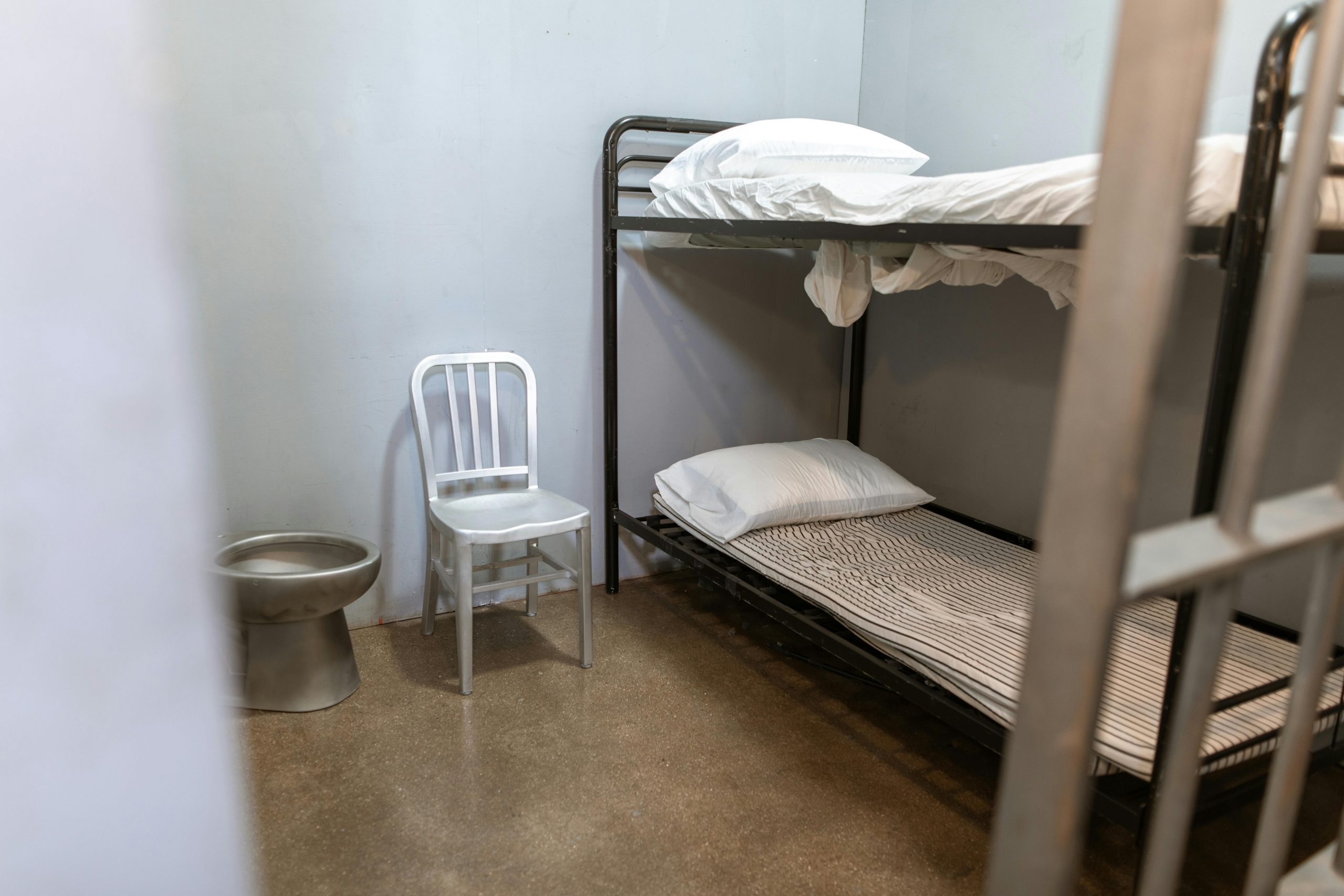

A bare prison cell with a bunk bed, metal chair, and toilet. Image from RDNE Stock project under Pexels license.

Gender segregation is a core feature of American prisons, with men and women separated out into separate facilities. So how do gender nonconforming prisoners fit into this system? 

In a study of California men’s prisons from 1941 to 2018, Joss Greene finds that the response to gender-nonconforming prisoners varied historically. As attitudes towards both punishment and gender changed over time, prison administrators shifted their approach to managing gender-nonconforming prisoners. 

1941-1954: Segregation

Beginning in the early 1940s, California promoted prisons as sites of rehabilitation. However, from 1941 to 1954, prison administrators viewed gender nonconformity as a contagion that threatened both the overall health of the prison and the prison’s rehabilitation efforts. Prisoners who were identified as “effeminate homosexuals” were segregated from the rest of the prison population, stigmatized, and excluded from educational and work opportunities.

1955-1981: Treatment

From 1955 to 1981, prison administrators approached gender-nonconforming prisoners as “medicalized subjects”, meaning that their homosexuality or gender expression was considered a psychiatric or medical condition. 

Gender-nonconforming prisoners were subjected to psychological studies and “treatment” (in the form of harsh medical experimentation) at a newly constructed California prison medical facility. However, many prisoners were able to use their new medical label as leverage to demand access to some gender-affirming care.

1982-1998: Risk Management

In the late 1970s, California’s “tough on crime” approach led to a historic rise in prison populations. To increase efficiency, prison administrators classified prisoners into four risk levels, based on their sentence, behavioral record, and other factors. Those classified as high-risk were subject to harsher punishment. Under this system, all “known homosexuals” were automatically classified as a Level 3 risk (the second-highest level). They were grouped in with individuals convicted of more serious crimes, faced increased restrictions within the prison, and were frequently targets of violence. Victims of violence often increased their risk score by defending themselves, as the system did not distinguish between the risk of harm to the prisoner and the risk of the prisoner harming others.

1999-2018: Legal Status

Finally, from 1999-2018, there were growing social movements opposing mass incarceration, and “transgender” became a recognized legal status. Prison administrators, seeking to avoid legal battles, created a “transgender” prisoner category and expanded their medical services, including gender-affirming hormone treatments.

Despite these legal advances, most transgender prisoners have been unable to access hormone treatments and still face widespread suffering in prisons. They remain a protected group in name, but not in reality.

Advancing Rights

Greene’s work highlights how institutions (and their underlying logic and resources) can shape how gender boundaries are defined, reproduced, and changed over time. In California prisons, views on crime and punishment, incarceration rates, prison resources, and anti-incarceration social movements all shifted gender boundaries within prisons. These historical shifts should provide hope for some trans rights advocates, who view changing prison policies as an opportunity to provide relief for transgender prisoners. That said, fully addressing the suffering of gender-nonconforming prisoners will require more fundamental changes to both societal gender boundaries and the nature of prisons themselves.

A grayscale landscape with a tall border fence surrounded by floodlights in the distance. Image by David Peinado from Pexels is licensed under Pexels license.

Immigration law is commonly assumed to be enforced by federal agencies such as the U.S. Immigration and Customs Enforcement (ICE). However, in recent years state, county, and municipal police and courts have become integral to the process of identifying, holding, and punishing immigrants. From the moment a person is booked, local police become aware of their citizenship status and this information can be immediately forwarded to federal authorities. 

To gain insight into these local-federal law enforcement relationships, Michael T. Light and colleagues looked at data on felony convictions from every local jurisdiction in Texas and California. These states have the largest and fastest-growing immigrant populations in the US but differ greatly in how they treat immigrants in the justice system. Texas has given immigration authority to the local police and has increased cooperation with ICE. California, in contrast, has become a self-proclaimed “sanctuary” for immigrants by distancing themselves from ICE and preventing local authorities from holding people for immigration violations alone. Looking at data from both states allowed the researchers to compare these differing approaches.

In both states, the researchers found that immigrants were convicted and incarcerated at a much higher rate than comparable US citizens arrested for the same crimes with similar criminal histories. In Texas, however, they found that immigrants were almost 10% more likely than citizens to be incarcerated, whereas the immigrant-citizen gap was only 2% in California. This is largely due to Texas’ strict policies that encourage local law enforcement to work with federal law enforcement

In some ways, this “punishment gap” between citizens and immigrants parallels the disparities between white and non-white defendants. The authors therefore suggest that future discussions of disproportionate criminalization may center around citizen status as well as race. 

This research shows what can happen when local police become the gatekeepers of both the criminal justice system and the immigration system. Based on the differing outcomes in Texas and California, it appears that deepening connections between local and federal criminal justice systems may result in harsher punishment for immigrants. 

A collage of social media icons with a blue haze by geralt. Image from Pixabay is licensed under Pixabay license.

Your Tweets, pictures, and messages may be used against you. Social media, a common way to connect and share our lives, has become a common form of courtroom evidence. Jeffrey Lane, Fanny A. Ramirez, and Desmond U. Patton explored in their research how social media data in criminal trials harms low-income defendants – who are commonly represented by public defenders. The researchers interviewed New York City public defenders, lawyers appointed to represent people who cannot afford to hire private attorneys, about their experiences preparing for trial and defending clients in cases involving social media data. 

The public defenders shared three main disadvantages they experienced while defending their clients. First, they were frustrated by overly broad search warrants that allowed the prosecution to access years of social media data to use as evidence. This overwhelmed public defenders with data, which increased their uncertainty about what evidence might be used, their fear of missing important data, and the amount of time preparing the case. Describing prosecutors’ use of these search warrants, one public defender said: “They were just fishing…they looked at everything and they found something they liked. That’s not how it’s supposed to go.”

Next, public defenders told the researchers that social media companies generally “bend over backwards for law enforcement,” but do not cooperate with public defenders in sharing individual profile data. While law enforcement could request a wide range of data (including data unavailable to the public, like location data), public defenders have limited access to data that may help their clients.

Lastly, public defenders described how social media data is used to paint their clients in a negative light. This pattern of using social media against people even involved using racial stereotypes. For example, one public defender told researchers about a case where the prosecution selected a photo from Instagram to identify the defendant at trial. Although the Instagram account had plenty of options, including family pictures, the prosecution selectively chose a photo that made the defendant appear ‘thuggish’ and ignored others. 

Due to these disadvantages, public defenders in this study said that they consistently had to defend against social media and lacked opportunities to use social media data to help their clients. While social media data could negatively impact any defendant, this research suggests that low-income defendants are particularly vulnerable due to the time and resources it takes to review social media data, putting increased strain on public defenders.  

 A woman in a suit arguing with a judge in robes outside a courtroom. Image by ekaterina-bolovtsova from Pexels is licensed under Pexels license.

Both child welfare social workers and juvenile probation agents work in systems where time is scarce and caseloads can be overwhelming. Catherine Sirois observed this reality among social workers and probation agents by observing court hearings where youth did not neatly fit within either the child welfare or juvenile justice systems.

Sirois observed juvenile court hearings, interviewed court and social service workers, and attended governmental committee meetings to understand how young people ended up being the responsibility of child welfare or juvenile justice. She found that both agencies attempted “institutional offloading” during court hearings. That is, they tried to place the children, who required the most time and effort due to mental or behavioral challenges, in the other agency and not their own.

This deflection, Sirois explains, is not caused by social workers or probation officers being lazy, but because of the reality of scarce resources. For example, a social worker may have an overbooked caseload which means they can only serve a certain number of time-intensive youths. As a result, when they get to court, such social workers may attempt to remove some of these youths from their caseload — freeing up their time for other, less time-intensive youths.

Because this institutional offloading often occurs in court, where children and adolescents can hear and see their social worker or probation agent attempt to drop them as a client, this can make them feel unwanted, abandoned, and unloved. This institutional abandonment coupled with family histories of neglect and abandonment can increase the likelihood that youth will need even more interventions. 

Sociological research like Sirois’ study sheds light on the paradox of institutional offloading in child welfare and juvenile justice systems. While it may be easy to blame individual probation officers and social workers for turning youth away, this research shows how limited resources can pressure well-meaning social workers and probation agents to drop the children who are most in need of services.

Kristin Turney, Katelyn Rose Malae, Mackenzie A. Christensen, and Sarah Halpern-Meekin., ““Even though we’re married, I’m single”: The meaning of jail incarceration in romantic relationships,” Criminology, 2023

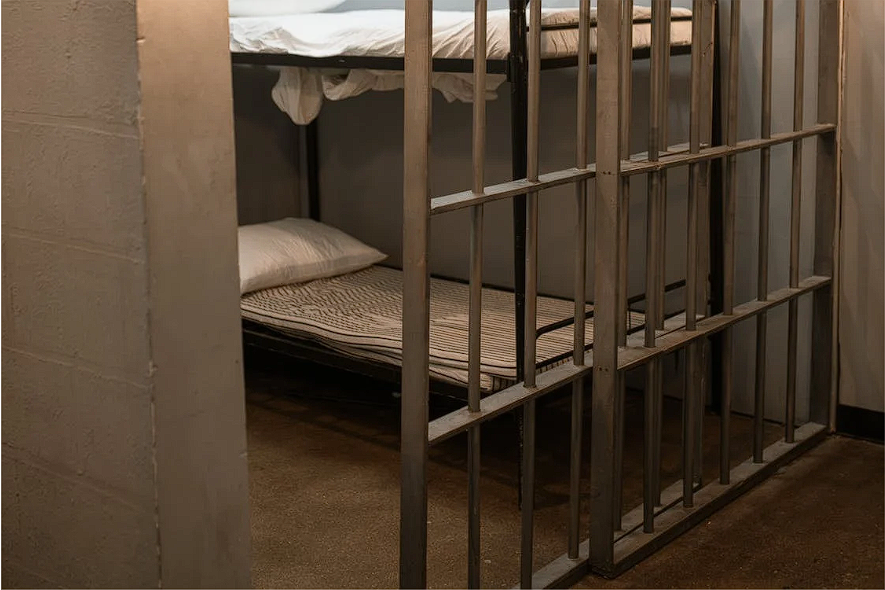
A jail cell, partially open with two uncomfortable mattresses on a bunk bed. Image by RDNE Stock project from Pexels is licensed under Pexels license.

Almost one in five adult women in the United States is a romantic partner or co-parent with a currently or formerly incarcerated person. In other words, roughly 33 million women in America have had to manage a relationship behind bars. 

Unlike previous studies of long-term prison incarceration, new research by Kristin Turney, Katelyn Rose Malae, MacKenzie A. Christensen, and Sarah Halpern-Meekin asks how shorter-term jail incarceration affects romantic relationships and family structures for women in relationships with incarcerated men. This research addresses a lack of focus on jail incarcerations. Jail sentences often come more suddenly and are less predictable than prison sentences, leaving families less time to plan for the future. 

Turney and colleagues analyzed interview data from the Jail and Family Life Study of incarcerated fathers and their family members. The researchers had three main findings. First, women whose partners were incarcerated in jail felt their relationships were in a period of transition where their roles and expectations were uncertain. Arrests meant that families were suddenly separated for unknown amounts of time. Some interviewees spoke about their partners’ unclear release dates making them unsure of their relationship status and how things might change after release. Many interviewees described feeling both “connected” and “disconnected” from their incarcerated partners, with some describing their relationships as “long-distance” even though they still lived in the same county as their partners. Because of the forced separation, some interviewees even described themselves as newly “single” although they still felt committed to their partners.

“We were kind of at a standstill. We’ve just been dealing with Manny being gone, having to just go through life, I guess, without him. Raising his son, raising my daughter as a single mom. Because that’s what it is. Even though we’re married, I’m single,”

Second, many women whose partners were incarcerated in jails took on new or increased responsibilities when their partners were incarcerated, often becoming their family’s only breadwinners. Being in charge of their family’s finances, women were often responsible for the court fees of their incarcerated partners, creating new, challenging relationship dynamics. Without their children’s fathers, the interviewees also described difficulty in parenting alone, especially when speaking to their children about their partner’s absence. These often led to shifts in how interviewees viewed themselves with some finding a new sense of independence, such as seeing themselves as more positive, self-reliant role models for their children 

Finally, the researchers found that women with partners in jails reevaluated their relationships and priorities. Some interviewees felt the incarceration strengthened their relationships, as they became more committed to their partners. Some described feeling as though their partners focused on them more after being incarcerated which led to their relationship roles becoming more stable.  Others, because of their new responsibilities or the uncertainty of their relationship status, took the opportunity to reexamine their relationships, choosing to focus on themselves and their children while finding their relationships less important and feeling less committed to their partners.

Jail is an isolating experience for those incarcerated but it also affects relationships back home. Turney and colleagues show how separation complicates these relationships and, more generally, how the criminal justice system can impact relationships and inequalities among families outside of jail.

A collage of social media icons with a blue haze by geralt. Image from Pixabay is licensed under Pixabay license.

Your Tweets, pictures, and messages may be used against you. Social media, a common way to connect and share our lives, has become a common form of courtroom evidence. Jeffrey Lane, Fanny A. Ramirez, and Desmond U. Patton explored in their research how social media data in criminal trials harms low-income defendants – who are commonly represented by public defenders. The researchers interviewed New York City public defenders, lawyers appointed to represent people who cannot afford to hire private attorneys, about their experiences preparing for trial and defending clients in cases involving social media data. 

The public defenders shared three main disadvantages they experienced while defending their clients. First, they were frustrated by overly broad search warrants that allowed the prosecution to access years of social media data to use as evidence. This overwhelmed public defenders with data, which increased their uncertainty about what evidence might be used, their fear of missing important data, and the amount of time preparing the case. Describing prosecutors’ use of these search warrants, one public defender said: “They were just fishing…they looked at everything and they found something they liked. That’s not how it’s supposed to go.”

Next, public defenders told the researchers that social media companies generally “bend over backwards for law enforcement,” but do not cooperate with public defenders in sharing individual profile data. While law enforcement could request a wide range of data (including data unavailable to the public, like location data), public defenders have limited access to data that may help their clients.

Lastly, public defenders described how social media data is used to paint their clients in a negative light. This pattern of using social media against people even involved using racial stereotypes. For example, one public defender told researchers about a case where the prosecution selected a photo from Instagram to identify the defendant at trial. Although the Instagram account had plenty of options, including family pictures, the prosecution selectively chose a photo that made the defendant appear ‘thuggish’ and ignored others. 

Due to these disadvantages, public defenders in this study said that they consistently had to defend against social media and lacked opportunities to use social media data to help their clients. While social media data could negatively impact any defendant, this research suggests that low-income defendants are particularly vulnerable due to the time and resources it takes to review social media data, putting increased strain on public defenders.  

Ben Crewe, Julie Laursen, and Kristian Mjåland, “Comparing deep-end confinement in England & Wales and Norway,” Criminology, 2023
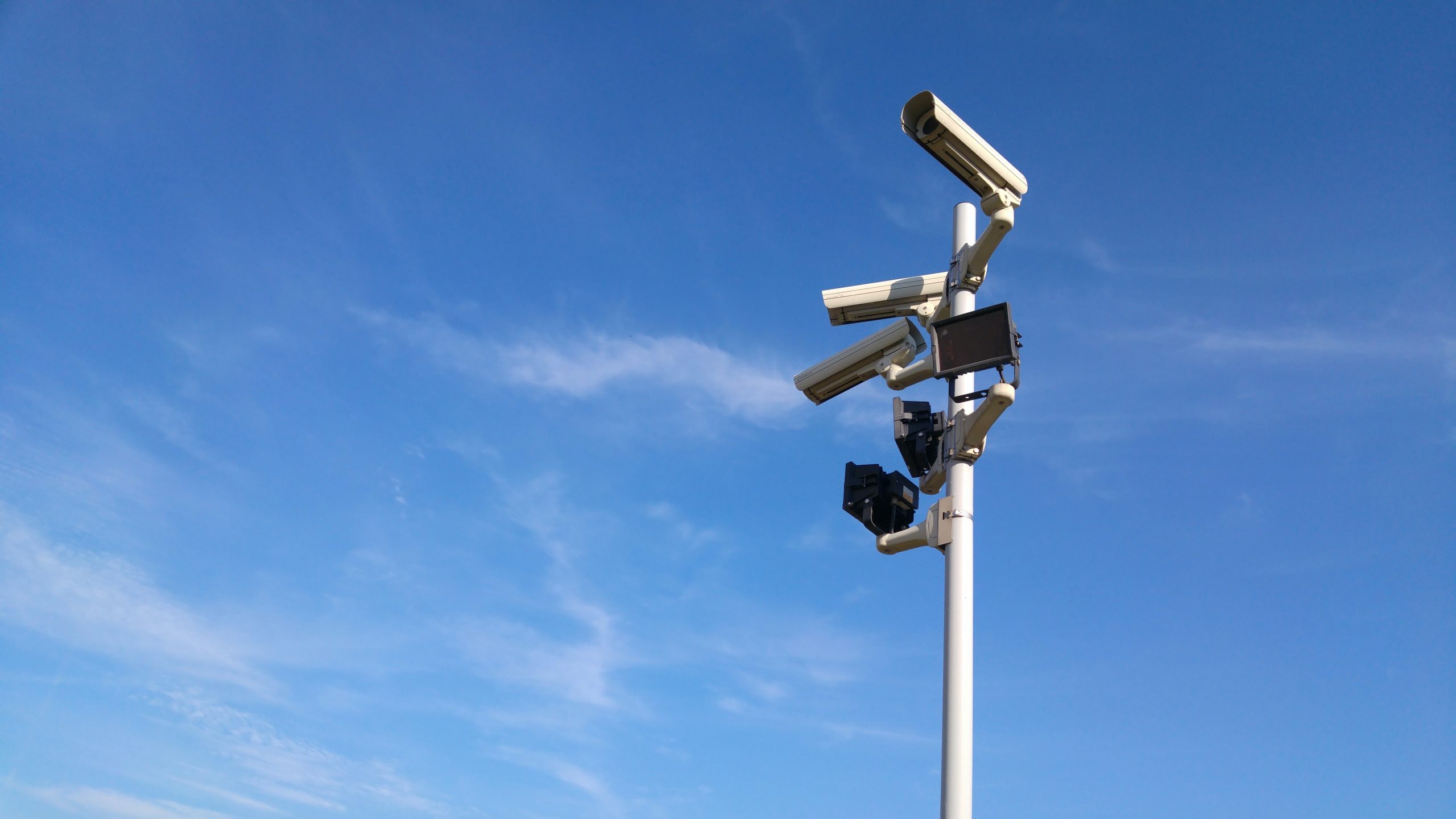
A tall metal pole with multiple cameras fixed towards the top of the pole, with a dark blue sky with wispy clouds in the background. Image by Thomas Windisch is licensed under Pexels license.

There is prison, then there is prison within prison. Countries vary in their approach to these “deep-end” or high-security prison sections reserved for the most dangerous residents with a history of violence. Ben Crewe, Julie Laursen, and Kristian Mjåland compared two approaches towards these high-security prison units: one in England & Wales, and the other in Norway. After conducting 55 interviews with prisoners in restrictive “deep-end” confinement, the authors compared the experiences of prisoners in England & Wales’s traditional supermax system to Norway’s “inclusive othering.”

In Norway, now famous for its less restrictive prisons, deep confinement is rare and used to protect the outside community. Deep-end prisoners continue to enjoy benefits such as attending educational and job programs alongside the general prison population, lengthy, unsupervised visitation time (including accommodations for sexual activity), and supervised, temporary release for activities such as fishing, shopping, or meals with friends. 

Despite their relative freedom, people in deep-end Norwegian prisons were still concerned about being watched by cameras, the limits placed on their phone calls, and other connections with the outside world, especially in comparison to the general, less restrictive Norwegian prison environment. Lastly, although Norway does not give life sentences, people in the deep-end sometimes do not have a specific release date, leaving some feeling hopeless about serving an indefinite sentence.

In England & Wales, people in the deep-end are isolated for the safety of other prisoners rather than the safety of the outside community. Once isolated, the deep-enders felt far removed from the general population, and they too reported feeling like they were in a “hopeless vacuum,” “on the moon,” or “in a cave.” They also felt that corrections officers used incident reports to target deep-end prisoners. However, some of these deep-end prisoners felt relieved to be removed from the “prison politics” and “batch living” of the general population. Some even reported that less competition with other prisoners provided them with greater access to staff and resources.

This research shows how looking across borders helps us understand both the distinct approaches to managing people who have done serious harm and the human impact of policies that leave some prisoners swimming in the deep-end. Although Norway’s focus on reintegration and openness seems quite different from England & Wales’s focus on “managing unruly groups”, people in both types of deep-end confinement reported feeling isolated, surveilled, and often hopeless.

Six bronze bullets on top of a reflective surface, two fired and four not. Image by MasterTux from Pixabay is licensed under Pixabay license.

According to the Centers for Disease Control, more women are killed by their current or former partners than by strangers, and the millions of women in physically abusive relationships are at even greater risk. Because most intimate partner homicides are committed with guns, many states have implemented firearm restrictions on persons convicted of domestic abuse.

Victims of domestic violence often seek emergency restraining orders to help protect themselves and their children. In some states, judges are legally required to order the confiscation of firearms when restraining order petitions contain allegations of physical abuse or threats. These statutes are designed to prevent perpetrators from escalating violence against their current or former partner because firearms are commonly used in intimate partner murders. Research has even shown that this mandatory firearm confiscation lowers homicide risk. Given the importance of mandatory confiscation, judges should be ordering the removal of firearms, right?

Not exactly. Recent research from Julie Kafka, Kathryn Moracco, Deanna Williams, and Claire Hoffman found that judges in North Carolina failed to order firearm confiscation in 61% of protective orders, even when physical violence and/or threats to kill were present. This runs against North Carolina’s mandatory firearm confiscation law in emergency restraining order hearings, and the researchers observed judges failing to verbally announce firearm restrictions during hearings in two-thirds of cases. In other words, judges pick and choose when to follow the law and enforce firearm restrictions for people accused of domestic violence; in most cases, they do not order confiscation. 

This research shows that leaving the confiscation of firearms up to judges maintains access to firearms even after allegations of physical abuse and threats. Kafka and colleagues suggest making confiscation the default or removing the “open-to-interpretation” language in the law. The researchers suggest that better training for judges, monitoring the whereabouts of guns in households with a history of intimate partner violence, and greater domestic rights education for victims could prevent further tragedy.

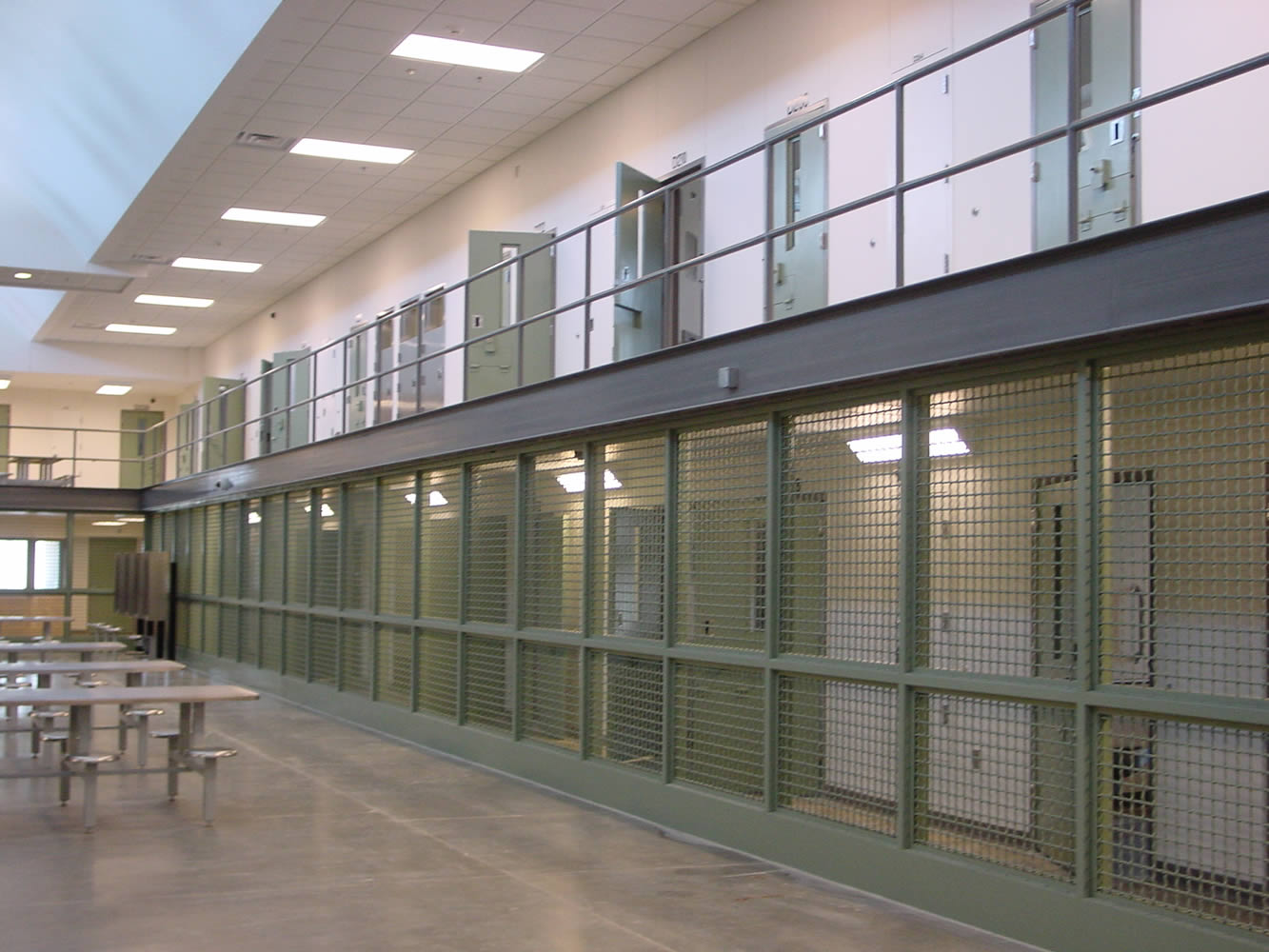
A prison cell block in Faribualt, Minnesota. “Faribault Cell Block 2,” by Minnesota Department of Corrections is licensed under CC0.

Advocates for criminal justice reform have argued that supervisory punishments, such as parole and probation, are a key driver of  mass incarceration even though they are meant to serve as alternatives to prison. This is because people who violate the technical conditions of their supervision are often arrested and reincarcerated. However, new research from Michelle Phelps and colleagues puts some of these concerns into perspective. 

Using data from a national survey of incarcerated adults from 1979 to 2016, the researchers discovered that people in prison for parole and probation violations alone have made up about 11-14% of the prison population – and that this percentage has been remarkably stable over time. The largest percentage of the prison population consists of people incarcerated for new offenses, regardless of whether they were on probation or parole.

This finding suggests that mass incarceration has been driven primarily by increasing punishments for new offenses, rather than increasing enforcement of technical conditions. In order to reduce mass incarceration, the researchers advise that prison reformers should focus on shortening sentence length for new offenses. 

Although parole and probation violations have not contributed as significantly to mass incarceration as originally thought, the researchers caution advocates from diverting their attention from this issue. First, this study focuses on state prison populations and revocations are likely to have an even larger effect on local jail populations. Second, the threat of incarceration alone puts unnecessary stress on those who are on probation and just trying to survive. Incarceration for parole and probation violations contributes to the disorganization and difficulties people can face when they are churned in and out of prison.