
crime

Image: Yellow “crime scene do not cross” tape in front of a black background. Image courtesy of Null Value, CC BY-NC-ND 2.0.

Each March, we celebrate women’s history month. During this time we recognize influential women and highlight the various challenges and inequities that women face. Many scholars have shown that gender inequality predicts violence, specifically homicide, against women. Yet new research from Moore and colleagues suggests that gender inequality also predicts  homicide against men.

Constructing a database modeled after the UN Human Development Report, the authors calculated each US state’s gender inequality index based on health, empowerment, and labor market participation measurements. They also indexed homicide rates for each state using the FBI Uniform Crime Report. The authors find that as gender inequality increases, the total homicide rate also increases. That is, as a state becomes more unequal for women, more homicides are committed. These findings hold true even when male and female homicide are analyzed independently. For example, as gender inequality increases, the male homicide rate also increases.

Previous studies have linked gender inequality to violence against women, either through women’s empowerment or through the backlash they face from men. Overall, scholars have found that as women gain political, social, and economic power, they are less likely to be targets of violence. This new study is important because it shows that gender inequality not only increases violence against women but increases violence against men as well.

Image: The emergency and admitting entrance of a hospital, a tall tan building rising in the background. Image courtesy of Chealion, CC BY-NC 2.0.

Over 3 million Americans were targets, or victims, of violence in 2018. Yet, only half of the targets of nonlethal violence seek formal medical care. Why do some targets of violence avoid medical care? Keith L. Hullenaar and Michelle Frisco studied how adults make healthcare decisions after suffering injuries in violent incidents. 

Using the National Crime Victimization Survey from the past 20 years, the researchers identify three “situational factors” that influence a person’s decision to receive medical care. They find a victim is less likely to seek medical care if they have previously experienced violence, know the person who injured them, or if the incident was sexually violent.  In these instances, the target of violence may feel safer avoiding medical care altogether. Unfortunately this holds true even after controlling for race, gender, income, and healthcare coverage, when the individual has serious injuries.

The decision to seek medical care is not neutral or obvious in the face of injury but contextualized within relationships, risks, and consequences. While social connections are necessary for wellbeing, negative or abusive relationships can actively harm health. As this research demonstrates, “social relationships can have a dark side for health and health care use.” By understanding the social factors that can limit access to care, healthcare professionals can mitigate these risks and create better care conditions for targets of violence.

Image: a White man’s hands in handcuffs behind his back. Image courtesy of pixabay and Pixabay License.

In 2019, nearly 72,000 Americans died from a drug overdose — more than car accidents or gun violence. Over 50,000 of those deaths involved opioids. Drug overdose deaths have been on the rise for the past twenty years, with deaths increasing fourfold. 

Katherine Beckett and Marc Brydolf-Horwitz wanted to know whether states had altered drug policies in response to the opioid crisis. The researchers reviewed US state sentencing statutes between 2010-2016, as well as drug arrest and imprisonment records in a similar time frame. With the rise of the opioid crisis, the authors hypothesized that the drug war is de-escalating and that White drug users would see the greatest decline in punishment. The War on Drugs that began in the 1970s overwhelmingly targeted Black communities, contributing to the rise of police brutality and mass incarceration. What they found surprised them. 

Contrary to their prediction that White drug users would disproportionately benefit from policy changes, drug arrests decreased more sharply for Black people in the last decade. While Black people remain considerably overrepresented in drug arrests, 31 percent fewer Black people were arrested for drugs in 2018 than in 2007. Further, the number of Black people incarcerated in state prisons due to a drug conviction fell by 53% between 2012 and 2017.

Beckett and Brydolf-Horwitz think geography could explain this decline. Drug arrest and imprisonment rates decreased in urban areas but increased in suburban and rural areas. Since urban areas are typically more racially diverse, this geographic trend could explain why Black people were arrested and imprisoned at lower rates. This trend could also explain why drug arrest and imprisonment rates did not fall for White people, because many suburban and rural areas remain predominantly White. 

While further research is needed to understand these shifting patterns in drug arrests, the most recent War on Drugs appears to be slowing down. And this decline is significantly narrowing the racial disparities between Black and White drug arrests. The racial injustices of previous drug scares and the tragedies of the opioid crisis cannot be undone, but these trends demonstrate that meaningful changes are underway in state drug policies.

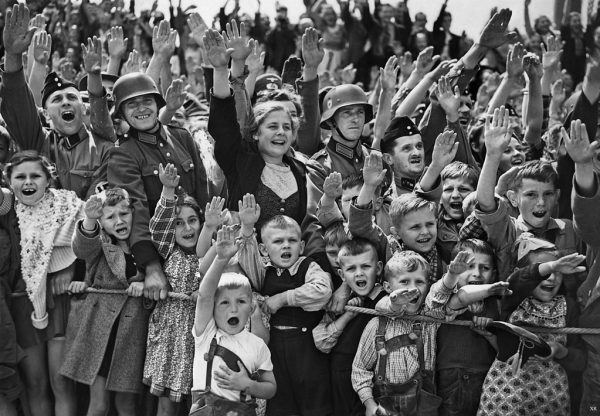
Image: Children, soldiers, and women engage in the Nazi salute. Image via James Vaughan, CC BY-NC-SA 2.0. The legacy of Nazi perpetrators echoes through generations.

When learning about the role that their community members and/or loved ones played during the Holocaust, descendants of Nazi perpetrators can experience a wide range of emotions: shame, anger, sadness. These emotions stem from the trauma and stigma that many Germans experience as a result of grappling with the ongoing, historic aftermath of the Nazi holocaust.  In a recent article, Joachim Savelsberg explores the relationships between cultural trauma and stigma to better understand how Germans manage these emotions.

Savelsberg analyzes family histories written by the descendants of Nazi perpetrators and one victim. He asks: How do the children and grandchildren of Nazi perpetrators make sense of their family’s history and their own existence? For example, he explores how family members grapple with learning that their family members was a Nazi perpetrator and having to consider their role in the Holocaust. Within the pages of these family histories, Savelsberg identifies three ways in which the descendants of genocide perpetrators manage the stigmatized knowledge that their loved ones took part in the Holocaust.

Many authors attempted to silence the past. For example, one author describes a curtain used to cover the lower shelves of his grandfather’s library. It was only after the grandfather’s death that the curtain was pulled back to reveal Nazi propaganda. Denial was also a second typical response. Perpetrator’s family members struggled to search for and acknowledge their family histories while also preserving their family member’s integrity. Interestingly, even after revealing the shelves of Nazi propaganda, such family members sometimes felt the need to express the belief that their grandfather was a good man. Lastly, Savelsberg discusses acknowledgment and confessions, as the authors and family members of perpetrators confessed their own guilt about not asking about their elder’s troubling past.

Through these stigma management strategies, the family members of perpetrators try to reconcile the painful reality that their family members were involved in perpetrating genocide. These findings show that even decades after mass violence, cultural trauma is prevalent among the descendants of perpetrators. The children and grandchildren of Nazi perpetrators struggle to manage the stigma of being related to a genocide perpetrator while also trying to maintain family loyalty and emotional ties. These findings point to the importance of understanding that those who commit mass violence are not monsters, but rather, they are someone’s loved one. 

Man in a suit speaks into several microphones. Image by www.audio-luci-store.it, CC BY 2.0

Since the 2016 presidential election violent hate crimes have risen by over 12% in America’s largest cities. It is not unusual for hate crimes to rise during election years, but they typically decrease quickly in the following year. For the first time in American history, however, hate crimes continued to rise after the last election. Hate crimes, or violent crimes committed against someone due to their race, ethnicity, sexual orientation, religion or national origin, are not simply individual acts. They are also symptomatic of racial power dynamics and are employed to reestablish a group’s dominance.

Using federal violent hate crime statistics and data on US federal government actions from 1992 to 2012, Laura Dugan & Erica Chenoweth examine this phenomenon. They ask how the federal government’s expressions of support or opposition to racial and ethnic minorities, such as affirmative action policies or hostile rhetoric towards immigrants, affect hate crimes rates.  

The authors find that when political gains are made by Black Americans, they are more likely to be targets of hate crimes. For example, when the government supports civil rights protections, hate crimes against Blacks people increase. Conversely, when politicians engage in hate speech against immigrant populations, demonizing and degrading these groups, hate crimes against Latinx folks increased.

These findings suggest that hate crimes that target Black people are used to reestablish White dominance because they occur when Black people have made political progress and are consequently seen as a political threat. This differs for Latinx persons. Hate crimes are more likely to target Latinx persons when politicians support anti-immigration policies or use hate speech.

These findings show how political actions aimed at minorities (such as protection measures and hate speech) may result in hate crimes, but these actions affect Black people and Latinx communities differently. The authors suggest this may be because Whites view Black people as “insiders,” and therefore, as a greater political threat. Alternatively, while Latinx persons may be seen as less politically threatening “outsiders,” the racist and exclusionary language of officials can encourage violence against Latinx targets.

This article cautions us that government actions and hate speech among elites have serious consequences and may in fact motivate Americans to commit hate crimes. In this election season, this research demonstrates the important role of government actions in driving violence against racial and ethnic minority groups.

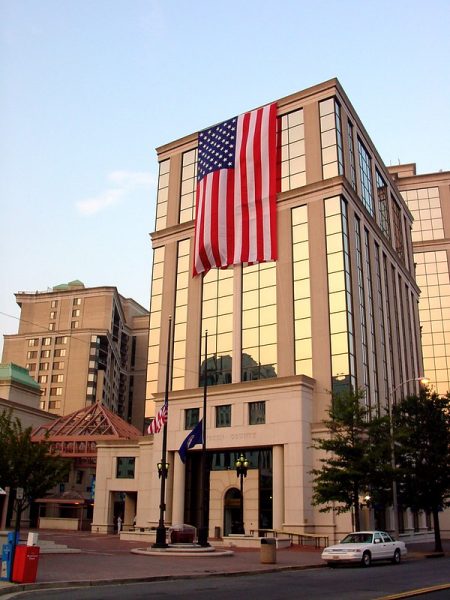
Arlington Courthouse displays a U.S. Flag after 9/11. Photo by Pedro Vera, Flickr CC.

National crises can have long lasting impacts beyond the day or year they occur. For example, in the wake of September 11th, American nationalism increased. However, the unity Americans displayed was an exclusive form of nationalism that pitted many U.S. citizens against non-citizens. A recent study found that following the 9/11 national crisis, non-citizens in the United States faced a greater likelihood of imprisonment than citizens. In fact, by 2010 nearly 48 percent of the federal docket was comprised of cases against non-U.S. citizens. 

Michael Light, Ellen Dinsmore and Michael Massoglia examined a database of federal criminal felony offenses that includes case type, defendant characteristics, court location, and judge-specific data. They find non-U.S. citizens living in New York and Washington D.C were eight percent more likely to be imprisoned than U.S. citizens after 9/11. The increased likelihood of incarceration for non-citizens in New York and D.C. was evident for a full four years after September 11, 2001.

The authors suggest that the reason for this disparity in criminal punishment is not due to changes in federal policies, but instead due to judges being less sympathetic to defendants without American citizenship during times of national emergencies. In other words, the federal criminal justice system is not unbiased: Legal actors like judges can be affected by national fear during times of crisis.

This research raises important questions about the functioning of democratic institutions in the wake of national emergencies. The findings show legal patterns of inequality that target non-U.S. citizens — raising the question of whether the American penal system has become a component of immigration enforcement.

Photo by Pablo Varela, CC

Originally posted November 5, 2019.

The term ‘gaslighting’ earned its name by way of the 1944 film, Gaslight. In the film, an antagonist secretly brightens and dims his home’s lights, making his wife doubt her sanity and sense of reality. Despite the cinematic origins of its label, this form of abuse is experienced by many women. Though psychologists have extensively investigated the subject, little attention has been paid to the role that underlying social characteristics may play. In new research, Paige Sweet fills this void by revealing how social characteristics affect individual experiences of gaslighting within domestic abuse.

Through a series of life course interviews, Sweet finds that abusers mobilize gender stereotypes, racial stereotypes, and victims’ institutional settings in order to manipulate their victims’ sense of reality. Women of different racial and social backgrounds experience gaslighting in different forms; whereas an abuser might prey upon a black woman’s fear of becoming a stereotypical “baby mama,” another might threaten an undocumented Hispanic woman with deportation. Despite differences, abusers in Sweet’s study utilized “crazy-making” tactics for all women — drawing on stereotypes that men are rational, while women are irrational.

Sweet’s argument that “micro tactics of abuse are situated in macro conditions of inequality”  helps us to understand why gaslighting can be so effective at stripping down one’s sense of reality; by drawing attention to existing power structures and inequalities, abusers are able to gain a greater sense of legitimacy and tailor their tactics to a victim’s personal social experiences. It is crucial that we understand the forces that underlie gaslighting in order to more effectively recognize symptoms of abuse, and subsequently support the victims who experience it. 

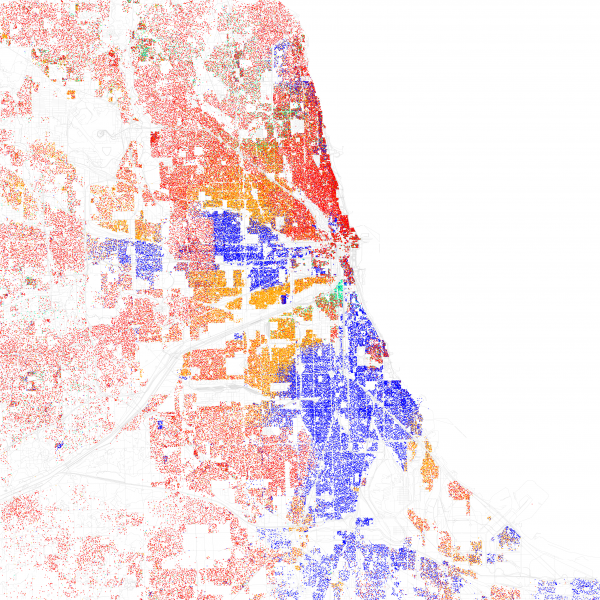
Map showing Chicago’s racial diversity. Each dot represents 25 residents: Red is White, Blue is Black, Green is Asian, Orange is Hispanic, and Yellow is Other. By Eric Fisher via Flickr.

Since the mid-20th-century, research has linked racial residential segregation to a variety of unequal outcomes between racial groups, including education, health, incarceration, and employment. Segregation seems to be slightly declining recently, particularly as the USA becomes more racially diverse. This does not mean, however, that residential segregation is no longer relevant. Long-lasting legacies and impacts of racial segregation remain. Michael Light and Julia Thomas analyze how residential segregation between blacks and whites relates to racial disparities in violence and victimization. 

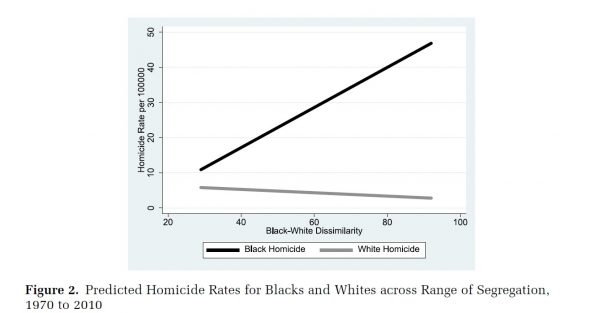
Using decades worth of data from 1970 to 2010, Light and Thomas explore neighborhood segregation and violent crime in several large metropolitan areas across the country. Taking into account the level of non-black and non-white residents, Light and Thomas compare the risk of being the victim of a violent crime for blacks and whites across areas with differing levels of black-and-white segregation. 

As the above graphic from the article shows, the impact of racial residential segregation differs across race. Increasing segregation is linked to higher victimization for blacks and low victimization for whites, but the slopes of these relationships are not equal. In essence, segregation hurts blacks more than it helps whites; racial segregation itself is not only a product of racial inequality; it also another driver of such dynamics. 

This research highlights how violence is yet another factor related to racial residential segregation that hurts blacks and helps whites.  Notably, the data show that metros with more integrated neighborhoods seem to have less violence overall. Thus, as America becomes more racially diverse, racial residential integration may reduce racial inequality as well as inequality in violent crime and victimization. 

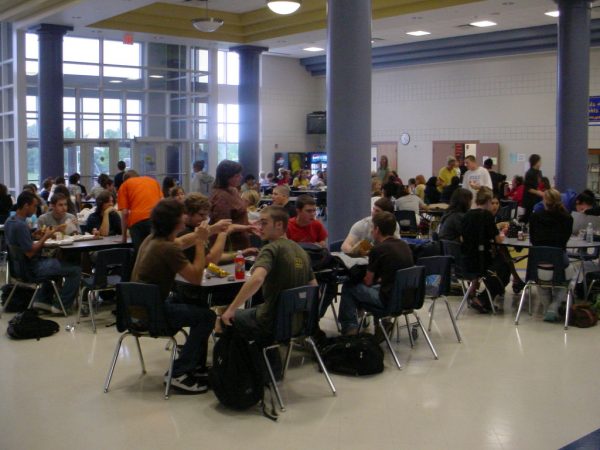
High school students eat lunch with their friends in the school cafeteria. Photo by Sean, John, and Joe via Wikipedia CC.

For many adolescents, schools serve as the epicenter of friendships and peer social engagement. Yet, as disciplinary practices like suspension become increasingly common and disproportionately targeted towards racial and ethnic minority youth, school punishment may not only weaken students’ tie to school, but also their friendships with fellow classmates. Wade C. Jacobsen’s new research examines whether and how school suspension in rural communities impacts current friendships and future engagement with antisocial peers.

To measure changes in friendship networks, Jacobsen examined surveys from 766 students each year between sixth and ninth grade. Each survey asked students to name their closest school friends, the number of times they were suspended, and involvement with substance use and delinquent behavior (e.g. vandalism, fighting, etc.). Jacobsen further observed whether students withdrew from peers, were rejected by peers, and increased involvement with antisocial peers.

By the time students reached ninth grade, roughly 40 percent of racial and ethnic minority students experienced suspension versus less than 20 percent of white students. Furthermore, all students who were suspended nominated fewer peers and received less friendship nominations from peers than non-suspended same-grade students in ninth grade. The more times students were suspended, the more likely they were to discontinue friendships. Experiencing at least one school suspension also increased student likelihood of nominating friends who engaged in substance use. At the same time, suspended students held more friendships in different grades and schools than non-suspended students. 

School discipline imposes harmful effects across both urban and rural communities. When administrators design school punishment policies, they must acknowledge that they are carried out in a deeply racialized context and consider their impact on students of color, who are disproportionately targeted by teachers, school administrators, and law enforcement officers. 

Photo of Cleveland Ohio Police Emergency Rescue SWAT by Raymond Wambsgans, Flickr CC

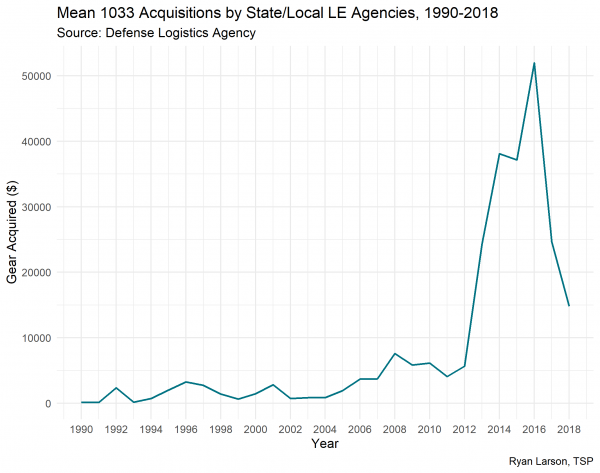
Modern policing is often characterized by its quasi-militaristic tendencies, from its stated “wars” on drugs and crime to its use of armored vehicles and automatic weapons. The Department of Defense 1033 Program, which provides military equipment slated for storage to law enforcement agencies, is a popular route by which police and sheriff’s departments acquire military gear. According to data from the Defense Logistics Agency, the acquisitions of military equipment by state and local law enforcement sharply rose to a peak in 2016, but has declined in recent years. But what explains who participates in the DOD’s program and who acquires the most military equipment?

David Rameyand Trent Steidley investigate the factors that pattern whether law enforcement agencies participate in the program and how much gear they acquire using 1033 program participation and U.S. Census and American Community Survey data. They find that participation in the 1033 — but not the value of gear acquired — is greater in areas of higher violent arrests. They also find that, after controlling for crime rates and other factors, higher Black and Hispanic populations correlate to higher levels of participation and greater value acquired.

However, these racial impacts work in a nonlinear fashion. Agencies operating in areas very low and very high in minority presence have low probabilities of program participation, but agencies that serve a more diverse community are most likely to obtain military equipment through the 1033 program. For those that do participate, increases in minority populations raised the value of gear agencies used, with each subsequent increase garnering even more gear than the last (an exponential increase). In other words, program participation increases in response to racial demographics up to an extent, but once an agency decides to participate, the value of military equipment requested dramatically increases as minority populations increase.

Police militarization appears to support two key theories. From a classic rational choice perspective, law enforcement agencies respond to increasing crime rates with police militarization, possibly in an attempt to increase the agency’s ability to deter further crime. In contrast, the racial effects found in this study follow  a “minority threat” model, as military acquisitions are patterned by perceptions of racial competition in the presence of racial minority groups. This research illustrates how race, net of the crime rates in an area, can pattern not only where police operate, but how police operate.