crime

Robert Courtney Smith, Andres Besserer Rayas, Daisy Flores, Angelo Cabrera, Guillermo Yrizar Barbosa, Karina Weinstein, Maria Xique, Michelle Bialeck, and Eduardo Torres, “Disrupting the Traffic Stop–to-Deportation Pipeline: The New York State Greenlight Law’s Intent and Implementation,” Journal on Migration and Human Security, 2021
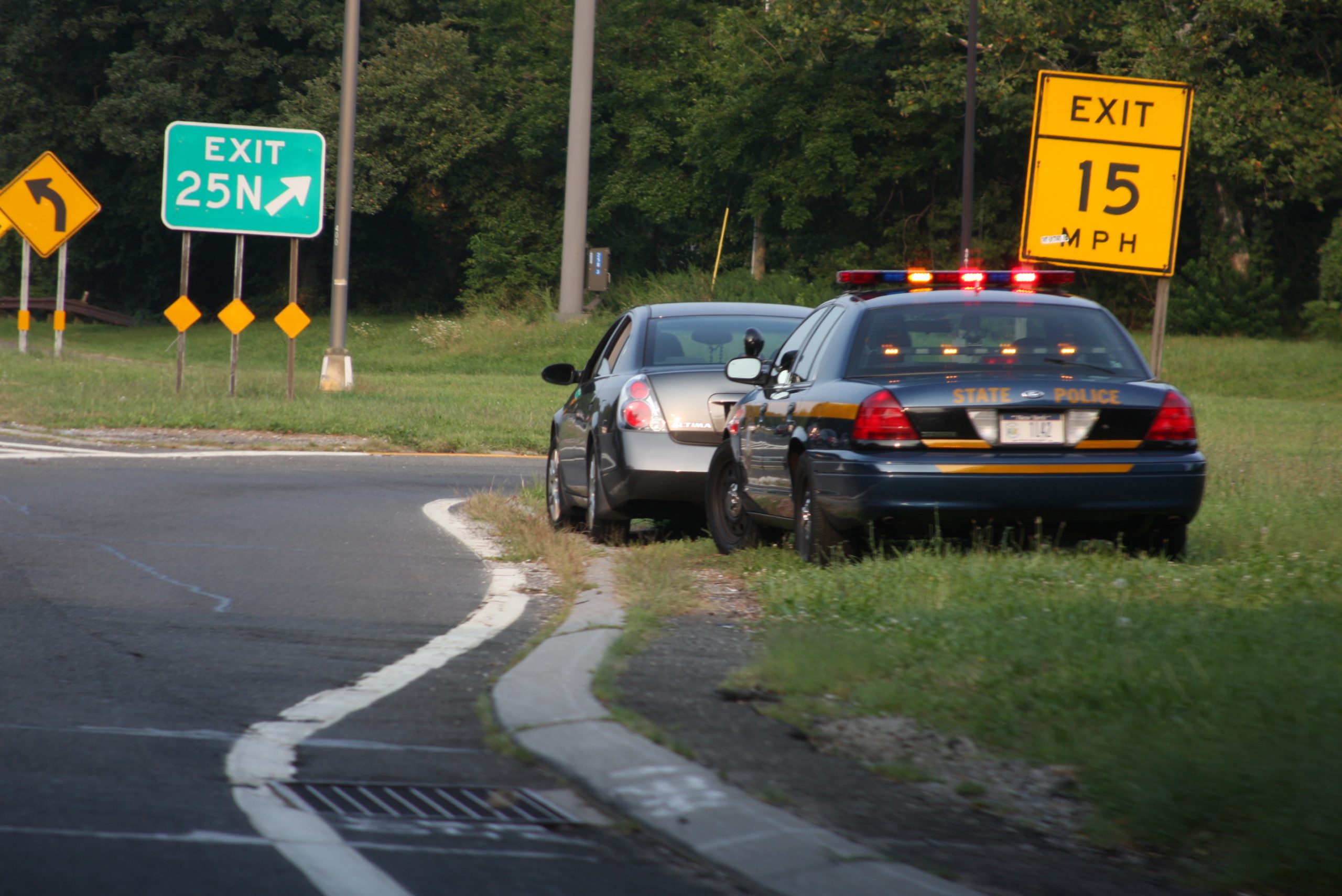
New York state police parked behind a gray near a highway exit. “New York State Police Traffic Stop” by dwightsghost is licensed under CC BY 2.0.

Although many of us view traffic stops as a minor inconvenience, a ticket on the commute to school can end in traumatic separation for undocumented immigrants and their children. Using interviews and data from The US Customs and Immigration Service (USCIS), Robert Smith and colleagues found that the threat of deportation can jeopardize children’s mental and physical wellbeing. 

Smith and colleagues interviewed undocumented parents who have been pulled over for driving without a license. Parents described stops where the police discovered they were unlicensed and delivered them to ICE (Immigration and Customs Enforcement) on the side of the road while their children watched. The children in the backseat watching these encounters experienced short and long term emotional harm after police stops and ICE detainment, including nightmares, post traumatic stress disorder and difficulty adjusting to change in family structure. After these arrests, the parents felt that police neglected their children. For example, one mother described how police made her young children walk three miles home unaccompanied on a cold winter night.

Children and parents lived in constant fear that routine trips to school or the doctor would lead to separation after a police stop. This constant fear of separation from parents made it hard for kids to focus in school. One mother reported that her son had to repeat fifth grade because of his anxiety about his mom being deported. Likewise, fear of deportation can also prevent parents from taking their children to routine healthcare visits.  

 Many parents reported that they were stopped by police due to racial profiling.  Researchers found that a majority of people deported after a traffic stop were booked under “No conviction,” meaning that they were not convicted of any crime or driving violation. Instead, many were targeted for stops on account of their racial appearance. Smith and colleagues found that some law enforcement agencies would even work cooperatively with ICE to scout out undocumented people through traffic stops. 

The authors argue that New York’s newly implemented Drivers License Access and Privacy Act, commonly known as the Greenlight law, could prevent these harms to children. The law allows undocumented immigrants in New York to obtain drivers licenses and prevents the DMV from reporting them to ICE. However, the government’s implementation of the Greenlight law has been inconsistent, weakening its effects. In the small number of counties where Greenlight licenses are offered, lack of funding restricts the amount of licenses that the DMV can administer per day. Some DMV offices refuse to offer services in Spanish and make Greenlight applicants, but not standard license applicants, wait outside in the cold. 

The researchers suggest that universal implementation of the Greenlight law and more thoughtful policing of Latinx communities could eliminate the harm to children and families that comes from police stops, ICE detainment, and family separation. Other solutions include expanding busing to communities with large immigrant populations. This would ensure that children have a safe ride to school and parents would not have to risk deportation by driving unlicensed. These efforts could address the reality that short and routine car trips put some immigrant families at risk of police contact and the harm and separation that can follow. 
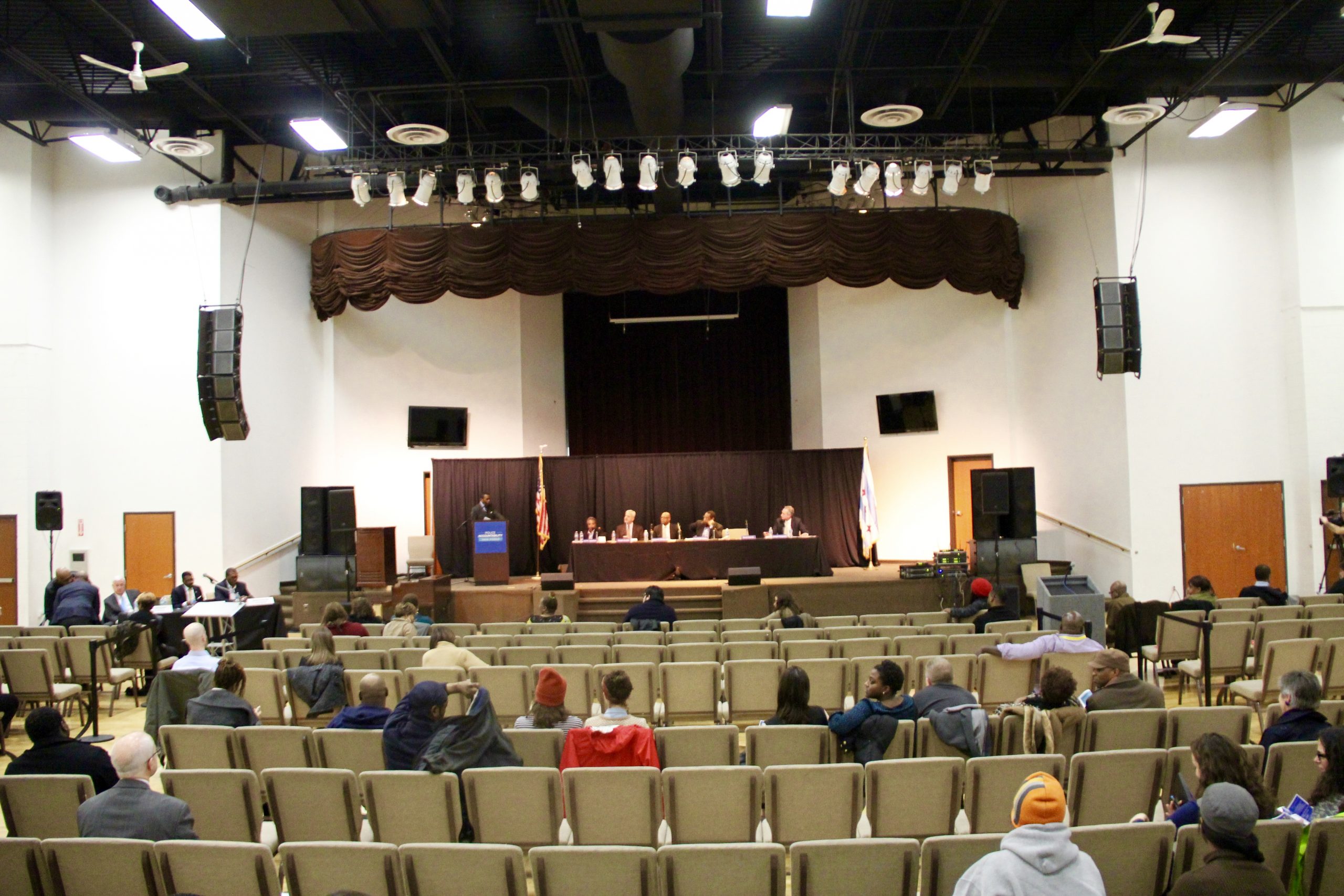
Police lead meeting in large, and mostly empty room. “Chicago Police Accountability Task Force Community Meeting #1” by Daniel X. O’Neil is licensed under CC BY 2.0

Recent police violence and related protests have led to calls to reestablish and strengthen trust between police and communities. In response, the New York Police Department (NYPD) holds quarterly police-community listening meetings to discuss issues ranging from junked cars to shootings of people with mental illness. 

Cheng collected ethnographic data from 40 of these community-police meetings across nine communities in New York and conducted 58 interviews with meeting attendees. He found that three issues prevent these meetings from successfully increasing police-community trust and communication: 1) ignoring “rabble rousing” topics such as police brutality and focusing on easily resolvable problems, 2) the snubing of first-time attendees from actively participating, and 3) the use of police-friendly venues.

During these meetings, attendees sometimes raised concerns about police violence towards community members. When these conversations arose, police redirected comments and shifted dialogue towards directly resolvable problems, such as parking. Following meetings, tweets and reports written by officers further omitted complaints about police violence and framed the events in a favorable light. For example, instead of recording discussion about the police’s failure to respond to gang activity in a timely manner, police officially reported “Trespassing/Narcotics–Late Nights” in a housing development as the topic of discussion – favorably curating the original complaint. 

In his observations of the dialogue between police and attendees, Cheng also noted the presence of pro-police “regulars” frequently attending meetings and vocally dismissing first-time attendees. For example, when a first time attendee expressed their intent to create a non-profit to help youth find employment and reduce crime, “regulars” dismissed this non-law enforcement solution and declared that youths in question “don’t want help”. 

The location of the meetings also favored the NYPD. Churches, schools, and housing complexes were selected for their convenience and capacity – but these venues hold pre-existing connections with law enforcement. Officers frequently serve in roles such as security for weekend religious gatherings and school resource officers in schools. By using these venues the NYPD inadvertently stacked attendance with police-friendly community members. For example, one pastor had bible-study members attend and following an opening prayer to begin the meeting then commented, “the way to stomp [drug dealing] is to foster that relationship between the police. We’re not just to see the police as the enemy, but we see the police as our ally”.

This research shows how intentional and impartial organization is necessary to create a space where people can effectively share constructive criticism of the police. In order to meaningfully change responses to police complaints, organizers must better balance institutional control over these types of meetings and actually provide space for community members’ criticism.

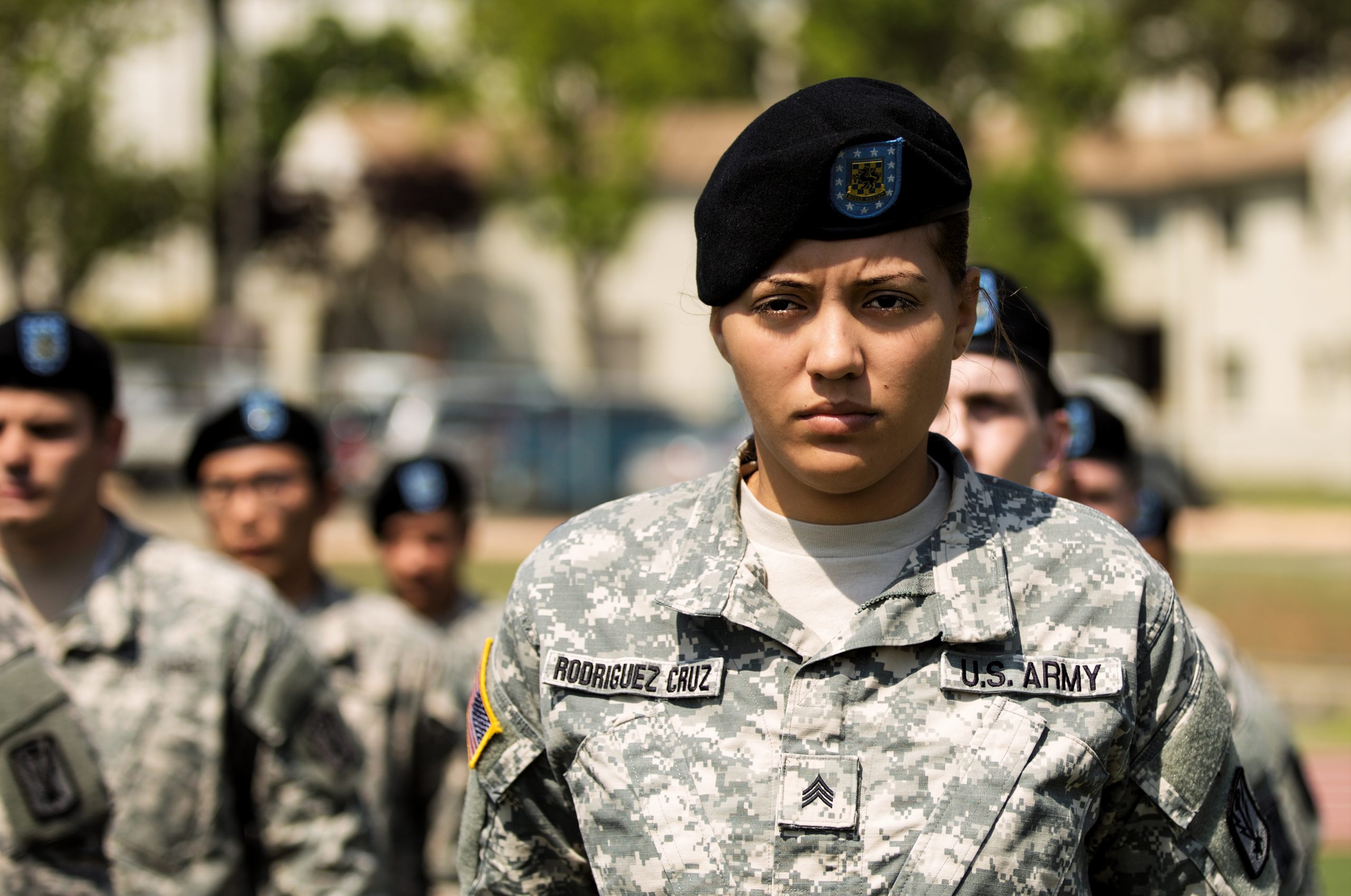
Image: A female service member stands at the front of a formation of soldiers, her gaze resolutely focused beyond the camera. “Military women, rule.” by Johnny Silvercloud is licensed under CC BY-SA 2.0.

Women who enter the armed forces are expected to be strong, tough, and masculine. Feminine insults, like being called a girl, are used to denigrate and motivate male service members. New research shows a hidden consequence of these gendered expectations: undeniably feminine moments in servicewomen’s lives, like pregnancy or entering a new heterosexual relationship, increase their risk of assault and discrimination.

Sociologist Stephanie Bonnes interviewed 50 current and former servicewomen. Over 59% of the participants experienced sexual harassment and discrimination that coincided with feminine life events like dating, engagement, marriage to a man, or  pregnancy. Feminine life events jeopardize female service members’ efforts to appear strong and masculine and put them in danger. 

One participant explains how she was victimized  after she started dating a fellow serviceman. The day that her partner left the unit for training, her superior sexually assaulted her. 

 “This NCO cornered me and grabbed and kissed me. I was completely caught off guard. I mean it was right in front of his home, with his wife inside.“

The participant described how this had shocked her. Not only was this very public, she had also never had any issues with this coworker before. The timing of the incident led her to believe that her superior waited for her new boyfriend to leave before assaulting her. 

Discrimination against servicewomen who are pregnant or in heterosexual relationships is also deeply ingrained in military institutions. One woman described how her she was treated differently by the military organization after she told her unit she was pregnant.

 “So, I got pregnant and of course they’re liable for lots of things, so God forbid I pick up  a single chair. But then they went and made me go clean the bathrooms for the company.”

The findings show how the undeniably feminine moments in servicewomen’s lives put them at risk for both sexual harassment and workplace discrimination – and how women in the US military are put in harm’s way by their fellow soldiers.

Image: A wooden gavel sits next to a pair of handcuffs and a stack of spread out cash. Judge Gavel, Money And Handcuffs by George Hodan is licensed under CC 1.0.

Court fines and fees  are hardly new, however, their use has increased in recent years. New research from Ilya Slavinski and Becky Pettit suggests that law enforcement agencies have resurrected these “legal financial obligations”  as an additional tool of punishment that targets and constrains the same groups of people that have been historically disadvantaged by incarceration. 

Slavinski and Pettit analyzed data from 254 counties in Texas, a large, diverse state that collected over $1 billion in legal financial obligations in 2016. 

Slavinski and Pettit found that Texas jurisdictions with high Republican voter affiliation issued monetary sanctions at a much higher rate than less conservative regions. This finding parallels prior research that links party identification with incarceration rates. Similarly, they noticed that heavy use of fines and fees was not associated with higher crime rates. This is consistent with research showing that some  “tough on crime” policies are more closely tied to politics, race, and class than they are to crime control. 

The researchers also found that legal fines and fees were disproportionately  administered in predominantly Black and Latinx areas. This builds on previous research that has linked incarceration rates to perceptions of “racial threat.”  

Slavinski and Pettit suggest that legal financial obligations are often used in combination with jail and prison time, rather than serving as an alternative to incarceration. This means that after people leave incarceration, they continue to be watched by authorities to ensure that they pay their legal financial obligations. By coupling prison sentences and legal fees in this way, the state has used legal debt to extend the surveillance and control of historically marginalized populations. 

Video imagery courtesy of canva, canva licensing

Young men in gangs are often thought to always practice masculinity by engaging in violent behavior like fighting and shooting, which many attribute to systemic inequalities like mass incarceration, scarce jobs, and racism. New qualitative research by John Leverso and Chris Hess shows that as male gang members age, they remain committed to masculinity but they relate to their manhood differently. 

Leverso and Hess asked about important life events that changed the way respondents understood what being a good man is in 29 in-depth interviews with current and former gang members in Chicago. These interviews showed how masculinity endures and evolves into new phases of adulthood, particularly fatherhood. the ways gang members accomplish masculinity changed drastically as they became fathers, caregivers, and husbands.

From the perspective of these current and former gang members, the ideal man is “hardworking, no punk, tough, and loyal.” Their concept of the ideal man reflects a tough, hardworking, and heterosexual ideal of manhood. These foundations of masculinity were consistent among men when describing both their past and present lives, regardless of whether they remained involved in a gang. However, despite this consensus, the ways gang members accomplish these goals of masculinity changed drastically as they became fathers, caregivers, and husbands.

Even current gang members still value family as an important part in accomplishing masculinity. One example is Jason, a gang member who claims that he “will always be a Pope,” or a part of his gang. However, he now valued his role as a father more and put his daughter’s needs in front of the gang. For instance, Jason claimed he would only help his fellow gang members financially if they were desperate, but would not do anything dangerous for the gang, and if anyone asked him to do something dangerous he would “smack them silly.”

This change in understanding of being a good father was also observed with those who had left gang related activity. As a gang member, Juan expressed the importance of “putting in work” (violent or non-violent actions in service of the gang) to show he was “faithful, loyal and respectful.” For Juan today, however, “putting in work”  means “spending time with his son, making money as a truck driver, and being a family man.” While no longer a gang member, loyalty and faithfulness to his family and children are still central to his ideas of manhood.

The article highlights that gang members, like non-gang members, change how they ccomplish masculinity over the course of their lives. It also challenges assumptions about gang members as having radically different understandings of manhood. Like many men who were never in gangs, they prioritize being a family man and providing for their families. 

A black and white photo of a young child of color walking and holding the hands of two adults, a woman on his left, and a man on his right. Image use under CC0.

Young men in gangs are often thought to always practice masculinity by engaging in violent behavior like fighting and shooting, which many attribute to systemic inequalities like mass incarceration, scarce jobs, and racism. New qualitative research by John Leverso and Chris Hess shows that as male gang members age, they remain committed to masculinity but they relate to their manhood differently. 

Leverso and Hess asked about important life events that changed the way respondents understood what being a good man is in 29 in-depth interviews with current and former gang members in Chicago. These interviews showed how masculinity endures and evolves into new phases of adulthood, particularly fatherhood.

From the perspective of these current and former gang members, the ideal man is “hardworking, no punk, tough, and loyal.” Their concept of the ideal man reflects a tough, hardworking, and heterosexual ideal of manhood. These foundations of masculinity were consistent among men when describing both their past and present lives, regardless of whether they remained involved in a gang. However, despite this consensus, the ways gang members accomplish these goals of masculinity changed drastically as they became fathers, caregivers, and husbands.

Even current gang members still value family as an important part in accomplishing masculinity. One example is Jason, a gang member who claims that he “will always be a Pope,” or a part of his gang. However, he now valued his role as a father more and put his daughter’s needs in front of the gang. For instance, Jason claimed he would only help his fellow gang members financially if they were desperate, but would not do anything dangerous for the gang, and if anyone asked him to do something dangerous he would “smack them silly.”

This change in understanding of being a good father was also observed with those who had left gang related activity. As a gang member, Juan expressed the importance of “putting in work” (violent or non-violent actions in service of the gang) to show he was “faithful, loyal and respectful.” For Juan today, however, “putting in work”  means “spending time with his son, making money as a truck driver, and being a family man.” While no longer a gang member, loyalty and faithfulness to his family and children are still central to his ideas of manhood.

The article highlights that gang members, like non-gang members, change how they accomplish masculinity over the course of their lives. It also challenges assumptions about gang members as having radically different understandings of manhood. Like many men who were never in gangs, they prioritize being a family man and providing for their families. 

An empty courtroom, facing towards the judge’s stand. Image via pixabay, Pixabay License.

Courts are expected to be unbiased. However, Vicki Lens found, in courtrooms mothers are routinely judged based on narrow expectations of motherhood that ignore their real-world situations and challenges.

Lens studied mothers’ treatment within family courts, observing approximately 100 child maltreatment cases from 2012-2013 in one U.S. urban courtroom in the Northeast. They found that judges based neglect and removal of children on gendered beliefs of “good mothers.” “Good” mothers are those that take primary care of their children and sacrifice for their children. In making decisions, judges were focused on beliefs about what it means to be a “good mother” and disregarded that motherhood also requires resources and social supports. 

For instance, one mother was accused of educational neglect by a judge for failing to quickly find a tutor for her child. This was even after the mother fought to get her daughter on a wait-list for tutoring and the mom’s caseworker explained the difficulty in finding tutors. Instead of seeing the effort that the mother put forward despite challenges, the judge saw this as inherently negative for the child. The judge felt that a good mother would have put more effort into finding a tutor for her child while working at her job. 

The norms and conventions of the court itself were another part of the problem for underprivileged mothers. Judges required that only attorneys speak for their clients in court, even though the attorneys often misunderstood the complexities of clients’ situations. This led to many underprivileged mothers having no way to communicate with the judge about the structural issues that prevented them from fulfilling this “good mother” role that was valued by the judges. 

While based on just one family courtroom, this study shows how moms can be silenced and judges can mistake inequalities in resources outside of the courtroom as neglect. The end result is that underprivileged mothers, forced to defend their parental rights, face an uphill battle in trying to keep their kids. For the courts to act fairly, all legal actors must hear and value underprivileged mothers’ complicated experiences.

Lindsey Rose Bullinger, Jillian B. Carr, and Analisa Packham, “Effects of Stay-at-Home Orders on Domestic Violence,” American Journal of Health Economics, 2021
Image: The roof of a police car is visible at the bottom of the image, a blue light is illuminated on top. Image via pixabay, Pixabay License.

The COVID-19 lockdowns brought much of society to a screeching halt – including many types of crime. Yet one crime type that is especially difficult to track may have risen – domestic violence.  Lindsey Bullinger, Jillian Carr, and Analisa Packham looked closely into these crime numbers and discovered some unexpected findings.

Using cell-phone activity and public transportation data in Chicago during the March 2020 lockdown, the researchers examined the impact of official stay at home orders on domestic violence reports, arrests, and 911 calls. They found that reports and arrests for domestic violence decreased during the lockdown, but when they looked “upstream” at 911 calls, they found a 7.4% increase in police calls for domestic violence. 

To explain the apparent increase in police calls for domestic violence but decline in reports and arrests, the researchers suggested three possible explanations.  

  1. Many people were deemed “nonessential” and ordered to remain home, leading more neighbors to “self-police” domestic conflicts, potentially increasing 911 calls.  However, when police arrived, victims of domestic violence may have been less likely to officially report the crime because they feared further isolation during this unpredictable time – leading to fewer reports. 
  2. Due to concerns about COVID-19 within jails and prisons, police and courts may have intentionally limited arrests and prosecutions. 
  3. The shutdown of workplaces, schools, child care centers, domestic violence shelters, and other supports during the lockdown created additional stress on the community.  From these closings, pressures such as unemployment, increased caregiver demands, and isolation increased the chance of conflict and domestic violence within homes. 

The lockdowns in cities and communities across the U.S. clearly saved many from COVID-19 and reduced many types of crime.  But domestic violence is a distinctive category of crime, with social causes that are bound up with family relationships.  Policies providing better social and material support for families during future lockdowns might help ease the strains that led to domestic violence in the COVID-19 era.

Image description: A police vehicle is in the foreground, a traffic light, and large office building in the background. Image via pixabay, pixabay license.

The 2020 murder of George Floyd by Minneapolis police reinvigorated a national debate on racism in law enforcement. Despite calls to eliminate aggressive engagement practices – such as the chokehold – larger debates on racist biases in law enforcement remain fraught and contested. In a recent article, sociologists Victor M. Rios, Greg Prieto, and Jonathan M. Ibarra set out to understand how police respond to changing expectations of police conduct in their interactions with Latinx communities.

To examine how the goal of friendly civilian encounters occur in practice, the authors spent five months observing a Gang Suppression Team (GST) in a mid-sized California city. Additionally, they interviewed gang-associated Latinx civilians who interacted with the GST. Although many researchers have studied police bias against Black communities, Rios and colleagues focus on the Latinx community, a largely overlooked group in the literature on racial profiling. 

Rios and colleagues identify a continuum of policing tactics. These range from cordial and cooperative engagement styles – mano suave (Spanish for soft hand) – to more abusive and punitive tactics in which officers frisk civilians and use physical force to display dominance – mano duro (hard hand). These varying and often contradictory approaches to policing signal recognition of changing expectations of law enforcement. However, the authors find that courtesy policing, or the turn to respectful and cordial methods, is often used to justify more punitive approaches. Officers approach these encounters “interactionally,” integrating new practices alongside tactics that reflect ingrained racist biases.

In recent years, police leaders have expressed a desire to repair relationships with Latinx communities and other historically marginalized groups. Yet the legitimacy policing continuum leaves space for existing biases and racist practices to shape interactions with overpoliced communities. The years-long debate over excessive policing has underscored the need for systemic change. Many activists have called for the outright abolition of police and law enforcement, while other advocates and policymakers favor reform in engagement styles, such as bans on techniques like the chokehold. However, as this article demonstrates, surface-level reforms without structural change can leave room for existing biases, amounting to little more than “a velvet glove sheathing an iron fist.”

Image: We see the back of someone’s head, their hair cut short. They are holding up a cellphone to their ear, like they are on a call. Image via pixabay, Pixabay License.

Although public awareness of sanctuary has increased dramatically in the last few years, sanctuary cities have actually existed since the 1980s. Sanctuary jurisdictions are areas with policies that limit federal and local level cooperation in regards to immigration enforcement. The impacts of sanctuary policies are only beginning to be understood, but one outcome has emerged already: their impact on crime reporting. New research suggests that victims of crime are more likely to report their victimization when they reside in a sanctuary city.

In a new article, Ricardo Martínez-Schuldt and Daniel Martínez analyze 35,000 incidents of violent crime victimization and 135,000 incidents of property crime in 40 of America’s largest metro areas from 1980 to 2004. They find that Latinos and Latino-Americans are 12% more likely to report violent crime victimization when they live in a sanctuary city. Interestingly, the authors did not find any evidence for other ethno-racial groups’ odds of reporting crime victimization.

The higher rates of violent crime reporting found by the authors indicate that victims are more likely to come forward when they have the basic protections offered in sanctuary cities. The fact that immigrant community members were more likely to notify the police when victimized suggests that sanctuary policies may help establish trust in local law enforcement agencies. Sanctuary policies are therefore important for achieving equal justice for victims of crime, in this case permitting Latinos to report crimes without fear of their or their loved ones’ potential deportation. Conversely, the absence of sanctuary policies may undermine trust and the perceived legitimacy of local criminal justice systems.