There are any number of ways to frame the apocalypse, I suppose. As one who spends a lot of time thinking about technology, mine is a phenomenon known as “technological autonomy.”

I’m convinced that technological autonomy may be the single most important problem ever to face our species and the planet as a whole. A huge statement, obviously, but there’s plenty of recent evidence to back it up.

Briefly stated, technological autonomy describes a condition in which we’re no longer in control of our technologies: they now function autonomously. This isn’t as absurd as it may sound. The idea isn’t that we can’t switch a given machine from “on” to “off.” Rather, technological autonomy acknowledges the fact that we have become so personally, economically, and socially committed to our devices that we couldn’t survive without them. more...
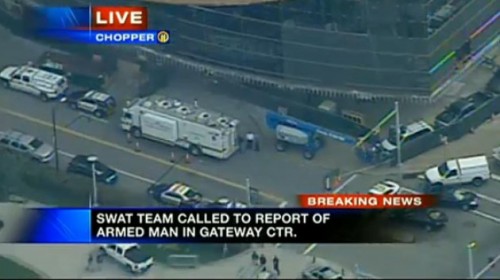
Just as I arrived in Pittsburgh this morning, the city was virtually shut down by a hostage crisis. A man claiming to have a gun and explosives entered a law office with weapons and held a lawyer hostage for several hours. Eventually, the hostage-taker (named Klein Michael Thaxton) surrendered and no one was physically harmed.

This sort of story might not have been of much interest (beyond serving as a local news spectacle) except for one small detail: The perpetrator was using Facebook to provide live updates about the situation.

more...

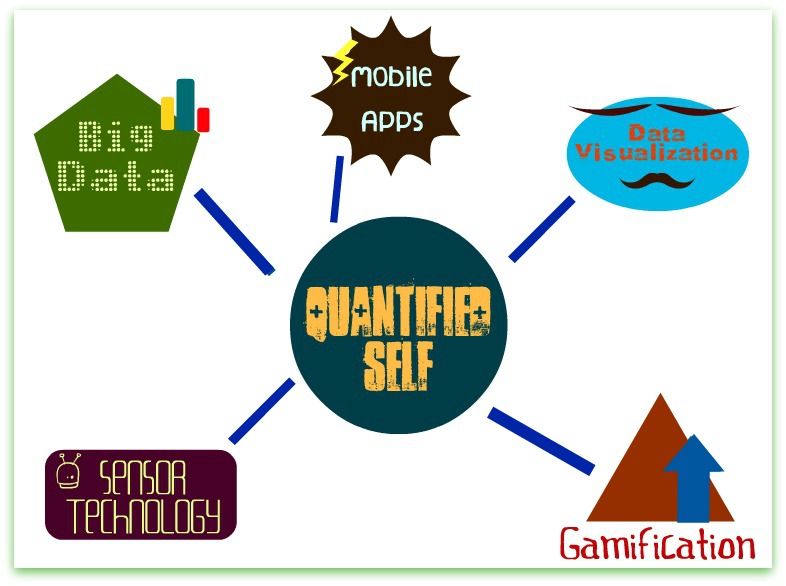
“Mindfulness” may be Quantified Self’s best-kept secret.

Before the dust of Quantified Self 2012 (#QS2012) settles completely, I want to take a moment to reflect on an implicit question that I saw running throughout the two-day conference: If data empowers individuals, what kinds of information do and do not count as data? What kinds of information have value, and to whom?
more...

I’ve recently been auditing a course with Jason Farman on “Space, Place, and Identity in the Digital Age” and he assigned a piece that was so profoundly relevant to this blog that I had to post about it immediately.

Lev Manovich’s 2006 article “The poetics of augmented space” published in Visual Communication (which he had apparently been working on since 2002 [edit: the article was actually first published in 2002]) is the earliest that I am aware of anyone using the term “augmented reality” in the broader sociological context of social interaction that flows between digital and physical (as opposed to the more limited computer science definition that describes it as merely the overlaying of digital information on the physical environment). more...

Video recorded at the American Sociological Association Meeting in Denver, Colorado on Sunday, August 19th,  2:30pm – 4:10pm.

You can also listen to the audio here.

The slides from Keith Hampton’s talk are included below: more...


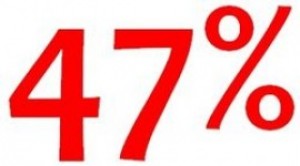
On the anniversary of the Occupy movement, an anonymous saboteur released a secret video from a private Mitt Romney Fundraiser back in May, potentially replacing “99%” with “47%” as the new progressive rallying cry.

I know I ended my post last week with a promise for continuation, but that will have to wait (next week, I promise). Today, I want to talk about privacy, sousveillance, but mostly, context collapse in light of Monday’s events.

In case anyone missed it, here is what happened: An attendant at a small, private, high-dollar Mitt Romney fundraiser secretly taped Romney’s speech and released the tape to the mainstream media. On this tape, Romney makes several politically damning statements, most notably, referring to 47% of American citizens as “victims” who will always depend on the government and about whom it is not his job to worry. Here is a quick snippet of the transcript (see full video below): more...

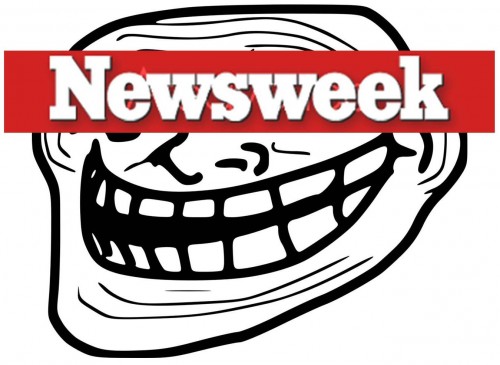
In light of the recent Newsweek magazine cover scandal, let’s think for a moment on what a “troll” is and when we should or should not call someone or something a troll. My first reaction to the Islamaphobic cover was “trolling. ignore.” That was the exact wrong reaction.

Trolls, of course, are those who deliberately post inflammatory material in order to disrupt or derail discourse. Declaring something or someone a “troll” is a way of saying that they just want attention. Trolls attempt to disrupt productive communication in an attempt to get noticed. The one thing you need to know to do when this happens: don’t feed the trolls. Don’t. Feed. The. Trolls. It’s good advice. However, because of its mainstream position, I do not think Newsweek is a “troll,” even if it sure as hell is acting like one. more...

“Those who make revolutions half way only dig their own graves.”

“Power to the imagination.”

“I don’t like to write on walls.”

-Graffiti in May of 1968 Paris, France. 

I was gonna write something about how I appreciate Procatinator more than everyone else, but I can’t bring myself to do it. Not today anyway. Remember when the United States had this popular uprising and everyone was talking about it and the political establishment was actually afraid of what it could accomplish?  When hundreds of thousands of Americans were exposed to political organizing and direct action for the first time? That started a year ago today, and while the summer did not see massive protests, the Fall promises a new start. A resurgence built upon… arbitrary calendar dates, I suppose. Truthfully, I see no reason why Zuccotti park should be re-occupied, nor should anyone feel the need to act out of a fear of “losing momentum.” Momentum is important for steering large ships, but direct action is all about swimming against the tide. Anarchist movements (and Occupy undeniably fits this category) are by their very definition: voluntary, small, functional, and temporary. We don’t need another occupation of Zuccotti Park. We need something new. more...

“Number Of Users Who Actually Enjoy Facebook Down To 4”

“In order to be profitable, it is highly likely that Twitter can only get more annoying, Pandora can only get more interrupt-y, Tumblr can only get more cluttered, Facebook can only get more devious”

“Grindr officially announces its plan to mobilize gay men as a political bloc in the 2012 elections”

“I can’t put Twitter or the little blue bird in jail, so the only way to punish is monetarily”

“About four grams of DNA theoretically could store the digital data humankind creates in one year”

“Google Glass is changing the implicit social contract with everyone in his or her field of view”

“Having opened up a chasm between the informational and material, we’re rapidly trying to close it”

“Imagine being excited to see what the Internet looks and feels like in a new town”

“remote sensing and screen culture might displace today’s commonplace demand for airbuses”

“[Academics] quickly devolve into a game of Who’s The Best Luddite. And it is most definitely about hierarchy & power”

“The site, just a few weeks old and still in beta, consists entirely of videos uploaded by real people having what might be called nonperformance-like sex”

“human beings have not always tried to make sense of emotions through numbers”

“the hate-mongers who made this video and those who use the provocation as a pretext to kill are in a symbiotic, mutually reinforcing relationship”

“it appears that identity-based search results could be nothing more than old bigotry packaged in new media” [pdf]

Follow Nathan on Twitter: @nathanjurgenson more...

Giorgio Fontana (1981) is an Italian writer, freelance contributor and editor of Web Target (http://www.web-target.com/en/). His personal website is www.giorgiofontana.com. On Twitter: https://twitter.com/giorgiofontana.

In some very stimulating articles – mainly this one – Nathan Jurgenson has convincingly argued against what he calls digital dualism: that is, to think that “the digital world is virtual and the physical world real”:

more...