inequality

Ban the Box via PBS

As noted by Harvard sociologist Devah Pager, experimental evidence indicates that the presence of a criminal record reduces one’s application callback likelihood by 50% for whites and 64% for African Americans. To potentially mitigate this employment discrimination, 23 states have adopted “ban the box” policies—the removal of the criminal history question on first-round job applications. However, a pesky question remains in the minds of many employers: do felons make good employees?

National Public Radio’s Planet Money Podcast, hosted by Keith Romer, asked Pager how felons fare if they gain employment. To get at the answer, Pager has been studying felon enlistment in the military (5,000 enlistees between 2002-2009 had felony records). She finds that those with felony records are no more likely to get kicked out before the end of their term than their clean-record counterparts. In fact, those with felony records are not only promoted faster, they are also promoted to higher ranks. Pager contends that “employers are probably missing a lot of talent when they exclude people with criminal records” (notably, with few exceptions, the military is not currently accepting felons). Because it is often so hard for ex-cons to get a job, they seem to work particularly hard to keep that job. Overall, Pager’s evidence appears to show that steps to “ban the box” will bring qualified applicants rather than unwanted mischief to employers.
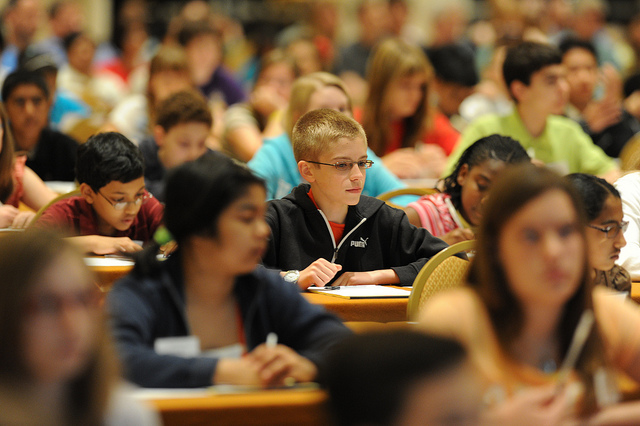
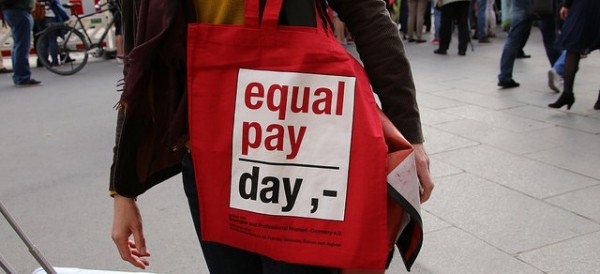
Photo via Scripps National Spelling Bee, Flickr CC
Integrated kids become integrated adults. Photo via Scripps National Spelling Bee, Flickr CC.

Nearly 20 years have passed since Beverly Daniel Tatum released her groundbreaking book, Why Are All the Black Kids Sitting Together in the Cafeteria: And Other Conversations about Race. In it, she examines how and why black youth often segregate themselves in middle and high school, arguing that engagement in meaningful conversations about race can help deconstruct such racial barriers. While many may have lost hope in the Civil Rights-era dream of school integration, today, new sociological research demonstrates the importance of integration and the positive long-term effects it provides for working adults. A recent article in The Atlantic reveals that students who attend racially diverse high schools are more likely to work in diverse employment settings.

Adam Gamoran, Sarah Barfels, and Ana Cristina Collares tracked over 10,000 black and white high school students during the 1980s and 1990s, then recorded the racial make-up of their current work environment. White and black students who attended predominantly white schools were more likely to work in predominantly white work settings. Regardless of the various methods behind the integration (including busing and neighborhood development), the students from racially diverse high schools were more likely to work today with a diverse group of coworkers. The authors suggest that “Interactions with a diverse student body may mean that individuals are more likely to live in communities that are more diverse, or [are] more willing and comfortable in racially diverse settings later in life.” While they are reluctant to conclude that attending a diverse high school or working with diverse coworkers will eradicate the economic and social disparities of life in the U.S., it is safe to say that both provide a strong step in the right direction.

Equal Pay Day is marked around the world as the day on which women have officially made as much as their male peers did in the previous year. This year's was April 12, 2016 in the U.S. Photo by metropolica.org, flickr.com
Equal Pay Day is marked around the world. It shows how far into the next year women must work to make as much as their male peers did in the previous calendar year. This year’s was April 12, 2016 in the U.S. Photo by metropolico.org, flickr.com

Recently, I reviewed research showing that women in leadership roles may contribute to decreasing gender segregation at lower positions in the same firm. I also noted that gender segregation is a large contributor to the wage gap between men and women. Unfortunately, while a small number of women moving into top positions may help those below, when large numbers of women enter traditionally male-dominated fields, the results are not so rosy. Why? Women’s work simply isn’t valued as highly as men’s.

The Washington Post recently featured a study by sociologists Paula England and Asaf Levanon demonstrating this trend. When occupations employing mostly men shifted to employing most women, these jobs started to pay employees considerably less, even when the researchers took employees’ education, work experience, skills, race, and geography into account. For instance, wages for a ticket agent dropped 43 percentage points after the position shifted from mainly male to female. Stereotypically “female” jobs that involve caregiving pay less, regardless of whether men or women hold those jobs:

[T]here was substantial evidence that employers placed a lower value on work done by women. “It’s not that women are always picking lesser things in terms of skill and importance,” Ms. England said. “It’s just that the employers are deciding to pay it less.”

Taller men get the taller stacks. TaxCredits.net.

According to British researchers, tall men and thin women are most likely to make the big bucks. Meanwhile, they found evidence to suggest overweight workers, especially women, are likely to get paid less. Still, sociologist Amy Blackstone says companies probably aren’t intentionally penalizing employees based on height and weight.  

In an interview with Broadly, Blackstone points to gender biases that extend beyond the workplace. Culturally, Americans associate thinness with beauty and self-discipline in women and tallness with authority for men. “For women, being thin means taking up less space, something that is expected of women both literally and symbolically,” Blackstone says. Thus, it’s no surprise that pay reflects societal views about gender, power, and the body. Nor is it a surprise that other gender inequalities make their way into work spaces, like limitations on contraception coverage in employer provided health care and a lack of paid maternity leave. As contributing editor Diana Tourjee points out, “paying certain men and women less in relation to the way they look is obviously disturbing, but worse is the realization that this data is part of a broader system of oppression that structures the lived experiences of us all.”

Photo by The Great 8, Flickr CC.

Income inequality is a hot topic this election, and the Panama Papers have added fuel to the fire. Indeed, it seems that there’s no end to the data that shows the discrepancy between the 1% and the rest of us. What will it to start seeking solutions to extreme income disparities?

New research by TSP contributor Kevin Leicht of Urbana Champaign (available in an article in The Sociological Quarterly) points us in the right direction. As he explains in an interview with The Atlantic’s Gillian B. White, the way social scientists and others conceptualize inequality is too tied to trying to increase diversity at the top rather than studying the economy as a whole. Furthermore, while we’ve been very interested in inequality by race, we don’t do enough to consider gender inequalities, particularly as they exist within racial groups. The popular narrative is that hard work can jettison anyone to the top, but research like Leicht’s shows how outdated this notion is.

To read more of Leicht’s work, see his TSP papers, “Has Borrowing Replaced Earning?”, “Economic Decline and the American Dream,” and “Old Narratives and New Realities,” or check out our volume on the new sociology of debt, Owned.

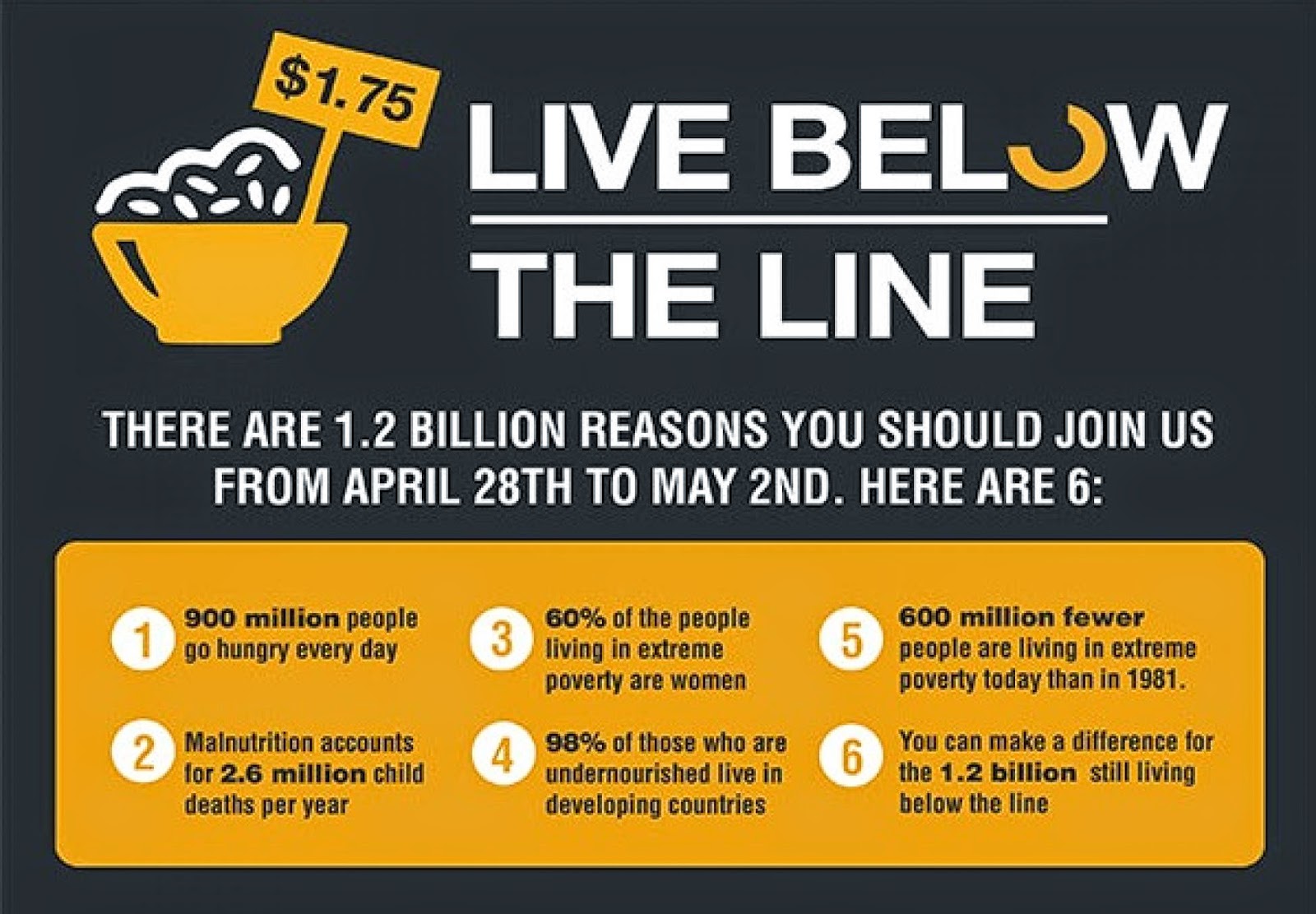
The Live Below the Line campaign helped people in many countries express solidarity with fellow citizens working to make ends meet.
The 2015 Live Below the Line campaign helped people in many countries express solidarity with fellow citizens working to make ends meet.

The U.S. presidential election is beginning to take on issues of poverty and class. Such conversations often look at “the poor” from a careful remove, but work by Thomas Hirschl of Cornell and Mark Rank of Washington University says that outsider angle is a comfortable farce. As explained by an article in Salon, the unpleasant fact is that over fifty percent of Americans will experience poverty during our lifetimes. Impoverishment and “the poor”—and the politics and policies that affect them—are actually very close to home.

Of course, demographic factors are a big part of predicting one’s likelihood of experiencing poverty. (If you’re interested in calculating your own odds, check out Hirschl and Rank’s poverty calculator!) Education is one big factor, as is race: white people are half as likely as non-white people to fall into poverty. And married people are less likely to become poor than singles. Still, as candidates and voters debate nature of class and poverty in America, we would do well to remember that they affect us all. To pretend like anyone’s above poverty would be a poor show.

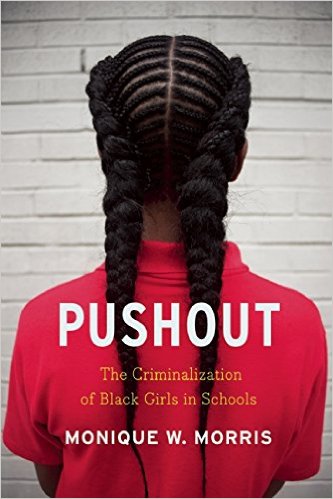
pushout coverOver the last year, bystanders have recorded numerous instances of confrontation between police and black students, from one officer pointing his gun at an unarmed black youth during a pool party in Texas to another officer flipping over a black girl still seated in her desk in a South Carolina high school. Media reports often blame black girls for defying authority figures while excusing the behaviors of school officials and law enforcement officers. Recent reports including Kimberlé Crenshaw’s, “Black Girls Matter: Pushed Out, Overpoliced and Underprotected,” contextualizes the serious effects of harsh punishment as black girls disproportionately enter the school-to-prison pipeline.

Monique Morris sheds additional light on the topic in her new book, “Pushout: The Criminalization of Black Girls in Schools.” Morris interviewed several young black girls in group homes, foster care, and juvenile detention centers in cities including Chicago, San Francisco, New York, and Boston. She discovered that several girls experienced various forms of physical and sexual violence. Michelle Alexander, author of The New Jim Crow, praised the book, calling it “A powerful indictment of the cultural beliefs, policies, and practices that criminalize and dehumanize Black girls in America,” while activist Gloria Steinhem wrote that Morris “tells us exactly how schools are crushing the spirit and talent that this country needs.”

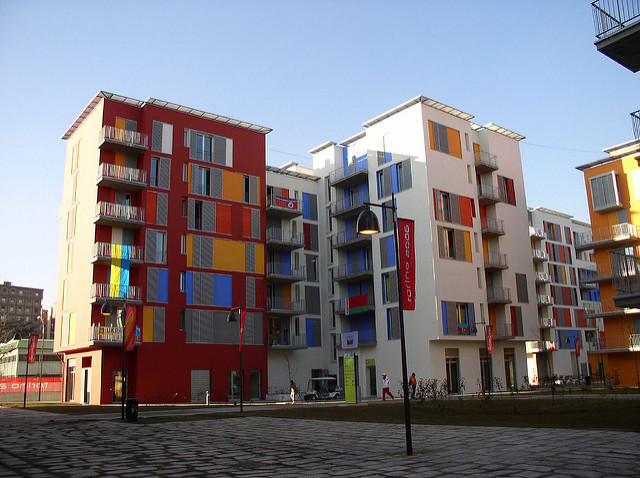
Turin's Olympic Village in 2005, before the athletes arrived. Marco Scala, Flickr CC. https://flic.kr/p/aiymh
Turin’s Olympic Village in 2005, before the athletes arrived. Marco Scala, Flickr CC.

Ever wonder what happens to Olympic villages once the athletes and spectators leave? Some thrive, and some end up as ghost towns.

Turin, Italy’s village has taken an interesting turn. The city tried to make an international name for itself with the 2006 Olympic Winter Games. Sociologist Sergio Scamuzzi, a member of an academic Games-monitoring group called the Olympics and Mega Events Research Observatory, told the Guardian that the Olympics “gave an opportunity to the inhabitants to be proud of the city, of its capacity for innovation, its capacity to organise such a big event.” Soon after the games ended, however, the area was almost abandoned.

Today, Turin’s Olympic village hosts more than 1,000 refugees from over 30 countries. Many of these occupiers were migrant workers from African countries who found themselves out on the streets in 2013, when Italy’s Emergency North African program ended abruptly, and some still survive on seasonal labor farm jobs. The village now features a weekly pop-up medical clinic, common spaces for office and legal advice drop-ins, language classes, barber shops, restaurants, and stores. However, many of the buildings are overcrowded and falling apart. Plans to redevelop the area have been made, and eviction orders have been issued by the government.

The actual eviction of so many seems almost impossible, and residents continue their daily lives despite the threat. According to a resident formerly from Senegal, “For now it’s just words, no one knows what will happen.” In the meantime, an international community lives on in the dormitories and cafeterias that once hosted international athletics’ elite.

Photo by brandbook.de, cropped. Flickr CC.

In many fields—especially those that require more degrees or a longer resume—diversity remains a lofty goal. Claire Jean Miller writes in the New York Times that some unconventional thinking may help make that goal a reality, suggesting the practice of “blind hiring,” wherein those who review employment criteria are unable to see prospects’ race, gender, or similar factors.

Miller looks to research from sociologists Maya A. Beasley (University of Connecticut) and Lauren Rivera (Northwestern University). One of the more common reasons cited for companies’ lack of diversity is that there are not enough minorities and women in the “pipeline” who have sufficient skills or qualifications. Beasley’s research shows, however, a greater amount of people with those qualifications are minorities or women. Rather than overt discrimination in the hiring process, Rivera sees companies stressing “fit” and, in this way, contemporary employment is more like finding a romantic partner. A match between leisure activities and hobbies is a strong predictor of who gets hired where; because those factors are inherently raced and gendered, organizations that are disproportionately white and/or male are likely to stay that way.

“Blind hiring” means shifting early hiring processes to consider skill first. For example, after facing litigation for its historically disproportionately white male ensemble, the Boston Symphony orchestra moved to blind auditions, putting aspiring orchestra members behind a screen while they played. The new procedure led to a demonstrably more diverse orchestra. In tech, blind hiring might mean critiquing applicants’ code or software before examining their resume. Though this idea clearly can’t be applied to all fields with equal ease, blind hiring might let us see workplace diversity.

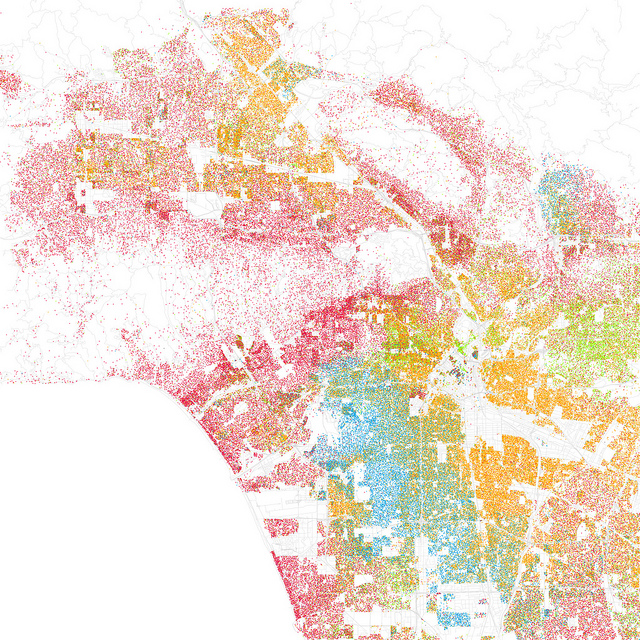
The racial integration of West Hollywood, mapped by Eric Fischer (flickr CC), inspired by Bill Rankin.

In an era of “post­-racial” rhetoric, whites may not openly declare their prejudices and biases toward blacks and other racial and ethnic minorities, yet sociological research illustrates how whites may both consciously and unconsciously maintain and reproduce racial segregation in schools and neighborhoods. More subtle negative racial attitudes are persistent and pernicious. A recent article in The Atlantic showcases a few of sociologies most relevant studies on whites and racial segregation that challenge the myth of a post­-racial America.

The white family is essential for the transferring and maintaining of economic wealth. Sociologist Thomas Shapiro notes that middle­class white families use their financial resources to pay for kids’ college or housing payments, thus alleviating some of the financial burden from younger generations. Racial segregations is also reproduced in this process when whites invest in neighborhoods that provide access to majority white schools. Due to the wealth gap, most blacks do not hold the privilege of supporting younger generations with existing financial wealth. Instead, researchers report they are more likely to use more limited funds to support their own parents and additional extended family members.

The work of sociologists including Mary Pattillo, Douglas Massey, and Nancy Denton has further demonstrated that blacks are not geographically located in neighborhoods that provide access to well funded schools, even when black families are homeowners. Other researchers such as Deirdre Royster and Lauren Rivera discuss the importance of exclusive white networks that systematically neglect blacks when sharing vital information about education and careers in schools and workplaces.