inequality

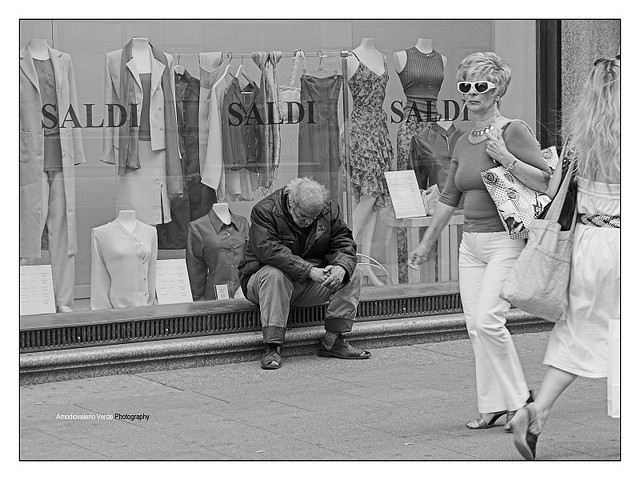
Photo by Amodiovalerio Verde via Flickr.


A recent New York Times/CBS News poll finds that nearly 60% of Americans are concerned with income inequality. The overall results may be surprising, given steady economic growth over the past few years. However, sociologist Leslie McCall has an explanation for this post-recession in the New York Times:

People think the returns to economic growth should be going to people like them as much as they should be going to people at the top.

The article highlights McCall’s research on public opinion about income inequality, specifically her analysis of the General Social Survey (GSS), a nationally representative survey conducted every two years by the National Opinion Research Center at the University of Chicago. She finds that public concern about inequality rises after recession periods, peaking several years after initial economic growth.
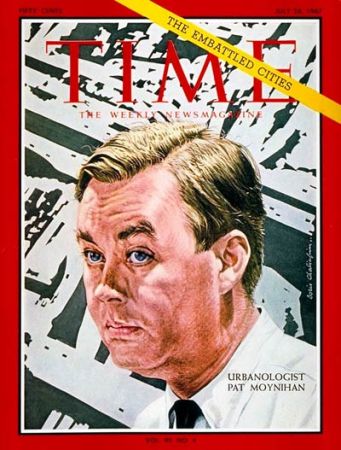

moynihanSince the 1965 “Moynihan Report,” conversations about disproportionate inequalities between white and black communities have historically focused on “black culture”—that is, explanations of racial discrepancies as products of different values, social norms, and cultural practices within black communities. The study, formally titled “The Negro Family: The Case for National Action,” saw black poverty as the result of non-nuclear family structures and absentee fathers. Now, University of Maryland sociologist Philip N. Cohen tells Vox that academics are leaving the argument behind because it simply doesn’t hold up:

The predominant view now is that there is a specific condition of inner-city concentrated poverty especially in black communities, because of racial segregation and racism, and the structural conditions are very damaging to family life, family relationships. People lose jobs and housing because of incarceration, job discrimination, etc., which create real obstacles to family stability, which in turn is a challenging condition for children’s development.

Indeed, as social science has matured and issues of race and racism have come under scrutiny and greater focus, more people are aware that structural issues, rather than personal ones, best explain advantage and privilege by race. Hopefully 1960s-era thought is well on its way to being replaced with more nuanced understandings of the factors behind racial discrepancies.

Photo by JD via Flickr. Click for original.


Parents often equate good parenting with spending as much time with their children as possible. The idea is that, in those hours, parents will cultivate particular characteristics in their children that will contribute to bright futures. But is helicopter parenting really worth it? Sociologists Melissa Milkie and Kei Nomaguchi share the findings of their recent study with the Washington Post: “I could literally show you 20 charts, and 19 of them would show no relationship between the amount of parents’ time and children’s outcomes. . . . Nada. Zippo,” says Milkie.

It’s not the number of hours, but quality of time spent together that matters. Interactive activities like reading to a child, sharing a meal, and talking one-on-one benefit kids, while just watching TV together may be detrimental, as Amy Hsin found. Still, Milkie and Nomaguchi’s study did find that teenagers who engaged with a parent for six hours per showed lower levels of delinquent behavior and drug use than peers who spent less time with their parents.

The authors dug deeper, finding that when a parent was overly-tired, stressed, cranky, or feeling guilty, spending time with their children could lead to more behavioral problems and lower math scores. Nomaguchi says, “Mothers’ stress, especially when mothers are stressed because of the juggling with work and trying to find time with kids, that may actually be affecting their kids poorly.” This particularly impacts parents from low-income households who often lack access to social resources for improving mental health, but still feel the pressure to be “good” parents by spending time with their children. In fact, Milkie and Nomaguchi found that the biggest indicators of child success were mothers’ income and education levels:

“If we’re really wanting to think about the bigger picture and ask, how would we support kids, our study suggests through social resources that help the parents in terms of supporting their mental health and socio-economic status. The sheer amount of time that we’ve been so focused on them doesn’t do much,” says Milkie.

Purple Sherbet Photography via Creative Commons


Sociologists are quite familiar with the combination of marginalized identities that can lead to oppression, inequalities, and “double disadvantages.” But can negative stereotypes actually have positive consequences?

Financial Juneteenth recently highlighted a study showing that gay black men may have better odds of landing a job and higher salaries than their straight, black, male colleagues. Led by sociologist David Pedulla, the study sent resumes and a job description to 231 white employers nationwide, asking them to suggest starting salaries for the position. Resumes included typically raced names (“Brad Miller” for white applicants and “Darnell Jackson”) and listed participation in “Gay Student Advisory Council” to imply the applicant’s sexuality. Pedulla found that gay Black men were more likely to receive the same starting salaries as straight white men, whereas gay white men and straight black men were offered lowered salaries.

Pedulla’s findings have sparked a conversation among scholars and journalists about the complexity of stereotypes surrounding black masculinities and sexualities. Organizational behavior researcher and Huffington Post contributor Jon Fitzgerald Gates also weighed in on the findings, arguing that the effeminate stereotypes of homosexuality may be counteracting the traditional stereotypes of a dangerous and threatening black heterosexual masculinity.

Read Pedulla’s entire study, published in Social Psychology Quarterly, here: The Positive Consequences of Negative Stereotypes: Race, Sexual Orientation, and the Job Application Process.

Photo by Alan Levine via Flickr Creative Commons.

In years following the 2008 recession, many Americans are still scrambling to find enough work hours to make ends meet. One emerging trend is “clopening,” when an employee works the closing shift, then opens the same business a few hours later. Piled on top of commuting, trying to get some sleep, and attending to family duties, the few remaining precious hours between shifts are overbooked. That can have negative consequences on health. Sociologist Gerhard Bosch tells the New York Times about the European Union’s required 11-hour rest period between shifts: ““If a retail shop closes at midnight, the night-shift employees are not allowed to start before 11 o’clock the next morning.”

Even though some unions in the United States have negotiated similar required “between shifts” time, there is not yet a national labor law. However, several states have taken steps toward Right to Work laws some hope will alleviate the long, inconsistent hours many employees face.

Some business owners claim that some employees prefer “clopening” to working 9 to 5, pointing, for example, to students with busy daytime class schedules. However, one student worker told the Times that working on the clopening schedule meant quitting his pursuit of a master’s degree—he’d lost focus and developed chronic exhaustion.

social meaning of moneyThe rise of mobile payment apps like Venmo has made it much easier to, say, split a dinner tab, but this convenience comes along with worries about security and privacy. Further, could companies’ use of personal information about payments to target advertising reveal compromising details about our personal lives?

Venmo, for instance, is explicitly “not just a mobile payment app”—it’s also a social media platform that broadcasts its users’ payment activities to their friends. Cameron Tung discusses some of the implications in Slate. Mobile sharing of payment information helps us attach social meanings to financial transactions, and $100 spent in a restaurant is not the same as $100 spent on a phone bill. Sharing details about whom we’re paying and when opens our financial activity to social scrutiny. Don’t want your spouse or partner to know about the fancy dinner you had last weekend? Better not pay with Venmo.

To support this point, Tung cites Princeton sociologist Viviana Zelizer’s work on payments and social ties. We should think about each monetary transaction, according to Zelizer, as a gift, an entitlement, or compensation: “each one corresponds to a significantly different set of social relations and systems of meanings. People making payments use a number of earmarking techniques to distinguish those categories of social relations and meanings from each other.”

When Zelizer wrote about Christmas bonuses, for instance, she found that whether employers and employees thought about bonuses as gifts, compensation, or entitlements had a profound effect on the relationships between bosses and workers. Mobile payment platforms allow us to attach similar meanings to everyday transactions, broadcasting these meanings to our friends. As we consider the privacy and security implications of convenient mobile services, we also need to think about their cultural implications. Though we might want to use sharing apps strategically to cultivate particular online personas and identities, we may not always be able to predict how others’ will attach meanings to our payments.

Looks like a long walk. Photo by Krystian Olzszanski Flickr CC.

Those who have fallen on hard times or don’t have many resources can turn to public programs for essentials like food and housing assistance, but what about transportation? As people living in poverty are forced to the suburbs by rising costs and gentrification, they are now further away from the places and services they need to reach, like work and clinics. Enter Alexandra Murphy, a University of Michigan sociologist recently quoted in the Pacific Standard: “Transportation has been outside of what we define as a human service… even though it’s widely acknowledged that transportation creates opportunity and hardship.”

King’s County in Seattle is offering a new subsidized bus program that is garnering national attention. As described in the Pacific Standard, “[the program] will now allow low-income residents to ride buses, trains, and ferries for $1.50, when standard fares can be more than $3.” Programs like this, however, come with liability risks. What happens if a government-subsidized vehicle gets into an accident? The stickiness of these situations can be a deterrent for those hoping to start public transportation programs; as Murphy explains, “it’s the perception that it’s a quagmire that people don’t even want to walk into.” With time, it is hoped that King’s County may offer a way forward for other communities facing a mismatch between where the housing is plentiful and where the jobs are on offer.

The 2015 Oscar nominees are announced. Photo by RedCarpetReport via flickr cc. https://flic.kr/p/qwEuL7
The 2015 Oscar nominees are announced. Photo by RedCarpetReport via flickr cc.


Following the whitest Academy Awards in nearly 20 years, UCLA’s Ralph J. Bunche Center for African American Studies released its 2015 Hollywood Diversity Report. Sociologist and center Director Darnell Hunt described the findings to The Hollywood Reporter: “Hollywood is not progressing at the same rate as America is diversifying.”

The study, which surveyed the top 200 worldwide box office films and 1,105 television series in 2012 and 2013, found that racial minorities and women were substantially underrepresented in both acting and directing roles. Those films with at least 30% diversity, however, did best in the worldwide box office tallies.

Study co-author Ana-Christina Ramon believes these numbers show that, “audiences, regardless of their race, are clamoring for more diverse content.” So what’s the holdup?

“It’s a high-risk industry,” says Hunt. “People want to surround themselves with collaborators they’re comfortable with, which tends to mean people they’ve networked with—and nine times out of 10, they’ll look similar. It reproduced the same opportunities for the same kind of people: You’re surrounding yourself with a bunch of white men to feel comfortable.”

Hunt suggests that emerging digital platforms like Netflix and Amazon could create more opportunities for on-screen diversity. Still, he is hesitant to make grand claims about progress: “It’s getting better, but it’s not getting better fast enough. And it’s still a big problem.”

Image via alicexc.deviantart.com


Princess Jasmine fell for Aladdin, even after his Prince Ali façade failed. Lady Sybil Crawley married the family chauffeur Tom Branson, despite his socialist views and Irish, working-class origins. Richard Gere scaled a fire escape to retrieve his “Pretty Woman.” Typically, sociologists say, marrying across class differences happens much less frequently in real life than in popular culture. Jessi Streib, however, wrote a whole book about these uncommon couples. She tells New York Magazine’s Science of Us the findings in her The Power of the Past: Understanding Cross-Class Marriages.

Streib’s interviews revealed benefits and challenges to class difference in marriage. Partners may recognize in each other qualities they felt lacking in their own class background. Thus, working-class individuals may value the confidence and sense of stability of middle-class individuals, while middle-class partners may gravitate toward the intimacy and expressiveness they perceive in working-class families. Middle-class individuals often communicate in a “managerial” style, which, according to Streib, means “They manage their emotions, so before you want to express something, you think about it first, you figure out what you really feel, you think about how to express it in a way that will make the other person most comfortable, and then you kind of quietly and very calmly state how you feel and make sure there’s a good rationale behind it.” Working-class individuals, on the other hand, have a more laissez-faire way of expressing emotions. They are more likely to state their honest feelings directly, even if they’re not particularly nice or polite.

While differences in communication styles provide opportunities for understanding, they also pose challenges. Trying to change the other person, Streib says, is not going to make a partnership work.

The couples who it went really well for were the ones who appreciated each other’s differences. So they would say things like, “You know, it’s not how I do it, but I can understand why that other way makes total sense,” or could actually use their partner’s differences to help them solve a problem at times. So keeping in perspective that difference isn’t necessarily bad, and that they love their partner despite or because of all these differences, could help a lot.

As in any relationship, cooperation and communication are keys to success. Cross-class marriages may not be incredibly common, but at least one sociologist is convinced Tom and Sybil could have made a life of it—save a few plot twists.

A screenshot from a Sesame Street clip about parents in prison.

If you happen to be watching Sesame Street, you may notice a new Muppet named Alex. The child’s father is in prison. Many viewers may consider Alex’s incarcerated parent an unusual, heavy topic for the program that has taught generations of kids their ABC’s and 123’s. But children across the country, particularly African-American children, are in Alex’s position.

The Nation consulted sociologists Christopher Wildeman, Sara Wakefield, Kristin Turney, and John Hagan about the effects of parental incarceration on children. They found that children with incarcerated parents had significantly higher rates of aggression, mental-health issues, behavioral problems, and risk of homelessness than peers whose parents had never been to prison. However, although they have identified a key link between parent imprisonment and children’s mental health, researchers like Turney are still figuring out how and why this connection exists. “Is it stigma, attachments, income loss, parents breaking up and relationships not surviving? We don’t know,” Turney reports.

More than a decade ago, Hagan stated that effects on children might be “the least understood and most consequential” results of incarceration. According to Wildeman, 1 in 30 white children and 1 in 4 black children born in 1990 experienced a parent going to prison before turning 14. The surge in incarceration rates disproportionately affects African-American children. Even if their fathers have a college degree, these kids are twice as likely as white children with parents who didn’t finish high school to have a parent in prison. And regardless of whether incarceration rates decline in the next few years, the effects of current imprisonment rates will last for several generations. That means that optimism about any decline in mass incarceration “must therefore be set against the backdrop of the children of the prison boom—a lost generation now coming of age,” according to Wildeman and Wakefield.