
inequality

In 2013, Kaiser Permanente, the country's largest non-profit health system, was a silver sponsor for Capital Pride DC. The healthcare provider invited "the community of allies for LGBTI health" to celebrate. Ted Eytan//Flickr CC
In 2013, Kaiser Permanente, the country’s largest non-profit health system, was a silver sponsor for Capital Pride DC. The healthcare provider invited “the community of allies for LGBTI health” to celebrate. Ted Eytan//Flickr CC


This year was momentous for trans visibility in the media, with high profile celebs like Laverne Cox and Caitlyn Jenner speaking out about their experiences as trans women. Even so, trans folks still face an incredible risk of discrimination and attacks. The recent death of Keisha Jenkins marks at least 20 American trans women murdered in 2015.

But trans people are not equally likely to experience discrimination. A recent study published by Lisa R. Miller and Eric Anthony Grollman showed that trans women were more likely to experience discrimination than trans men, as are trans folks from already disadvantaged groups—like those who are multiracial or low income. In turn, those who experienced more discrimination were more likely to engage in risky health behaviors like smoking cigarettes, abusing drugs and alcohol, and attempting suicide. Miller told US News, “Rather than assuming that all members of the transgender community are equally at risk, we need to investigate the extent to which some members may face disproportionate exposure to discrimination and poor health.”


Photo via ethiopia.limbo13.com.

“Microaggressions” are not new, but the term has only recently entered our vocabulary as a means to describe the small, but frequent, indignities often experienced by minorities. If you have seen a white person touch an African-American person’s hair or heard questions like “What are you?” asked of a racially ambiguous person, you have witnessed a microaggression.

Sociologist Bradley Campbell, who has written about microaggressions, recently spoke with Boston’s local NPR news station, 90.9 WBUR, about his findings. He highlights cultural shifts that have produced and shaped microaggressions:

These microaggression complaints—what characterizes them is that they are appeals to third parties. They’re not something like vengeance where people just take direct action against the offender. Secondly, they’re complaints about minor things, which is what the “micro” in microaggression means. And then also that these—the complaints—are about specific kinds of things. It’s not just any minor offense, it’s things that are said to further oppression, and mainly the oppression of minority groups. So we thought about like when do these things occur? So some of the social conditions we mentioned were things like, you know, the presence of authority and also the demise of communal groups. But one of the main things is actually the increase in diversity and equality. So it’s in settings where there’s already a lot of equality and diversity that you get these kinds of complaints.

Listen to the whole interview here.

For many, the “American Dream” seems beyond possibility. Zhang Yu, Flickr CC.

Work by Harvard University’s Robert Putnam and Princeton’s Doug Massey was featured in a recent article in The Atlantic, which discusses the need for policy changes to fight poverty and begin a new “civil-rights movement” for the poor. As the article describes, through policies in housing, employment, and education, the poor are at an inherent disadvantage in America, one that is often outside their control.

Putnam, in his work Our Kids: The American Dream in Crisis, states that poor children are often less prepared than their middle-class counterparts to develop skills and succeed. Communities and families within poor contexts are less likely to have the same resources and starting platform with which to help their kids participate in “The American Dream.” The article presents arguments to suggest potential change within housing, educational, and employment contexts. Doug Massey’s research, for example, is cited in support of housing policies that enable the poor to live in better-resourced communities. The article makes multiple suggestions for ways to empower the poor and increase their life chances, and research shows that such policies can effect positive change.

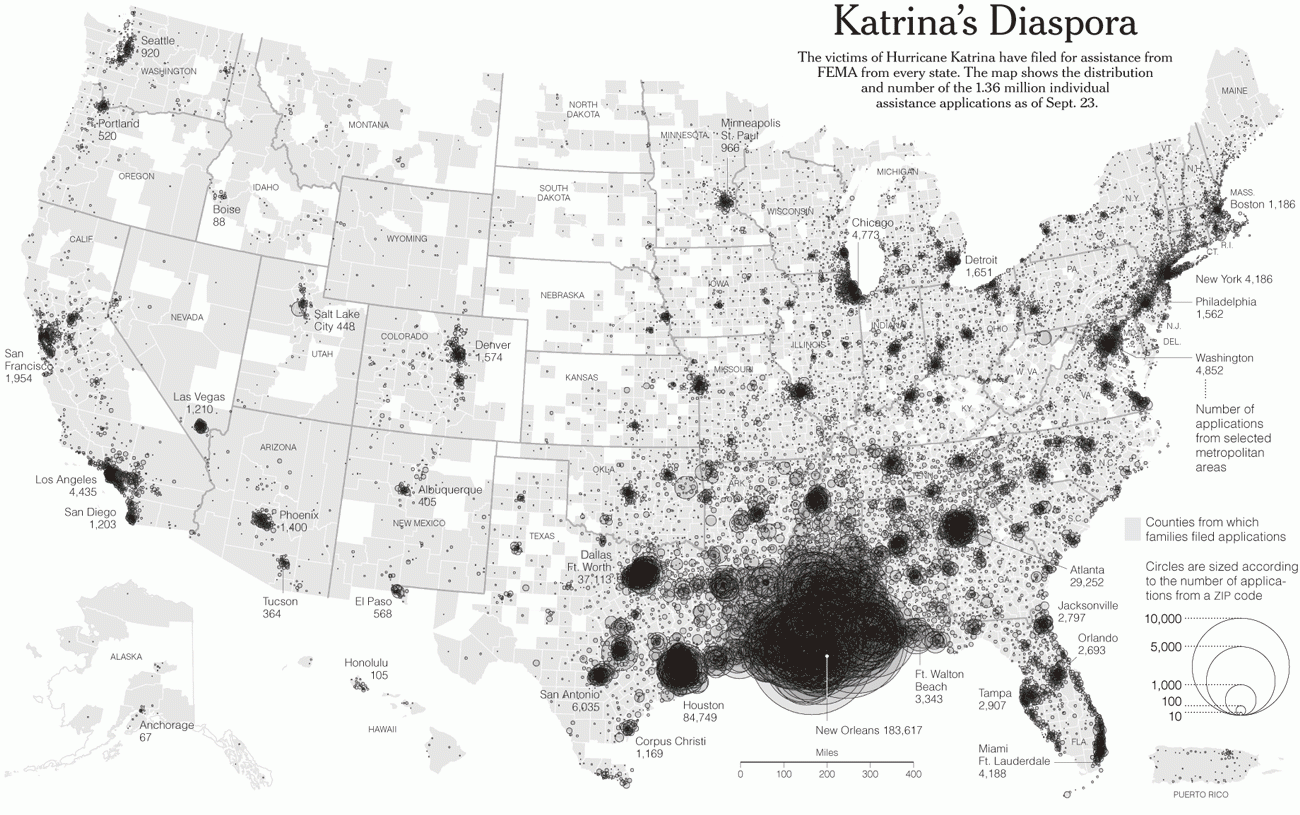
The New York Times, Katrina displacement as of 9/23/2005.
The New York Times, Katrina displacement as of 9/23/2005. Click for original.

The New Yorker recently featured several sociologists in a piece about what has happened to residents of New Orleans’s Lower Ninth Ward in the aftermath of Hurricane Katrina:

  • David Kirk, who studies neighborhood effects, focused on recidivism, or likelihood of ending up in prison again after release, based on whether individuals stayed in the same neighborhood or moved elsewhere. He found that those who returned to their former neighborhoods in New Orleans had a 60% recidivism rate compared to those who. While, historically African Americans have been more likely to move, often for economic mobility, since 1970 the pattern has flipped, and more African Americans tend to stay put.
  • Patrick Sharkey says that in recent decades white Americans more frequently engage in “contextual mobility,” or moves significant enough to change opportunities and circumstances. Instead of major moves, African-American families in urban areas tend to make more frequent, minor moves to places similar to their previous living arrangement.
  • According to Stefanie DeLuca, these moves are not voluntary. Rising rent, eviction, breakups, or changing in housing subsidies spark moves within the same areas—not the better schools or job opportunities that middle-class Americans cite as reasons to relocate.

Following the severe damage from Hurricane Katrina in 2005, going “home” wasn’t possible for many poor black families. As it turns out, those who had to leave found their new homes offered more opportunity:

  • Houston, Texas, has become a hot spot of upward mobility for those displaced by Katrina, Corina Graif found: “The fact that they were all of a sudden thrown out of that whirlpool gives them a chance to rethink what they do. It gives them a new option—a new metro area has more neighborhoods in better shape,” she says of the 700 mostly black women she tracked.

Sharkey cautions optimistic readers that relocation could become a game of cat and mouse. If too many poor people move into middle-class areas, the middle-class may move, taking some of the neighborhood’s higher resources and leaving new families in circumstances that mimic a minor move.

Simon Dufour-Loriolle // Flickr CC

Approximately 5% of Americans currently work multiple jobs, likely just to make ends meet. However, recent data from the U.S. Bureau of Labor Statistics finds that this percentage is nearly twice as high in Midwest states, with anywhere from 8.7% of South Dakotans to 6.9% of Idahoans working multiple jobs. Economists have proposed a number of theories to explain this trend, everything from the region’s relatively low wages to the Midwest’s strong work ethic.

Randolph Cantrell, a rural sociologist at the University of Nebraska at Omaha’s Rural Futures Institute, recently told Omaha’s World-Herald that the type of labor common in the Midwest could partially explain this trend. “In rural areas there are not a lot of established businesses to provide services, but there are people who know how to do things,” he said. “If you grow up in a rural community, you learn to work with machines, animals. You can fix a car, fix a tractor—those are transferable skills.”

The article also highlights another interesting trend: those with some college education are more likely to work multiple jobs than those with a high school diploma, suggesting that the higher wages associated with college education provide even further incentive to pick up extra work.

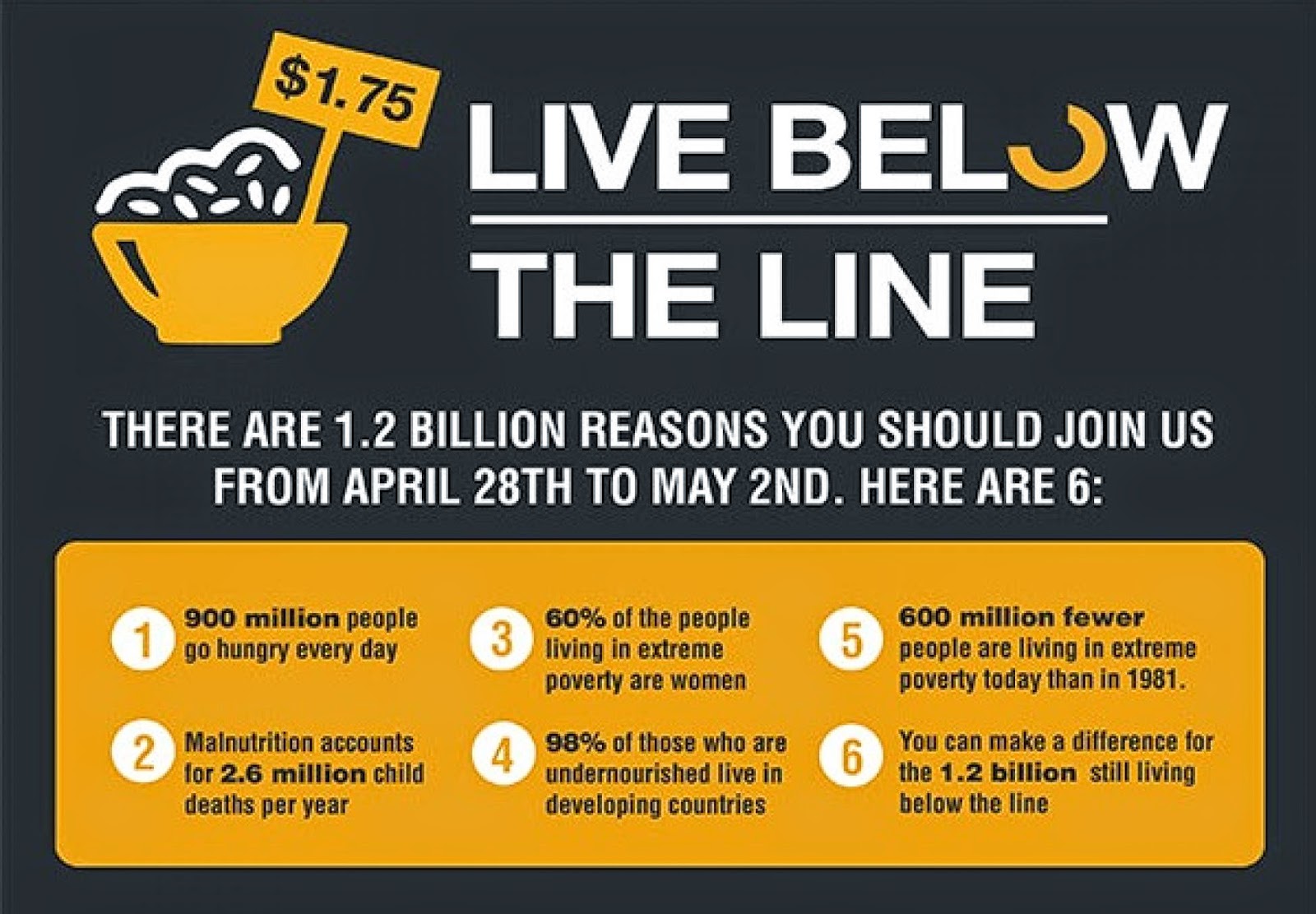
The Live Below the Line campaign helped people in many countries express solidarity with fellow citizens working to make ends meet.

For those of us fueling ourselves with the late-night pizza and discount wine that a graduate stipend affords us, the idea of spending at least a year or two on poverty-level incomes may not feel shocking. It may, however, be more common than we once thought.

A new study by sociologists Thomas Hirschl and Mark Rank finds that nearly 60% of Americans will spend at least one year living off of poverty-level incomes. These rates are heavily concentrated among those under the age of 30, with 42% of those young adults experiencing at least one year of poverty (20th percentile of income), and 23% experiencing extreme poverty (10th percentile of income). And for those without savings or parental help to fall back on, these low incomes can lead to homelessness and long-term financial struggle. According to their findings, 12% of Americans spend nearly a decade or more in poverty.

“There’s a great deal of fluidity in the income distribution,” Hirschl told Pacific Standard Magazine. “Economic insecurity—this is not a small effect. We have a tough road ahead of us.”

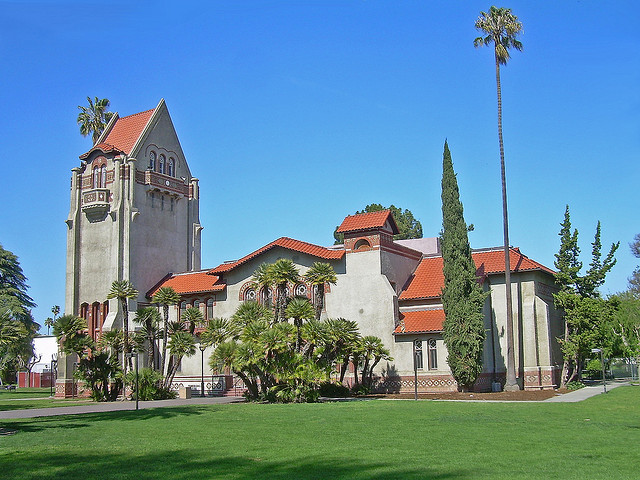
San Jose State: another place to turn knowledge into action. Photo by David Sawyer, Flickr CC.


Many are familiar with the long history of student activism at University of California at Berkeley, but fewer have heard of the difference-makers at San Jose State University. “San Jose State is in the shadow of UC Berkeley when it comes to student activism,” sociology Professor Scott Myers-Lipton told The Nation. “But we’ve got this history as a working-class university that most people don’t know about.”

Starting in 2011, students in Myers-Lipton’s Social Action sociology class started thinking about ways they could bring change to their own community. San Jose houses big-name companies like Adobe, eBay, and Cisco Systems, but it’s the sixth most expensive city in the country. Many residents barely eke out a living. Student and after-school worker Marisela Castro, whose parents worked the California farm fields, pitched the idea of working toward raising the minimum wage. (Myers-Lipton estimates that 80% of his students work over 30 hours per week on top of being students.)

Working with South Bay Labor Council leader Cindy Chavez, Myers-Lipton’s students raised $6,000 to hire a polling agency and make thousands of phone calls to see if increasing minimum wage was an issue that voters would support. When over 70% of respondents said they favored minimum wage increase, Chavez went to the board of the Labor Council. Unions pledged over $120,000 to help the cause by the end of the meeting. After collecting 20,000 signatures, the students took their proposal to the Silicon Valley Chamber of Commerce. The vast network of supporters (including Catholic Charities, United Way, churches, and non-profits) alarmed the Chamber, which raised $400,000 to defeat the measure.

The student activists were not defeated, however. They continued, keeping their message simple. Instead of getting into statistical debates, they touted the importance of economic fairness. On November 6th, San Jose became the fifth and largest city to raise its minimum wage, increasing the income for minimum wage workers by $4,000 per year. What started as a student brainstorming activity in a sociology class brought thousands in San Jose closer to economic sustainability.

Katie Cannon, Flickr CC

After months of abuse and harassment from users, Reddit CEO Ellen Pao resigned from the website. Unfortunately, Pao’s experience is far from unique. Many female chief executives face character assassination based in large part on their gender; the anonymity of the Internet allows harassment to escalate as far as death threats. For many experts, Pao’s resignation is an example of the “glass cliff,” a point where women rise to higher positions only to be forced out through excessive personal attacks and abuse.

Sociologist Marianne Cooper of Stanford University’s Clayman Institute for Gender Research isn’t surprised by this gendered bias, telling The Guardian, “I haven’t seen this kind of reaction to egregious things male CEOs have done.”

As lead researcher for Lean In: Women, Work, and the Will to Lead, Cooper is familiar with the gendered biases of the workplace and the use of female leaders as scapegoats for larger company problems: “Oftentimes, the women who inherit the problems are put in precarious positions, and if they fail, they are blamed for it.”

Chicago's "Overpass Light Brigade." Photo by Mikasi, Flickr CC.
Chicago’s “Overpass Light Brigade.” Photo by Mikasi, Flickr CC.

San Francisco recently passed legislation which will eventually increase the minimum wage to $15 an hour in incremental, planned hikes. On the heels of the “Fight for 15” movement, this seems like good news for those living on or near the minimum wage. As explained by an article on NBC online, with help from CUNY Graduate Center’s Ruth Milkman, a sociologist of labor and labor movements, people may not start celebrating just yet.

Many people working on the minimum wage at the moment, for example, work multiple jobs. As Milkman states, “[I]f you’re working at the current minimum wage in a lot of places, you’re still in poverty, especially if you’re supporting other people.” When the wage is going to be increased in gradual increments, those gradual changes may not make much of a dent in what it takes to support oneself or dependents, especially in areas experiencing gentrification. Consequentially, as Milkman explains, this can create a “lot of discontent in a lot of the working population.”

Indeed, as basic struggles of living on the minimum wage continue after slight increases, there can be downsides as well. Businesses which rely on a greater proportion of minimum-wage workers can be more likely to operate in low-income areas, such as fast-food restaurants. Therefore, if businesses raise prices to handle paying a higher wage, the minimum-wage-hike could be hurting the people it was meant to help. At the moment, San Francisco is leading the way on raising the minimum wage, but don’t wager that the discussions are over just yet.

Do declining government jobs chip away at the stamps' promise?
Do declining government jobs chip away at the stamps’ promise?

That’s likely true for a lot of reasons, but one is just coming to light: For many African-Americans, working for the government has provided a gateway to the middle class. “Compared to the private sector, the public sector has offered black and female workers better pay, job stability and more professional and managerial opportunities,” sociologist Jennifer Laird tells The New York Times. The civil service, delivering mail, teaching, operating public transportation, and processing criminal justice have historically provided steady income and opportunities to climb the economic ladder—often without an expensive college degree.

The recession’s recovery has not brought back employment at the local, state, and federal levels, though, and it’s causing struggle in black communities in particular. Population growth has also meant higher competition for ever scarcer public sector jobs. African-Americans once benefitted most from government employment, so cutbacks and layoffs hit them the hardest. Laird describes black government workers’ situation as a “double-disadvantage”:

They are concentrated in a shrinking sector of the economy, and they are substantially more likely than other public sector workers to be without work.