
inequality

Photo by Lee Coursey, Flickr CC

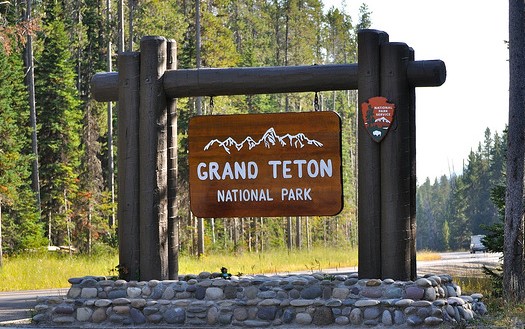
Last month marked the centennial of the National Park Service, which is tasked with preserving natural and cultural resources and protecting outdoor spaces for recreation, like Yellowstone, the Grand Canyon, and Yosemite. The most recently designated park is an ocean park where 4,900 square miles of deep sea volcanoes and canyons in the Atlantic ocean are now prohibited from commercial fishing and other types of resource extraction. While the idea behind the national park system is that everyone should be able to enjoy nature, the reality is that the working class and people of color are less likely to use national parks and the history of the parks has involved the displacement and exclusion of Native American, African American and immigrant communities.

Unequal access to resources – including money for entrance fees and transportation, equipment for exploring the parks, and leisure time – have resulted in race and class differences in who can actually enjoy the national parks.
Beyond access, there are a variety of cultural definitions of “the wilderness,” “the outdoors,” and recreation that are shaped by race. Racial norms and ideologies impact how people perceive leisure time and values of natural beauty, and activities like hiking and camping are often seen as “white hobbies.” Yet, these differences are largely due to a history of exclusion, discrimination, and segregation that kept people of color from using public outdoor space, particularly in the Jim Crow South.
The parks themselves were created through colonialism, as much of the land that is now “protected” was of course taken from Native Americans. The idea of a pristine wilderness is historically linked to white racial purity and the need for Europeans to save the land, which justified U.S. expansion into the West. The conservation movement was also led by white men, such as John Muir, who often overlooked the struggles of racial minorities and issues of equity.
Photo by The All-Nite Images, Flickr CC

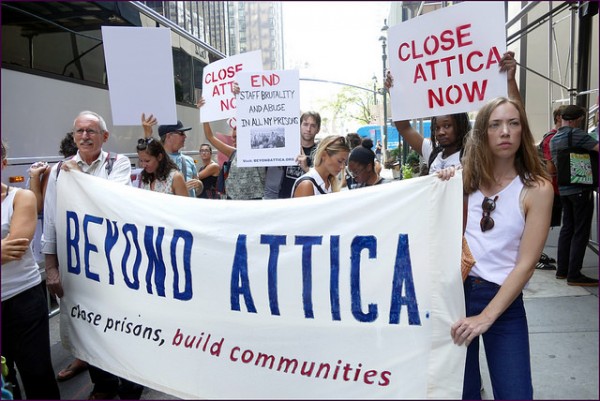
On the recent 45th anniversary of the Attica prison uprising, prisoners in at least 24 states protested inhumane living and working conditions, in what some observers are calling the largest national prison strike in American history. Led by inmate movements in Alabama and Texas that critique prison slavery, protests are still ensuing in many states, with demonstrations ranging from work stoppage to hunger strikes. As historian Heather Ann Thompson reveals in a recent article in the Atlantic, the parallels between these modern prison protests and the Attica prison uprising are clear:

“The root causes of the Attica rebellion were, as they are with the rebellions today, abysmal conditions in our nation’s correctional facilities.”

Thompson argues in her book that the political consequences of the misinformation surrounding Attica helped to legitimate the punitive turn in American imprisonment. Although Attica may have helped to perpetuate some of the problems in American prisons, Thompson believes that it also provides an example to those who are incarcerated that they have ways to take action.
The current uprising highlights not only unpaid labor but also issues of dismal healthcare and high rates of suicide in prisons, as well as the overuse of solitary confinement. Prison suicide rates are extremely high compared to the general population, and imprisonment may contribute to racial disparities in midlife physical health functioning.  Moreover, solitary confinement significantly damages the mental health of prisoners, especially if used for extended periods of time.
Not only are these protests in response to conditions within prisons, but also for related causes such as the school-to-prison pipeline. Recent evidence suggests a strong relationship between school sanctioning and future involvement with the criminal justice system.  Thus, many of the concerns of this prisoner movement are empirically supported but have yet to capture attention outside of the prison system.   

Want to know more? See here for live updates on the national prison strike.  

San Francisco 49ers' Colin Kaepernick and Eric Reid kneel during the national anthem. Mike McCarn, Associated Press.
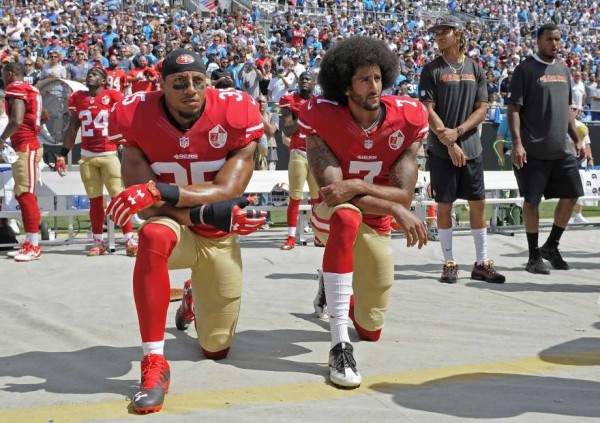
San Francisco 49ers’ Colin Kaepernick and Eric Reid kneel during the national anthem. Mike McCarn, Associated Press.

More and more athletes are joining the San Francisco 49ers’ Colin Kaepernick in kneeling during the “Star Spangled Banner” at the beginning of sporting events. Though this phenomenon has spurred controversy and heated exchanges, sports stars using their celebrity for civic action is not entirely new. After the police shootings of Eric Gardner, Michael Brown, Tamir Rice, and other unarmed black people, numerous members of the NBA and NFL wore hoodies that read “I Can’t Breathe,” (Eric Gardner’s last words); others entered the game while making the “Hands Up, Don’t Shoot!” gesture championed by #BlackLivesMatter. Indeed, today we are witnessing a resurgence of athlete advocacy.

A common criticism of these athletes is that “they should just stick to sports!” or that “they aren’t supposed to talk about politics!” In reality, however, athletes have been at the forefront of protests and civic action for some time now, particularly in the 1960s. TSP Editor Doug Hartmann’s popular book describes how the Civil Rights Movement provided the context for athletes to begin using their celebrity for greater causes. Similarly, Ben Carrington describes how racism has shaped the international black-athlete-experience. Colonialism and contemporary globalization have made sports a site where racism is enacted and solidified, meaning athletes have had to think about these concepts–and fight against them–for a long time.
After the Civil Rights movement, athlete protests became less common, especially as athletes expanded into areas like merchandising and marketing, which meant that they were more likely to avoid “rocking the boat” and jeopardizing their business. But because of #BlackLivesMatter and a greater national focus on police killings of unarmed black people, athletes are once again getting into the fray. As Herbert Ruffin describes, politicizing college sports has led student athletes to protest for their own rights and demands — remember the events at Ole Miss last year? Similarly, Emmett Gill describes actions (and reactions) surrounding the “Ferguson Five” — the St. Louis Rams football players who showed solidarity with protesters in Ferguson, Missouri. 

This research shows that while athlete activism is often met with criticism, it does not mean that their tactics will prove unsuccessful. If history or recent events have shown us anything, the opposite may be truer. One thing is for sure — athlete protest in the contemporary era is just warming up.

For even more readings on race, sports, and athlete activism, check out the  #ColinKaepernickSyllabus created by NewBlackMan (in Exile).

Photo by John Duffy, Flickr CC

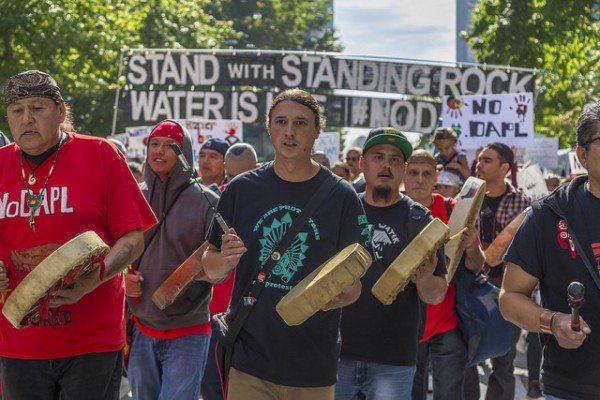
Thousands led by Native Americans from across the country have converged on rural North Dakota over the past month to stop construction of the Dakota Access pipeline near the Standing Rock Sioux reservation. Opponents say the pipeline is a threat to culturally and spiritually sacred sites as well as vital drinking water sources. Protesters have erected an encampment and are leading daily marches to the construction site demanding that the company and federal government halt construction in order to protect water and adhere to treaties with Native American tribes.

The protest over the Dakota Access pipeline reflects the social and political tensions that often emerge around resource extraction projects and potentially hazardous infrastructure, and sociologists have been at the forefront of research and analysis. Mining development led by large multinational companies often brings social dislocation, environmental problems, and a loss of livelihoods for native communities. Yet, indigenous communities have had some success in preventing development and maintaining control over land and natural resources partially through direct action, transnational coalitions, and public campaigns against corporations.
In the U.S., Native American reservations have often been used as sites for hazardous mining and disposal of toxic waste – what scholars call “national sacrifice zones” and environmental racism. Hooks and Smith find that Native Americans struggle with environmental injustices and are more likely to live near toxic waste sites, largely because the U.S. military has used reservations and nearby land for testing and disposing of weapons.
Protest is also driven by group identities and culture. Mobilization against industrial development is shaped by historical and social differences in how people relate to the land. Indigenous philosophy, spirituality, and land claims can provide legitimacy to environmental opposition and are a source of inspiration and motivation for movement participants. This highlights the role of culture, place-based identity, and values in motivating people to participate in protest.
Environmentalists have joined the effort to stop the pipeline as part of a wider movement against fossil fuel extraction and climate change mobilization. Coalitions of environmentalists and indigenous peoples often develop in response to environmentally harmful projects, such as dams or pipelines, which have been important for generating public attention to issues of Native American rights while also building environmental movements. Protests over particular local industrial development can be used strategically by social movements to attract new participants and link people’s immediate concerns about health and safety to broader environmental issues.

There are those who contend that it does not benefit African Americans… to get them into the University of Texas where they do not do well, as opposed to having them go to a less­ advanced school… a slower-track school where they do well.

During oral arguments for Fisher v. University of Texas-Austin (in which the Supreme Court just upheld UT Austin’s use of race in their admissions policies), Justice Antonin Scalia’s comments caused quite an uproar. Did a member of the Supreme Court actually say that African Americans aren’t capable of success at competitive colleges? He was drawing from the so-called “mismatch hypothesis,” which suggests that affirmative action places people into positions they can’t handle—that is, that affirmative action could hurt African Americans by placing them in schools where they may not succeed or from which they may not graduate.

A significant amount of academic work debunks “mismatch theory,” deeming it both wrong and “paternalistic.”

Fischer and Massey use the National Longitudinal Survey of Freshman to analyze college outcomes and test the mismatch hypothesis; they find no evidence in its favor. Alon and Tienda use two different longitudinal datasets to run similar analyses, again finding no proof that ethnic minority students fare badly in advanced institutions. Replication results have been consistent over time; Kurlaender and Grodsky piece, for instance, find that students placed in programs considered “out of their league” performed just as well as those in less demanding programs.
In a twist, scholars find that affirmative action may place a different group of people in schools for which they are not equipped. In many schools, particularly prestigious ones, “legacy” students—whose family members graduated from the same school—benefit from affirmative action in admissions. Bowen and Bok show this has disproportionately affected white students, and Massey and Mooney show that legacy students earn lower grades than their peers and have lower graduation rates. If affirmative action is doing a disservice to some students, it is not in the way Justice Scalia suggested.
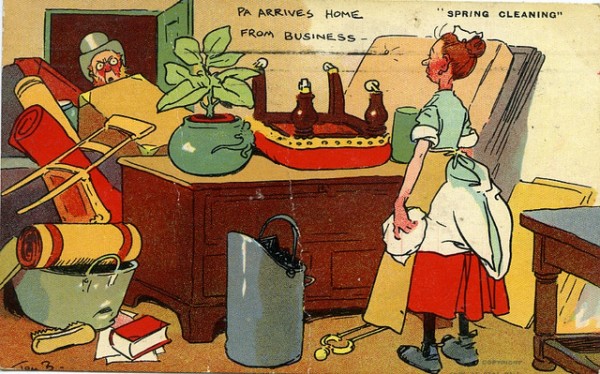
Vintage postcard via Blue Mountains Library, Flickr CC.

This is the time of year that many people throw open their windows and begin their yearly spring cleaning. Long ago, springtime cleaning had religious significance and coincided with holidays such as Passover and Easter. By the 19th century, spring cleaning had become more about practicality than piety. Particularly in places that suffered cold, wet winters, March and April were a perfect time for dusting because it was warm enough to open windows, but still too chilly for bugs to fly in the house. Ideally, the wind would help blow the dust out of the home instead of swirling it around the rooms.

The blame for a dusty shelf tends to fall on women’s shoulders because the home has traditionally been “her place” in society. Although the 1950s vision of June Cleaver has shifted and more women now participate in the labor force, women still tend to take on the bulk of the housework. Women employed outside the home have a “second shift” of cooking, cleaning, and childcare when they come home from work.
Women who work in more masculinized jobs tend to do more cooking and cleaning, and men with feminized professions engage in more “manly” tasks like yard work and auto repair to neutralize their gender-atypical occupations. Even in couples that are not comprised of a cis-man and a cis-woman, the gendered division of household labor persists. In couples consisting of trans*-men and cis-women, the women end up taking on the “Cinderella roles,” which they often link to personal preference rather than socialization or gender roles.
And what of the sociological significance of dust? A dusty book can show a lack of interest in the material, and the old adage “cleanliness is next to godliness” speaks to the moral implications of a dust-free, spotless home. Dust and dirt are out of place in the well-tended home, and their presence highlights a lack of control over the environment. Additionally, a lack of cleanliness has long served as a social indicator of moral disorder in Western Culture, acting as rallying point of social solidarity over what is socially acceptable.
Zoe Saldana, left, and Nine Simone, right. Image via ABC News Entertainment.

Zoe Saldana’s portrayal of singer and activist Nina Simone in an upcoming biopic has proven controversial, even before the film’s premiere. In press photos, Saldana, a light-skinned woman of color, is clearly wearing dark makeup and a prosthetic nose to appear more like the late singer. Some argue using “blackface” in order to cast Saldana is particularly troubling considering Nina Simone’s own life-long dedication to encouraging the acceptance and embrace of dark skin tones. It also ignores the realities of colorism, which reproduces social inequalities and hierarchies among people of color.

Several studies address the benefits that accrue to light-skinned women. Employers, for example, often evaluate women applicants on physical attractiveness, regardless of job skills. This includes privileging physical features that suggest lighter-skinned women are friendlier and more intelligent. Lighter skin tones also make their female bearers more likely to marry spouses with higher incomes, report less perceived job discrimination, and earn a higher income. In schools, studies find that teachers expect their lighter-skinned students to display better behavior and higher intelligence than their darker peers, and public health research shows lower rates of mental and physical health problems among lighter-skinned blacks.
Colorism may provide socioeconomic, educational, and health benefits to light-skinned women, but it also challenges their identity as black women. Other blacks may perceive them as not “black enough,” assuming that they are more assimilated into white culture and lack awareness of black struggles. Those with lighter skin may feel isolated as members of their ethic group openly question their authenticity and belonging.
Robert Elyov, Flickr CC https://flic.kr/p/8RUdpc
Robert Elyov, Flickr CC

In July 2015, four California state prisons began supplying condoms to prisoners, and more will follow suit in the next next five years. California, however, is only the second state to address infectious diseases in prisons. Prison officials are skeptical of the new law, though its ability to slow the spread of HIV and other sexually transmitted diseases among inmates may prove significant.

Sexual contact amongst U.S. prisoners is a complex issue emanating from societal expectations of sexuality and masculinity. Many of those who are incarcerated are young, unmarried, working-class men who are effectively cut off from the outside world and heterosexual encounters. As a result, many who identify as straight engage in male-to-male sex behind bars. This “institutional homosexuality” separates sexual behavior from sexual orientation.

Preventing the spread of sexually transmitted diseases in prison populations is a complicated matter. In the past, condom distribution was refused for two main reasons: the denial that male-to-male sex occurred in prison, and the illegal status of such encounters. To slow the spread of sexually transmitted diseases in prison and when inmates are released, both facts must be acknowledged.

U.S. prisoners are guaranteed access to health care. Unfortunately, rather than receiving cost effective, preventive measures to combat STIs, inmates usually only receive treatment after contracting one—and that’s costly in terms of money and health.

Sara Anderson will graduate from University of the Pacific in May 2016 with a degree in social sciences. She will attend law school in the fall.

Photo by Keoni Cabral, Flickr CC.
Photo by www.liveoncelivewild.com, Flickr CC.

To cut costs, the city of Flint, Michigan moved its residents from the Detroit city water system to water sourced from the Flint River. It was a temporary fix until Flint could access Great Lakes water directly. Now, as the world knows, there’s something in the water: lead. In Flint, more than 40% of residents live below the poverty line, and the high lead levels (10 times higher than originally estimated) have caused skin lesions, hair loss, vision loss, memory loss, depression and anxiety, and Legionnaires’ disease. According to sociologists, it’s no fluke that a disenfranchised community pays the ultimate price for environmental damage.

Nature is a battleground where the privileges of wealth and whiteness prevail. Race and class inequalities perpetuate practices that harm the environment, and the poor, immigrants, and minorities are most likely to live in areas with environmental damage (some 60% of African Americans and Latino/a people live in in places with uncontrolled toxic waste sites). This is largely due to the ways that bureaucracies and the state exercise power over resources in a capitalist economy. Flint, MI is just one of many examples of wealthy governments and corporations exporting hazardous material to poor communities of color.  
Poor communities of color also receive lower government response and assistance in environmental emergencies. From Hurricane Katrina to the Flint water crisis, African Americans tend to lack the economic resources and transportation necessary to evacuate an environmental danger zone, exacerbating its impacts on minority communities.
Job application via PBS.org.

Conservative and liberal legislators alike are calling for criminal justice reform. Last November, President Obama proposed a “ban the box” initiative that prevents federal agencies from inquiring about an applicant’s criminal history during the initial stages of the hiring process. The plan mirrors similar policies in over 100 U.S. cities that seek to reduce employment discrimination against people with criminal records and alleviate the socioeconomic burdens they often face as they reenter the job market. Social science highlights the scope of this problem and how ban the box policies may help.

Employers often dismiss applicants with criminal records, which disproportionately affects black men. A Milwaukee study revealed employers contacted only 5% of black men who disclosed a record; even black men without a criminal record were less likely to receive a callback than their white male peers with a criminal record. Thus, even in the absence of criminal background checks, employers may use racial indicators, education levels, and gaps in employment to evaluate potential criminality among job applicants.
Among candidates with a record, employers may consider the severity of the crime, the time since the crime was committed, and the outcome of the crime. Felony crimes and convictions appear to create the most barriers, while job applicants with misdemeanor arrests face lower hurdles. Since interviews with employers show that making personal contact with job applicants can help overcome the negative effects of a criminal record, “ban the box” measures that delay consideration of the criminal record until the interview process could make a real difference in individuals’ job prospects.