
inequality

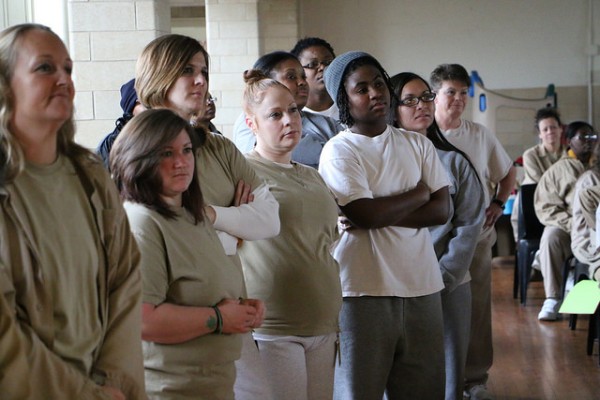
At the Indiana Women's Prison. Lwp Kommunikáció, Flickr CC.
At the Indiana Women’s Prison (established in 1873, the first adult women’s correctional facility in the U.S.). Lwp Kommunikáció, Flickr CC.

Many more men are incarcerated than women, but from 1980 to 2014, the number of women in state and federal prisons rose from just over 13,000 to more than 106,000, making women the fastest growing prison population in the U.S. This drastic increase is due in part to the War on Drugs and the shift to a “tough-on-crime” logic in the 1970s and ‘80s. For women, the mass incarceration era doesn’t just exert tougher penalties; it also carries over an earlier, paternalistic way of disciplining women.

Before mass incarceration, women’s prisons operated under rehabilitative models. These viewed women’s criminal behavior as a result of their vulnerability or dependency, rather than dangerousness. Inmates were sometimes called “girls” and referred to the warden as “daddy.” Later tough-on-crime policies increased security, abolished mandatory counseling, and emphasized order and control in women’s prisons. Still, some contemporary prisons maintain a paternalistic attitude by offering women “treatment” that focuses exclusively their perceived inability to make good choices in the face of challenges from men, drugs, or a history of abuse.

In other words, incarcerated women are hit with a double bind. Strict sentencing policies ignore social context and drastically increase the number of women in prison, while the paternalism of the past shapes how the criminal justice system interprets and judges their behavior and prospects for rehabilitation.
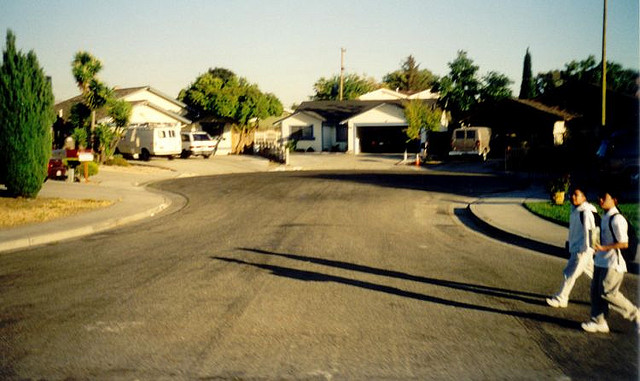
From the AirBnb website's section for prospective hosts.
From the AirBnb website’s section for prospective hosts.

A recent working paper from Harvard found that hosts of the room/house renting service Airbnb discriminate against renters with Black-sounding names. The study revealed that “requests from guests with distinctly African-American names are roughly 16% less likely to be accepted than identical guests with distinctively White names.”

Unfortunately, racial discrimination based on names is nothing new.
Racialized housing discrimination also has a long history. Once overt, such as in the outright denial of mortgages, housing discrimination has shifted toward micro-aggressions that are harder to spot, such as the private decision not to offer an Airbnb to people of color.

In September 2015, the hashtag #masculinitysofragile first swept across the greater twitter community—even gaining its own twitter account. Tweeters use the hashtag to point out how masculinity and expectations for men to be “manly” are not only unattainable, but also harmful to both men and women. Some posts called out the gendered marketing of men’s products like man-sized soap bars, and others the need to qualify affection between two men with “no homo” and the way boys are taught to reserve, rather than express, emotions.

So, is #masculinitysofragile? Luckily for all of us, there’s research on that!

Scholars define masculinity as more than just an individual trait. It involves social practices that privilege men over women and some men over other men. Traits associated with the “ideal” man—what scholars refer to as “hegemonic masculinity”—include sexual aggression, violent behavior, and lack of outward emotion, as well as whiteness, middle-class status, and heterosexual desire for women. Men actively work to maintain a spot in the dominant gender group. Sometimes this involves demonstrating masculinity through behaviors like fighting discrediting women at work.
Masculinity faces crises when the dominant status of manhood is threatened. For instance, during periods when women’s rights and freedoms expand—like during the three waves of American feminism—men felt their advantages as the more powerful group were threatened. Men also police other men by calling out their lack of toughness using homophobic language. In this case, one man is deemed feminine or weak, while the other’s straightness and dominance is affirmed. Finally, parents may participate in constructing their sons’ masculinity by limiting access to feminine toys and clothing. Men with privilege—those who are white, straight, and/or middle- or upper-class—can afford to be more flexible with their masculinity.
Coates' latest book reflects on race and the justice system. Click for publisher site.
Coates’ latest book reflects on race and the justice system. Click for publisher site.

In The Atlantic, Ta-Nehisi Coates’ “The Black Family in the Age of Mass Incarceration” details the historical development of the carceral state, its consequences on current and formerly imprisoned black Americans, and the unique challenges families face during their absences and returns. Coates cites and interviews several prominent sociologists for their insight into the carceral state’s repercussions for black Americans specifically. We rounded up some of their best work on the topic.

The 1970s saw increasing unemployment and concentrated poverty. Legislators developed “tough on crime” policies that resulted in the start of a massive increase in the number of incarcerated individuals in jails and prisons. Increases in incarceration, however, do not appear to have had a significant effect on decreasing crime rates.
Mass imprisonment has a wide range of collateral consequences. Those who serve time face health risks, familial struggles, and barriers to employment before and after they are released.
Macro-level segregation affects school diversity and students' outcomes. Photo by Michael Patrick, Flickr CC.
Macro-level segregation affects school diversity and students’ outcomes. Photo by Michael Patrick, Flickr CC.


Chicago Public Media’s This American Life recently aired “The Problem We All Live With”—an extended episode with New York Times Magazine reporter Nikole Hannah-Jones on how racial segregation lives on into 21st century classrooms.

School segregation has been on the rise since the 1980s, leading, in part, to a wide achievement gap between Black and White students. Policymakers often focus on the moral achievement of Brown v. Board of Education, but racial separation persists.
Minority students are much more likely to drop out of school, to be tracked into “low-ability” groups or vocational programs, and to face other barriers to achieving higher education. Ability matters for achievement, but so does the social structure of schools.
We usually think school segregation really happens at the neighborhood level, but neighborhood segregation has declined since 1990. Instead, we see increasing macro-segregation—patterns where minority groups are concentrated in certain urban and suburban areas. Therefore, entire schools or districts are more likely to see homogenous groups of students.

For more on inequality in schools, check out the TSP White Paper “Students Squeezed by an Hourglass Economy” by Robert Crosnoe.


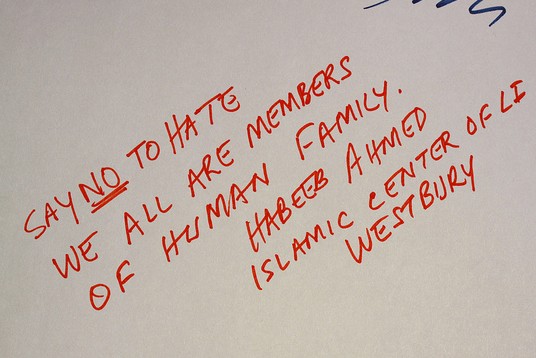
A message left at a memorial for Marcelo Lucero, a Hispanic victim of a hate crime on Long Island. Photo by Long Island Twins via Flickr.

The Emmanuel AME shootings in Charleston, South Carolina have reignited public discussion of both terrorism and hate crimes. While the media often focuses on foreign religious extremism as a motivation for domestic attacks, data show more radicalization has taken place on the political far-right (independent of religion or race) than among Muslims in the United States. Since 9/11, only 25 recorded attacks have been committed by Muslim extremists, while 65 attacks were driven by right-wing extremists at home. So what’s the difference between terror and a hate crime? Is there a difference? Sociological research shows how public discourse and community differences can change the story.

Words like “terrorism” and “hate crime” change across social contexts. In the U.S., acts of violence perpetrated by minority populations are more likely to be defined as acts of terrorism, whereas “home-grown” offenders are likely to be dismissed as crazy, deranged, or evil—“bad apples” rather than people motivated by hate or politics. For hate-crimes, the pattern is reversed. Hate crimes that involve majority perpetrators, particularly in interracial incidents, are linked to higher seriousness ratings. In both cases, the social position of both perpetrator and victim changes how we interpret the violence.
American anti-black hate crimes are most prevalent in communities with a high concentration of white residents that are undergoing black in-migration. This suggests that majority members may try to “defend turf” from the perceived threat of “outsiders”. Compliance with hate crime law is less likely in high-percentage black communities, particularly in the southern U.S. Within these black communities, past lynchings (between 1882-1930) are associated with lower compliance with hate crime law in the present and a lower likelihood of prosecution of hate crime cases.

For more on this issue, check out our other TROT! post, “How Hate Crimes Count.”

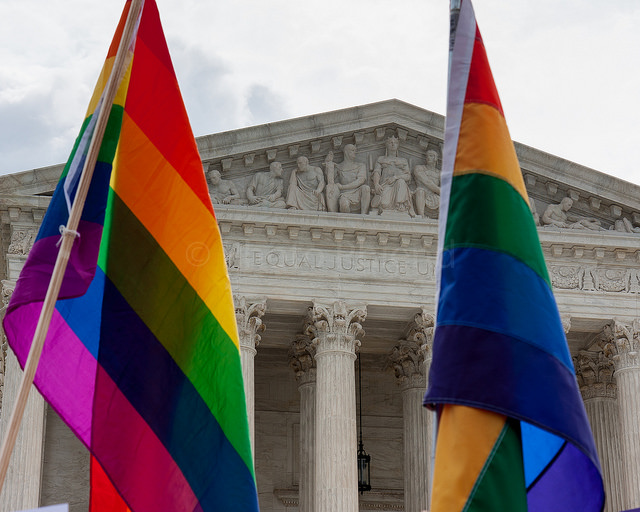
Photo Phiend, Flickr Creative Commons

With the Supreme Court’s ruling in Obergefell v. Hodges, states must legally recognize same-sex marriage nationwide. The fight for equality isn’t over, however, as many states do not have explicit protections for same-sex couples against practices like hiring discrimination. The Texas Attorney General also ruled that individual county clerks can refuse to offer marriage licenses to same sex couples on the grounds of their religious beliefs, even if the clerks’ office must ultimately grant the license. This is the challenge with nationwide legislation: laws on the books often differs from the law in action. History shows inequality can thrive in low level bureaucracy, sometimes in spite of national policy.

Policy changes take time to wind through organizations, especially those with large bureaucratic structures like the U.S. government. Autonomous managers in the middle construct their own reasons for adopting policies, often distancing themselves from big changes at the top of the chain. An institutional culture affects the implementation of a policy as much as the policy itself.
We can see these institutional boundaries in broader patterns of hiring discrimination against LGBT citizens that appear in experimental studies, even when employers don’t intend to discriminate. The history of federal regulation in immigration, the military, and welfare policies shows that the U.S. slowly built a bureaucratic system interested in measuring and controlling sexuality long before public battles over LGBT rights came on the scene.
Similar bureaucratic patterns happen around race. When the Supreme Court repealed laws against interracial marriage in Loving v. Virginia, for example, mixed-race couples still faced clerks who were often unwilling to grant them licenses. While the GI Bill was a sweeping national effort in which many U.S. citizens got better housing and education, veterans of color often had trouble registering for those benefits in uncooperative local offices.

Hillary Carly


With Hillary Clinton’s official announcement of her presidential candidacy—and now Carly Fiorina’s GOP candidacy—we have seen the immediate and constant sexism that will undoubtedly plague the campaign coverage until election day. Time Magazine, for example, ran a piece focusing on Clinton’s presumed post-menopausal estrogen levels as an asset to her presidential leadership skills (we have yet to spot an article on the testosterone levels of Jeb Bush or Bernie Sanders).

Media outlets often pay a disproportionately higher rate of attention to female candidate’s wardrobe, appearance, and age than to that of male candidates, treating women as novelties rather than serious contenders. The focus on appearance objectifies and sexualizes, delegitimizing their authority.
People evaluate “appropriate” roles for women in public office based on gender stereotypes about policy and issue competency more than on personality traits. Public opinion survey respondents indicate that they find female candidates more capable of handling “feminine” topics like education and healthcare, while male candidates are more qualified to deal with “masculine” issues like terrorism and the economy.
Contrary to expectations, neither higher numbers of educated women nor the type of political system translates to more women in national office. In fact, female congressional candidates win at similar rates to men in general elections. Instead, ideologies about women’s roles and positions in societies influence women’s abilities to enter politics as candidates and survive the primary process.

For more on this topic, check out Scholars Strategy Network and Sociological Images

Students take the AP Statistics test. Photo by Adrian Sampson via Flickr.


As senioritis infects graduating classes across the U.S., one group of students is denied the thrill of the “senior slide”: those enrolled in Advanced Placement courses. These students look forward to a grueling gauntlet of 3-hour exams on topics ranging from Computer Science to Studio Art to Chinese Language and Culture. The tests are rigorous, cumulative assessments of each student’s mastery of an entire year’s worth of class content, and they have extremely high stakes. College Board, the organization that creates and scores the exams (as well as the SAT), claims high AP scores help students “stand out in the admissions process.” While these tests only seem to target elite, high achieving students, they also impact educational processes school-wide.

AP classes are a source of inequality in educational attainment. Minority and low-income students are more likely to attend schools offering fewer AP courses. Even when courses are available, these students are also more likely to be underrepresented in them relative to their more affluent and white peers.
Policies aiming to increase AP courses at underprivileged schools may be one way to narrow the gap, since parent/student demand and school officials’ response in more affluent districts are likely driving the difference. The proportion of upper-middle class students at a school is an excellent predictor of both the number of AP courses offered and the number of students who enroll.
AP tests weren’t always used in college admissions. They were originally designed to allow high-achieving students to place out of introductory courses and into more advanced college work. Only in recent years have they become an important indicator for college admissions boards.
AP testing culture affects all students, no matter where they’re tracked. In most cases, tests change curricula by narrowing content to tested subjects, fragmenting content area knowledge into test-related pieces, and increasing teacher-centered instruction. However, certain types of high-stakes tests can encourage curricular content expansion, integration of knowledge, and cooperative learning.

workers of the world

Workers of the World, Unite!

Since the late 1800s May Day—the first of May and a traditional European spring celebration—has been recognized as International Workers Day. It’s a time to celebrate working people and the possibilities for international solidarity. On May Day 2015, the state of workers looks rather grim: expanding inequality, increasing fiscal austerity, and degrading working conditions. Amid these negative trends, though, there are glimmers of hope as global workers organize and mobilize to assert their rights, curtail corporate power, and create a more equitable world.

To mark May Day, we are exploring issues of inequality, labor, and social movements in a three-part series.

Part I: The U.S. & Inequality

Deregulation, privatization, and declining unionization have exacerbated the gulf between rich and poor in the past 50 years. Researchers have documented how much of the increase in wage inequality is due to the weakening of policies and institutions that have historically protected and empowered workers—unions, minimum wage laws, unemployment insurance, and labor law—in addition to structural changes in the economy and labor market.

Read May Day Part II: Global Labor. There’s Research on That!

Read May Day Part III: Social & Political Movements. There’s Research on That!