
inequality

Photo by Mike Beltzner, Flickr CC

Spring is here, and for many that means it’s time for a spring break! However, taking time off work can be a big deal, and taking a break can affect earnings and productivity. Research shows that vacation and leave time are largely shaped by a countries social and political context, but taking time off work can have serious consequences no matter where you live, especially for women.

To start, vacations take place in the context of larger structures of gender inequality and work/family policies. Mothers’ time in and out of work is shaped by institutional and cultural contexts, including paid-leave policies, state support for childcare, and cultural expectations around maternal employment. When women are supported by well-paid leave, affordable childcare, and a cultural expectation that mothers work, women with children ultimately work more weekly hours than those living in countries without these factors. Even so, time off is not without penalty. Country-specific policies also help predict the penalty women face for taking a break from employment to care for children. For instance, in a comparison between Germany, Sweden, and the U.S. — countries with distinct leave policies — researchers found that long leaves meant career penalties for all women. Unsurprisingly, in the U.S., a country known for lagging behind in parental leave, even short periods of time spent away from work can hurt womens’ careers.
When women take vacation days, they tend to take more than men, but this doesn’t mean that women are lounging on the beach or in the ski lodge while the men toil in the office.  Part of the reason for the gender difference is men use fewer vacation days because of anxieties about job security and supervisory responsibilities. Comparisons between nurses’ unions (mostly women) and firefighters’ unions (mostly men) shows that women prioritize negotiating scheduling, including vacation time, while men emphasize the importance of fairness in access to overtime among co-workers. Women who have unused vacation days tend to be more worried about the success of their families, but research shows that family concerns don’t necessarily lead women to take more vacation days.
Photo by Fibonacci Blue, Flickr CC

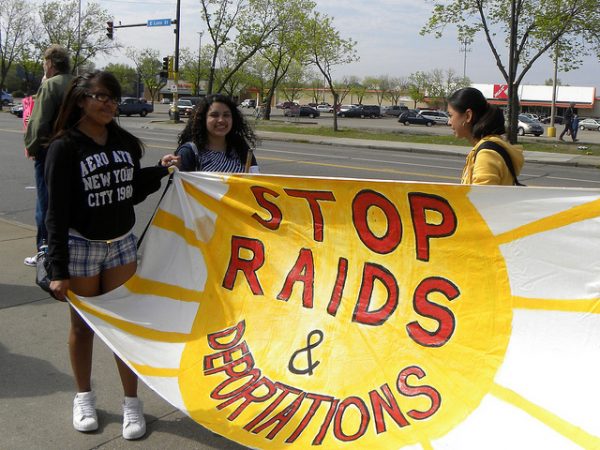
In response to the Trump administration’s crackdown on undocumented immigrants, cities and universities all across the United States have declared themselves “sanctuaries” from the threat of deportation. One aspect of this has been a revival of the sanctuary church movement. Over 800 churches nationwide have declared themselves sanctuaries for undocumented immigrants who fear deportation since Trump took office. While it is technically illegal to harbor undocumented immigrants, immigration enforcement officials have typically avoided raiding “sensitive locations” like churches and hospitals to avoid disrupting institutions that provide social services. Social science shows that protecting sensitive locations like churches is key to providing essential social services to marginalized populations. 

This is not the first instance of religious institutions attempting to shield undocumented immigrants from deportation on moral grounds in the United States. In the 1980s, thousands of refugees fled political violence in Central America, many to the border states of Arizona and Texas. In response, hundreds of religious congregations declared themselves to be sanctuaries for Central American refugees. With the exception of a notable trial in Arizona in 1986 in which several activists were convicted for violating immigration law, most congregations suffered minimal, if any, legal reprisal for their efforts during this period.
Churches are unique from other types of sensitive locations like schools and hospitals because of their long history of offering sanctuary to people in need, a history that goes back to the 1600s. It was not until the late 20th century that states began intervening and requiring churches to hand over people they were protecting. In the U.S. today, churches are a critical resource for low-income, minority, and immigrant communities, especially in small towns and rural areas. They often serve as primary distribution sites for a number of rural social services including food aid, shelter, clothing, basic healthcare, and English language and employment tutoring.
Research studying the long-term effects of ICE raids on hospitals and clinics shows that immigrants stop seeking medical services when they no longer feel safe from law enforcement. If sanctuary churches are no longer recognized as safe from ICE raids, there is some concern that the same problem will make it difficult for churches to reach immigrants in rural places.

It remains to be seen whether the Trump administration will stay out of churches, but social science shows that raiding these spaces could affect all immigrants, especially those in rural areas. And it may very well ignite an intense reaction from the churches and communities trying to keep people safe. 

Photo by K-Screen Shots, Flickr CC

For many Americans, anti-Semitism seems like a thing of the past, a topic for high school history classes and discussions of the Holocaust. But anti-Semitism has returned abruptly to the front page in recent weeks, with over 160 threats against Jewish community centers and synagogues since January. At times, such threats are paired with symbolic shows of force, as was seen when over 100 headstones in a Missouri Jewish cemetery were damaged or destroyed. For many this has been unexpected, but this is not necessarily true for social scientists who have been studying anti-Semitism over the last decade.

Recent survey-based studies have sought to assess anti-Semitic sentiments over time. Some scholars argue that anti-Semitism shifted into the more accepted form of anti-Israeli sentiments, with others arguing that the two issues are not necessarily related. However, most scholars seem to agree that public acceptance of anti-Semitism moved from the mainstream to smaller, more extreme groups throughout this period.
Social scientists have also looked at anti-Semitism using methods that look past publicly shared opinions, and these studies find slightly different results. Studies show that when questions focus on positive or “neutral” stereotypes, individuals are more likely to express them, possibly revealing that other, more negative  prejudices exist that they are less willing to share. This phenomenon helps explain why anti-Semitism seems to be increasing so quickly; as rhetoric against Jews and other minority populations becomes less stigmatized, people who quietly hold these views may feel more comfortable sharing their opinions. The  increase in hate crimes and threats within the United States and around the world may not reflect a cultural change in sentiment, but rather an increased willingness to share and act upon these previously held beliefs.


Photo by NASA, Flickr CC

With the recent discovery of numerous Earth-like planets orbiting the same star, Elon Musk’s promise to send citizens to the moon, and increased politicization surrounding the science of climate change, many Americans are looking to the stars for potential solutions and possible new homes. And the nascent NewSpace movement — made up of entrepreneurs and advocates looking to commercialize outer space — promises to push space exploration forward at a rapid pace. While it certainly requires rocket science to get to space, social science is beginning to weigh in on what it might mean for social life.

The privatization and commodification of public spaces is now moving beyond Earth as governments struggle over control of the atmosphere and outer space. And as new entrepreneurial space companies seek to privatize the sky and profit from new resources and new planets, some worry that existing structures of class and racial inequality will be repeated or even intensified with space colonization. Others, like anthropologist David Valentine, see potential for progressive re-imaginings.
Sociologists highlight how inequalities shape the way people are experiencing this increasing “humanization of the universe.” Wealthy elites relate to the universe as an object to dominate, funding new “space tourism” programs and hoping to extend the workings of capitalism to the Moon and beyond. Less wealthy and marginalized communities, however, experience the universe as a dominating and mystifying force, and many feel that space colonization will only make them more powerless.
Since women and people of color are still less likely to pursue careers in science or technology, they are less likely to have a voice in these new projects. But this is not the only thing keeping them from the conversation. For example, women have historically had a difficult time qualifying for space travel. Fears about menstruation, pregnancy, and hormones in outer space have significantly hindered research into how women’s bodies are affected by space travel. The result is that women’s bodies are constructed as problematic and essentialized in opposition to male bodies, keeping many women from successfully joining space missions.
Photo by Falcon® Photography, Flickr CC

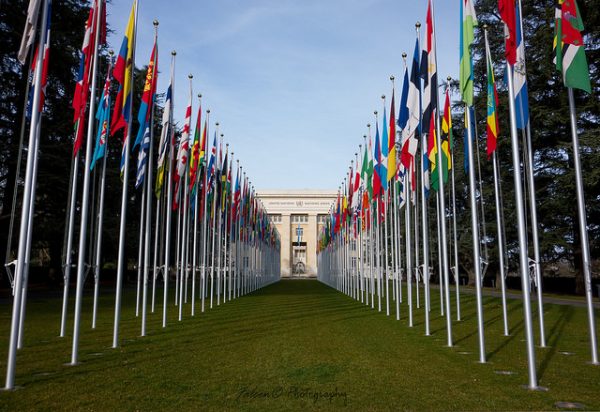
The United States and the United Nations have had a closely intertwined relationship since the organization’s founding in 1945. The UN deals with a broad range of issues around the globe, and its widespread influence is often controversial. However, the influence of the United Nation continues to be instrumental in promoting crucial human rights causes, and the reach of its aid is arguably beyond compare. Despite its numerous shortcomings, the UN plays a crucial role in promoting human rights norms across the globe.

Throughout the 1990s in particular, the United Nations took on a central role in the global justice process. It organized and funded international courts following episodes of mass violence, such as the International Criminal Tribunal for Rwanda, and it made indictments for egregious crimes possible for the first time (including the crime of genocide).  Sociologists find that the existence of these courts have a global impact in providing justice, and the trials seem to have a positive effect in reducing human rights violations in the long run.
The judicial process alone cannot adequately address global human rights issues — humanitarianism and diplomacy also play key roles. The United Nation arguably plays the most dominant global role in these initiatives, with monumental campaigns addressing topics like hunger, refugee needs, and climate change. The UN has been criticized for showcasing Western ideals and not taking into account cultural contexts, such as early endeavors to reduce female genital cutting. However, the UN has made improvements and when programs are approached as an opportunity for partnership and not dominance, the outcomes can be quite positive. For example, the agency has taken great strides in promoting gender equality and access to education.
Photo by Democracy Chronicles, Flickr CC

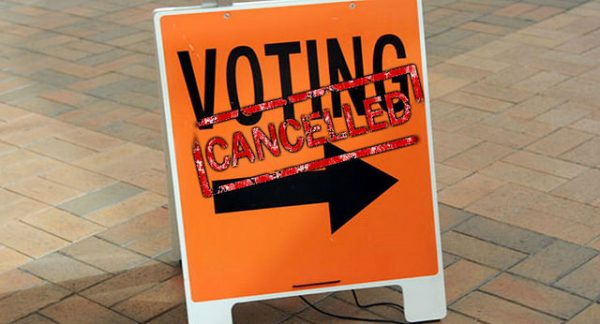
President Trump and his administration have insisted that there was massive voter fraud in the 2016 election, although evidence has not supported this allegation. Instead, the evidence points  to significant issues surrounding voter suppression in the United States.

One contributing factor is felon disenfranchisement — when people with a felony conviction permanently lose the right to vote. Since the late 1860’s, U.S. states with the largest non-white prison populations have been more likely to implement voting restrictions for felons. Today, formerly incarcerated persons constitute the largest portion of the disenfranchised population, which also includes people with disabilities and those without valid forms of identification. Importantly, restrictive voting laws have actually altered political outcomes. For example, it is estimated that Al Gore would have won the 2000 presidential election if formerly incarcerated persons in Florida had been allowed to vote.
After the 2010 midterm elections, there was a wave of laws that seemed to bolster voting requirements, such as new ID laws and proof of residence. And while strengthening voter requirements may seem benign at first, these rules restrict access to people who are less likely to have identification and proof of residence — people of color, the elderly, and the poor. In essence, such laws make it harder for only some people to vote. Research suggests that Republican leadership and legislatures are more likely to push for these laws, an irony when we consider that the President Trump is alleging that there were too many votes.
Photo by Automobile Italia, Flickr CC

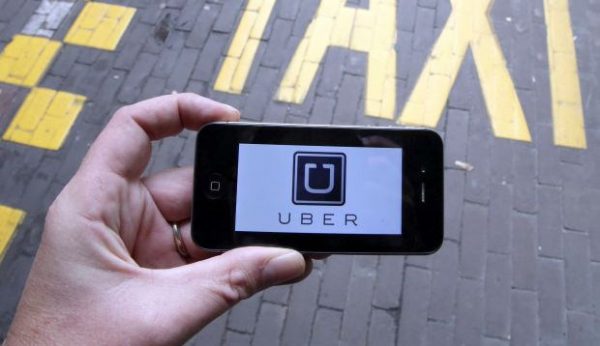
Uber has been having a bad time. From reports that venture capital has been propping up a flawed business model, to evidence of racial bias in pickups, rate cuts during a New York taxi strike leading to the #DeleteUber movement, and recent accounts of sexual harassment alongside conflicts with drivers, the romance of Silicon Valley innovation and “disruption” in the company is on the decline. But while this may seem like a fall from grace, research shows these problems are tragically normal. They often plague a wide range of companies because of their organizational structures, and tech start-ups are no exception.

Classic research shows that when a founder also acts as the CEO, it can cause trouble for a company. While they may have a knack for developing innovative products or services, founders don’t always have the management skills to run a large, successful business as a complex organization.
While teams of entrepreneurs can start a businesses together, they often choose who will ultimately run the company. This process is not neutral. Gender inequality in business leadership can emerge from these decisions because friends and family members in these teams often take gendered assumptions for granted.
Racial and gender discrimination in hiring and promotions plagues a wide range of organizations, especially because opportunities for promotion tend to favor homogeneous social networks. These problems also plague organizations and could indicate other organizational troubles, as firms that engage in hiring discrimination are more likely to go out of business.     
Photo by John Nakamura Remy, Flickr CC

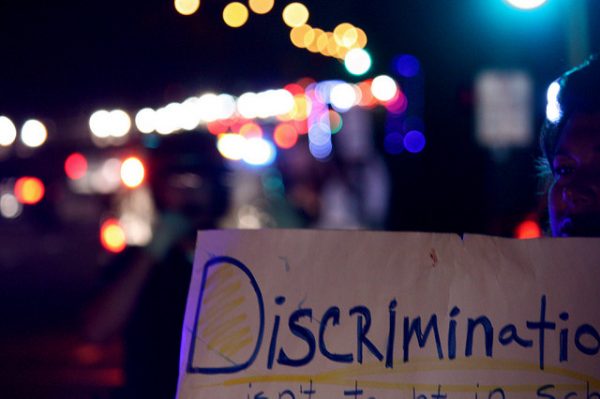
A recent study in the medical community has shown a decrease in teen suicide, particularly among high schoolers who are sexual minorities, since same-sex marriage was legalized. This is evidence that change in social policy impacts health outcomes among those who experience discrimination. This is important because social science has documented the negative impacts of gender and racial discrimination on mental and physical health.

A person’s status as a racial or sexual minority impacts their exposure to stress through perceived discrimination — a key way that racial, gender, and class inequalities in physical and mental health occur. The centrality and/or visibility of racial or sexual differences in a person’s life affects if and how often discrimination is perceived — the higher the salience or visibility of one’s racial or sexual identity, the higher level of perceived discrimination and the higher level of stress that person experiences.
Those who are disadvantaged in multiple ways, like being both a racial minority and a sexual minority, find themselves at higher levels of exposure to discrimination and have higher rates of depression and worse self-rated health.
Photo by Kobe, Flickr CC

Public housing has a long and troubled history in the United States. In recent years, the demolishing of public housing in cities like Chicago has been one of the most prominent images of decline. For sociologists, it is important to understand not just the problems with and eventual failures of post-war public housing, but also the social forces and sentiments behind their creation.

Consider why the federal government would even see a role for itself in the building of public housing structures in the first place. The origin of public housing legislation can be traced back to Franklin Roosevelt’s New Deal, a series of laws and executive orders focused on providing more basic necessities for the poorest in America.
However, public housing would eventually become associated with racial segregation. The design of public housing projects ultimately worked to concentrate poor non-white communities into relatively cut-off neighborhoods in the middle of cities. This segregation, combined with heavy degradation of the buildings and a lack of proper care from government officials, led to a heavily stigmatized view of public housing buildings.
Given the sheer intensity of racial segregation and concentrated poverty in public housing, many housing advocates and public officials have declared these programs a failure, leading to the demolition of old public housing facilities. But there have also been various proposals to renew public housing initiatives that look to learn from the mistakes of the past while keeping to the goal of housing the poor. One of the largest programs, the federal HOPE VI program, is an ongoing federal project to revitalize public housing areas with architecture focused on crime prevention. This focus on crime prevention is inspired by Oscar Newman’s ‘defensible space’ concept — the idea that if people feel more ownership over a space, they’ll be more watchful over how their neighbors use it, thus curbing crime.
Photo by Alan Levine, Flickr CC

In the wake of the 2016 presidential election turmoil, some groups have turned to storytelling to demonstrate solidarity and to show support for what they see as important issues. In the not-so-secret Facebook group Pantsuit Nation, for instance, members share stories of themselves and others standing up against racism and sexism. Sociologists recognize the power of storytelling in many contexts, especially in building movements for social change by shifting opinions or establishing solidarity, but they also point to some important barriers that come with using stories to change social policy.

Narratives are commonly used to establish a common group identity. For example, public officials might tell stories about a certain group of “dangerous” immigrants, thus establishing solidarity between people in the categories of “citizens,” in opposition to immigrants constructed as “enemies.” Public narratives such as these often follow a recognizable formula with actors who engage in typical behaviors, and plot lines that lead to a predictable moral conclusion.
Without people to listen, stories do not go very far. Thus, in order to make progress toward social change, social movement groups must find a way to speak to a broad public audience. Many groups try to gain public attention through protest, in an attempt to attract media coverage. However, news coverage of protests tends to neutralize or undermine their movement’s main issues, and sometimes ignores them altogether. Likewise, much of the news coverage tends to emphasize individual responsibility, rather than systemic explanations for the group’s grievances (i.e. racism).
But what makes a story effective in the public domain? Against common belief, sociologists have found that the ambiguity of personal stories makes them particularly effective for public deliberation. Stories that can be interpreted in multiple ways allow others to offer new ideas or compromises without seeming divisive. Conversely, personal stories that work well in value-oriented discussions, like remembering victims of 9/11, are not as effective in policy-oriented settings where reason-based arguments typically prove more effective. This is important because often it is the people with the most privilege (i.e., white, male, native-English speakers) who create these types of narratives, while stories told by people in less powerful social positions often have little traction in the policy realm.

In short, stories are not just about the meaning people convey through or derive from them — they have a social organization of their own, and require certain conditions to be taken seriously.