inequality

Lt. Shelton, one of the chemical engineers at the Rocket Propulsion Lab, stands at a chalkboard. Photo by Expert Infantry, Flickr CC

One of the most popular new movies in the past month was Hidden Figures, a film that highlights the forgotten story of three Black female NASA employees who were integral to the success of several U.S. space missions in the early 1960s. The film allows audiences to observe both the subtle and blatant instances of sexism and racism that plagued women in STEM, despite the prestige of the field. Over 50 years later, women’s employment in science, technology, engineering, and math remains low compared to that of their male peers, especially among minority women. Social science allows us to piece together where and how these gender differences develop, and how women within STEM careers successfully navigate their environments.

Despite growing numbers of women receiving college degrees, they remain underrepresented within STEM fields. While some research attempts to find biological explanations for gender and racial disparities, a myriad of social science scholars note that cultural stereotypes equate science and math studies with men’s work. As such, young women frequently experience lower self-confidence in their science and mathematical skills. Women of color, in particular, are less likely to attend elite schools with quality STEM programs and are more likely to experience family unemployment. These barriers limit access to the resources necessary to cultivate engagement with STEM studies.
High school environments account for much of the dearth of women in STEM careers. Research finds that 12th grade girls who attend high schools that fail to foster support for girls in science and mathematics, and that encourage gender segregation within extracurricular activities, are less likely to list a STEM career as a potential field of study.
When women enter STEM work spaces, they often experience microaggressions from their male peers, despite receiving the same degrees and having the same skills. Interviews with women working in technology firms revealed that those who identified as heterosexual and traditionally feminine recalled having a harder time in their workplaces because male peers avoided eye contact, questioned their work more than other male peers, and critiqued their clothing choices. Gender-fluid and LGBTQ women, on the other hand, reported an easier time navigating their predominantly male workplace because their styles conformed to the masculine subculture of the workplace.
Photo by Robert Couse-Baker, Flickr CC

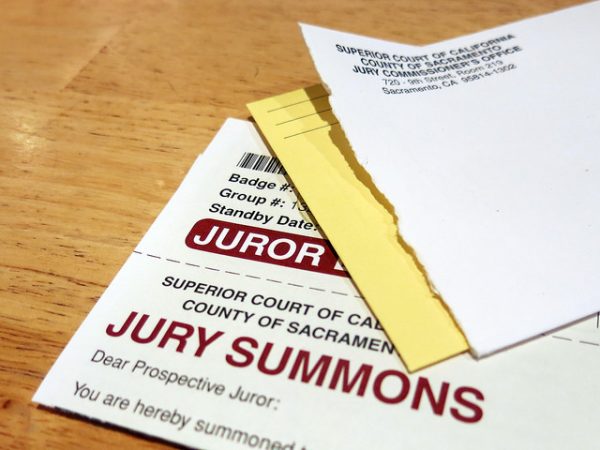
The U.S. Supreme Court is currently hearing arguments for Peña-Rodriguez v. Colorado, a case concerning allegations of racial bias in jury deliberations. Many states prohibit hearing juror testimony following the conclusion of a trial; however, following the deliberations of Peña-Rodriguez’s case, two jurors signed affidavits attesting to racial bias by a fellow juror. They allege that the juror referred to an alibi witness as discreditable because he was “an illegal,” and asserted that the defendant was guilty “because he’s Mexican.” After initially being struck down by both the trial judge and the Colorado Supreme Court, Peña-Rodriguez is now making his case to the highest court, a task which research suggests may prove extremely challenging.

In her book The New Jim Crow, Michelle Alexander illustrates why challenging racial bias in juries is so difficult. Despite the passage of laws such as Batson v. Kentucky, which prohibits prosecutors from discriminating on the basis of race when selecting juries, both prosecutors and defense attorneys are allowed peremptory strikes, or the ability to strike potential jurors for just about any reason they choose. Challenging instances of racial bias is even more difficult following the Supreme Court decision in Purkett v. Elm, which ruled that even if there is a pattern of striking a particular racial group by a prosecutor, providing any race-neutral reason (the prosecutor in this case used hair length) is enough to justify that the decision is not based on race.
Moreover, it is not just legal precedents that solidify racial bias, but also the initial selection process itself that is discriminatory. Potential jurors are drawn from registered voters or Department of Motor Vehicle lists, which contain fewer minorities. Forty-seven states also restrict the rights of felons to serve on juries, which disproportionately limits the presence people of color. Most states and the federal government place a lifetime exclusion for felonies, which automatically bans nearly 30 percent of adult black men from jury service.
In short, jury selection is not only inherently racially biased, but many Supreme Court decisions appear to support a system of racial discrimination rather than dismantle it. As a result, legal precedents such as the rules of evidence may bolster, or at the very least shield, racial bias within jury deliberations.
Photo by Jon S, Flickr CC

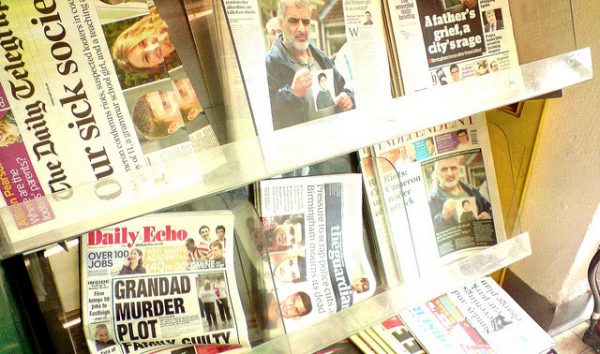
The ways that non-Western victims of violence and poverty are portrayed in the news is problematic. For example, on the 6th of October this year, The New York Times had an above-the-fold image of migrants on its front page. The image was of several dead and dying African migrants on a boat and, troubling as this may be, the image was not an anomaly. Consider the images we have recently seen from Syria — from the drowned child on the beach to the dazed child covered in dust pulled out of a bombed building. Social scientists explains how the choice to use these kinds of images is neither an objective nor an accidental process.

News images are rarely meant to teach us something new, rather, they are meant to reaffirm what we already know while tugging at our heartstrings. Nowhere is this more evident than during instances of instability and violence in the Global South. Even in death and suffering, non-Western victims are denied their privacy; their pain is meant to be consumed by the audience while reaffirming real and symbolic differences.
Images of pain and suffering are less about an increase in “bad” things happening and more about how  we understand the consumption of pain, suffering, and death of victims that are “Other.” They allow us to consume the pain of others from the comfort of our living rooms while reminding us of how “good” we have it.
In the case of Africa and Africans especially, the use of images has a long and troubled history. Research continually shows that images of Africans are often steeped in stereotypes of Africans as simplistic, tribal, “noble savages,” and primitive.
The defining images of 1960s Africa are of starving Biafran children. The image of the 1990s is that of a vulture stalking an emaciated Sudanese child near the village of Ayod in South Sudan by Kevin CarterSuch images often reaffirm stereotypes of the continent and its peoples as ‘starving’, ‘chaotic’, or ‘sick’. This history makes it possible to plaster images of dead and dying migrants on a boat across the front page of an American newspaper with little to no discussion of the structural factors leading to their deaths.
Photo by Andres Juarez, Flickr CC

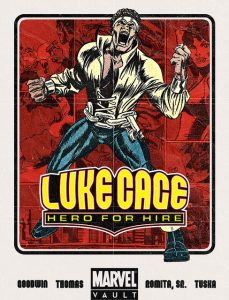
Marvel’s new series focusing on superhero Luke Cage debuted on Netflix in late September to critical acclaim. The show boasts a 95% rating on RottenTomatoes and was called “one of the most socially relevant and smartest shows on the small screen you will see this year,” by Deadline.com’s Dominic Patten. Aside from its artistic merits, commentaries also praise the prominence of Luke Cage as a “bulletproof black man in a hoodie,” with the show’s star Michael Colter telling The Huffington Post: “It’s a nod to Trayvon, no question … Trayvon Martin and people like him. People like Jordan Davis, a kid who was shot because of the perception that he was a danger. When you’re a black man in a hoodie all of a sudden you’re a criminal.”

Comic books and comic book culture have slowly become more diverse as companies like Marvel have begun prioritizing the inclusion of racial minorities in their stories. Kamala Khan, a Muslim teen, has replaced the white hero Carol Danvers as Ms. Marvel. The hero replacing Iron Man is a black teen named Riri Williams. And Miles Morales, a black Hispanic teen, replaced the white Peter Parker as Spider-Man. Yet despite its recent progressive slant, Marvel and other comic companies have had issues with racial stereotyping, particularly with their black heroes. Marc Singer describes how the medium of comics relies on racialized representations, with appearance being a major way to distinguish characters from one another. 
This is also heavily tied up in the portrayal of superheroes as super-masculine. When the racial aspect of this dynamic is uncovered, we see a complicated history. Rob Lendrum traces these heroes to the “blaxploitation” era of film/media in the 1970s, arguing that many superheroes were influenced by this culture, including Luke Cage. Jeffrey A. Brown sees these images as one-note and compares them to the black-owned works of Milestone Media Inc. comics.
Photo by Torsten Mangner, Flickr CC

Scientific and technological innovations have given humans a number of new methods to manage fertility and create families. One of the more recent advances in this area is the controversial birth of a child with genetic material from three parents, rather than two. Social scientists find that while these new technologies have helped countless individuals grow their families, their use and availability often reproduce class and gender inequalities. 

Families have always come in forms other than that of the Cleaver’s. Many parents have children from more than one partner. Other families have same-sex parents, single parents, or are childless, whether voluntarily or involuntarily. Invitrofertilization (IVF) and surrogacy are options for some women who have trouble conceiving, but the procedures are very expensive and not as easily available for people across socioeconomic lines. As a result, research finds that the framing of infertility as an individual issue rather than one related to structural constraints places stigma on childless women.
These conditions have created an exploding market for new reproductive technologies. The science of freezing eggs and sperm has resulted in egg and sperm banks where people can donate sex cells for compensation. Although both an egg and a sperm are required to create an embryo, the recruitment and marketing for these services is different for men than women. Women are more likely to be recruited to provide an “altruistic service” and donate their eggs to infertile women; the staff at egg banks have been found to capitalize on cultural norms of motherhood to construct egg donation as a gift exchange. As a result, there are far more women than men participating in this kind of service, even though it is much less physically invasive for men.

Katherine M. Johnson and Richard M. Simon. 2012. “Women’s Attitudes Toward Biomedical Technology for Infertility: The Case for Technological Salience.” Gender and Society 26(2): 261-289.

Lauren Jade Martin. 2010. “Anticipating Infertility: Egg Freezing, Genetic Preservation, and Risk. Gender and Society 24(4): 526-545.

Rene Almeling. 2007. “Selling Genes, Selling Gender: Egg Agencies, Sperm Banks, and the Medical Market in Genetic Material.” American Sociological Review 72(3) 319-340.

Women in Business at the White House. Photo by BusinessForward, Flickr CC

It’s no secret that the U.S. lags behind many other countries in terms of the number of women in politics. In Congress and state legislatures, women occupy less than a quarter of available positions. Hillary Clinton enters this arena, hoping to be the first female president in the US (but not first in the world: see Mindy Fried’s “Global Women at the Top”). Sexist critiques of Clinton range from criticizing her voice for being too loud, too shrill, and too naggy, to anti-Clinton merchandise that reads, “Don’t be a pussy. Vote for Trump,” or “Hillary sucks but not as hard as Monica.”

While there is some incentive for women to enter male-dominated fields–the pay and status is often greater–there are also negative consequences. Sexual harassment may function as a form of backlash against powerful women who challenge gender norms by entering male-dominated fields or positions. Many women report sexual harassment at work and female supervisors report especially high levels. These consequences occur on a much broader scale, as well. For instance, when women enter occupational fields traditionally dominated by men in large numbers, the average pay for those jobs decreases over time. To explain this phenomenon, scholars point to society’s devaluing of women’s work more generally.
So, what happens when men enter fields traditionally dominated by women? In workplaces where women often outnumber men, such as nursing, men actually advance much faster and to higher positions than their female counterparts. This mechanism is known as “the glass escalator.” Moreover, when men are outnumbered by women in a workplace, they perceive more support from coworkers and supervisors than women who work in male-dominated jobs.

Overall men benefit from working in female-dominated fields, while women face greater burdens when they work in male-dominated fields. It is no surprise that Hillary Clinton is experiencing her fair share of harassment and critique: Not only is she pursuing a position dominated by men, but one that has only been occupied by men.

For more on this, check out our TROTs on female leaders and sexual harassment in law professions, as well as this Soc Images post, “Why Aren’t There More Women in Politics?”

Sequim Bay Late afternoon at Sequim Bay, Washington (as seen from the Jamestown S'Klallam Indian Reservation). Photo by Jan Tik, Flickr CC
Late afternoon at Sequim Bay, Washington (as seen from the Jamestown S’Klallam Indian Reservation). Photo by Jan Tik, Flickr CC

Today some cities are celebrating Indigenous People’s Day in an attempt to counter the celebration of Columbus’ arrival in the Americas that led to years of disease, death, and the removal of native peoples from their homes. One thing to reflect on is how this turbulent past has had lasting health effects for Native Americans. According to the Indian Health Service (IHS), Native Americans and Alaskan Natives have a lower life expectancy than any other US racial group and they are more likely to die from heart disease, cirrhosis, and suicide.

Social science researchers point to a number of social and historical factors that help explain the high suicide rates for Native Americans, including racial discrimination, a long history of colonial exploitation, poor health outcomes, and poor communities. Many of these communities also lack access to quality reproductive healthcare, a disparity that researchers associate with high rates of c-sections among Native American women giving birth.
Poor health outcomes are also closely related to environmental injustice. The remote areas of land originally chosen for Native American reservations tended to be lands that were least attractive to White Americans, but perfect for military testing. The US military used adjoining lands and sometimes seized reservation lands to test military equipment, leaving toxic and dangerous materials in close proximity to Native American land. Native Americans living in areas with high levels of pollution attribute various health problems in their communities to pollutants, but are often unable to validate their concerns through institutional channels.


Photo by ThoseGuys119, Flickr CC

Charter schools are public schools that are meant to provide more choices for students and their families–at least, that’s what federal law says. Yet, sometimes charter schools reject students based on academic performance. Does that make them less public? Other times, charter schools forbid teachers from unionizing and the National Labor Relations Board gets involved. Such competing and confusing legal definitions of “public” only complicate the debate over charter schools’ legitimacy. Do these cases make charter schools any less public if the U.S. Department of Education insists otherwise? Certainly the NLRB thinks so, having recently argued that teachers in two separate charter schools do not have the right to unionize because, “charter schools are not public schools but private corporations.

One way scholars of education parse out the difference is by comparing charter schools’ behavior and organization with more traditional, unquestionably public schools. Scholars find that as long as these practices exist in a legal gray area and the school follows some institutional norms for public schools–such as not charging tuition and grading homework–charter schools are public.
Advocates for charter schools claim that this flexibility fosters innovation and helps close the achievement gap–everybody wins. That is, until regulatory agencies respond to the more abnormal facets of charter schools. This prompts a serious conversation about what “real” public schools should be. In the social world, the boundary shifts with popular perception, and the charter schools of yesterday can no longer be as public as they once were.
Trump interrupted Clinton 51 times at the first of three 2016 presidential debates.

If you didn’t notice the rampant interruptions during this week’s first presidential debate between Hillary Clinton and Donald Trump, don’t worry – several sources ranging from Vox to The New York Times and even U.S. Weekly took note. While estimates vary as to the exact number of times each candidate interrupted the other, some estimate that Clinton interrupted Trump about a dozen times while Trump interrupted both Clinton and debate moderator Lester Holt over 50 times. As this is likely a moment we will teach in Sociology of Gender courses for years to come, we can look to prior studies of speech patterns and gender to contextualize the demeanor of the debate.

Both men and women engage in all types and styles of interruption; however, men are more likely to engage in intrusive interruption — that is, when someone interrupts “the speaker’s turn at talk with the intent of demonstrating dominance.” Additionally, men interrupt women more often than they do other men, using sex as a status characteristic in group discussion.
Gender also plays a role in interruptions among deliberating bodies, particularly when women are the minority within the group. When outnumbered, women experience higher rates of dismissive interruption and lower rates of approval when speaking.
Interruption, regardless of gender, has social consequences. Someone who interrupts is often seen as more successful, though less socially acceptable and reliable.
Photo by G20 Voice, Flickr CC

In lieu of the recent fatal police shootings in cities such as Tulsa, Charlotte, and most recently, El Cajon, California, communities are coming together to demand changes in law enforcement interactions. Of particular concern is police surveillance and the subsequent criminalization of minor offenses. “Problem-oriented policing” – which focuses on a community’s “hot spots” and requires police to be more proactive in identifying where crime might happen, as opposed to just reacting after a crime takes place – has been offered as a possible solution. But does problem-oriented policing actually reduce crime? Social science research helps us sort out the potential benefits and pitfalls to problem-oriented policing.

The research record is mixed. Studies evaluating problem-oriented policing programs in Jersey City and Los Angeles showed reductions in serious crimes, such as property crime, robbery, and drug selling, as well nuisance crimes associated with homelessness. Others, however, show no signs of decrease in the number of reported crime rates. Scholars suggest that problem-oriented policing may only have an impact in areas of severe crime and distrust of law enforcement.  
Additional concerns with problem-oriented policing is its effect on marginalized communities. Both observed environmental cues and implicit racial and ethnic biases affect people’s perception of neighborhood disorder. As such, neighborhoods with high concentrations of racial/ethnic minorities are perceived as having more disorder, and consequently viewed as more dangerous and violent. Residents living in neighborhoods marked by perceived disorder are themselves labeled as threats by law enforcement, perpetuating and reproducing urban inequality and cultural stereotypes.