inequality

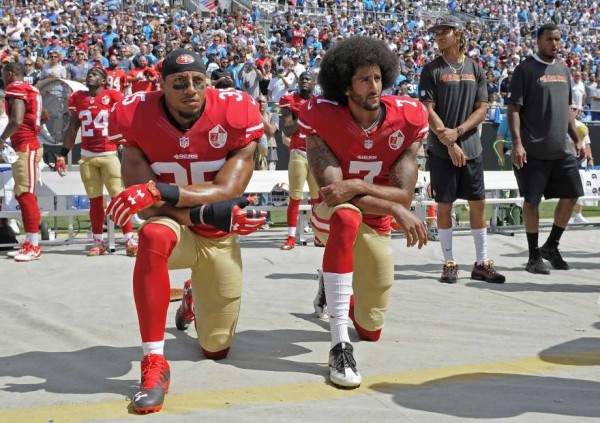
San Francisco 49ers' Colin Kaepernick and Eric Reid kneel during the national anthem. Mike McCarn, Associated Press.
San Francisco 49ers’ Colin Kaepernick and Eric Reid kneel during the national anthem. Mike McCarn, Associated Press.

More and more athletes are joining the San Francisco 49ers’ Colin Kaepernick in kneeling during the “Star Spangled Banner” at the beginning of sporting events. Though this phenomenon has spurred controversy and heated exchanges, sports stars using their celebrity for civic action is not entirely new. After the police shootings of Eric Gardner, Michael Brown, Tamir Rice, and other unarmed black people, numerous members of the NBA and NFL wore hoodies that read “I Can’t Breathe,” (Eric Gardner’s last words); others entered the game while making the “Hands Up, Don’t Shoot!” gesture championed by #BlackLivesMatter. Indeed, today we are witnessing a resurgence of athlete advocacy.

A common criticism of these athletes is that “they should just stick to sports!” or that “they aren’t supposed to talk about politics!” In reality, however, athletes have been at the forefront of protests and civic action for some time now, particularly in the 1960s. TSP Editor Doug Hartmann’s popular book describes how the Civil Rights Movement provided the context for athletes to begin using their celebrity for greater causes. Similarly, Ben Carrington describes how racism has shaped the international black-athlete-experience. Colonialism and contemporary globalization have made sports a site where racism is enacted and solidified, meaning athletes have had to think about these concepts–and fight against them–for a long time.
After the Civil Rights movement, athlete protests became less common, especially as athletes expanded into areas like merchandising and marketing, which meant that they were more likely to avoid “rocking the boat” and jeopardizing their business. But because of #BlackLivesMatter and a greater national focus on police killings of unarmed black people, athletes are once again getting into the fray. As Herbert Ruffin describes, politicizing college sports has led student athletes to protest for their own rights and demands — remember the events at Ole Miss last year? Similarly, Emmett Gill describes actions (and reactions) surrounding the “Ferguson Five” — the St. Louis Rams football players who showed solidarity with protesters in Ferguson, Missouri. 

This research shows that while athlete activism is often met with criticism, it does not mean that their tactics will prove unsuccessful. If history or recent events have shown us anything, the opposite may be truer. One thing is for sure — athlete protest in the contemporary era is just warming up.

For even more readings on race, sports, and athlete activism, check out the  #ColinKaepernickSyllabus created by NewBlackMan (in Exile).
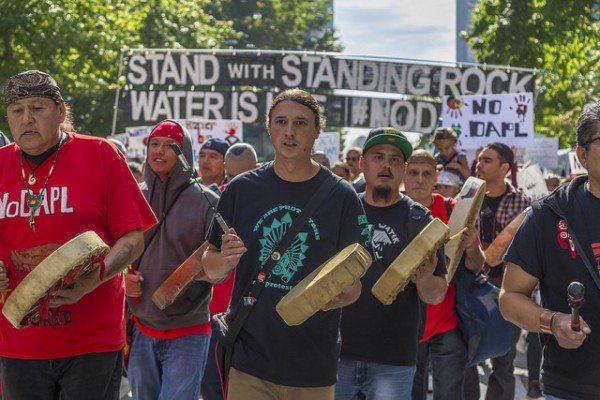
Photo by John Duffy, Flickr CC

Thousands led by Native Americans from across the country have converged on rural North Dakota over the past month to stop construction of the Dakota Access pipeline near the Standing Rock Sioux reservation. Opponents say the pipeline is a threat to culturally and spiritually sacred sites as well as vital drinking water sources. Protesters have erected an encampment and are leading daily marches to the construction site demanding that the company and federal government halt construction in order to protect water and adhere to treaties with Native American tribes.

The protest over the Dakota Access pipeline reflects the social and political tensions that often emerge around resource extraction projects and potentially hazardous infrastructure, and sociologists have been at the forefront of research and analysis. Mining development led by large multinational companies often brings social dislocation, environmental problems, and a loss of livelihoods for native communities. Yet, indigenous communities have had some success in preventing development and maintaining control over land and natural resources partially through direct action, transnational coalitions, and public campaigns against corporations.
In the U.S., Native American reservations have often been used as sites for hazardous mining and disposal of toxic waste – what scholars call “national sacrifice zones” and environmental racism. Hooks and Smith find that Native Americans struggle with environmental injustices and are more likely to live near toxic waste sites, largely because the U.S. military has used reservations and nearby land for testing and disposing of weapons.
Protest is also driven by group identities and culture. Mobilization against industrial development is shaped by historical and social differences in how people relate to the land. Indigenous philosophy, spirituality, and land claims can provide legitimacy to environmental opposition and are a source of inspiration and motivation for movement participants. This highlights the role of culture, place-based identity, and values in motivating people to participate in protest.
Environmentalists have joined the effort to stop the pipeline as part of a wider movement against fossil fuel extraction and climate change mobilization. Coalitions of environmentalists and indigenous peoples often develop in response to environmentally harmful projects, such as dams or pipelines, which have been important for generating public attention to issues of Native American rights while also building environmental movements. Protests over particular local industrial development can be used strategically by social movements to attract new participants and link people’s immediate concerns about health and safety to broader environmental issues.

There are those who contend that it does not benefit African Americans… to get them into the University of Texas where they do not do well, as opposed to having them go to a less­ advanced school… a slower-track school where they do well.

During oral arguments for Fisher v. University of Texas-Austin (in which the Supreme Court just upheld UT Austin’s use of race in their admissions policies), Justice Antonin Scalia’s comments caused quite an uproar. Did a member of the Supreme Court actually say that African Americans aren’t capable of success at competitive colleges? He was drawing from the so-called “mismatch hypothesis,” which suggests that affirmative action places people into positions they can’t handle—that is, that affirmative action could hurt African Americans by placing them in schools where they may not succeed or from which they may not graduate.

A significant amount of academic work debunks “mismatch theory,” deeming it both wrong and “paternalistic.”

Fischer and Massey use the National Longitudinal Survey of Freshman to analyze college outcomes and test the mismatch hypothesis; they find no evidence in its favor. Alon and Tienda use two different longitudinal datasets to run similar analyses, again finding no proof that ethnic minority students fare badly in advanced institutions. Replication results have been consistent over time; Kurlaender and Grodsky piece, for instance, find that students placed in programs considered “out of their league” performed just as well as those in less demanding programs.
In a twist, scholars find that affirmative action may place a different group of people in schools for which they are not equipped. In many schools, particularly prestigious ones, “legacy” students—whose family members graduated from the same school—benefit from affirmative action in admissions. Bowen and Bok show this has disproportionately affected white students, and Massey and Mooney show that legacy students earn lower grades than their peers and have lower graduation rates. If affirmative action is doing a disservice to some students, it is not in the way Justice Scalia suggested.
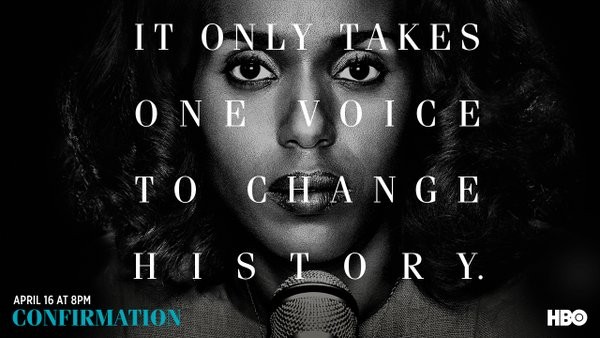
Actress Kerry Washington portrays Anita Hill in an ad for "Confirmation."
Actress Kerry Washington portrays Anita Hill in an ad for “Confirmation.”

In April, HBO premiered “Confirmation,” the story of Supreme Court Justice Clarence Thomas’s 1991 confirmation hearings. In those hearings, a former colleague, lawyer Anita Hill, testified about the ongoing sexual harassment she endured while working for Thomas. HBO’s film, some 25 years after the hearings that Thomas famously called a “high-tech lynching,” reminds us of the murky waters women must drudge through when facing and reporting sexual harassment—as well as how complicated the intersections of race, gender, law, and work can be.

Hill testified that Thomas sexually harassed her as her supervisor at the Department of Education and the EEOC. Various studies find that at least 40% of all women report experiencing sexual harassment at work during some point of their lives. Women of color experience higher rates of both sexual and ethnic workplace harassment.
Hill testified that she continued working for Thomas despite the ongoing harassment because she had no other job alternatives. This is unsurprising given that women in law professions encounter a glass ceiling that limits upward mobility, often pushing women to pursue a limited track of jobs when seeking promotions. Further, women in law professions report hearing sexist jokes, having their authority questioned, and being complimented on looks rather than achievements—all at higher rates than their male colleagues.
Even women in power are subject to sexual harassment. One study finds that sexual harassment can actually increase when some women occupy supervisory positions. Sexual harassment has much more to do with power than simple workplace hierarchies.
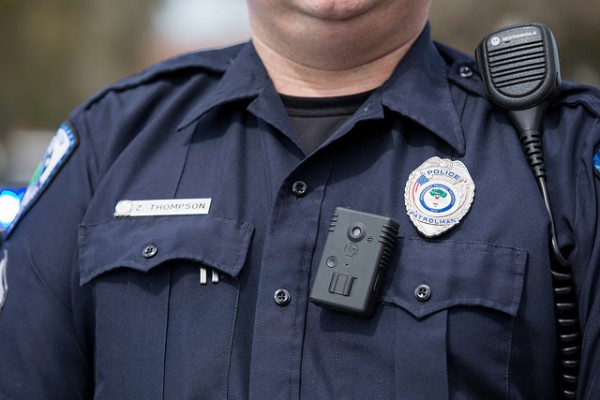
An officer wears a body camera in North Charleston, NC. Photo by Ryan Johnson, Flickr CC.

The issue of police brutality has long been a problem in U.S. criminal justice. Police-worn body cameras are one potential “remedy” to these violent encounters, but they have both benefits and drawbacks.

The cameras may increase transparency and improve police legitimacy, promote legally compliant behavior among both police officers and citizens, enhance evidence quality that can improve resulting legal proceedings, and deter officers’ use-of-force. Conversely, body-worn cameras could create privacy concerns for the officer and the citizenry and place a large logistical and financial burden on already cash-strapped law enforcement agencies.
This issue is so timely that research is only now starting to see publication, but we do have some early insights. The first observational studies examining the use of police-worn body cameras were carried out in England and Scotland. They found rates of citizen complaints dropped after body cameras were introduced. Preliminary results from an experimental study in Phoenix, Arizona also suggest that the use of body cameras reduces both self-reported and official records of citizen complaints.
The first experimental evidence concerning use-of-force comes from a large study in the Rialto, California Police Department, and the results should encourage advocates of body cameras. The study randomly assigned particular police shifts to wear body cameras (the “treatment”). Police shifts in the treatment condition are associated with reduced use-of-force: shifts in the control condition saw roughly twice as much use-of-force as the treatment condition and citizen complaints against the police were significantly reduced in the treatment condition.
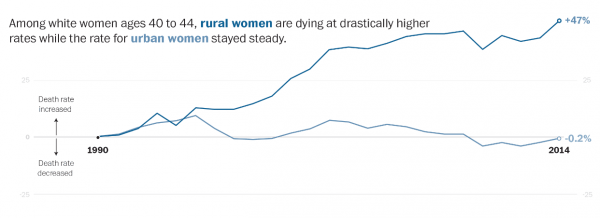
Graphic via Washington Post. Click for original and animation.

The Washington Post highlights the growing morbidity and mortality rates of rural white women. The rates of sickness and death for white women have climbed steadily over the past couple of decades, but the most dramatic increase is in rural areas. Sociologists and demographers have long investigated these trends. Poverty, stress, and timing of childbirth all matter for mortality, but the combination of these factors have stronger effects on rural, white women—surprising, because poverty confounds our typical understandings of race and inequality.

Mortality rates have decreased overall since the latter half of the 20th century, though several factors, many related to poverty and education, contribute to the increasing death rates of certain groups. Those with less education tend to have higher mortality rates and rates of heart disease and lung cancer.
Less education tends to correlate with lower socioeconomic status and difficulty finding employment. Sociologists Link and Phelan point to poverty as a “fundamental cause” of mortality and morbidity. Low socioeconomic status means difficulty is accessing resources: not only do poor people have trouble obtaining the means to maintain a healthy life, they also tend to lack the time, transportation, social networks, and money to help them recover from sickness.
Some of the health issues tied to poverty affect women more than men. Women with high stress levels are more likely than men to die from cancer-related illnesses. Other health patterns related to social class, such as the timing of childbirth, matter, too. Poorer women are more likely to have children before age 20, which correlates with increased risk of death, heart and lung disease, and cancer.
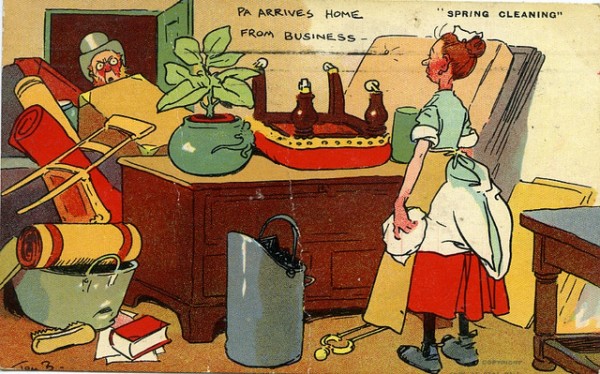
Vintage postcard via Blue Mountains Library, Flickr CC.

This is the time of year that many people throw open their windows and begin their yearly spring cleaning. Long ago, springtime cleaning had religious significance and coincided with holidays such as Passover and Easter. By the 19th century, spring cleaning had become more about practicality than piety. Particularly in places that suffered cold, wet winters, March and April were a perfect time for dusting because it was warm enough to open windows, but still too chilly for bugs to fly in the house. Ideally, the wind would help blow the dust out of the home instead of swirling it around the rooms.

The blame for a dusty shelf tends to fall on women’s shoulders because the home has traditionally been “her place” in society. Although the 1950s vision of June Cleaver has shifted and more women now participate in the labor force, women still tend to take on the bulk of the housework. Women employed outside the home have a “second shift” of cooking, cleaning, and childcare when they come home from work.
Women who work in more masculinized jobs tend to do more cooking and cleaning, and men with feminized professions engage in more “manly” tasks like yard work and auto repair to neutralize their gender-atypical occupations. Even in couples that are not comprised of a cis-man and a cis-woman, the gendered division of household labor persists. In couples consisting of trans*-men and cis-women, the women end up taking on the “Cinderella roles,” which they often link to personal preference rather than socialization or gender roles.
And what of the sociological significance of dust? A dusty book can show a lack of interest in the material, and the old adage “cleanliness is next to godliness” speaks to the moral implications of a dust-free, spotless home. Dust and dirt are out of place in the well-tended home, and their presence highlights a lack of control over the environment. Additionally, a lack of cleanliness has long served as a social indicator of moral disorder in Western Culture, acting as rallying point of social solidarity over what is socially acceptable.
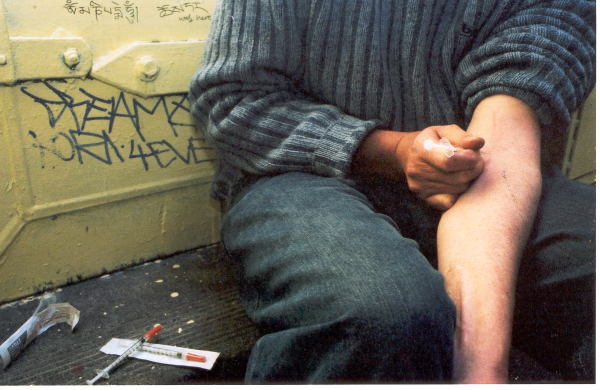
Urban Seed, an Australian organization, considers harm reduction programs part of their mission to help disadvantaged communities. Flickr CC.

The mayor of Ithaca, New York recently proposed a facility for people to use heroin and other injected drugs safely. It’s part of a larger plan to focus on prevention and treatment of drug use, and the facility’s trained medical staff would provide clean needles, referrals to treatment programs, and naloxone, an opioid overdose antidote. Today’s opioid epidemic—which kills an estimated 78 Americans every day—has shocked many, given that other forms of illicit drug use have generally declined in prevalence and mortality during recent decades. Ithaca’s plan falls under the umbrella of “harm reduction” approaches, which attempt to mitigate personal and societal harm from drug and alcohol use. Social science shows us how and why these programs work.

Supervised injection facilities are relatively recent, originating in the Dutch and Swiss harm reduction movements of the 1970s and ‘80s. The first site in North America opened in Vancouver in 2003 and is linked to drastic declines in public injection and overdose deaths. Today a number of supervised drug consumption rooms operate throughout northern Europe, Canada, and Australia. Ithaca’s would be the first in the U.S.
Substance use was once a popular element of social events, like election day, but by the 20th century, “drug scares” stigmatized drug use, associating it with racial stereotypes, immigration, and crime. Smoking opium was first outlawed in the U.S. in the 1870s, for instance, as a result of anti-Chinese sentiments in California. Non-smoking opioid use remained popular among the white middle class—for supposed medical reasons, but by the turn of the century though, users who preferred injection became the stigmatized face of opiate addiction.
Stigma remains a critical issue in drug treatment, preventing users from accessing clean injection tools, uncontaminated opiates, information about safe injection practices, and life-saving overdose antidotes. Harm reduction efforts, like needle exchanges, have the potential to restore self-respect and autonomy to populations generally believed to lack these characteristics. Programs that provide work to formerly incarcerated individuals who have undergone drug treatment has been shown to reduce certain crimes, like robberies. Harm reduction communities also offer a space for drug users to empathize with and support each other, creating networks that bolster success.
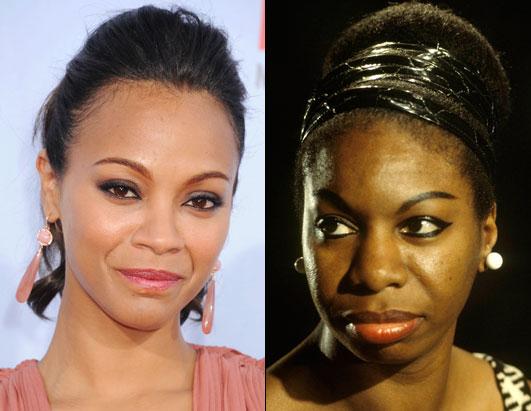
Zoe Saldana, left, and Nine Simone, right. Image via ABC News Entertainment.

Zoe Saldana’s portrayal of singer and activist Nina Simone in an upcoming biopic has proven controversial, even before the film’s premiere. In press photos, Saldana, a light-skinned woman of color, is clearly wearing dark makeup and a prosthetic nose to appear more like the late singer. Some argue using “blackface” in order to cast Saldana is particularly troubling considering Nina Simone’s own life-long dedication to encouraging the acceptance and embrace of dark skin tones. It also ignores the realities of colorism, which reproduces social inequalities and hierarchies among people of color.

Several studies address the benefits that accrue to light-skinned women. Employers, for example, often evaluate women applicants on physical attractiveness, regardless of job skills. This includes privileging physical features that suggest lighter-skinned women are friendlier and more intelligent. Lighter skin tones also make their female bearers more likely to marry spouses with higher incomes, report less perceived job discrimination, and earn a higher income. In schools, studies find that teachers expect their lighter-skinned students to display better behavior and higher intelligence than their darker peers, and public health research shows lower rates of mental and physical health problems among lighter-skinned blacks.
Colorism may provide socioeconomic, educational, and health benefits to light-skinned women, but it also challenges their identity as black women. Other blacks may perceive them as not “black enough,” assuming that they are more assimilated into white culture and lack awareness of black struggles. Those with lighter skin may feel isolated as members of their ethic group openly question their authenticity and belonging.
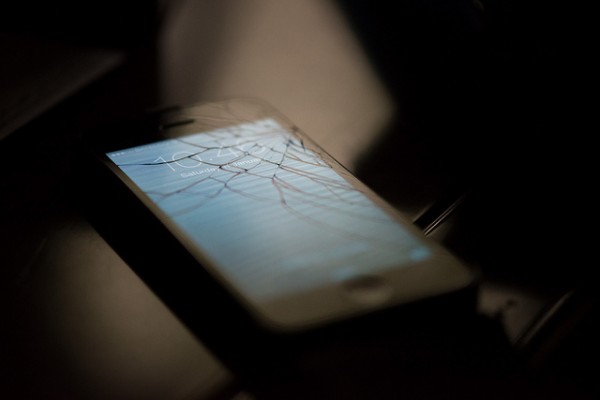
Photo by Faris Algosaibi, Flickr CC. https://flic.kr/p/j7hLsu
Photo by Faris Algosaibi, Flickr CC.

The FBI now says they may not need Apple’s help to break into a terrorist’s iPhone, but for months they have insisted Apple’s programmers must write a program enabling them to bypass security on this and other Apple devices. The demand raised questions about security and surveillance in a time of rapid technological change. Apple’s refusal to comply stemmed from both a philosophical stance on privacy and concerns that such a program could easily be exploited. The company and its programmers further argued that code should be covered by free speech protections—no one can be forced to write code against their will. Sociological research shows how assumptions about the objectivity of computer code work against arguments like Apple’s and how these assumptions are often used to legitimize the policing of already marginalized populations.

Apple’s concerns about controlling how and when a “break-in” program gets used are valid. Not only can it fall into the hands of hackers and the like, technologies like this can be used by law enforcement to maintain social inequalities and reinforce harmful stereotypes. Sociologists show how computer code and surveillance technologies are not value-neutral, but are instead composed of the values and opinions of those who write and use them. The result is that the police often use these presumably objective technologies to justify intrusive policing of the already at-risk.
From this perspective, it becomes easier to understand code as speech. Codes are the expression, intentional or otherwise, of the values and beliefs of the programmer. What makes code in some ways more powerful than speech is that it is also highly functional. Jennifer Peterson explains that code is at once the writing of a program as well as the program’s execution—it is both expressive and functional—but the legal system overlooks the functional capacity of code as speech and the ways that it can be used to protest, dissent, and discriminate.

And for a great read on surveilling sociologists, check out Stalking the Sociological Imagination: J. Edgar Hoover’s FBI Surveillance of American Sociology by Mike Forrest Keen.