Search results for embed

This 48-second ad is a fantastic example of framing, as well as a super-ridiculous blast-from-the-past.  Paid for by the movie theater industry, the ad attacks the idea of cable.  Cable, of course, was going to deliver more content to television sets and potentially compete for the business movie theaters enjoyed. So they frame cable as “pay tv” and counterpose it to “free tv.”  They don’t, you might notice, frame cable as “pay tv” and the movie theaters as “pay movies” because that comparison is not as useful for them.  Instead, without drawing attention to the fact that they charge for entertainment, they try to delegitimate the idea of paying for on-screen entertainment at home.

They also try to argue that cable tv will bring scary monsters into your living room.  So cute.  In an era where millions of instances of pornifed violence are just a click away, it is almost incomprehensible to imagine wanting to make sure that scary movies stayed at the theater.

Via BoingBoing.

Lisa Wade, PhD is an Associate Professor at Tulane University. She is the author of American Hookup, a book about college sexual culture; a textbook about gender; and a forthcoming introductory text: Terrible Magnificent Sociology. You can follow her on Twitter and Instagram.

Technically yesterday was tax day, but since it fell on a weekend and today is a holiday in Washington, D.C. (Emancipation Day), Americans actually got two extra days to file. Whether you’re already done or are wildly rushing to finish up, you might enjoy this short video by political economist Robert Reich, explaining how the concentration of wealth, and the ability of the very wealthy to redesign the tax code to their advantage have affected the overall economy:

Via The Sociology Cinema.

Cross-posted from cyborgology.

On February 26, 2012, Trayvon Martin, an unarmed Black high school student, was shot and killed by George Zimmerman, a White Hispanic neighborhood watch captain. The case has become a symbolic battleground. Artist Israel McCloud was inspired to paint a mural in his honor in Houston.

As Jessie Daniels points out at Racism Review, battles over racism have shifted into the realm of social media, where digital and physical race relations persist in an augmented relationship. We see this in both anti-racist discourses and the racial smear campaigns surrounding the Martin/Zimmerman case.

Although it is important to expose the overtly racist tactics utilized by some of Zimmerman’s defenders, I want to talk about a more subtle, and so perhaps more problematic, form of racial discourse. A prominent strategy of protest arising from the left may inadvertently perpetuate, rather than challenge, racial hierarchies in their most dehumanizing form.

This tactic has made the rounds on my own Facebook Newsfeed, and is one in which I, prior to more critical thought, actively participated:  the creation of images and texts that couple Black bodies with prestigious social positions and ask viewers to problematize racialized assumptions that often lead to faulty first impressions—which in turn lead to physical danger for the racialized subject. This tactic comes in two forms: political memes and case examples.

The memes, such as the one pictured below, are direct and general. They argue that Black bodies are assumed dangerous unless proven otherwise. This meme warns us that we might treat a doctor as a criminal purely based on skin color:

 I (regretfully) posted this meme to my own Facebook wall. Rather than delete the meme, I added this post to the comment thread as a public declaration of my error.

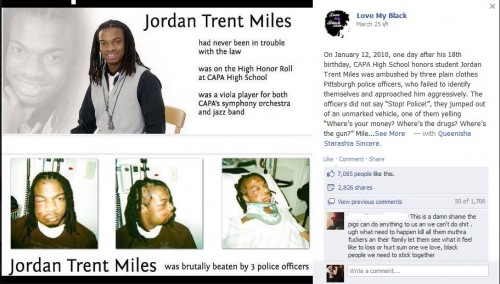
The case examples are more in depth, but accomplish a similar task. They picture a clean-cut, Black male body. They list his credentials, and then tell of his physical abuse at the hands of scared, racist White authority figures:

Copied from my Facebook Newsfeed.

 Activists strategically link these memes and cases to Trayvon Martin’s story, highlighting his clean record and child-like face. This protest tactic honors Martin (and other Black boys and men who have been hurt because of a racist culture) and spotlights the problematic racialized lens within which Americans largely operate.

Both forms of this protest tactic tell an empirically accurate story. Simultaneously, however, they are gross oversimplifications that perpetuate oppressive hierarchies that lie at the intersection of race and class. They work to differentiate the “good” from the “bad” kind of racial minority—and imply that the life of the former is more valuable.

We are warned that our racial assumptions may lead to the wrongful and tragic harm of a “good” racial minority—reinforcing the devaluation of poor, under-educated, over-policed and under-protected people of color. Indeed, as the left fights accusations that Trayvon Martin sold drugs, we forget to ask: “SO WHAT IF HE DID?!” Would he somehow be less human? Would his murder be less atrocious? As the left justifiably decries the accusative investigations into Trayvon’s life, some protest tactics effectively present the opposite side of the same coin.

The empirical reality of Blackness in America is that it often intersects with poverty, which in turn, intersects with crime. A poor Black man with a criminal record is an artifact of a deeply embedded racial system. The memes and case examples discussed above perpetuate the devaluation of the Poor Black subject, marginalizing him against those who are upwardly mobile. In utilizing this protest tactic we fail to address the grittier realities of race in America that led George Zimmerman to perceive an anonymous, unarmed Black boy as a threat. We not only ignore these realities, but become naively complicit in their reproduction.

—————

Jenny Davis is a doctoral candidate in the Department of Sociology at Texas A&M University. She studies self, identity, and human-technology interaction. She blogs for cyborgology.org. Follow Jenny on Twitter @Jup83

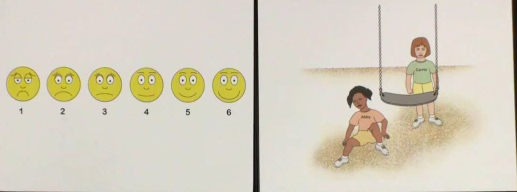
Anderson Cooper 360 posted a video based on a study they sponsored of kids’ perceptions of race and friendships. The results are not surprising: kids pick up on larger social patterns, such as the fact that the adults around them often have few significant friendships across racial lines, and struggle to make sense of what they see. By age 6 they are highly aware of race and have formed clear ideas about how adults feel about people of other races than their own. Moreover, they’ve internalized cultural messages about race. As the clip shows, the race of the children themselves, as well as the race of children in images they are shown, impacts how they interpret the events in the pictures, with White children attributing more negative behaviors to African Americans in the photos:

Also check out Anderson Cooper’s earlier segments on children’s attitudes about skin color.

Laura McD. sent in an extra-disturbing sexist ad from Turkey. The ad, for Biomen shampoo, uses the ever-so-common marketing tactic of shaming men for any association with femininity. The voiceover says:

If you’re not wearing women’s clothes, you shouldn’t be using women’s shampoo either. Here it is. A real man’s shampoo. Biomen. Real men use Biomen.

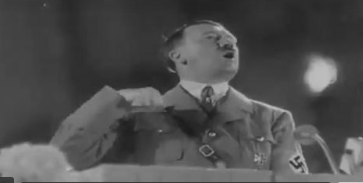
So far, so predictable. But this ad has drawn intense criticism because the exhortation to avoid girly stuff is recorded over historical footage of Adolf Hitler:

Via AdWeek.

According to Adland, it was still airing as of a couple of days ago, despite complaints from Turkey’s Jewish community and other groups, but JTA reports it was finally pulled.

W.W. Norton released a couple two-minute interviews in which I talk about hook up culture, part of their collection of academics talking about their research.

In the first clip, I discuss the difference between hooking up and a hook up “culture.”  In the second, I respond to the concern that there is something “wrong” with casual sex on college campuses.  There is something wrong, I argue, but it’s not unique to casual sex. Instead, the problems students face on campus — heterosexism, gender inequality, and a relentless pressure to be “hot” — don’t go away with graduation.

In that sense, for better or worse, college is a “functional training ground” for the friendships, marriages, workplace interactions, and other types relationships that students will encounter after college; social inequalities threaten the health of all of these relationships.  Instead of shaking our fingers at college students, then, we should recognize that the acute problems we see on campuses are symptoms of the ills that characterize our wider sexual culture as well.

I’m speaking about hook up culture at Harvard and Dartmouth this week. If you’re in the area, please come by and say “hello!”

  • Monday, Mar. 26th at 8:00pm: “Sex Lives and Sex Lies: Hooking Up on Campus” (Harvard University, Science Center D)
  • Wednesday, Mar. 28th at 7:30pm: “Sex Machines vs. Sex Objects: How Stereotypes Subvert Sexual Pleasure” (Harvard University, Fong Auditorium)
  • Thursday, Mar. 29th at 4:30pm: “The Promise & Perils of the Hook-Up Culture”  (Dartmouth University, Rockefeller Center “Rocky” 2)

Lisa Wade, PhD is an Associate Professor at Tulane University. She is the author of American Hookup, a book about college sexual culture; a textbook about gender; and a forthcoming introductory text: Terrible Magnificent Sociology. You can follow her on Twitter and Instagram.
In “Just Walk on By: A Black Man Ponders His Ability to Alter Public Space,” author Brent Staples recounts his realization, in his early 20s, that his mere presence in public often made others uncomfortable or outright fearful, a fact they were not hesitant to make clear. Staples points out that while he poses no threat to  those around him, others’ fear of him — including an instance in which he was assumed to be a robber when visiting his editor’s office to drop of a story and was chased by security — puts him in potential danger:

…I soon gathered that being perceived as dangerous is a hazard in itself. I only needed to turn a corner into a dicey situation, or crowd some frightened, armed person in a foyer somewhere, or make an errant move after being pulled over by a policeman. Where fear and weapons meet—and they often do in urban America—there is always the possibility of death.

I thought of Staples’s essay as soon as I heard about the Trayvon Martin case, and particularly after Fox News ran a segment in which Geraldo Rivera basically blames Trayvon himself for wearing a hoodie:

Rivera removes the focus from the man who shot an unarmed teen and places it instead on what the teen should have done to not get shot. Yes, yes, people shouldn’t shoot unarmed minority teens, but Trayvon’s choice of clothing was, according to Rivera, equally responsible for the shooting. He normalizes prejudice and stereotypes — it’s just normal for people to cross the street when they see a Black or Latino youth in a hoodie on the street. Trayvon should not have “allowed” himself to be seen as a criminal — as though he could individually ensure racial stereotypes and prejudices were not applied to him.

Rivera argues that Trayvon Martin wouldn’t have been shot if he hadn’t been wearing a hoodie. But Staples’s experiences undermine this reasoning; he presumably wasn’t wearing a hoodie the many different times he was taken for a criminal or treated like a threat while trying to carry out his role as a professional reporter. Merely being African American was sufficient to make him scary, as it was enough to make Trayvon Martin “suspicious” to George Zimmerman, and it’s unlikely a cardigan instead of a hoodie would have changed the situation.

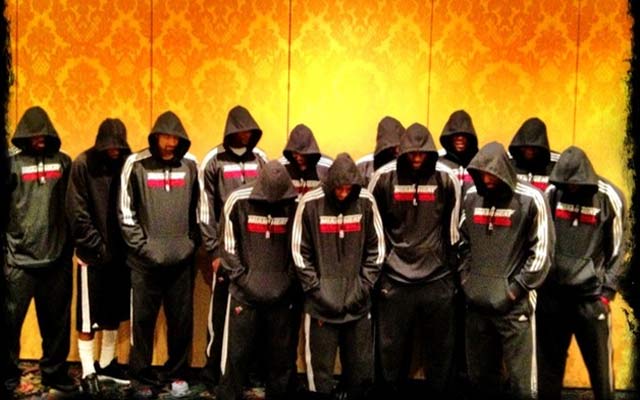
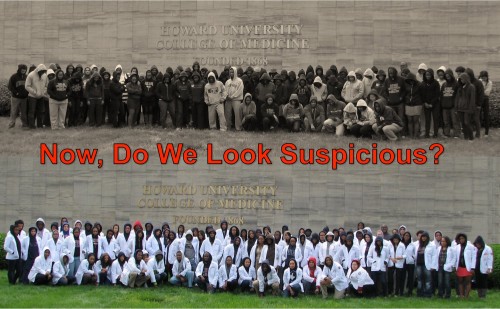
In support of Trayvon Martin, LeBron James tweeted a photo of Miami Heat players in hoodies:

A while back I posted about a Pew study looking at long-term unemployment. About a third of those currently out of work have been unemployed for a year or longer.

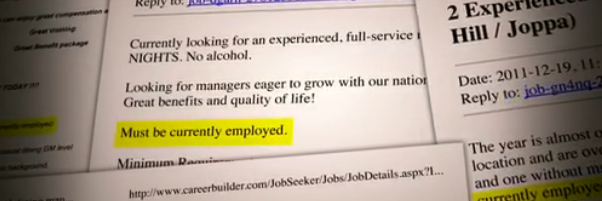
That makes a recent video released by 60 Minutes Overtime particularly striking. The reporters discuss evidence of discrimination against the long-term unemployed, with employers particularly unwilling to hire those who have been out of a job for two years or more. Given the length and severity of the current recession, this leaves large numbers of jobless people facing the frustrating paradox that you often need a job to get a job, leaving them trapped: