Search results for embed

In an earlier post we reviewed research by epidemiologists Richard Wilkinson and Kate Pickett showing that income inequality contributes to a whole host of negative outcomes, including higher rates of mental illness, drug use, obesity, infant death, imprisonment, and interpersonal trust.

In the six-minute video below, Kate Pickett talks about how more equal societies are kinder to each other, give more in foreign aid, are less status-conscious, consume less, and even recycle more.  Based on this, she argues that reducing inequality within societies is a good strategy towards addressing climate change.

How to increase equality? It turns out there are lots of options.

See Dr. Pickett making similar arguments as to why raising the average national income in developed countries doesn’t make people happier or enable them to live longerwhy unequal societies are more violent, and how status inequality increases stress.

And see more about income inequality and national well-being at Equality Trust.

Lisa Wade, PhD is an Associate Professor at Tulane University. She is the author of American Hookup, a book about college sexual culture; a textbook about gender; and a forthcoming introductory text: Terrible Magnificent Sociology. You can follow her on Twitter and Instagram.

This morning NPR had a segment on the history of the U.S. income tax. A federal income tax was first introduced during the Civil War to make up for lost tariffs due to blocked ports and sunk ships. However, in 1895 the Supreme Court declared the income tax unconstitutional. In 1913, the states ratified the Sixteenth Amendment to the Constitution:

The Congress shall have power to lay and collect taxes on incomes, from whatever source derived, without apportionment among the several States, and without regard to any census or enumeration.

For a couple of decades, only the wealthy paid income tax. However, war — in this case, World War II — once again increased the need for taxes. The government had to convince a larger portion of the population to pay income tax. The Treasuring Department and Disney produced “The New Spirit,” a short film featuring Donald Duck. The film presented paying taxes as patriotic and essential to the war effort, and helped normalize the income tax for all workers:

For another example of World War II-era Disney propaganda in support of particular government policies, see our earlier post on Victory through Air Power, which justified bombing civilian targets.

Gwen Sharp is an associate professor of sociology at Nevada State College. You can follow her on Twitter at @gwensharpnv.

A couple of years ago I posted a segment from the PBS series Faces of America focusing on the legal efforts by Syrian immigrants in the late 1800s and early 1900s to be officially recognized as White (and thus eligible for naturalized citizenship). It nicely illustrates the social construction of race and ethnicity, and the way  power struggles are embedded in the categories we recognize and who is assigned to each one.

In Not Quite White: Arabs, Slavs, and the Contours of Contested Whiteness, directors Jamil Khoury and Stephen Combs integrated scenes from Khoury’s play WASP: White Arab Slovak Pole and interviews with scholars from the Arab American and Polish American communities to “reflect upon contested and probationary categories of whiteness and the use of anti-Black racism as a ‘whitening’ dye.”

Thanks to Katrin for the link!

Hennessy Youngman is one of things-on-the-internetz that validates the entire enterprise. In the fast and fascinating 10 minute clip here, Youngman traces the history of performance art, linking it to Occupy and our contemporary engagement with the internet. Oh, and totally worth watching to the end.

(Hennessy, if you’re reading, I was the one that tweeted at you to do a video about The Levitated Mass.  Nobody could do it quite like you! PS – whisky is my drink too.)

Also from Hennessy Youngman:

Lisa Wade, PhD is an Associate Professor at Tulane University. She is the author of American Hookup, a book about college sexual culture; a textbook about gender; and a forthcoming introductory text: Terrible Magnificent Sociology. You can follow her on Twitter and Instagram.

A recent post on Boing Boing discussed the newly discovered “rules for jazz performers during the Nazi occupation.”  Jewish and Black people — two groups targeted by the Nazis — were also the primary innovators of jazz music. But even as the German state denigrated jazz, jazz musicians, and swing dancers, Nazi soldiers loved jazz!  How to handle such a contradiction? Rules for playing jazz music: no “Jewishy gloomy lyrics,”  no “Negroid excesses in tempo,” and no “hysterical rhythmic reverses characteristic of the barbarian races.”  

It’s well worth a look, as is this post from 2010 explaining how many groups vilified by Nazis survived the Holocaust by playing jazz for Nazi soldiers…

————————–

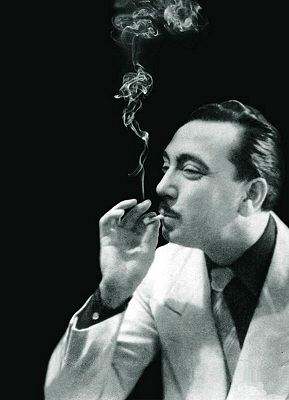
I have a favorite historical musician: Django Reinhardt.

Reinhardt was a Roma jazz musician. During World War II both Roma and jazz musicians were targeted by the Nazi regime. Over a million Roma were exterminated for presumed racial inferiority and jazz was believed to combine the worst of Blacks and Jews (i.e., “musical race defilement”). Just listening to a jazz record could get you sent to a concentration camp.

Reinhardt, however, enjoyed the most lucrative period of his career during the war, while living and playing openly among Nazi soldiers.

How?

Reinhardt biographer Michael Dregni, recently interviewed by NPR, explained:

The Germans used Paris basically as their rest-and-relaxation center, and when the soldiers came, they wanted wine and women and song. And to many of them, jazz was the popular music, and Django was the most famous jazz musician in Paris… And it was really a golden age of swing in Paris, with these [Romas] living kind of this grand irony.

Reinhardt, then, survived because the Nazis loved jazz music, even as Hitler censored the music and, on his orders, people who dared to listen to, dance to, or play it were encamped and members of the groups who invented it were murdered.  Irony indeed.

For more on Reinhardt, jazz, and World War II, here is a clip from a documentary on Reinhardt’s remarkable talent, career, and luck:

—————————

UPDATE: A commenter, Bernardo Soares, offered an interesting critique/clarification in the thread.  Here’s part of what he had to say:

…I think it is grossly misleading to write that Reinhardt “enjoyed the most lucrative period of his career during the war”. He enjoyed the protection of some individuals in the German occupation force. This is not so unusual — the composer Richard Strauss who headed the Reichsmusikkammer used his influence to protect some Jewish composers. But as many other examples show, this was extremely precarious. As long as these individuals had the power to protect him, he was probably relatively safe, but he could still be shot by any soldier at a whim or be accidentally included in a deportation action. Also, these individuals could lose their power, or some higher-ranking officer could order him to be deported. Reinhardt tried several times to escape occupied France.

[Also] …the whole issue of music and art politics in the Third Reich is much more complex than stated in the video. The Reichsmusikkammer (Reich Music Chamber) was not the only institution regulating music politics. As with many other bureaucratic institutions in the Third Reich, several agencies struggled for influence and power. This means that music politics was often contradictory, and the absence of a clear regulation as stated in the video opened the door for arbitrary measures – again emphasizing the precarious situation of musicians. The competition and struggle for power between different agencies led to a radicalisation of racial and cultural politics, and this was even taken further in the occupied countries.

I do love this topic.  I also have a post on racial borrowing and lindy hop, the dance that made me love Django.  A paper I wrote about gender and lindy hop can be found in the journal Ethnography. And I have a talk based on the paper that I love to give in theory classes.

Lisa Wade, PhD is an Associate Professor at Tulane University. She is the author of American Hookup, a book about college sexual culture; a textbook about gender; and a forthcoming introductory text: Terrible Magnificent Sociology. You can follow her on Twitter and Instagram.
Behold, I present to you a video parody of Lady Gaga’s “Bad Romance,” rewritten as “Bad Romance: Women’s Suffrage,” an account of the fight to get voting rights for women in the U.S.:

I just wanted you to know that this exists.

Lyrics and info available here. Thanks to Kristina Killgrove for the tip!

Gwen Sharp is an associate professor of sociology at Nevada State College. You can follow her on Twitter at @gwensharpnv.

In a wonderful example of the social construction of time, there was no Friday, December 30th, 2011 in Samoa (NPR).

The country decided to move from one side of the International Dateline to the other.  The move, accomplished by skipping forward 24 hours, will allow it to align its week with its largest trading partners: Australia, New Zealand, China and Tonga.  Many business leaders were thrilled at the switch.

Thanks to sociologist Dan Hirschman for the tip!  Also in the social construction of time: Social Construction, Deviance, and Daylight Savings.

Lisa Wade, PhD is an Associate Professor at Tulane University. She is the author of American Hookup, a book about college sexual culture; a textbook about gender; and a forthcoming introductory text: Terrible Magnificent Sociology. You can follow her on Twitter and Instagram.

Earlier this year we uncritically posted a spoken word poetry performance about prejudice against short men.  Geoffrey Arnold, who uses his blog, The Social Complex, to highlight heightism, had this to say about our tacit approval…

—————————

I’ve gotten some e-mails and criticism lately for an entry on this blog which was recently featured on the Sociological Images website.  In this entry, I posted a video of a Def Poetry Slam entitled “Death From Below” and asked the rhetorical question whether the video depicted “Short guys making fools of themselves?  Or poetry with a message, delivered through humor?”  I should have elaborated further, but I neglected to at the time.

The problem with Dan Sully & Tim Staffor’s poetry slam about being short is that it does not clearly convey the message that heightism is wrong.  In fact, as one commenter put it, the pair seem only to perpetuate numerous false stereotypes about short men.  Quite simply, the commentary which may underline their performance is too subtle for a general audience.  Instead of standing up for those who are the targets of height bigotry, it seems to me that these two are basically playing the role of the short male buffoon.  They are humiliating themselves and their bodies for the entertainment of others.  Any point which they are trying to make (and I’m not so sure that there is a point here) is lost in their performance.  Additionally, beyond their performance itself, some of their comments actually have the effect of supporting heightism instead of undermining it (“little man complex” as motivation for being healthy and “can’t date girls in heels people”).

Just the fact that they attempted to deliver their message through comedy is troubling when one considers that other groups rarely engage in this sort of behavior.  There is already a stigma against short men as people who are not to be taken seriously and so it doesn’t help when a short man publicly presents his body as a target for ridicule.

—————————

Geoffrey Arnold is an associate with a mid-sized corporate law firm’s Business Litigation Practice Group.  When Geoffrey isn’t chasing Billable Hours in the defense of white-collar criminals, he is most likely writing about social justice with a special emphasis on height discrimination at his blog: The Social Complex.  See also Geoffrey’s guest post introducing the concept of heightism as a gendered prejudice.