Search results for embed

YetAnotherGirl sent us a link to a post at Jezebel about a sign MarketFair Mall, in New Jersey, put up (and then took down after criticism and a petition) to apologize for any inconvenience some remodeling might cause:

The sign does a couple of things. It normalizes the idea that the type of verbal harassment women often face when in public (see my post from a couple of years ago for a personal example) is, in fact, the natural outcome of how women look. Rather than feeling harassed, women should interpret such comments as the compliments they really are. Yes, yes, we can shake our heads and act annoyed, but isn’t it ultimately nice to know we look good?

The sign also reinforces a certain view of working-class masculinity, one in which working-class men are crude and lacking in basic civility, unable or unwilling to control how they express themselves, a fact that everyone else may find a bit irritating but should ultimately shrug off with a bit of a smile.

This view of working-class masculinity is reinforced in a Dutch commercial sent in by Sarah van B. The commercial is for Gamma, a chain of hardware stores in the Netherlands. In it, boys build houses out of Legos, displaying various stereotypes of rough, brutish masculinity: lack of middle-class manners (burping, nose-picking), uncontrolled bodies (belly hanging out, visible butt crack), and group harassment of women:

Sarah translates the call to the woman as “Where are those pretty little legs going?”

Such depictions normalize the harassment of women while also associating it with a general lack of sophistication, something that only the lower classes would engage in. They encourage the audience to laugh at the men who do so, finding humor in their brutish antics, but also reinforce the idea that women should just expect this type of behavior from the type of men who do manual labor.

The term glocalization — a combination of globalization and local — refers to the tendency of globalizing processes to have to adapt to local peculiarities.  McDonalds is a great example.  It’s a brand recognized around the world, but it responds to local tastes in developing its menu.  So, you can buy a McItaly burger, a Maharaja Mac in India, a McLobster in Canada, and an Ebi Filit-O with Seaweed Shaker fries in Japan (source).

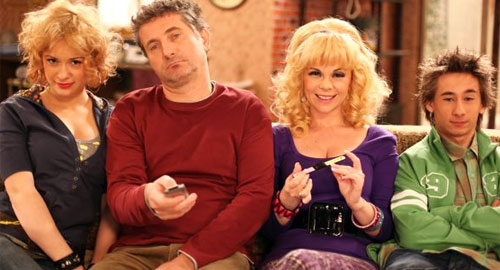
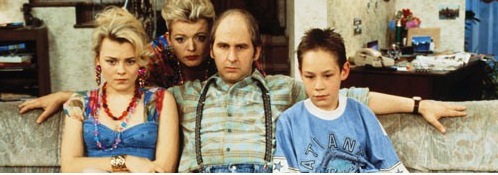
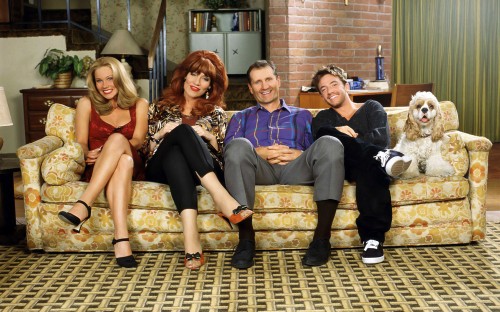
I thought of the concept of glocalization when I came across a set of publicity photos for TV programs in 13 different countries, all modeled after America’s Married with Children.  Each has its own flavor (e.g., the parrot replacing the dog in Chile) and I imagine if we were able to watch them all we’d see great examples of the phenomenon.

The original:

Bulgaria:

Chile:

Croatia:

Germany:

More examples at Neatorama.

UPDATE: Dmitriy T.C. sent me this trailer for a movie called Exporting Raymond, about making a Russian version of Everybody Loves Raymond. It’s along the same theme and looks quite good:

Lisa Wade, PhD is an Associate Professor at Tulane University. She is the author of American Hookup, a book about college sexual culture; a textbook about gender; and a forthcoming introductory text: Terrible Magnificent Sociology. You can follow her on Twitter and Instagram.

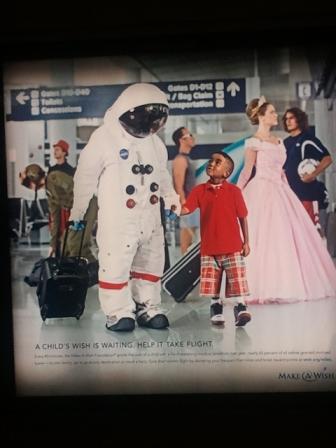
I snapped this photograph of a Make a Wish Foundation advertisement at the Los Angeles International Airport.  The organization aims to grant wishes to children with life-threatening medical conditions.

Unfortunately, in this advertisement, they pigeonhole girls into the princess role.  There are five adult males in the ad with the little boy: a soccer player, a surfer, a soldier, a man in a red hat (?), and an astronaut (I’m assuming people imagine there is a man in that space suit). There is one female, and she looks to be a princess.  (Or maybe that’s supposed to be an option for the little boy in the ad? Somehow I don’t think so.)

Meanwhile, Aisha C. sent in this March of Dimes promotion, called “I’m Born To…”  It portrays children, each given a supposedly natural talent (hence, “I’m born to…”).  Each child, though, is attributed a gender stereotypical talent and future:

Lisa Wade, PhD is an Associate Professor at Tulane University. She is the author of American Hookup, a book about college sexual culture; a textbook about gender; and a forthcoming introductory text: Terrible Magnificent Sociology. You can follow her on Twitter and Instagram.

Cross-posted at Ms.

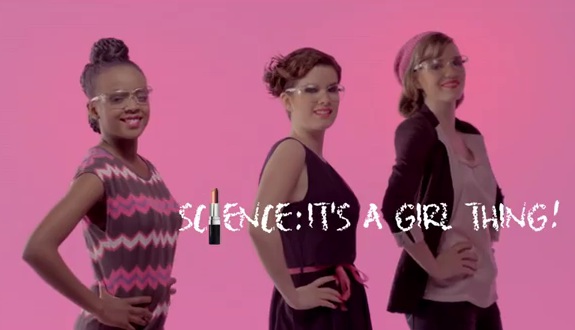
Paul (an Irish grad student), Carys G., Zeynep A., Marjan vdW., and one other reader all sent in a link to a new video released by the European Commission. The video, “Science: It’s a Girl Thing!”, is meant to encourage girls to consider careers in the natural and physical sciences, presenting science, as the title suggests, as an area compatible with femininity and other “girl things” — make-up, high heels, and fashion:

The video has been roundly criticized (check out the Twitter feed for #sciencegirlthing), both for presenting a stereotyped image of girls and for misrepresenting the scientific workplace (one female scientist Tweeted wondering what will happen to any girls possibly drawn in by this campaign when they learn that in many labs, open-toed heels violate safety codes).

I suspect the makers of the video believe they are doing that first thing — trying to push back against the idea that science is unfeminine. Indeed, the video is part of the larger Science: It’s a Girl Thing! campaign, and the website also contains 12 profiles of female European scientists, which provide more realistic depictions of women working in a range of scientific fields. But many viewers, including a lot of scientists (both women and men), see it as the second thing — another example of what I described in my original post of the cartoon as “superficial attempts to overcome the often structural constraints that keep women out of masculinized arenas of social life.”

Indeed, girls don’t just need to be told “you can do science and look cute too!” In fact, a post at New Scientist discusses the results of a recently-published article by Diana Betz and Denise Sekaquaptewa, “My Fair Physicist? Feminine Math and Science Role Models Demotivate Young Girls”. Betz and Sekaquaptewa found that images of conventionally feminine women in science fields actually demotivated female middle school students and decreased their perceptions of their likelihood of success in science and math. Girls appeared to see these images and, instead of thinking “Oh, I can like makeup and clothes but still do science!”, they thought, not unreasonably, “Oh, great, so I have to be smart and still meet all the demands of conventional femininity, too?” Instead of inspiring girls, the images were threatening, making them feel less likely to succeed in science and math. This effect was most pronounced for those girls who weren’t already interested in such fields — presumably the exact group campaigns such as Science: It’s a Girl Thing! are meant to attract. As the authors conclude (p. 7), “Submitting STEM role models to Pygmalian-style makeovers…may do more harm than good.”

Gwen Sharp is an associate professor of sociology at Nevada State College. You can follow her on Twitter at @gwensharpnv.

S. Alfonzo sent us a link to the abridged version of The Codes of Gender, in which Sut Jhally, known for a number of documentaries on pop culture, analyzes current messages about masculinity and femininity in advertising, applying the ideas of Erving Goffman regarding gender and cultural performance. Definitely worth the time to watch:

The Media Education Foundation has provided a full transcript and tips for using the film in the classroom.

Solomon Asch was a social psychologist famous for his experiments in conformity.  In 1962 he collaborated with Candid Camera, a TV show, to show just how easy it is to reverse an innocuous social norm: the direction one stands in an elevator.

Does it still work?  Watch this University of South Florida replication:

Asch did many such experiments, including showing that people will agree with others when asked a simple question, even if they suspect everyone else is wrong.  The implications are obvious.  Social pressure is incredibly powerful and we’ll do things that seem pretty bizarre just to fit in.  How one stands in an elevator, of course, is a trivial matter and has almost no consequences short of feeling funny.  Imagine how much we’ll be willing to do when the consequences are even a little bit greater.

For more great social psychology: entering a theater full of bikers, doing nothing, change blindness, norm breaching, Milgram’s obedience experiment (plus the original flyer).

Lisa Wade, PhD is an Associate Professor at Tulane University. She is the author of American Hookup, a book about college sexual culture; a textbook about gender; and a forthcoming introductory text: Terrible Magnificent Sociology. You can follow her on Twitter and Instagram.

The Belgian Cancer Foundation is trying to increase awareness of skin cancer and the importance of wearing sunscreen to protect against it. Unfortunately, they’ve recently decided the best way to get this across is to fall back on a familiar message: ladies, if you don’t do what we say, you’ll be hideous and your guy won’t want you any more. In this video released as part of the campaign, ostensibly aimed at men (and sent in by YetAnotherGirl and Grace W.), guys fall asleep with their young female partners. After they fall asleep, the women sneak out of bed and their moms take their places, and we get to see the startled reactions when the men wake up, with the final warning that if men don’t make their girlfriends wear sunscreen, “she’ll start looking like her mom far too soon”:

Because you know, ladies, if you don’t wear sunscreen, you’ll age, and that makes you so gross and scary that men will fall out of bed trying to get away from you. And what could be more romantic than a boyfriend lovingly reminding his girlfriend to put on some sunscreen so she doesn’t someday totally freak him out?

Via Gawker.

On this day in 1963 the U.S. Congress passed the Equal Pay Act, a law designed to end wage discrimination against women.

How to get the word out? Advertising of course!

Thanks to Sean D. for the link!

Lisa Wade, PhD is an Associate Professor at Tulane University. She is the author of American Hookup, a book about college sexual culture; a textbook about gender; and a forthcoming introductory text: Terrible Magnificent Sociology. You can follow her on Twitter and Instagram.