Search results for The

We have an ever-growing collection of ways in which men are frequently positioned as people and women as women.  We’re always on the lookout for new examples and sociologist Nathan Palmer recently highlighted a nice observation about how this happens in language.

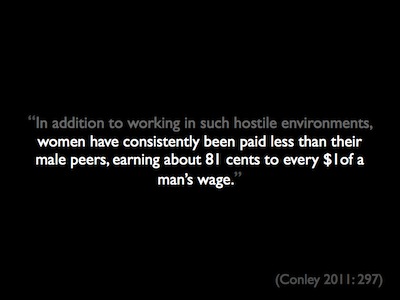
He asked readers to consider a quote from a textbook (not to single Conley out, he’s using standard language and I use it as well in my own textbook).  Here’s the quote with the relevant part in bright white:
1

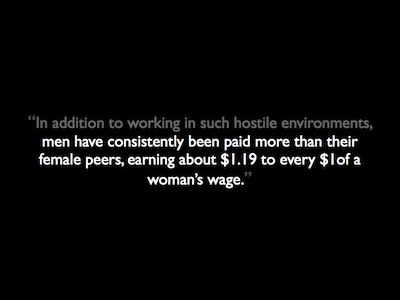
Applying an insight by sociologist Michael Kimmel, Palmer then updated the slide with slightly different language:
2

If a dollar is the amount by which all other wages should be compared, then the first sentence centers men’s experiences and positions women as a deviation from that.  The second sentence switches that around.

By switching the referent, this change in language shifts the center of the discussion from women’s disadvantage to men’s advantage.  Of course, there is both unfair disadvantage and advantage in this story, and we need to make both visible, but always talking in terms of the former makes women and their disadvantage the problem and hides the way that we need to be addressing men’s unfair advantage as well.

Lisa Wade, PhD is an Associate Professor at Tulane University. She is the author of American Hookup, a book about college sexual culture; a textbook about gender; and a forthcoming introductory text: Terrible Magnificent Sociology. You can follow her on Twitter and Instagram.
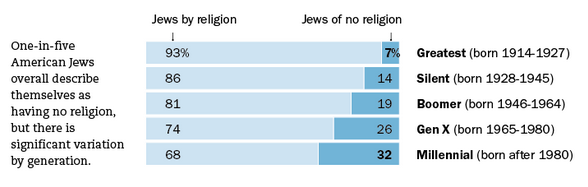
The Pew Research Center has released the data from new survey of religious and non-religious Jews.  They find that almost a quarter of Jews (22%) describe themselves as being “atheist,” “agnostic,” or “nothing in particular.”  The percentage of Jews of no religion correlates with age, such that younger generations are much more likely to be unaffiliated.  Nearly a third of Millennials with Jewish ancestry say they have no religion (32%), compared to 19% of Boomers and 7% of the Greatest Generation.

Screenshot (34)

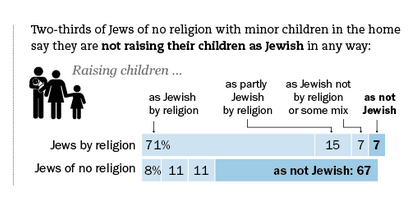
A majority of Jews with no religion marry non-Jews (79%); 67% have decided against raising their children with the religion.
Screenshot (33)As a result of intermarriage, the percent of all Jews who have only one Jewish parent is rising.  While 92% of people born between 1914 and 1927 had two Jewish parents, Millennials are as likely as not to have just had one.

Cross-posted at Pacific Standard.

Lisa Wade, PhD is an Associate Professor at Tulane University. She is the author of American Hookup, a book about college sexual culture; a textbook about gender; and a forthcoming introductory text: Terrible Magnificent Sociology. You can follow her on Twitter and Instagram.
3Thanks to a tip from Jay Livingston, I came across this quote from The Pursuit of  Loneliness by sociologist Philip Slater.  It’s long, but wow:

[I]t can’t be denied that the female ideal in America is nonaggressive and nonthreatening, to the point of caricature.  Take for example the film personality of the much-idolized Marilyn Monroe: docile, accommodating, brainless, defenseless, totally uncentered, incapable of taking up for herself or knowing what she wants or needs. A sexual encounter with such a woman in real life would border on rape – the idea of “consenting adults” wouldn’t even apply.  The term “perversion” seems more appropriate for this kind of yearning than for homosexuality or bestiality, since it isn’t directed toward a complete being.  The Marilyn Monroe image was the ideal sex object for the sexually crippled and anxious male: a bland erotic pudding that would never upset his delicate stomach.

It’s important to realize that this Playboy ideal is a sign of low, rather than high, sexual energy.  It suggests that the sexual flame is so faint and wavering that a whole person would overwhelm and extinguish it.  Only a vapid, compliant ninny-fantasy can keep it alive. It’s designed for men who don’t really like sex but need it for tension-release – men whose libido is wrapped up in achievement or dreams of glory.

Slater wrote this passage in 1970, hence the reference to Marilyn Monroe.  I would have to think hard about whether I think it still applies broadly, but I think it’s fair to say that the “bland erotic pudding” is still part of the repertoire of essentially every female celebrity who is successful in part because of her appearance.  I did a search for some of the most high-profile female actresses and singers today, looking specifically for images that might fit Slater’s description.  I invite your thoughts.

1

Lisa Wade, PhD is an Associate Professor at Tulane University. She is the author of American Hookup, a book about college sexual culture; a textbook about gender; and a forthcoming introductory text: Terrible Magnificent Sociology. You can follow her on Twitter and Instagram.

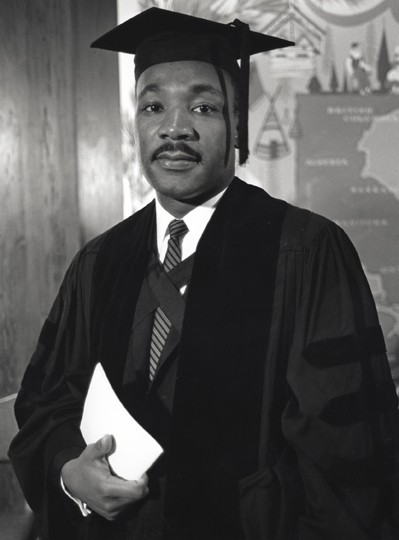
B.A. in Sociology, Morehouse College, Class of 1948. 

Image at HBCU.

Lisa Wade, PhD is an Associate Professor at Tulane University. She is the author of American Hookup, a book about college sexual culture; a textbook about gender; and a forthcoming introductory text: Terrible Magnificent Sociology. You can follow her on Twitter and Instagram.

In a comprehensive analysis of young men’s and women’s aspirations to public office, Jennifer Lawless and Richard Fox discover that part of the reason we see so few female politicians is because women just aren’t interested in running.  There are lots of reasons for this.  A absence of role models, a lack of encouragement from their parents, and the intimidating role that sexist attacks play in media coverage of campaigns.

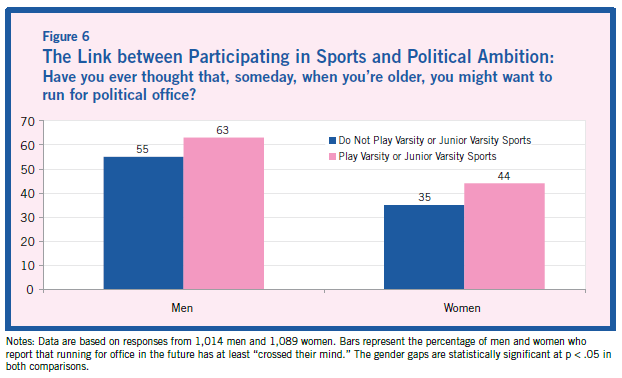
But Lawless and Fox discovered another interesting correlation, one between political aspiration and sports.  More men than women — 74% compared to 41% — played on a college or intramural team and, for both, playing sports was correlated with political aspirations.  The figure shows that running for office had “crossed the minds: of 44% of women who played sports and 35% who hadn’t.  The numbers for men were 63% and 55% respectively.

Screenshot_6

The authors suggest that the mediating factor is “an opportunity to develop… a competitive spirit.”  Sports, they argue, may build or reinforce the tendency to find pleasure in competition, which may make politics more appealing.

While sports increased both men’s and women’s interest in politics, it had a greater effect for women, shrinking the gender gap in political ambition by half.

Cross-posted at Pacific Standard.

Lisa Wade, PhD is an Associate Professor at Tulane University. She is the author of American Hookup, a book about college sexual culture; a textbook about gender; and a forthcoming introductory text: Terrible Magnificent Sociology. You can follow her on Twitter and Instagram.
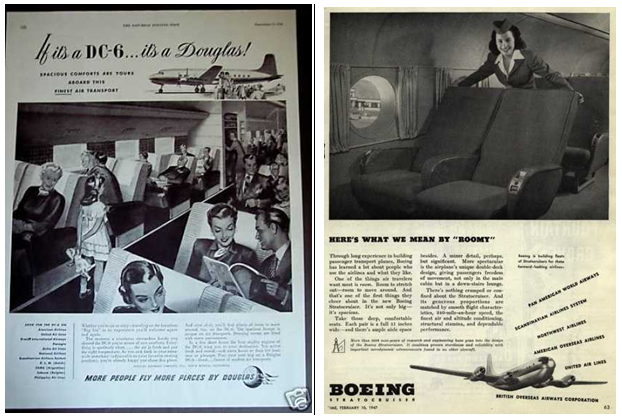
While the first flight attendants were male and many early airlines had a ban on hiring women, flight attending would eventually become a quintessentially female occupation.  Airline marketers exploited the presence of these female flight attendants.  Based on my reading — especially Phil Tiemeyer‘s Plane Queer and Kathleen Barry’s history of flight attendants’ labor activism — there seem to have been three stages.

First, there was the domestication of the cabin.  As air travel became more comfortable (e.g., pressurized cabins and quieter rides), airlines were looking to increase their customer base.  Female “stewardesses” in the ’40s and ’50s were an opportunity to argue that an airplane was just like a comfortable living room, equally safe for women, children, and men alike.  Marketing at the time presented the flight attendant as if she were a mother or wife:

Screenshot_1

Twenty years later, air travel was no longer scary, so airlines switched their tactics. They sexualized their flight attendants in order to appeal to businessmen, who still made up a majority of their customers. Here’s a ten-second Southwest commercial touting the fact that their stewardesses wear “hot pants”:

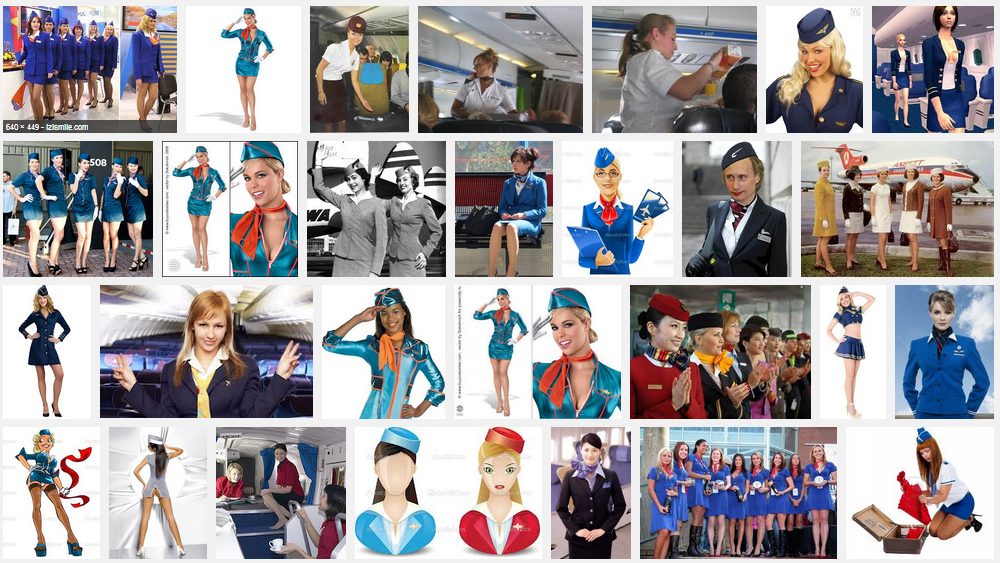
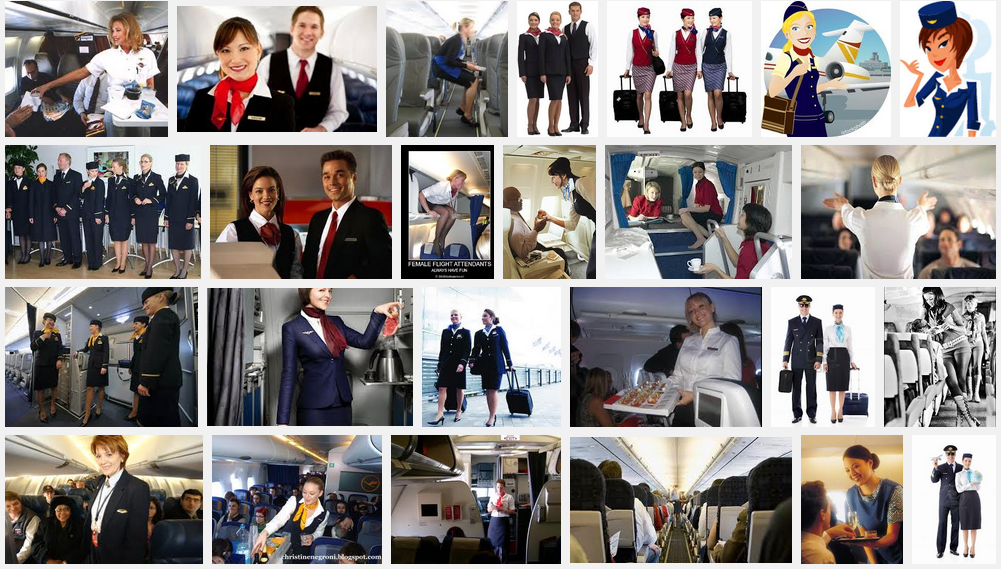
The intersection of the labor movement and women’s liberation in the ’60s and ’70s inspired women to fight for workplace rights. Flight attendants were among the first female workers to organize on behalf of their occupation and among the most successful to do so.  Their work won both practical and symbolic victories, like the discursive move from “stewardess” to “flight attendant” that transformed women in the occupation from sex objects to workers.  A quick Google Image search shows that the association — stewardess/sex object vs. flight attendant/worker — still applies. Notice that the search for “stewardess” includes more sexualized images, while the one for “flight attendant” shows more images of people actually working.

“Stewardess”:

Screenshot_1

“Flight attendant”:Screenshot_2My impression is that today’s marketing tends to feature flight attendants in all three roles — domestic, sex object, worker — echoing each stage of the transformation of the occupation in the public imagination.

Cross-posted at The Huffington Post, Pacific Standard, and Work in Progress.

Lisa Wade, PhD is an Associate Professor at Tulane University. She is the author of American Hookup, a book about college sexual culture; a textbook about gender; and a forthcoming introductory text: Terrible Magnificent Sociology. You can follow her on Twitter and Instagram.
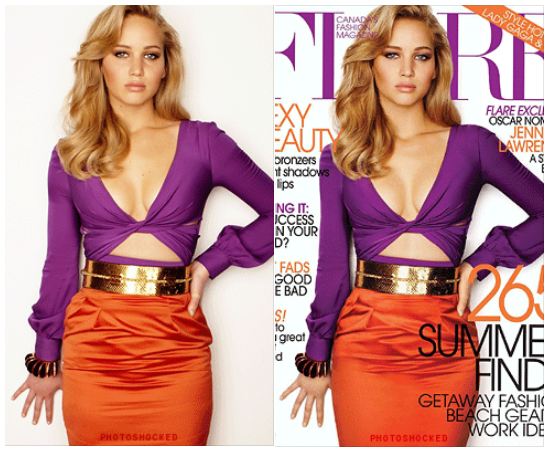
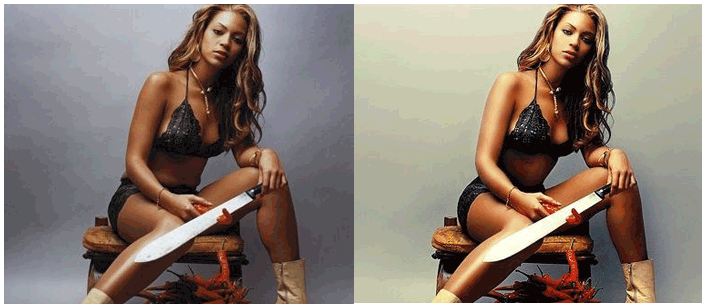
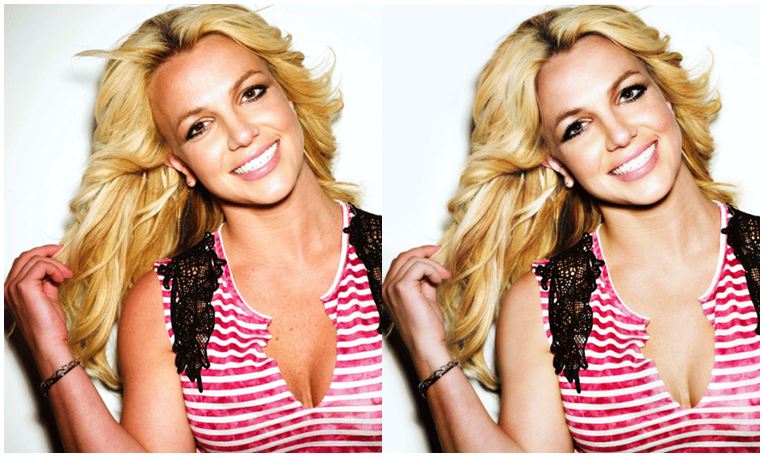
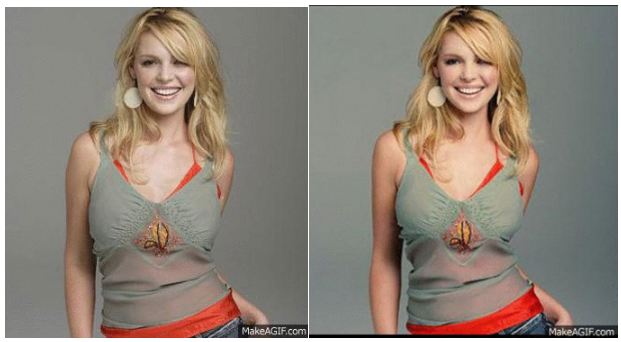
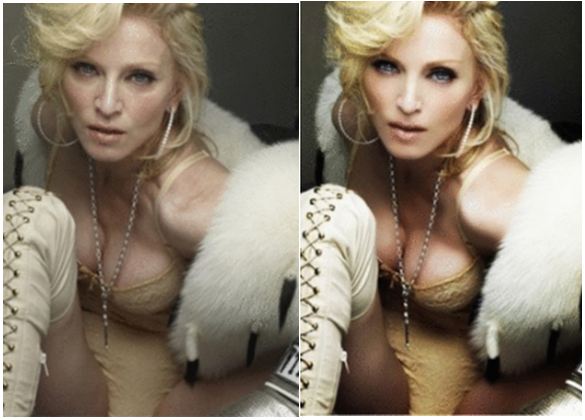
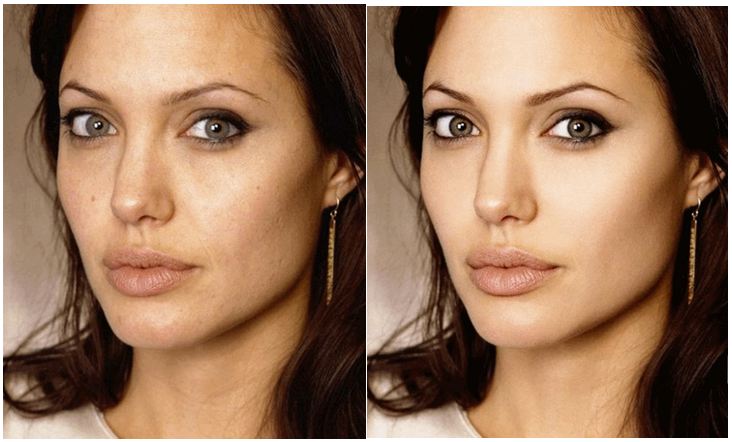
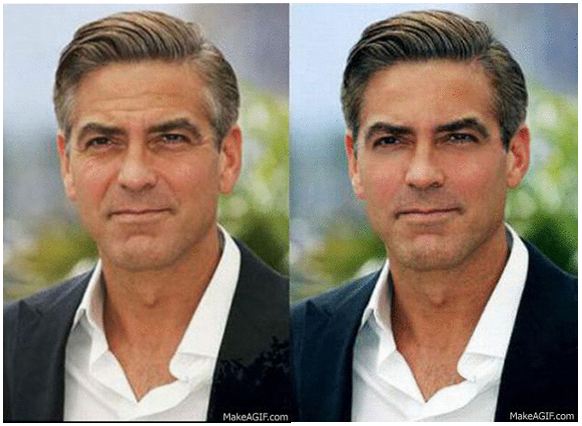
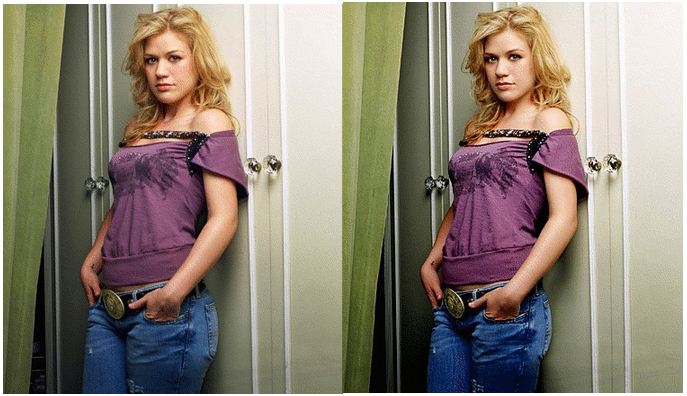
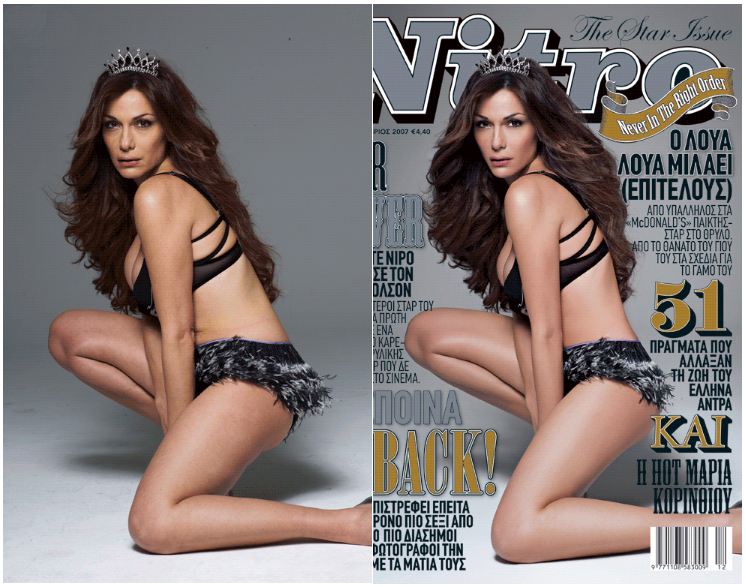
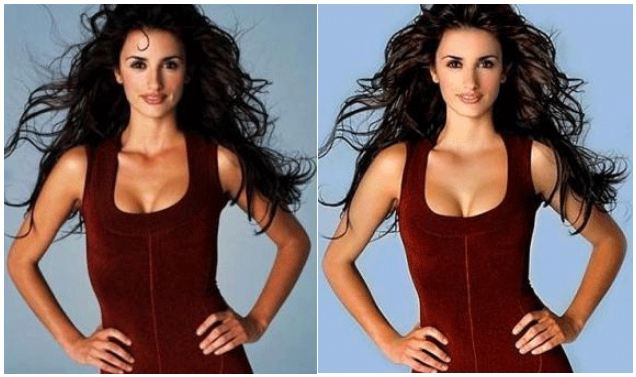
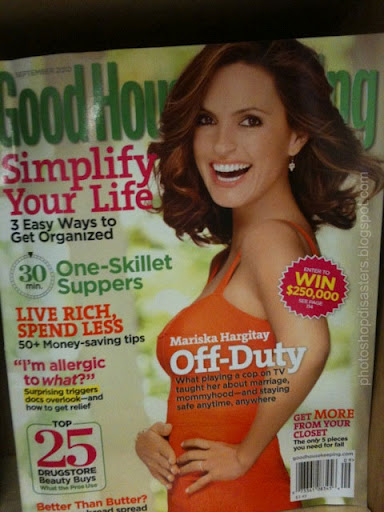
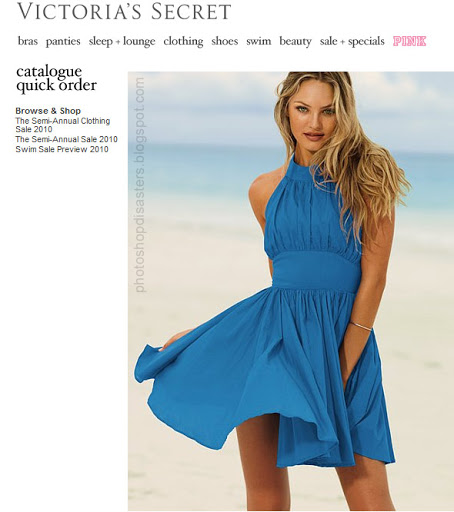
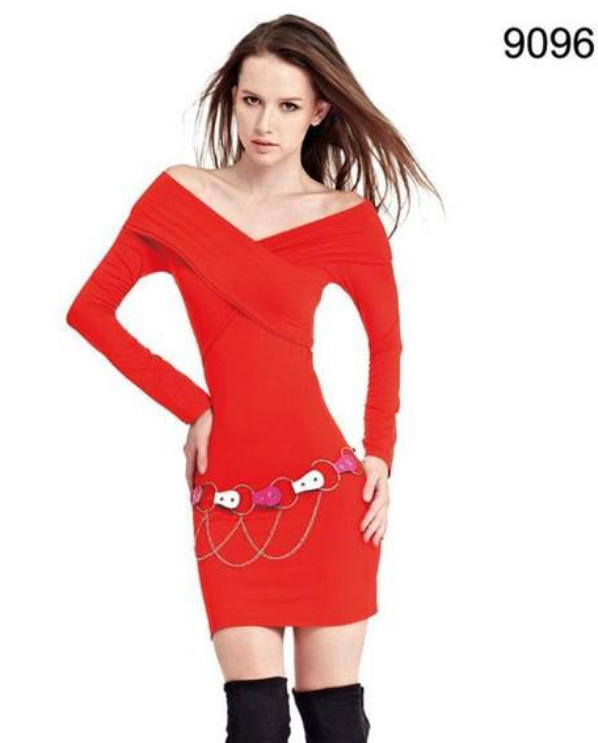
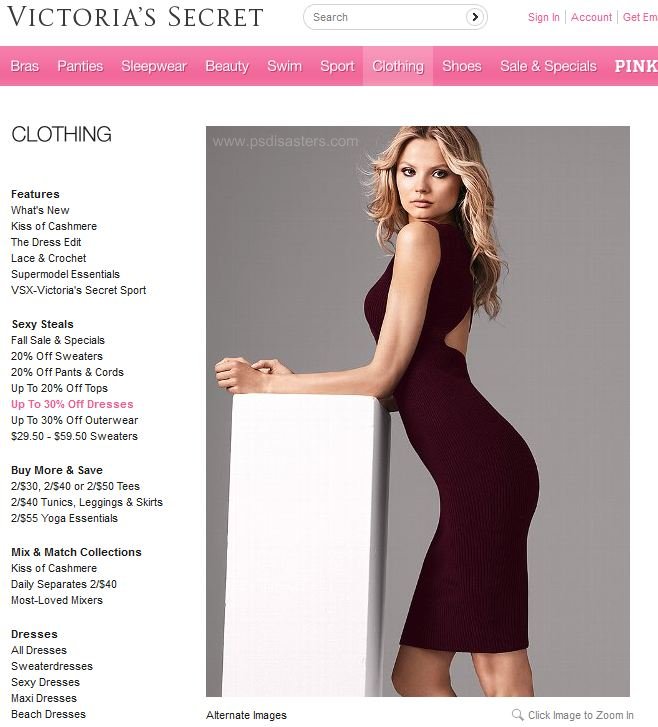
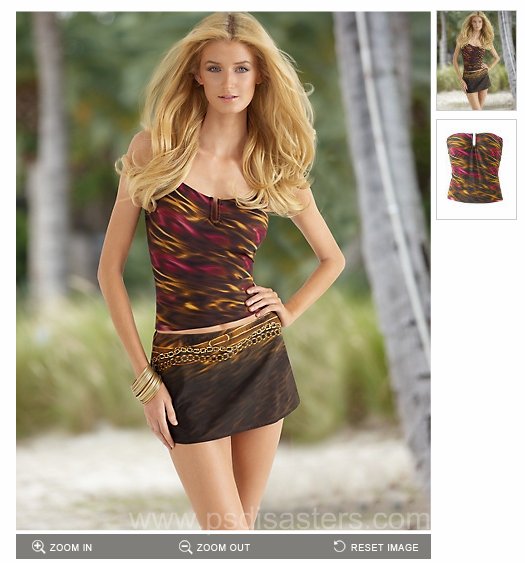
We’re cultivating a Pinterest page featuring revealing examples of re-touching and photoshop.  Here are our nineteen newest contributions, borrowed from JezebelBuzzfeed, and Photoshop Disasters.

12 3 4 5 628 9 10 11 12

Perfect without a belly button (ebay); Lindsey Lohan once also had a mighty migrating belly button:

1

Terrifying proportions (Westfield Mall):

2

And Good Housekeeping too:
5

Take care with the placement of that right hip (Victoria’s Secret):

4

Let us count the ways (Speigel, Victoria’s Secret, and Laffy Taffy via Photoshop Disaster):

7 6 3

See our full Pinterest page here.

Lisa Wade, PhD is an Associate Professor at Tulane University. She is the author of American Hookup, a book about college sexual culture; a textbook about gender; and a forthcoming introductory text: Terrible Magnificent Sociology. You can follow her on Twitter and Instagram.
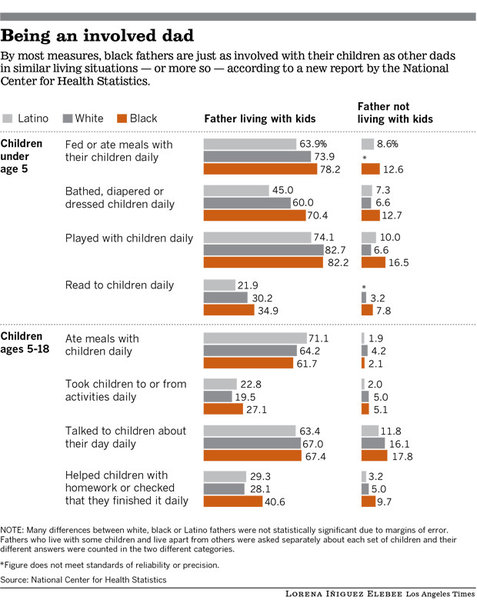
The Centers for Disease Control have released new data comparing the involvement of black, white, and Latino fathers.  The study found more similarities than differences.  Men of all races were more likely to be living with their children than not.  Defying stereotypes, black fathers were, on average, more involved in their children’s daily care than white and Latino fathers.

1

Image via the Los Angeles Times.

Lisa Wade, PhD is an Associate Professor at Tulane University. She is the author of American Hookup, a book about college sexual culture; a textbook about gender; and a forthcoming introductory text: Terrible Magnificent Sociology. You can follow her on Twitter and Instagram.