Search results for The


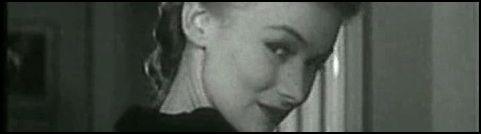
Kevin I. sent in a great short clip instructing women workers newly employed in industrial factories during World War II on how to do their hair to maximize safety. It assumes both ignorance and vanity on the part of women and speaks to the lack of efficiency caused by efforts to remain attractive on the line. Pretty great:

Lisa Wade, PhD is an Associate Professor at Tulane University. She is the author of American Hookup, a book about college sexual culture; a textbook about gender; and a forthcoming introductory text: Terrible Magnificent Sociology. You can follow her on Twitter and Instagram.
Monica C., who teaches ethnic studies and works with survivors of interpersonal violence, sent in this 9-minute satirical video (posted at Consent Turns Me On) she created for Sexual Assault Awareness Month. It highlights the way that rape prevention campaigns often put the onus on women to avoid being raped, providing lists of things to avoid doing (that basically add up to never doing anything where a man is present, ever), rather than focusing on educating men about not raping women.

Nice work, Monica!

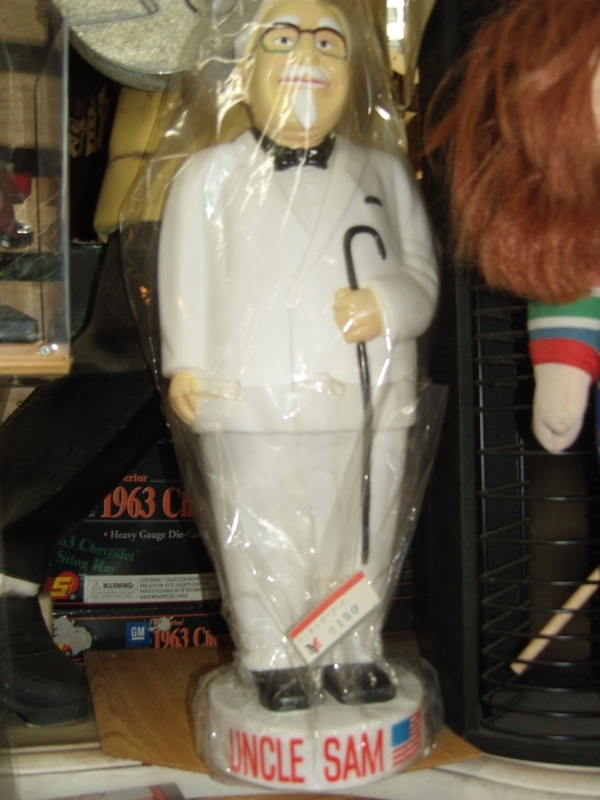
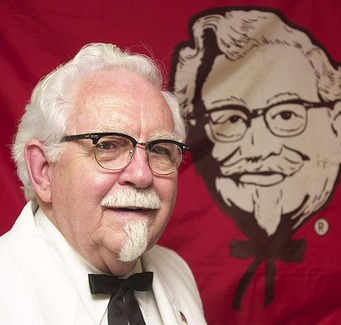
Over at Buzzfeed, Peggy posted this photo of a piece of kitsch she found on sale in Japan:

Thanks to Dmitiry for the link!  To clarify…

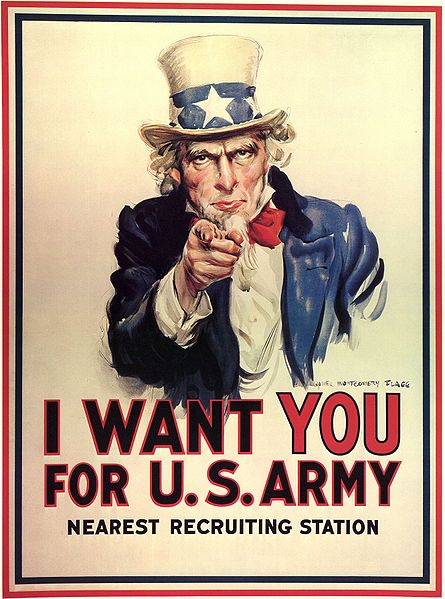
Uncle Sam, icon of American freedom:

Colonel Sanders, mascot for the fast food restaurant Kentucky Fried Chicken (the suit is the giveaway):

So what does this mean?  Well, perhaps nothing.  But it suggests that America is associated with capitalism and greasy food at least as much as the idea of freedom.  It also means that, at least in this instance, the U.S. has lost control of its brand.

Lisa Wade, PhD is an Associate Professor at Tulane University. She is the author of American Hookup, a book about college sexual culture; a textbook about gender; and a forthcoming introductory text: Terrible Magnificent Sociology. You can follow her on Twitter and Instagram.
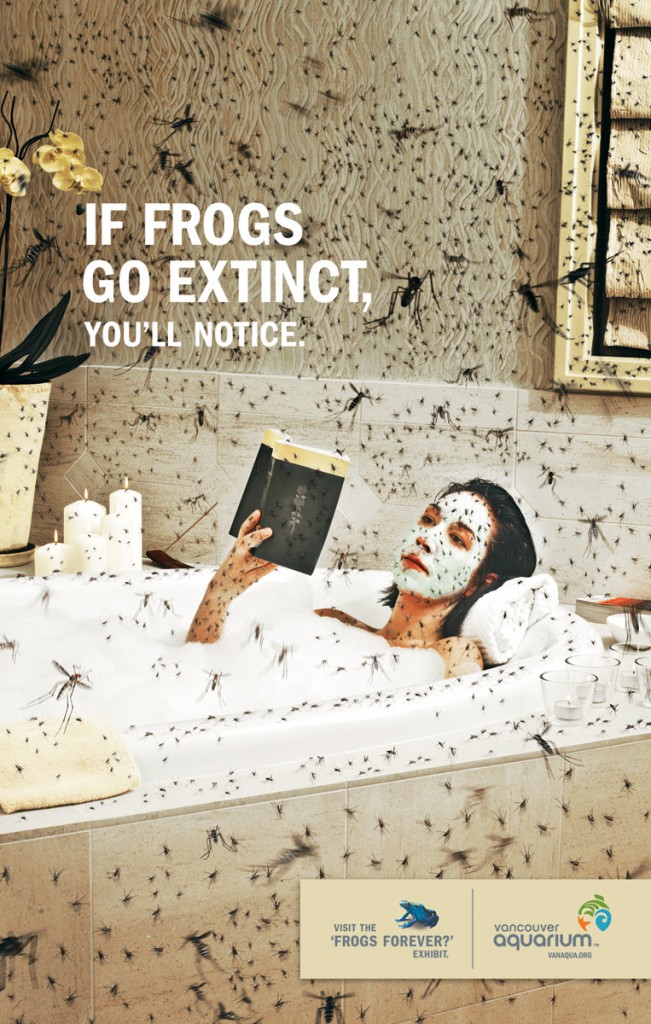
Modern Western cultures are argued to be individualistic. That is, most of us in these countries are presumed to prioritize our own or our immediate family’s goals, as opposed to more widely communal ones, and be motivated to support policies and initiatives that help ourselves, as opposed to others or, even, everyone.

I thought this ad for a frogs exhibit at the Vancouver Aquarium, sent in by fds, nicely illustrated this logic. Why should we care about the fact that frogs are going extinct? We should care because their absence will negatively affect our bubble bathing experience.

Compare this ad to an unusual one from the University of Minnesota that suggests that you get a flu shot for the benefit of everyone.

Lisa Wade, PhD is an Associate Professor at Tulane University. She is the author of American Hookup, a book about college sexual culture; a textbook about gender; and a forthcoming introductory text: Terrible Magnificent Sociology. You can follow her on Twitter and Instagram.
Adrienne K., who posts at Native Appropriations, let us know about the book Make It Work! North American Indians: The Hands-On Approach to History. Her friend Katie found it in the 4th-grade classroom library at the school where she teaches on the Rosebud Sioux Reservation in South Dakota:

Photobucket

As posted on Native Appropriations, Katie said,

The book purports to give a history of Native Americans and a guide to Native crafts, but what it ends up being is a veritable handbook for white kids to “play Indian.”  All the photos are of white kids dressed up as Indians!  I can’t find one picture (other than the historical ones, of course) of a Native American child.  Even more disturbingly, the descriptions make it sound as if these white kids are authentic representations of Indian clothing, etc.

Katie found it particularly odd that this book was in a classroom on a Sioux reservation. Some pages from the book:

Photobucket

Photobucket

The information is often rather vague. For instance, on one page a description of the Seminole tribe says, “The Seminole were a group formed by Creek Indians and other people from different areas.” Um, ok…that’s less than helpful.

In this image, Adrienne points out that children dressed up as a Seminole and a “Plains Warrior” (?) are playing stickball, as though the game was played by all American Indian groups (rather than mostly confined to the Southeastern region of the U.S.):

Photobucket

As Adrienne mentions, throughout the book, only the past tense is used, as though Native Americans are relics of the past, no longer in existence (or at least, no longer interesting).

I have seen lots of books like this. In fact, I was once given a book like this when I was a kid. At the time I thought it was awesome. The books all seem to have a common theme: American Indians are part of history in the same way that, say, the ancient Greeks [note: several readers object that ancient Greeks aren’t gone, either, since there are still Greek people around–see below] are — something to study that is interesting but no longer exists. Native cultures are presented as neat art projects for non-Native kids to create, all under the guise of learning about the history of Native Americans. But as we see here, any educational benefit the books might aim at is undermined by the conflation of many different groups and cultural features into one or two generalized “Indians” who end up combining elements of Native societies that were separated geographically and temporally.

And almost all of these books present the “Plains Warrior,” as though there was a single Plains culture made up entirely of war-lovers decked out in feather headdresses. Even as a kid I wondered what a Plains Indian was, since I’d never heard of a tribe called the Plains.

Part of what is going on here is the romanticization of Native Americans as courageous, noble, but ultimately tragic figures of the past. Modern Native Americans, those living now and wearing blue-jeans and t-shirts and perhaps eating Wonder Bread as often as homemade fry bread, just aren’t interesting. They don’t fit into our romanticized narrative. They aren’t authentic. Authentic American Indians were culturally distinct…and disappeared about the time Geronimo became a member of Buffalo Bill’s Wild West show. And that makes the cultural appropriation acceptable, because it’s referring to people in the past. Creating a “Plains outfit” with burlap and a stapler is no more problematic than using a sheet to create a Roman toga.

UPDATE: As I said above, a number of commenters have asked how it’s any different to dress up like Native Americans than it is to dress up like ancient Greeks, seeing as how there are still Greeks around. I think there is a distinction. When people think about ancient Greek civilization, no one is then making Greeks who live today invisible. We do not imply that Greeks disappeared because a particular Greek society waned in influence. And we certainly don’t imply that ancient Greeks were the same as every other European civilization, with a few sartorial differences here or there. We also don’t suggest that anyone living in Greece today who doesn’t, say, worship Zeus is inauthentic, not a “real” Greek. People living in Greece aren’t stuck in time the way many people who romanticize American Indians see them.

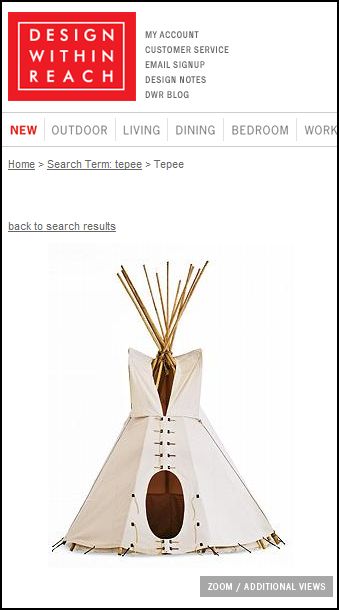
NEW (Apr. ’10)!  Jessica S. and Lucia M.M. sent in examples of “teepees” sold for fun.

First, from Jessica, a teepee by Land of Nod (a sister company of Crate and Barrell).  The copy reads: “Our roomy teepee is the perfect place for peewees to powwow.”

Second, from Lucia, a teepee sold by Design Within Reach:

—————————–

Related posts: racist mascots, Canada’s “indigenous Olympics“, ice skaters dress up like aborigines, indigenous cultures in Avatar (spoiler alert), Halloween costumes, defining “Indian art”, “my skin is dark but my heart is white“, anachronistic images of Native Americans, “My Indian name is…“, the sports mascot Chief Illini, Playmobil’s Native American family, Howe Nissan dealership statue, the “crying Indian” anti-littering PSA, Italian political party uses images of American Indians to oppose immigration, and a Native American toy set.

Tom C. sent us an ad for Google that does an excellent job of resisting the urge to make separate commercials aimed at men and women. In the ad below, a searcher seeks information on masculine-typed and feminine-typed activities, as well as more neutral ones. It leaves open the sex of the searcher. It’s a nice counterpart to the profoundly gendered advertising we see almost everywhere else… and evidence that it doesn’t have to be that way.

————————————-

For another example of non-gendered advertising, see this vintage Uniroyal tires ad.

In comparison, Hulu sometimes asks whether you want to see ads made “for her” or “for him,” Facebook wants to know what sex you are so as to better sell to you, and Best Buy will just assume you’re a dude,

Lisa Wade, PhD is an Associate Professor at Tulane University. She is the author of American Hookup, a book about college sexual culture; a textbook about gender; and a forthcoming introductory text: Terrible Magnificent Sociology. You can follow her on Twitter and Instagram.
I watched it four times… so adorably human:

The Daddy’s youtube page, via Maedchenmannschaft.

Lisa Wade, PhD is an Associate Professor at Tulane University. She is the author of American Hookup, a book about college sexual culture; a textbook about gender; and a forthcoming introductory text: Terrible Magnificent Sociology. You can follow her on Twitter and Instagram.

Thank Maude for the British—because, without Kim and Aggie teaching us how to clean our homes, and Jo Frost teaching us how to raise our kids, and Victoria Stilwell teaching us how to control our dogs, and Trinny and Susannah teaching us how to dress ourselves, and Simon Cowell teaching us how to sing, and Nigel Lithgoe teaching us how to dance, Americans would be naked, cultureless beasts who lived in garbage heaps with feral children and wild dogs.

This is all true.

The latest Brit in the British How-To Invasion is “Naked Chef” Jamie Oliver, whose new show I Hate Fat People Jamie Oliver’s Food Revolution features Oliver traveling to Huntington, West Virginia—the Obesitiest Place in the Multiverse!—where he was determined to use his “magic” to help Huntington’s Fatties get less fat. I mean, healthier!

The reality series based on this generous thin martyr giving up his time to help stupid fat people premieres tomorrow night. But! By the magic of the internetz, you can watch it here right now!

[Editor’s note: this is the entire episode, but the first 8 minutes will give you the idea; also, I’m sorry non-U.S. readers, I know you can’t see Hulu.]

If you can’t view the video, here’s a quick summary: Headless fatties? Check. Enormous food stock footage? Check. OHNOES Obesity CrisisTM? Check. Being fat is ugly? Check. Fat people are lazy? Check. Fat people are stupid? Check. Fat people are sick? Check. DEATHFAT? Check. Mother-blaming for fat kids? Check. Fat as a moral failure? Check. Religious shaming of fat? Check. Fat people don’t have “the tools” to not be fat? Check. Fat people need a skinny savior? Checkity-check-check!

I want to note that there is, buried somewhere beneath the 10 metric fucktons of fat-shaming (and not an incidental dose of misogyny, for good measure), information about healthful eating (e.g. not eating any fresh veg, ever, isn’t good for anyone), but this is information that could be delivered without a scene in which a mother of four whose husband is gone three weeks a month is told that she’s killing her children while she’s weeping at her kitchen table.

The premiere episode has absolutely zero structural critique, not even a passing comment about the reason that millions of mothers feed their kids processed foods is because it’s cheap and fast, which is a pretty good solution for people who are short on money and time.

Oliver places the responsibility for unhealthful eating exclusively at the feet of the individual, seemingly without concern for the cultural dynamics that inform individual choices. The extent of the explanation provided for why someone might choose to stock their freezer with frozen pizzas is that they’re lazy and/or don’t know any better.

And then he wonders why he isn’t greeted by the citizens of Huntington with open arms.

At the end of the episode, a newspaper article comes out in which Oliver’s evident contempt for the community has been reported. Oliver claims his words were taken out of context; the people with whom he’s been working to revamp elementary school meals don’t believe him—and understandably so, given that he’s been a patronizing ass to them.

In the final scene, Oliver speaks directly to the camera, and he is crying, wiping tears from his eyes as he throws himself a little pity party:

It’s quite hard to cut through negativity, always. And defensiveness. You know, I’m giving up massive time that is really compromising my family—because I care! You know, um, the tough thing for me [exhales deeply] is they don’t understand me, ‘cuz they don’t know why I’m here. [sniffs] They don’t even know what I’ve done, the things I’ve done in the last ten years! And I’m just doing it ‘cuz it feels right [sniffs], and when I do things that feels right, magic happens! [sniffs; shakes his head disbelievingly] I’ve done some amazing things, you know? And that’s when I follow my heart. And when I never follow my heart, I always get it wrong.

Look, I’m gonna be really honest: You do live in an amazing country. You put people on the moon! You live in an amazing country. And so do I, you know? And, right now in time, is a moment where we’re all confused about how brilliant we are and how technically advanced we are, and that is fighting with what once made our countries great, which is family, community, being together, and something honestly as simple as putting a few ingredients together and sitting your family or your friends or your girlfriend or your mother-in-law around that table and breaking bread. And if you think that’s not important, then shame on you!

Wow.

In an interview to promote the show, Oliver says, “You can’t really blame the parents when the whole culture and the whole horizon of food is all the same.” Which is an interesting comment from someone who chose a scene where he’s telling a mother she’s killing her kids for the premiere episode of his show.

That underlines a key problem with Jamie Oliver’s Food Revolution: He doesn’t want to be seen as the guy who blames parents for killing their kids and shaming fat people for being fat—but there he is in his show, blaming parents for killing their kids and shaming fat people for being fat. Oops.

And, on top of it, he ends the premiere episode by crying because those goddamn fat ingrates don’t appreciate him.

Reportedly, Huntington eventually warmed up to Oliver, but I don’t think I’ll be sticking around to watch that happy ending unfold.

And, for the record, Mr. Oliver, the “whole horizon of food” is actually not all the same in the US: In some places, things are much, much worse.

—————————-

Melissa McEwan is the founder and manager of the award-winning political and cultural group blog Shakesville, a founding member of the Big Brass Blog, and a contributor to The Guardian’s Comment is Free and AlterNet. Melissa graduated from Loyola University Chicago with degrees in Sociology and Cultural Anthropology and an emphasis on the political marginalization of gender-based groups.

If you would like to write a post for Sociological Images, please see our Guidelines for Guest Bloggers.