Search results for The

In a comments thread, shorelines linked to a fascinating Scientific American article about adolescence by psychologist Robert Epstein. In it, he points to the invention of the very idea of adolescence and its non-universality. In a sample of 186 pre-industrial societies, for example, only 60% had words for the life stage and most had little or no problems with anti-social teen behavior. This data, however, contrasts strongly with new research suggesting that adolescent brains are quite different from adult brains.

How do we make sense of this?

Epstein suggests that differences in brain structure may be the result of social realities, not their cause. He writes:

I have not been able to find even a single study that establishes a causal relation between the properties of the brain being examined and the problems we see in teens… [Meanwhile, c]onsiderable research shows that a person’s emotions and behavior continuously change brain anatomy and physiology… So if teens are in turmoil, we will necessarily find some corresponding chemical, electrical or anatomical properties in the brain. But did the brain cause the turmoil, or did the turmoil alter the brain? Or did some other factors—such as the way our culture treats its teens—cause both the turmoil and the corresponding brain properties.

By “the way our culture treats its teens,” Epstein is referring to the possibility that we infantilize and criminalize them. He includes a figure illustrating how we’ve increasingly targeted teens with laws:
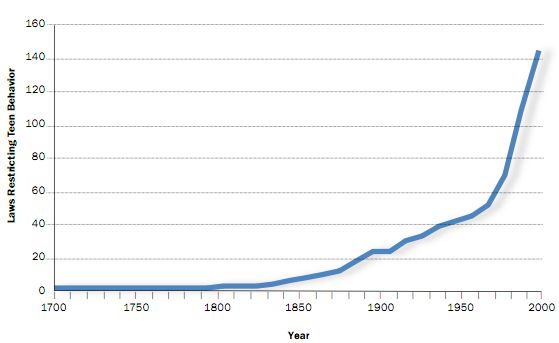
Teens are subject to, Epstein explains, “…more than 10 times as many restrictions as are mainstream adults, twice as many restrictions as active-duty U.S. Marines, and even twice as many restrictions as incarcerated felons.”

Believing them to be different from adults, we then segregate them:

Today, with teens trapped in the frivolous world of peer culture, they learn virtually everything they know from one another rather than from the people they are about to become. Isolated from adults and wrongly treated like children, it is no wonder that some teens behave, by adult standards, recklessly or irresponsibly.

Epstein has no more data showing that how we treat teens, and how they learn to behave, changes their brain anatomy and physiology, than he does showing the reverse. But the former certainly has substantial neurological precedent. Meanwhile, the latter is comforting to a society awash in out-of-control adolescence: “What is there to do? It’s only natural.” Right?

Lisa Wade, PhD is an Associate Professor at Tulane University. She is the author of American Hookup, a book about college sexual culture; a textbook about gender; and a forthcoming introductory text: Terrible Magnificent Sociology. You can follow her on Twitter and Instagram.

Jamal Spencer, a student in Naomi Glogower’s sociology class at Michigan State University, sent in the following promotion for Black History Month, courtesy of the Los Angeles Clippers (source):

Spencer makes two interesting points. First, Black History Month is in February. Oops. Second, and more importantly, notice that the promotion includes admitting “1,000 underprivileged children free.” It is assuming that “Black” is coterminous with “underprivileged,” erasing middle and upper class Blacks and poor Whites. In fact, about half of poor people are White and about 75% of Black people are not poor. This promotion, however, strengthens the conception that the poor are Black, a conception that contributes to the (racist) maligning of and restriction of benefits for the poor. Happy Black History Month indeed.

Lisa Wade, PhD is an Associate Professor at Tulane University. She is the author of American Hookup, a book about college sexual culture; a textbook about gender; and a forthcoming introductory text: Terrible Magnificent Sociology. You can follow her on Twitter and Instagram.
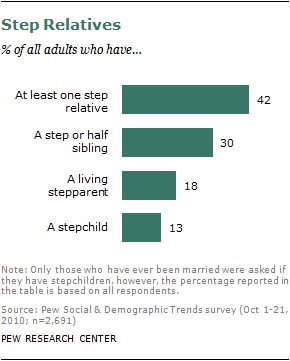
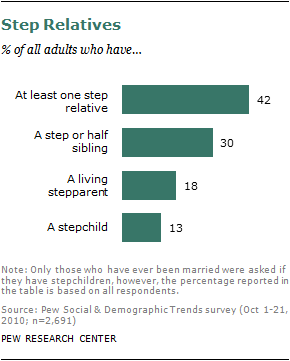
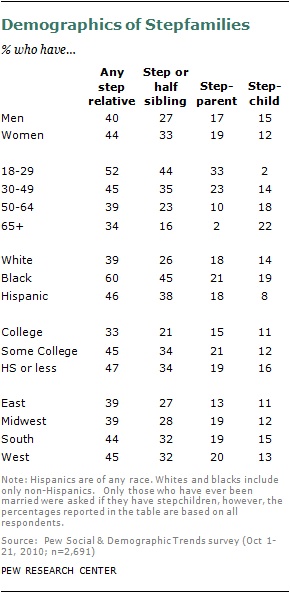
The Pew Research Center recently released data on stepfamilies in the U.S. Of the 2,691 respondents, over 40% had at least one step relative in the immediate family:

Note that they include both step- and half-siblings. For readers who might not be familiar with that language, a step-sibling is related to you only through marriage; you don’t share a biological parent. A half-sibling shares one parent with you, but not both. I can see the point of including both categories if you’re interested in seeing the degree to which American family life varies from the culturally-accepted “ideal” nuclear family, but I would think putting both in a single category might hide meaningful differences (such as for the question about obligation, below).

The chances of having a step-relative in the immediate family vary quite a bit based on demographics, reflecting differences in marriage, divorce, and non-marital childbearing rates:

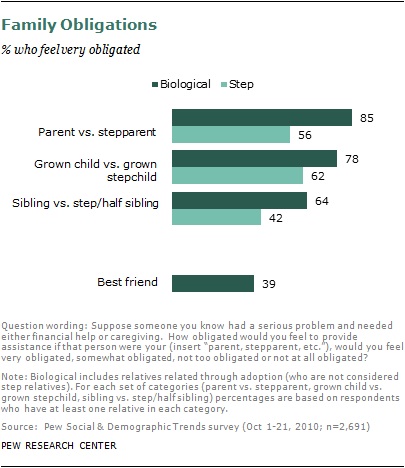
The vast majority (70%) of people with step-relatives said they were very satisfied with their family lives, undermining some of the cultural stereotypes of stepfamilies as inherently filled with conflict. However, the survey also asked participants if they would feel “obligated” to help a family member who was facing serious problems and needed either financial help or caregiving. The results show more feelings of obligation to biological family members than to step-relatives:

I presume perceptions of obligation vary widely based on how old a person was when their parent married their stepparent, the quality of the relationship, and perhaps even whether the stepparent has biological children. The data would seem to have important implications for our ability to draw on family networks for resources. Who is responsible for caring for elderly parents, for instance? Only their biological children? Should someone feel obligated to help a person who they’re related to only because of a parent’s marital choice? Unclear cultural norms about obligations to step-relatives bring up a number of complex issues that many Americans will be forced to grapple with in the future.


I submit to you Lady Gaga’s new music video for “Born This Way.” Have at it! Is Lady Gaga breaking new ground? Or is this a strategic ploy to be played more or less constantly in every gay bar in America? Or something else? What do you think?

See also a previous post on Lady Gaga’s disability imagery and my cynical and controversial post critiquing the Gaga-inspired site, Born This Way.  Oh, and that dude with the skeleton face, we totally featured him in a post about the self-fulfilling stereotype.

Lisa Wade, PhD is an Associate Professor at Tulane University. She is the author of American Hookup, a book about college sexual culture; a textbook about gender; and a forthcoming introductory text: Terrible Magnificent Sociology. You can follow her on Twitter and Instagram.
In and around the apartment complex where we live in Nanning, China, there are no less than five coffee shops.  They are part of what make our neighborhood so much, well, like a neighborhood.  Several of them have free wi-fi and they all have finely crafted, good quality kafei (coffee).

But my wife and I have learned the hard way that if we want coffee in the morning, we either have to go to McDonald’s or make it ourselves.  While your average US Starbucks employee arrives at work before the sun peeks its head above the horizon, baristas in China report to work around 10 am.  And while some Starbucks and rare other coffee shops in the US are open until ten or even midnight (at the latest), their Chinese counterparts stay open until two in the morning every night.

Needless to say we found these business hours confounding, and poked around to find out why anyone would want to drink such strong coffee (and, do not doubt, this coffee is stout!) so late at night.

As it turns out, China’s coffee history dates back to the early 19th century, but in all those years, coffee never “caught on.”  And it is not really a mystery as to why.  China’s tea culture has a centuries-long monopoly on China’s liquid ingestion.  Coffee?  Well, its OK, if you like that sort of thing.

But if for 200 years the Chinese have resisted coffee, why now are coffee shops finding enough success that there is room for five in one small neighborhood?  The answer is in the picture of my wife below.   Chinese cafes are dimly-lit, quiet, and “romantic” (or at least that is the goal of the decor) rendezvous points.  A new high school couple might take their xiuxi (afternoon rest – the Chinese version of a siesta), flirting with each other while sipping on lattes.  After a night out on the town, young couples flood the cafes, taking lots of pictures, drinking beer and maybe a couple of iced macchiatos.

The marketing scheme is actually quite impressive.  If you can’t win them over with quality, lovingly brewed, pristinely presented coffee, make the coffee shop a romantic oasis.  Draw them in with the promise of passion and mystery and win them over with brilliantly executed coffee.

The pictures are just a bonus.

Evan Schneider is a graduate of Princeton Theological Seminary. He teaches English at an education college in Nanning, China.  While in China he enjoys learning to cook Chinese food and discovering the differences between the way that Chinese and American people think about food.  He blogs about it at Cooking Chinese.


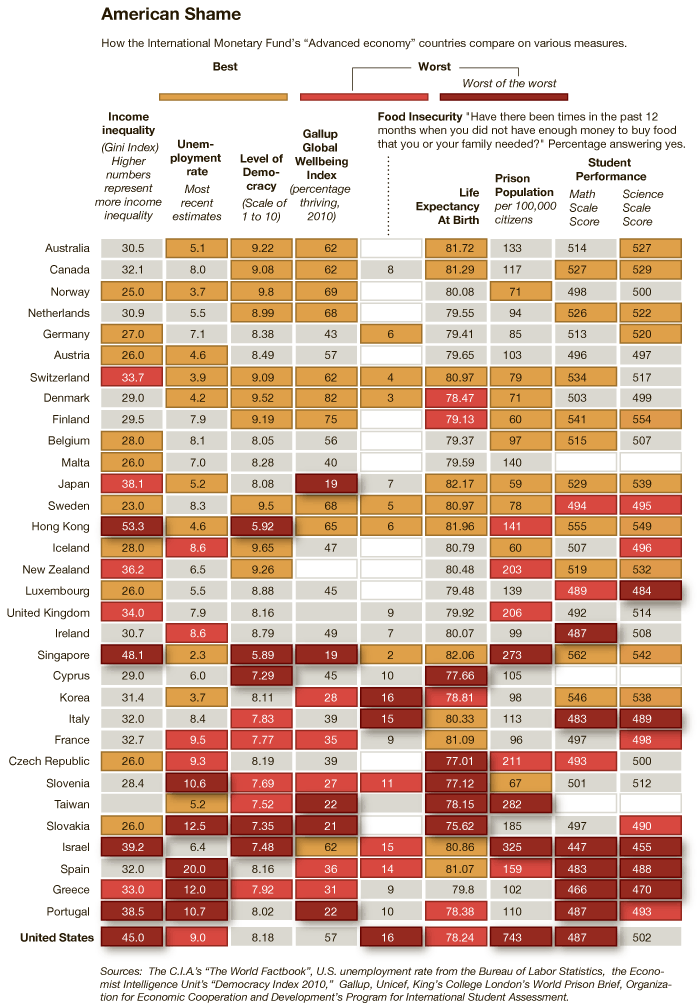
An infographic accompanying an article at the New York Times reveals how “advanced economies” compare on various measures of equality, well-being, educational attainment, and more.  To illustrate this, for each measure countries that rank well are coded tan, countries that rank poorly and very poorly are coded orange and red respectively, and countries that are in the middle are grey.  The countries are then ranked from best to worst overall, with Australia coming in #1 and the United States coming in last.  You might be surprised how some of these countries measure up.

Thanks to Dmitriy T.M. for the link.

Lisa Wade, PhD is an Associate Professor at Tulane University. She is the author of American Hookup, a book about college sexual culture; a textbook about gender; and a forthcoming introductory text: Terrible Magnificent Sociology. You can follow her on Twitter and Instagram.
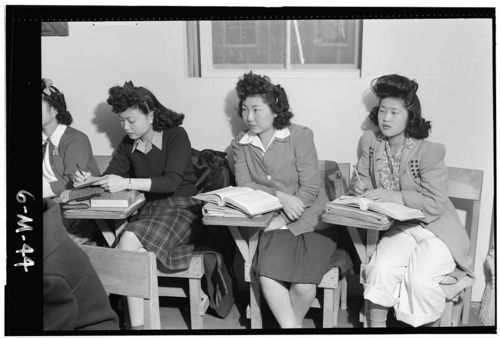
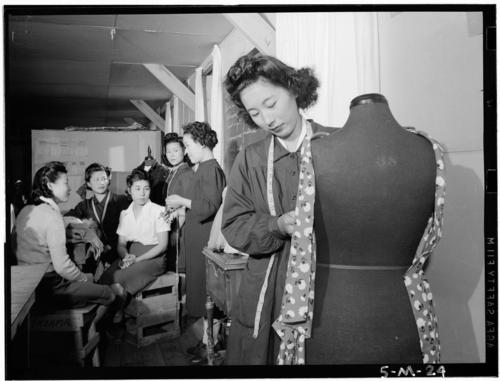
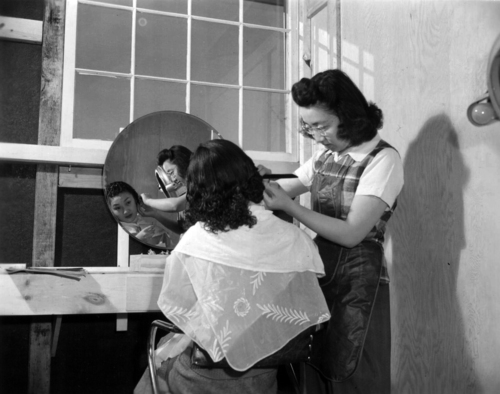
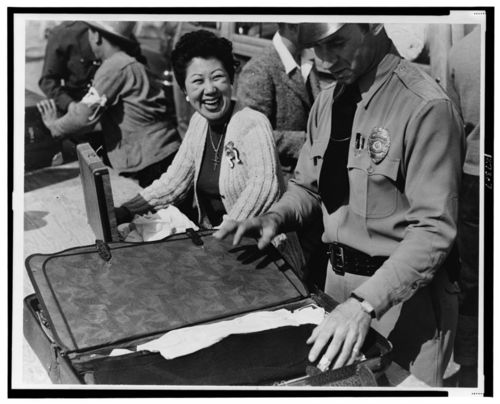
The blog Of Another Fashion, by Minh-Ha T. Pham, serves as “an alternative archive of the not-quite-hidden but too often ignored fashion histories of U.S. women of color.” The collection includes images taken from public sources as well as photos sent in by readers and provides a contrast to fashion exhibits that usually present fashion trends as almost entirely White experiences.

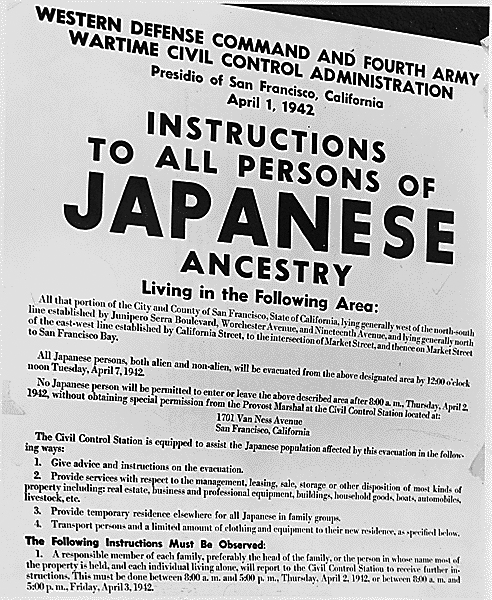
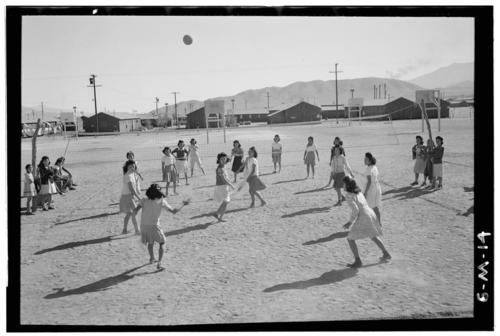
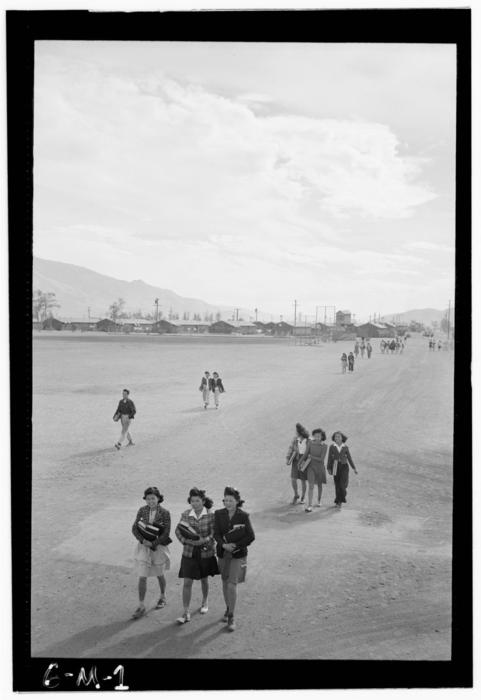
While the collection is fascinating overall and definitely worth a look, I was particularly struck by the photos of life among Japanese Americans forced to live in internment camps during World War II.

A legal notice requiring Japanese Americans on the West Coast to relocate voluntarily to internment camps or face arrest:

Women playing volleyball:

(Library of Congress. Photo by Ansel Adams.)

Walking to school at the Manzanar camp:

(Library of Congress. Photo by Ansel Adams.)

Women in biology and dressmaking classes:

(Both images by Ansel Adams, 1943; Library of Congress.)

One camp’s version of a beauty salon:

Intake processing at the Santa Anita center:

(From the Library of Congress’ Farm Security Administration and Office of War Information Collection (April 1942). Photographer unknown.)

Pham discusses the fact that in many of the photos of the processing centers, the women are smiling and look very happy, despite going through what had to be an upsetting, frightening, and humiliating experience. Japanese Americans were not allowed to bring their own cameras into the camps; the photos were taken by others, including Dorothea Lange and Ansel Adams. And they found their subjects didn’t always cooperate with the images they were planning to provide of the camps:

According to Sue Kunitomi Embrey the chair of the Manzanar Committee, Adams hoped to capture the despair of camp life in order to stir some public sympathy for Japanese Americans but was frustrated by all the primping and posing Japanese Americans did when he was photographing.

…I hope that images of smiling and fashion-conscious Japanese American women…adds to and deepens our appreciation of the small acts of feeling, creativity, and resistance that happen everyday in spite of huge limitations. In an act as seemingly trivial and trite as smiling for the camera, these women interrupt and take some control of the historical, political, and visual frames through which they’re being viewed.


What is a norm?  How important is it that we follow them?  And what happens when we break one?

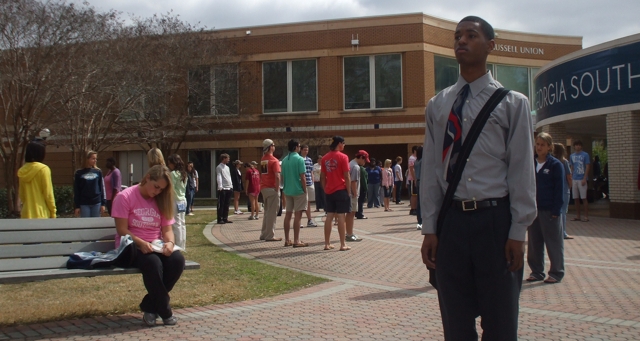
Nathan Palmer, a lecturer at Georgia Southern University and founder of the blog Sociology Source, recruited his entire class of 262 students to go into the world and do nothing (an idea he borrowed from Karen Bettez Halnon).  It was sort of like a flash mob in which absolutely nothing happens.

Palmer’s aim was to reveal a norm (in this case, that we all must always be doing something), expose his students to the feelings one has when breaking a norm (even a consequence-less one like this), and show them the range of reactions that observers have to norm breaking.  And he recorded the whole thing for us:

Read Palmer’s entire write-up of the experiment at Sociology Source.

Lisa Wade, PhD is an Associate Professor at Tulane University. She is the author of American Hookup, a book about college sexual culture; a textbook about gender; and a forthcoming introductory text: Terrible Magnificent Sociology. You can follow her on Twitter and Instagram.