Search results for The

Cross-posted at Caroline Heldman’s Blog.Magic Mike is “wildly overperforming” at the box office because women and gay men are going to see it in droves.  Thank you Hollywood executives for finally noticing that there’s plenty of money to be made off of heterosexual female and gay male sexuality.  Magic Mike purports to be a movie that caters to het women, and while it does provide a highly unusual public space for women to objectify men, the movie in fact prioritizes male sexual pleasure in tired, sexist ways.
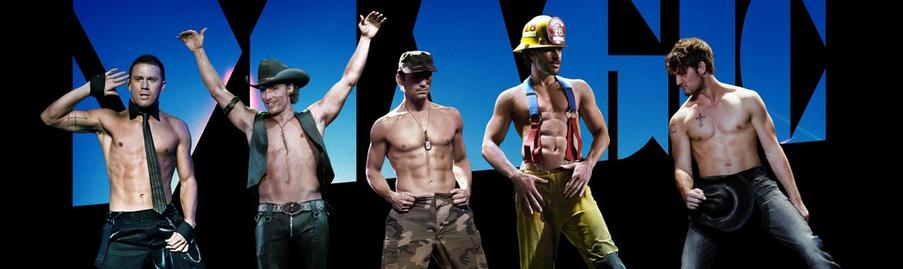
Watching Magic Mike was an experience.  Many of the female theater-goers around me were hollering demands (e.g., “take it all off, baby!”) and grunting approvingly during dance scenes.  The camera unabashedly focused tight on the dancer’s abs and buttocks, requiring viewers to objectify the male actors.  I’ve written elsewhere that living in a culture that objectifies girls/women is highly damaging, and emerging male objectification is a corporate wet dream to sell products by creating new body dissatisfactions/markets.

Make no bones about it, this movie is all about reinforcing the notion that men are in control and men’s sexuality matters more.  It baffles me that the filmmakers were so effective in conveying these themes in a movie about male strippers that a mostly female audience is eating up.  Have we learned to devalue our own sexual pleasure so thoroughly that the scraps of het female sexual pleasure provided by Magic Mike feel like a full meal?

Aside from the questionably-empowering viewer interaction with the film, the content of Magic Mike is old-school sexism wrapped in a new package.  It reinforces prevailing notions of masculinity where white men are in control, both economically and sexually, and women are secondary characters to be exploited for money and passed around for male sexual pleasure.

Most of the women in the film are audience members portrayed as easily manipulated cash cows to be exploited for money.  In one scene, the club boss, Dallas (Matthew McConaughey) gets his dancers pumped up before a show by asking them, “Who’s got the cock?  You do.  They don’t.”  Dallas has a running commentary that forcefully rejects the idea that female audience members are sexual subjects in the exchange.

Beyond the foundational theme of male control, many (but not all) of the simulated sex acts the dancers perform in their interactions with female audience members service the male stripper’s pleasure, not hers.  Dancers shove women’s faces into their crotch to simulate fellatio, hump women’s faces, perform faux sex from behind without a nod to clitoral stimulation, etc.  As a culture, we have deprioritized female sexual pleasure to such a great extent that these acts seem normal in a setting where they don’t make sense.While the men in Magic Mike strut their sexual stuff with a plot line that constantly reaffirms their sexual subjectivity, the few supporting female roles show women in surprisingly pornified, objectifying ways.  Magic Mike is pretty tame when it comes to male bodies.  Lots of floor and face humping, but no penis or even close-up penis tease shots through banana hammocks.  In fact, viewers aren’t exposed to any male body part that they wouldn’t see at Venice Beach.  The same cannot be said for women.
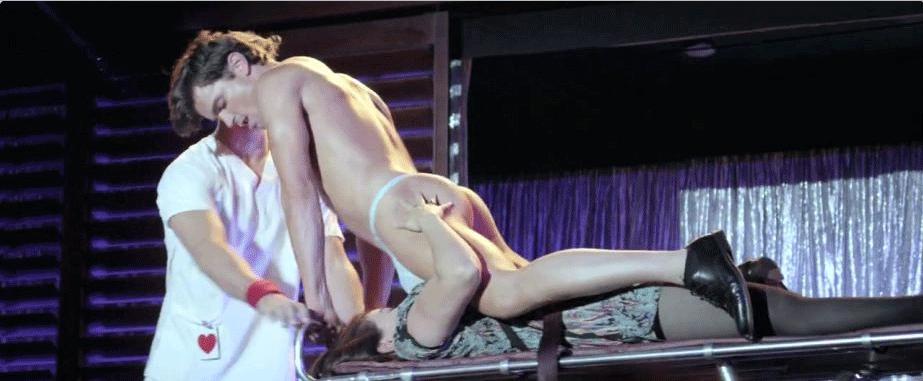
The movie features gratuitous breast scenes galore (yes, the breasts are the scene) and full body (side and back) female nudity. One of the male stripper’s wives is reduced to a pair of breasts that are passed around when her husband encourages another male stripper to fondle them because “she loves it.”  The few recurring female roles in the cast are flat with no character development, including the romantic interest, while the white men in the film enjoy extensive character development.

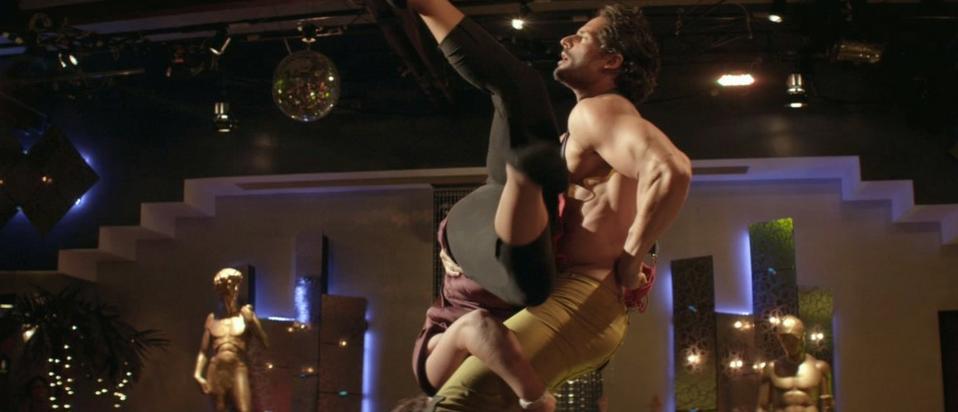
Other disturbing moments are peppered throughout the movie.  Magic Mike (Channing Tatum) makes a thinly veiled rape innuendo when he’s “teaching” a younger guy how to approach a woman at a club: “Look what she’s wearing. She’s asking to be bothered.”  The movie also asks viewers to laugh at a larger woman who hurts a dancer’s back when he picks her up (see photo and trailer below).  And one of the main characters has a homophobic reaction when he’s grossed out that his sister thinks he’s gay.  Also, this is a story about white men where both women and men of color exist at the margins.  The Latino DJ is a drug dealer (how original), and the two Latino dancers barely talk.I was heartened and humored by grandmas and teenage girls asserting their sexual subjectivity in the theater by yelling at the screen.  It is wonderful to see so many women spending money for an experience that purports to cater to our sexual desires.  We want to feel powerful when it comes to our sexuality because we’re constantly robbed of sexual subjectivity through popular culture, pornography, the male gaze, and in the bedroom.  One Sexual Revolution later, men are still twice as likely to achieve orgasm than women during sex.
If Magic Mike is our sexual outlet, we deserve something better.  When women turn around and engage in the same objectification that harms us, is that empowering?  When the men we’re objectifying on the screen are degrading women and prioritizing their own sexual pleasure, and we eroticize this behavior, is that empowering?  And when women eroticize sexual acts that don’t involve the clitoris/orgasm, is that empowering?  I don’t have definitive answers to these questions, but I do know that Magic Mike would have been a radically different film had it truly been about female sexual pleasure.  It’s high time more women were calling the shots in Hollywood and making mainstream movies that feature female sexual pleasure.

Magic Mike trailer.  To see the sexual double standard, note how the trailer frames male stripping as a “fantasy” life, and imagine this term being applied to female strippers in a Hollywood trailer.

[youtube=http://www.youtube.com/watch?v=eMU7s6cwxEM]

Caroline Heldman is a professor of politics at Occidental College. You can follow her at her blog and on Twitter and Facebook.

My post on the centrality of whiteness in fashion photos — whether magazine photos, catalogs, or ads — inspired several readers to send in other examples related to this trend.

YetAnotherGirl and Julian S. sent in a link to a Jezebel post about the new J.Crew catalog, which presents the two models in J.Crew clothing amid a group of local children, who are used to help signal the exoticism of the location:

Marianne sent in a couple of ads for Naf Naf, a French fashion brand, that show a slight variation, utilizing ethnic/cultural differences within Europe. They show a “luminous, lightning-blond caucasian woman and the dark, anonymous and yet welcoming bohemians,” seemingly meant to evoke popular imagery of the Romani.

And finally, H. pointed out Louis Vuitton’s “Journey” commercial, which she actually saw at an indie movie theater. It provides an interesting counterpoint, as groups other than Caucasians can be included as central characters in the narrative, as long as they are privileged LV consumers, with others presented in the more peripheral setting-the-tone role. As H. explains,

In this ad they include the story line of the (presumably African?) black man who is dressed in an elegant Western-style linen suit, but who is barefoot and rubbing the dust off of an old family photo. An interesting racial counterpoint — and one which suggests a metanarrative which is not only about race but also quite pointedly about class.

Take a look:


Gwen Sharp is an associate professor of sociology at Nevada State College. You can follow her on Twitter at @gwensharpnv.

During college I spent a season selling fireworks at a roadside stand in South Dakota.  As you can see on the map below, posted at Buzzfeed, South Dakota is one of the few states where you can buy serious fireworks.  We sold some pretty hard-core stuff, but I mostly liked working there because the packages were so pretty.

In any case, if you haven’t lived in any of the dark blue states, you may not have seen the roadside stands that pop up this time of year.  Some are elaborate seasonal operations, but others are rather ramshackle.  Fireworks for sale end up getting crammed into all manner of places.  Lucky for us, in 2010 photographer Bill Vaccaro drove across the country snapping shots of these retailers.

Lisa Wade, PhD is an Associate Professor at Tulane University. She is the author of American Hookup, a book about college sexual culture; a textbook about gender; and a forthcoming introductory text: Terrible Magnificent Sociology. You can follow her on Twitter and Instagram.

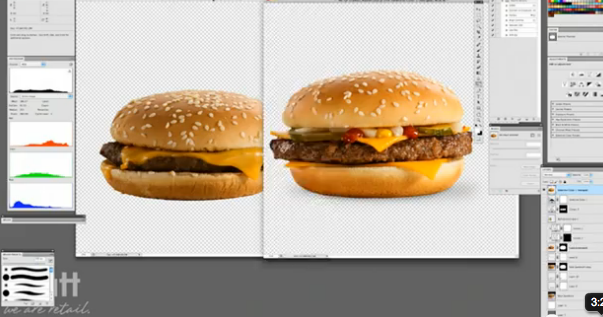
We’ve posted a number of examples that make it clear just how re-touched the images of people we see in magazines and ads are. Of course, everything else in those images is photoshopped too, leading to those “hmmm, this doesn’t look quite  like it does on the box” moments.

McDonald’s Canada released a video showing a photoshoot for a hamburger. It reveals the techniques that are used to get that luscious, huge, fresh look that so tempts us in food ads. I think it’s great to add to the examples of retouching people to spark discussion on our relationship to the manipulated images around us and the effects of different types of retouched images.

Thanks to Dmitriy T.C. for the tip!

It seems so.

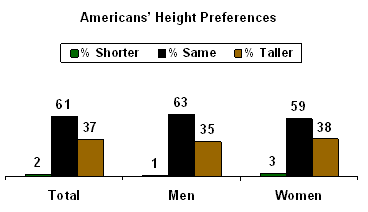
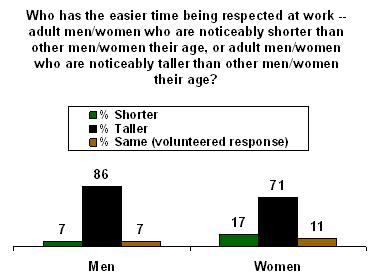
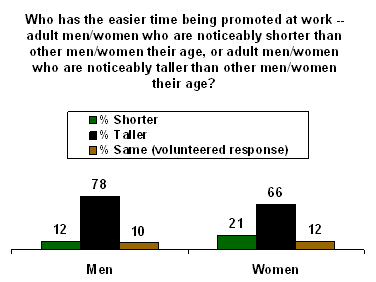
According to a Gallup poll, “Americans believe that one’s stature has a decided effect on a variety of important dimensions.”

More people would prefer to be taller than shorter:

People think that taller people have a greater likelihood of getting respect at work, and even getting promoted:


Via Geoffrey Arnold, at The Social Complex.  See also Arnold’s guest posts from The Social Complex introducing the concept of heightism as a gendered prejudice and discussing heightism (and other icky stuff) at Hooters.

Lisa Wade, PhD is an Associate Professor at Tulane University. She is the author of American Hookup, a book about college sexual culture; a textbook about gender; and a forthcoming introductory text: Terrible Magnificent Sociology. You can follow her on Twitter and Instagram.

This is the first part in a series about how girls and women can navigate a culture that treats them like sex objects. Cross-posted at Ms.,  BroadBlogs, and Caroline Heldman’s Blog.

Around since the 1970s and associated with curmudgeonly second-wave feminists, the phrase “sexual objectification” can inspire eye-rolling. The phenomenon, however, is more rampant than ever in popular culture.  Today women’s sexual objectification is celebrated as a form of female empowerment.  This has enabled a new era of sexual objectification, characterized by greater exposure to advertising in general, and increased sexual explicitness in advertisingmagazinestelevision showsmoviesvideo gamesmusic videostelevision news, and “reality” television.

What is sexual objectification?  If objectification is the process of representing or treating a person like an object (a non-thinking thing that can be used however one likes), then sexual objectification is the process of representing or treating a person like a sex object, one that serves another’s sexual pleasure.

How do we know sexual objectification when we see it?  Building on the work of Nussbaum and Langton, I’ve devised the Sex Object Test (SOT) to measure the presence of sexual objectification in images.  I proprose that sexual objectification is present if the answer to any of the following seven questions is “yes.”

1) Does the image show only part(s) of a sexualized person’s body?
Headless women, for example, make it easy to see her as only a body by erasing the individuality communicated through faces, eyes, and eye contact:
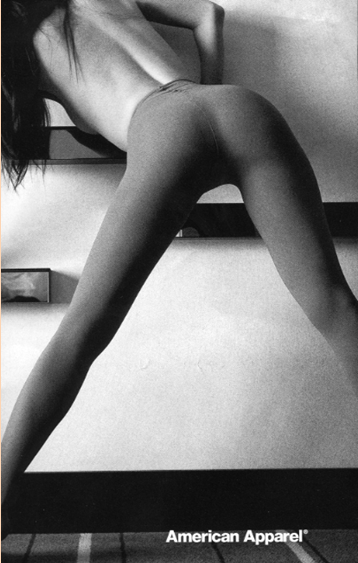
We get the same effect when we show women from behind, with an added layer of sexual violability. American Apparel seems to be a particular fan of this approach:

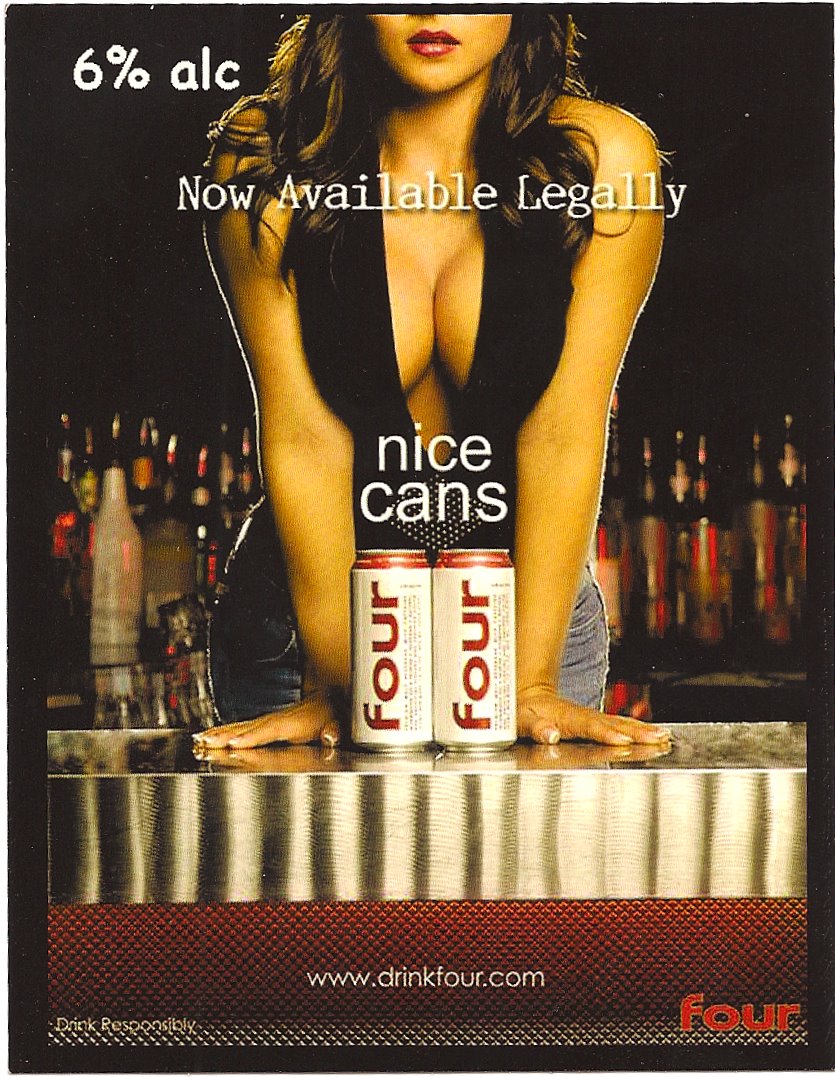
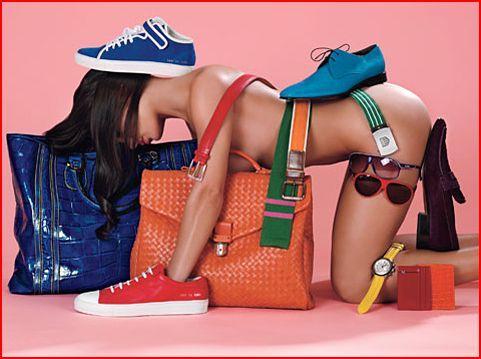
2) Does the image present a sexualized person as a stand-in for an object?

The breasts of the woman in this beer ad, for example, are conflated with the cans:

Likewise, the woman in this fashion spread in Details in which a woman becomes a table upon which things are perched. She is reduced to an inanimate object, a useful tool for the assumed heterosexual male viewer:
Or sometimes objects themselves are made to look like women, like this series of sinks and urinals shaped like women’s bodies and mouths and these everyday items, like pencil sharpeners.

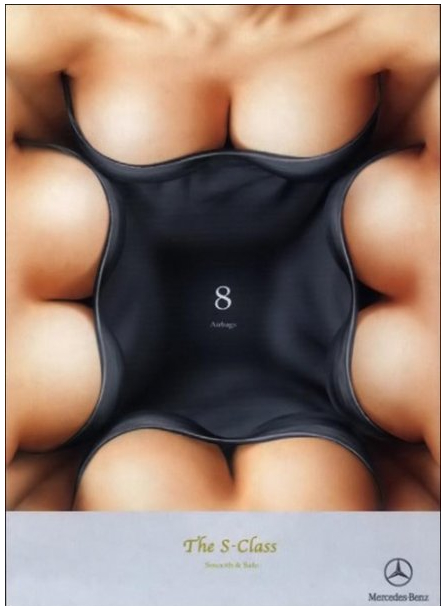
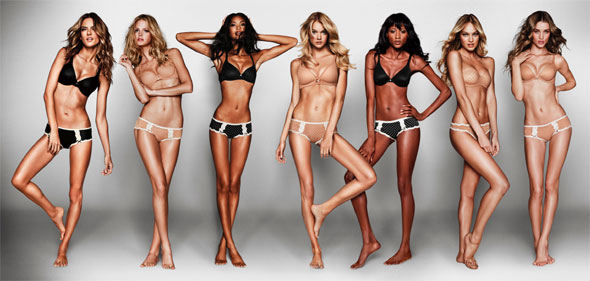
3) Does the image show a sexualized person as interchangeable? 
Interchangeability is a common advertising theme that reinforces the idea that women, like objects, are fungible. And like objects, “more is better,” a market sentiment that erases the worth of individual women. The image below advertising Mercedes-Benz presents just part of a woman’s body (breasts) as interchangeable and additive:

This image of a set of Victoria’s Secret models, borrowed from a previous SocImages post, has a similar effect. Their hair and skin color varies slightly, but they are also presented as all of a kind:

4) Does the image affirm the idea of violating the bodily integrity of a sexualized person that can’t consent?

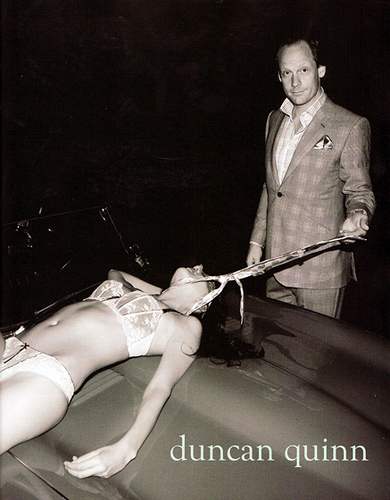
This ad, for example, shows an incapacitated woman in a sexualized positionwith a male protagonist holding her on a leash. It glamorizes the possibility that he has attacked and subdued her:

5) Does the image suggest that sexual availability is the defining characteristic of the person? 

This ad, with the copy “now open,” sends the message that this woman is for sex.  If she is open for business, then she presumably can be had by anyone.

6) Does the image show a sexualized person as a commodity (something that can be bought and sold)?

By definition, objects can be bought and sold, but some images portray women as everyday commodities.  Conflating women with food is a common sub-category.  As an example, Meredith Bean, Ph.D., sent in this photo of a Massive Melons “energy” drink sold in New Zealand:
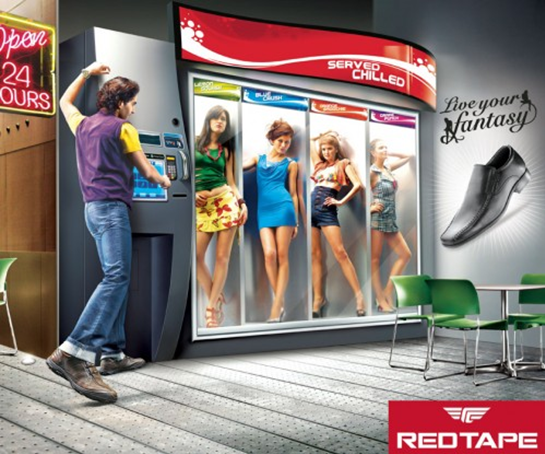
In the ad below for Red Tape shoes, women are literally for sale:

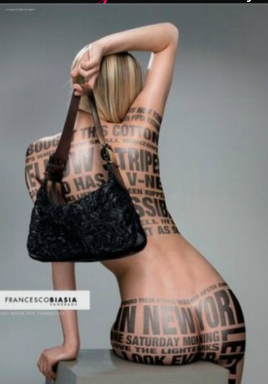
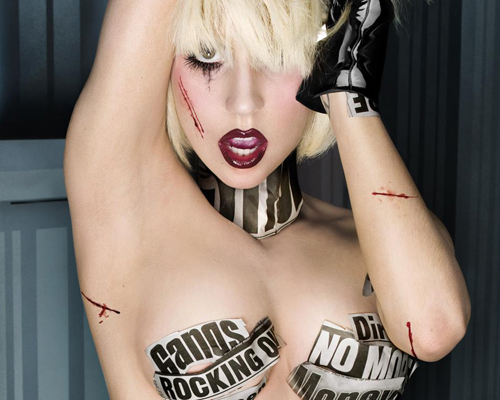
7) Does the image treat a sexualized person’s body as a canvas?

In the two images below, women’s bodies are presented as a particular type of object: a canvas that is marked up or drawn upon.

——————

The damage caused by widespread female objectification in popular culture is not just theoretical.  We now have over ten years of research showing that living in an objectifying society is highly toxic for girls and women, as is described in Part 2 of this series.

Caroline Heldman is a professor of politics at Occidental College. You can follow her at her blog and on Twitter and Facebook.
SocImages News:

Lisa appeared on the pop culture podcast Sounds Familiar to talk about the role of women in horror flicks.  Are slasher flicks feminist?  Well, kinda they are!

She also served as the guest expert on KPCC’s AirTalk for a conversation on the grandfather who was kicked out of a Barnes & Noble children’s book section for being a single male.  She called it  “gender profiling” (listen).

The folks from Office Hours, one of our sibling blogs at The Society Pages, posted a podcast with Lisa and Gwen discussing Sociological Images and public sociology more generally.

The Guardian reposted part of Matt Cornell’s SocImages post on his “man boobs” and Playboy Radio had him on for an “awkward” Q&A.

Quotes and Links:

We were quoted or linked at The Atlantic, the Kansas City Star, TV Tropes, the Huffington Post, and Jezebel.

New Resources:

Gwen added a section on politics to her Intro to Sociology Course Guide and Lisa put together a new Pinterest page, this one collecting all the images from our posts on Disney.

Social Media ‘n’ Stuff:

Finally, this is your monthly reminder that SocImages is on TwitterFacebookGoogle+, and Pinterest.  Lisa is on Facebook and most of the team is on Twitter: @lisadwade@gwensharpnv@familyunequal@carolineheldman@jaylivingston, and @wendyphd.

In Other News…

We wanted to give a shout out to the anonymous fan who added this sticky note to the paperwork for a book Lisa ordered on interlibrary loan.   You made our day!  :)

A while back, in a post about Kim Kardashian’s fame, Lisa summarized the concept of a patriarchal bargain as “a decision to accept gender rules that disadvantage women in exchange for whatever power one can wrest from the system. It is an individual strategy designed to manipulate the system to one’s best advantage, but one that leaves the system itself intact.”

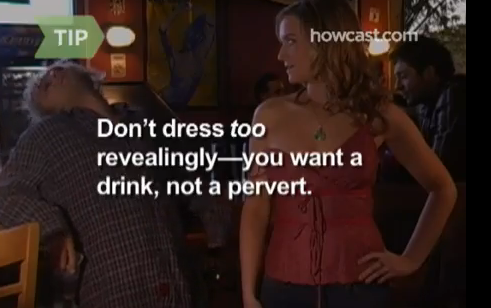
Christine B. sent in an excellent example of an individual-level attempt at empowerment with the confines of gender inequality. The video, part of the Howcast series of how-to videos, explains to women how to get men to buy them drinks at a bar:

In case you didn’t feel like watching the video, I can sum it up for you:

  • Dress sexy, but not slutty, or you’re asking for it. How do you know if you’ve crossed the line? Well, if any men act inappropriately toward you, you must have shown too much boob. Better luck next time!
  • Instead of planning a fun night out with your female friends, select only one — the bubbliest one, obviously — and go find a male-dominated environment.
  • Buy yourself one drink right off the bat, so it looks like you’re an independent-minded woman who isn’t trying to get free shit in return for being pretty. I mean, you are doing that, but you don’t want to make it obvious. Men might be turned off if the gendered exchange were made explicit.
  • Assume all men are stupid.
  • Don’t ever stop to question a system that tells women that trading on our appearance, faking interest in people, excluding friends from social outings because they might be annoying to random men you’ve never met, and being manipulative are all totally empowering and socially-acceptable ways to behave as long as ladies get a fairly low-cost item for free in return for our efforts.

Transcript after the jump.

more...