Search results for The

NPR’s Planet Money blog posted an interesting image of differences in how we allocate income based on how much we make. The image looks at three income groups and shows what percent of their  household income budget they spend various categories, using Bureau of Labor Statistics Consumer Expenditure Survey data:
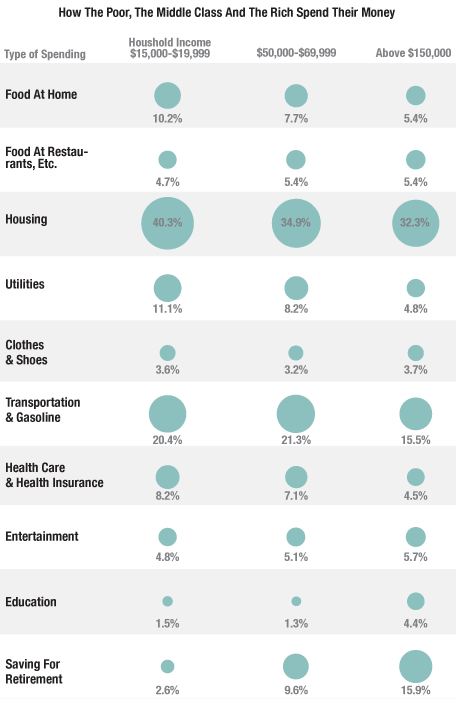
As we see, the largest expense for every group is housing; for the low-income group, 40% of their income goes just to paying for a place to live. They also use more of their income to cover basic necessities — utilities, food eaten at home, transportation.The high-income group, on the other hand,  spends quite a bit more on education.

Look at that last row: saving for retirement (which includes Social Security contributions). This is a particularly striking difference. The affluent are able to put away a significant portion of their income for retirement; for those living just above the poverty line, it’s much, much less than the amount financial planners would recommend (even the middle-income group is saving about the minimum amount generally recommended to prepare for retirement). When so much of your income goes to simply meeting day-to-day needs, saving for the future is a luxury many just cannot afford.

UPDATE: NPR has updated their post, saying the image they had up initially incorrectly. They posted a new image, with notably lower spending on housing:
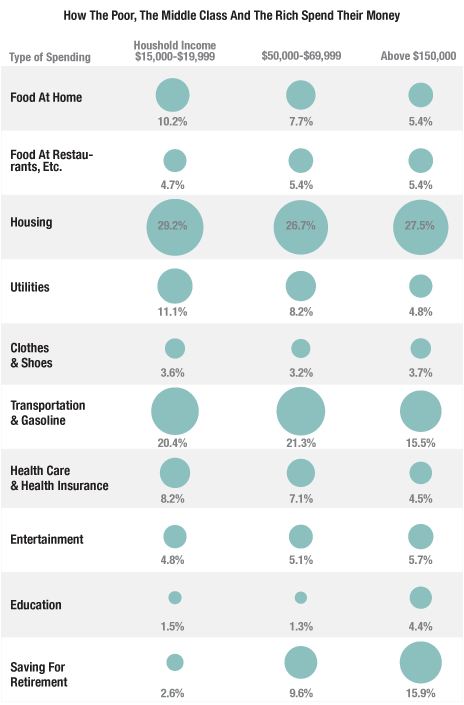
Eagle-eyed reader David C. pointed this out to me. The revised numbers seem surprisingly low to both of us.Looking at the NPR post again, I think I misunderstood what they were representing; I think this isn’t the percent of total income, but rather % of the household budget, which may not be identical. That said, I looked at some Consumer Expenditure Survey data (here and here) and can’t get the numbers to work out to what they’re showing in the updated image. If someone can, please send us a note at socimages(at)thesocietypages.org and we’ll do another update. Thanks!
Cross-posted at Reports from the Economic Front.

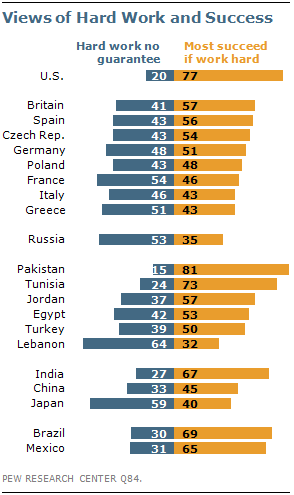
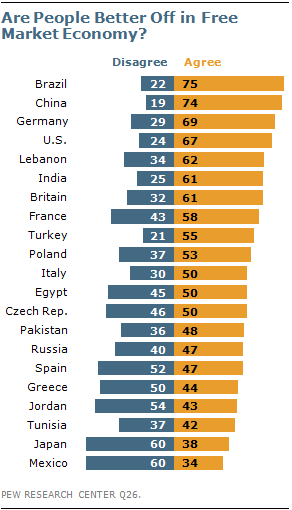
The Pew Research Center recently published a report titled “Pervasive Gloom About the World Economy.” The following two charts come from Chapter 4 which is called “The Causalities: Faith in Hard Work and Capitalism.”

The first suggests that the belief that hard work pays off remains strong in only a few countries: Pakistan (81%), the U.S. (77%), Tunisia (73%), Brazil (69%), India (67%) and Mexico (65%). The low scores in China, Germany, and Japan are worth noting. This is not to say that people everywhere are not working hard, just that many no longer believe there is a strong connection between their effort and outcome.

The second chart highlights the fact that growing numbers of people are losing faith in free market capitalism.  Despite mainstream claims that “there is no alternative,” a high percentage of people in many countries do not believe that the free market system makes people better off.

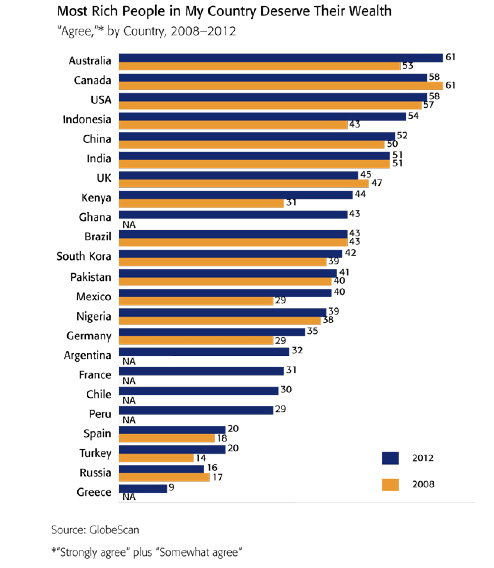
GlobeScan polled more than 12,000 adults across 23 countries about their attitudes towards economic inequality and, as the chart below reveals, the results were remarkably similar to those highlighted above.  In fact, as GlobeScan noted, “In 12 countries over 50% of people said they did not believe that the rich deserved their wealth.

It certainly seems that large numbers of people in many different countries are open to new ways of organizing economic activity.

Martin Hart-Landsberg is a professor of economics at Lewis and Clark College. You can follow him at Reports from the Economic Front.

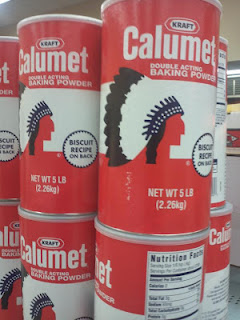
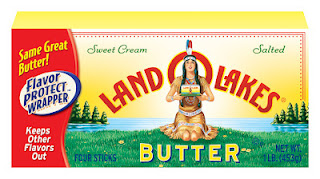
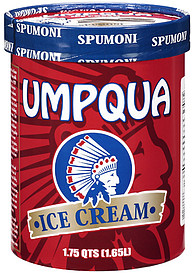
Adrienne K., who blogs at Native Appropriations, recently put together a post about food products that feature stereotypical images of Native Americans. I’m reposting some of them here, but check out her original post for more.

It started out with Calumet baking powder:

Adrienne explains,

In my head, I thought “I could make some stereotype biscuits for breakfast!” Which got me thinking. How many products with stereotypical imagery could I fit in one imaginary breakfast?

Excluding vintage products and items that weren’t easily available, she still found an awful lot. Indian Head corn meal, anyone?

Land-O-Lakes butter:

The Sue Bee Honey logo:

Umpqua ice cream:

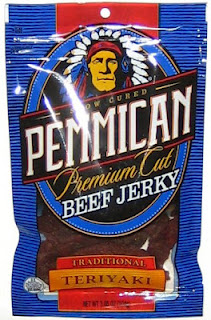
Pemmican beef jerky:

And you can top off your meal with Cherikee Red soda:

Adrienne explains,

In isolation, each of these would seem like no big deal–these are the “good” stereotypical images. The “noble savage.” No wild eyes or big noses, just headdresses and Indian maidens. But when taken as a collective, is it any wonder that most people in the world think of Native peoples as headdress-wearing Plains chiefs or buckskin-clad Indian women? I’m not saying there isn’t stereotypical imagery of other racial/ethnic groups in branding, but the ubiquity of Native imagery is striking.

Check out her blog for her full discussion of the problems with the repetition of these limited, anachronistic images of Native Americans.

SocImages News:

We hit milestones on both our Facebook and Twitter pages this month, exceeding 18,000 at the former and 8,000 at the latter.  We also celebrated our 5th birthday and almost 4,500 posts.  Congratulations to us!

And congratulations also to Christina Barmon, Georgia State University.  Barmon has written guest posts for us — on health advice to men and women in the 1920s and, most famously, on sitting, standing, and peeing — but, more importantly, she was awarded the ASA/SAGE Teaching Innovations & Professional Development Award this year! Congratulations Christina!

Upcoming Lectures and Appearances:

Lisa has started booking talks and lectures for the fall.  Her first talk will be at Indiana State University (Sept. 17th-19th) where she’ll be giving a featured lecture at the International Crime, Media & Popular Culture Studies Conference.

Newest Pinterest Page:

We now have a Pinterest page featuring our collection of material glamorizing violence in fashion (trigger warning).  It’s a depressing ride, if you want to take it for a spin.  We have 17 other boards, too, if you’d like to check out the list.

Social Media ‘n’ Stuff:

In case you’re new, we’re on TwitterFacebookGoogle+, and Pinterest.  Lisa is on Facebook and most of the team is on Twitter: @lisadwade@gwensharpnv@familyunequal@carolineheldman@jaylivingston, and @wendyphd.

In Other Very Important News…

We visited a little-known private, non-profit zoo in Moapa, NV called Roos n’ More.  They let us hold and pet monkeys, lemurs, bear cats, zebra, camels, toucans, wallabies, and, kangaroos!  The best part, though, was being swarmed by otters!  Here’s Gwen getting an otter kiss:

And here’s Lisa smiling as an otter goes down her shirt and comes out again.  Rawr!

This experience in no way undermined our belief that animals prefer us above all other humans.

Links and Quotes This Month:

Lisa Wade, PhD is an Associate Professor at Tulane University. She is the author of American Hookup, a book about college sexual culture; a textbook about gender; and a forthcoming introductory text: Terrible Magnificent Sociology. You can follow her on Twitter and Instagram.

Thanks to YetAnotherGirl and Kari B., we can now feast our eyes on this ad from Unik (“unique”) Wax Center.  It’s a promotion offering 50% off hair waxing for girls “15 and younger.”  The Consumerist reports that all procedures are fair game, including bikini waxes.

The usual concerns regarding the sexualization of young girls apply here.  Why do girls this young need to be concerned about how they look in bikinis?

Perhaps more interesting is the frame for why such a girl might want to undergo waxing. According to the 4th of July-themed ad, it’s to “celebrate freedom and independence.”  Implicitly, hers. So, to follow the logic to its endpoint, a girl of 15 or younger can’t feel free unless she’s hairless.

The company, responding to criticism, gave arguments along these lines.  They framed waxing as a “regular activity” and a “process in life” that “goes along with our country.”  Moms are coming in to get waxed (as all women do), explained the corporate offices, they’re dragging their tweens along with them (obviously), and the girls “have questions” and “get bored,” so the next step is to initiate them into the ritual.

So, the whole process is “natural,” as the ad copy specifies.  It is just an inevitable step in a supposedly universal way of (female) life.  And one that liberates women from… um, I don’t know what… embarrassment, I guess.

The ad is reminiscent of many similar campaigns aimed at adult women, ones that frame consumption of clothes, make-up, jewelry, and cosmetic procedures as expression of freedoms.  In this way, it’s a capitalist appropriation of feminism/liberation ideology.  It’s also a naturalization of what is, in reality, a lifetime of compulsory, expensive, and sometimes harmful beauty practices.

Lisa Wade, PhD is an Associate Professor at Tulane University. She is the author of American Hookup, a book about college sexual culture; a textbook about gender; and a forthcoming introductory text: Terrible Magnificent Sociology. You can follow her on Twitter and Instagram.


Five years ago today we posted our very first images: a re-touched magazine cover featuring Faith Hill and two almost identical Skyy Vodka ads that appeared in Maxim and Cosmo.

While people often congratulate us for coming up with the idea for the blog, we never actually intended the public to read it.  We initially started the site as a place for the two of us to share images that we used in teaching.  That’s it.

Accordingly, in our earliest posts we didn’t bother to do much explaining.  We didn’t think we’d ever have anyone to explain to!

Quickly, though, and we’re not sure why, people began reading.  So we started adding more descriptive titles.  And more people came!  So we started adding text explaining why we were featuring the particular image.  Eventually the blog evolved into one aimed at a wide array of readers — that is, not just each other — and it became what it is today.

So, we’d like to conclude by effusively thanking those early readers with whom we reimagined the blog and those of you who read today.  Almost 4,500 posts later, you’ve changed our lives and careers in unexpected and delightful ways!

————————

If you’d like to learn more about SocImages, you can visit our about page, listen to this recent Contexts podcast or read our recent publication, Blogging as Public Sociology (email us at socimages@thesocietypages.org if you’d like a copy).

In the wake of the shootings in a Colorado theater last week, Sean D. sent in a BBC video clip commenting on media coverage of mass murders.  It criticizes the typical response, which usually involves intense coverage dissecting every piece of the story, focusing closely on the killer and his motivations.  This can go on for days.

The narrator argues that this is exploitative — the media is using gruesome events to drive ratings (often for days at a time) — and it feeds into the public’s tendency towards voyeurism.  He also includes an interview with a forensic psychiatrist, Dr. Park Dietz, who specializes in such cases; he says that this type of coverage is the exact opposite of what the media should do… if it is interested in saving lives.  The attention, especially to the criminal himself, encourages other “anti-heros” to contemplate and execute mass murders themselves.

Lisa Wade, PhD is an Associate Professor at Tulane University. She is the author of American Hookup, a book about college sexual culture; a textbook about gender; and a forthcoming introductory text: Terrible Magnificent Sociology. You can follow her on Twitter and Instagram.

Sociologists use the term “stalled revolution” to describe how current state of the feminist movement.  It’s “stalled” in that, while women are (mostly) free to do what men do, men have been much more reluctant to do what women have traditionally done.  This makes sense because masculine things are generally valued and feminine things are not.

Housework is one of these things.  Married women still do twice as much housework and childcare as their husbands, on average.  If you used advertising as your metric, however, you’d think that women did 99%.  Here are three examples and a counter-example:

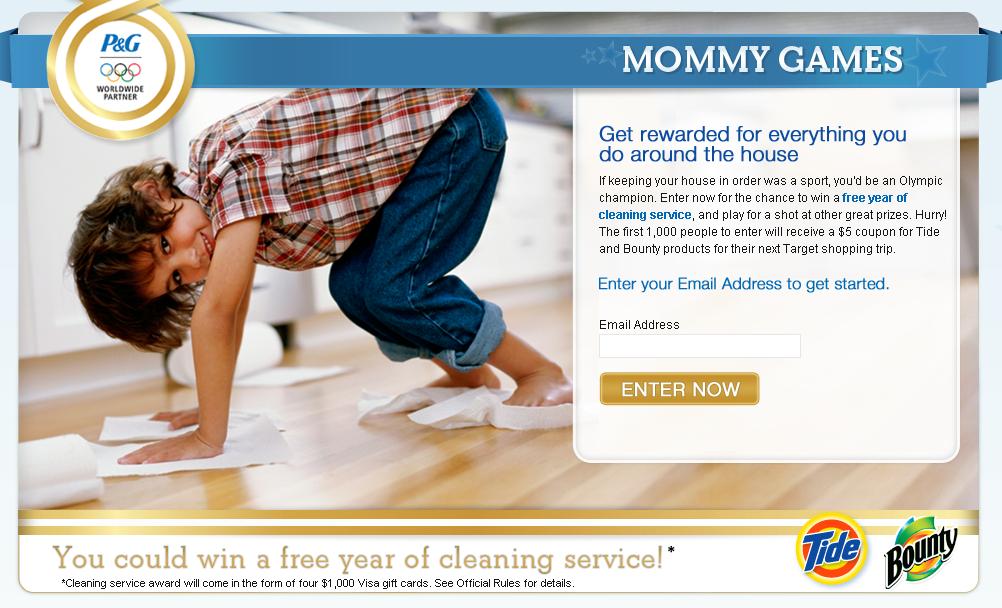
1.  Monica C. sent in an Olympics-themed content sponsored by Pampers.  It’s called the “Mommy Games,” as if only women parent:

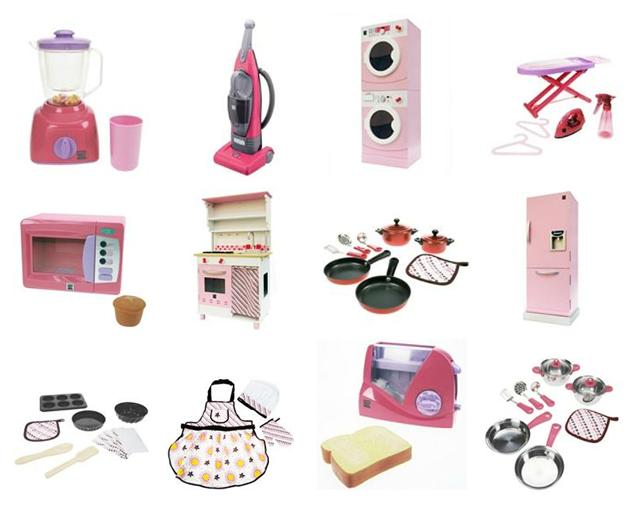
2. Appliance maker Kenmore has a children’s line, sent in by Anna C.  All of the products are in pink:

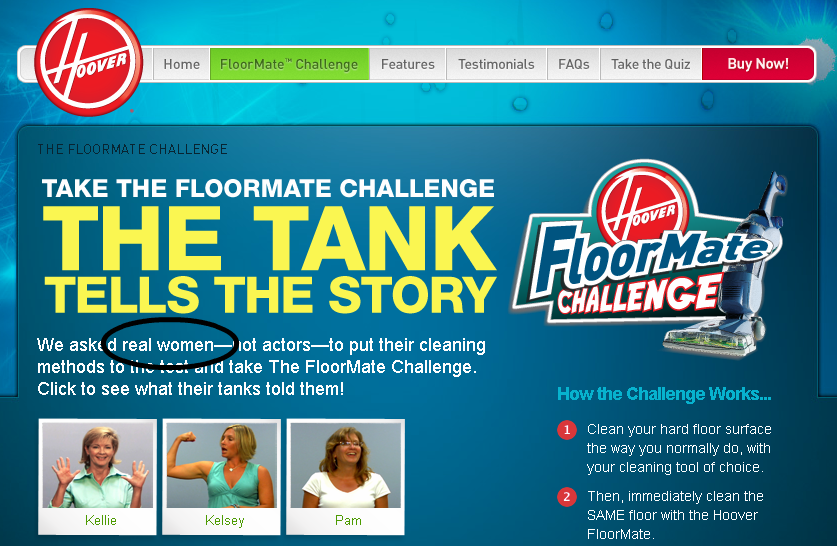
3. Allison spotted the same phenomenon at Hoover.  They are inviting “real women” to submit vacuum stories:

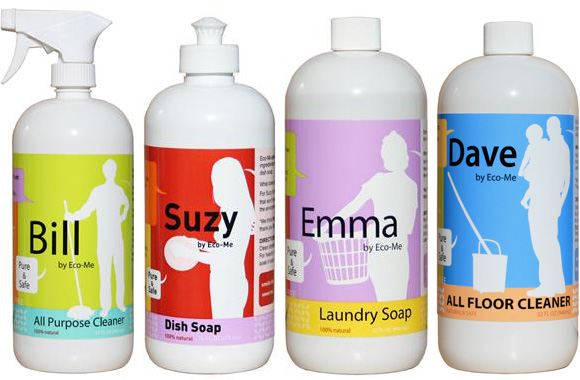
4.  As a counter-example, Kristie McC. sent in a screenshot of Eco-Me products.  The company  make a point of putting images of both men and women on their cleaning products.

So, there are exceptions, but the overwhelming message is that parenting and childcare is something that women do.  For more, see our gendered housework/parenting page on Pinterest.

Lisa Wade, PhD is an Associate Professor at Tulane University. She is the author of American Hookup, a book about college sexual culture; a textbook about gender; and a forthcoming introductory text: Terrible Magnificent Sociology. You can follow her on Twitter and Instagram.