Search results for The

Republicans tend to be Second Amendment absolutists.  The NRA and their representatives in Congress haven’t yet weighed in on the specific issue of, say, banning assault rifles in LAX, but they just might argue that such a law would be an unconstitutional infringement of the right to bear arms.

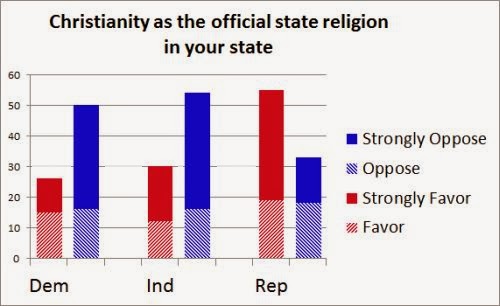
The  First Amendment begins, “Congress shall make no law respecting an establishment of religion,” and when it comes to the Establishment Clause, Republican ideas become a bit more nuanced.  Here are the results of a recent YouGov survey.  The question was, “Would you favor or oppose establishing Christianity as the official state religion in your state?”
1

Democrats and Independents oppose the establishment of Christianity – “strongly oppose” is their modal response.  But a majority of Republicans favor making their state a Christian state, and of those, most (two-thirds) are in the “strongly favor” pew.

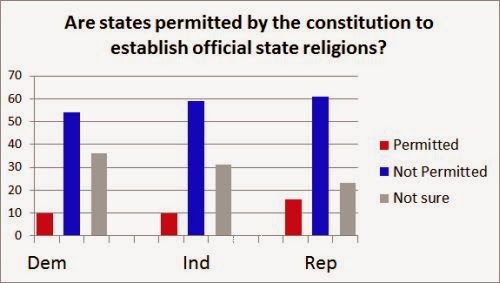
This is not to say that Republicans are unaware of the Establishment Clause.  “Based on what you know, would you think that states are permitted by the constitution to establish official state religions, or not?”
2

Republicans are slightly more likely than Democrats to say that the Constitution does not permit state religions.  They just think that on this one, the framers of the Constitution got it wrong.

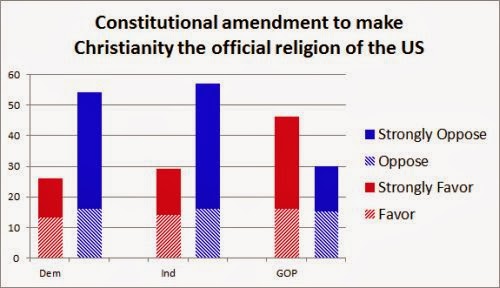
Republicans are only a bit less enthusiastic about establishing Christianity as the official religion of the entire country.  “Would you favor or oppose a Constitutional amendment which would make Christianity the official religion of the United States?”
3

A plurality, 46% – almost a majority – want to correct the Framers’ careless omission by amending the Constitution.  We can’t know specifically what the people who favor this have in mind. Republicans themselves probably differ in their ideas. Maybe only symbolic gestures, like invoking Jesus’s blessing on public events. Maybe public indoctrination – requiring Christian prayer and Bible reading in the public schools. Or maybe more tangible forms of support – giving taxpayers’ money directly to Christian organizations for explicitly religious purposes.

In any case, this is an interesting piece of data to keep in mind for next time a representative of the political right argues that the Constitution is unamendable and inflexible.

Cross-posted at Montclair SocioBlog.

Jay Livingston is the chair of the Sociology Department at Montclair State University. You can follow him at Montclair SocioBlog or on Twitter.

In Other SocImages News:

Your Favorite Posts:

Tweet of the Month:

Yeah, when musician Amanda Palmer tweeted a SocImages article to her one million followers and implied we were smart?  That was cool.

Screenshot_3

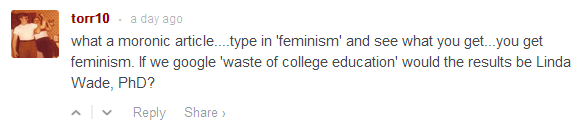
Insult of the Month:

We don’t know who this “Linda Wade” chick is, but… BURN!

1002010_416420351814579_249721298_n

Social Media Milestones!

This month we breached 30,000 Facebook friends and 15,000 Twitter followers.  Thanks to all of you who follow, like, and share!  And, for the curious, you might be interested to know that after Google search, Facebook is the #1 referrer to SocImages; Twitter is in the mix too.  So, for those of you who support our work, know that being a follower is a BIG help!  :)

Screenshot_1

Finally…

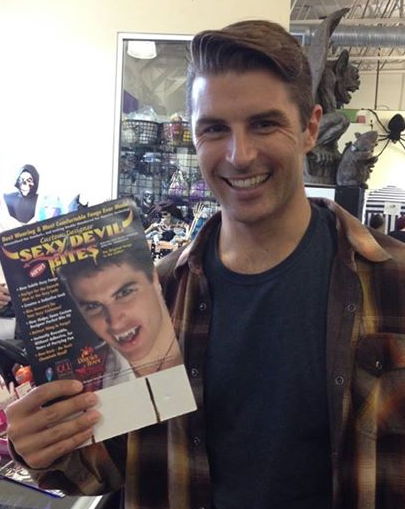
SocImages fan Jason W. wishes you a bloody delicious Halloween!  You should have made the face, Jason!  Next time make the face!  :)

Screenshot_3

Lisa Wade, PhD is an Associate Professor at Tulane University. She is the author of American Hookup, a book about college sexual culture; a textbook about gender; and a forthcoming introductory text: Terrible Magnificent Sociology. You can follow her on Twitter and Instagram.

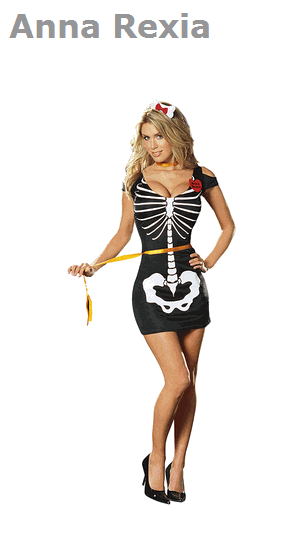
We originally posted about this six years ago.  But, yep, they’re still selling it: The “Anna Rexia Dreamgirl” costume.
Screenshot_6

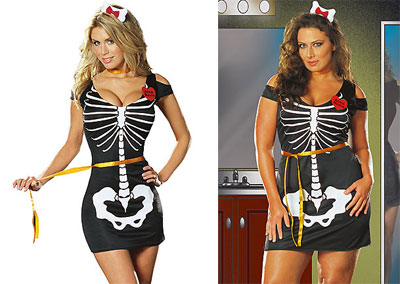
Copy reads: “You can never be too rich or too thin.”  Costume comes with a measuring tape belt.  In 2007, it was also featured in “plus size”:

H/t @RGWonser.

Lisa Wade, PhD is an Associate Professor at Tulane University. She is the author of American Hookup, a book about college sexual culture; a textbook about gender; and a forthcoming introductory text: Terrible Magnificent Sociology. You can follow her on Twitter and Instagram.

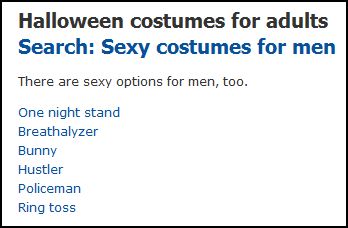
In many parts of the Western world, Halloween (for adult women, and increasingly for girls too) has morphed into an opportunity or imperative to dress sexy.  These costumes for women and girls are par for the course, where men usually go for scary, funny, or creative.  Brandi H., however, found a link to “sexy costumes for men” at msn.com that claims “There are sexy options for men, too.”

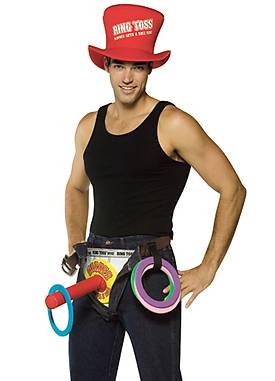
Let’s take a look.  While women’s sexy costumes are typically decidedly sexy (tight with lots of exposed skin), these men’s “sexy” costumes are simply suggestive.  In two cases, they “suggest” that men should be sexually serviced or played with (the “breathalyzer” and the “ring toss”):

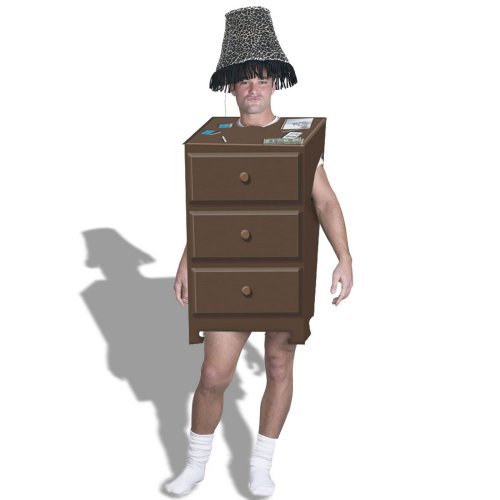
In a third, the joke is that he is a perfect candidate for casual sex (the “one night stand”):

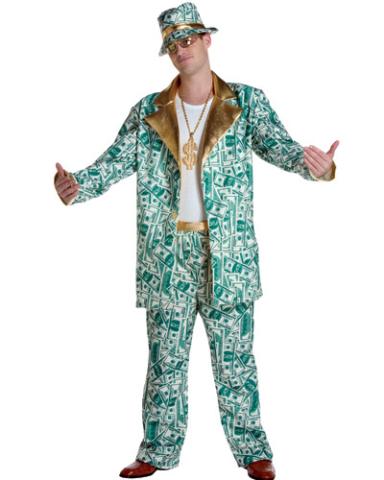
In a fourth, the costume is simply sexy because it’s related to (stereotypes) about prostitution (the “hustler”):

So, when women go sexy for Halloween, it usually means being seen as a sex object for others.  When men go sexy, it means joking about how men should be sexually serviced, have access to one night stands, or being in charge of and profiting from women’s bodies.  A different type of “sexy” entirely.

The other two costumes are simply non-sensical in context.  I suppose policemen (and men in uniform in general) are supposed to be sexy in American culture.  And I guess bunnies are related to Playboy bunnies?  But the costume certainly misses the mark.

Cross-posted at Ms.; originally posted in 2010.

Lisa Wade, PhD is an Associate Professor at Tulane University. She is the author of American Hookup, a book about college sexual culture; a textbook about gender; and a forthcoming introductory text: Terrible Magnificent Sociology. You can follow her on Twitter and Instagram.

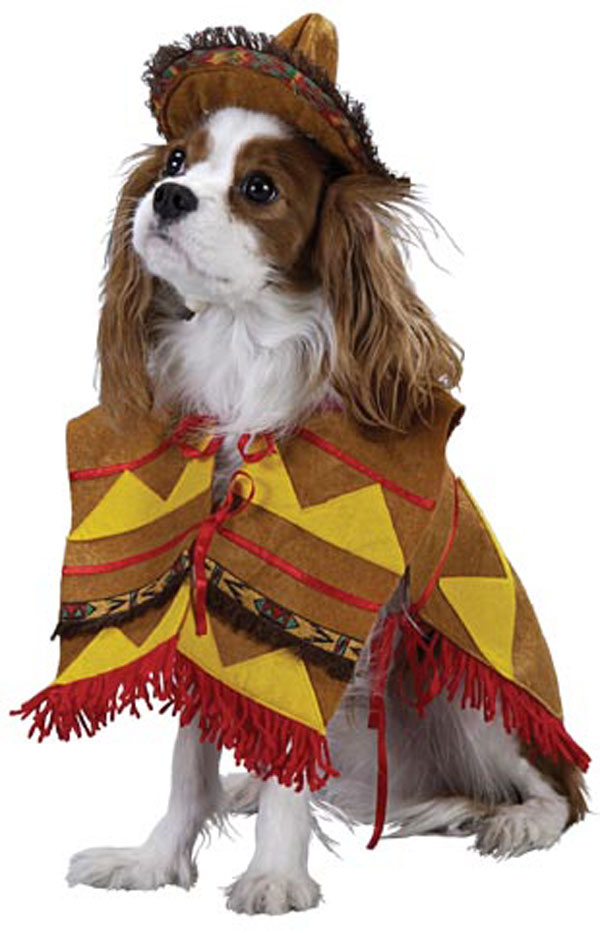
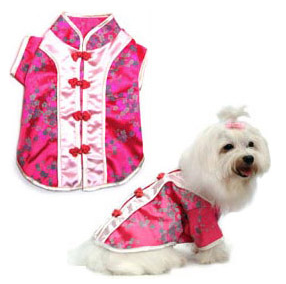
Can we at least agree that it’s racist to dress your dog up like a racial caricature?

“Little Spanish Bandito Dog Costume” (link):

4659-large

“The Geisha Dog Costume” (link):
Screen_shot_2009-10-22_at_11_47_11_AM

“Pup Shalom Dog Costume” (link):


futurememories_2073_276562741)

“Indian Dog Costume” (link):

brandsonsale-store_2073_22060987

Originally posted in 2009, but the links are still live! Via Alas A Blog.  

Lisa Wade, PhD is an Associate Professor at Tulane University. She is the author of American Hookup, a book about college sexual culture; a textbook about gender; and a forthcoming introductory text: Terrible Magnificent Sociology. You can follow her on Twitter and Instagram.

UPDATE: I may have been wrong about this one and, if so, I apologize.  The Univ. of Alabama has released a statement saying that the image is not photoshopped, including a quote from the student saying “It’s kind of funny, but people are blowing it out of proportion a little bit.”  If anyone has further information on this story, please email it to socimages@thesocietypages.org.

In 2000, the University of Wisconsin – Madison was sued by a man named Diallo Shabazz.  Because the college wanted to present itself as a diverse place, Shabazz, a black man, had been featured in university marketing materials for several years.  That year, however, his face was photoshopped into a picture of a crowd at a football game.   He complained, but was blown off.  He’d had enough.  In his lawsuit, he asked not for a settlement, but for a “budgetary apology”: money dedicated to increasing the actual diversity of the campus.

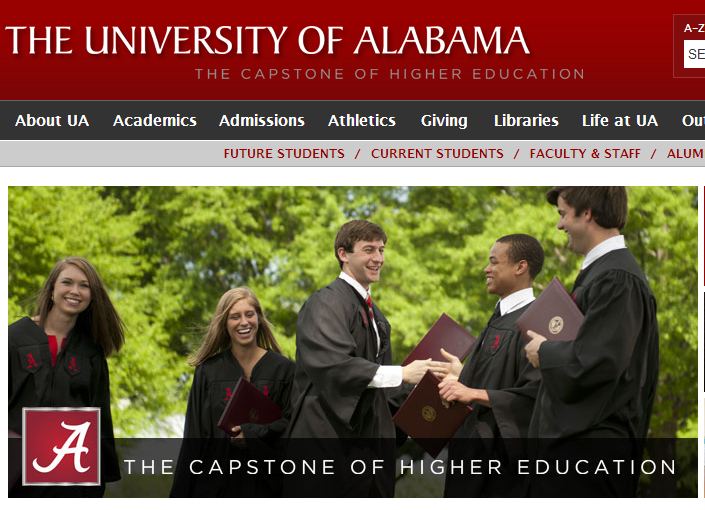
Today @EricTTung sent us another example of this kind of doctored diversity, currently the first slide on the homepage of the University of Alabama.  Do you see it?

Screenshot_31

How about now?

BXOzfqKCMAARAlE (1)

Note the skin color of the African American man’s hands.

As I’d written in the post about Shabazz, this teaches us both that colleges believe that diversity is a useful commodity with which to market their institutions and that, “if real diversity isn’t possible, cosmetic diversity will do.”

Recruitment of minorities to a mostly white campus: tricky.  Addressing the systematic educational underinvestment in minorities prior to arriving: expensive.  Retaining minorities in that environment: challenging.  Photoshop: easy.

Lisa Wade, PhD is an Associate Professor at Tulane University. She is the author of American Hookup, a book about college sexual culture; a textbook about gender; and a forthcoming introductory text: Terrible Magnificent Sociology. You can follow her on Twitter and Instagram.

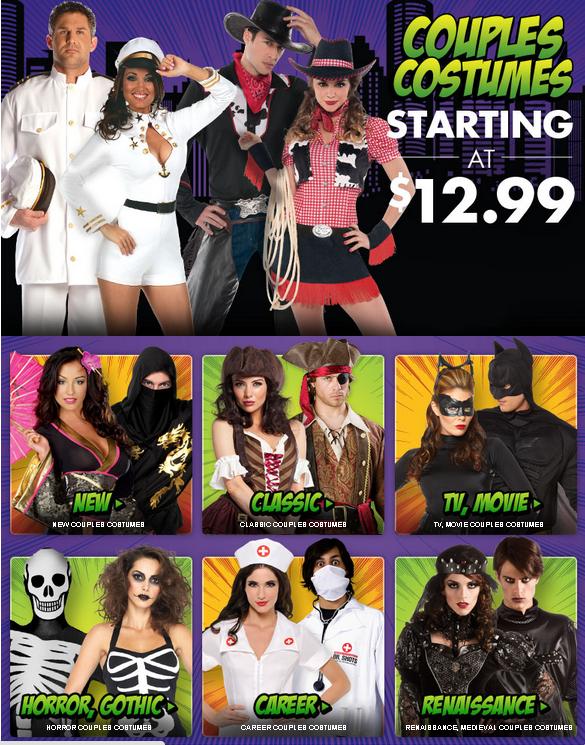
The word “heteronormativity” refers to a persistent privileging of “opposite”-sex couples and the relative invisibility of people who partner with others of their “same” sex.  Halloween costumes are a great example of the phenomenon.  Costumes designed for couples nearly always assume that they need to outfit a man and a woman, not two men or two women.

As an example, here is the main page for couples costumes at Party City.  Notice that all couples represented are heterosexual:

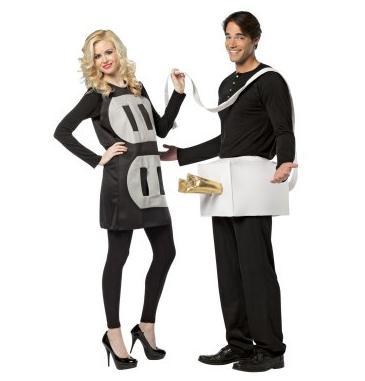
Occasionally the costumes even have heterosexualized themes that metaphorically refer to penile-vaginal intercourse, like this plug and socket costume at Buy Costumes

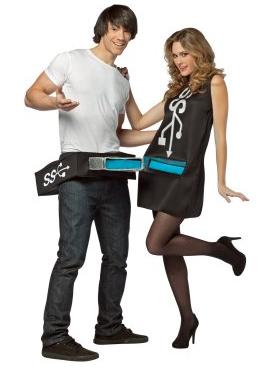
…and this updated usb and dock costume:

It’s a simple point, but worth observing.  For people who aren’t heterosexual, these Halloween costumes are just one more example of how they aren’t recognized or validated by our society.  We are increasingly accepting of gay people, yet they remain marginal in our collective imagination.

Originally posted in 2012.

Lisa Wade, PhD is an Associate Professor at Tulane University. She is the author of American Hookup, a book about college sexual culture; a textbook about gender; and a forthcoming introductory text: Terrible Magnificent Sociology. You can follow her on Twitter and Instagram.

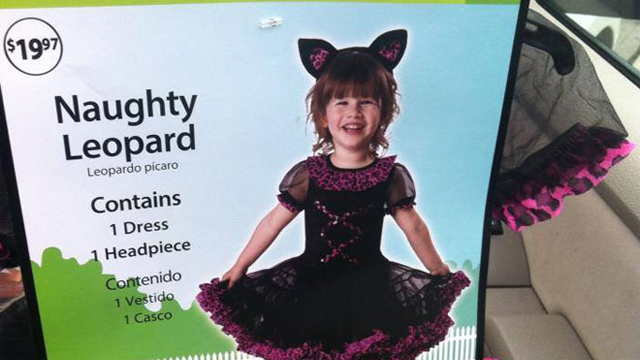
Lindy West for the win at Jezebel, asks what’s so sexualizing about calling a child’s costume “naughty.”  The costume below was widely criticized for sexualizing little girls, but West nicely observes that there is a non-sexual, child-related meaning to the word naughty.  You know, being bad.  The non-sexual version of bad.  Doing something you’re not supposed to do.  A non-sexual thing.  You know what I mean!  West writes:

Sure, naughty has had sexual connotations as far back as the mid-19th century, but it’s been used to describe disobedient kids since the goddamn 1600s. So why did we let hornay college chicks hijack the word in all its forms? Why can’t children be naughty anymore?

It’s a great question.

The instinct that “naughty” means “bad and sexy” probably stems in part from our Puritanical roots.  Today it gets tied up with the infantilization of women and the notion that women should be cute like girls.  Add the rampant sexualization at Halloween, including costumes in which women dress up like little girls dressed up like sexy adult women.  It’s hard to see how one could avoid interpreting this “naughty leopard” as an example of the sexualization of little girls.

1

Nevertheless, West is right.  The biggest problem with this costume’s title is that it includes the word “leopard.”  Because that’s just false advertising.  It doesn’t say sexy leopard and the dress — I’ll stop calling it a costume now — is not particularly sexualizing.

West calls for change:

Why don’t we send “naughty” back from whence it came—into the realm of wedgies and spitballs and pies cooling on the windowsill with bites taken out of them!? It’s time, people. You know it is. Take Back the Naughty. For the children.

And for the grown ups, too, who are tired of the idea that being a sexual person makes us bad, bad girls and boys.

Lisa Wade, PhD is an Associate Professor at Tulane University. She is the author of American Hookup, a book about college sexual culture; a textbook about gender; and a forthcoming introductory text: Terrible Magnificent Sociology. You can follow her on Twitter and Instagram.