Search results for The

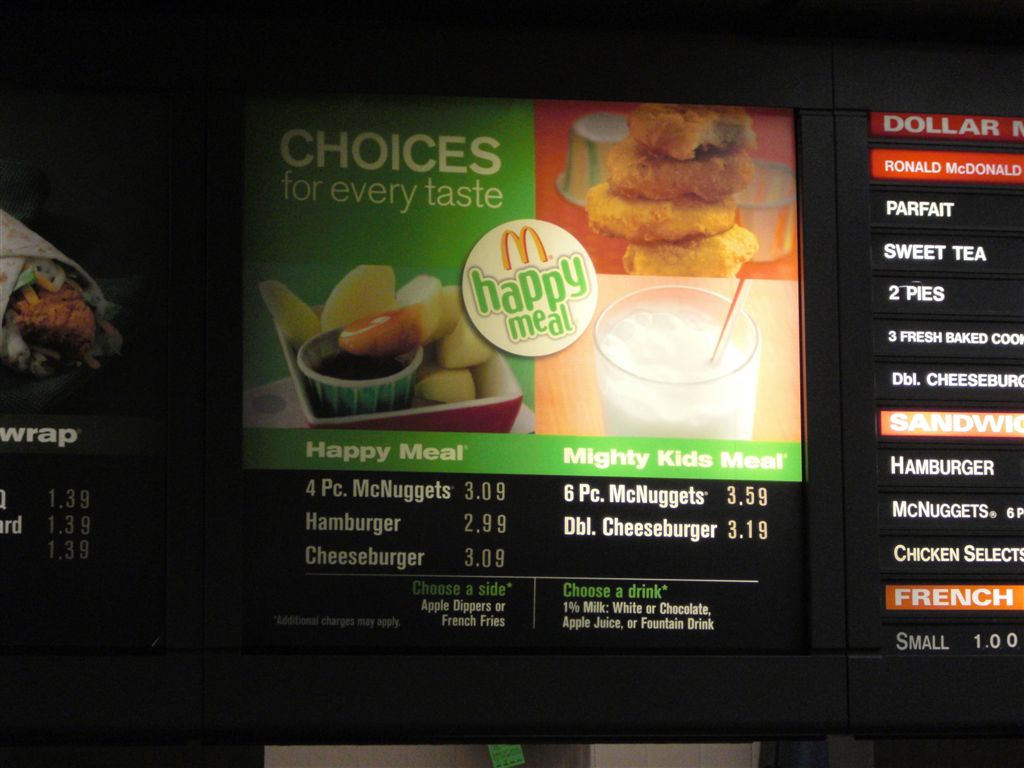
Even in an era when children’s obesity is a significant problem (though a commenter points out that this is contested), the ever-upping of serving sizes at McDonald’s doesn’t appear to be skipping kids.  Stephen W. took this picture at a McDonald’s in Pennsylvania this week. 
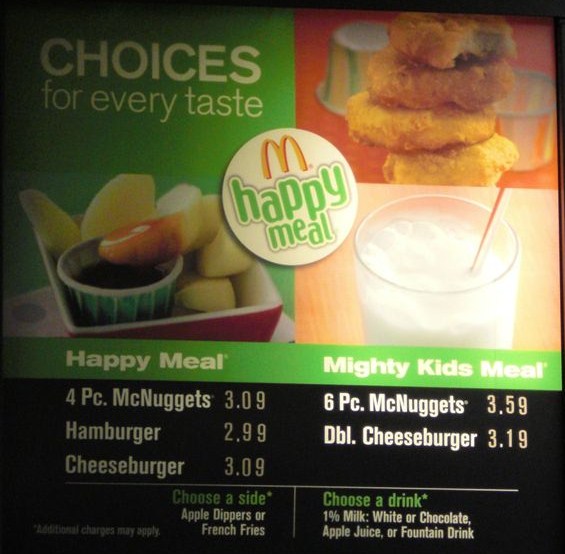
Now McDonald’s doesn’t just offer Happy Meals, but Mighty Meals.  Mighty Meals include a double cheeseburger instead of a hamburger or cheeseburger or a 6-piece McNugget instead of a 4-piece. 

By the way, a Mighty Meal with a double cheeseburger has 780 calories.

And, really, what kid doesn’t want to be mighty?  McDonald’s will sink pretty low for a few extra pennies.

Thanks for the tip and the picture, Stephen!
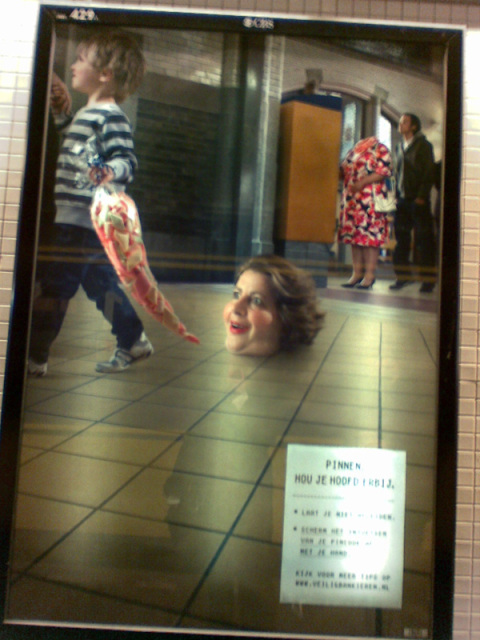
Over at Kate Harding’s site, user Daminique writes about an ad she saw in a Dutch train station:

The idea behind this ad: the fat lady gets distracted by a bag of candy, ‘loses her head’, and people could see her PIN number because she wasn’t paying attention.

I could get really analytical here, but I run the risk of vitriolic sarcasm. I’ll just say that this ad is a great illustration of the societal connection between “health” and moral goodness, not to mention a cheap-shot joke at the expense of fat people.

Picture taken by Damanique.

Elizabeth recently posted about an ad for Motrin that suggested that you should take pain medicine so as to keep walking in pain-inducing high heels.  The message was, essentially, “Suffer for fashion, ladies!  Motrin will help!”  I wanted to discuss, also, this second ad in their series (found here) and an anonymous commenter egged me on:

[youtube]https://www.youtube.com/watch?v=XO6SlTUBA38[/youtube]

They start off saying that how mothers make decisions about how to carry their infants according to what is in style (“Wearing your baby seems to be in fashion”).  They then point out that what is currently in fashion is painful for mothers.  But, of course, moms are going to do it anyway, because the sacrifice is for the child (“It’s a good kind of pain, it’s for my kid”).  But also about fashion!  And about how in-fashion it is to be a mom!  (“Plus it totally makes me look like an official mom”).

The ad trivializes motherhood (threatening to reduce it to fashion), equating it, in a sense, to the high heels in the other ad.  At the same time, it legitimizes suffering in the service of your child, which reinforces the ideology of intensive mothering that has ramped up the must-haves and must-dos of mothering like never before in human history.

The good news is that Motrin pulled this ad campaign and has apologized after bloggers took them to task.

Lisa Wade, PhD is an Associate Professor at Tulane University. She is the author of American Hookup, a book about college sexual culture; a textbook about gender; and a forthcoming introductory text: Terrible Magnificent Sociology. You can follow her on Twitter and Instagram.


Politics has long been considered a masculine domain.  After all, there are issues, and there are “women’s issues.”  However, in this election season, The View has delved deeply into politics.  Reactions to this reveal the assumption that politics are for men.

First, Bill O’Reilly’s appearance on The View can be described as nothing if not sexist.  Essentially, his message was “Don’t worry your pretty, little emotional heads about politics, ladies!” The View is just “entertainment,” according to O’Reilly, because it’s for women.

[youtube]http://www.youtube.com/watch?v=F6rR2OwaY1c[/youtube]

Second, soon after Joy Behar appeared on Larry King, King asked her “When did ‘The View’ become this?  When did it go off-track?”  King’s question reveals his assumption that women’s media is for women’s issues, and those are, simply, not real politics (read the transcript here).

Ironically (awesomely), after 12 years on the air, this election season marks the first time that The View has been the #1 watched daytime show, “…garnering its biggest aud[ience] ever (6.2 million) on Nov. 5, the Wednesday after the election” (source).

So, it turns out, women are interested in politics after all.

(Thanks to Gwen for help on this post.)

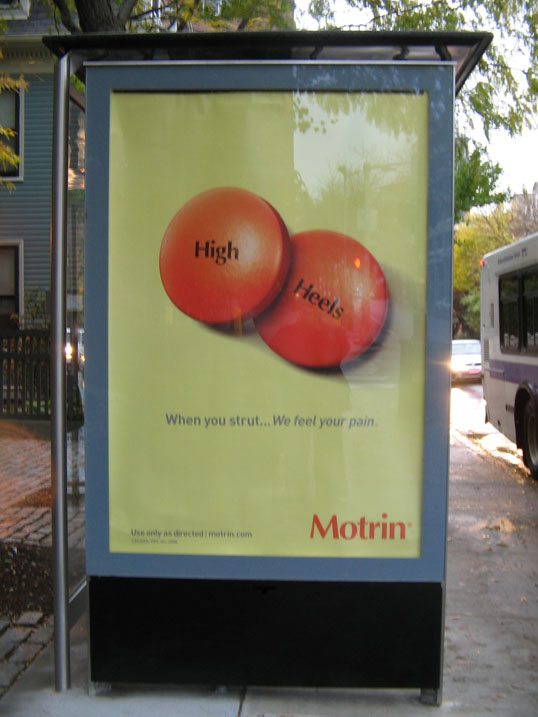
Motrin shows ads on the sides of bus shelters in the Boston metro area. Here’s one, which says, “High heels…when you strut, we feel your pain.”

"When you strut, we feel your pain."

Another ad in the series says, “30-pound stroller…when you lift, we feel your pain.” I can only find these 2 examples so far, and it seems they are both gendered feminine, associated with a shoe style worn almost exclusively by women and with an activity [stroller use = child care] connoted as feminine.

Burk brought my attention to the video game Battle Raper. I found a Battle Raper website, but it was all in Japanese, and I couldn’t find an English version, so I will provide you a short description from Wikipedia:

Battle Raper is a 3D fighting game in which the objective is to strip, grope, and sometimes actively rape the female characters, including a special move by the boss character and only male fighter where the female opponent is forced to perform fellatio as the camera zooms in. Like in most Hentai games, however, the penis is rendered invisible or transparent. There is also a feature in the game which allows the player to have sex with the female characters.

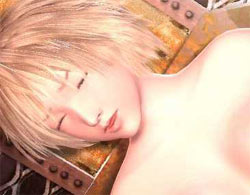
Here is a screenshot (found at Something Awful) of a female character crying because she is being forced to perform oral sex on the male character:

You can also damage your opponent by molesting their breasts or crotch. Once you win the game playing each of the different characters, you open a function where you can look at all the rape scenes. Here’s a shot of a female character’s face as she’s being raped:

Apparently in Battle Raper 2, they took out the rape function.

A simple description of this game will have to do, because I just can’t bring myself to write any commentary about it.

UPDATE: For the record, I’m not saying a) the Japanese are more sexist than other cultures, b) this game is (or isn’t) representative of video games in general or hentai games in particular, c) that video games lead to any particular behaviors or make people act violently, or d) that people shouldn’t be able to play these games in the privacy of their own homes.

It was sent to me as a possible post, I thought it was interesting, and I thought the discussion by some gamers I found on different websites was also fascinating: lots of people saying “Oh, I play violent stuff, but this was unacceptable even for me!” and saying how they put rape in a different category than any other type of violence, so these types of games are worse than “regular” violent video games. I thought of it as a case that might be useful for discussions of cultural representations of rape, and particularly how we often treat rape as a “special” type of crime that is somehow worse than any other type, possibly even murder. Why we do that, and what it means (particularly, how does it impact the stigmatizing of rape victims, who are often treated as though they are permanently broken and defiled?), are sociologically interesting questions.

NEW (Apr. ’10)! Dmitriy T.M., Beth W., Tom M., Abby D., and Jillian Y. all sent in another game with the same theme. The narrative for this one, called Rapelay, is as follows:

The player plays as a chikan (a perverted man who frequently fondles women) in crowded subway trains. A young woman named Aoi has the player arrested for molesting her. Afterwards, the player plans to exact revenge by molesting and raping her entire family (source).

This is the cover:

A still from the game:

Most media coverage won’t offer images, saying that they are too graphic to show.

A main source of the wage gap between men and women is job segregation.  Men and women are sorted into different jobs and jobs associated with women are paid less.

Below is a list of occupations and their average wages for 2007 from The Bureau of Labor Statistics.  I picked out occupations that were rather straightforward (not a random sample, just an illustrative one), put them in order from lowest to highest, and colored them according to whether they are feminine (pink) or masculine (blue) occupations.  Comments below.

Parking Lot Attendants:  $8.82
Child care workers:    $8.82
Coatroom attendants:   $9.18
Bellhops:  $9.25

Sewing machine operators:   $9.31
Manicurists and pedicurists:   $9.60
Home health care aid:  $9.62

Stock clerks:   $9.85           
Janitors:   $10.00

Hairdressers:  $10.68
Security Guards:  $10.85
File clerks:  $11.06

Pre-school teachers:  $11.12
Barbers:  $11.31
Receptionist:  $11.40
Bus Driver (school):   $12.43
Construction workers:   $13.13
Butchers:   $13.87

Dental Assistants:   $15.17
Bus Driver (city):   $15.94
Roofers:   $15.98
Car mechanics:   $16.43
Truck drivers:   $17.41
Electricians:   $21.53

1. Notice that feminized occupations, occupations that are disproportionately female, cluster towards the lower wage end of this hierarchy.  

2. Notice also that, were we to rank these occupations in order of importance or difficulty, we might come out with a very different ranking.  Importance and difficulty does not necessarily translate into wages. 

For example, child care workers and home health care workers are paid only a bit more or no more than parking lot attendants. And coatroom attendants are paid more. So coats and cars are, I guess, pretty important.

Car mechanics are paid more than dental assistants.  They require a similar amount of training, yet we still pay those taking care of our cars more than those taking care of our teeth.

And pre-school teachers are paid less than butchers and bus drivers.  Is preparing our children for school less important than getting them there?  Do we value the man preparing our meat more than we value the woman tending to our child?

3. Finally, notice that some jobs come in gender specific forms and the feminized form is paid less. For example, maids are paid less than janitors and hairdressers are paid less than barbers.

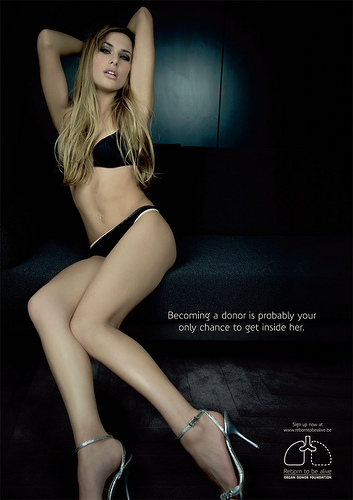
Xavier M. sent us a link to this print ad, which he saw in a Belgian men’s magazine, that uses sex to encourage organ donation (found here).

Text: “Becoming a donor is probably your only chance to get inside her.”

There are some interesting implications here about why we engage in altruism and who is deserving of that altruism.

See also similar posts on PETA (see here and here) and human rights violations in Burma.

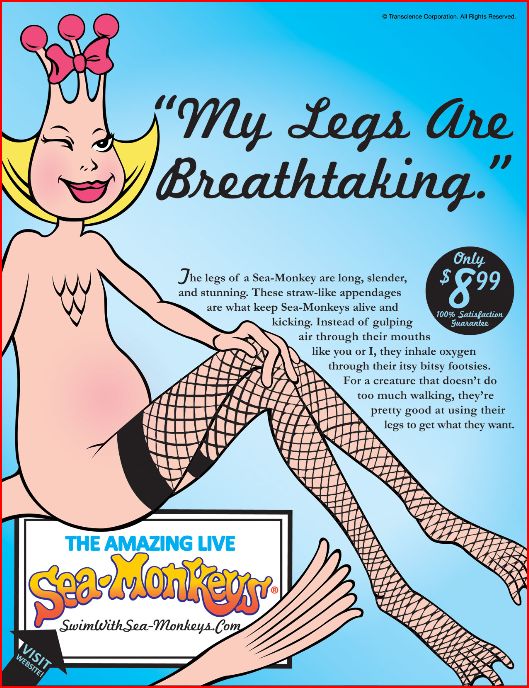
At AdFreak, I discovered that Sea Monkeys are being used to sell sex. Sure enough:

Capture1

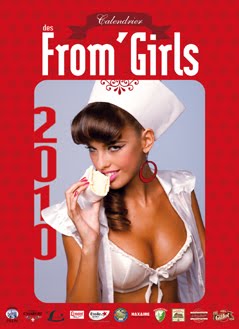
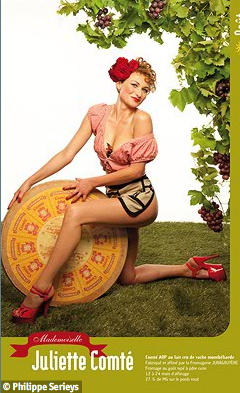
NEW (Mar. ’10)! Christina W. sent in this ad campaign for French cheeses using a pin-up calendar:

The video is a backstage look at a sexy calendar photo shoot for…cheese:

[vimeo]https://vimeo.com/113146614[/vimeo]

NEW (Jun. ’10)! Stephanie DeH. sent in this lovely CPR instructional video (which also got its own post):

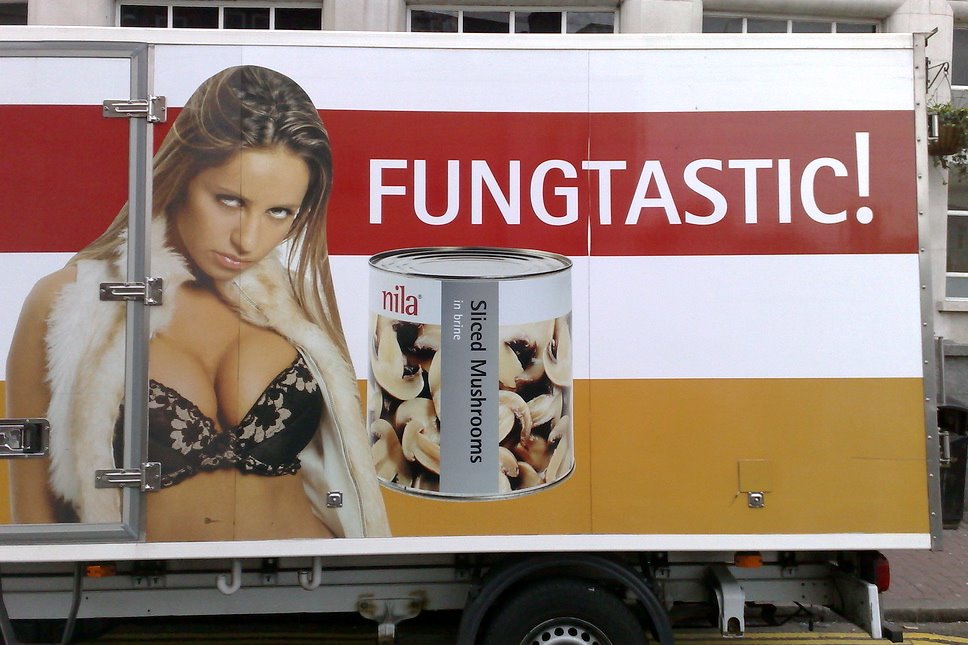
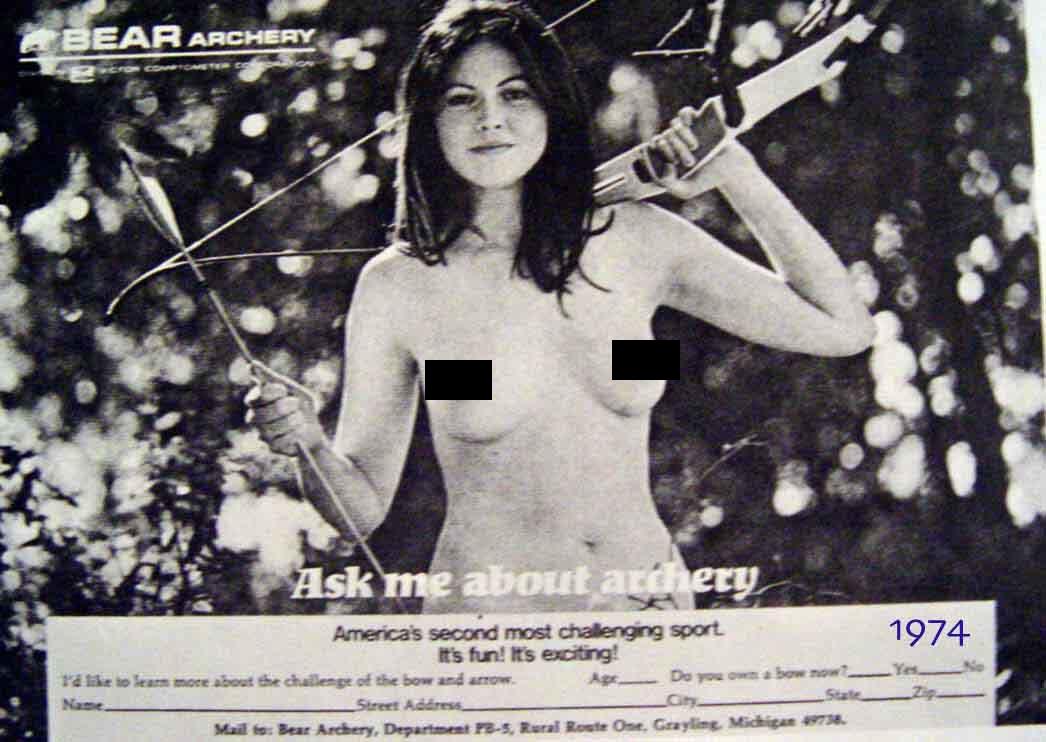
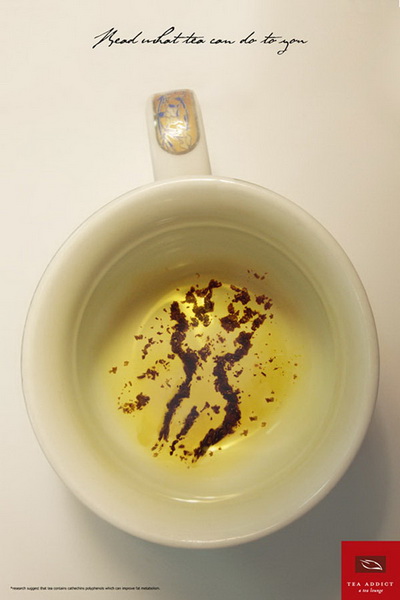
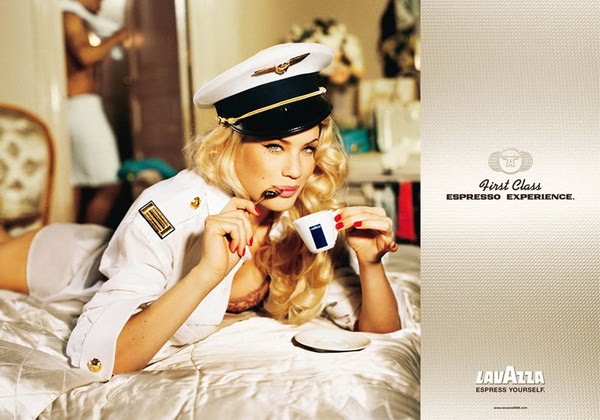
ALSO NEW (Jun. ’10)! Lindsey Dale, at Nobody, collected the following ads selling, with sex, archery, a laser detector, tea, and coffee:

Lisa Wade, PhD is an Associate Professor at Tulane University. She is the author of American Hookup, a book about college sexual culture; a textbook about gender; and a forthcoming introductory text: Terrible Magnificent Sociology. You can follow her on Twitter and Instagram.