Search results for The

I found this Absolut Vodka ad in Entertainment Weekly:
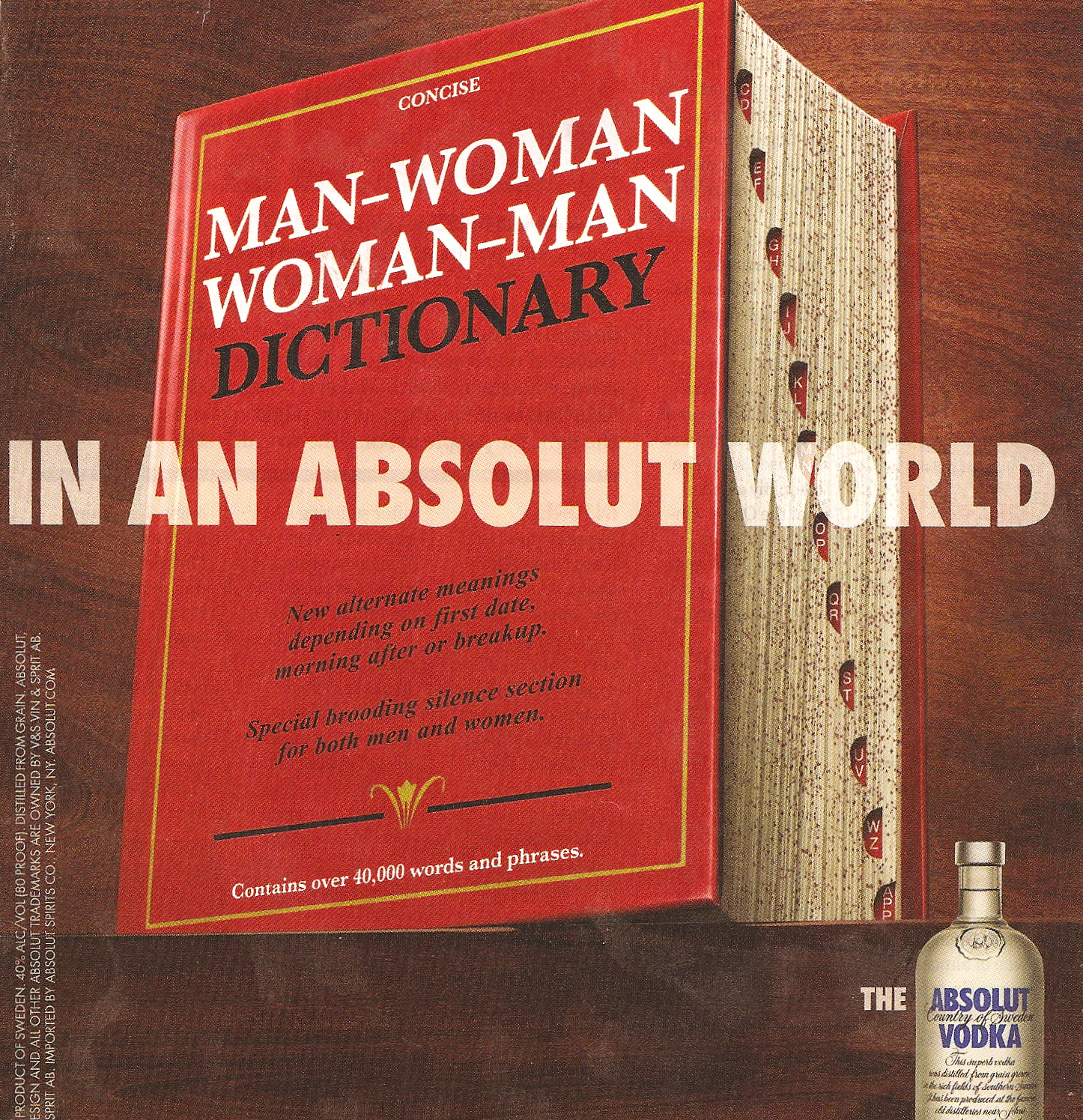
It draws on that whole Men Are from Mars, Women Are from Venus ideology in which men and women are so different we can barely understand each other without expert help.

UPDATE: Commenter ihdl pointed out this German dictionary, titled Woman-German, German-Woman: Quick Help for the Clueless Man:

And Emberiza noted that a Man-German, German-Man is available as well:

Thanks for pointing them out!

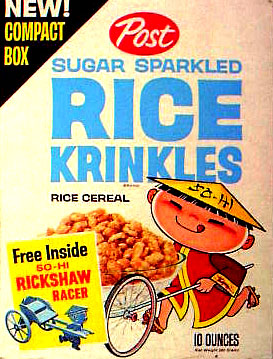
From 1987 (found here):

No date (found here):

Also in “Oriental” stereotypes: a new restaurant in Rhode Island and Oriental Pearl Cream.

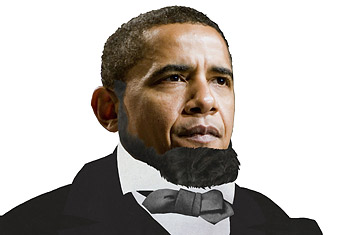
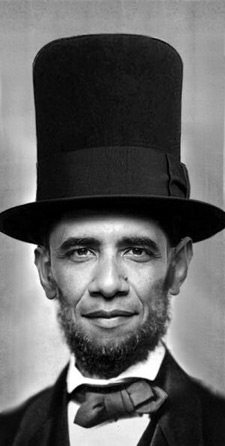
Here are a couple of pictures that morph the faces of President-Elect Obama and Abraham Lincoln. By now, I doubt people haven’t either seen or imagined such images; the comparison is pretty popular in the media. Indeed, as Time columnist Joe Klein says in this article, Obama “has never been shy about comparing himself to Abraham Lincoln.” The more obvious reasons for such comparisons have to do with his platform of change, negotiation, and most notably, his appointment of “a team of rivals” to high cabinet positions (a notion that, given the very different contexts of their presidencies, holds less water than it should– for instance, Obama is not hurtling toward a civil war).

But another less examined consequence of this type of morphing is that images like these can also unintentionally work as a strategy to produce an essentialized vision of President Obama as untouchable. Perhaps in the end, the more that we (the public) buy into this morphing of the two presidents into one, the less apt we — Democrats, or even Republicans for that matter– are to either criticize or engage in serious policy discussions and debates. In a sense, such comparisons could potentially allow President-Elect Obama to squelch, change, or appropriate differing viewpoints within his own party, and visual representation through the various morphings of Obama-Lincoln we find on the internet and in print– and the instant association we make between the two– could very well keep the American public from seriously disagreeing with his “core vision,” whether from the left or the right.

Sandra F. sent in a link to “Prop 8: The Musical,” a parody starring Jack Black, Margaret Cho, Andy Richter, John C. Reilly, Neil Patrick Harris, and other celebrities:

See more Jack Black videos at Funny or Die

The clip, though a parody, brings up a reason some groups that might not care about the reasons gays and lesbians want to get married, or about gay rights more broadly, nonetheless supported gay marriage: money. The New York Times discussed this issue here. Weddings are big business, and the more people who are eligible to be married, the more money is potentially available to wedding-related businesses. In 2004, the Congressional Budget Office estimated the impact legalizing same-sex marriage would have on the budget (end result: an estimated $1 billion a year for the 10-year estimation period). That’s just the federal budgetary effect; it doesn’t include private-sector benefits.

This anti-Prop 8 video makes an explicitly economic argument for gay marriage:

You might compare these videos to the commercials in this post; in those ads, advocates of gay marriage try to rhetorically frame the issue as being about love–that is, gay marriages are equated with straight marriages by focusing on the idea that what is important in a marriage is love, regardless of the sex of the spouses. Clearly you could use them to discuss gay marriage, but they might also be good for illustrating the idea of framing of social issues.

Thanks, Sandra!

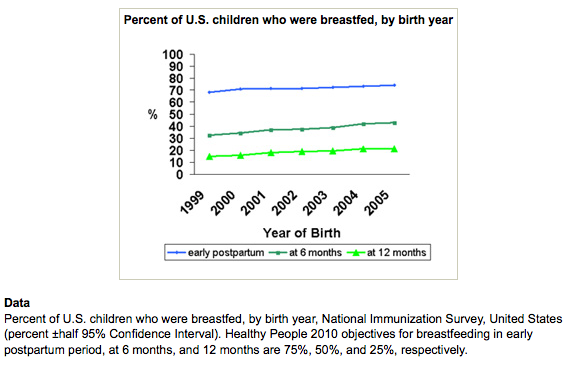
We’re talking about the medicalization of pregnancy and the natural childbirth and breastfeeding movements in my Women’s Studies class, so here are some data on rates of breastfeeding in the U.S., which you might use for a discussion of ideals of motherhood, medicalization, and the difficulties of integrating breastfeeding with full-time work. The regional patterns are also fascinating.

This map shows the percent of children born in 2005 ever breastfed at all (including those supplemented with formula):

This one shows the percent of children who were only breastfed (no formula supplementing) for the first three months:

And here we have the rates of exclusive breastfeeding up to 6 months. Notice how low the rates are, with many states having 10% or less of children breastfed exclusively for that long:

Here are overall rates:

And overall rates of kids ever breastfed, including with formula supplementing:

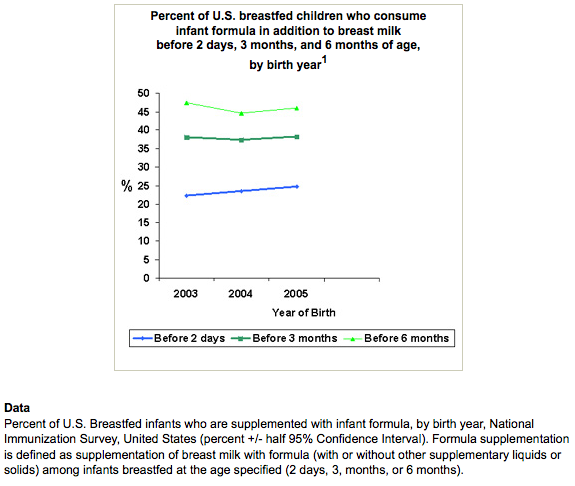
About 25% of babies are supplemented with formula within the first 48 hours:

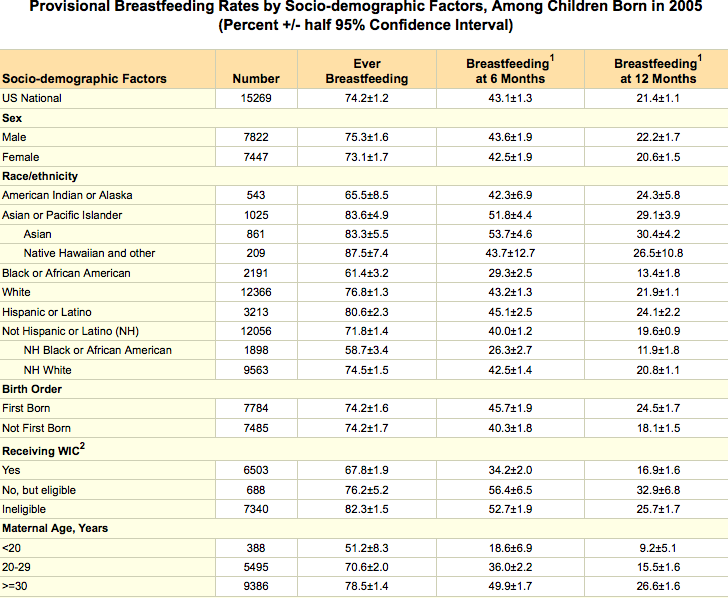
Here’s a whole lot of information on rates of breastfeeding:

In general, higher incomes are associated with higher rates of breastfeeding, which probably partially explains some of the other patterns (regional, race, etc.). My guess is many people will attribute this to cultural factors–the idea that highly-educated women with higher incomes have access to more information about breastfeeding, are more aware of how important it is, and have more access to support systems that encourage breastfeeding. I suspect part of it is also that some women–particularly those with higher incomes–are more able to take time off work to stay home for at least a short while, making breastfeeding easier. Of course, the paradox there is that the very families who can least afford expensive formula are most likely to use it.

All images found at the Centers for Disease Control and Prevention’s breastfeeding website.

In this video, Campbell Brown analyzesGov. Ed Rendell’s comments, overheard due to standing too close to an open mic, that Janet Napolitano is perfect for secretary of Homeland Security because she has no family (you can also see the video here if the CNN site doesn’t play correctly).

In fact, the wage gap between men and women is made up, almost entirely, by the comparison between men (fathers or not) and mothers. Women without children make significantly more money than mothers. Conversely, fathers make slightly more than men without children.

Women without children do pretty well at work in the U.S. Of course, about 90% of adult women are mothers.

Lisa Wade, PhD is an Associate Professor at Tulane University. She is the author of American Hookup, a book about college sexual culture; a textbook about gender; and a forthcoming introductory text: Terrible Magnificent Sociology. You can follow her on Twitter and Instagram.

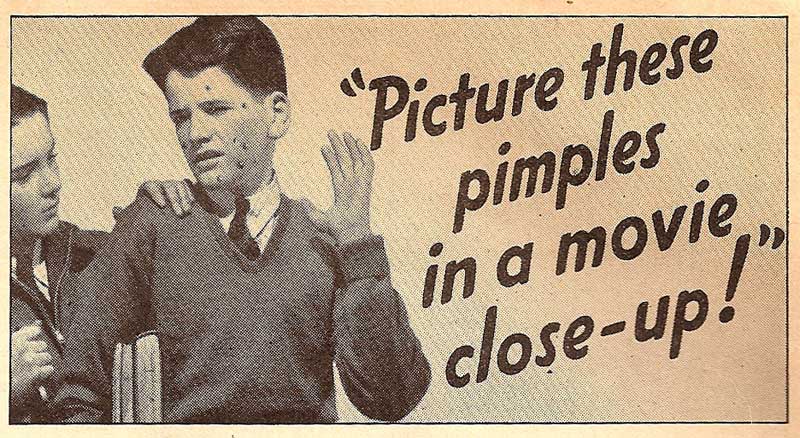
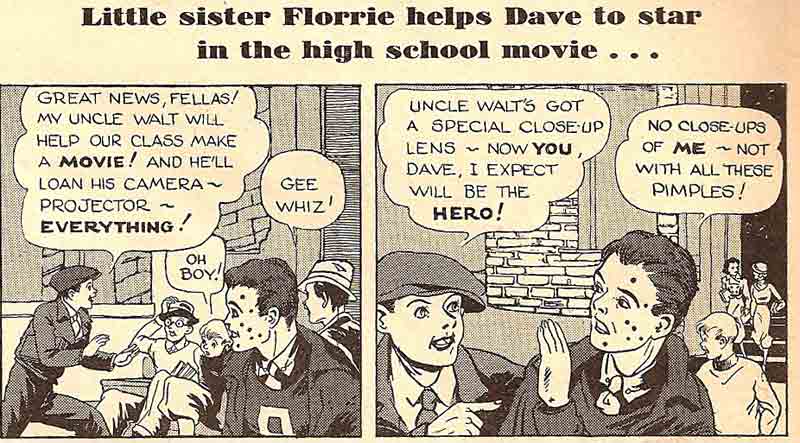
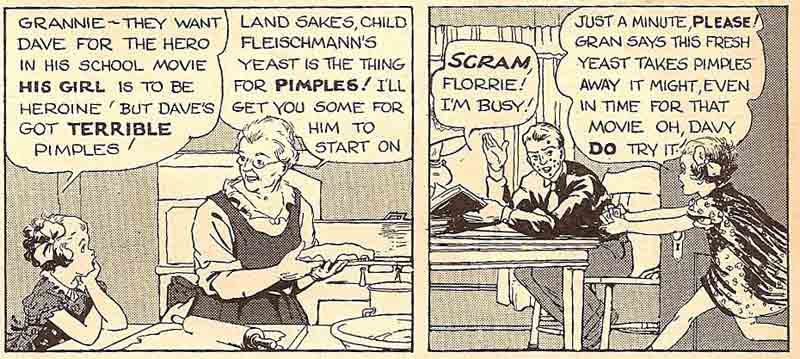
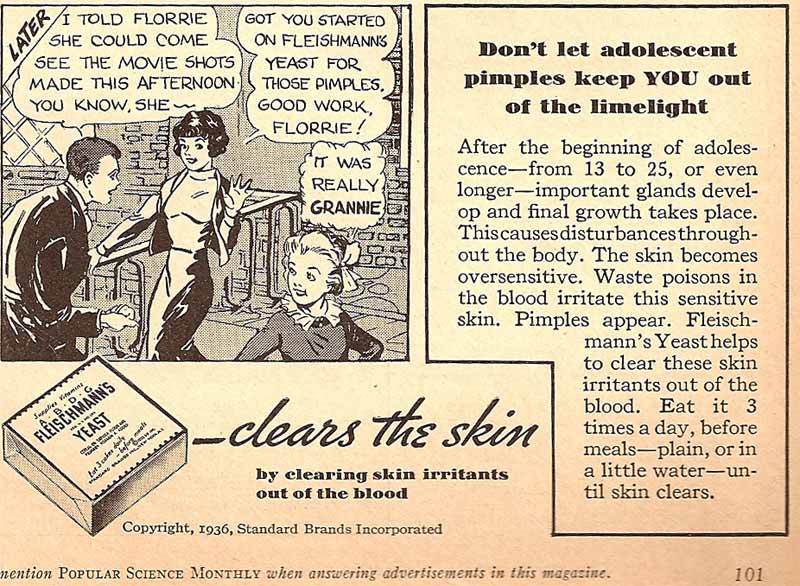
Here’s a vintage Fleishmann’s Yeast ad (found here), which presents yeast as the answer to the horrors of pimples–awful, hideous pimples!

I don’t know in what world high schools have movies, but whatever. Clearly, the message is “pimples = social death and eternal loneliness.” It’s not just that Davy can’t be in the movie due to his horrible affliction; if he can’t play the lead along with his girlfriend, he faces the possibility of losing her to a leading man with a clear complexion.

Given such messages about the importance of clear skin, it’s no wonder teens and their families were willing to shell out enormous sums of money on skin-care products. Apparently yeast didn’t catch on as a treatment, though.

For other examples of vintage ads playing on teens’ fear of facial blemishes, see here and here.

I’ve never been able to find a picture of it, but when I was in graduate school (not so long ago) and living in Madison, Wisconsin, there was an ad for Bacardi on the side of a city bus that said: “Bacardi, the Ultimate Wingman.”  A wingman is a friend who helps you get laid, so the not-so-subtle message of the ad was: “get’er drunk and she’ll do ya!”

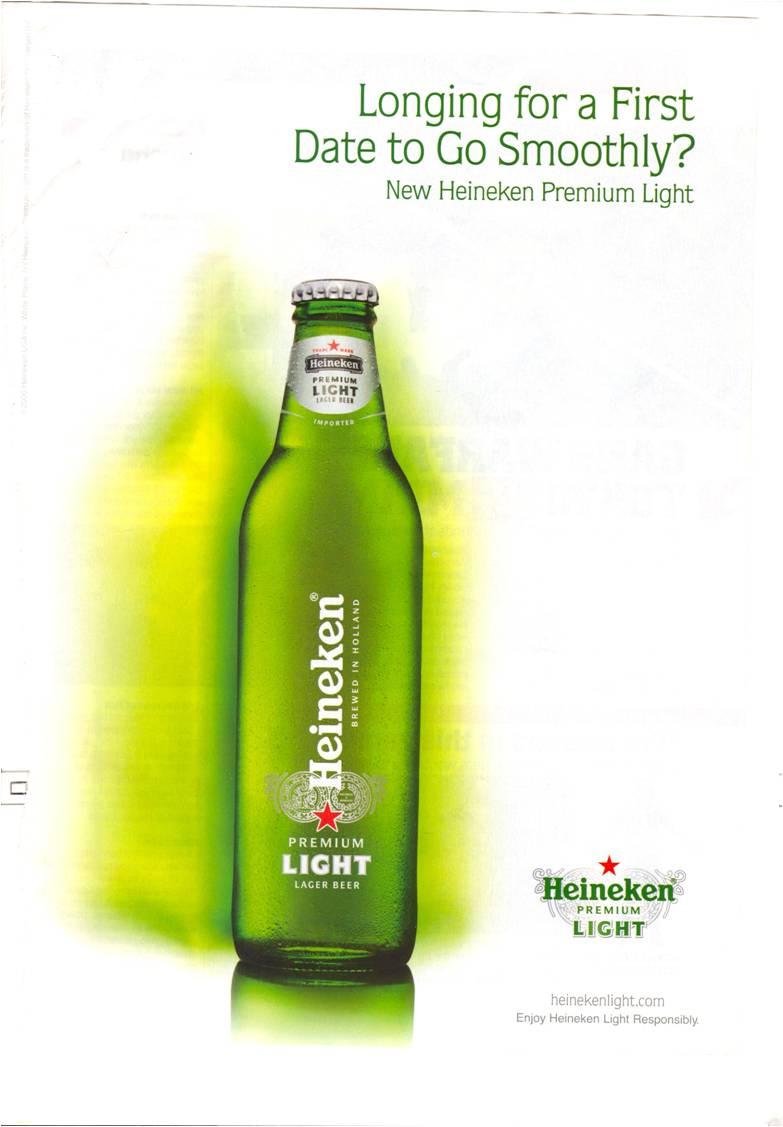
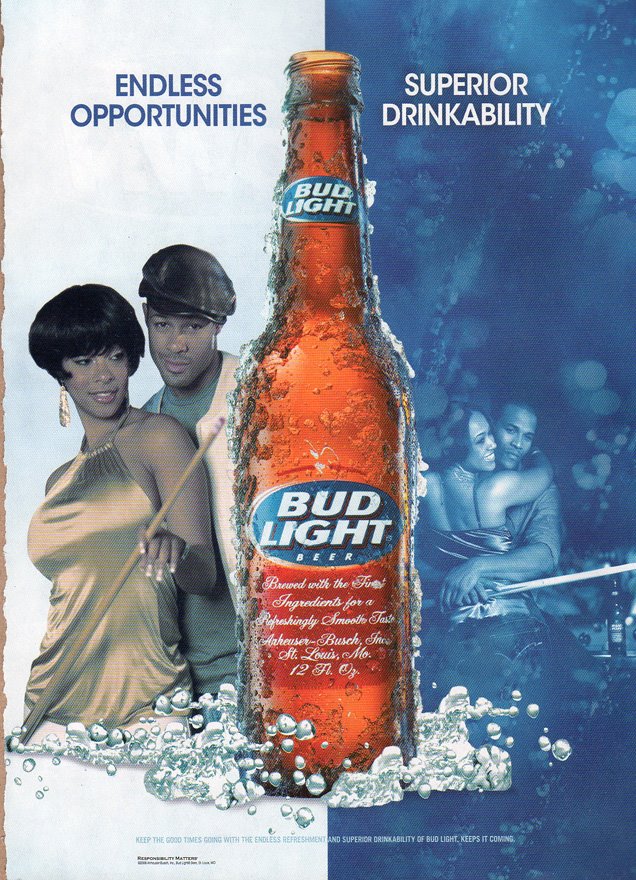
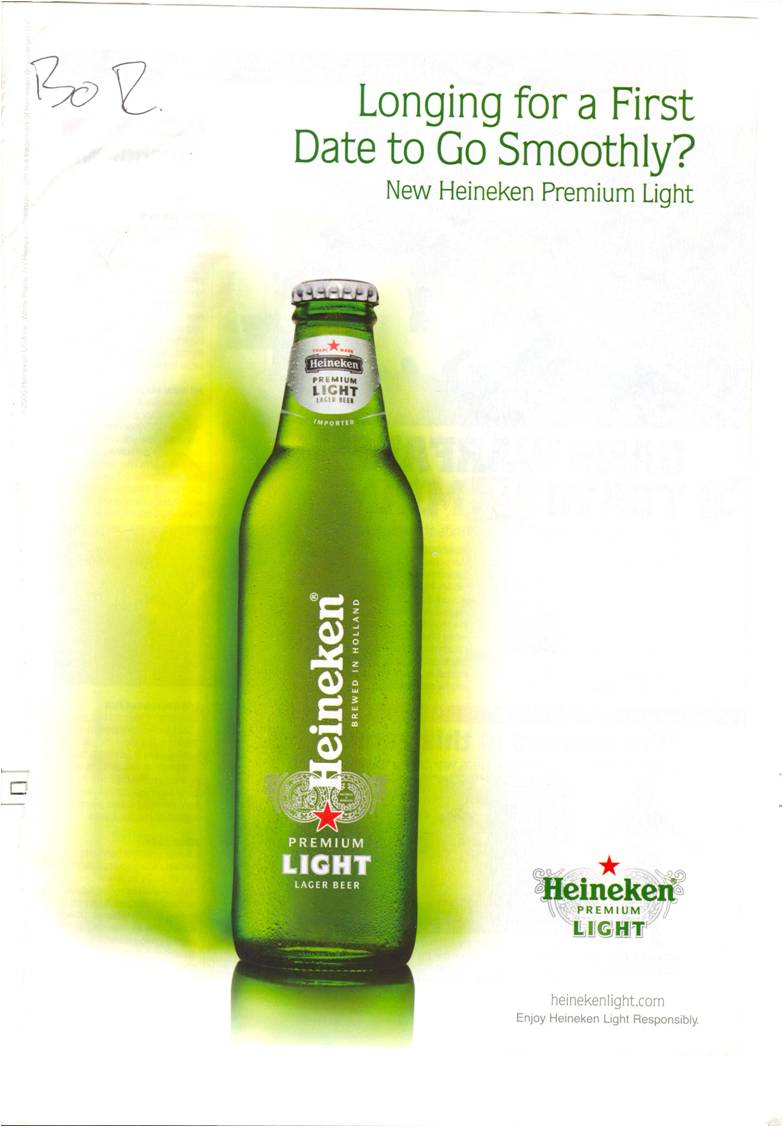
Here are two ads that have, essentially, the same message (the first was given to me by my student, Bo; the second was found here).

This one could be interpreted as, “Drink Heineken so you won’t be nervous,” or, “Drink Heineken so you’ll get what you want without any trouble.”

In this ad for Bud Light, with the copy “Endless Opportunities,” the man and the viewer of the ad exchange a conspiratorial gaze, while the woman glances to the side or, perhaps, back at him.  Is the message, “If I’m drinking Bud Light, anything could happen,” or “If she’s drinking Bud Light, anything could happen”?

See also this ad for, ostensibly, a date rape drug.

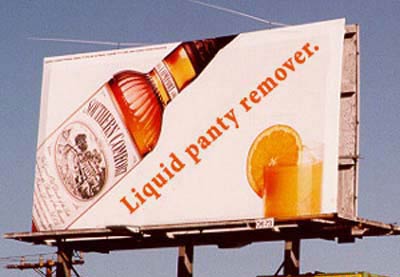
An anonymous commenter pointed us to billboard below advertising Southern Comfort as a “liquid panty remover.”  Before we get our panties in a bunch, I should point out it’s a hoax (thanks, Vidya):

So this is a hoax.  It still trivializes trying to manipulate women by getting them drunk (at best) and date rape (at worst), but it could have been produced by any yahoo with a computer.  Yahoos with computers can do anything they like, I’d be more concerned if it was circulated by the company that markets Southern Comfort.

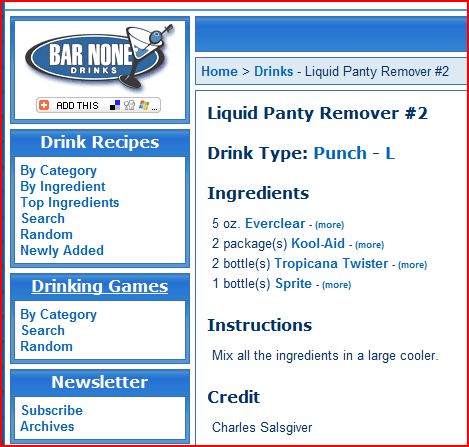
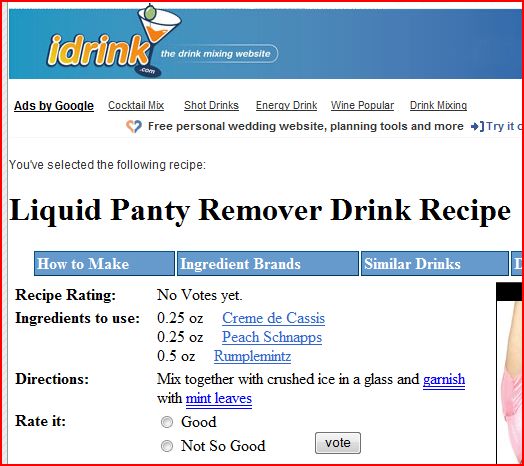
That said, in looking it up to discover it was a hoax, I discovered about a dozen recipes for mixed drinks called “Liquid Panty Remover.”  Here are some screen shots:


So I guess there was good news and bad news.

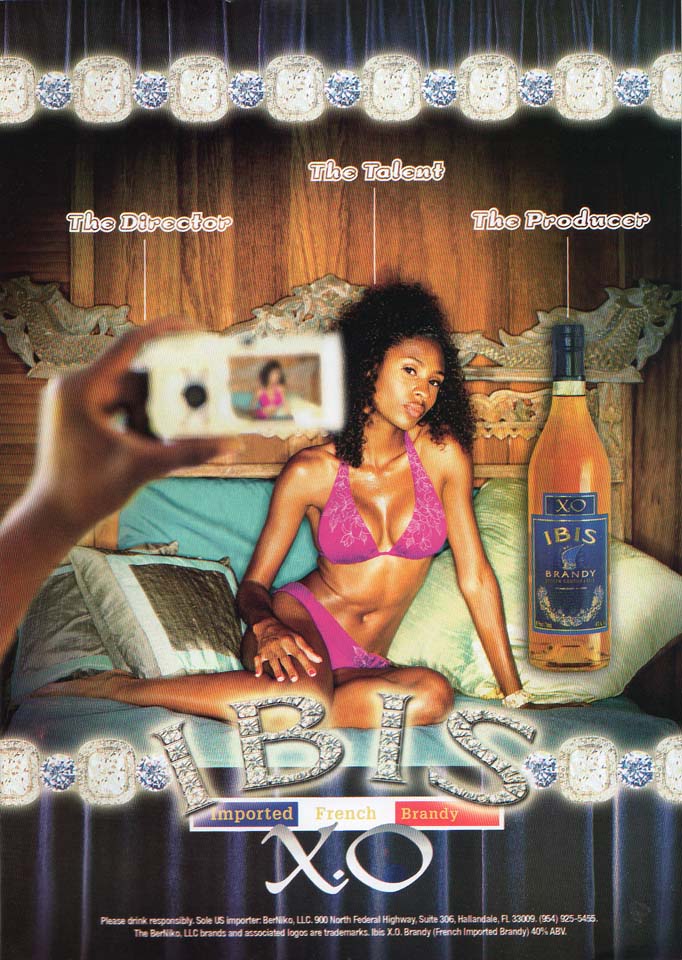
NEW! In this ad, sent in by HighJive of MultiCultClassics, the brandy is the “producer.”  The producer is the person who makes a film happen.  Thus the sexy scene that is about to ensue is attributed to the alcohol.  (Also notice the linking of the product with pornography.)

ibis

Also in sexualizing alcohol: “nice cans,” “she loves a cockatoo,” sexy robots (see here and here), “aged longer, tastes smoother,” and, um, this one.