Search results for The

Behold, “The Ugly Truth” about women and men:uglytruthposter_011Amanda at Pandagon offers a nice analysis:
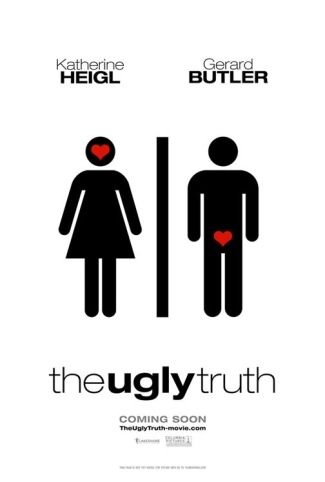
It’s the classic modern attempt to mollify women about vicious gender stereotyping by phony flattery through insulting men—men are such dogs, amiriteladeez?!  But the “men are dogs” stereotype is ultimately about putting women in their place, because it packages these assumptions:

* Women are naive, emotional, and kind of stupid, which is why men can exploit these “feelings” women have to steal sex from us.

* Women are obsessed with irrational things like weddings and getting flowers, and they lose their minds over this.  (Men are compelled by their supposed out of this world horniness, but rarely are they depicted as losing control of themselves to the point where they lose their dignity.) This is why men have the upper hand, because women are too crazy to hang onto it.  It’s certainly not that this is a male-dominated society, no siree, and to make that abundantly clear, female rom com characters now usually have a lot of professional power.

* Women don’t really like sex that much; they just tolerate it to lure unwilling men into pretending to care about us.

* Men are cold, unfeeling creatures that just want sex and nothing more.  Women cannot change this, so we have to accept it.  For some reason, just abandoning men altogether if they suck this much doesn’t occur to anyone.

* But for some reason, if you buy into this bleak worldview where men and women are completely different, and at war with each other, you’ll be rewarded with True Love.

Via Jezebel.
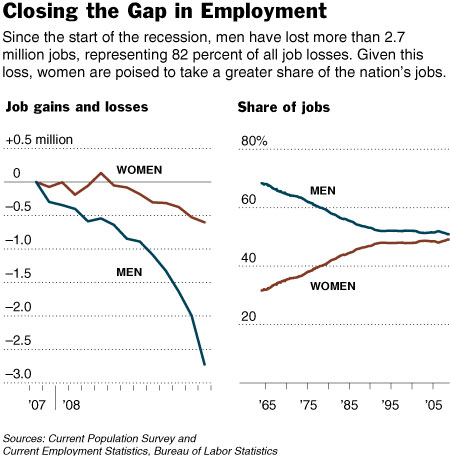
This week in the New York Times, Catherine Rampell explained how the recession was affecting the ratio of female to male workers:

The proportion of women who are working has changed very little since the recession started. But a full 82 percent of the job losses have befallen men, who are heavily represented in distressed industries like manufacturing and construction. Women tend to be employed in areas like education and health care, which are less sensitive to economic ups and downs, and in jobs that allow more time for child care and other domestic work.

Here are the results:

06women-graf01

Excluding farm workers and the self-employed, women held 49 percent of the nation’s jobs as of November. Including farm workers and the self-employed, women held 47 percent of jobs.

But, Rampell reminds us:

Women may be safer in their jobs, but tend to find it harder to support a family… Women are much more likely to be in part-time jobs without health insurance or unemployment insurance. Even in full-time jobs, women earn 80 cents for each dollar of their male counterparts’ income…

If the recession continues as it has, the U.S. workforce may soon be majority female.

See also this post on job segregation.

I read some very silly celebrity blogs, but make a point of staying away from the ones that make fun of people for being fat, sad, whatever, even as they may poke fun of the sometimes-ridiculous things celebrities wear.

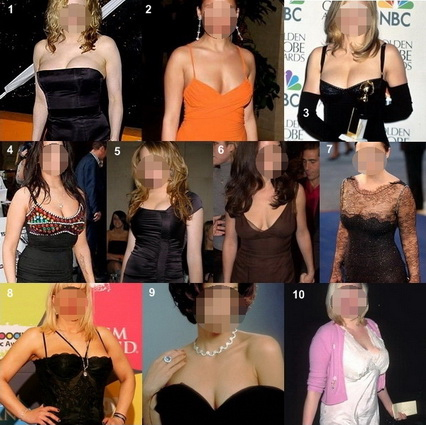
That said, AYYY! does a “puzzle corner” every Monday and blurs out the faces of people in a similar theme (i.e. child star pics of current stars) and the reader’s meant to guess who’s who.  Last week, they did one of women who are currently very twig-like, but once were curvier.

So, let’s pretend we’re playing the puzzle just like any old Monday morning. Do you think you recognize any of these stars? I’ll admit, I only had guesses for a couple of them.

iqb1

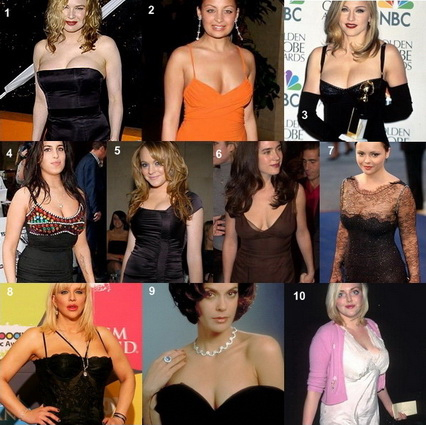
So, let’s have the big reveal, shall we?

iqb2

1. Renee Zellweger, 2. Nicole Richie, 3. Madonna, 4. Amy Winehouse, 5. Lindsay Lohan, 6. Jennifer Connelly, 7. Christina Ricci, 8. Courtney Love, 9. Teri Hatcher, 10. Sophie Dahl

And here are the same women today:

iqb3

Now, I want to put a disclaimer out there that I’m not trying to body shame anyone here—fat, skinny, in between, or whatever words you prefer to describe yourselves. And, based on their older pics, I’d say that these are not generally women who are naturally this thin (though, of course, such natural changes can occur). I’m sure we all know at least one naturally extremely thin woman, and they get their share of shame (No boobs!) and guilt (Gawd! You’re so lucky! I wish I could be that skinny!) from people daily. I’m not here to add to that.

The point I want to make is that these women have ALWAYS been beautiful. They were considered beautiful enough to be stars with their curves, so what made them think they needed to lose them?

What I want to know is: What changed? What happened between the ’90s (when several of those pics were taken) and today? You can see evidence of the skinnying of hollywood over many decades, but it seems like it suddenly sped up to an extreme point in the last 10-15 years.

What are your takes on the social/political issues that have made this shift occur? My guesses include a lot of conservative blowback against the liberation of women, but I’d really like to know what you think.

* Title unapologetically stolen from ayyyy.com, the inspiration for this post.  Originally posted at Shakesville and Crossing the Highway

———————–

InfamousQBert, sometimes known as Bethany Keeler, is a pinko-commie-liberal-vegetarian-feminist, living, writing, and attempting to fight the good fight in Dallas, TX.

If you would like to write a post for Sociological Images, please see our Guidelines for Guest Bloggers.

Via Feministing, I found this SuperBowl ad for Bridgestone tires, wherein Mrs. Potatohead shouts driving advice to Mr. Potatohead until her mouth flies off and he looks relieved. Silencing women is hilarious apparently.

[youtube]https://www.youtube.com/watch?v=tQkKP-VPUJM[/youtube]

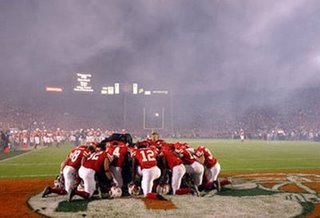
I stumbled across a blog posting with the provocative title, As an Athiest, I Prefer Hockey that contained the following image.

superbowl-prayer1I realized I had watched the Super Bowl and likely seen this a similar image. I have probably seen images of athletes gathered in prayer hundreds of times, to the point where they have become a taken-for-granted aspect of sport. It could be an interesting start to a discussion of religion and sport. Is this concentrated on sports that are primarily played in the US? Or only particular team sports? I don’t recall ever seen such prayer groups in basketball. Are such sights common in soccer or cricket?

The New York Times recently published an article on the evolving Diagnostic and Statistical Manual of Mental Disorders (DSM).  The DSM is the official source for psychologists who are diagnosing patients with mental disorders.  The article points out that the number of disorders in the manual has more than doubled since the 1950s:

1218-nat-subpsychweb

Hypothesis One:  The DSM reflects an increasingly sophisticated and exhuastive compendium of all possible mental disorders.

Hypothesis Two:  More psychological disorders = more people diagnosed with mental disorders = more money is siphoned off to hospitals, treatment centers, drug companies, mental health professionals, social workers, school counselors, etc.  (Scientists who are currently working on the next version of the DSM have agreed to restrict their income from drug makes to $10,000 a year or less.)

Hypothesis Three:  We are an increasingly rationalized society and all things are becoming increasingly listed, compiled, organized, and annotated.

Hypothesis Four:  What is considered a “problem” depends on the social context.  (“Homosexuality” used to be in the DSM, but it isn’t any longer.)  Perhaps a shift in the last 50 years has created a social context that is less tolerant of difference, more insistent upon happiness, or requires a more compliant citizen.

Hypothesis Five:  Grassroots activists get together and lobby scientists to include disorders in the DSM so that they can raise awareness and money for research.

What do you think?

Thanks to Francisco for pointing me to this article!

The ownership of corporations under parent companies concentrates profits and profit motives, often in ways that undermine the progressive or conservative causes that the subsidiary companies purport to promote. Ben and Jerry’s Ice Cream is famous for its progressive and countercultural flavors and activities.

A tribute to the countercultural bands, Phish and The Grateful Dead:


A pacifist message:

The Barack Obama inspired flavor, Yes Pecan:

Alas, in 2000 Ben and Jerry’s was bought by Unilever, the company that brings us (pseudofeminist) Dove, (misogynistic) Axe, and (racist) Fair and Lovely products (examples herehere, here, here, here, here, here, and here).

Oh, to bring the irony full circle, Unilever owns Slimfast too.

Don’t shoot the messenger.

Hat tip to Jezebel.

Thanks to Captain Crab for letting me know about this fun 20-minute video by Annie Leonard called The Story of Stuff.  It it, using animation, she explains how “[f]rom its extraction through sale, use and disposal, all the stuff in our lives affects communities at home and abroad.”  Basically it’s about the externalized costs that allow us to get things for $1.99 at our local big-box store:

Found at The Story of Stuff.

NOTE: As several commenters have pointed out, this video is definitely a simplification–it is, after all, a very brief overview of an extremely complex process. The video still provides a fairly accurate portrayal of some concerns expressed by critics of globalization, despite the simplifications.

One commenter in particular argues that the statistics used in the video are flawed or even entirely made up. I really have no way to judge that one way or the other, not being an expert on this. At the website for The Story of Stuff, there are citations for all of the numbers used, so if you’re really interested in that, you might want to look more fully into where the data came from. Again, I can’t take a real stance here one way or the other because this isn’t my area of expertise; the data might be flawed, but the commenter doesn’t provide other data to contradict it. It might make for an interesting discussion on the use of data and why people with different views on globalization might use different numbers. You take students through it and ask “What’s useful here? What statistics might be inaccurate? Why might they be presented that way? Why is it possible to come up with statistics that say completely different things about the same issue?”

Click here for a discussion of how one Professor uses it in a Rhetoric and Writing class.