Search results for The

Commodification is the process by which something that is not bought and sold becomes bought and sold.   At one time, Americans grew, or raised and butchered, much of their own food.  Later, meat, grains, and vegetables became commodified.  Instead of working in the fields and with their animals, people would “go to work,” earn a new thing called a “wage,” and trade it for meat, grains, and vegetables.  With those raw ingredients, they would prepare a meal.

More recently in American history, the very preparation of food has commodified as well.   When I go to a restaurant, I am exchanging my wage for the planting, harvesting, processing, delivering, preparing, and disposal/clean up of my meal.   In this way, then, more and more components of our daily nutritional intake have become commodified.

The graph below traces the increasing commodification of “dinner.”  When it comes to family dinners, Americans are increasingly turning to restaurants, which commodify the preparation of food and the post-meal chores.  Sometime around 1988, the family dinner as a commodity became more common than family dinners at home.
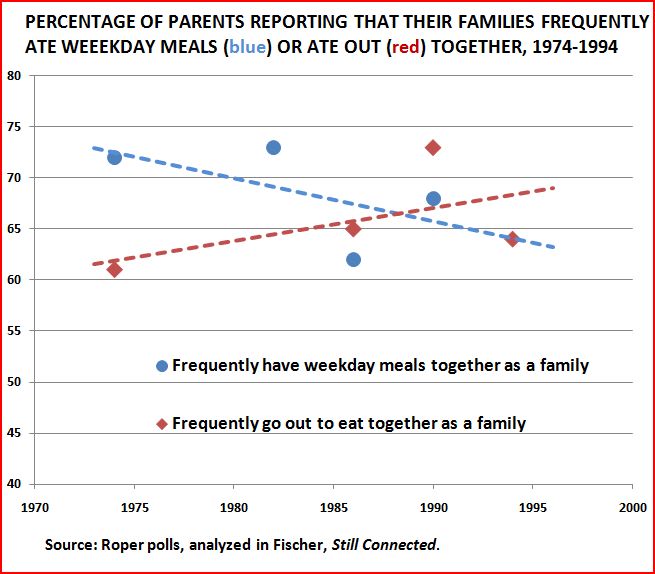
Image borrowed from Claude Fischer’s Made in America.

UPDATE: In the comments, Ludvig von Mises offers this alternative explanation:

Another way to look at this would be as a form of increasing wealth. The nobility of old, after all, also did not butcher, harvest, and prepare their own meals, and neither did the wealthiest members of the new rich. Over time, the ability to afford such a thing on a more regular basis has gradually expanded to more and more people.

Matter of fact, there is very little in the way of such luxury that has been enjoyed by the elites of the past that is not available to the majority of workers today. “Commodification” is not, as you suggest, the creation of any kind of new product, but merely of making extremely expensive products affordable to a much larger fraction of the population.

“The characteristic feature of modern capitalism is mass production of goods destined for consumption by the masses.”

Lisa Wade, PhD is an Associate Professor at Tulane University. She is the author of American Hookup, a book about college sexual culture; a textbook about gender; and a forthcoming introductory text: Terrible Magnificent Sociology. You can follow her on Twitter and Instagram.
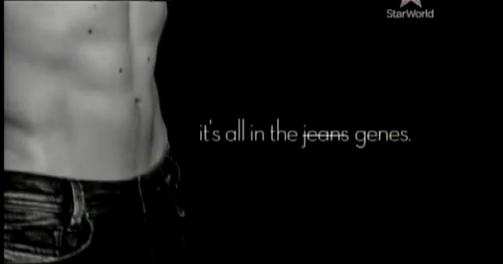
“You can’t be taught the skills to model, because first and foremost, skill doesn’t matter.  It’s all in the jeans genes.”

So notes a shirtless man, a self-described “male mannequin” in commercials for Next Top Model in Vietnam:

My sociological knee-jerk reaction is to point to the ways in which models’ labor is deliberately rendered invisible, masking performance as mere appearance, in much the same way social categories are naturalized to appear like states of being instead of products of social organization — think gender, ethnicity, class, and yes, beauty.

As concerns the category of beauty, there is considerable work involved in pulling it off.  Like retail service workers, models do “aesthetic labor,” as documented by sociologists Elizabeth Wissinger and Joanne Entwistle and more recently by Christine Williams and Catherine Connell.  Aesthetic labor is the work of manipulating one’s physique and personality to embody a company brand.  In the modeling market, some people easily have that physique, as the shirtless guy claims to have, but most models have to fight for it, and they’re fighting against the clock of aging.  If they don’t have to work for cut abs and narrow hips, they most likely still feel compelled to work at it, given the rampant uncertainties facing them in their daily grinds of auditions and rejections.  All of this work gets carefully tucked behind the scenes of fashion and beauty images — a clandestine world NTM purports to expose for voyeuristic consumers around the world.

But instead of exposing it, the NTM franchise caricatures it.  In the American version, Tyra Banks insists that effort is everything, and she axes candidates left and right because they didn’t “want it badly enough.”  She just didn’t work hard at it, goes the usual dismissal, or she lacked the determination to keep smiling when Jay Manuel told her that her face is weird.  It’s not that you’ve got the wrong look, the show tells contestants, but that you didn’t put in the work to get the right one.  NTM sticks close to an individualistic ethos:  if you fail, it’s because you lacked the individual effort needed to succeed.

Success in any culture industry is a mix of both hard work and the luck of being the “right” contender at the right moment, which is somewhat arbitrarily decided in any given fashion season.  Saying that success is “all in the genes” renders the “look” into a natural state of being, when like all culture industries, modeling is a complex social production.

Saying it’s all in the jeans is also pretty funny.  Let’s not overlook this guy’s self-deprecating humor:  here’s a man surrendering himself (and his manhood) to the whims and preferences of fashion, an industry widely believed to be controlled by women and gay men.  In other ads he mocks his talent and wryly notes the biggest hazard in his line of work: wearing leopard print g-strings (to say nothing of occupational challenges like the precarious nature of freelance labor, the lack of health and retirement benefits, or the unpaid labor of castings and magazine shoots).  What’s most striking about this guy and his seductive black-and-white commercial is not the sociological back story, it’s his own silliness.  He’s playing on the ironic gap between social expectations of masculinity and the realities of being featured as a passive visual object.  We probably wouldn’t be so charmed if the commercial featured a young woman laughing about her job title: “I’m a professional model!”  We’d probably roll our eyes.  The source of that silliness—unequal cultural expectations about the display value of men and women—is as problematic as it is good fodder for comedy.

Ashley Mears is a former model and current Assistant Professor of sociology at Boston University who is doing fantastic work on the modeling industry.  In her book, Pricing Beauty: Value in the Fashion Modeling World (UC Berkeley Press), she examines the production of value in fashion modeling markets.

Gwen Sharp is an associate professor of sociology at Nevada State College. You can follow her on Twitter at @gwensharpnv.


Elisabeth R., Rebecca H., and Kalani R. all sent in a Volkswagen commercial produced for SuperBowl weekend that they found striking, both for the commercial itself and reactions to it. In the commercial, a child dressed up as Darth Vader tries using The Force on various items around the house. What struck all three of the submitters is the ambiguous gendering of the ad:

At no point is the child’s gender made clear. If we just went with the information in the ad, we might conclude the child is a girl, based on scene in the stereotypically super-pink bedroom. But given the usual clear gendering of toys, Elisabeth, Rebecca, and Kalani all enjoyed seeing an ad in which this didn’t occur.

But the possibility that a girl might dress up as Darth Vader seems difficult for a lot of people to grasp. In the pages and pages of comments on the commercial on YouTube, the child is repeatedly referred to as “he” or “the boy.” In one comment thread, when someone brings up the possibility the child is a girl due to the pink bedroom, someone else says no, it was a boy in his sister’s room.

There’s no particular reason to assume this child is a boy except that we associate Star Wars with boys (and generally see males as the default if gender isn’t otherwise specified). I think the reactions to the video are a good example of the power of gendering: because viewers have pre-existing ideas about gender, kids, and what they’d be interested in, they’re likely to apply those assumptions even in the face of potentially contradictory information and to come up with explanations that leave the pre-existing ideas intact.

UPDATE: I forgot to mention when I was writing the post that none of the commenters who saw the child as a boy seemed to think the pink room was his — I read several different comment threads and when it was brought up, people assume it’s a sister’s room. Also, reader Angie thinks the stuff in the pink room looks too old for the child, since the toys look like the type an older kid would collect. I am clueless about that, which is why I struggle to buy gifts for kids: I no longer have a clear sense of what types of things kids are playing with at what age.

UPDATE 2: This is separate from what the gender of the role of the child in the commercial, but VW has confirmed that the actor who played the child is a boy.

On another note, the fact that VW is using Star Wars nostalgia in its ads as a way to appeal to adult customers makes me feel very old for some reason.

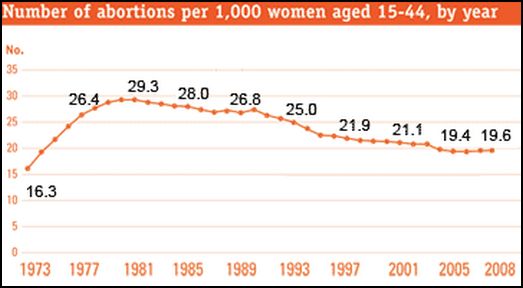
The Guttmacher Institute reports that the decades long fall in the rate of surgical abortions has plateaued:

Decreasing abortion rates is something that most Americans support.  Sharon Camp, president and CEO of Guttmacher, suggests that greater availability of cheap effective contraception might help jump start the decrease.  That seems like a politically safe recommendation.  What say you?

Via Michelle Chen at Ms.

Lisa Wade, PhD is an Associate Professor at Tulane University. She is the author of American Hookup, a book about college sexual culture; a textbook about gender; and a forthcoming introductory text: Terrible Magnificent Sociology. You can follow her on Twitter and Instagram.

Cross-posted at Adios Barbie.

Today I had the pleasure of reading a 1978 essay by Susan Sontag titled The Double Standard of Aging.  I was struck by how plainly and convincingly she described the role of attractiveness in men’s and women’s lives:

[For women, o]nly one standard of female beauty is sanctioned: the girl.

The great advantage men have is that our culture allows two standards of male beauty: the boy and the man. The beauty of a boy resembles the beauty of a girl. In both sexes it is a fragile kind of beauty and flourishes naturally only in the early part of the life-cycle. Happily, men are able to accept themselves under another standard of good looks — heavier, rougher, more thickly built. A man does not grieve when he loses the smooth, unlined, hairless skin of a boy. For he has only exchanged one form of attractiveness for another: the darker skin of a man’s face, roughened by daily shaving, showing the marks of emotion and the normal lines of age.

There is no equivalent of this second standard for women. The single standard of beauty for women dictates that they must go on having clear skin. Every wrinkle, every line, every gray hair, is a defeat.  No wonder that no boy minds becoming a man, while even the passage from girlhood to early womanhood is experienced by many women as their downfall, for all women are trained to continue wanting to look like girls.

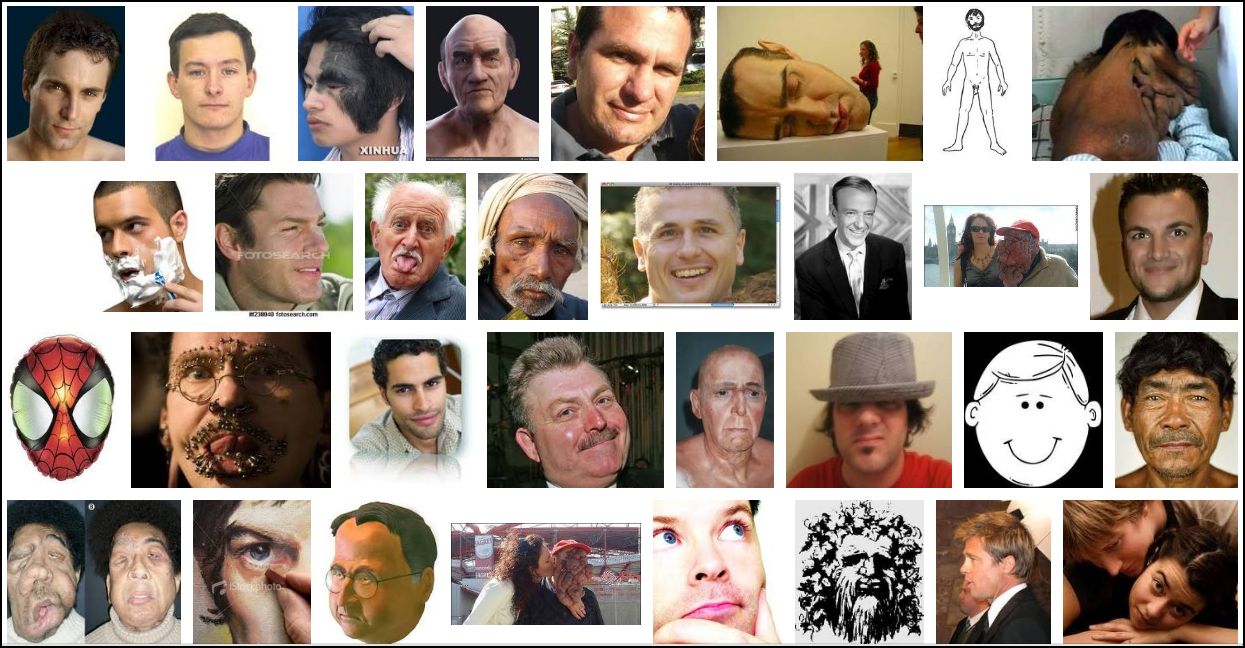
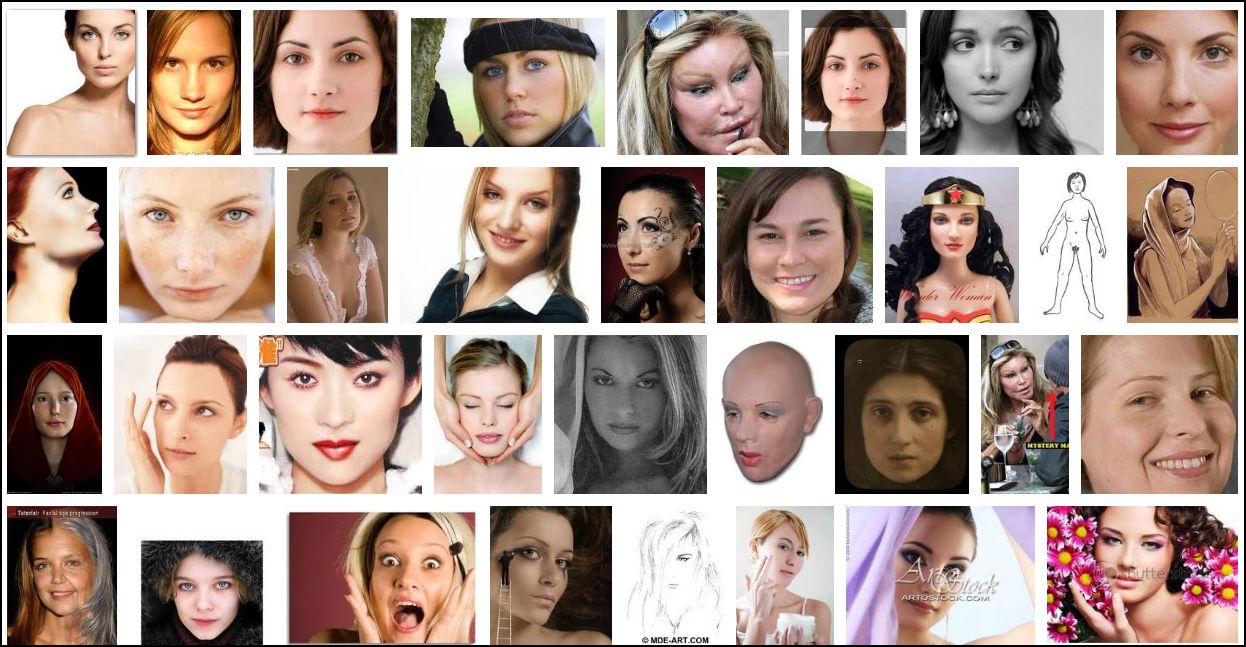
These words reminded me of an idea for a post submitted by Tom Hudson.  Tom was searching for faces to help him draw and was struck by the differences in the results for “woman face” and “man face”:

The wide variety of men’s faces, compared to the overwhelming homogeneity of the women’s faces, nicely illustrates Sontag’s point. Women’s faces are important and valorized for only one thing: girlish beauty. Men’s faces, on the other hand, are notable for being interesting, weird, wizened, humorous, and more.

On another note, the invisible but near total dominance of whiteness is worth acknowledging.

Lisa Wade, PhD is an Associate Professor at Tulane University. She is the author of American Hookup, a book about college sexual culture; a textbook about gender; and a forthcoming introductory text: Terrible Magnificent Sociology. You can follow her on Twitter and Instagram.
We’ve discussed American Indian mascotsadvertising featuring anachronistic caricatures of American Indians, the ice skater who appropriated aboriginal culture, the lie at the heart of the famous crying Indian PSA, and the stunning irony that is Avatar, but we’ve never directly addressed the use and appropriation of the idea of the Eskimo.  The term refers to the Inuit and Yupik people in Eastern Russia, Alaska, Canada, and Greenland.

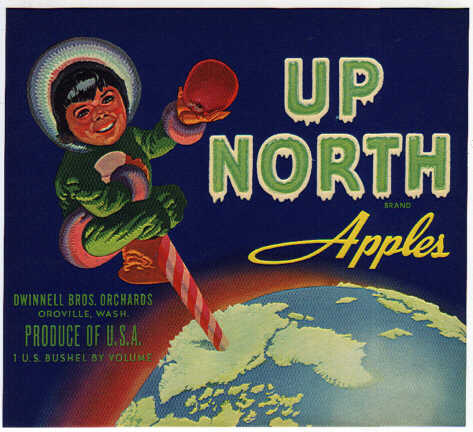
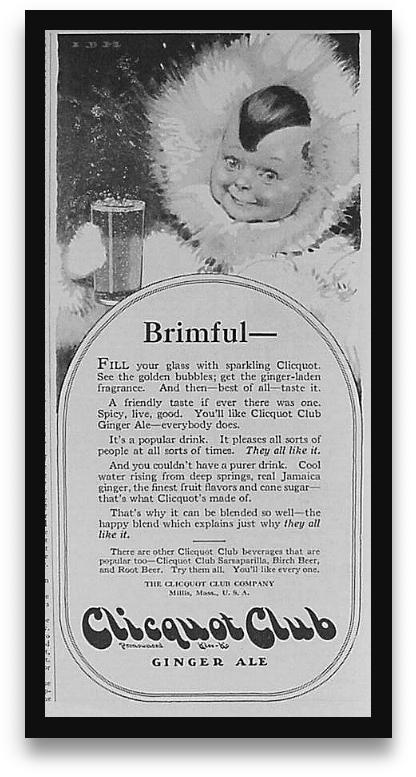
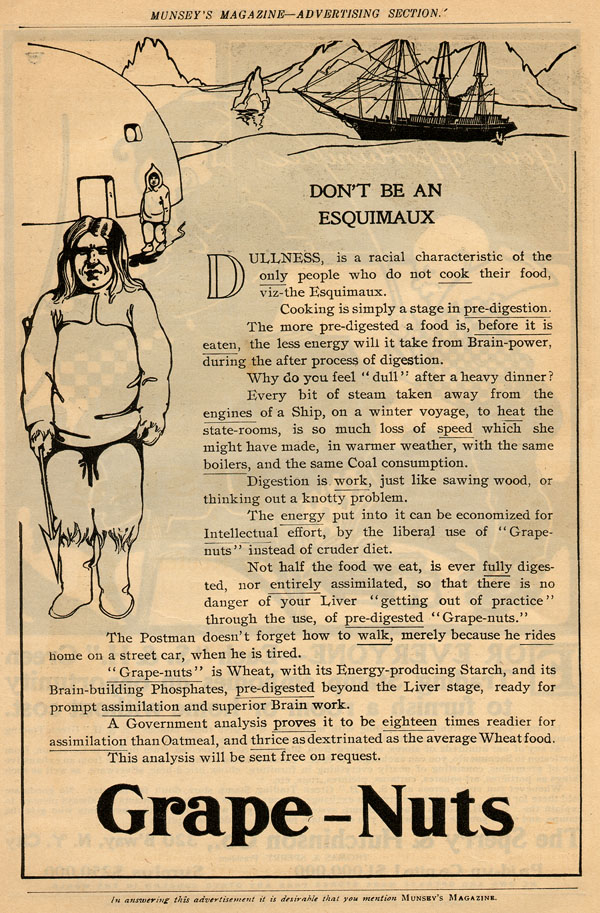
Russell Potter, a professor of English at Rhode Island College, collected a few vintage advertisements featuring the idea of the Eskimo.  He argues that they fall roughly into two camps: cheerful adorable Eskimo and the Eskimo as primitive and backwards.

These first two for apples and ginger ale fall into the first category:

But this ad presents the “Esquimaux” as “dull” and Grape Nuts as civilized:

Building on Potter’s collection, Adrienne at Native Appropriations posted some more contemporary uses of the Eskimo.

Eskimo Joe’s (Stillwater, OK) uses an image of an Eskimo looking downright ridiculous and very much like his dog:

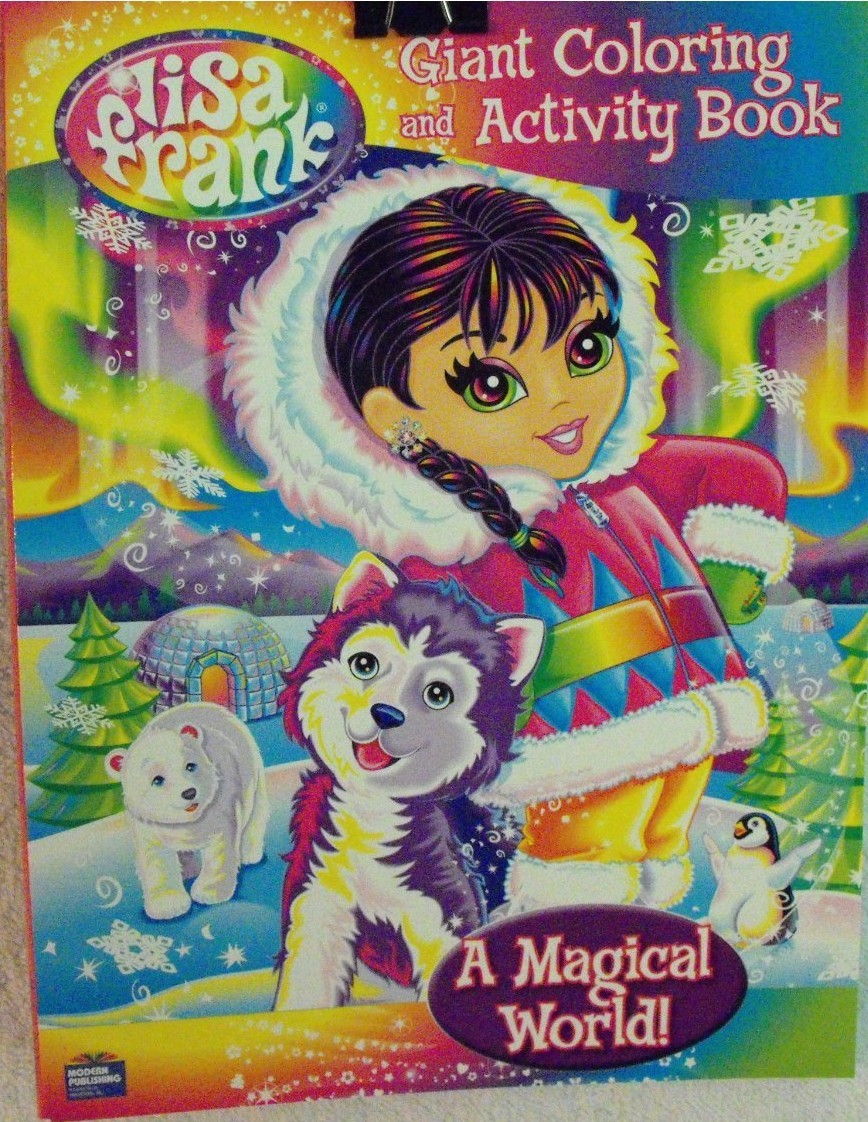
Any child of the ’80s probably remembers the Lisa Frank Eskimo girl (which Adrienne points out looks decidely anglo):

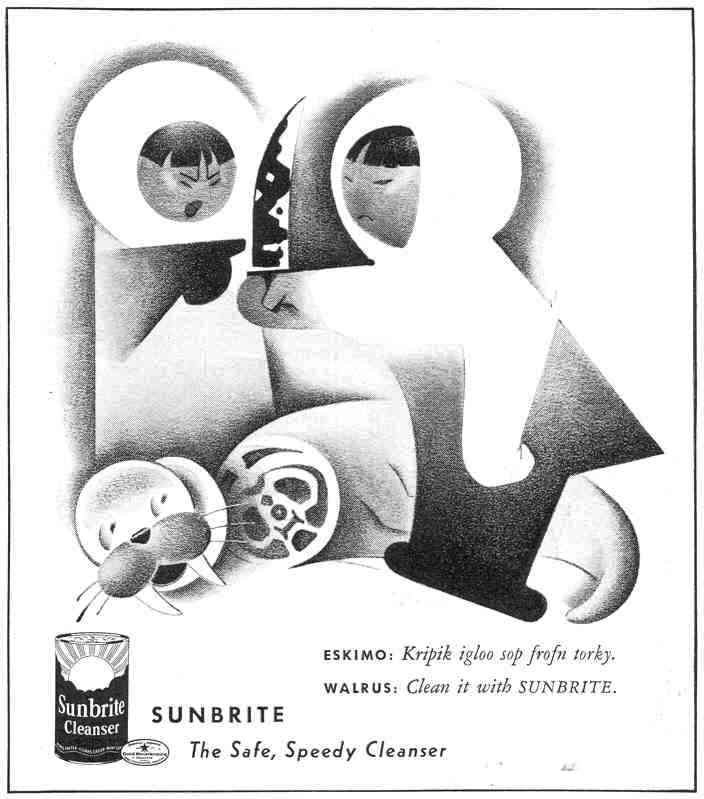
And this ad seems to suggest that even decapitated walruses speak better English than Eskimos:

Here’s another example of the childlike Eskimo, tweeted to us by @Matthew_Kneale:

BYRZlcdCEAAibSQ

All of these ads turn Eskimos into (cute but inferior) childlike figures or (deficient and inferior) backwards adults, or some combination of the two.  For a population with essentially no contact with the Inuit or the Yupik, the idea that they are real human beings can become lost.  When real members of a group are invisible, imaginary representatives can be demonized or romanticized as we see fit.

Lisa Wade, PhD is an Associate Professor at Tulane University. She is the author of American Hookup, a book about college sexual culture; a textbook about gender; and a forthcoming introductory text: Terrible Magnificent Sociology. You can follow her on Twitter and Instagram.
On January 30th a video was uploaded to youtube featuring among the most blatantly racist banter I have ever heard on or off screen.   The conversation occurred among the hosts of a BBC program called Top Gear: Jeremy Clarkson, Richard Hammond, and James May.  They discuss a new sports car made in Mexico and the racist “hilarity” ensues.  It is pretty damn horrible… and it goes on and on… so, trigger warning.

There’s a full transcript after the jump, but here are some high points:

They say the car is like the Mexican people: “lazy, feckless, flatulent, [indecipherable] leaning against a fence asleep”

They call Mexican food “sick with cheese on it.”

Hammond says, “Just imagine waking up and remembering that you’re Mexican.” Everyone laughs. Clarkson replies, “It’d be brilliant because you could just go back to sleep again.”

Hammond is the ring leader in this example, but Clarkson appears to make a habit of racist commentary. Here’s just a sampling from Wikipedia:

In October 1998 Hyundai complained to the BBC about what they described as “bigoted and racist” comments he made at the Birmingham Motor Show, where he was reported as saying that the people working on the Hyundai stand had “eaten a dog” and that the designer of the Hyundai XG had probably eaten a spaniel for his lunch…

In April 2007 he was criticised in the Malaysian parliament for having described one of their cars, the Perodua Kelisa, as the worst in the world, built “in jungles by people who wear leaves for shoes”…

This clip reminds us that there are still people out there who will make race-based attacks and plenty of people, note the audience, who will laugh.  Many white people truly do oppose racism and they want people of color to trust them; they want the benefit of the doubt.  But occasional exposure to people like this, even if just on television, and the ongoing daily experience of prejudice, some mild, some severe, plus the hundreds of things that happen every week that may have been racism or may have been somebody having a bad day, add up.  This makes it very scary to trust white people.  Every “benefit of the doubt” has the potential to backfire.

Given the daily experience of race that most people of color must endure, blind trust is too much to ask for.

(Transcript after the jump, borrowed from Racialicious.)

more...

The New York Times has made available a digital copy of The Gentleman’s Directory, a guide to New York City published in 1870. The guidebook informs travelers of a particular type of local attraction: brothels. Of course, the information was for curiosity’s sake only:

Not that we imagine the reader will ever desire to visit these houses. Certainly not; he is, we do not doubt, a member of the Bible Society, a bright and shining light…But we point out the location of these places in order that the reader may know how to avoid them… (p. 6-7)

Certainly passages like this, from p. 13, make it clear that such establishments are to be avoided:

It also included pages that were simply ads for particular brothels:

Interestingly, the NYT checked the 1870 Census for the houses listed in the guide. In general, the women living there were described by Census workers as domestic servants or women who “kept house.” However, they found a few cases where the Census openly listed them as working at a “house of prostitution” or “house of assignation.”

A doctor advertised “imported male safes,” i.e., condoms:

His ad also describes an unspecified cure for women that may very well refer to abortions (at the time, products that caused abortion were often advertised as helping with menstrual regulation or any type of “menstrual stoppage”):

In addition to an article about the directory, the NYT put together a map showing the locations of the establishments it mentions (which were a small proportion of all brothels in NYC, where prostitution was illegal but widely available at the time):