Search results for The

Harkening back to a day when grocery and ‘convenience’ stores did not exist, one was intimately aware of where one’s food was coming from. This is because leading a life of subsistence meant growing one’s own food. It meant raising animals and growing crops and then processing them into food.

As foodstuffs began to be commodified, that is, rendered a marketable good to be exchanged for capital — and largely controlled by transnational corporations — we began to lose understanding to where our food comes from. Arguably, the dearth of this understanding is illustrated by the fact that increasingly children believe that fruit and vegetables are something that comes from the grocery store rather than from the farm or the earth.

The effects of this phenomenon, known as distancing, have social, political and economic ramifications. Typically grocery store produce is devoid of any clues as to the conditions under which it was produced, save for the country of origin. This serves to make invisible the labour taken to cultivate the produce and instead presents the consumer with the end product. The conditions under which bananas are produced, for example, are particularly problematic given their use of toxic pesticides and lack of environmental and worker protection measures.

Accordingly, I was particularly struck when I noticed this produce sign at a local grocery store.
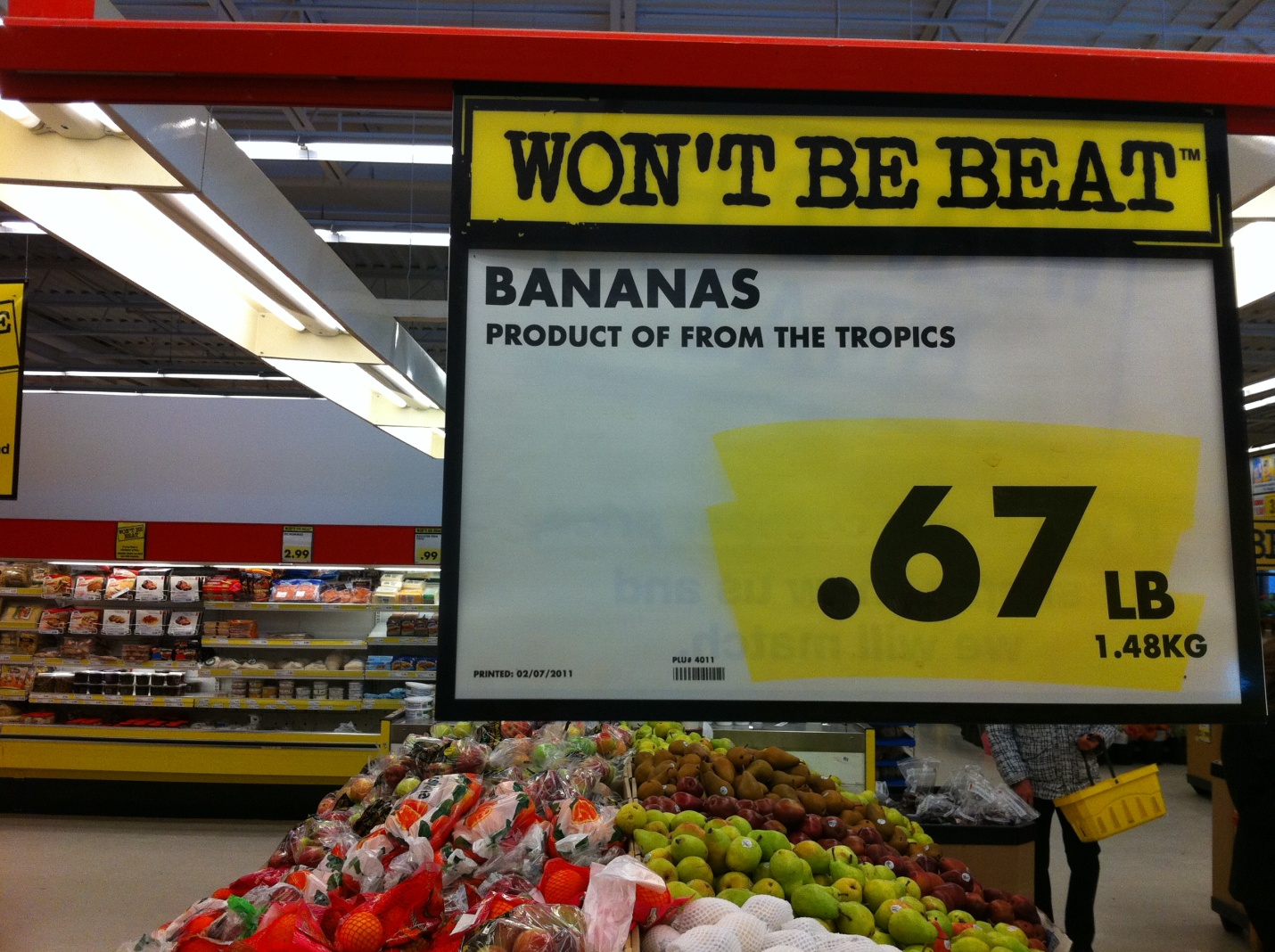
Here the source of the bananas is specified in a way that might help combat distancing.  But, in fact, knowing that these bananas are from the “tropics” does more to obfuscate than illuminate.  The tropics refers to no place in particular – technically referring to parts of South America, Africa, Asia, and the South Pacific.  Instead of a concrete agricultural source, then, pointing to the tropics simply creates a false sense of understanding, one that plays on consumers’ desires for (and stereotypes about) all things lush and tropical, leaving the consumers’ ignorance intact.

Kristina Vidug is pursuing a masters of arts degree in sociology at the University of Guelph in Ontario, Canada. Her research is on post-industrial risk management with a focus on women’s avoidance of synthetic chemicals in the domestic sphere. You can follow her “adventures in thesising” on her blog, jeez (kristina) louise.
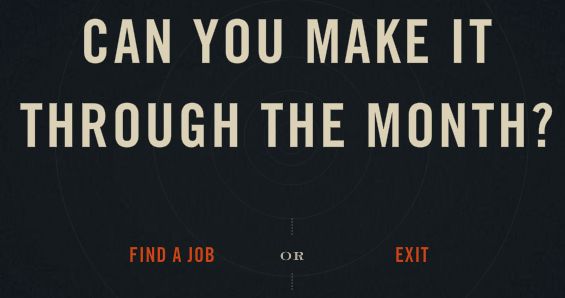
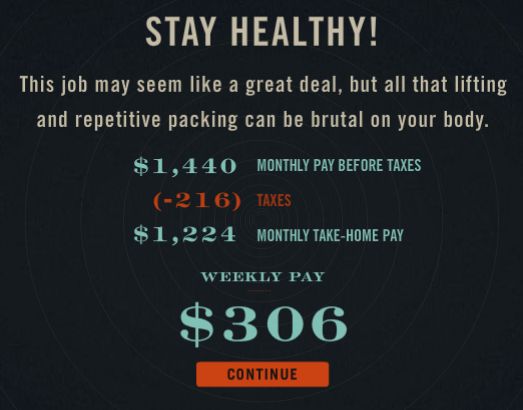
Dolores R., Kelly, and Elyse all sent links to a new website, PlaySpent, designed to help people understand the challenges and trade-offs faced by low-income people with insecure employment.  The “game” begins when you’ve been unemployed, have only $1,000 left in your bank account, and need to get a low wage job.

I failed the typing test (seriously), so I got a job as a warehouse worker:

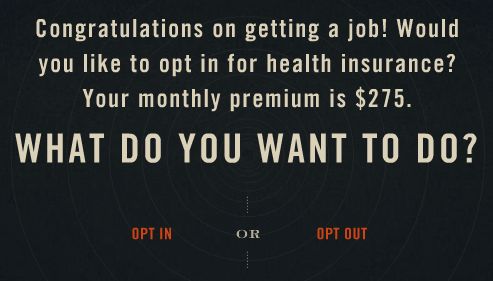
The site asked me if I wanted to pay for health insurance:

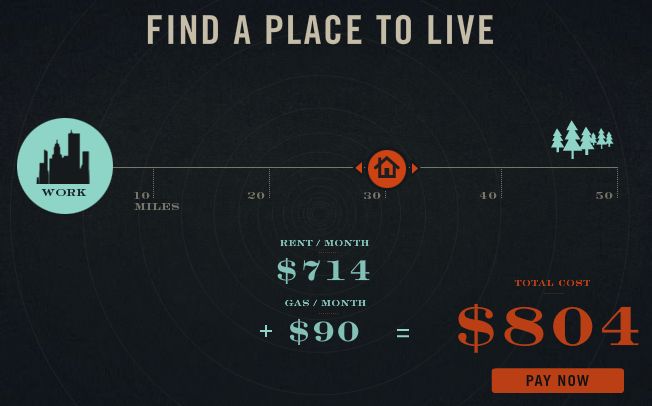
The site then asks me to find a place to live, balancing gas costs:

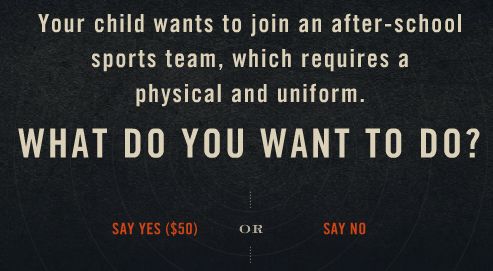
And it asks the player to choose between things your children need/want and your budget:

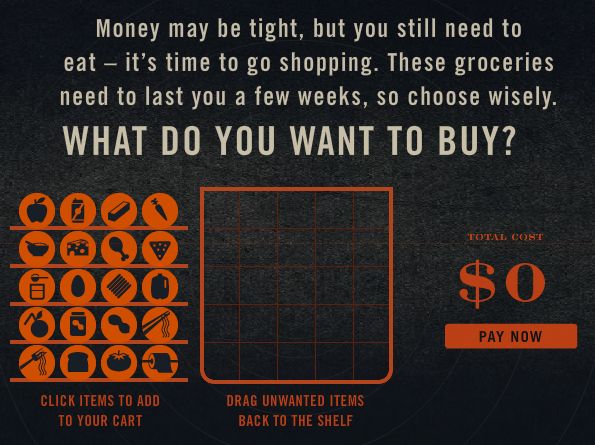
And then, of course, there’s groceries:

And the game goes on…

The site would be an excellent internet field trip for students in sociology classes or anyone who wants to better understand the many trade-offs that poor people are forced to make and the difficulty in making ends meet when you’re part of the working poor.

Says Kelly:

I thought this was an interesting tool to highlight the difficult choices that low-income families have to make.  It also points out how our society often disadvantages the lower class, such as how I was charged a fee for going below the minimum balance in my account, or by telling me how long it would take to pay off credit card debt only paying the minimum balance.

Lisa Wade, PhD is an Associate Professor at Tulane University. She is the author of American Hookup, a book about college sexual culture; a textbook about gender; and a forthcoming introductory text: Terrible Magnificent Sociology. You can follow her on Twitter and Instagram.

The idea that young people take a decade to grow up, in the meantime inhabiting a space called “young adulthood,” is rather new in American culture.  A bit older is the idea of “adolescence,” the idea that there is a stage between childhood and (young) adulthood that is characterized by immaturity and capriciousness: the teenage years.  Before these ideas were invented, children were expected to take on adult roles as soon as they were able, apprenticing their parents and transitioning to adulthood with puberty.  Shifts in ideas about life stages is a wonderful example of the social constructedness of age.

Documenting the rise of the notion of adolescence, Philip Cohen searched Google Books for the term, tracing its rise at the turn of the 20th century till today:

Lisa Wade, PhD is an Associate Professor at Tulane University. She is the author of American Hookup, a book about college sexual culture; a textbook about gender; and a forthcoming introductory text: Terrible Magnificent Sociology. You can follow her on Twitter and Instagram.

The sexual assault of CBS reporter Lara Logan in Tahrir Square last week has resulted in two predictable, but utterly depressing types of commentary.

Muslims are backwards

On the one hand are the anti-Islam culture warriors, eager to find in this incident proof of how degenerate Muslims (and Arabs) are. This, despite the fact that there’s no proof the assailants were Muslims, nor that they had any connection to the overwhelmingly peaceful and harassment-free demonstrations. In fact, there’s reason to believe that Logan’s attackers may have been pro-Mubarak thugs or apolitical opportunists. The right wing response to this story was inevitable, but liberal response was also problematic. Film critic and outspoken liberal Roger Ebert tweeted this today:

“The attack on Lara Logan brings Middle East attitudes toward women into sad focus.”

Oy.

I’d like to call Roger Ebert’s attention to the case of Roman Polanski, who has enjoyed a long and celebrated movie career, in spite of his status as a fugitive child rapist. When Polanski was arrested in September of 2009, while attempting to accept an award at a film festival in Switzerland, supporters circulated a petition on his behalf. Over a hundred people in the film industry signed that petition which gratuitously called Polanski’s crime “a case of morals.” Some weeks later, Gore Vidal went so far as to smear Polanski’s 13 year old victim as “a young hooker.”

Has Ebert ever decried the Polanski case for the way it “brings Hollywood’s attitudes towards women into sad focus?” Has he ever criticized Polanski, Vidal, David Lynch, Wong Kar Wai, Harvey Weinstein or any of the dozens of cinematic luminaries who signed off on this petition? Nope. On the contrary, he gave a big thumbs up to a documentary which argued Polanski should be given a pass for his crime.

I hardly expected Russ Meyers’ former writing pal to be an exemplar of feminist discourse, but his tweet yesterday was especially myopic. Does he really believe that the West is so much more enlightened about rape and sexual violence than those primitive, backwards Middle Easterners?

The opportunistic use of feminism is a common feature of the “liberal” discourse in the culture war against Islam. Just look at how Ayaan Hirsi Ali is trotted out by the media (especially Bill Maher and Steven Colbert) to justify imperialist wars and burqa bans, all in the name of protecting Arab and Muslim women from their own cultures. Meanwhile, many of these same commentators ignore the fact that rape and misogyny are also endemic to our own culture. (And that includes our movies, Roger.)

Rape is sexy

The other type of response to Logan’s assault was the usual victim blaming, made extra creepy by the focus on Logan’s good looks and alleged sexual history. The worst offender was LA Weekly blogger Simone Wilson, who, in an extraordinarily trashy piece of writing had this to say:

Logan was in Tahrir Square with her “60 Minutes” news team when Mubarak’s announcement broke. Then, in a rush of frenzied excitement, some Egyptian protesters apparently consummated their newfound independence by sexually assaulting the blonde reporter.

Wilson conflates the historic Egyptian revolution with gang rape. Classy stuff. But she’s not through. In addition to “blonde reporter” we’re also treated to these descriptors of Logan:

“it girl”
“firecracker”
“shocking good looks”
“Hollywood good looks”
“gutsy stunner”
“homewrecker”
(this courtesy of a NY Post article from 2008)

As has already been noted, focusing on a sexual assault victim’s good looks and allegedly dubious sexual character amounts to victim blaming. But it also does something even more insidious. It makes rape sexy.

This is par for the course at the LA Weekly, where almost anything can be sexed up. LA Weekly‘s cover art department in the last couple of years has managed to make nearly every topic sexy, from murder to toxic mold and overpopulation.

Murder is sexy:

Toxic mold is sexy:

Overpopulation is sexy:

Rarely do the sexy women adorning the covers of the LA Weekly figure as the subjects of these stories. They’re splayed on the cover to boost circulation, because sex sells and, after all, “what’s wrong with being sexy?” (This isn’t even to mention the content of the Weekly– its abundance of ads for plastic surgery, or its routine back page ads from American Apparel– subjects for a longer post.)

Given this particular aesthetic, it is not at all surprising that an LA Weekly blogger would choose to play up the sexy side of the Logan assault story, taking extra pains to emphasize her “Hollywood good looks.” Even an “alternative” newspaper upholds the local value system. Arab Muslim rapists are bad. Sexy women make great victims. And cinematic geniuses should get a pass.

UPDATE, after the jump:

more...

I recently came across the guideline that was used to calculate how much money was to be paid out to the victims of the attacks on September 11. This was a fund that was set up by the US government partly because of the scale and the unprecedented nature of the September 11th attacks and partly to diminish the amount of lawsuits that the airlines would receive.

According to the New York Times article it goes as follows:

1. Economic loss.
2. Set amounts for pain and suffering: $250,000, plus $100,000 for each surviving spouse and child.
3. Subtract any life insurance paid.

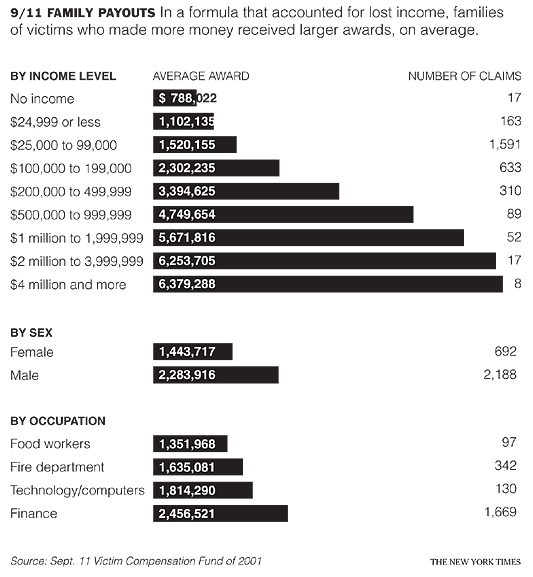
Along with the rubric, The Times also included a chart that showed the amount of payouts that took place as of 2007:

Putting a price on a life is already a difficult concept to parse through. So I am not taken back that the people in charge actually found a price for each of the victims (some compensation had to be made for those individuals who now found themselves without the sole or part-earner in the household).

What I am taken back by is the stratification of how the payouts were dispersed. Who is to say a person makes no income is worth less than a person who makes 4 million and up? Who is to say females are worth less than males? Who is to say that food workers are worth less than individuals who work in finance?

I get the aspect that a person who was a blue collar worker or someone of no income will get less of a payout than a white collar worker or someone who was making $4 million based on the first guideline “economic loss”. But even that argument doesn’t hold much weight as that the food worker might be the next JK Rowling or that person of no income could be the next Bill Gates. Why would it not account for ability not yet realized? We are a meritocratic republic aren’t we?!

Even in a national tragedy like the attacks on September 11 we can’t seem to follow through on the belief that we are a classless society. These payouts are, unfortunately, the reality of the extreme stratification that we hide when we, as a society, claim that we are classless.

AFTER THE JUMP: STEVE GRIMES RESPONDS TO THE COMMENTS THREAD…

more...

If you are alive these days, and not already part of the undead masses yourself, you probably have noticed a staggering increase of zombie references in film, television, pop culture, videogames and the internet.

For instance, the big screen and small screen have both hosted a plethora of zombie films, e.g., 28 Days Later (2002), Shaun of the Dead (2004), and I Am Legend (2007). On television, we have seen the recent success of AMC’s The Walking Dead. And if you are on a college campus, you have probably seen undergraduates playing “Zombies Vs. Humans,” a game of tag in which “human” players must defend against the horde of “zombie” players by “stunning” them with Nerf weapons and tube socks. In videogames, we have seen the success of the Resident Evil franchise, Left 4 Dead, and Dead Rising. Finally, the internet is awash with zombie culture. From viral videos of penitentiary inmates dancing to Michael Jackson’s “Thriller,” to post-apocalyptic zombie societies, fansites, and blogs.

But what is the zombie and where does it come from?

What makes the zombie unique from other movie monsters is its unique place of origin. Whereas Frankenstein, Dracula, and the Wolfman all have ties to the Gothic literary tradition, the zombie stands apart in having a relatively recent (and proximal) origin. Theorists of zombie culture (such as Kyle Bishop or Jamie Russell), attribute the origin of the zombie to Haitian folklore and the hybrid religion of voodoo. But the zombie didn’t make its away into American culture until the 1920s and 30s, when sensationalist travel narratives were popular with Western readers. Specifically, W.B. Seabrook’s book The Magic Island, is often credited as the first popular text to describe the Haitian zombie. Additionally, the work of Zora Neale Hurston (specifically her 1937 book Tell My Horse) explores the folklore surrounding the zombie in Haitian mythology.

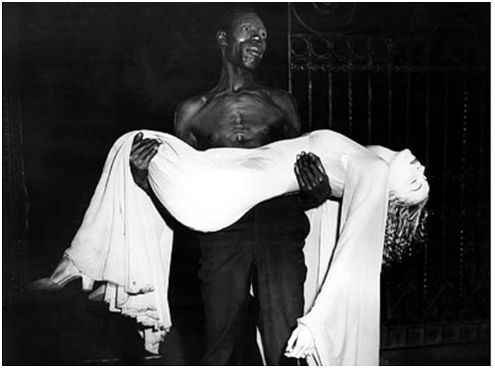
(Still from I Walked with a Zombie, 1943)

With the development of the motion picture, the zombie became a staple of horror, and a popular movie monster. The zombies of White Zombie (1932), Revolt of the Zombies (1936), King of the Zombies (1941), and I Walked with a Zombie (1943), however, were not the cannibalistic creatures we now know. These zombies were people put under a spell, the spell of voodoo and mystical tradition. In these films, the true terror is not be being killed by zombies, but of becoming a zombie oneself.

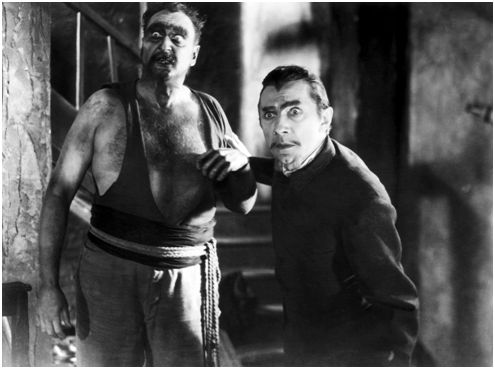
Bela Lugosi as ‘Murder’ Legendre, the mad scientist and his zombie slave:


What all these films have in common is their depiction of Voodoo and Haitian culture more generally as dangerous, menacing, and superstitious. Those who study colonial history note that the messages contained in these films present stereotyped versions of Haitian culture aimed largely at satisfying a predominantly white audience. Many of these films also contain an all white cast, with several members in blackface serving as comedic relief for the more “serious” scenes.

It’s interesting to see how the zombie has morphed into the cannibalistic creatures we now know. While the original zombie is a powerful metaphor for fears of the non-white Other and reverse colonization, the contemporary zombie largely reflects contemporary fears of loss of individuality, the excesses of consumer capitalism, environmental degradation, the excesses of science and technology, and fears of global terrorism (especially more recent renditions of the zombie post-9/11).

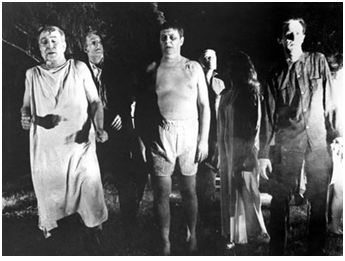
For instance, George A. Romero’s famous Night of the Living Dead (1968), the first film to feature the flesh-eating zombie, is often remarked as a not-so-subtle allegory to the Civil Rights Era and the militant violence perpetuated by Southern states against the Black protestors, as well as a critique of the Vietnam War. Romero himself has stated that he wanted to draw attention to the war through the images of violence contained in the film.

Cannibal zombies in Night of the Living Dead (1968):

Similarly, the Italian zombie horror film Let Sleeping Corpses Lie (1974) reflects fears of environmental degradation and pollution. In this film, the zombie epidemic is caused by an experimental pest-control machine, which sends radio waves into the ground. Although it solves the local pest problem for farmers, it also reanimates the dead in a nearby cemetery.

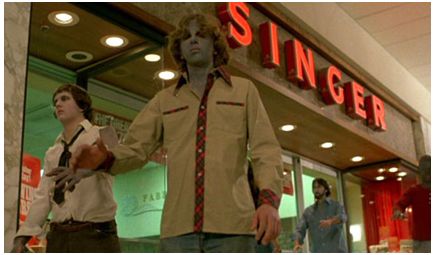
Zombie consumers in Romero’s second zombie flick Dawn of the Dead (1978):

Later zombies are used to symbolize the excesses of capitalism and militarism, respectively.  For example, in 28 Weeks Later (2007), we see the decay of social structures across the globe, as institutions that are supposed to protect us inevitably fail to do their job.  In this scene, protagonists attempt to escape the city just before the military firebombs it:

As we can see, the zombie has a unique cultural history and serves as a powerful metaphor for social anxieties. This movie monster might have come out of the Caribbean, but it became a powerful representation of modern fears when it met the silver screen. Perhaps the current failure of global social structures (global terrorism, environmental catastrophes, and the current economic downturn) has prompted the most recent “Zombie Renaissance.” Or maybe we are just gluttons for the “everyman” tales contained in each rendition of the zombie apocalypse, a point made by SocProf several months back. I do not know what the future holds, but one thing is certain: the zombie will continue to haunt us from beyond the grave.

David Paul Strohecker is getting his PhD in Sociology at the University of Maryland. He studies cultural sociology, theory, and intersectionality. He is currently working on a larger project about the cultural history of the zombie in film.

I enjoy opportunities to link back to my dog person/cat person rant.  In it, I point out how pet ownership can be gendered.  In this case, owning a dog is masculine and owning a cat is feminine. Anna sent in an image demonstrating just this, noting that the dog products at her vet are blue and the cat products pink:

More, and importantly, because we also tend to value men and masculinity over women and femininity, it is somehow “cool” to own a dog, especially a big dog.  This is true for both men and women.  But it isn’t really cool to own a cat.  We accept it in women because cats enhance her femininity (for better or worse), but when men do it.  Well, as I say in my previous post on the topic, “we think men with cats are a little femmy or, at minimum, sweeter than most… even, maybe, gay.”

This was not lost on the folks at Much Love Animal Rescue.  Visiting the site, Squee noticed that they had a page aimed at men that attempted to convince them that owning a cat could be manly indeed. Their commercials feature extra-super-manly-men with grease ‘n stuff talking about punching things and loving their cat. This is nice in that it challenges the social construction that owning cats is feminine, but notice that it leaves intact the idea that men-should-be-men and avoid all things feminine.

Lisa Wade, PhD is an Associate Professor at Tulane University. She is the author of American Hookup, a book about college sexual culture; a textbook about gender; and a forthcoming introductory text: Terrible Magnificent Sociology. You can follow her on Twitter and Instagram.

CNN reported yesterday on the House Republicans’ plan to reduce spending.  Staff Reporter Charles Riley writes that it’s a “dramatic budget proposal… that would result in sweeping cuts to federal agencies and government services.”

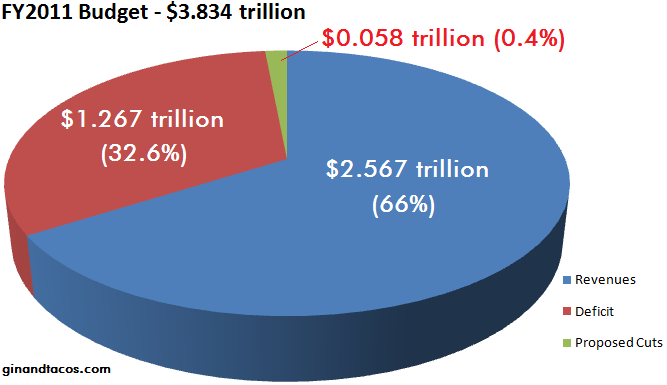
Oh really?  Gin and Tacos puts it in perspective:

See that little green sliver?  That’s the budget cut.  I’ll let Gin and Tacos be the sarcastic one: “Wow, over 4/10ths of one percent of the FY2011 budget!”

More, it’s not even actually $58 billion because, as Riley reports:

In practical terms, the spending decrease is actually closer to $35 billion, since Congress failed to pass a budget for fiscal year 2011, and agencies have been operating at 2010 funding levels.

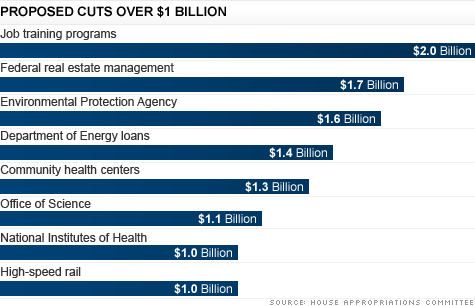
This is an ongoing problem for political conservatives.  Cutting spending is a useful sound bite, but when asked what they actually want to cut — you know, a plan to actually balance the budget without raising taxes or while cutting them — they typically flounder.  So, in this case, they’re successfully cutting four-tenths of one percent of the budget.  And what must we sacrifice for this tremendous step towards a balanced budget?  Among other things, this:

Lisa Wade, PhD is an Associate Professor at Tulane University. She is the author of American Hookup, a book about college sexual culture; a textbook about gender; and a forthcoming introductory text: Terrible Magnificent Sociology. You can follow her on Twitter and Instagram.