Search results for The

Iconic Photos documents at least two instances in which the U.S. postal service rewrote history, so to speak, taking smoking out of the stamp:
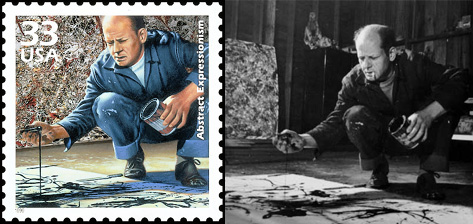
Pollack and Johnson are important figures in American history, who smoked before it carried the stigma it carries today, and whose smoking represents the time and culture that inspired their genius.  How do you balance the desire to be historically accurate and true to the individual, with the desire to avoid endorsing a habit newly framed as a social problem?

Via BoingBoing.

Lisa Wade, PhD is an Associate Professor at Tulane University. She is the author of American Hookup, a book about college sexual culture; a textbook about gender; and a forthcoming introductory text: Terrible Magnificent Sociology. You can follow her on Twitter and Instagram.


On today’s SportsCenter, ESPN closed out showing their “This is SportsCenter” commercials. As described on ESPN’s official YouTube, “This is SportsCenter” channel:

This is SportsCenter is the name of a series of comical television commercials run by ESPN to promote their SportsCenter sports news show. The ads are presented in a deadpan mockumentary style, lampooning various aspects of sports, and sports broadcasting. The commercials debuted in 1994.

As of tonight (December 24, 2010), ESPN’s YouTube channel profiles 77 of these short videos. Not every “This is SportsCenter” commercial is profiled, but I’m just going with what is up on this page now as the sample data set. I generally enjoy these commercials. Many of them are witty, and they are all short (around 30 seconds). Here are a few examples:

As can be seen, the commercials typically profile a famous athlete and/or a SportsCenter anchor, and on occasion a non-sports-related celebrity (e.g., Richard Simmons). In examining what athletes the commercials profile on ESPN’s YouTube page, a highly predictable trend emerges. Here are the individual athletes the commercials profile (note: when no athletes are profiled and only anchors, gender of anchors profiled noted instead):

  1. Dwight Freeney (football; male)
  2. Derek Jeeter (baseball; male)
  3. Floyd Mayweather (boxing; male)
  4. Tim Lincecum (baseball; male)
  5. Wayne Gretzky (hockey; male)
  6. Dwight Howard (basketball; male)
  7. David St. Hubbins (musician; male)
  8. Arnold Palmer (golf; male)
  9. Oregon Duck (football; gender neutral)
  10. Usain Bolt (track & field; male)
  11. Larry Fitzgerald (football; male)
  12. Matt Ryan (football; male)
  13. Brett Favre (football; male)
  14. Adrian Peterson (football; male)
  15. Joe Mauer (baseball; male)
  16. Adrian Peterson (football; male)
  17. Manny Ramierz (baseball; male)
  18. Josh Hamilton (baseball; male)
  19. SportsCenter Anchors (all male)
  20. Jimmie Johnson (car racing; male)
  21. SportsCenter Anchors (all male)
  22. Manny Ramirez (baseball; male)
  23. David Ortiz & Jorge Posada (baseball; male)
  24. David Wright (baseball; male)
  25. Chad Ochocinco (football; male)
  26. Chad Ochocinco (football; male)
  27. Ladanian Tomlinson (football; male)
  28. Chad Ochocinco (football; male)
  29. Tony Romo (football; male)
  30. Paul Pierce, Kevin Garnett, & Ray Allen (basketball; male)
  31. Michael Phelps (swimming; male)
  32. Ladanian Tomlinson (football; male)
  33. Jim Kelly (football; male)
  34. Dale Earnhardt Jr. (car racing; male)
  35. Chad Ochocinco (football; male)
  36. Stephen King (writer; male)
  37. Michael Phelps (swimming; male)
  38. Jimmy Rollins (baseball; male)
  39. Richard Simmons (fitness pro; male)
  40. Maria Sharapova (tennis; female)
  41. Steve Smith (football; male)
  42. Jose Reyes (baseball; male)
  43. Pat Summit (basketball; female)
  44. Dale Earnhardt Jr. (car racing; male)
  45. Carmelo Anthony (basketball; male)
  46. Chris Paul (basketball; male)
  47. Keyshawn Johnson (football; male) & Kobe Bryant (basketball; male)
  48. “Moving the Franchise” (all male anchors)
  49. “Yahtzee” (male anchors)
  50. Kerri Strug (gymnastics; female)
  51. “Talent Search” (male anchors)
  52. Globetrotters (basketball; male)
  53. Dan O’Brien (track & field; male)
  54. “Journalistic Integrity” (male anchors)
  55. “Sportscaster Celebrities” (male anchors)
  56. “Live on the Set” (predominantly male anchors; female anchor at end)
  57. Michael Andretti (car racing; male)
  58. Gordie Howe (hockey; male)
  59. “Reading Lips” (all male anchors)
  60. “Makeup Buddies” (all male anchors)
  61. “Athletes Bribing” (multiple male athletes from different sports)
  62. George Mikan (basketball; male)
  63. Mary Lou Retton (gymnastics; female)
  64. “Tour” (all male anchors)
  65. “One Track Mind” (predominanty male anchors; female anchor at start)
  66. “Shoot” (female anchor)
  67. “Paws” (all male anchors)
  68. “Serious Journalism” (all male anchors)
  69. “Write Your Own Stuff” (all male anchors)
  70. “Sweet Science” (predominantly male anchor; short appearances by a female anchor)
  71. “Potty Talk” (male anchor)
  72. “Memories” (all male anchors)
  73. Keshawn Johnson (football; male) & Kobe Bryant (basketball; male)
  74. Glenn Robinson (basketball; male)
  75. Barry Melrose (hockey; male)
  76. Landon Donovan (soccer; male)
  77. Jimmie Johnson (car racing; male)

When going through the data set, we find that out of the 77 commercials, women only appear 8 times (10.4%), in some cases in relatively peripheral roles. When looking specifically at athletes, only 3 female athletes are profiled, all 3 of whom represent historically “acceptibly feminine” sports: Mary Lou Retton and Kerri Strug (both gymnasts) and Maria Sharapova (tennis). One commercial profiles Pat Summit, the famous women’s basketball coach from the University of Tennessee. All other commercials featuring athletes have males.

Examining the content of the commercials is also important. For instance, the commercial with Sharapova clearly relies on Sharapova’s status as a femininized beauty figure in athletics. And while all the commercials are “presented in deadpan mockumentary style,” the humor clearly calls upon dominant notions of heterosexual masculinity — take for example the commercials that mock femininity among males, such as those in which the male anchors share makeup and mock Richard Simmons as a conditioning coach.

The trends shown here are highly predictable. It is hardly surprising that males are over-represented numerically in the commercials, both as athletes and anchors. Likewise, it is unsurprising that the humor utilized in these commercials so often mocks femininity among males in the sporting world or uses female athletes as sexualized figures.

What we see here in ESPN’s “This is SportsCenter” commercials is the typical way that gender is constructed in sport — patriarchy is reified within an institution historically reserved for heterosexual males.

———————————–

David Mayeda is an Assistant Professor in the Department of Sociology and Legal Studies at Hawaii Pacific University.  His recent book publications include Celluloid Dreams: How Film Shapes America and Fighting for Acceptance: Mixed Martial Artists and Violence in American Society.  He also blogs at The Grumpy Sociologist.

If you would like to write a post for Sociological Images, please see our Guidelines for Guest Bloggers.

In the 22-minute short film below, titled MouseTrapped 2010, employees of Florida’s Walt Disney World plead with Disney to negotiate a fair contract with their Union. The film is interesting on two accounts. First, is a good example of the low wages in many service industries. Sociologists refer to the “working poor” to describe people who work full-time and yet still cannot make ends meet. Some of the employees in this video take second jobs, live with their parents or siblings, routinely take food from church food banks, or receive food stamps.

Second, it is an example of a new bargaining tactic: widespread public pressure. This tactic is possible only because of developments in the last decade: the affordability and accessibility of the technology required to put together a short video like this and the medium of youtube that allows the employees to reach potentially millions of viewers for free. It’s working too; Jordan G. spotted this video at Boing Boing, one of the most widely read sites on the web.

Part I of II:

Part II of II:

Lisa Wade, PhD is an Associate Professor at Tulane University. She is the author of American Hookup, a book about college sexual culture; a textbook about gender; and a forthcoming introductory text: Terrible Magnificent Sociology. You can follow her on Twitter and Instagram.

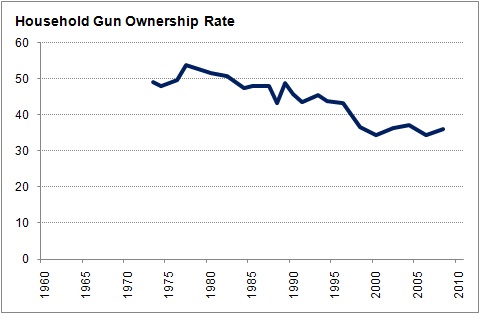
FiveThirtyEight has up a post about attitudes toward gun ownership in the U.S. Drawing on General Social Survey data, they show actual ownership of guns has gone down over time; less than 40% of American households now report having one:

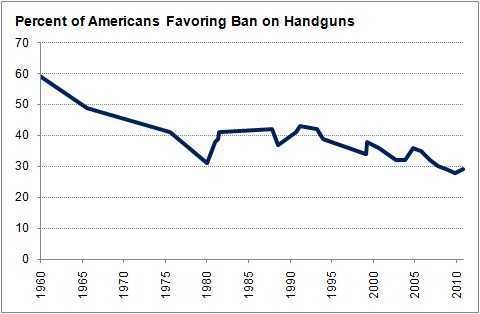
You might expect that, as fewer Americans own guns themselves, support for the right to own personal firearms might decrease, as fewer people might feel a strong personal interest in the issue and restricting or banning access to guns wouldn’t, presumably, affect them directly or bring up an emotional image of agents storming into their homes.  Yet we don’t see this at all. In fact, Gallup poll data indicate that support for banning handguns has decreased over time as well, with fewer than one third of Americans supporting such a policy:

Silver suggests that changes in political rhetoric, particularly more vocal and unequivocal support for gun rights by the Republicans and less emphasis on banning guns by Democrats, may explain some of this change. I’m sure that’s part of it; but that leaves unanswered why the political rhetoric changed, particularly after 1992 (when, as Silver demonstrates, the Republican Party platform became more pro-gun/anti-restriction, while the Democrats made sure to start stressing their overall support for some basic right to gun ownership by individuals, though still pushing for some regulations). And aside from that, the biggest drop in support for banning handguns came during the ’60s and ’70s, before the change in party rhetoric, so what do we make of that?

Also see our post on concealed weapon laws, increases in gun sale background checks, and changing images of guns in pop culture.

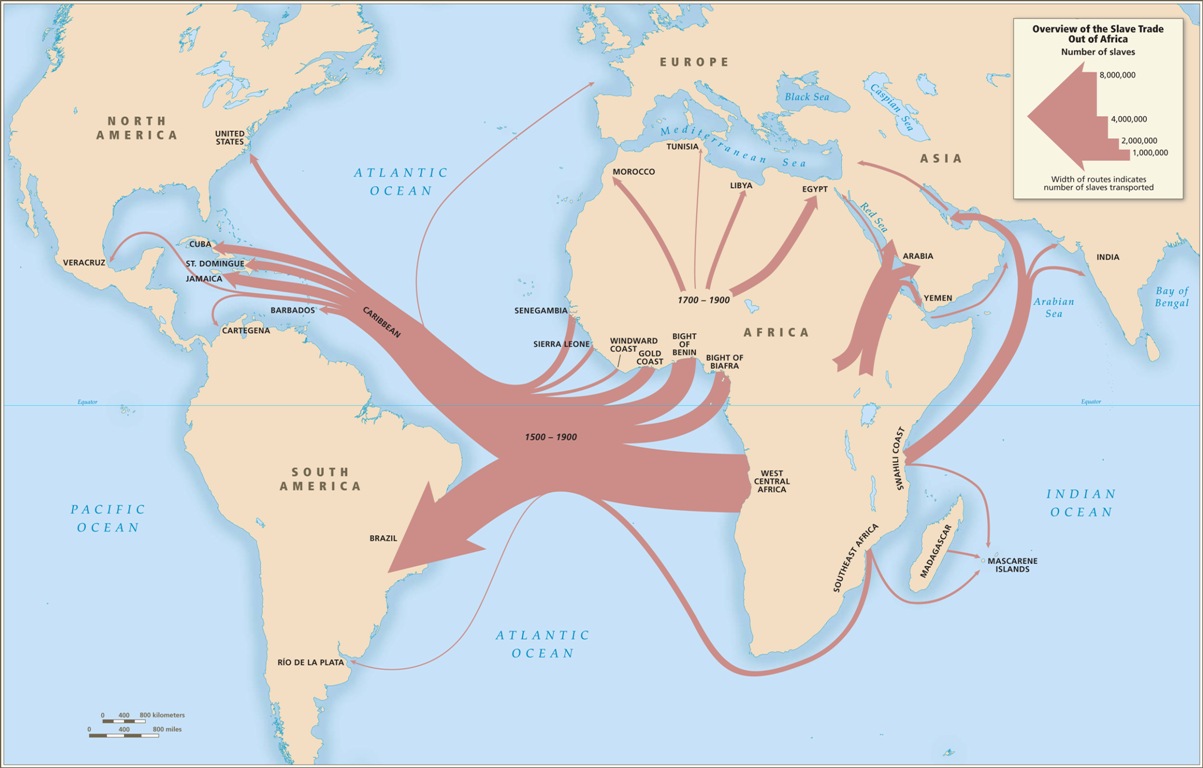
Emory University has a very detailed database about the Atlantic slave trade, titled Voyages: The Trans-Atlantic Slave Trade Database, which I don’t believe we’ve posted before (my apologies if we have). It includes nine maps providing information on major points of departure and destination ports for the trans-Atlantic trade; here’s a general overview:

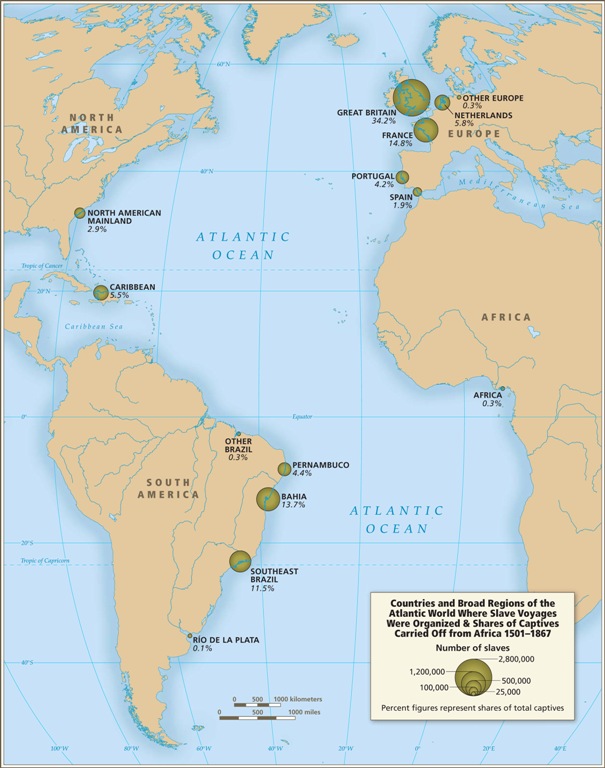
Initially the vast majority of slave voyages were organized by firms or individuals in Spain and Portugal; however, over time the slave trade was dominated by groups from northern Europe. Great Britain eventually played a major role, and over 1/3 of documented slave voyages were organized there.The description of Map 6 explains, “vessels from the largest seven ports, Rio de Janeiro, Bahia, Liverpool, London, Nantes, Bristol, and Pernambuco carried off almost three-quarters of all captives removed from Africa via the Atlantic Ocean.”

This map shows where voyages were organized, and the % of all documented African slaves that voyages from that country/area transported:

In the U.S., students generally learn about slavery in relation to cotton plantations and, to a lesser extent, tobacco. However, overall those two crops played a relatively minor role in the growth of the global slave trade. It was the growing taste for sugar, and the creation of sugar plantations, particularly in the Caribbean and South American coastal areas, that produced such an enormous demand for African slaves in the Americas. According to the Voyages website, less than 4% of all Africans captured were sold in North America.

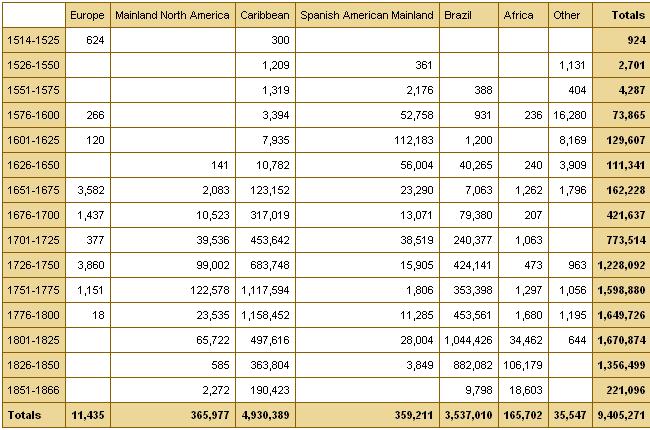
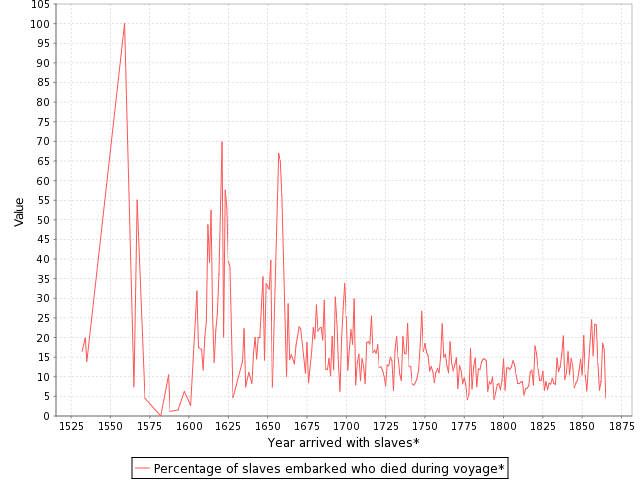
The website also has a database of thousands of documented trips in the trans-Atlantic slave trade, including everything from point of origin, destination, number of slaves, % who died during voyage, length of trip, and so on. Some include many more details than others, as you’d expect. You can also create tables to display the variables you’re interested in. Here’s the table showing the slave trade, broken into 25-year intervals and by destination. We can clearly see that the slave trade made one big jump in the late 1500s (going from 4,287 in the 1551-1575 interval to 73,865 between 1576 and the end of the century) and another huge jump in the late 1600s, with the height of the slave trade occuring in the 1700s through the mid-1800s:

You can also create various graphs and charts. Here is a graph of the % of slaves who died during the trip, by year:

I presume the extremely high numbers in the 1550s must be skewed by some ships that sank or met some other disaster that led to the death of everyone aboard.

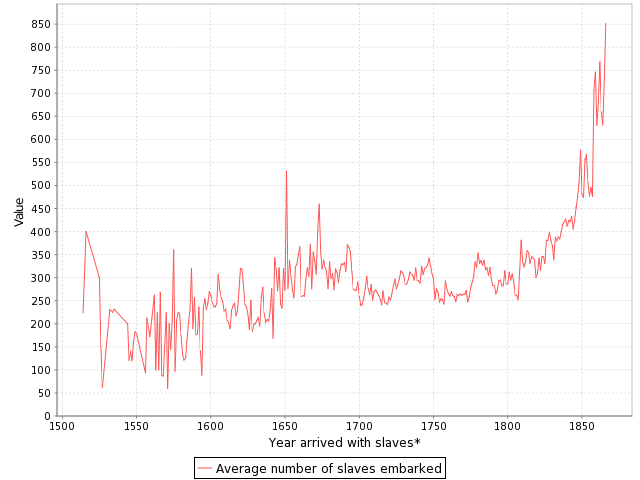
Over time, ships carried larger numbers of individuals per trip:

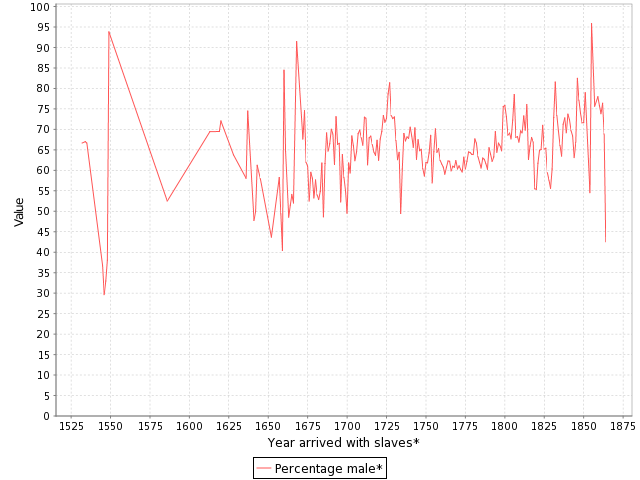
The individuals taken as part of the slave trade were predominantly male:

Documented types of resistance from captives or from Africans trying to free them:

You can spend quite a bit of time on this, I warn you — creating timelines, graphs, and so on. It’s taken me an hour to write this post because I keep getting distracted creating charts and tables. Overall, the site is a fantastic resource for both specific information and for helping illuminate the enormity of the Atlantic slave trade. Thanks to Shamus Khan for the tip.

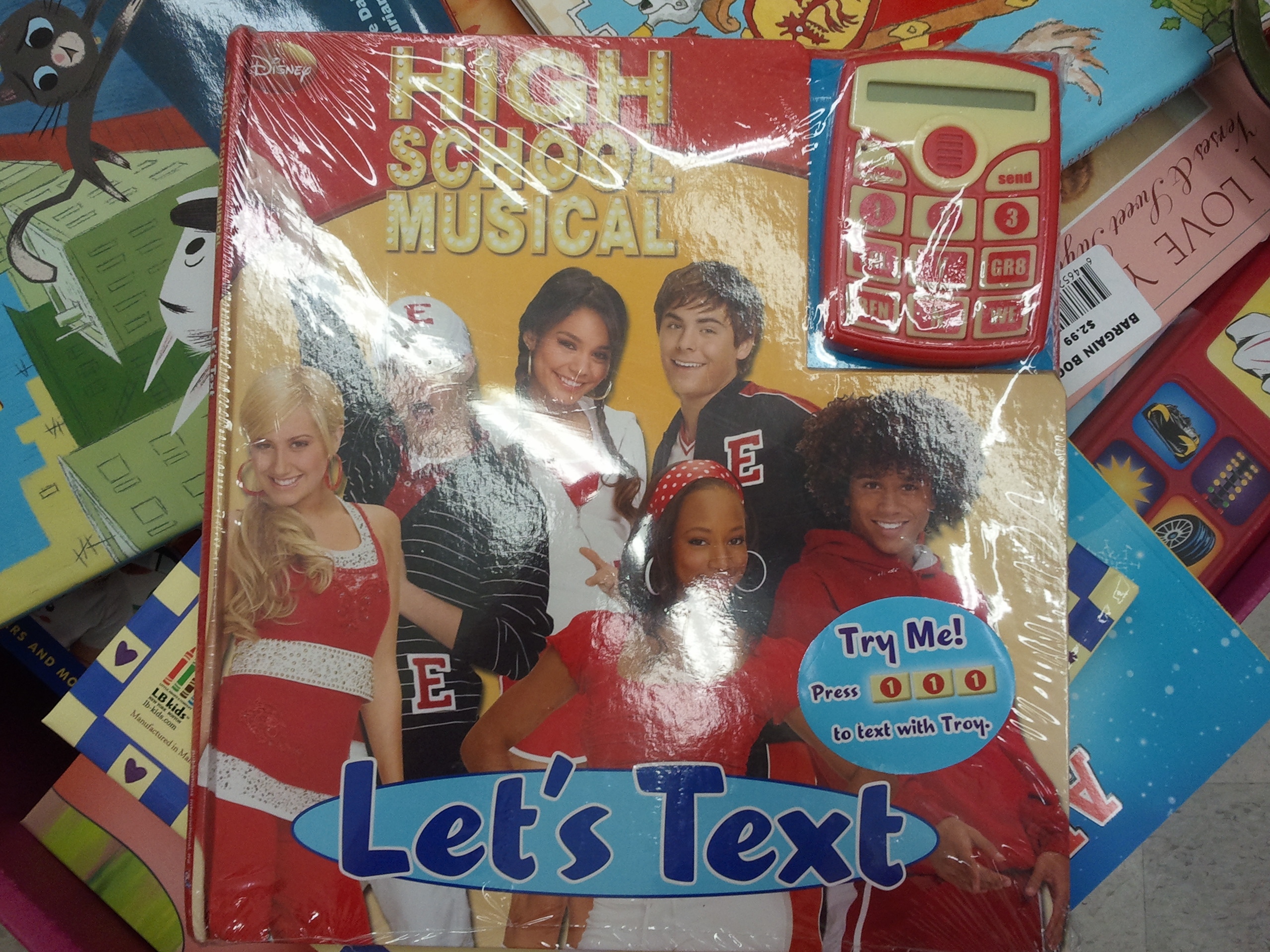
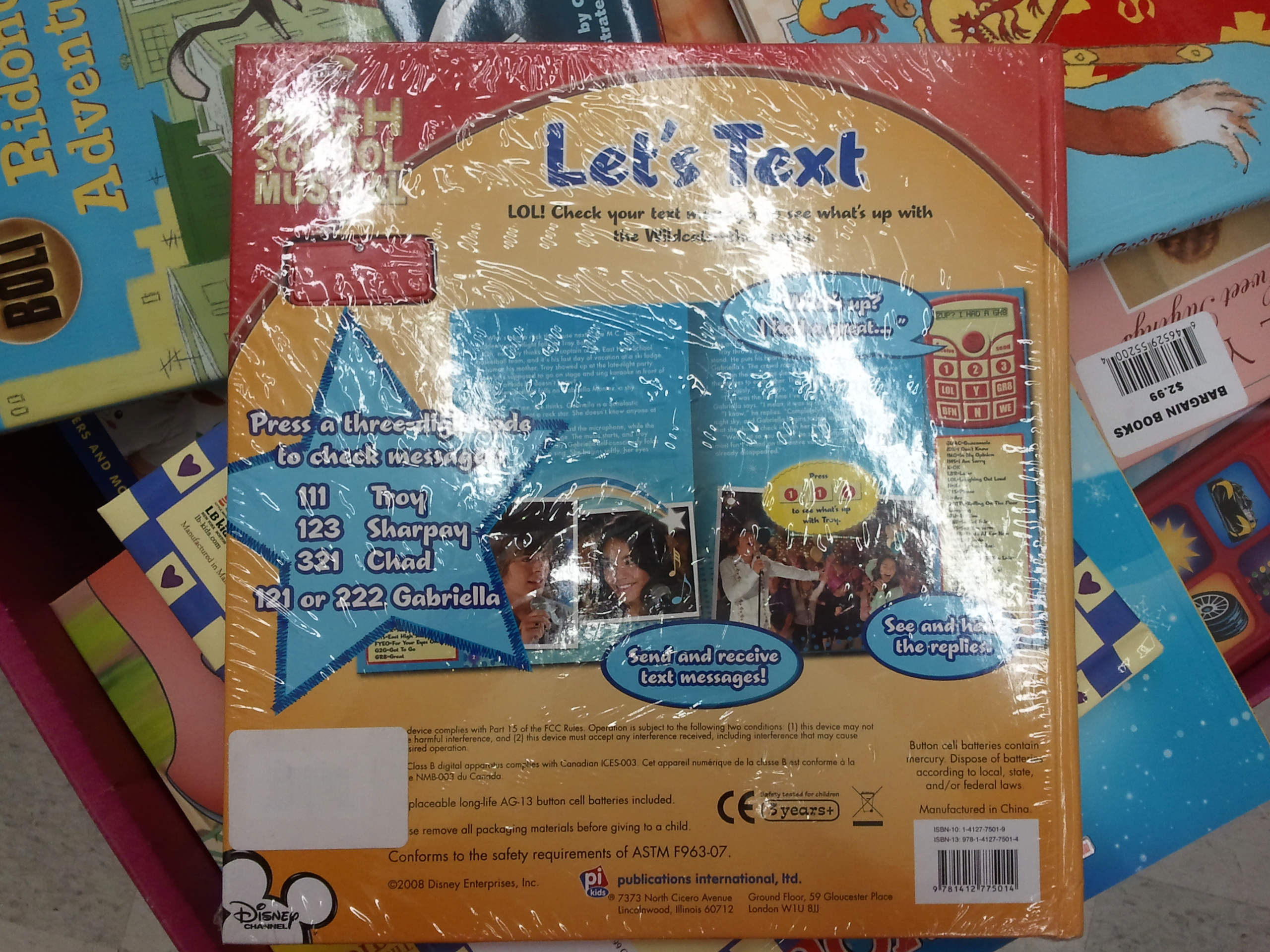
Wandering around Las Vegas, Gwen and I happened upon a High School Musical-themed book complete with a little gadget that allows small children (3+) to practice texting.  The gadget allows children to press 1, 2, or 3 to send a pre-fabricated message to High School Musical characters, who send pre-fabricated messages back, and so on.

Kids, of course, like to do what they see adults doing.  That’s why they like getting play vacuums and lawn mowers.  It’s not inherently fun, it’s just fun to copy.  So it makes sense that, in a world where adults text, little kids would want to text too.

Just like play vacuums and lawn mowers, however, a toy phone to text on is training children how to be adults or, in this instance, teenage girls; ones who flirt with boys, spend a lot of time socializing on their cell phones, and use text-speak (the book includes a lingo dictionary explaining, for example, that LOL means “Laugh Out Loud” and WAZ UP means “What’s up?”).

Front:

Back:

Thanks to Jordan G. for help on this one.

Lisa Wade, PhD is an Associate Professor at Tulane University. She is the author of American Hookup, a book about college sexual culture; a textbook about gender; and a forthcoming introductory text: Terrible Magnificent Sociology. You can follow her on Twitter and Instagram.
Michaela sent in two Australian ads for Selleys sealants. Both target men and caution them about the consequences of neglecting home maintenance projects:

So men who fail to do the type of housework that is consistent with ideals of masculinity — fixing things — face threats to other areas of masculinity as well, since, of course, women (who cannot, themselves, caulk a shower, obviously) will be unable to resist a hot dude who can (and will) fix stuff, thus proving himself to be the ideal man. Who doesn’t love emasculation as a marketing tool?

A polished version of this post was published in Contexts. You can download it here.

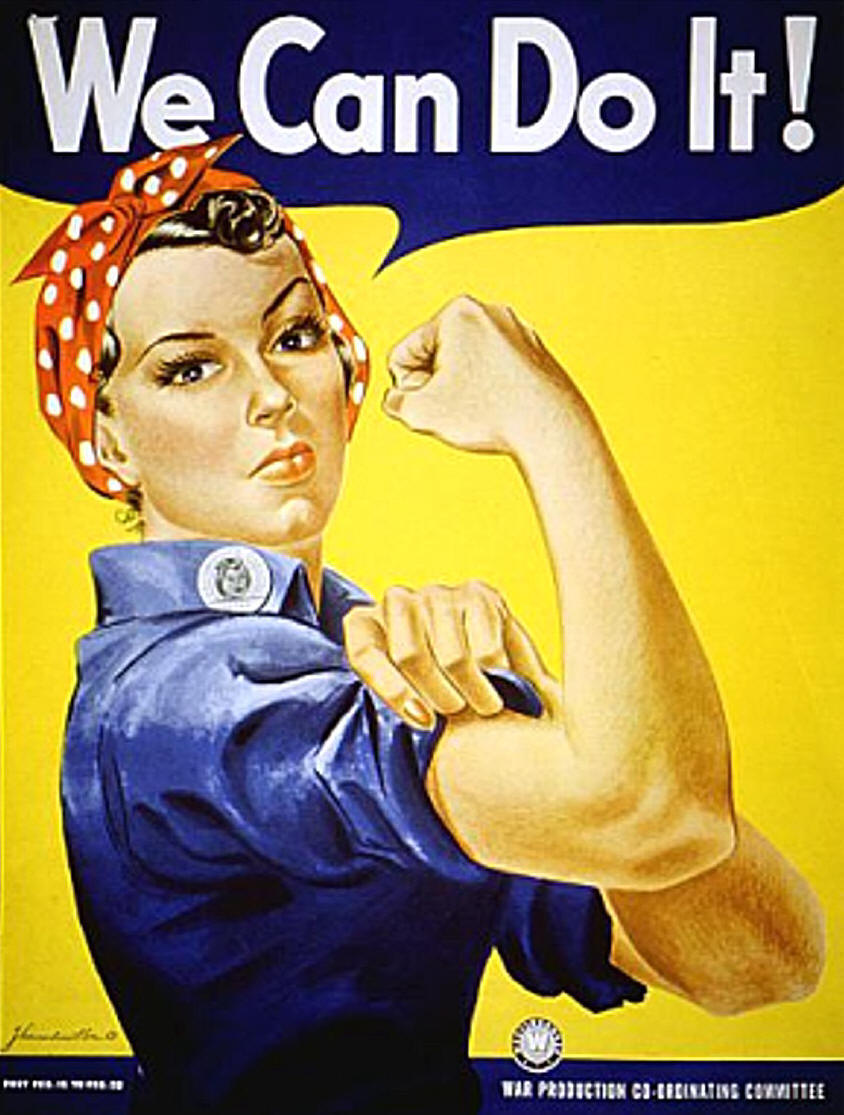
Most of our readers are probably familiar  with the now-iconic “We Can Do It!” poster associated with Rosie the Riveter and the movement of women into the paid industrial workforce during World War II:

It is, by this point, so recognizable that it is often parodied or appropriated for a variety of uses (including selling household cleaners). The image is widely seen as a symbol of women’s empowerment and a sign of major gender transformations that occurred during the 1940s.

In their article, “Visual Rhetoric Representing Rosie the Riveter: Myth and Misconception in J. Howard Miller’s ‘We Can Do It!’ Poster,” James Kimble and Lester Olson argue that our current interpretations of the poster don’t necessarily align with how it was seen at the time.

While the poster is often described as a government recruiting item (Kimble and Olson give many examples in the article of inaccurate attributions from a variety of sources), it was, in fact, created by J. Howard Miller as part of a series of posters for the Westinghouse Electric and Manufacturing Company — the Westinghouse logo is clearly visible just under the woman’s arm, and the badge on her shirt collar is the badge employees wore on the plant floor, including an employee number. The War Production Co-ordinating Committee was an internal Westinghouse committee, similar to those created by many companies during the war, not a government entity.

The assumption of current viewers of the image is usually that it was meant to recruit women into the workforce, or to rally women in general — an early example of girl power marketing, if you will — and was widely displayed. But the audience was actually only Westinghouse employees. The company commissioned artists to create posters to be hung in Westinghouse plants for specific periods of time; this poster specifically says, “Post Feb. 15 to Feb. 28” [1943] in small font on the lower left. There’s no evidence that it was ever made available to the public more broadly. For that matter, the poster doesn’t identify her as “Rosie,” and it’s not clear that at the time she would have been immediately identifiable to viewers as “Rosie the Riveter”.

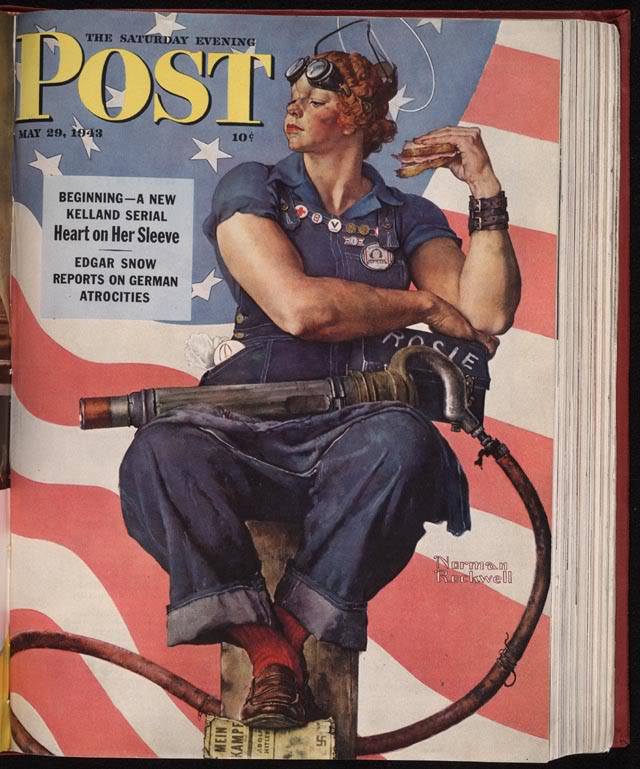
The image that was more widely seen, and is often conflated with the “We Can Do It!” poster, was Norman Rockwell’s May 29, 1943, cover for the Saturday Evening Post:

Here, the woman is clearly linked to the idea of Rosie the Riveter, through both the name on her lunchbox and the  equipment she’s holding. She is more muscular than the woman in Miller’s poster, she’s dirty, and her foot is standing on a copy of Hitler’s Mein Kampf. Rockwell’s image presents the woman as a vital part of the war effort; her work helps defeat the Nazis. The image also includes fewer details to make her look conventionally attractive than Miller’s, where the woman has emphasized eyelashes and visibly painted fingernail.

Most interestingly, Kimble and Olson question the female empowerment message presumed to be the point of the “We Can Do It!” poster. We see the poster on its own, through the lens of a narrative about World War II in which housewives left the kitchen in droves to work in factories. But Westinghouse workers would have seen it in a different context, as one of a series of posters displayed in the plant, with similar imagery and text. When seen as just one in a series, rather than a unique image, Kimble and Olson argue that the collective “we” in “We can do it!” wouldn’t have been women, but Westinghouse employees, who were used to seeing such statements posted in employee-access-only areas of the plant.

Of course, having a woman represent a default factory employee is noteworthy. But our reading of the poster as a feminist emblem partially rests on the idea that this female worker is calling out encouragement to other women. The authors, however, point out a much less empowering interpretation if you think of the poster not in terms of feminism, but in terms of social class and labor relations:

…Westinghouse used “We Can Do It!” and Miller’s other posters to encourage women’s cooperation with the company’s relatively conservative concerns and values at a time when both labor organizing and communism were becoming active controversies for many workers… (p. 537)

…by addressing workers as “we,” the pronoun obfuscated sharp controversies within labor over communism, red-baiting, discrimination, and other heartfelt sources of divisiveness. (p. 550)

One of the major functions of corporate war committees was to manage labor and discourage any type of labor disputes that might disrupt production. From this perspective, images of happy workers expressing support for the war effort and/or workers’ abilities served as propaganda that encouraged workers to identify with one another and management as a team; “patriotism could be invoked to circumvent strikes and characterize workers’ unrest as un-American” (p. 562).

And, as Kimble and Olson illustrate, most of Miller’s posters included no women at all, and when they did, emphasized conventional femininity and the domestic sphere (such as a heavily made-up woman waving to her husband as he left for work).

Of course, today the “We Can Do It!” poster is seen as a feminist icon, adorning coffee cups, t-shirts, calendars, and refrigerator magnets (I have one). Kimble and Olson don’t explain when and how this shift occurred — when the image went from an obscure piece of corporate war-time propaganda, similar to many others, to a widely-recognized pop cultural image of female empowerment. But they make a convincing argument that our current perceptions of the image involve a significant amount of historical myth-making that helps to obscure the discrimination and opposition many women faced in the paid workforce even during the height of the war effort.

[The article appears in Rhetoric & Public Affairs 9(4): 533-570, 2006.]

Gwen Sharp is an associate professor of sociology at Nevada State College. You can follow her on Twitter at @gwensharpnv.