The current political discourse is so focused on a single form of government revenue, that the word taxes has become essentially synonymous with just one tax in particular; the federal income tax.  In fact, unless there is a foreign policy crisis, the federal income tax usually dominates most political discussion given how the federal budget (or increasingly the federal debt) relates to almost anything and everything the federal government does (or does not do in more and more instances).

For example, during the closing months of 2012 we watched how a fight over a sunset of the Bush Tax Cuts almost shoved the United States over a fiscal cliff.  Just prior to this near crisis, the most discussed difference between 2012 presidential candidates was their disagreement about a 4 point increase in the highest federal income bracket.  Also, Mitt Romney will likely be remembered mostly for his disparagement and disregard of “The 47% of United States Citizens who pay no federal income tax.”

However, limiting discussion about government funding and spending to just the federal income tax and ignoring the other types of payments we make to the treasury is not without consequence, especially given how the federal income tax is actually a very unique kind of tax.  Unlike excise taxes, payroll deductions, sales taxes and most property taxes that are regressive or require the poor to pay a larger proportion of their resources than the wealthy; the federal income tax is one of the few progressive taxes in the United States because at least on paper (I say that because these marginal rates often do not equate the larger effective rates given that the wealthy are afforded more loopholes, deductions, and lower rates on investment income), the rich pay larger marginal rates than the middle-class and poor.   Thus, with our political discussion largely limited to the federal income tax, it should come as no surprise conservatives are so easily able to frame “The State,” especially the federal government, as a perverse Robin Hood who steals from the rich (the makers as they are being called now) to give to the poor (the takers).
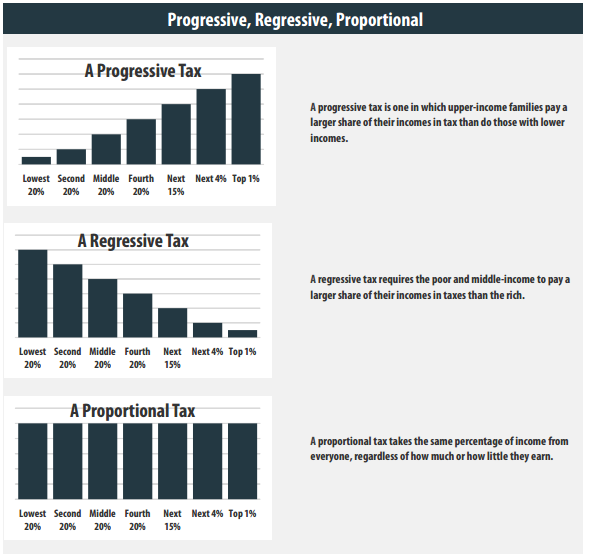
The non-profit, non-partisan Institution on Taxation and Economic Policy recently released its research on the taxes families in the United States paid in 2010.  These findings reveal when the focus is taken off the federal income tax and the entire tax system is examined, cumulative household taxes in nearly every state are regressive because the less money a family makes, the larger proportion they pay to the different levels of government.  As the graph below shows, the cumulative tax system is regressive because sales, excise and property taxes offset progressive income taxes at both the state, and federal levels.
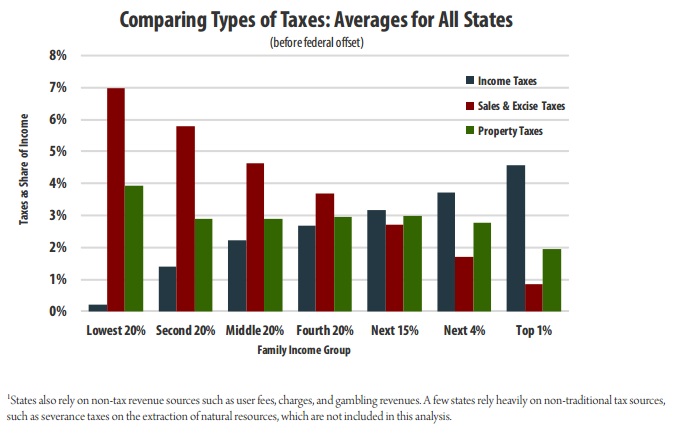
The tax system as a whole is largely regressive because the higher one’s class standing, the lower the proportion of total taxes they pay.  While the report provides great details in the variations across each state, the graph below shows that on average, the lowest 20% of earners pays an overall tax rate that is more than twice of what the top 1% of earners pay.
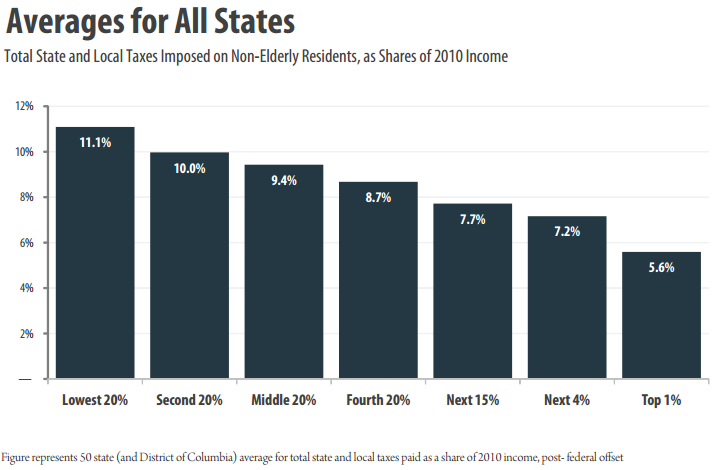
While many citizens perceive the U.S. tax code as inherently unfair because the wealthy have higher marginal rates on their federal income tax (the only one anyone ever seems to talk about); an examination of the entire system reveals the opposite as cumulatively, the poor pay a larger proportion of their income to local, state, and the federal governments.

—————————

Jason Eastman is an Assistant Professor of Sociology at Coastal Carolina University who researches how culture and identity influence social inequalities.

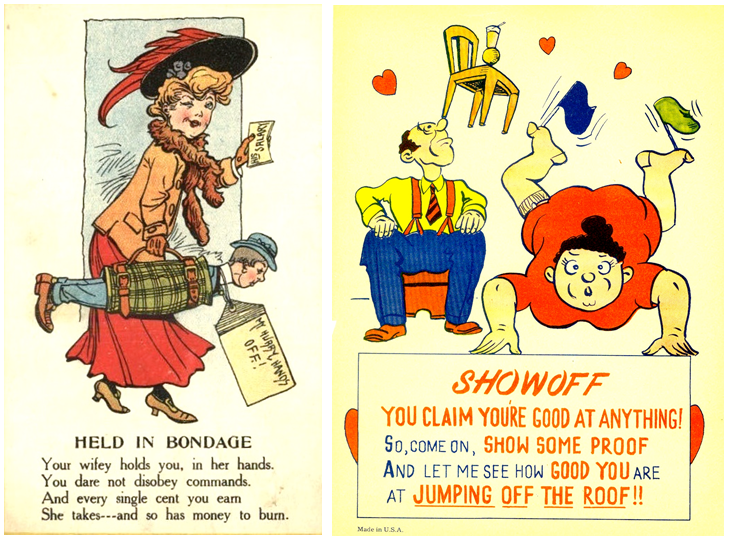
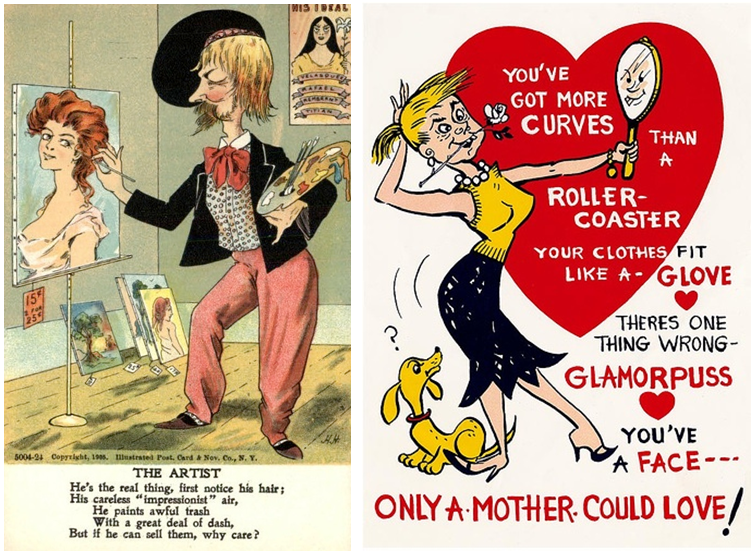
For 100 years Valentine’s Day was not only associated with sweet sentiments, but was an occasion to send a cruel and biting message to someone you didn’t like.  These cards — called “vinegar valentines” — were popular from 1840 to 1940 in both America and the U.K.

1Annebella Pollen, an art and design historian who talks about the valentine’s at Collector’s Weekly, explains that there was a valentine for many types of people and occasions:

 You could send them to your neighbors, friends, or enemies. You could send them to your schoolteacher, your boss, or people whose advances you wanted to dismiss. You could send them to people you thought were too ugly or fat, who drank too much, or people acting above their station. There was a card for pretty much every social ailment.

23

Pollen insists that people did send them to one another, albeit anonymously, and they were not meant to be jokes. Instead, they were meant to say: “Your behavior is unacceptable.”  For much of the 1800s there was no such thing as a pre-paid stamp, so the person who got the mail paid for it, so often they were forced to buy their own insults, a twist of the knife from the sender.

4

Many, many more vinegar valentine’s at Collector’s Weekly, where I also stole this great title.  Via BoingBoing.

Lisa Wade, PhD is an Associate Professor at Tulane University. She is the author of American Hookup, a book about college sexual culture; a textbook about gender; and a forthcoming introductory text: Terrible Magnificent Sociology. You can follow her on Twitter and Instagram.

Originally posted in 2010. Re-posted in honor of the holiday.

This morning I heard an interesting story on NPR about the celebration of Valentine’s Day in Japan.

In the U.S., Valentine’s Day is pretty much for women. While women do give Valentine’s gifts to male partners, the emphasis among adults is on men giving items to women: flowers, candy, cards, taking them out to dinner, and so on. In many cases women aren’t expected to reciprocate, or can give a less expensive/significant present, and I doubt many give flowers or chocolate in heart-shaped boxes.

In Japan, however, the roles are reversed: women give chocolates to men, as well as often buying gifts and providing meals. It apparently isn’t entirely clear how this tradition emerged.

There are two types of chocolates that women give men. Giri-choco, or “obligation chocolate,” is relatively cheap and is what you give to coworkers and the like. Honmei-choco is higher-quality chocolate reserved for men a woman is close to–partners or perhaps a family member. Some women choose to make their own honmei.

Men aren’t off the hook, however. A month later, on March 14th, is White Day, a day when men give candy and other gifts to women. According to wikipedia, these gifts are supposed to be more expensive than what the men received on Valentine’s Day.

A lot of websites say that White Day was invented by a marshmallow company in the ’60s as a way to increase sales, but I can’t find any reliable source for this explanation.

It’s a good example of the social construction of holidays and food. In the U.S., chocolate is highly feminized–we think of it as a food that women particularly like, and ads about chocolate, especially fancy chocolates, are usually aimed at women (or men buying for them). Valentine’s Day and big heart-shaped boxes with large bows on them are likewise feminized. Valentine’s Day is, primarily, a day when men are expected to show their affection for women through the purchase of these things (and, as a side note, the chocolate that comes in those heart-shaped boxes is often pretty unappealing). Insofar as women reciprocate with gifts for men, they’re unlikely to come in a similar heart-shaped box. When I brought up this possibility to my students, they said that would be really unusual and the male recipient would probably feel strange about it.

In Japan, clearly chocolates for Valentine’s Day (even expensive, fancy chocolate), heart-shaped boxes, and big bows are considered appropriate gifts for men. It makes it clear how our association of chocolate with women is culturally specific.

Of course, the fact that on White Day men are supposed to give women more expensive gifts than they received indicates that, while Valentine’s Day specifically is for men, the expectation is that overall, the balance of gift-giving requires men to show more affection-via-spending, similar to U.S. expectations surrounding the holiday.

Other posts: the social construction of chocolate and marketing chocolate to men.

Gwen Sharp is an associate professor of sociology at Nevada State College. You can follow her on Twitter at @gwensharpnv.

Consumption:

Heteronormativity

Cross-Cultures

Race/Ethnicity

Gender


Lisa Wade, PhD is an Associate Professor at Tulane University. She is the author of American Hookup, a book about college sexual culture; a textbook about gender; and a forthcoming introductory text: Terrible Magnificent Sociology. You can follow her on Twitter and Instagram.

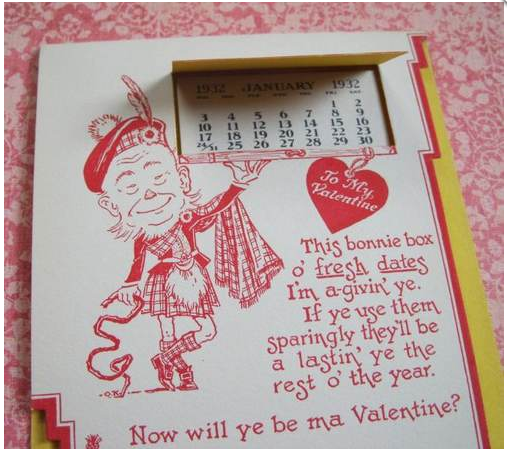
On previous Valentine’s Days, we’ve featured vintage holiday cards caricaturing African Americans, Asian Americans, and American Indians.  This year I stumbled upon a card that draws upon stereotypes of the Scottish.

Though it has largely disappeared as a well-known stereotype, at one time in American/British history, the Scottish were stereotyped as cheap.  Accordingly, this 1932 Scotch-themed valentine boasts that it’s box of dates (a type of dried fruit) can last all year if “ye use them sparingly.” A great example of a bygone stereotype (I think):

Valentine found at Kitsch Slapped.

Lisa Wade, PhD is an Associate Professor at Tulane University. She is the author of American Hookup, a book about college sexual culture; a textbook about gender; and a forthcoming introductory text: Terrible Magnificent Sociology. You can follow her on Twitter and Instagram.

Originally posted in 2011. Re-posted in honor of the holiday.

I recently posted a vintage cartoon featuring men showering. Today, in the context of “don’t drop the soap” jokes, it seems obviously homo-erotic (or -threatening).   At the time, however, it likely didn’t because homosexuality didn’t hold such a central place in our collective imagination.

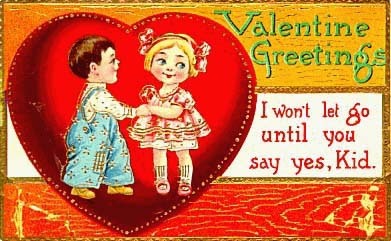
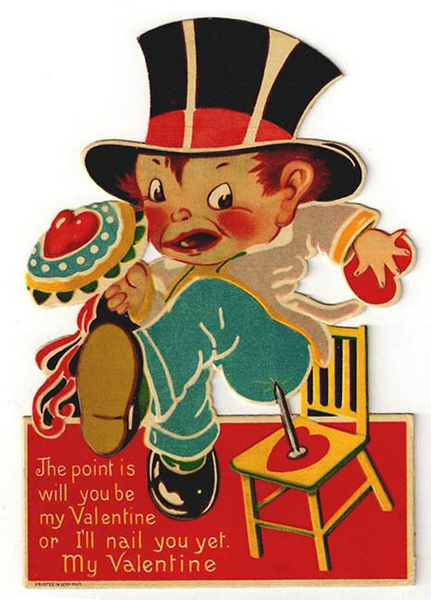
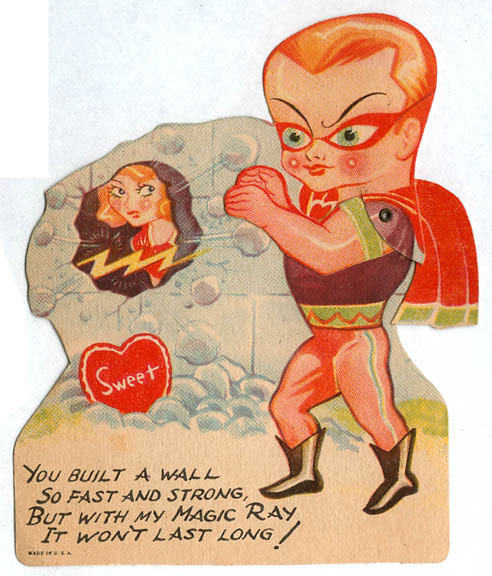
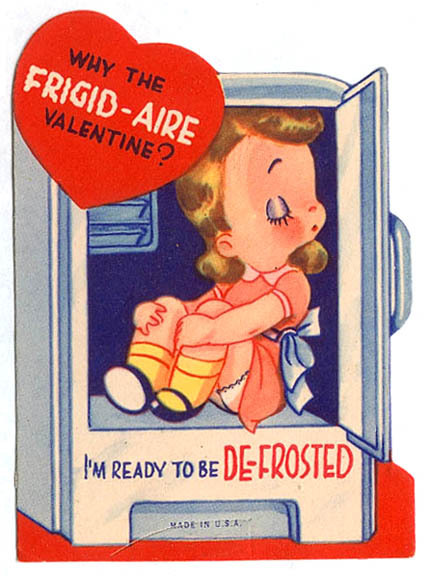
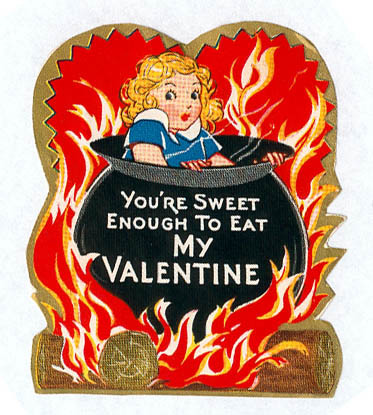
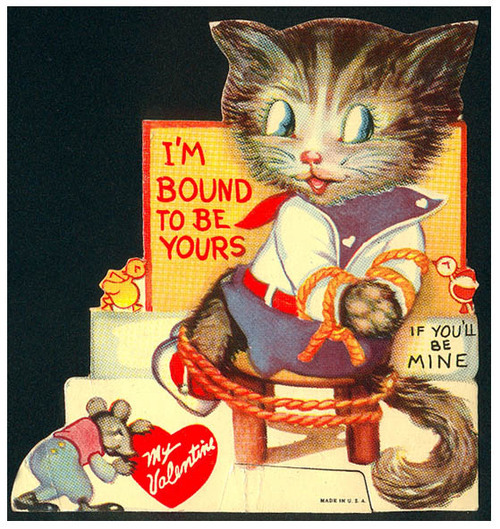
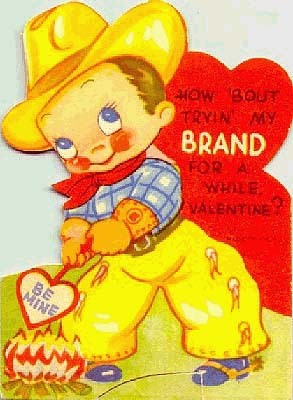
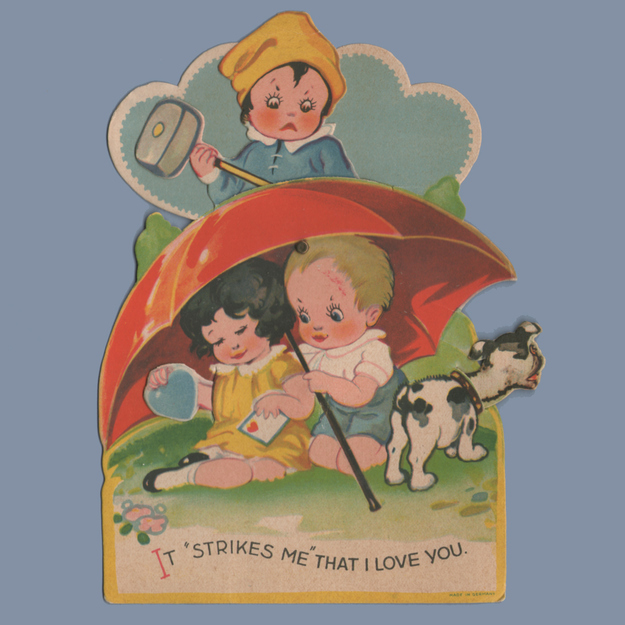
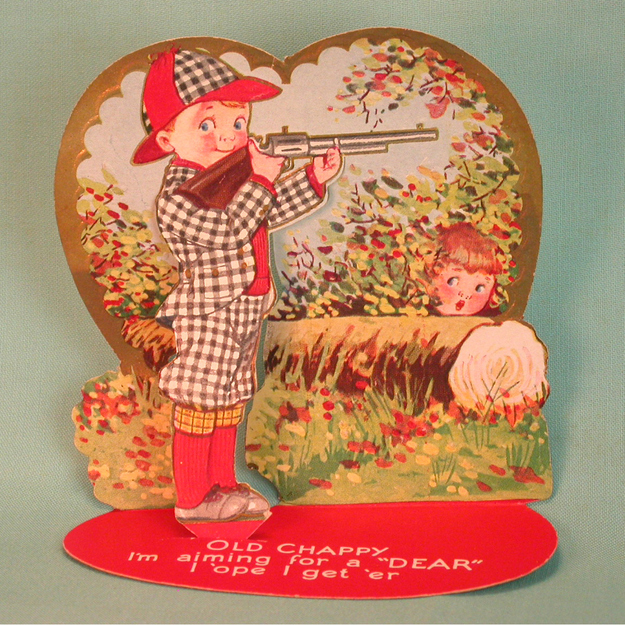
Dmitriy T.M. sent along a series of vintage Valentine’s Day cards that, similarly, have a different effect given our contemporary cultural sensibilities. After decades of efforts to draw attention to and problematize men’s violence against women, these cards seem misguided at best:

1 (2) 1 (3) 1 (4) 1

Cards borrowed from Funny or Die and Buzzfeed.

Lisa Wade, PhD is an Associate Professor at Tulane University. She is the author of American Hookup, a book about college sexual culture; a textbook about gender; and a forthcoming introductory text: Terrible Magnificent Sociology. You can follow her on Twitter and Instagram.

Happy Fat Tuesday to all our friends in New Orleans! Don’t do anything we wouldn’t do!

If you’re not in the middle of the revelry, enjoy these Mardi Gras posts from previous years:

2Over at Feministing, Maya Dusenbery made a great observation about the conservative response to Beyoncé’s Super Bowl halftime show.  Conservatives widely criticized her for sexually objectifying herself.  She made her “sex appeal the main attraction,” said one commentator, who said that Beyoncé “humping the stage and flashing her lady bits to the camera” made her “sad.” Another said that her performance was “tasteless and unedifying.”

Dusenbery notes that the definition of sexual objectification is the reduction of a person to their sex appeal only.  And, ironically, this is what the conservative commentators did to Beyoncé, not something she did to herself.  Sexual objectification is not found in a person’s clothing choices or dance moves; instead:

[Objectification is] watching Beyoncé’s show — where she demonstrated enormous professional skill by singing live, with an awesome all-women band I might add, while dancing her ass off in front of millions of people — and not being able to see anything besides her sexy outfit.

Indeed, these conservative commentators are arguing that Beyoncé’s talent can only be fully be appreciated in the absence of sex appeal (whatever that might look like).  And that is the problem. Dusenbery continues:

These commentators reflect a “culture in which too many people seem to find it difficult to understand that it is possible to simultaneously find a woman sexually attractive and treat her like a full human being deserving of basic respect.”

Right on.  To me, Beyoncé’s performance — along with those of her band mates and fellow dancers and singers — embodied strength and confidence; the pleasure of being comfortable in one’s own skin and the ability to use your body to tell a story; and the power that comes from being admired for the talents you’ve worked so hard to cultivate.  I don’t see how you could watch this and only see a sexual object:

Via Racialicious.

Lisa Wade, PhD is an Associate Professor at Tulane University. She is the author of American Hookup, a book about college sexual culture; a textbook about gender; and a forthcoming introductory text: Terrible Magnificent Sociology. You can follow her on Twitter and Instagram.